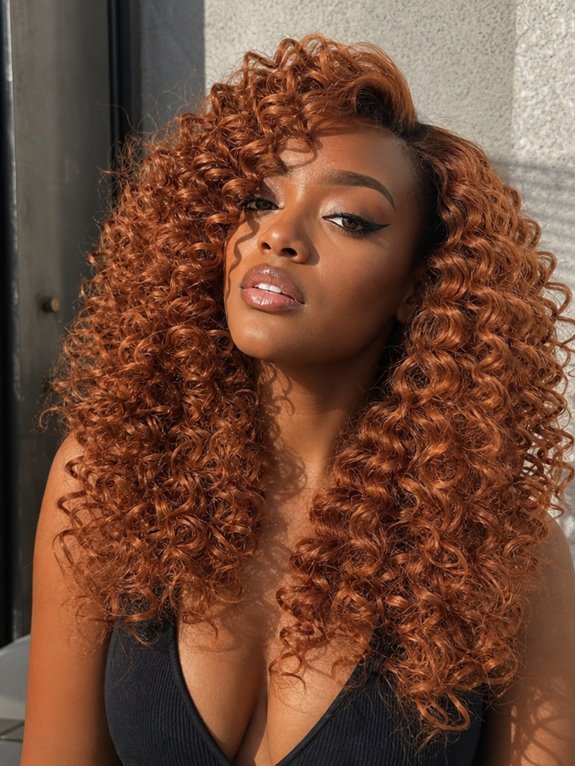
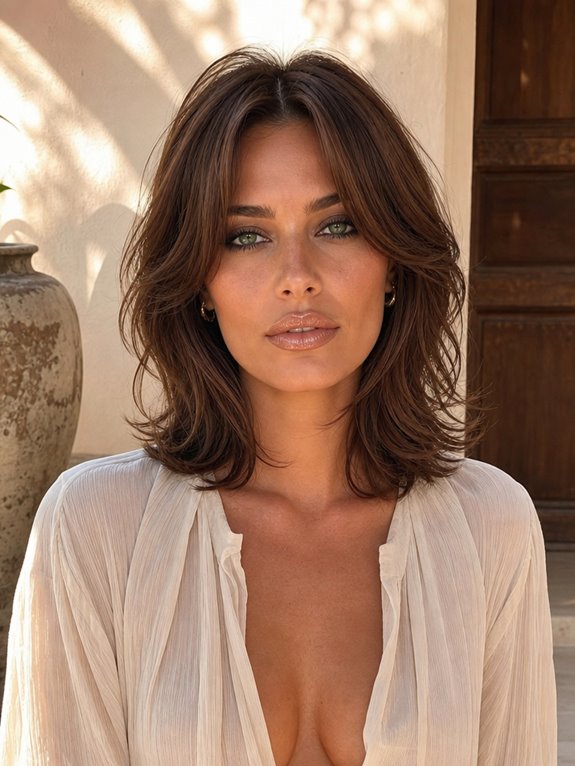
Strategic layers can redefine a strong jaw without sacrificing inches. Fifteen specific cuts use placement and soft curves to blur angles, creating a subtle, length-preserving effect. The key lies in where the layers fall, not how much is removed. The full breakdown awaits.
Invisible Layers for Long Hair
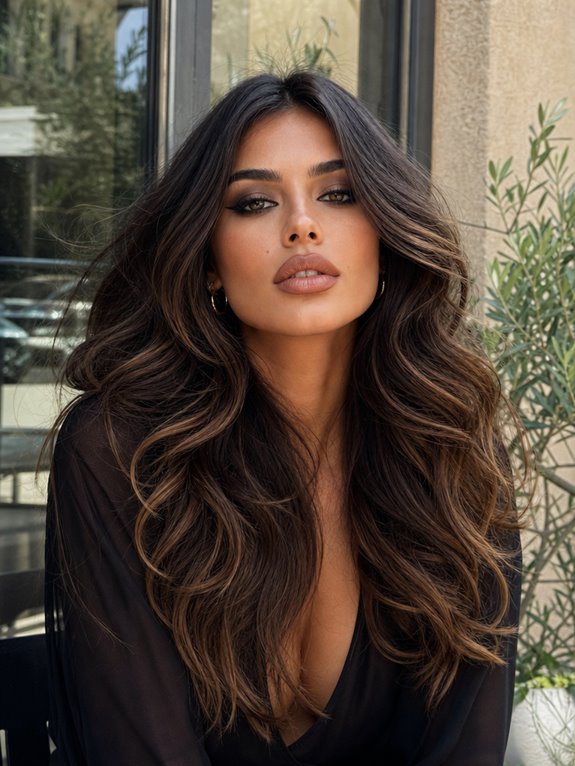
When invisible layers are cut into long hair, the jawline softens without a noticeable change in overall length.
These invisible layers use subtle face-framing layers and internal cuts throughout the ends, creating vertical motion, softening angles.
Subtle face-framing layers and internal cuts craft vertical motion, gently softening angles without losing length.
They start near the jaw and blend downward gradually.
Softer, longer layers require little upkeep.
Fine hair gains body; thick hair loses heaviness near the jaw.
Long layered haircuts can be tailored to different hair types for flattering results, including long layered haircuts that add movement without sacrificing length.
Face-Framing Layers at the Cheekbones
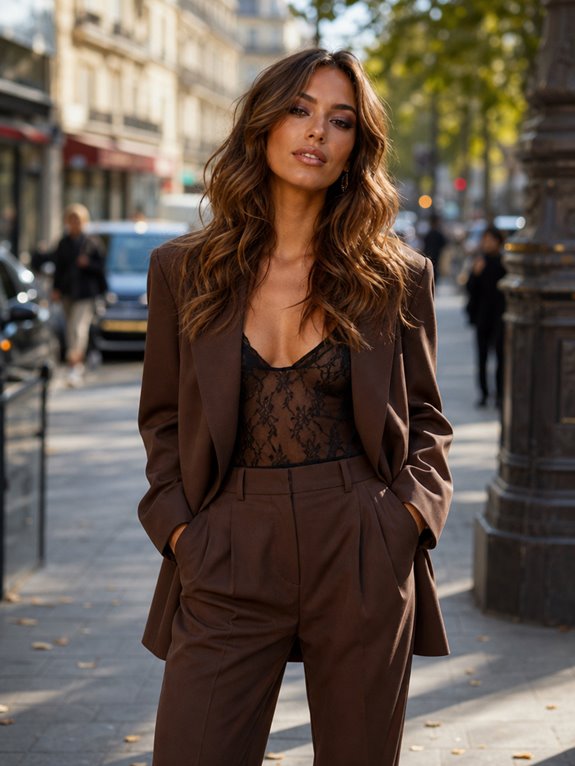
While maintaining the overall length, face-framing layers positioned at the cheekbone level help draw the eye upward and gently soften a strong jawline.
These long layers begin at the cheekbone level and taper downward, following the face’s curve to break up angularity.
They minimize bulk near the jawline, creating an airy, length-retaining finish.
Controlled depth keeps thicker hair lighter, and integrated grow-out ensures lasting softness.
Chic short layered haircuts often use short layered techniques to add texture and movement without sacrificing shape.
Chin-Skimming Layers for Jawline Balance
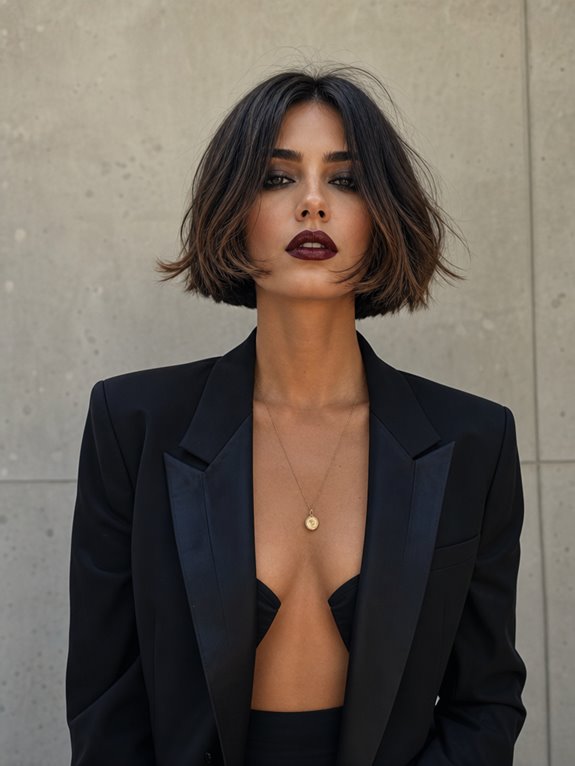
Chin-skimming face-framing layers balance a pronounced jawline by beginning right at or just below the jaw, creating a soft curve that gently hugs the lower face and blurs angular edges. Paired with a deep side part, they shift focus diagonally.
Soft layers at the chin blur angular lines; a deep side part shifts focus diagonally.
- Opt for soft, C-shaped layers to embrace the jaw.
- Request minimal density removal near the face.
- Avoid center parts to reduce chin emphasis.
- Blend layers seamlessly for length retention.
The long bob is an especially flattering option for this technique because its length and shape naturally complement chin-skimming layers.
Soft Curve Layers for Straight Hair
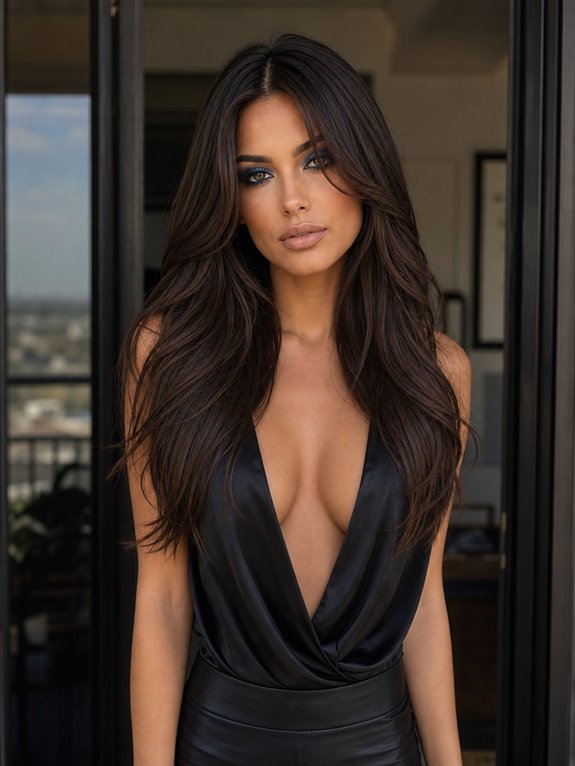
Soft curve face-framing layers soften a strong jawline on straight hair by introducing long, C-shaped pieces that curve around the cheeks, jaw, and collarbone.
These layered haircuts use gentle, blended elevation starting naturally around the chin, so upper layers redirect attention to the face while preserving length.
Styling adds a slight bend for a loose, curved fall that follows the jaw’s contour.
This approach is especially effective when applied to a layered lob, which combines length with soft, strategic layering to flatter angular features.
Waterfall Layers for Gentle Movement

Because waterfall layers cascade from the cheekbone or jaw downward, they introduce gentle movement that softens angular jawlines while preserving overall length.
- Request waterfall layers at cheekbone or jaw for face-framing softness.
- Keep graduation subtle to maintain length and avoid short layers.
- Style with waves for front pieces to fall in soft face-framing.
- Schedule regular trims to keep the cascade shape blended.
Butterfly Layers With Long Ends
When hair is cut with butterfly layers, the two-tier pattern—shorter crown layers for lift paired with longer mid-to-long layers for motion—softens an angular jawline while preserving overall length. This haircut long layers method keeps ends beneath the jaw, with face-framing blur for sharp edges. Layered blending prevents bulk, and loose bends add vertical movement for a softer, airy look over time.
| Layer Type | Placement | Effect |
|---|---|---|
| Shorter crown layers | Around the crown | Adds lift, prevents flatness |
| Longer mid-to-long layers | Cheek to jaw area | Creates movement, softens jawline |
| Face-framing pieces | Front, below jaw | Blurs angular edges, hugs face |
| Blended layering | Throughout, no harsh steps | Prevents bulk, ensures smooth grow-out |
| Styling with loose bends | Ends | Adds vertical movement, draws eye upward |
U-Shaped Layers to Slim the Sides
A U-shaped layering pattern takes bulk away from the sides by keeping mid-face layers shorter while leaving front and back lengths longer, creating a subtle inward curve that contours the cheek-to-jaw zone.
- U-shaped layers at the cheek-to-jaw zone slim sides.
- Subtle shaping preserves length, avoids choppy look.
- A deep side part flatters round face shapes.
- Grow-out is easy, as longest sections stay intact.
V-Shaped Layers for a Narrower Look
V-shaped layers sculpt a tapered silhouette that elongates the face and narrows the jawline by starting near the cheeks and gradually lengthening downward. These layered cuts keep top sections soft and blended, avoiding bulk at the crown. Longer v-shaped layers hitting collarbone or below maintain weight balance while slimming the lower face. A side parting directs front pieces inward, creating vertical emphasis. Regular trims preserve the V-shape, preventing a boxy silhouette.
| Technique | Benefit |
|---|---|
| Start layers at cheek/jaw | Creates tapered V silhouette, softening jawline |
| Keep top layers blended | Reduces crown bulk, refines shape |
| Collarbone-length or longer | Maintains length, visually slims lower face |
| Side parting with V-shape | Directs eyes vertically, elongates face |
Extra-Long Layers for Thick Hair
Extra-long layers thin out dense manes without sacrificing overall length, employing face-framing pieces that start at the cheekbones or just beneath the jaw to soften angular features. For thick hair, this technique removes weight without choppiness, creating soft movement.
Extra-long layers remove weight from dense hair, using face-framing pieces to soften features and create fluid movement.
- Thin out density near the face.
- Use C-shaped layers to contour the jaw.
- Direct eye vertically, not sideways.
- Trim regularly to prevent splitting.
Curtain Bangs With Long Layers
When curtain bangs are paired with long layers, the combination softens a strong jawline without sacrificing overall length. These bangs part in the middle, sweeping outward to break up horizontal jaw lines.
Long layers starting at the cheekbone add vertical lift, drawing focus to the eyes rather than the jaw.
Blended layering connects bangs seamlessly into the length, creating a curved, jaw-hugging frame.
The style stays low-maintenance during grow-out, as bangs merge into face-framing pieces.
Long Shag Layers for Airy Texture
Long shag layers soften a strong jawline without sacrificing length by adding airy texture and movement.
- Long layers starting at the cheekbone soften sharp jaw angles overall.
- Layered removal of side bulk prevents a boxy silhouette.
- It adds volume to fine hair and thins thick textures near the jaw.
- Style with loose waves or a textured blow-dry to keep airy movement as hair grows.
Collarbone-Grazing Layers That Keep Length
For a cut that keeps collarbone length while softening a strong jawline, strategic, long layers starting just below the chin or at cheek level provide face-framing movement and subtle vertical shadows. These collarbone-grazing long layers are blended; a C-shaped face-framing design keeps an oval illusion. Soft, refined layering assures graceful grow-out. Fine hair gains bounce without bulk loss; thicker hair sheds weight to avoid a boxy jawline.
| Hair Type | Layering Approach | Softening Effect |
|---|---|---|
| Fine | Bounce-adding layers | Maintains fullness with face-framing movement |
| Thick | Blended, weight-lifting layers | Reduces jawline boxiness, airy finish |
| All Types | C-shaped face-framing | Oval illusion, face-framing movement |
| Upkeep | Feathered, soft ends | Graceful grow-out, lasting jaw softening |
Wavy Layers With Soft Side Volume
Because an angular jawline can dominate the face, wavy layers with soft side volume provide a corrective counterpoint.
- Request face-framing layers starting at cheekbones to diffuse jaw sharpness.
- Use blended long layers so wavy layers add movement without bulk.
- Style with a side part, keeping front pieces longer for a soft swoop.
- Direct waves vertically-diagonally to elongate the face and neck area.
Curly Layers That Lift and Elongate
When curly layers start around the cheekbone or jawline, they introduce vertical lift that prevents curls from dragging the face downward, softening angular features without sacrificing overall length.
Strategic C-shaped layers add volume at crown, while feathered ends reduce bulk.
Long layers wrap the collarbone, elongating the silhouette.
Defined curls lift upward, drawing the eye to the eyes rather than the jaw.
Coily Layers With Tapered Face Framing
Tapering the face-framing layers on coily hair creates a soft, graduated drop that hugs the cheek and jaw, relaxing angular features while preserving the overall length.
- Keep the crown weight to prevent excessive front shrinkage.
- Use less-severe layers that hug the cheek and jaw.
- Opt for tapered face framing that grows out seamlessly.
- Define face framing coils to keep a vertical movement.
Frequently Asked Questions
Do Layered Cuts Soften the Jawline?
Yes, layered cuts soften a strong jawline. Strategic longer layers beginning around the cheekbone or below the chin create gentle movement and vertical emphasis, drawing attention upward.
These softly blended layers reduce visual bulk along the sides, preventing a boxy appearance, while face-framing pieces contour with a C-shaped silhouette.
The result adds dimension and a rounded softness without sacrificing overall hair length, making the jawline appear less angular.
What Haircuts Soften the Jawline?
Haircuts that soften a strong jawline feature long, face-framing layers starting near the cheekbone to create vertical movement and draw the eye away from sharp angles.
A curve cut shapes C-silhouettes that contour the jaw without shortening.
A modern shag adds airy texture to avoid bulk, while a soft butterfly cut introduces subtle internal elevation for blurred definition.
A side part and strategic layering direct attention upward, ensuring a softened appearance.
These methods collectively soften without sacrificing length.
What Hairstyle Hides Sagging Jowls?
A hairstyle that effectively hides sagging jowls incorporates long, face-framing layers beginning around the jaw or chin. These layers create lift and movement, avoiding a straight, downward pull that emphasizes the lower face.
A side part draws the eye upward, while soft texture like loose waves softens harsh edges. Adding curtain bangs or wispy fringe redirects focus to the cheeks and eyes, minimizing the appearance of jowls without sacrificing overall hair length.
How to Cut Layers Without Losing Length?
To cut layers without losing length, a stylist initiates layering well below the chin, often near the collarbone, using sliding or graduated elevation. This technique removes bulk internally while preserving the perimeter. Micro-layers and subtle texturizing beneath the surface generate movement and volume, avoiding exterior shortening. Face-framing pieces receive minimal, blended trimming.
The approach maintains overall length by concentrating dimensional reduction within the interior, resulting in soft texture without compromising the hair’s visible hemline.
Conclusion
These layered cuts achieve a softened jawline without compromising overall length. Strategic placement of face-framing pieces at cheekbones and chin diffuses angularity, while U- or V-shaped patterning eliminates bulk invisibly. Textures from waterfall waves to tapered coils create motion and lift, keeping depth controlled near the face. Feathered, soft ends ensure a graceful, low-maintenance grow-out that maintains the intended elongated silhouette.