


For fine hair, the right bob can create noticeable lift and the illusion of density through measured lengths, subtle internal layers, and blunt finishes. Practical choices—chin-length for jaw emphasis, lobs for versatility, stacked backs for crown height—work best when combined with strategic parts, minimal texturizing, and targeted bangs. Simple styling and color techniques maintain body without thinning, and a few pro tips make all the difference—more follows.
Best Bob Length for Fine Hair : Quick Answer
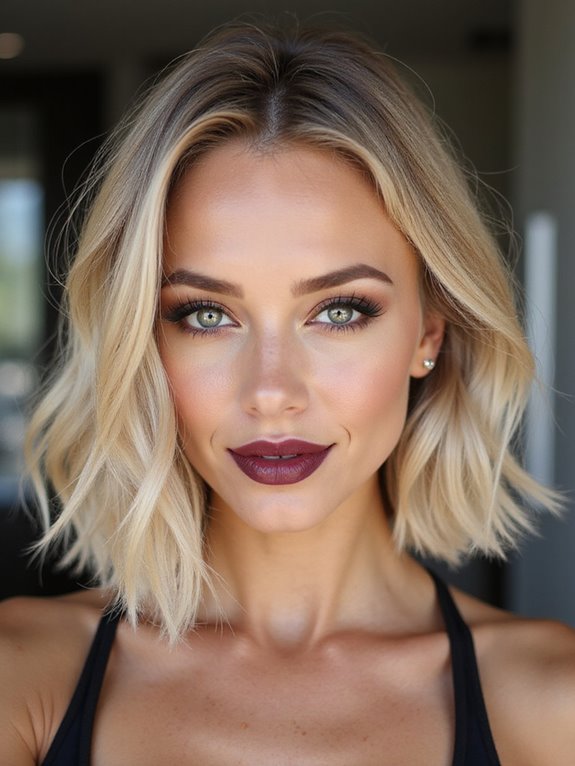
When choosing a bob for fine hair, shoulder-grazing to slightly above-shoulder lengths tend to offer the best balance of volume and manageability; this range maximizes lift at the roots while avoiding weight that flattens strands.
Stylists recommend subtle internal layering, blunt ends for perceived thickness, and minimal texturizing. Daily styling should focus on root-lifting products and heat tools used to enhance body without compromising hair health.
Best Bob Styles for Fine Hair: Chin-Length, Lob, Stacked
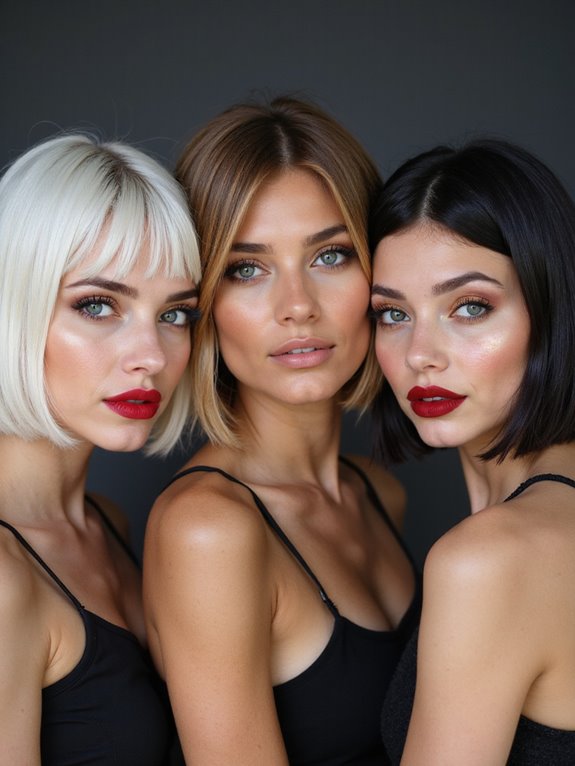
After establishing ideal length and layering for fine hair, attention turns to specific bob shapes—chin-length, lob, and stacked—that each address volume, silhouette, and maintenance differently. Chin-length offers lift at the jaw; lob provides versatile movement; stacked maximizes back volume with graduated layers.
| Style | Benefit |
|---|---|
| Chin-length | Jawlift |
| Lob | Versatility |
| Stacked | Maximum volume |
| All | Low-maintenance styling |
Face Shapes and the Bob That Flatters Fine Hair
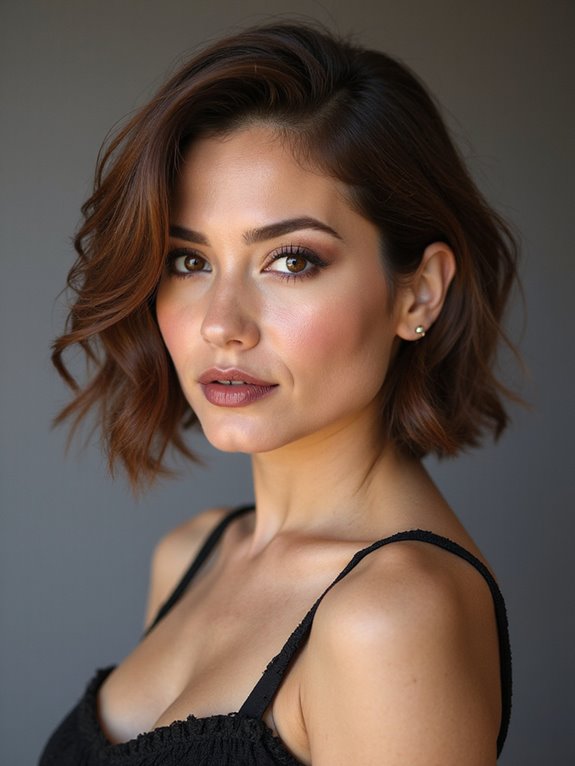
Although face shape is just one factor, it plays a central role in choosing a bob that maximizes volume and balance for fine hair.
Round faces benefit from longer lobs to elongate; square jaws soften with layered, face-framing lengths; oval faces suit most bobs, especially blunt cuts that add lift; heart shapes gain balance with chin-length fullness. Tailor cut angles to enhance natural proportions.
Choosing the Right Part, Bangs, and Fringe for More Density
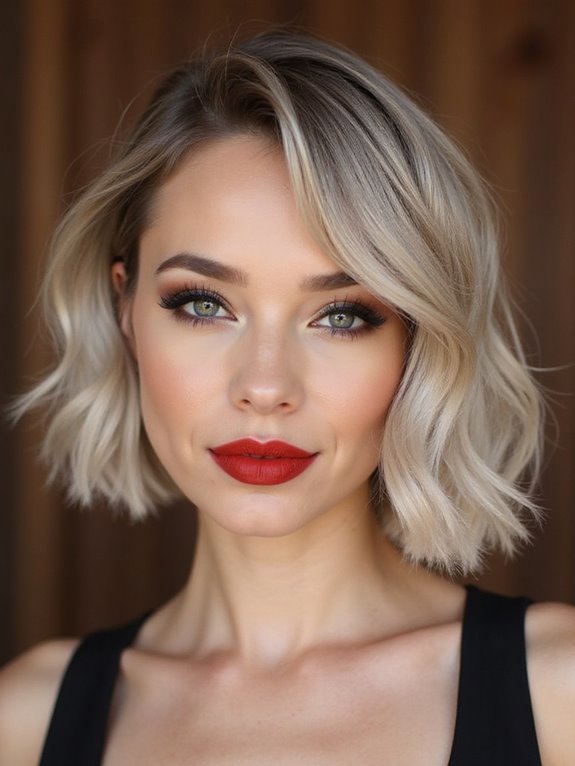
If the goal is increased density, strategic parting and fringe choices create the illusion of thicker hair by concentrating weight and redirecting movement. A deep side part adds lift at the root; a centered part offers symmetry.
Short, blunt bangs maximize perceived bulk across the hairline; wispy fringes should be avoided for fine strands. Regular trims maintain shape and visual density.
Layering and Texturing That Add Volume Without Thinning Ends
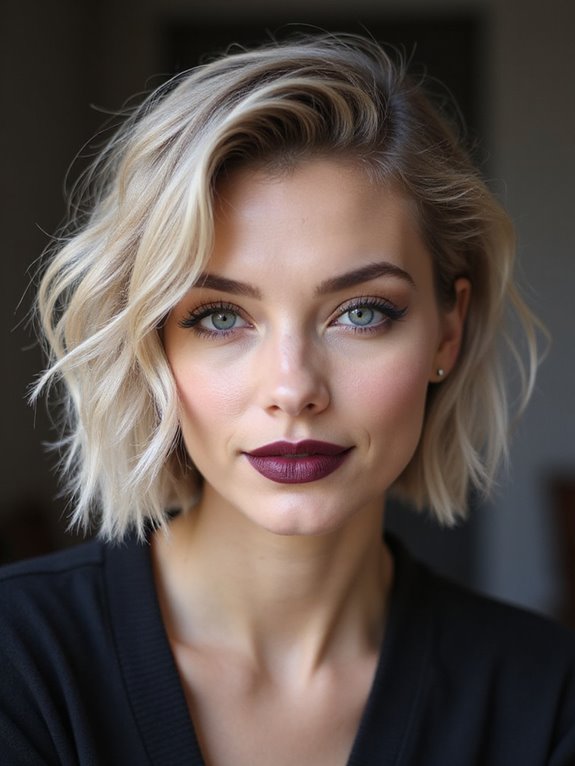
When aiming to boost body without sacrificing thickness at the ends, targeted layering and subtle texturizing create internal lift while preserving weight where it matters most.
Stylists recommend short interior layers near the crown, long face-framing pieces, and point-cutting at mid-lengths to break bulk gently.
Use measured razoring sparingly; maintain blunt terminal lines to keep visual density and avoid over-thinning.
Daily Styling Routine: Tools, Products, and Step Order
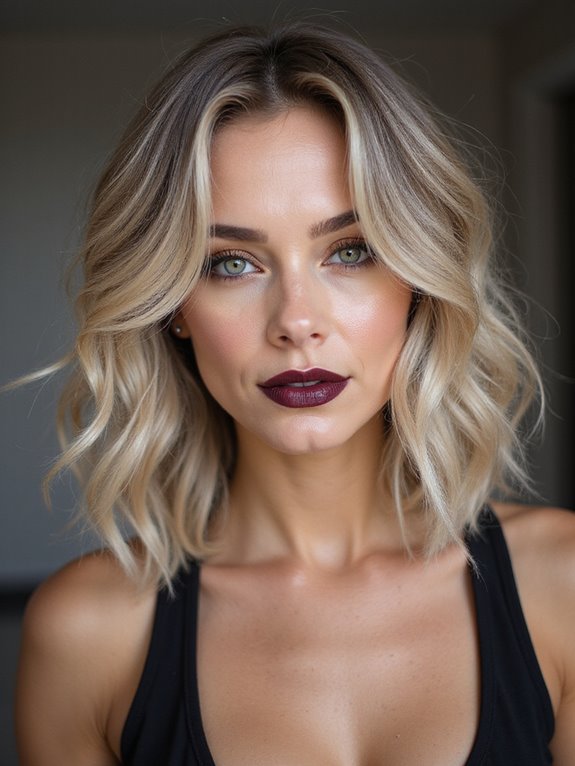
Because consistent technique matters more than expensive tools, a streamlined daily routine for fine-haired bobs focuses on a minimal set of implements, targeted products, and a fixed step order to maximize lift and maintain density.
Begin with lightweight volumizing spray at roots, detangle gently, apply a thin heat-protectant serum, use a round brush for root direction, finish with a fine-hold texturizing mist and occasional dry shampoo.
Quick Blow-Dry and Heat-Free Methods for Lasting Lift
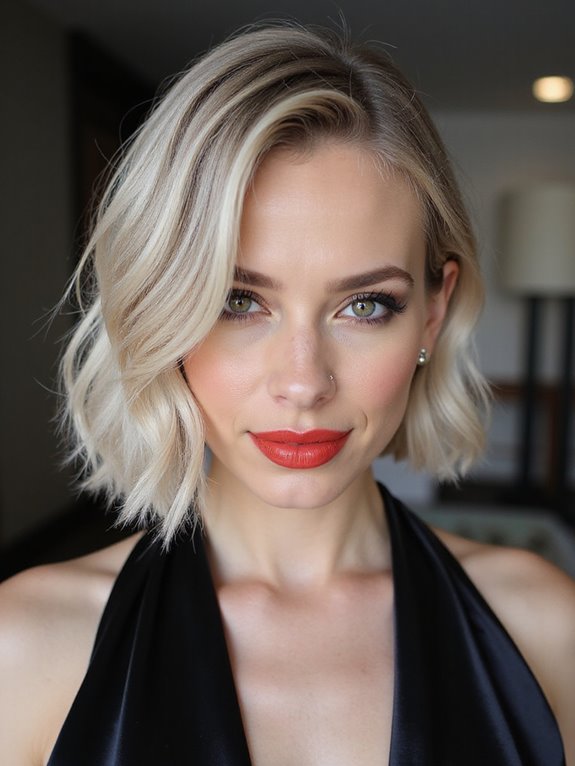
Moving from daily product sequencing to quick drying and heat-free lifts, the focus shifts to techniques that create height without prolonged styling.
Professionals recommend targeted root drying with a round brush and low heat, clip-and-cool sections to set lift, and overnight methods like pin curls or headband rolls.
Lightweight texturizers and strategic tousling maintain volume while preserving hair health and shape.
Color Tricks for Bobs That Make Fine Hair Look Thicker
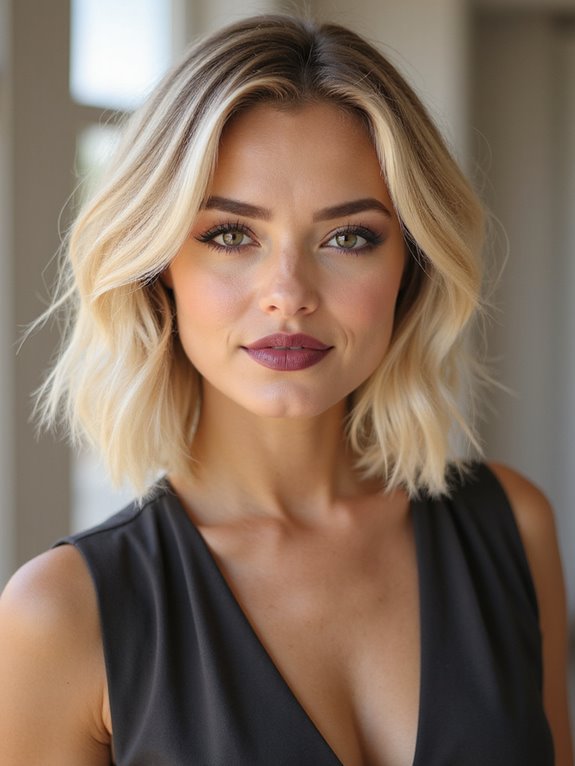
Selective color placement and contrast can visually broaden a bob and give fine strands the illusion of density. Subtle root shading, soft lowlights, and strategically placed face-framing highlights add depth without weight.
Balayage panels and chunky babylights create movement that reads as volume. Maintain tonal harmony to avoid scalp exposure; choose low-contrast blends for ultra-fine hair and stronger contrast for medium-thin textures.
Trims and What to Tell Your Stylist for a Fuller Bob
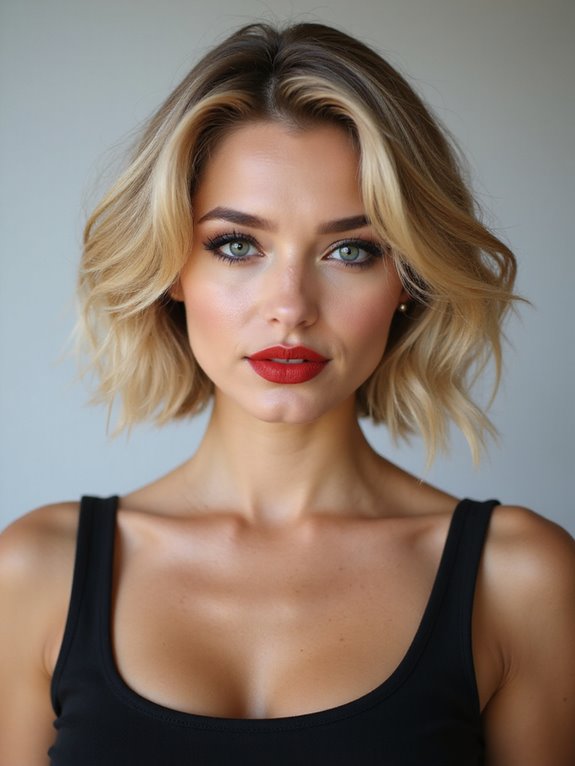
When aiming for a fuller bob, communicate precise cutting techniques and desired proportions so the stylist can sculpt weight and movement to counteract limpness.
Request blunt bluntness at the perimeter for density, long layers for internal lift, a slightly shorter back to create forward fullness, and soft texturizing only at ends to avoid thinning.
- Blunt perimeter
- Internal long layers
- Shorter back
- Minimal end texturizing
Troubleshooting Limp Roots, Visible Scalp, and Saggy Ends
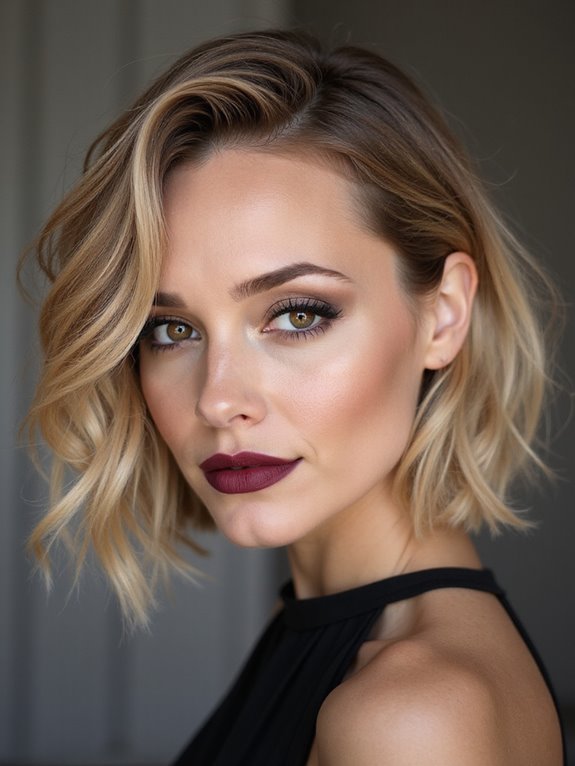
After specifying perimeter bluntness, internal lift, and minimal texturizing, attention must shift to root volume, scalp coverage, and end resilience to guarantee the cut reads full on fine hair.
Diagnose limp roots by evaluating crown layering and weight distribution; add subtle root stacking. Camouflage visible scalp with strategic density near parting. Reinforce saggy ends with controlled bluntness and micro-layers, avoiding over-thinning.
Frequently Asked Questions
Can I Wear a Bob With Very Thin, Fragile Hair Extensions?
Yes. They recommend lightweight, well-secured extensions and a blunt or layered short bob tailored to hair density. The stylist monitors weight, uses bonding-friendly methods, and advises gentle care to prevent breakage and maintain volume.
How Often Should I Wash a Volumizing Shampoo for Fine Bobs?
Every 2–3 days is typical; shampooing volumizing formula twice weekly with co-washes or dry shampoo between washes preserves lift and moisture. Adjust frequency for scalp oiliness, styling products, and hair fragility to avoid over-stripping.
Can I Sport a Bob While Growing Out Damaged Ends?
Yes. One can wear a bob while growing out damaged ends; regular trims, layered shaping, and textured finishes conceal uneven lengths while promoting healthier regrowth. Professional trims every 6–8 weeks minimize split ends and maintain style.
Are There Nighttime Routines to Preserve Bob Volume?
Yes. They pillow with a silk or satin case, loosely pin or pineapple the bob, apply lightweight mousse or texturizing spray, avoid heavy oils, sleep on a low-rise silk scarf, and refresh with root lift and dry shampoo in morning.
Will Humidity Ruin a Volumized Bob All Day?
Humidity can undermine a volumized bob over a day, causing limpness and frizz. Professionals recommend humidity-resistant products, strategic blow-drying with root lift, light styling sprays, and touch-up tools to maintain shape and lift.
Conclusion
Fine-haired clients achieve the fullest bob by prioritizing shoulder-grazing to chin-length cuts, subtle internal layering, blunt ends and strategic parts. Chin bobs, lobs and stacked backs each boost jawline lift or crown volume while short blunt bangs and deep side parts enhance root density. Minimal texturizing, targeted color, routine trims and clear stylist notes preserve weight and prevent limp roots. Combined with simple styling methods, these choices create a consistently voluminous, low‑maintenance result.