


Picture a dim jazz club in 1925. A woman tilts her chin under a low lamp, and the only things you really register are a tiny scarlet mouth and two pools of smudged black around her eyes. That contrast, a pale face against dark eyes and a small dark lip, is the entire language of 1920s makeup.
These looks were born from a specific moment: new silent-film cameras and harsh studio lighting that flattened color, so women leaned into heavy contrast to register on screen. That history is exactly why the makeup still photographs beautifully a century later. Below are fifteen flapper-era faces I keep coming back to, each with the real technique behind it and honest notes on who it flatters.
The Short Version
The 1920s face runs on three moves: a matte, pale-leaning base, heavily smoked eyes, and a small, dark, sharply defined lip. Get those three right and every look on this list is just a variation in color or intensity.
Most of these faces cost very little to recreate. A kohl pencil, a cream rouge, and one deep lip color do the heavy work. What they reward is a slow, patient hand, far more than any pricey product.
The Petite Heart-Shaped Scarlet Lip
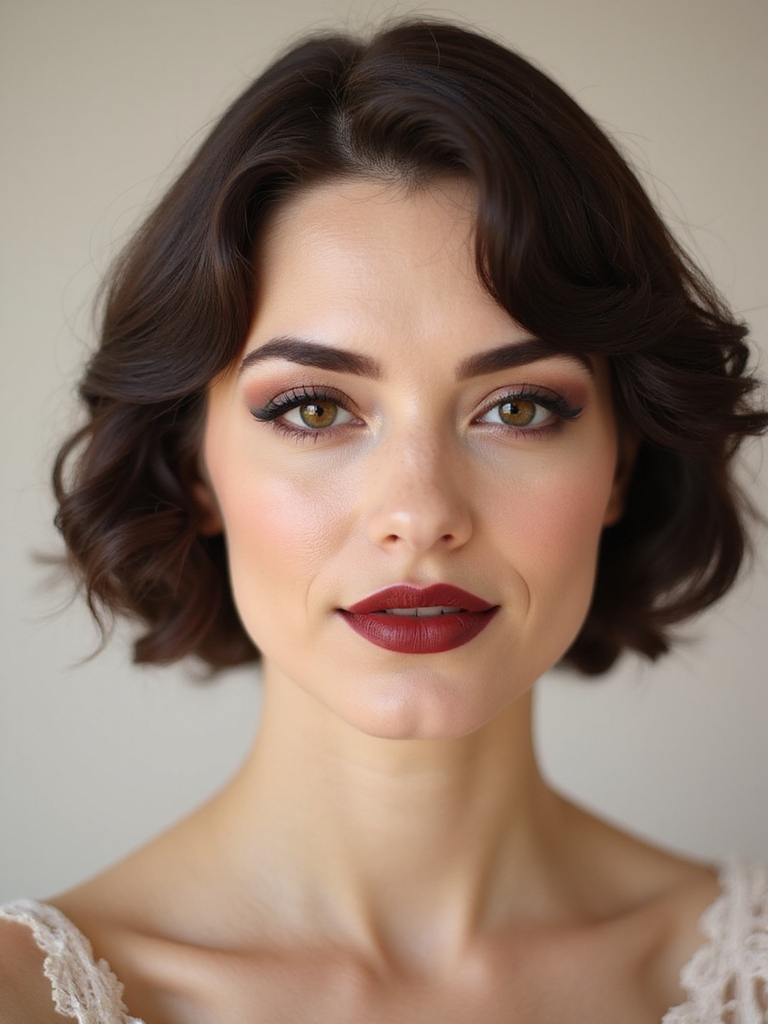
This is the lip that defines the decade. You ignore the natural mouth and draw a smaller, rounder shape that peaks into a soft heart at the top and stops short of the corners. The color sits in a true blue-red scarlet, the cool kind that looks a little severe against pale powder.
Who It Flatters Most
To build it, line the bow first with a fine pencil, exaggerate the dip in the center, then pull the bottom lip in slightly at both sides. Fill with a matte cream lipstick in true scarlet, blot, and reapply one thin layer. A good long-wear scarlet runs about $10 to $22, and a single tube outlasts a year of occasional flapper nights.
Honest note: a deliberately small lip can shrink a fuller mouth in a way not everyone loves. If you have naturally generous lips, keep the shape but let it follow your real lip line more closely so it still feels like you.
Smudged Inky Kohl Smoke Eyes
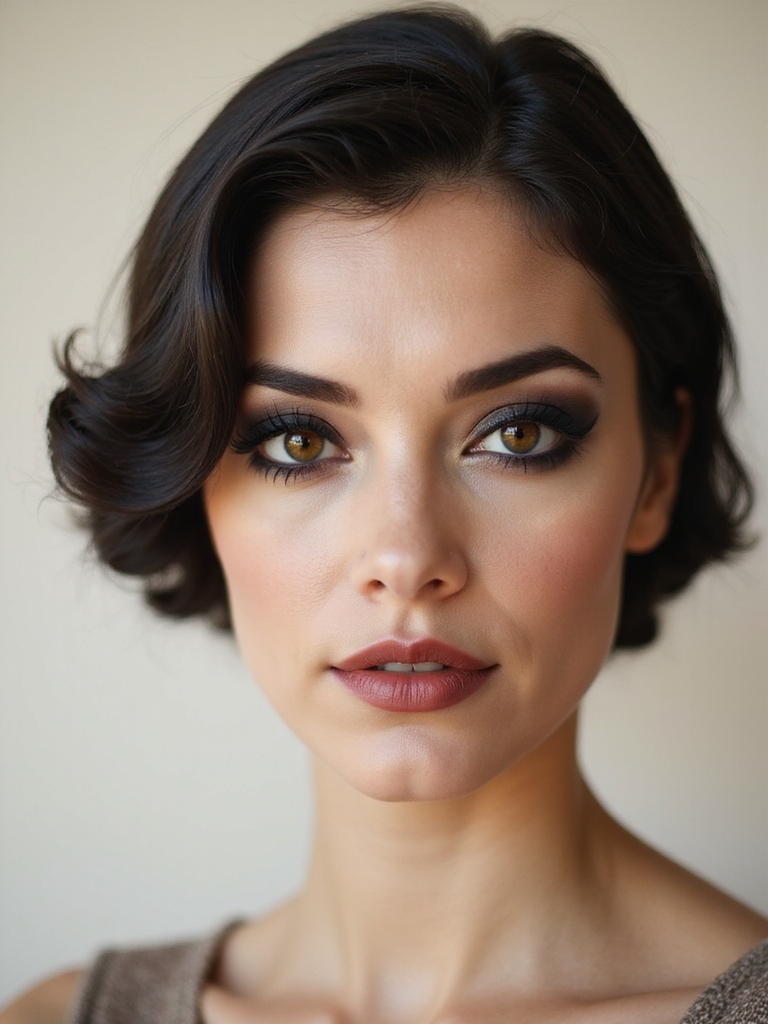
If the scarlet lip is the headline, the smoked eye is the mood. The 1920s version is soft and a little messy on purpose, closer to a hazy ring than a clean modern smokey eye. You want it to look like it has been worn for hours under warm light.
- Press a soft black kohl along the upper and lower waterline, then smudge upward with a fingertip before it sets.
- Build a halo of deep grey or charcoal shadow around the whole eye and blur the edges with a fluffy brush so nothing has a hard line.
- Skip sharp wings. The shape should fade into the socket, which is what separates a true Jazz Age eye from a 2010s smokey eye.
👍Why the small scarlet lip works
- +Instantly looks period-correct with one product
- +Cool blue-reds flatter most skin tones
- +A single matte tube lasts for years of occasional wear
👎Where it gets tricky
- –The overdrawn shape can shrink naturally full lips
- –Matte scarlet shows every flake, so prep the lip first
- –Hard to wear convincingly in flat daylight
Thin, High-Arched Dramatic Brows
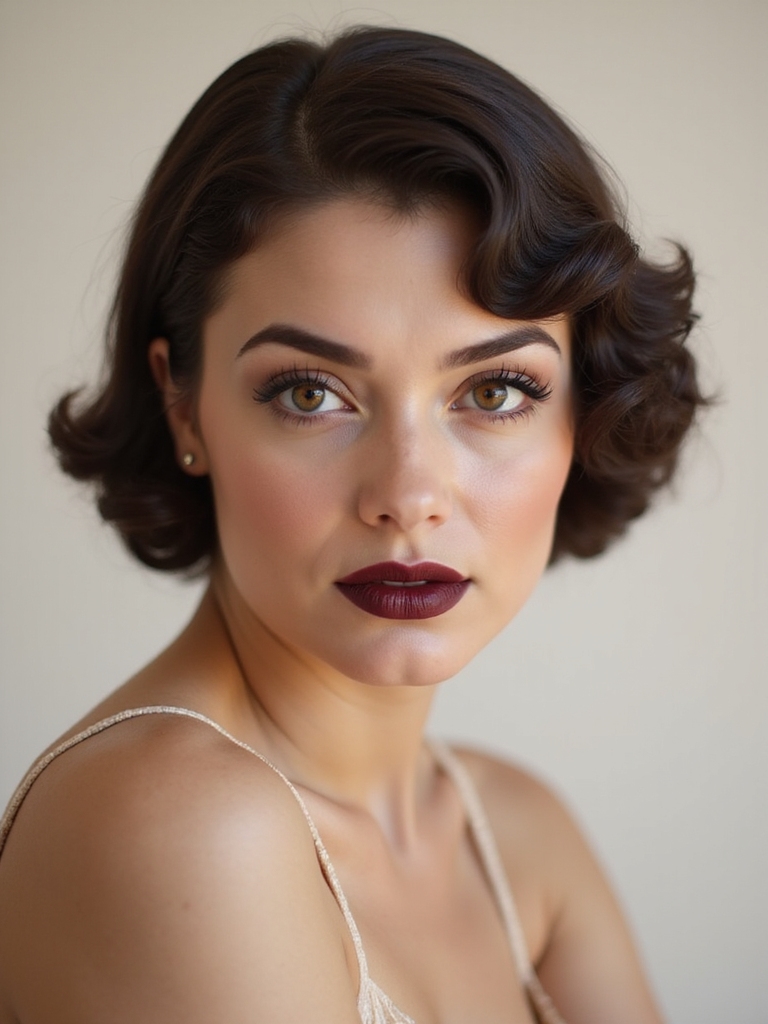
The 1920s brow was thin, long, and dropped down toward the temple in a gentle downward curve, often drawn well past where the natural brow ended. It framed the eyes for the camera and gave the face that wistful, slightly tragic silent-film quality.
How to Fake It Without Over-Plucking
You do not have to shave anything to fake it. Brush brows flat, conceal over the top edge to visually thin them, then draw a fine, low-arched tail with a sharp pencil. The faces I have made up for vintage shoots almost always need the tail extended and the front softened, leaving the rest of the brow alone.
This one is the riskiest to copy in daylight because an overly thin brow can age a modern face. Treat it as an evening or photo look you wipe off at the end of the night.
A Porcelain Matte, Cinematic Soft-Focus Base
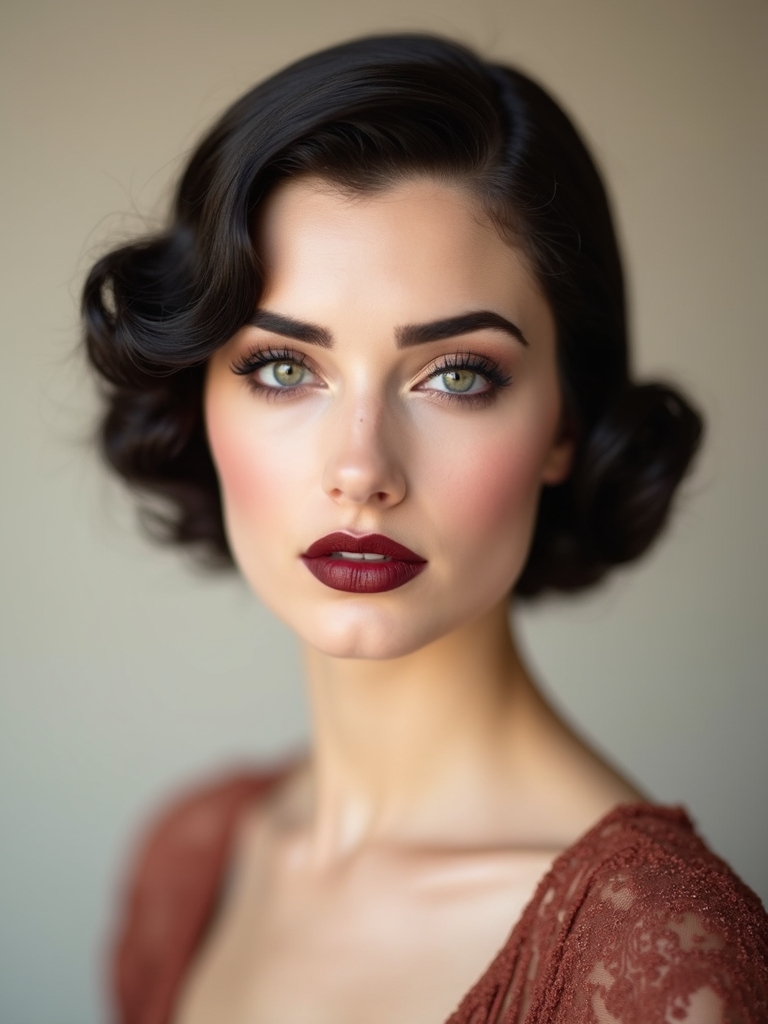
Underneath every flapper look is a flat, matte, powder-set complexion with almost no visible shine. Early film stock blew out highlights, so women powdered heavily to keep the skin smooth and even on camera, with every hint of shine pressed away.
Recreate it with a thin layer of medium-coverage foundation, then set generously with a loose translucent powder pressed in with a velour puff. The goal is a velvet, soft-focus finish that still looks like skin. On a winter shoot last year I watched a light hand with powder beat a heavy one every time; too much powder catches in fine lines and kills the softness you are after.
One correction worth making: porcelain does not mean ghostly. Match the base to your actual skin and simply mattify it. A deep, even, matte complexion is every bit as period-correct as a pale one.
Not sure how far to take the twenties brow? Match it to the occasion.
🎯Photo or themed event
Go full thin-and-dropped for an authentic silent-film frame.
🎯Modern evening out
Keep your natural shape but thin the front and soften the tail for a hint of the era.
Lifted Rosy Apples in a Feathered Bloom
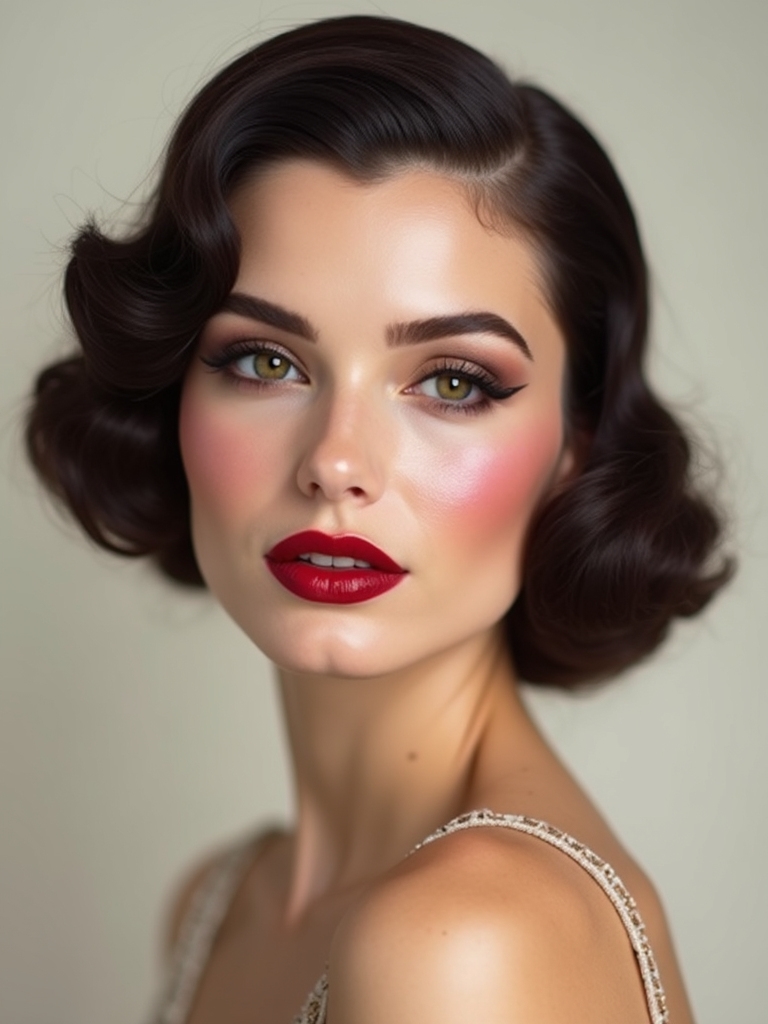
Twenties rouge sat high and round on the apples of the cheeks, blended into a soft, feathered bloom that sits high on the face. It gave a flushed, slightly doll-like warmth that feels young and a little theatrical.
Cream rouge is the authentic choice and the easiest to control. Smile, tap a rosy or warm-pink cream onto the roundest part of the cheek, then pat the edges out with your fingers until there is no defined border. A small pot of cream blush costs around $8 to $18 and doubles as a sheer lip tint.
Because the placement is high and round, it flatters most face shapes, but if you have very full cheeks you may prefer to drop the color a touch lower so it does not push your eyes down.
Ox-Blood Lacquered Dramatic Lips
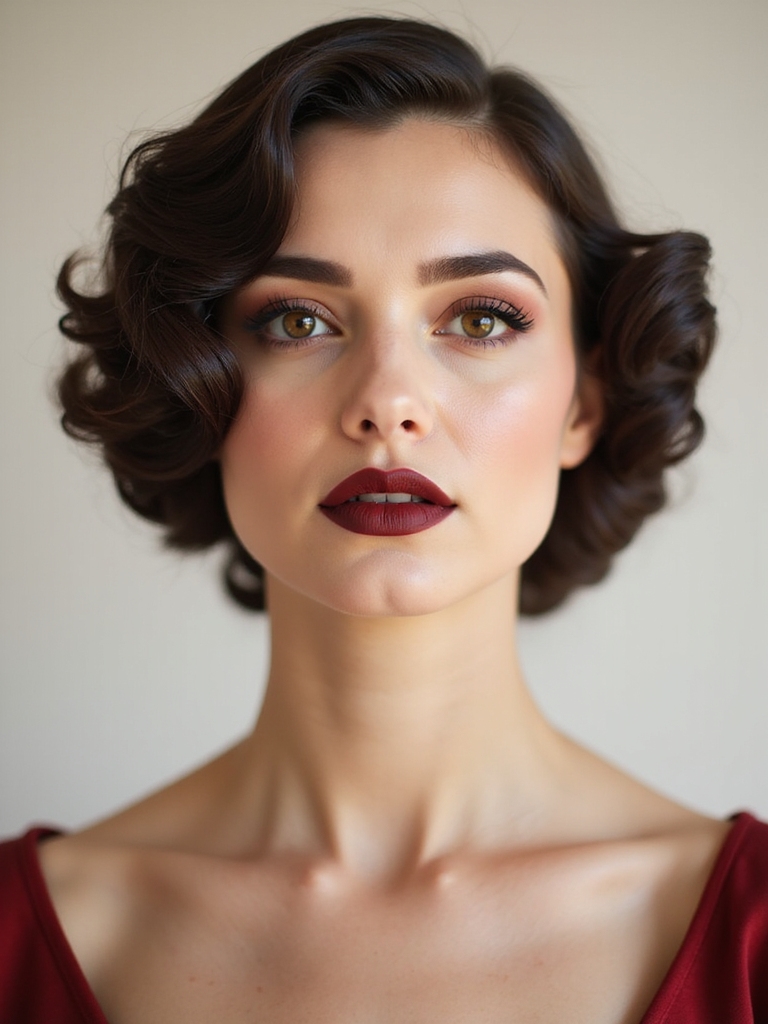
When scarlet feels too bright, the decade’s other signature lip steps in: a deep, brooding ox-blood that leans almost burgundy. It carries the same small, defined shape but trades jazz-club flash for something moodier and more grown-up.
- Line the full lip with a brick or wine pencil first so the dark color does not bleed past the edges.
- Press on a deep ox-blood cream, blot onto a tissue, then add a faint center dab of clear gloss for that lacquered, wet-looking shine.
- This shade is friendly to deep and olive skin in particular, where it turns rich and a little regal. For more in that family, see these moody dramatic looks.
💡Editor tip
Cream rouge sits highest and blends softest when you tap it on with a warm fingertip, then press, never rub, the edges outward. Cold hands drag the color; warm them first.
A Cool Metallic Smoky Eyewash
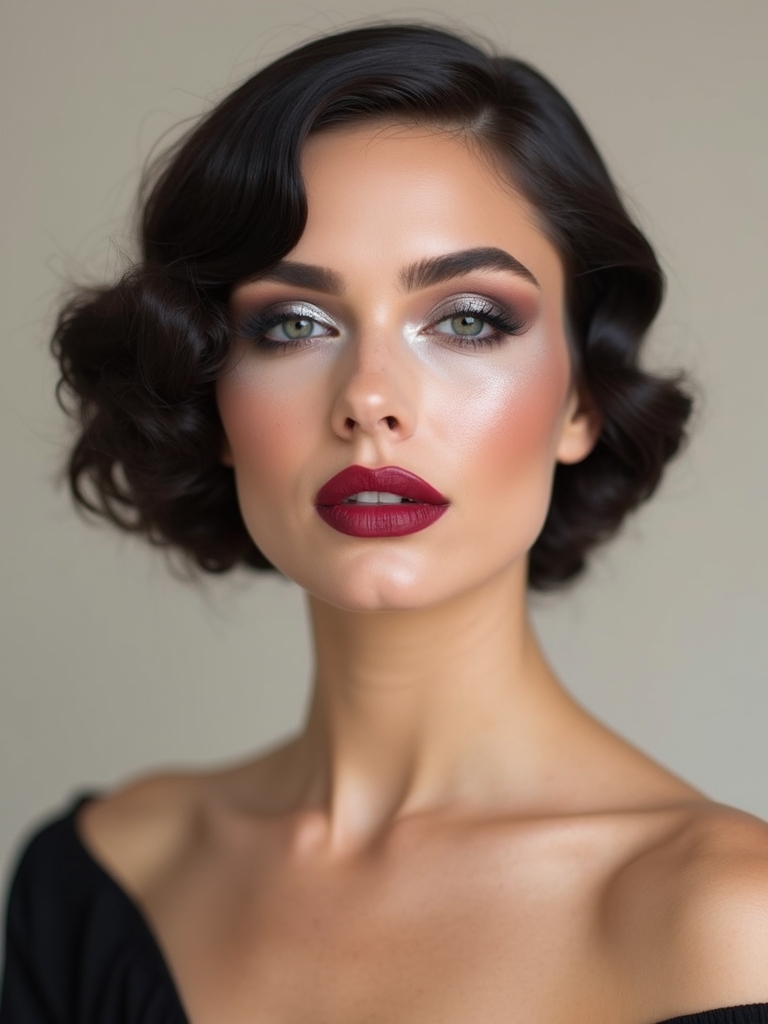
By the late twenties, silver-screen glamour pushed eyes toward a cool metallic wash: pewter, gunmetal, and silver smudged over the lid for a frosted, light-catching effect. It is the most overtly glamorous eye on this list and the most forgiving to wear.
The Easiest 1920s Eye to Wear Today
Pat a cream metallic base over the lid with a flat finger, then layer a loose silver or grey pigment on top so it catches light when you blink. Keep the lower lash line soft with the same shade smudged thin. Because there is no precise edge to get wrong, it is a good entry point if winged liner intimidates you.
Cool metallics flatter most eye colors, but they sing on brown and hazel eyes. On very warm or golden skin, nudge the metal toward a soft bronze-pewter so it stays cohesive.
The Sharply Contoured Bee-Stung Pout
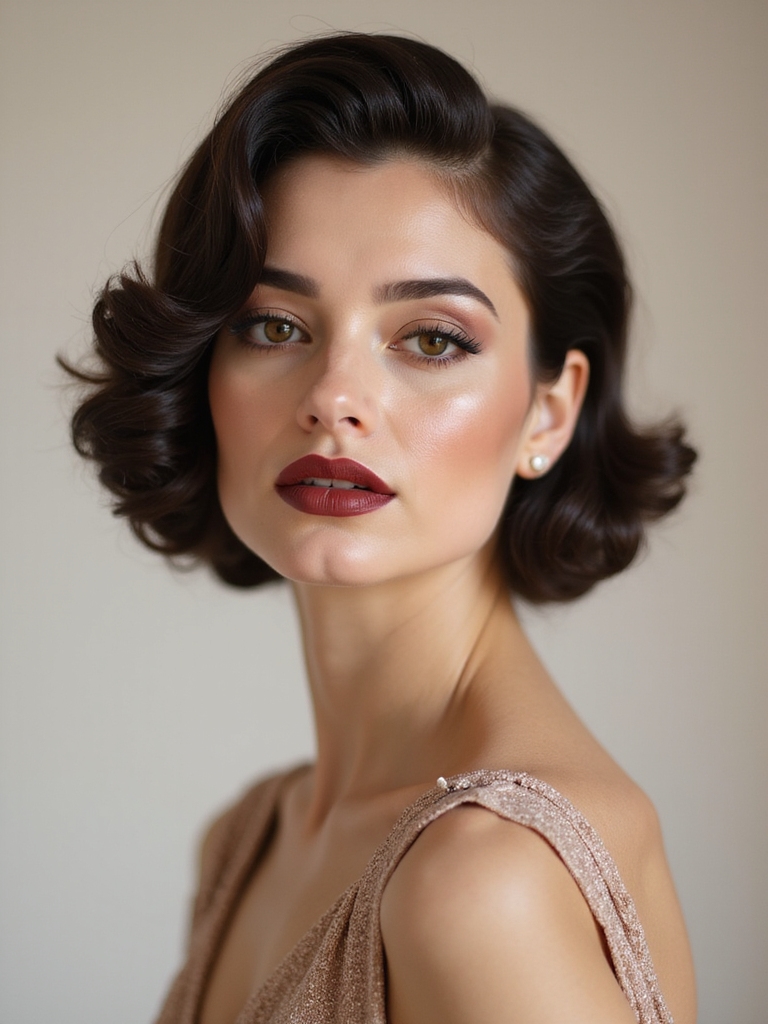
The bee-stung lip takes the small-mouth idea to its most graphic extreme. The color is concentrated in the center of the lips and pressed outward, leaving the corners barely touched, so the mouth looks pinched and pouty, as if it had just been kissed.
When to Reach for It
Dab a deep red or rose only on the inner two-thirds of the lip, then blot and blur the edge inward with a fingertip. Leave a faint gradient that fades toward the corners. It is fussy and it does not last through dinner, so I treat it as a photo look and keep a pencil on hand for touch-ups.
This shape works best on smaller or medium mouths. On a wide lip it can look like the color simply wore off the edges, so size the central blot to your own proportions.
A cool metallic wash is the kindest way into 1920s eyes. There is no sharp line to get wrong, so you can build the glamour slowly and stop whenever it looks right.
Sleek Pencil-Thin Arched Brows
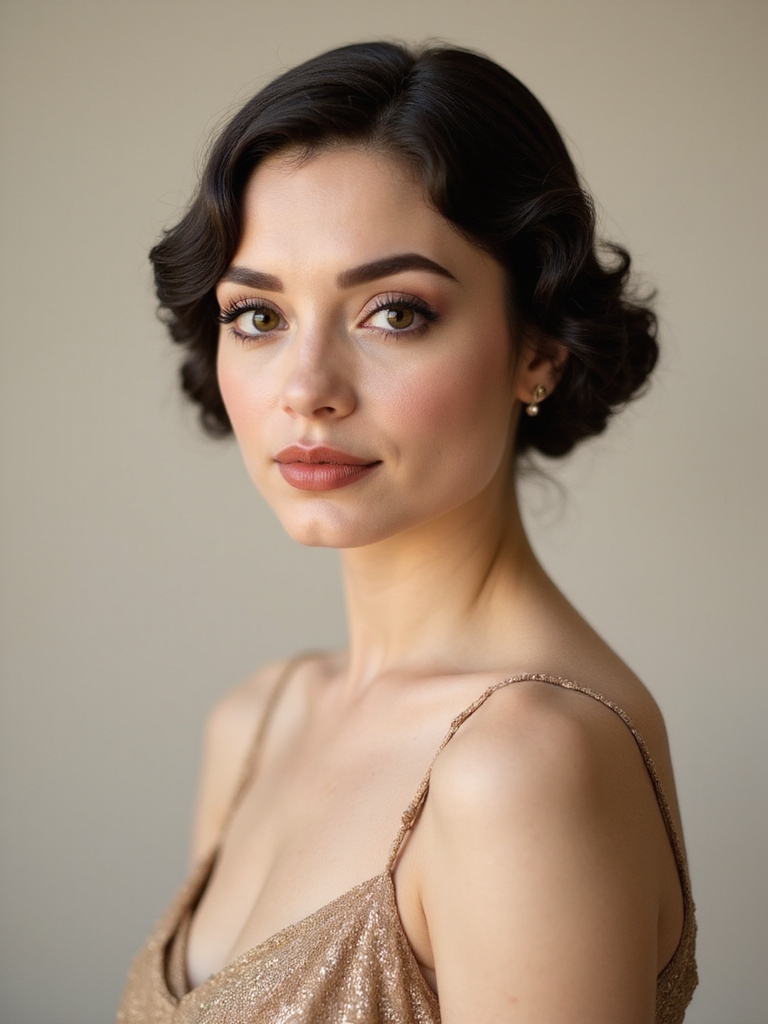
A close cousin to the dramatic brow, this version is cleaner and more controlled: a fine, sleek line with a slightly higher arch, the kind you see on polished studio portraits. It looks elegant and intentional.
The difference between this and the dropped, tragic brow is all in the arch height and finish. Here you want crisp definition and a neat tail.
- Map a higher arch point above the outer iris, then draw a thin, even line with light pressure.
- Set with a clear gel so the pencil-fine line stays put through a long evening.
- Keep the front soft and the tail sharp; a blunt front edge instantly looks drawn-on.
The Wet Cake Mascara Technique
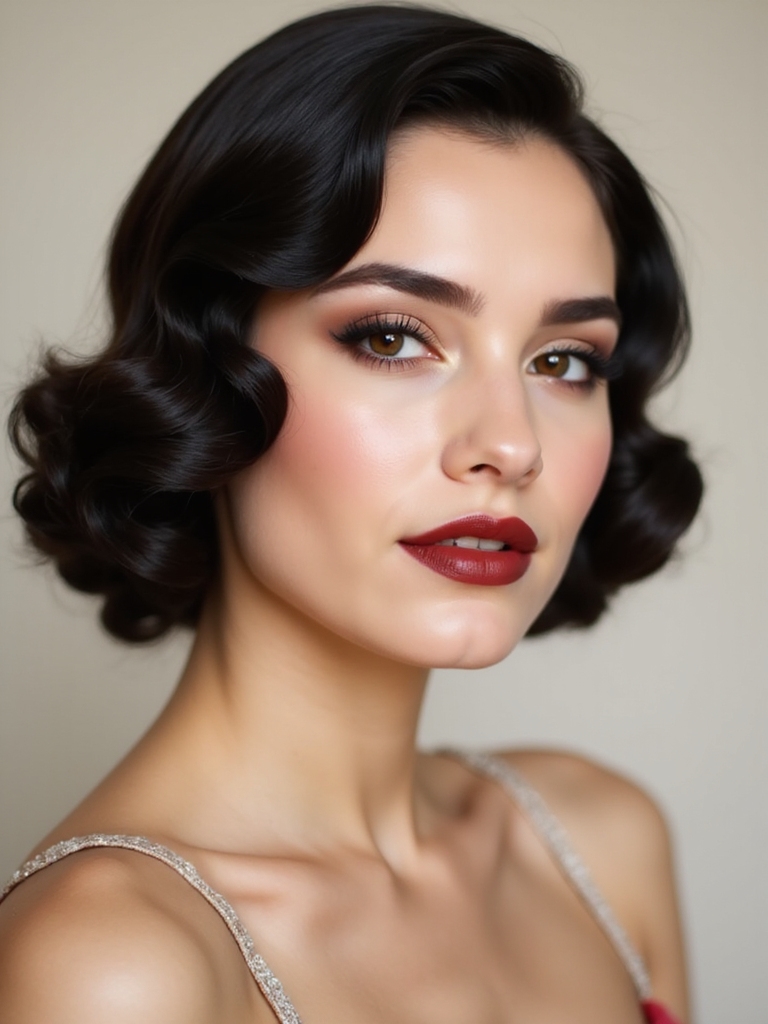
Before the tube mascara most of us own today, women wet a small brush against a pressed cake of pigment and combed it onto the lashes. The look it creates is spiky and a little clumpy on purpose, with lashes separated into distinct spikes that catch the light.
Modern Substitutes That Work
You can buy real cake mascara again for about $12 to $20, or fake the effect by letting a regular black mascara dry slightly between coats and pressing lashes into points with a clean spoolie. The clumping is the mistake I correct most for clients, except here it is the entire point, so lean into it.
Spiky lashes suit a strong eye and a small lip beautifully. Less works too. If you want the period mood with lighter drama, keep the smoke and skip the heaviest lash buildup.
A Velvet Matte Rice Powder Finish
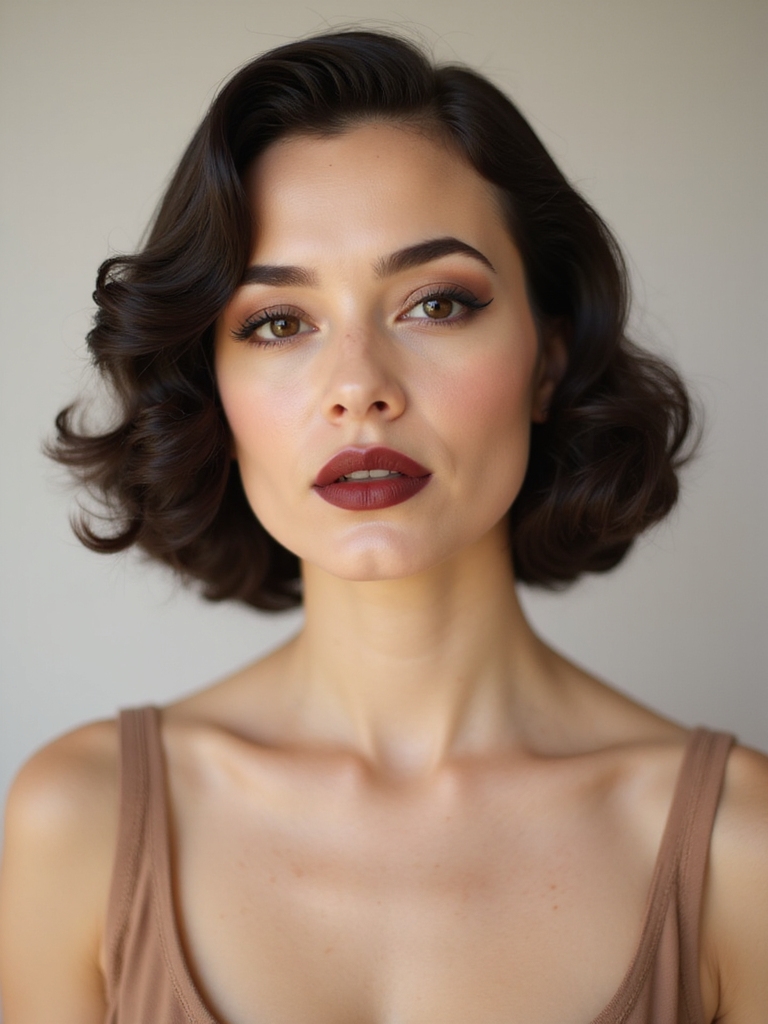
Rice powder was the period setting powder, prized for the airy, velvet matte it left behind. The finish is what makes everything else look authentically twenties: flat, soft, and slightly diffused, like skin seen through gauze.
Any finely milled translucent powder gets you there now. The application is what gets you there, far more than the brand on the jar.
- Press powder in with a puff, working it into the skin so the coverage stays even and the finish dense.
- Concentrate it through the center of the face where shine breaks first, and go lighter at the perimeter.
- Refresh with a quick re-press so the matte finish stays velvet all evening.
A Sheer, Freckle-Softening Natural Finish
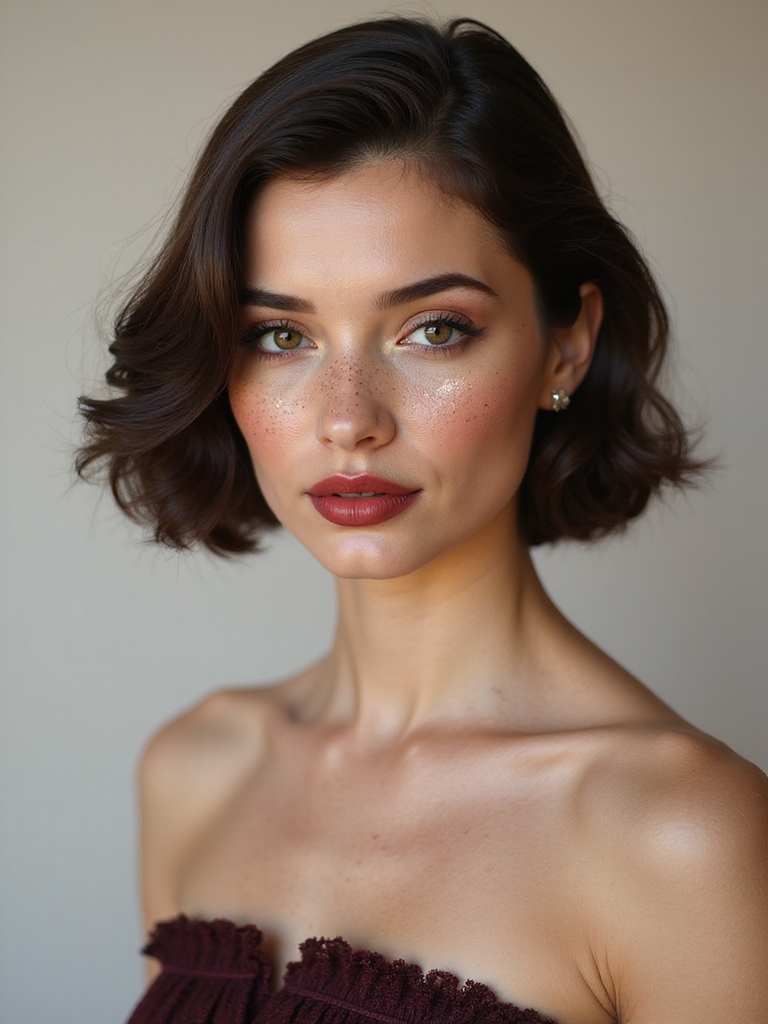
Not every twenties face was full glamour. A softer daytime version kept the era’s matte mood but used sheer coverage that evened the tone while still letting freckles show through. It is the most wearable look here for real life.
Use a tinted moisturizer or a sheer foundation pressed only where you want it, then set lightly so freckles stay visible as a soft veil under the color. Add a whisper of cream rouge and a muted rose lip and you have a face that nods to the decade without costume energy.
This is where the period style meets everyday wear. If you like that balance, this approach pairs naturally with softer everyday eye looks you already reach for.
Glossy Smoky Crease Glamour
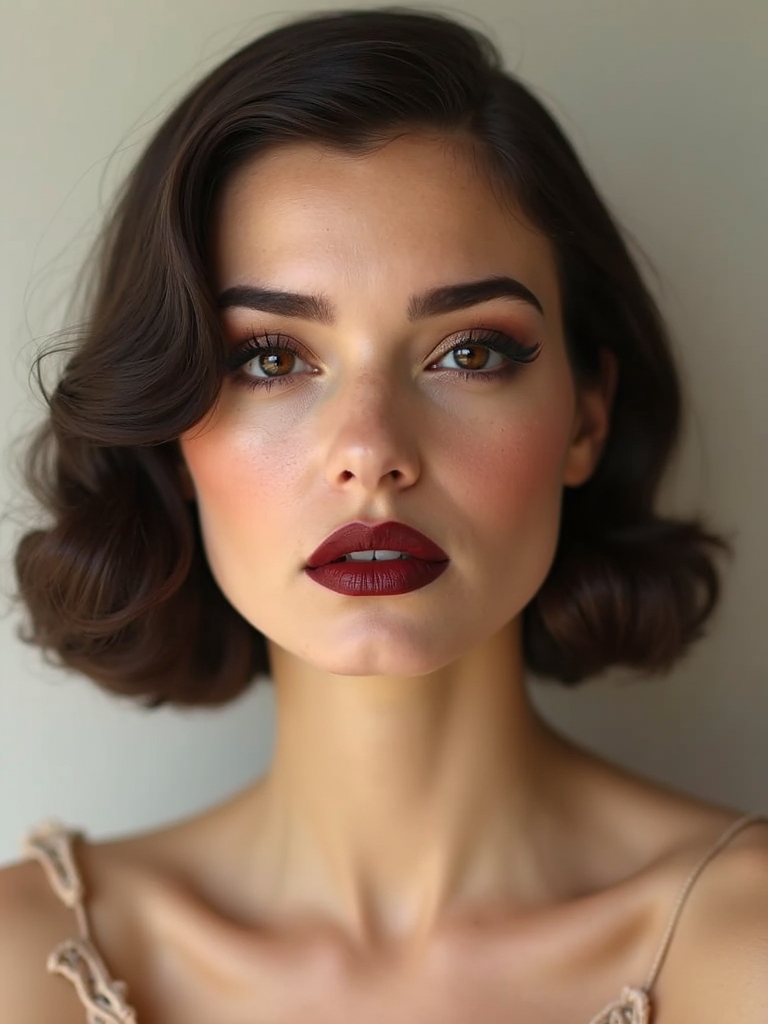
This look layers a hint of modern shine onto the classic smoked eye, concentrating gloss or a balm over a dark, smudged crease so the lid looks lacquered and reflective. It bridges true vintage and a current editorial feel.
Build your charcoal smoke first and let it set, then pat a tiny amount of clear lid gloss or balm only over the center of the lid. Keep it sparing, because gloss creases and travels; this is a sit-still, get-photographed look that wants a camera nearby. A clean fingertip gives you more control than any brush.
Glossy lids look best on smooth, less hooded eyes. If your lids crease easily, get the effect with a soft metallic instead and save yourself the touch-ups.
A Dreamy Soft-Focus 1920s Glow
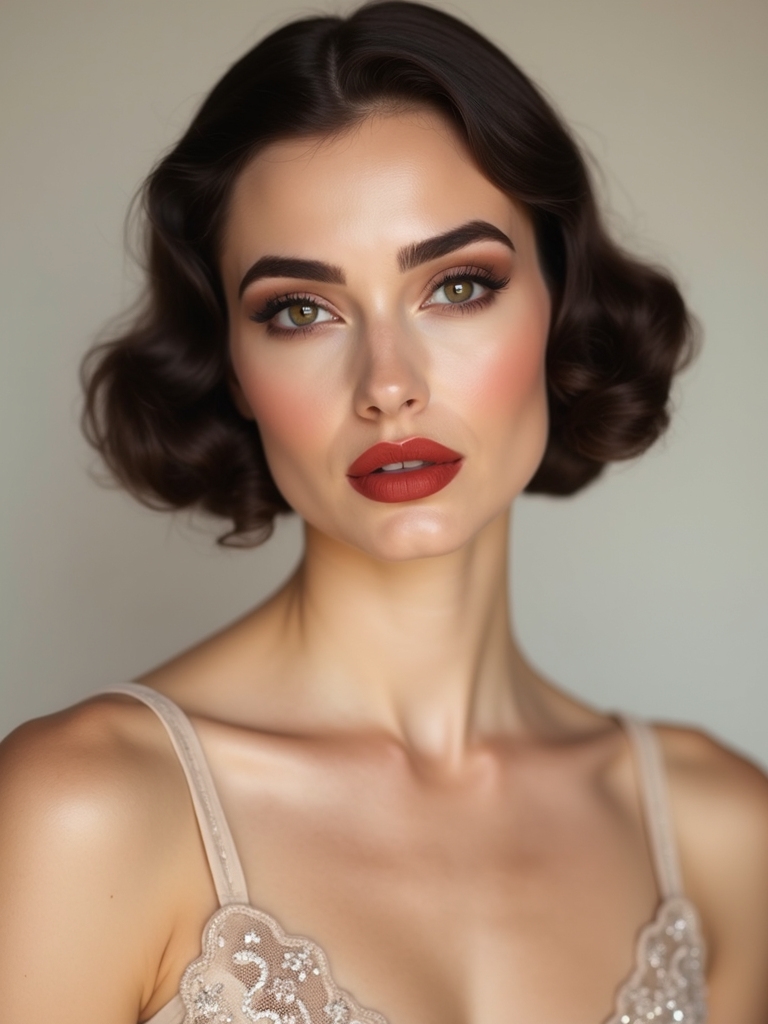
This is the romantic, hazy end of the spectrum: every edge softened, colors muted, the whole face diffused like an old portrait shot through a stocking over the lens. It is less about specific products and more about how you blur everything together.
- Keep colors low-contrast and quiet: dusty rose, hazy grey, a muted berry lip.
- Blend every edge twice. Nothing on a soft-focus face should have a visible starting point.
- Finish with the lightest dusting of powder for that gauzy haze. If you love this register, the same softness drives a lot of soft glam makeup.
Midnight Art Deco Glamour
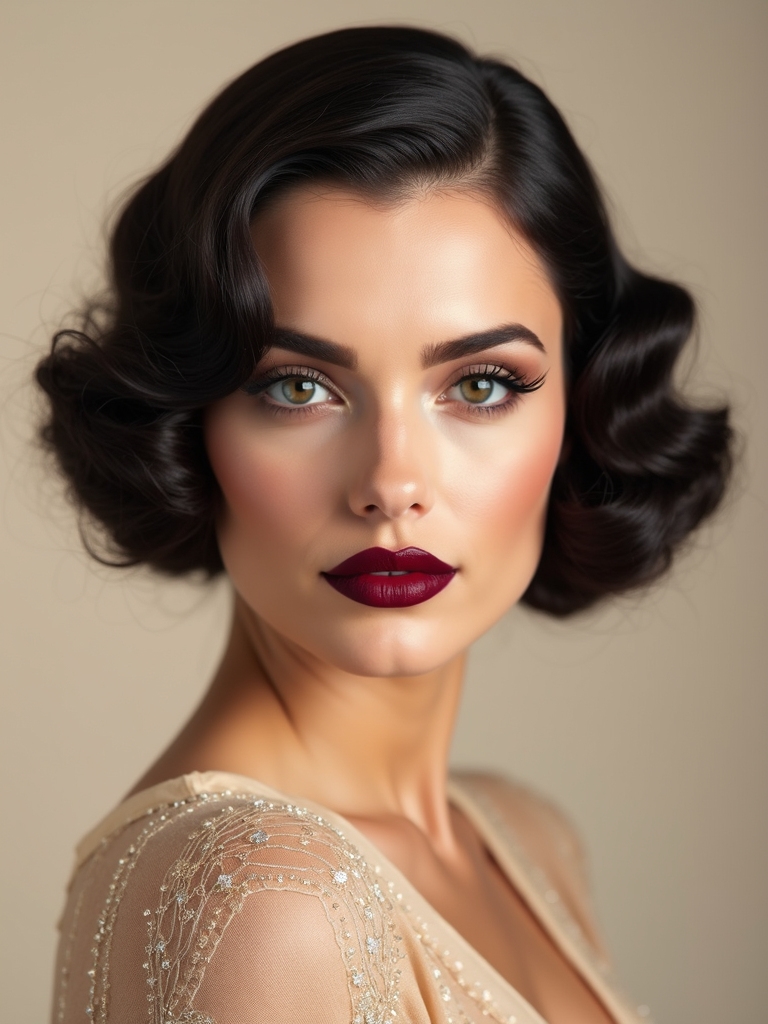
The full-volume evening look pulls every signature together: deep matte base, heavily smoked dark eyes, a touch of metallic, and a small dramatic lip in ox-blood or true red. This is the face for a black-tie party, and it is worth the thirty-odd minutes it takes.
- Layer the eye in stages, charcoal first, then a pewter or gold accent at the center, so it has real depth under low light.
- Lock the lip with a liner underneath and a blot-and-reapply finish so it survives a glass of champagne.
- Keep cheeks quiet here. With a strong eye and lip, a soft wash of rouge is plenty; for darker lip drama, borrow notes from goth-leaning looks.
Common Mistakes to Avoid
The most frequent slip I see is confusing pale with matte. People grab a foundation two shades too light to seem period-correct, when the real signature was always the flat, powdered finish. Match your actual skin, mattify it, and the look lands far better in photos.
When someone with deep skin worries the era will wash them out, my answer stays simple: hold onto your real depth, smoke the eyes hard, and let a deep red or ox-blood lip do the dramatic work. The flat finish is the era, the color is yours.
The other common error is treating these as daytime faces. Twenties makeup was engineered for candlelight and early film, so it can look heavy in flat sunlight. Save the smoked eye, thin brow, and small dark lip for evenings, photos, and themed events. For everyday, borrow one element, a soft scarlet lip or a hint of smoke, and leave the rest in the 1920s where it photographs best.
Questions About Wearing 1920s Makeup
?What are the three essentials of a 1920s makeup look?
A flat, matte complexion, heavily smoked dark eyes, and a small, sharply defined dark lip. Those three moves land as instantly period-correct, and everything else is a variation in color or intensity.
?How do I get the thin twenties brow without plucking?
Brush brows flat, conceal lightly over the top edge to visually slim them, then draw a fine, low tail with a sharp pencil. You fake the thinness with placement, so there is no need to remove any hair.
?Does 1920s makeup work on deep skin tones?
Yes, and it can look richer. Keep your true depth, mattify the base, smoke the eyes, and let a deep red or ox-blood lip carry the drama. A blue-based scarlet also lands beautifully on deep skin.
?Can I wear this style during the day?
It was designed for candlelight and early film, so the full face can look heavy in daylight. For daytime, borrow one element, a soft scarlet lip or a hint of smoke, and save the complete look for evenings and photos.
?What is cake mascara and do I need it?
It is a pressed pigment you apply with a wet brush, which gives the spiky, separated lashes of the era. You can buy it again for around $12 to $20, or fake the effect by pressing nearly dry regular mascara into points with a clean spoolie.
Borrow the Drama, Wear It Your Way
What makes 1920s makeup endure is how little it actually needs: a matte face, smoked eyes, and a small dark lip do almost all the work, and most of it costs less than a single department-store foundation. The technique matters more than the products, which is good news for anyone willing to practice with a fingertip and a patient hand.
Pick the one look that pulls at you, whether that is the scarlet Cupid’s bow or the cool metallic eye, and try just that this week before building toward a full Art Deco face. The decade rewards experimenting in front of a mirror far more than spending, so start small and let the glamour grow from there.
More Looks We Love


