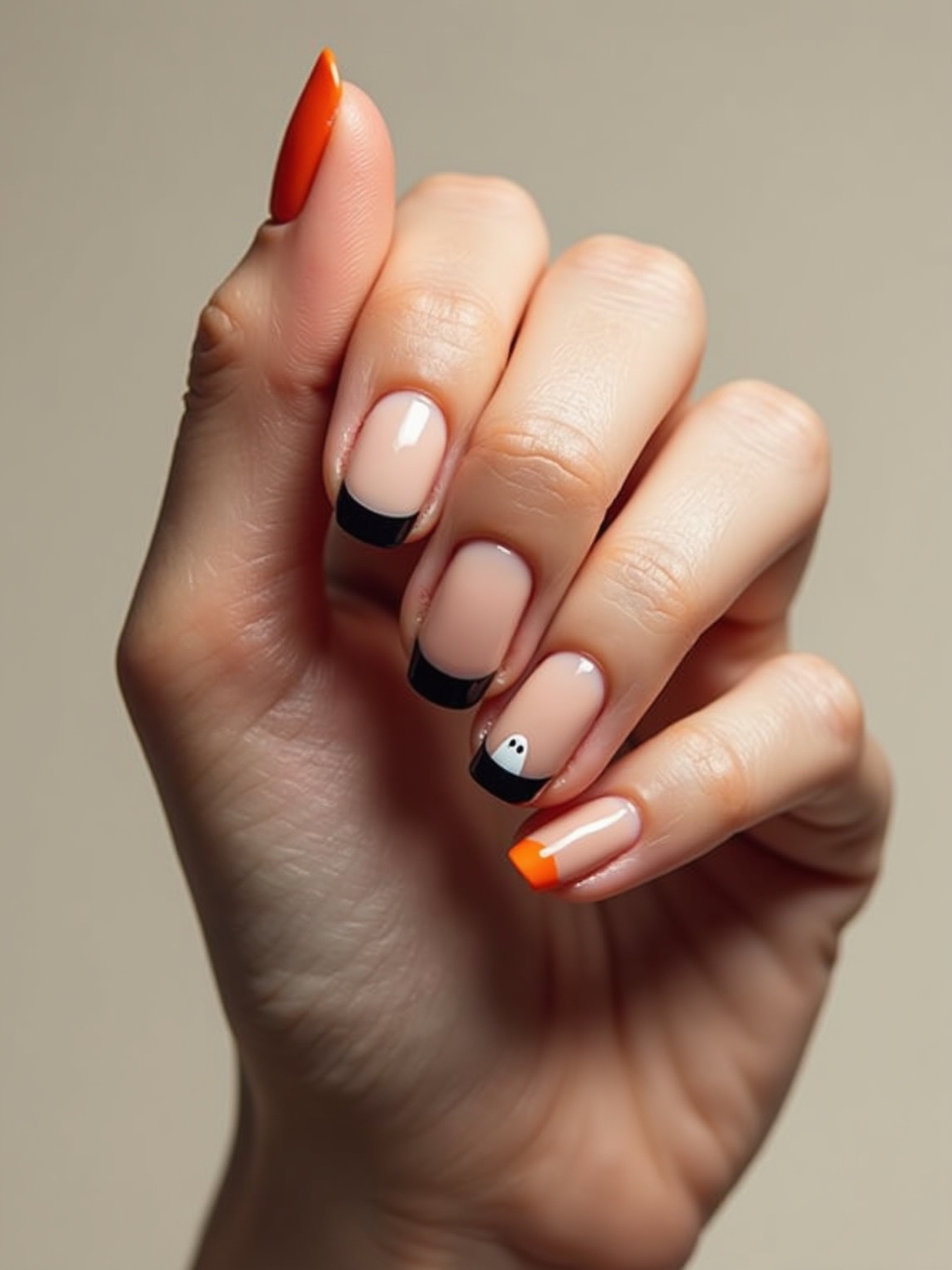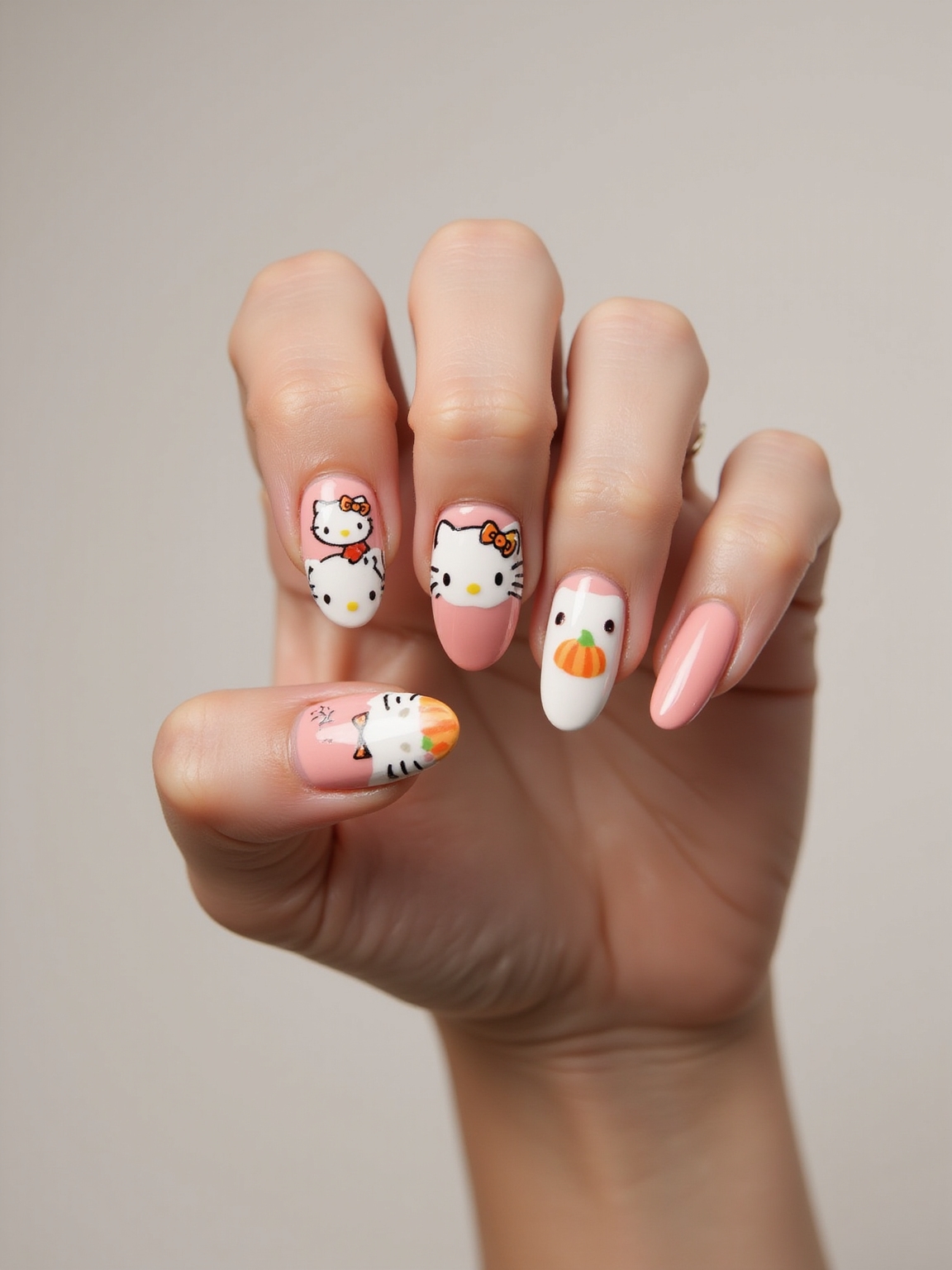

Abstract nails are the one design trend where there is no wrong answer, and that is the whole appeal. A swirl that does not quite line up, a color block that floats off-center, a single squiggle across a bare nail: the charm is in the looseness, the sense that a hand drew this rather than a stencil. It is wearable art for people who find a classic French a little too tidy.
Here are twelve abstract nail designs worth saving, from soft pastel swirls and negative-space blocks to chrome jelly and watercolor blooms. For each I will tell you how it is actually done, whether you can manage it at home or want a tech, and who it tends to suit, so you can pick the one that fits your hands and your patience.
Abstract Nails, Quick Answers
What counts as an abstract nail design? Anything freeform and non-repeating: swirls, squiggles, off-center shapes, color blocks, and brushstrokes that read as art instead of a neat, symmetrical pattern. The hand-drawn looseness is the whole signature.
Can I do abstract nails at home? Some, yes. Simple swirls, dots, and negative-space shapes are beginner-friendly with a thin brush and a steady hand. Fine linework, chrome, and watercolor blends are easier to leave to a tech.
What do they cost and how long do they last? A freehand abstract set runs roughly forty to eighty dollars depending on detail, takes a little extra chair time, and lasts two to three weeks over gel before a fill.
Soft Pastel Swirls

Soft pastel swirls are the gateway into abstract nails, gentle ribbons of muted lilac, butter, and sky drifting across a sheer base. They read dreamy, not bold, which makes them the easiest abstract look to wear to work or anywhere a louder design would feel like too much.
The swirls are dragged with a thin brush while the colors are still wet so they blur into one another, soft-edged instead of sharp. Because the palette is so quiet, this is among the most forgiving designs to attempt yourself. It is the gentlest place to start for anyone nervous about trying nail art at all.
- Drop two or three pastel creams onto a sheer base, then drag a thin brush through to swirl.
- Keep the colors low-contrast so any wobble in the line disappears.
- Seal with a glossy top coat so the swirls look glassy and intentional.
Negative-Space Color Blocks

Negative-space color blocks lean on what you leave bare as much as what you paint, setting a few solid blocks of color against clear, untouched nail. The result is graphic, modern, and architectural, and it flatters short nails as much as long ones.
- Plan where the bare nail will sit first; the empty space is the design, not a gap.
- Tape off clean edges or use a steady freehand line for each block of color.
- Because regrowth blends into the bare areas, this is one of the lower-upkeep abstract looks. Our minimalist nails guide has more in this vein.
“The thing I tell clients at the desk is that abstract is the one style where you should hand over a little control. People bring a photo and want it matched exactly, but the magic of abstract is that it is freehand, so yours will never be a perfect copy, and that is the point. Give your tech a palette, a vibe, and one or two must-haves, then let their hand do the rest. The looser sets are always the ones people stop to ask about.”
Inky Black-and-White Squiggles

There is something quietly cool about a single inky squiggle wandering across a bare or milky-white nail. It is the most minimalist abstract design here, all the impact of nail art with almost none of the commitment, and it suits people who want their hands to look considered, not decorated.
One Confident Line
The line is everything, so it wants a fine brush or a striping tool and one confident stroke instead of a careful, scratchy one. Black on white is the classic, but a single dark line on a nude works just as well.
Keep it to one squiggle per nail and vary the placement across fingers so the set reads hand-drawn, not stamped.
Off-Center Crescent French Tips

This is the abstract answer to the French manicure: instead of a tidy tip following the smile line, the crescent is knocked off-center, slanted, or doubled, so the classic suddenly feels like art. It keeps the elegance of a French while breaking the rule that makes it feel safe.
- Paint the crescent off to one side or on a diagonal rather than along the natural tip.
- Try two thin crescents in different colors for a layered, modern twist.
- It rewards a clean line, so steady the brush hand against the table. See our French-tip nails guide for the classic first.
| Design | DIY or salon | Why |
|---|---|---|
| Swirls, dots, squiggles, color blocks | DIY-friendly | Forgiving lines; wobble blends in |
| Off-center French, foil, checkerboard | Either | Doable at home with patience |
| Watercolor, fine linework, chrome | Salon | Needs technique and special product |
Sheer Jelly With Chrome Shimmer

Sheer jelly nails you can almost see through, brushed with a veil of chrome shimmer, are the dreamiest abstract finish, more a play of translucency and light than a drawn design. The abstract part is the way the chrome is placed unevenly, pooling at the tip or drifting across one corner.
It is a salon finish, since the chrome powder is buffed over gel and sealed, and it is the abstract look clients ask me for most by far. The shimmer shifts with the light and reads cool on fair hands and warmer, rosier on deep skin, so the same set looks subtly different on everyone. Built over a gel base, it stays glassy for the long haul.
Earthy Organic Asymmetry

Earthy abstract leans into terracotta, olive, sand, and clay arranged in organic, asymmetrical shapes that look like something out of a modern ceramics studio. It is grounded and grown-up, the grown-up choice for someone who finds bright art-nails a bit much.
- Pull from a muted, earthy palette so the shapes feel cohesive even when they are random.
- Let the forms be uneven and rounded, like pebbles, rather than sharp and geometric.
- A matte top coat pushes the whole set further toward that organic, stone-like feel.
The biggest misread about abstract nails:
❌ Myth: Abstract nails mean anything goes, so they always look messy.
✅ Reality: The opposite, actually. The best abstract work is deliberate about restraint: where the negative space sits, how few colors are used, and which one element is the focus. Loose lines are intentional; a crowded, every-nail-different set is what reads sloppy. Editing is the real skill.
Dotted Celestial Linework

Fine dots connected by delicate lines give an abstract, celestial feel, like a loose constellation traced across the nail. It is dainty and a little romantic, and it works beautifully on shorter nails where bigger designs would crowd.
This one tests a steady hand more than most, since the charm depends on the dots staying tiny and the lines staying thin. It is a lovely look to ask a tech for if your own linework is still shaky.
- Use a dotting tool for even dots and a striping brush for the connecting lines.
- Scatter the dots unevenly so it reads like stars, not a grid.
- A touch of fine gold for the dots makes the whole thing feel expensive.
Metallic Foil on Negative Space

Torn scraps of metallic foil pressed onto bare or sheer nails are pure abstract luxury, catching the light in jagged, irregular shards of gold, silver, or copper. The negative space around them is what keeps the metal from reading gaudy.
- Press small, torn pieces of foil onto a tacky top coat, leaving plenty of bare nail around them.
- Cluster the foil toward the base or one edge rather than coating the whole nail.
- Seal carefully so no foil edge lifts and catches; a thick top coat is your friend here.
Watercolor Blooms on Neutrals

Watercolor nails blur soft, translucent color into a neutral base so it looks painted with a wet brush, with abstract blooms of rose, peach, or blue bleeding gently into one another. It reads like a tiny canvas, the most hand-painted design in the set.
Let the Color Bleed
The effect comes from thinning gel or polish so the colors stay sheer and run into each other, then sealing while they are still soft-edged. It is a real technique, so this is one I would book a tech for unless you have painted watercolor before.
Kept over a milky or nude base, the blooms stay wearable rather than costume, which is what makes this one quietly special.
Checkerboard With a Glossy Swirl

The checkerboard had its moment, and the abstract update keeps the retro grid on an accent nail while letting a loose, glossy swirl take over the rest. The tension between the strict grid and the freeform swirl is what makes it feel current rather than dated.
Paint the checker on one or two nails with tape or a steady brush, then go loose and organic on the others so the set has rhythm. Mixing a structured pattern with a freeform one is a reliable way to make any abstract set look intentional.
Keep the palette tight, two or three colors at most, so the contrast of order and chaos stays the star.
Frosted Base With Crescents

A frosted, semi-sheer base scattered with soft crescent shapes is the cozy, wintry corner of abstract nails, all muted shimmer and gentle curves. It feels like frost on a window, which is its charm in the colder months.
The frosted finish comes from a sheer shimmer base, and the crescents are painted softly on top in a slightly deeper or pearlier tone so they whisper instead of shout. Placement is the abstract part, with the crescents drifting off-center and varying across the nails.
It is subtle enough for the office but still clearly a design, which makes it a quiet favorite for anyone easing into nail art.
Velvet Matte Meets High Gloss

Some of the best abstract designs use no color contrast at all, just finish. A velvety matte played against high-gloss panels in the same shade creates an abstract design through texture alone, visible only as the light moves across your hand.
You paint the whole nail one color, then add the design in a glossy top coat over a matte base, or the reverse, so the pattern appears purely as shine against velvet. It is subtle, tonal, and the most sophisticated of the bunch.
Because there is no color to clash, it goes with everything and never reads loud, which is why it wins over understated clients at the desk.
Who Abstract Nails Suit Best
Abstract nails reward a particular kind of person more than a particular nail shape. If you like the idea of your hands being a little expressive, if a perfectly matched set feels boring to you, or if you are drawn to art and design, this is your lane. The looseness that frustrates a perfectionist is the whole appeal for everyone else.
Length and shape are flexible: longer nails give freehand designs more canvas, but negative space, dots, and single squiggles look just as good on short, natural nails. The one honest caveat is that the busiest freehand work runs about forty to eighty dollars and can add twenty to thirty minutes to your appointment, so bring a clear reference photo and a little patience.
- Best for the expressive, the art-leaning, and anyone bored of a matchy set.
- Short nails do negative space, dots, and squiggles beautifully; save dense art for length.
- Decide your two or three must-have elements, then let your tech improvise the rest.
Abstract Nail Questions, Answered
?Are abstract nails harder to do than regular nail art?
Not necessarily. Some abstract designs, like single squiggles, dots, and negative-space blocks, are genuinely easier than precise, repeating patterns because small imperfections blend into the loose style. The harder ones are watercolor, fine linework, and chrome, which need real technique and are worth booking a tech for.
?What nail length works best for abstract designs?
Almost any. Longer nails give detailed freehand art more room, but short and natural nails look great with negative space, dots, single lines, and color blocks. If your nails are short, lean into minimalist abstract designs rather than dense, busy ones, and the look stays clean.
?How do I keep an abstract design looking intentional and not messy?
Restraint. Limit yourself to two or three colors, leave plenty of negative space, and let one element be the focus rather than filling every nail. Loose lines are fine and even the point, but a tight palette and clear breathing room are what separate artful from chaotic.
Where Abstract Nails Go Next
What keeps abstract nails fresh is that they refuse to settle into a single formula; the moment one shape feels expected, the trend drifts to looser swirls, quieter palettes, or texture instead of color. They are less a look to copy than a license to play, which is exactly why they keep evolving season after season.
So save the two or three that caught your eye, think about whether you want to try them yourself or hand the brush to a tech, and start with the simplest one. Save the two that pull at you, and let the rest just be fun to scroll past.
Browse More Looks