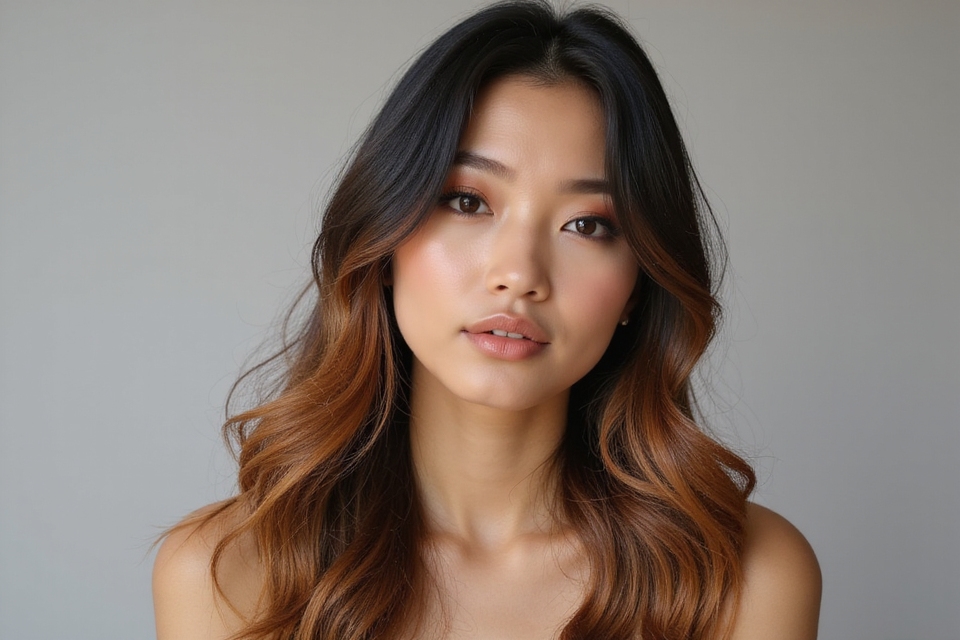

There is a particular moment at the mirror when a fresh fringe falls into place and your whole face seems to wake up. Long hair has obvious appeal, but on its own it can read a little one-note, all length and no frame. A fringe is what closes that gap, drawing the eye straight to your features and turning plain length into something with real shape.
So much of it is matching the type of fringe to your face, your texture, and how much upkeep you honestly want. Here are eleven long hairstyles with bangs worth trying, plus an honest guide to which suits which face and what each one will ask of you. For more length ideas underneath, our long hairstyles guide pairs with any of these.
Bangs on Long Hair, the Quick Version
- Bangs are the fastest way to refresh long hair without losing your length, but they are a real commitment most days.
- Soft, grown-out shapes like curtain and side-swept bangs flatter nearly everyone and forgive a grow-out; blunt and full fringes make a bolder statement and ask for more.
- Budget a shaping trim every two to three weeks, often free between cuts at your salon or ten to twenty dollars on its own, plus about five minutes of styling most mornings.
Curtain Bangs With Beachy Layers
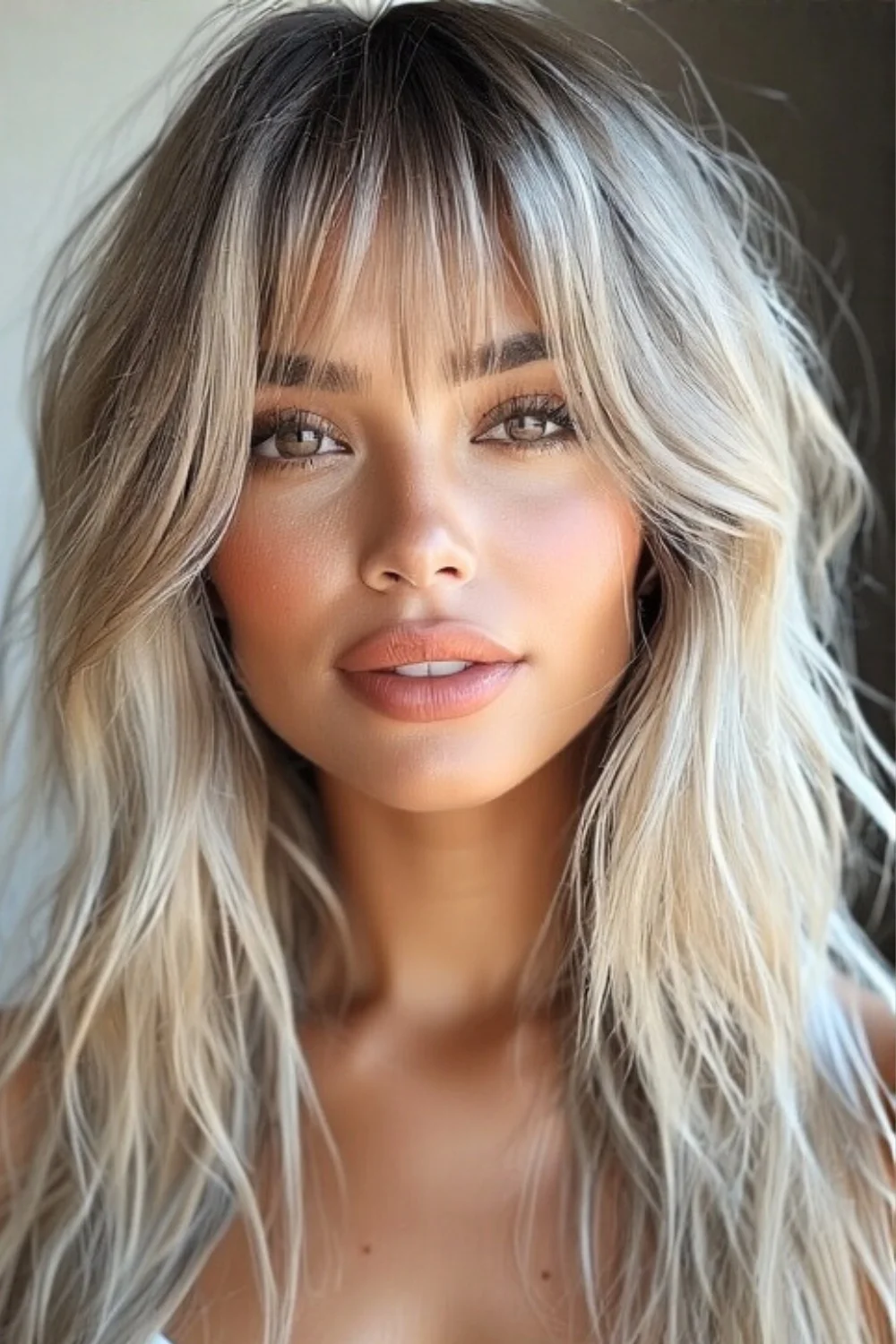
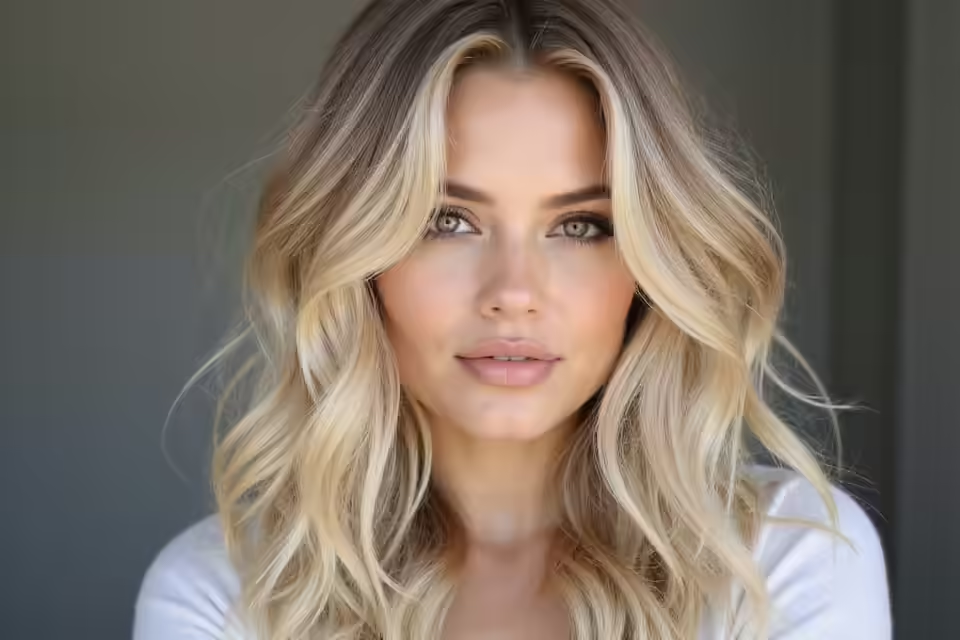
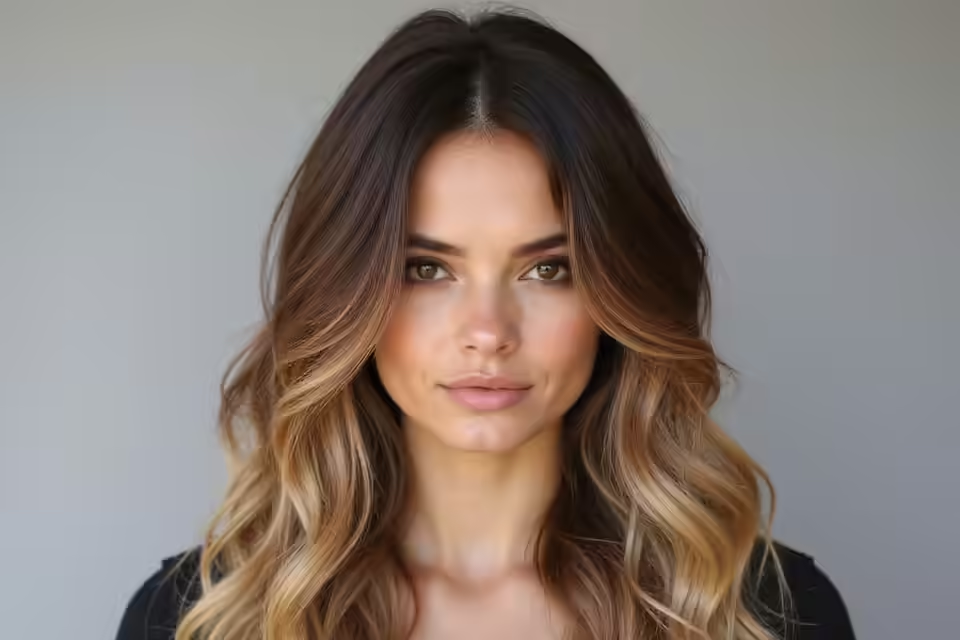
Of every fringe I cut, curtain bangs are the one almost no client regrets. They part softly down the middle and sweep out to frame the face like open curtains, and worn over long, beachy layers they look grown-in and undone in the best way.
Why They Rarely Disappoint
They flatter nearly every face shape and grow out gracefully, melting into your layers instead of leaving an awkward stage. Dry them with a round brush, down and away from the center, and a mist of texture spray keeps the whole thing soft.
The one catch is a strong cowlick, which can split a center part oddly. If that is you, part slightly off-center and train the bangs with a few minutes under a clip while they cool.
Side-Swept Bangs With Loose Layers

If a blunt fringe feels like too much commitment, side-swept bangs are the gentlest way in. They cross the forehead at an angle and melt into long, loose layers, creating a soft diagonal that softens and slims the face with no hard edge to commit to.
- Ask for them cut longer than a straight fringe so they reach toward the cheekbone.
- Dry them across your forehead with a brush so they lie flat instead of flicking up.
- On a lazy second day, push them straight back into the layers and no one will know.
Trimming your own fringe between salon cuts:
1Always cut dry
Trim on dry hair only. Wet hair springs up shorter as it dries, so what looks right wet ends up too short.
2Twist and snip
Take a small section, twist it loosely, and snip into the twist for soft, piecey ends instead of a hard line.
3Point up, not across
Point the scissors up into the bangs rather than cutting straight across, which keeps the edge soft and forgiving.
4Take less than you think
Cut conservatively. You can always remove a little more, but you cannot put length back, and bangs grow slowly.
Wispy Feathered Bangs

Some fringes barely register as a commitment, and wispy, feathered bangs are the lightest of all, thinned out so the skin shows through rather than a solid wall of hair. They give you a fringe’s framing without the weight or the commitment, which makes them the easiest first fringe to commit to. Our wispy bangs guide goes deeper on the cut.
- Ask for a texturized, lightly thinned cut so the ends feather softly.
- Dry them with your fingers, not a brush, to keep them piecey and separated.
- Tap a little light cream or oil on the ends if they frizz, never the roots.
- Trim them often; wispy bangs lose their shape faster than blunt ones.
Blunt Bangs With Sleek Lengths

Where most fringes on this list whisper, blunt bangs shout. A clean, straight-across line over sleek long hair is the boldest, most polished fringe of all, modern and deliberate and impossible to ignore.
It is also the highest-maintenance option here, the one I make sure clients understand before I pick up the scissors. A blunt fringe shows every frizz and kink, so it rewards sleek hair, a patient morning, and a shaping trim every two weeks at roughly ten to twenty dollars a visit.
- Blow-dry them flat with a round brush and a heat protectant daily.
- Book a trim every two weeks to hold that crisp horizontal line.
- Skip them if your hair is very curly or you live somewhere humid; the line will not hold.
A few fringe terms to take to your stylist:
📖Curtain bangs
A center-parted fringe that sweeps out to either side, framing the face like open curtains.
📖Point-cutting
Snipping up into the ends rather than straight across, for a soft, feathered finish instead of a blunt line.
📖Face-framing pieces
Longer layers around the front that blend a fringe into the rest of the hair.
Long Shag With Choppy Bangs

For anyone who wants a fringe but dreads the upkeep, a long shag with choppy bangs is the answer. The heavily layered cut and the rough, piecey fringe work together, so the bangs look intentional even halfway grown out.
That forgiveness is the whole appeal. The shag absorbs an awkward stage better than any other cut, which makes it one of the lowest-stress fringes you can wear.
- Ask for choppy, point-cut bangs to match the shag’s feathered layers.
- Scrunch a texture or salt spray through dry hair to bring out the movement.
- Let them grow freely; this cut is built to look good in between.
Piecey Bangs With Soft Waves

When you want a fringe that looks slept-in on purpose, you ask for piecey bangs. Instead of a solid wall, the hair falls in deliberate separated pieces that show a little forehead between them, relaxed and current without trying too hard. They pair best with loose, lived-in waves, since matching texture top and bottom keeps the whole thing cohesive.
- Wave the lengths with a wide wand for a soft, easy texture.
- Separate the fringe with a touch of matte paste, not gel, to avoid stiffness.
- Leave them long enough to graze the brows so they stay wearable.
A Real Commitment
Before you book a blunt fringe, picture your actual mornings. It wants near-daily blow-drying to stay sleek, and it fights humidity and natural curl harder than any other shape on this list. If your routine is rushed or your hair is very textured, a wispy or curtain fringe will forgive you on the days you have no time, and you will reach for it far more often.
Curly Bangs With Natural Volume

Clients with curls and coils ask me constantly whether they can pull off bangs, and the answer is a firm yes. Worn over long curls, a curly fringe celebrates your natural pattern instead of asking you to fight it flat every morning, and it is having a real moment.
The cut is everything here. Curly bangs should always be cut dry, so your stylist can see exactly where each curl lands once it springs up, because curly and coily hair shrinks as it dries. Cut wet, a fringe ends up far shorter than anyone planned.
Refresh them with a little leave-in and a scrunch rather than a brush, and diffuse on low or air-dry to keep definition high. Looser curls can go shorter, while tighter coils suit a slightly longer fringe for control. Our curly bangs guide covers the cut in full.
Layered Bangs With Face-Framing Pieces

Some fringes announce themselves; layered bangs simply blend in. They flow smoothly into longer face-framing pieces, blurring the line between fringe and layers so the whole thing reads as one soft, continuous frame.
A Frame, Not a Fringe
That makes them both flattering and genuinely easy to live with, since nothing sits in isolation waiting to grow out awkwardly. Style everything in one direction with a round brush for a smooth, blended sweep.
This is the least fussy fringe to live with day to day, which is why I suggest it to anyone who loves the idea of a fringe but hates the maintenance trap.
Grown-Out Bangs With Subtle Layers

What do you do with a fringe you are bored of but not ready to lose entirely? You grow it out on purpose. That length where an old fringe now grazes the cheekbones and blends into subtle long layers is not an awkward phase; it is among the most wearable, modern looks around.
- Have a stylist blend the growing fringe into face-framing layers so there is no hard line.
- Until then, a center or deep side part sweeps the length cleanly into the rest of your hair.
- It suits everyone and asks almost nothing of you, which makes it the lowest-risk way to test a fringe before you fully commit.
Deep Side Part With a Long Sweeping Fringe

A deep side part sends a long fringe sweeping across the forehead for a sophisticated, slightly dramatic line. It is glamorous and grown-up, and it adds instant volume right at the root where the hair changes direction.
Make the Sweep Last
Create the part on damp hair and dry the fringe across the forehead, training it to fall away from the part. A little lift at the root keeps the sweep from going flat by midday.
It works on most faces, especially rounder ones, since the diagonal adds length. The trade-off: a strong natural part can fight a deep one, so it may need a pin or a touch of product to stay put.
Full Rounded Retro Bangs

Full, rounded bangs over tousled long hair are the romantic, sixties-leaning end of the fringe spectrum, fuller through the center and curving back at the sides into the lengths. It is a soft retro frame that feels surprisingly fresh again on long hair, and it is the one clients bring me the most reference photos for.
- Ask for fuller bangs with rounded, slightly longer corners that blend into the sides.
- Round-brush them under with a little lift so they curve rather than lie flat.
- Add soft, tousled waves through the lengths to balance the volume up top.
- Set the shape with a velcro roller in the fringe for a few minutes while you finish.
Who Bangs Suit Best, by Face Shape
Before you commit, it helps to match the fringe to your face shape, because the same bangs can flatter one face and overwhelm another. The goal is balance, softening what feels sharp and adding width or length exactly where you want it. This is the single conversation I have most often before any fringe haircut.
As a rough guide: oval faces carry almost anything; round faces are lengthened by side-swept and longer curtain bangs; long faces are balanced by blunt or full bangs that add width; and square or strong jaws are softened by wispy, piecey fringes. When in doubt, longer and softer is the safest, most flattering bet. Our bangs for a round face guide drills into one shape in detail.
Long Hair and Bangs, Answered
?Do bangs suit long hair?
Yes, bangs and long hair are a classic pairing. A fringe adds shape and a focal point to long lengths that can otherwise look flat, drawing the eye up to your face. Soft styles like curtain and side-swept bangs flatter nearly everyone and blend easily into long layers.
?What are the easiest bangs to maintain on long hair?
Curtain, side-swept, and grown-out bangs are the most forgiving. They are cut longer and softer, blend into your layers, and grow out without an awkward stage. Blunt and full fringes look striking but need the most daily styling and the most frequent trims.
?How often do bangs need trimming?
Most bangs want a shaping trim every two to three weeks, since even a little growth changes how they sit. Softer, longer fringes can stretch a bit further, while blunt bangs need the most regular upkeep. Plenty of people learn to do a quick trim at home between salon cuts.
?Can I get bangs with curly hair?
Absolutely. Curly bangs look full and playful, but the cut matters: they should be cut dry so your stylist can see where each curl lands, since curls shrink as they dry. Refresh them with a leave-in and a scrunch rather than brushing them out, and they will spring back beautifully.
A Fringe for Every Length
Bangs are proof that you do not have to lose your length to change your whole look. From soft curtain and side-swept fringes to bold blunt and full retro shapes, there is a version that flatters your face and fits the morning you actually have.
If you are nervous, start soft and grown-out and work your way bolder from there. Match the fringe to your face and your patience, keep up with the trims, and a fringe will wake up long hair faster than almost anything else. Picture the one you keep coming back to, then take that photo to your stylist.