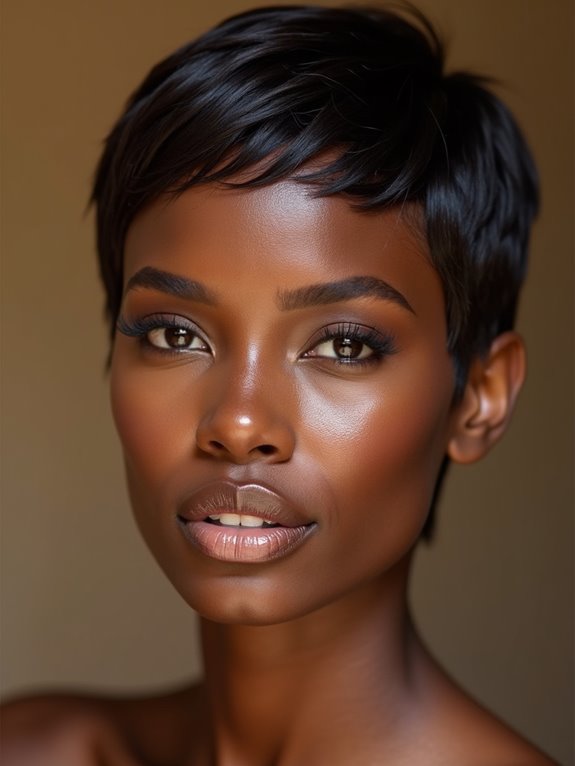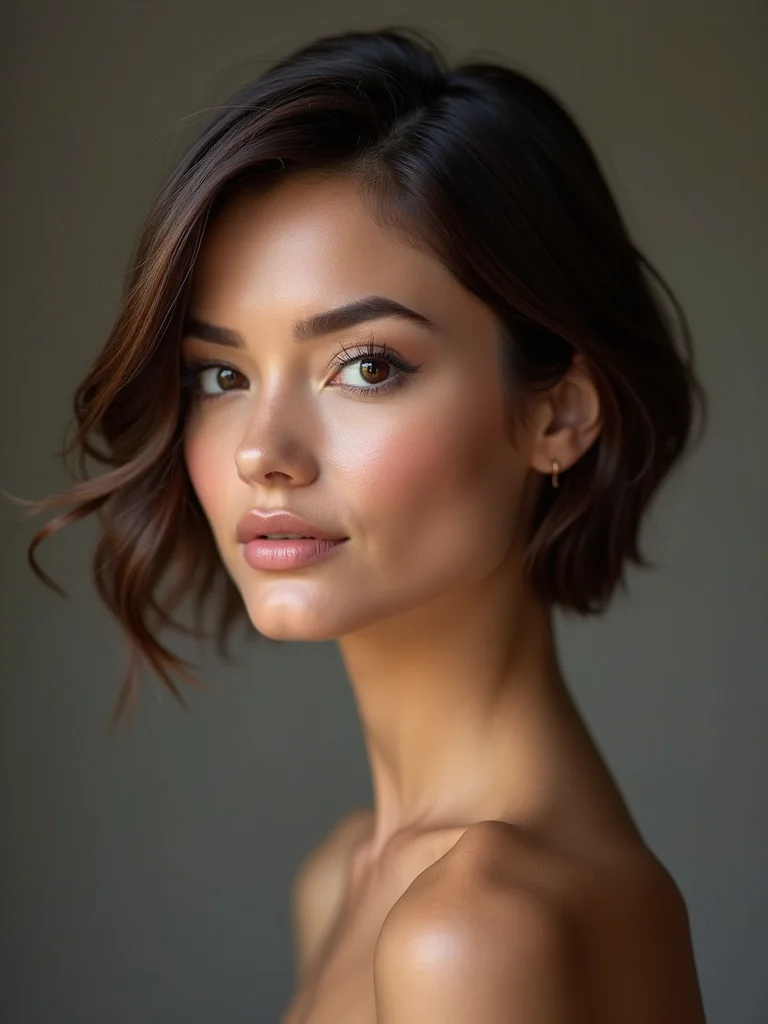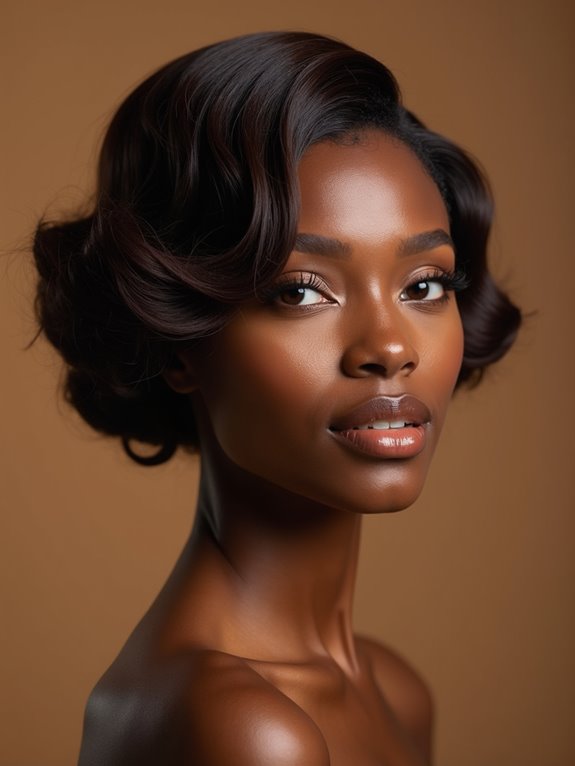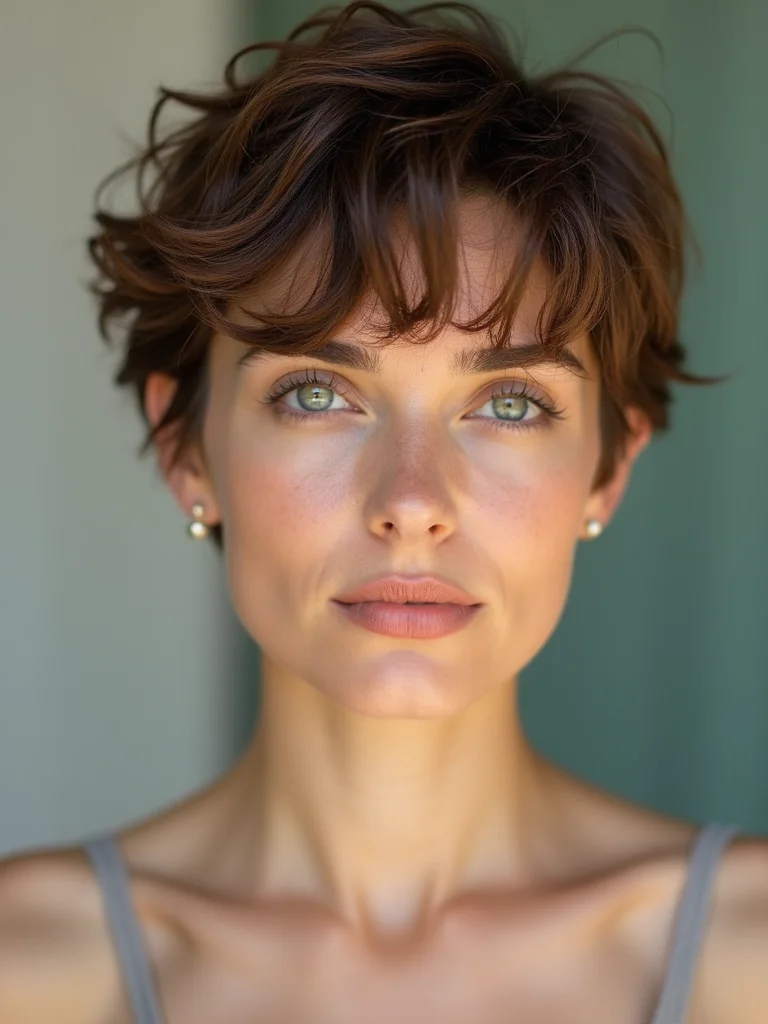
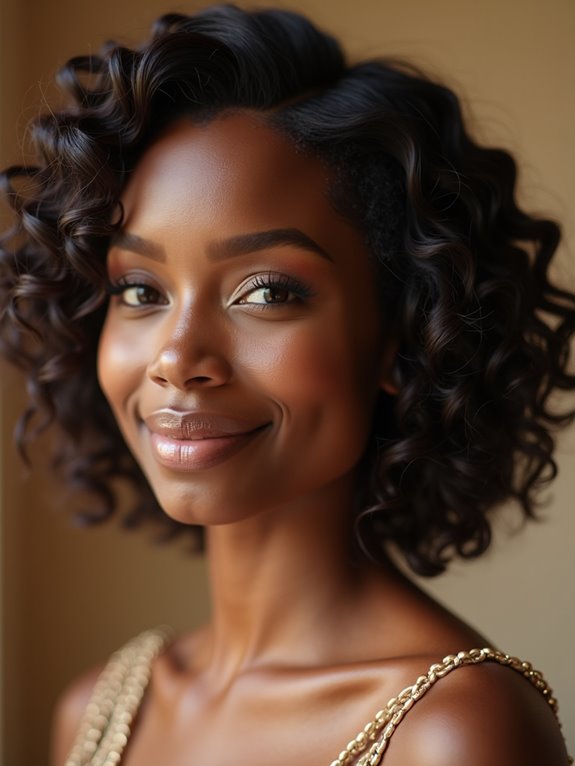
Why do two people with the same curly pixie walk out of the salon looking completely different? Because short curly hair lives and dies by the cut, and the cut has to answer to three things almost no one talks about: your curl pattern, your porosity, and how much your hair shrinks when it dries. Get those right and short curls are the most joyful, low-effort hair going. Get them wrong and you fight your own head every morning.
So this isn’t a generic list of cute crops. It’s 15 short curly shapes, from a shrinkage-smart pixie to a blunt ringlet bob to a mini Afro, each matched to the curls that actually suit it, plus the salon conversation that gets you there. Bookmark the ones that fit your pattern and let your natural texture do what it does best.
Before You Cut, Know This
- The cut is everything on short curls; it must be shaped to your specific curl pattern, ideally cut dry.
- Shrinkage is real: coily and tightly curled hair can spring up to half its wet length or more once dry, so ‘short’ can end up very short.
- Porosity decides your products and how the curls hold, so it should steer your routine as much as the cut does.
- Protective and low-manipulation short styles, like a tapered cut or a mini Afro, keep textured hair healthy and easy.
Match the Cut to Your Curl Pattern
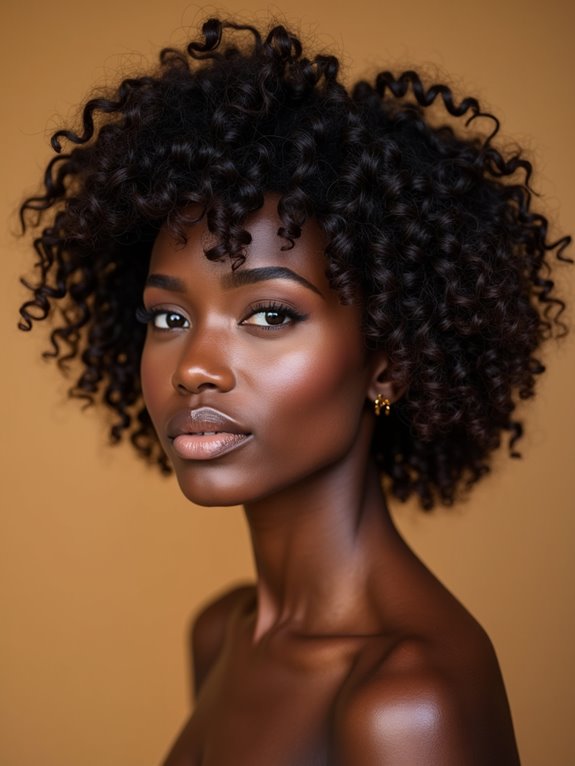
Everything starts here. A short cut that ignores your curl pattern will never sit right, because looser waves, springy corkscrews, and tight coils each fall and stack completely differently. The whole art of cutting short curls is working with how your pattern behaves.
Loose Curls vs Tight Coils
A stylist who cuts curls dry can see exactly where each curl lands and cut to it, which is the single biggest factor in whether you love the result. Wet-cutting curly hair is a gamble, since the curls shift as they dry and shrink.
So before you pick a style, know roughly where you sit, loose (type 2-3) or tight (type 4), because that decides which of these shapes will actually flatter you. See curly styling for working with your pattern day to day.
Porosity and Your Pixie
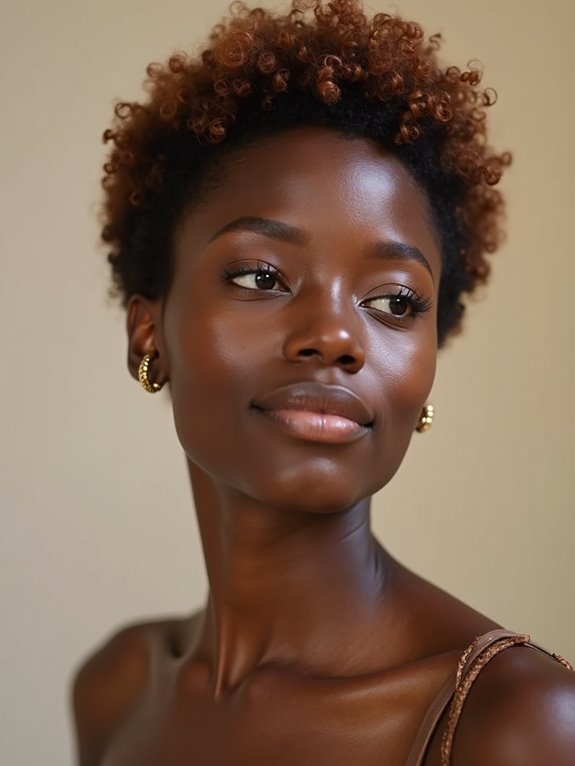
Porosity, how easily your hair absorbs and holds moisture, matters more on short curls than people realize, because there’s so little length to hide a dry, frizzy day. High-porosity hair drinks up water and loses it fast, so it needs richer creams and sealing; low-porosity hair resists moisture, so it wants lighter products applied to wet hair.
Why Porosity Comes First
On a short curly pixie this is the difference between defined, springy curls and a dry, undefined puff. The cut can be perfect, but if the products fight your porosity, the curls won’t form.
It’s worth a quick porosity test at home, dropping a clean strand in water to see if it floats or sinks, so you and your stylist can build the routine around it.
Refreshing a Short Crop Between Washes
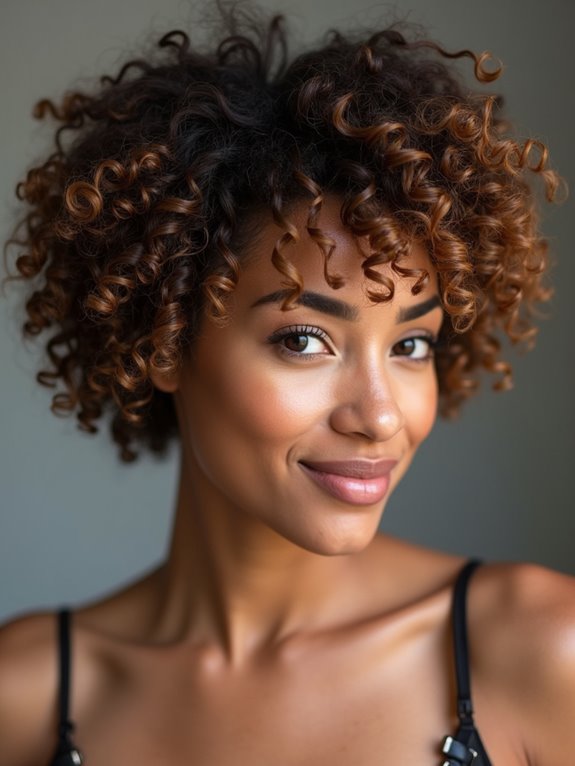
Short curls flatten and crease overnight faster than long ones, so the daily refresh is a skill worth learning. The good news is that it takes about two minutes: a light mist of water and leave-in, a quick scrunch, and your curls spring back to life without a full wash. Protecting them at night is half the battle, so a satin bonnet or pillowcase keeps the shape and cuts your morning work down.
- Mist with water and a little leave-in, then scrunch to revive.
- A satin bonnet or pillowcase preserves curls overnight.
- Skip daily washing, which strips the moisture short curls need.
The Curly Pixie and Shrinkage
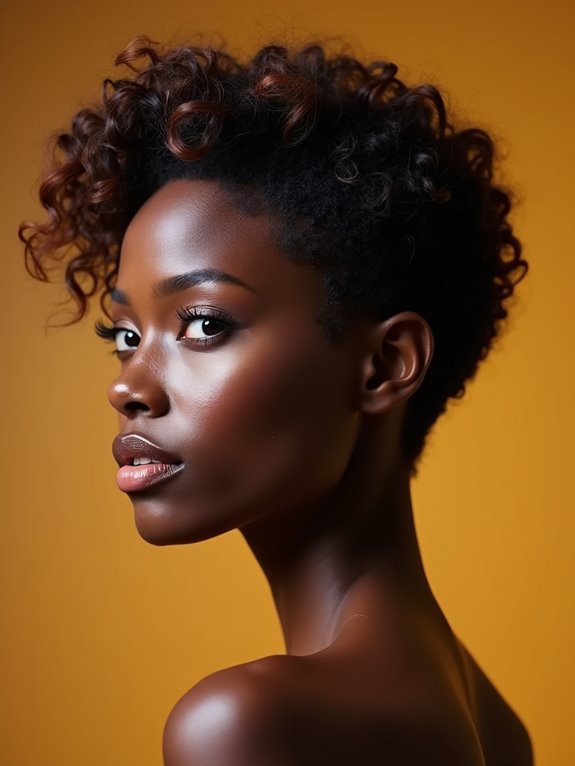
The curly pixie is the boldest, most freeing short curly cut, but shrinkage is the make-or-break factor, since coily hair can spring up to half its length or more once it dries. A pixie cut to look right wet will read dramatically shorter dry.
- Always plan the length around your shrinkage, using your dry hair as the guide.
- Cut dry so the stylist sees the true, shrunken shape.
- Best on tighter patterns, where the shrink builds a rounded shape.
- Frees you from styling; a scrunch of cream and you’re done.
| Your curls | Cuts that flatter | Watch out for |
|---|---|---|
| Loose waves and curls (2-3A) | Graduated A-line, soft rounded bob, stacked layers | Too-short pixies can fall flat without lift |
| Springy ringlets (3B-3C) | Blunt ringlet bob, choppy shag, curly bangs | Over-layering can thin defined curls |
| Tight coils (4A-4C) | Curly pixie, tapered cut, mini Afro | Plan for heavy shrinkage; cut dry |
The Consultation: Shrinkage and Routine
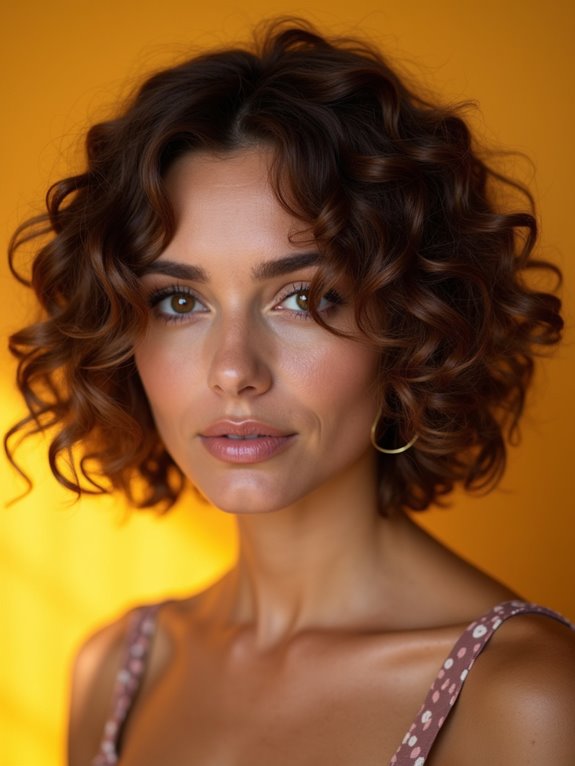
The best short curly cuts start with an honest conversation, and this is the step people skip. Before any scissors come out, a good stylist should ask how far your hair shrinks, what your mornings really involve, and how much upkeep you can realistically keep up, then cut to that reality, well before any inspiration photo.
I tell every short-curl client to be blunt about their limits here: if you won’t diffuse every morning, say so, and the cut can be shaped to air-dry instead. The consultation is where a cut you love is separated from one you tolerate.
- Talk through your real shrinkage before any length comes off.
- Be upfront about the amount of daily styling you can commit to.
- Ask for a shape that suits your routine, beyond any single photo.
A Blunt Jawline for Uniform Ringlets
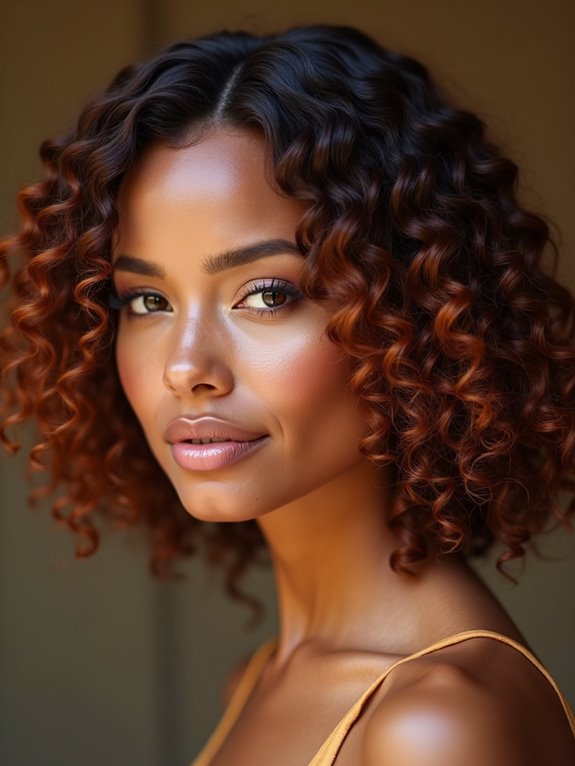
If your curls form defined, springy ringlets, a blunt cut at the jaw shows them off beautifully, giving a full, rounded shape where every curl reads clearly. The bluntness keeps weight in the ends so the ringlets hang with clean definition and stay controlled.
- Best for: uniform, well-defined ringlet patterns.
- A blunt line keeps weight so curls hang defined.
- Sits at the jaw for a full, rounded silhouette.
- Needs regular trims to keep the blunt shape sharp.
Pick a short curly cut by what you want from it.
🎯Lowest effort possible
A curly pixie or tapered cut; wash, scrunch a little product, and go.
🎯Shape and structure
A graduated A-line or stacked-layer bob that builds a defined silhouette.
🎯Bold and textured
A choppy curly shag or wolf cut for maximum movement and edge.
The Graduated A-Line
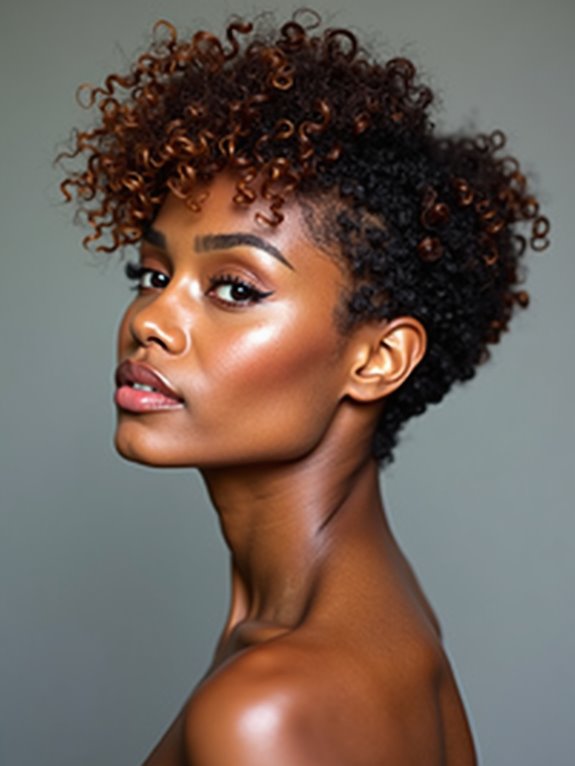
A graduated A-line, cropped close at the nape and lengthening as it moves forward, builds structure into curly hair that can otherwise sit shapeless. The graduation stacks the curls at the back for lift, while the longer front pieces frame the face and slim it.
It’s a smart pick for looser curls that need some engineered shape, and the forward angle gives a flattering line. Because it relies on precise graduation, it holds its form best with regular upkeep.
- Best for: looser curls that need built-in structure.
- Graduation stacks the curls for volume at the back.
- The forward line frames and slims the face.
The Rounded Chin-Length Bob
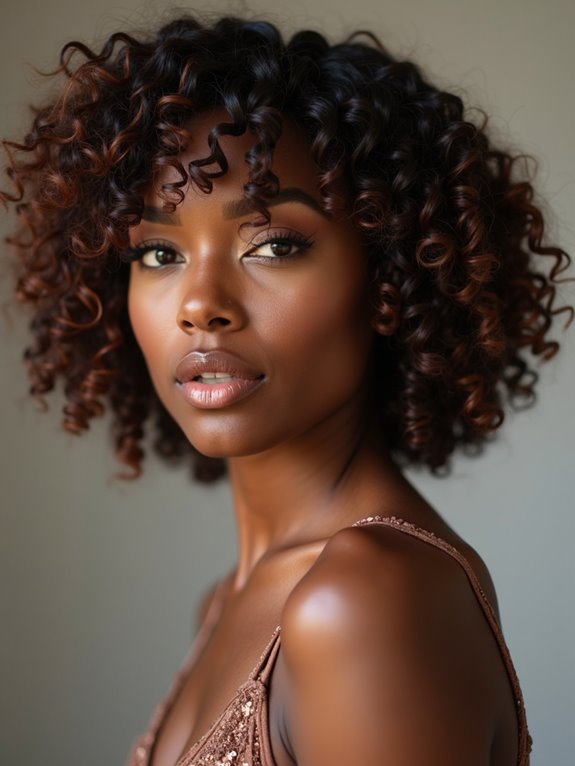
The rounded curly bob at chin length is the friendliest short curly cut there is, a soft, full shape that flatters an enormous range of faces and curl types. It has just enough length to define the curl and enough lift to stay round and bouncy.
- Best for: almost any curl pattern; the easy all-rounder.
- Chin length gives curls weight to define and lift to spring.
- A rounded silhouette softens strong or angular features.
- See the lob for a slightly longer version.
Stacked, Angled Layers
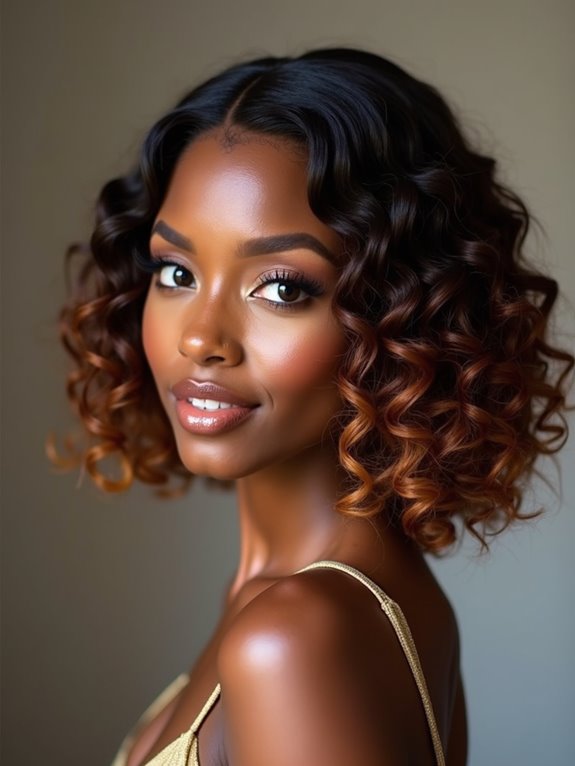
Stacked, angled layers are how a stylist builds real height and lift into short curls, cutting the under-layers shorter so the curls above stack and rise. It’s the technique behind a short curly cut that stands full and round, with no collapse at the crown.
This suits curls that need a volume boost, especially finer curly hair, and it keeps the shape from collapsing as the day goes on. The layers have to be curl-specific, cut for how your pattern springs, so this is expert territory.
- Under-layers cut shorter so the top curls stack and lift.
- Builds height and roundness, great for finer curls.
- Must be cut to your pattern, so seek a curl specialist.
The Choppy Curly Shag
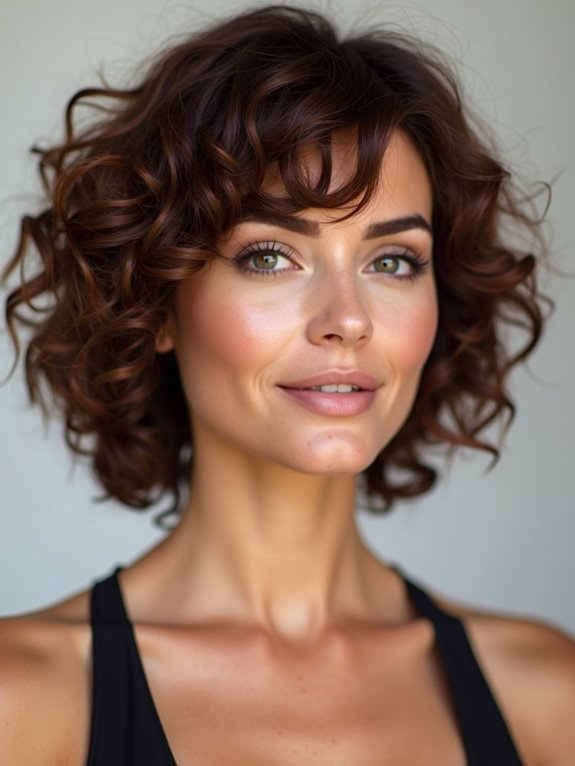
The curly shag brings edge and movement to short curls with high, choppy layers and a shaggy fringe that give the hair a piecey, textured, rock-and-roll feel. It’s the cut for anyone who wants their short curls to look a little wild and undone.
The heavy layering suits medium-to-thick curls that can carry the choppiness without thinning out, and it thrives on natural texture, so it’s low-effort by design. See soft layers for how shag layering works.
- High, choppy layers for a piecey, textured finish.
- Best on medium-to-thick curls that carry the layering.
- Undone and rock-and-roll, with almost no styling needed.
A few curl-cutting terms worth knowing.
📖Dry cutting
Cutting curls dry, in their natural state, so the stylist can shape to how each curl actually falls.
📖Shrinkage
How much curly hair springs up shorter as it dries; tighter patterns shrink most, sometimes over half the length.
📖Tapering
Gradually shortening the sides and back while keeping the crown fuller, for a clean, rounded curly shape.
The Curly Wolf Cut
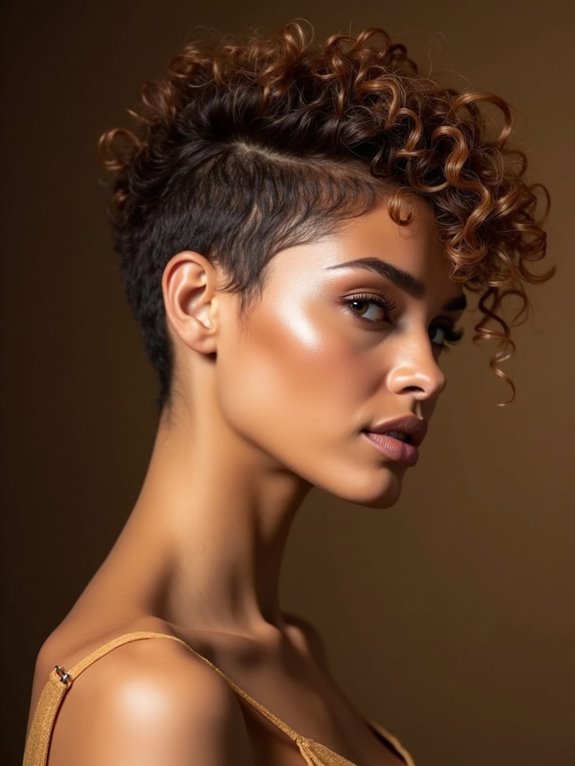
The wolf cut, part shag, part mullet, concentrates volume at the crown and tapers toward the neck, and on curls it creates a dramatic, crown-heavy shape full of movement. It’s the boldest of the layered short curly cuts.
That crown volume suits curls that want a big, textured silhouette, and the tapered length keeps it from feeling too heavy. It’s a modern, editorial choice, and like the shag it leans into natural texture.
- Volume piled at the crown, tapering toward the neck.
- A bold, high-movement shape for curls that want drama.
- Leans fully into natural texture, so it’s low-maintenance.
The Soft, Rounded Jaw-Length Bob
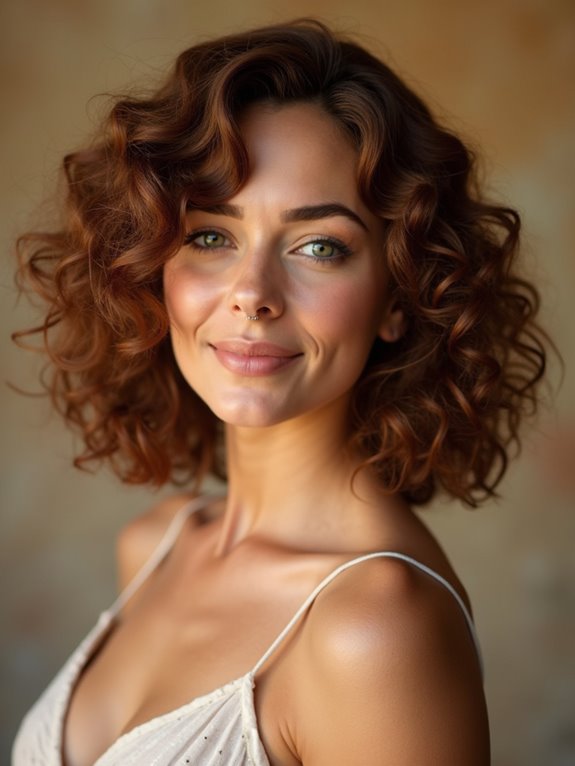
Where the blunt ringlet bob is sharp, the soft rounded jaw-length bob is its gentler sibling, cut with a little internal softness so the curls fall in a relaxed, rounded shape rather than a crisp line. It’s forgiving and flattering, and it suits curls that aren’t perfectly uniform.
Soft Shape, Not a Sharp Line
The softness comes from subtle internal shaping that lets the curls settle naturally, so it reads easy and undone rather than precise. It’s a lovely everyday cut for someone who wants shape without sharpness.
It flatters most face shapes, and the jaw length draws a soft line that’s kind to rounder and stronger faces alike.
The Mini Afro and Finger Coils
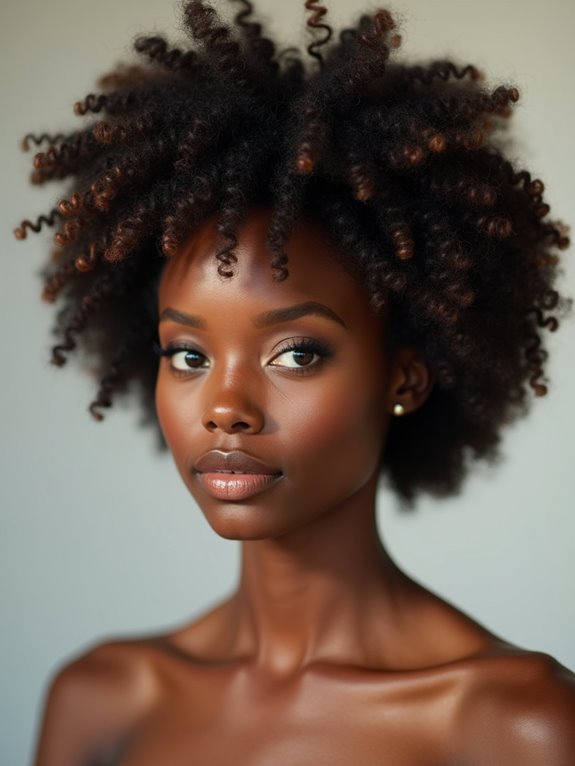
For tight coils, few things are as beautiful or as celebratory as a defined mini Afro, a short, rounded shape that shows your natural texture in its purest form, and finger coils are how you can define it curl by curl.
The Afro is a crown, and a well-shaped short one is striking, healthy, and endlessly wearable. Finger-coiling, twisting small sections of product-coated wet hair around your finger, gives each coil crisp, spring definition, worn with real pride.
- A short, rounded Afro celebrates tight coils at their fullest.
- Finger coils define the pattern curl by curl on wet hair.
- Keep it moisturized and shaped with a gentle pick.
- A protective, healthy way to wear type-4 texture short.
“The clients who thrive with short curls are the ones who stop chasing a photo and start working with what their hair actually does. Bring the inspiration, absolutely, but the best short curly cut is the one built around your real pattern, your real shrinkage, and the two minutes you’ll really spend on it in the morning.”
Curly Bangs for Your Face Shape
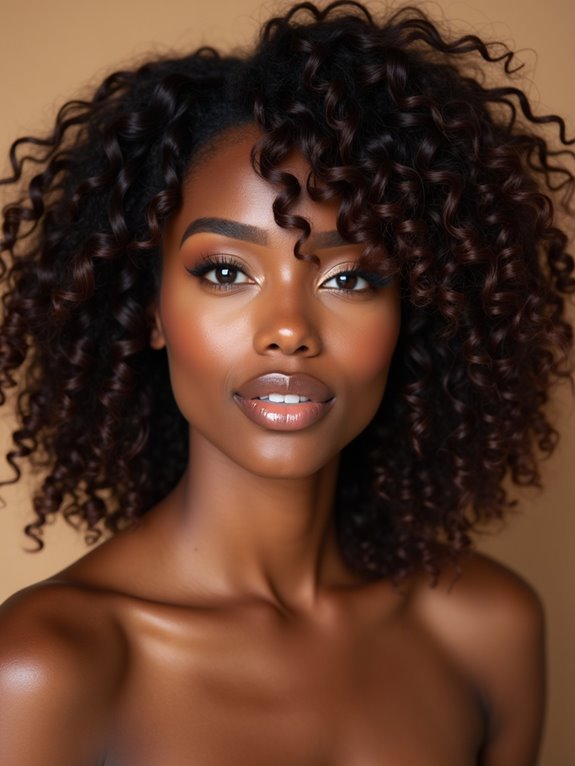
Curly bangs transform a short curly cut, but they have to be matched to your face shape and your shrinkage, since a curly fringe springs up much shorter than you’d expect. Cut with that spring in mind, they frame the face and add a playful, modern edge.
A rounder face suits a longer, side-swept curly fringe that adds length; a longer face loves a fuller curly bang that brings width. The golden rule is to cut them conservatively, since curly bangs only get shorter as they dry. See curl-friendly styling for finishing them.
- Curly bangs spring up short, so cut them cautiously.
- Longer side-swept fringe lengthens a rounder face.
- A fuller curly bang adds width to a longer face.
Tapered Layers for Movement
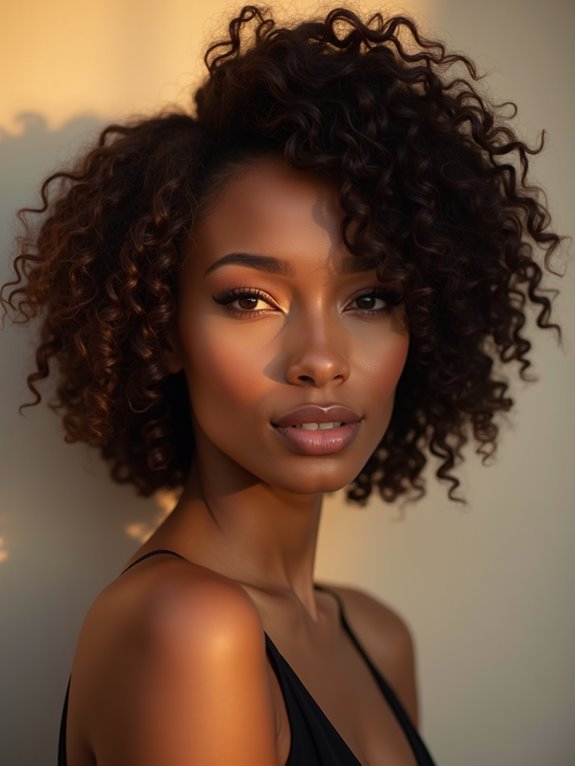
A tapered cut keeps the crown fuller and gradually shortens the sides and back, which on curls creates a clean, rounded shape with lovely movement, and it’s a favorite for coily and tightly curled hair. It’s low-maintenance, protective, and endlessly flattering.
The taper controls the shape without removing the curl’s character, so you get a neat silhouette that still moves and springs. It’s the short curly cut I recommend most to clients who want polish and ease at once, and it grows out gracefully between trims.
- Fuller at the crown, tapering down the sides and back.
- A clean, rounded shape that still moves and springs.
- Low-maintenance and protective, ideal for tight coils.
Who It Suits Best
Short curly hair suits far more people than the myths suggest, as long as the cut is matched to the curl. Looser curls and waves love the graduated A-line, the soft rounded bob, and stacked layers that build the shape they lack; tighter curls and coils shine in a curly pixie, a tapered cut, or a mini Afro that leans into their density and spring.
Round faces are flattered by height and a side-swept curly fringe; longer faces by width and a fuller bob; strong jaws soften under a rounded, jaw-length shape. The one universal is honesty about your shrinkage and your routine, because those two facts decide the cut more than any photo.
On upkeep, a proper dry curly cut with a specialist typically runs about $65 to $150 and, because short shapes grow out of form faster, most want a fresh trim on a six-to-eight-week rhythm to hold their silhouette. Spend your money on the cut and one or two products your porosity actually likes, and short curly hair becomes the lowest-effort, highest-joy hair you can have. Cut it right, keep it moisturized, and let your natural texture take it from there.
Let Your Texture Lead
The thread running through all 15 of these cuts is the same: short curly hair rewards you the moment you stop fighting it. Match the shape to your curl pattern, plan around your shrinkage, build your routine around your porosity, and short curls become the easiest, most expressive hair you can wear, springy, full, and unmistakably yours.
Whether it’s a bold curly pixie, a soft rounded bob, or a proud mini Afro, the right cut turns your natural texture into the whole point.
So take the shape that fits your pattern and your life, find a stylist who dry-cuts curls and understands your texture, and be honest with them about your shrinkage and your mornings. Bookmark the cuts that spoke to you here, and let your natural texture lead the way. It already knows what it’s doing.
More Inspiration