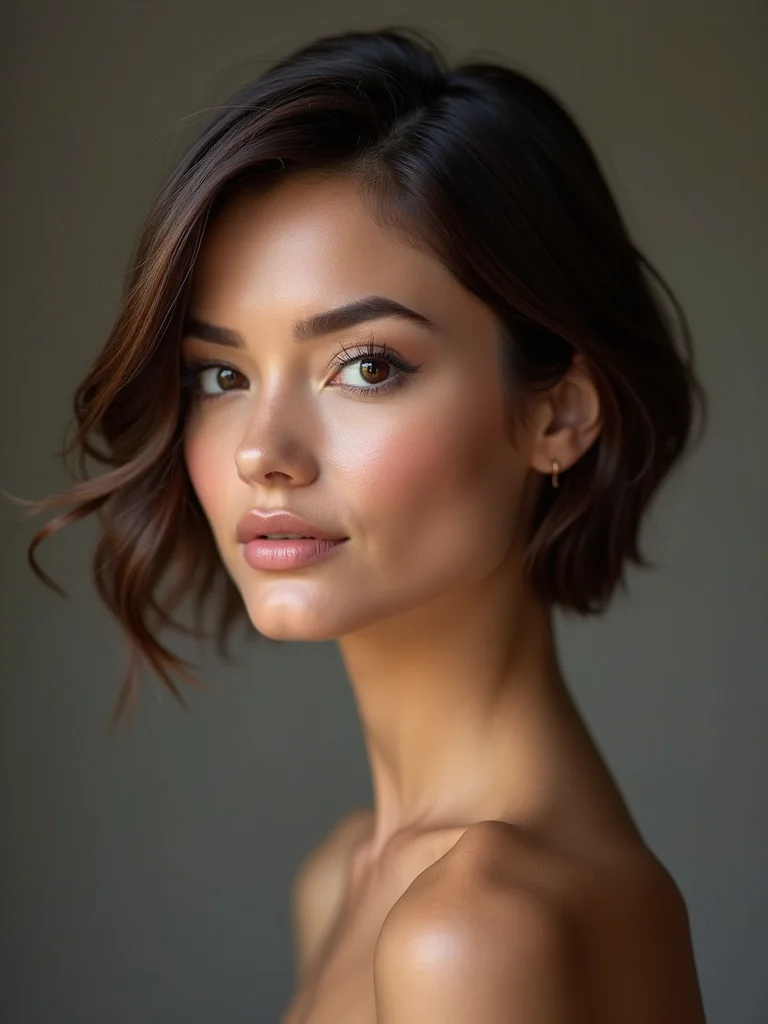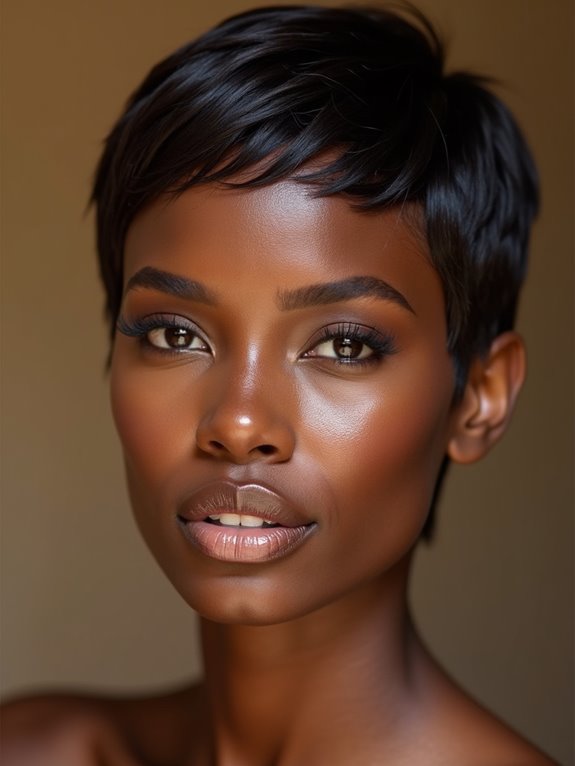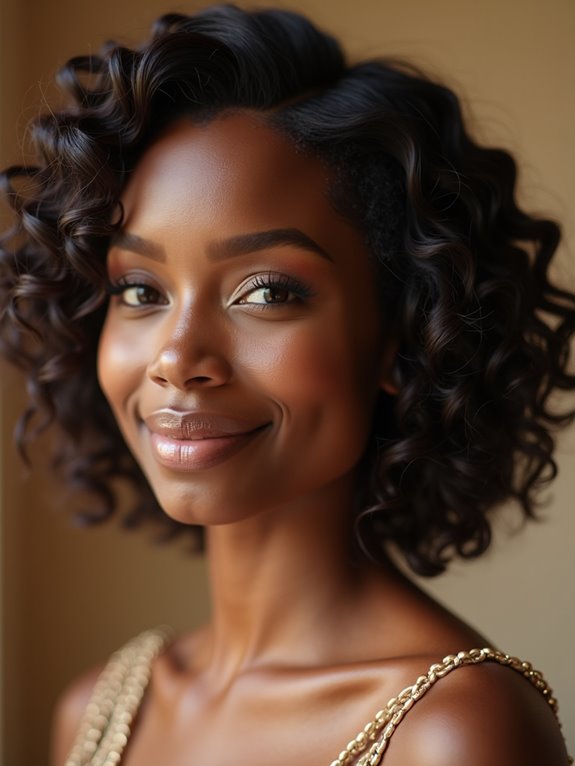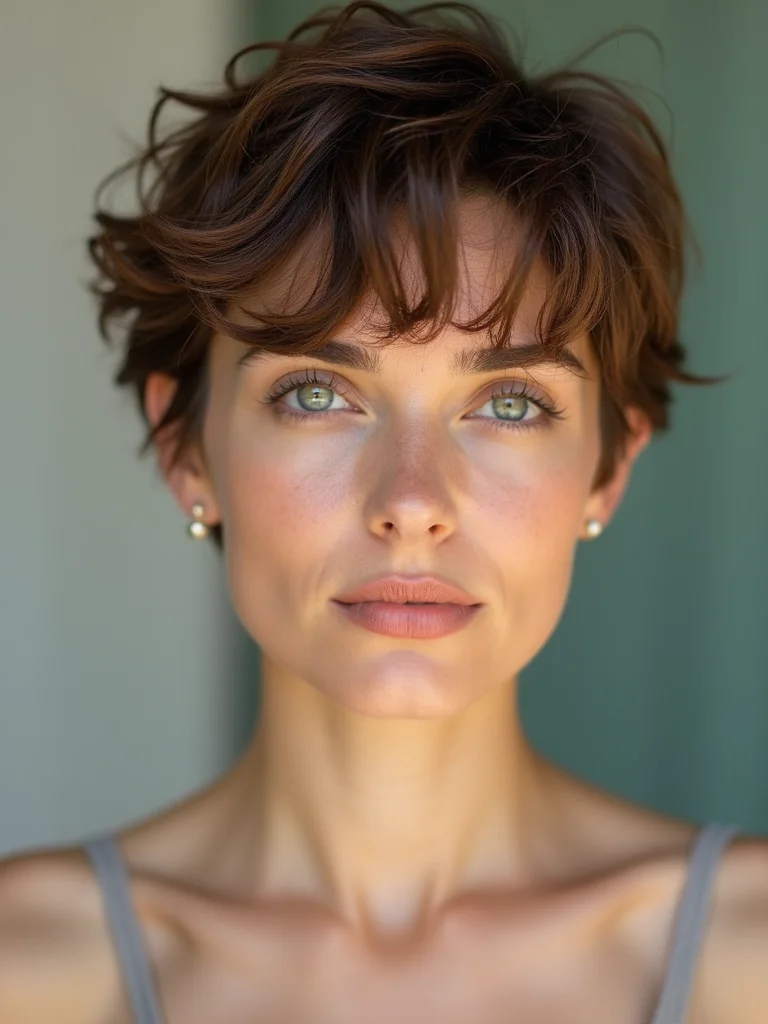
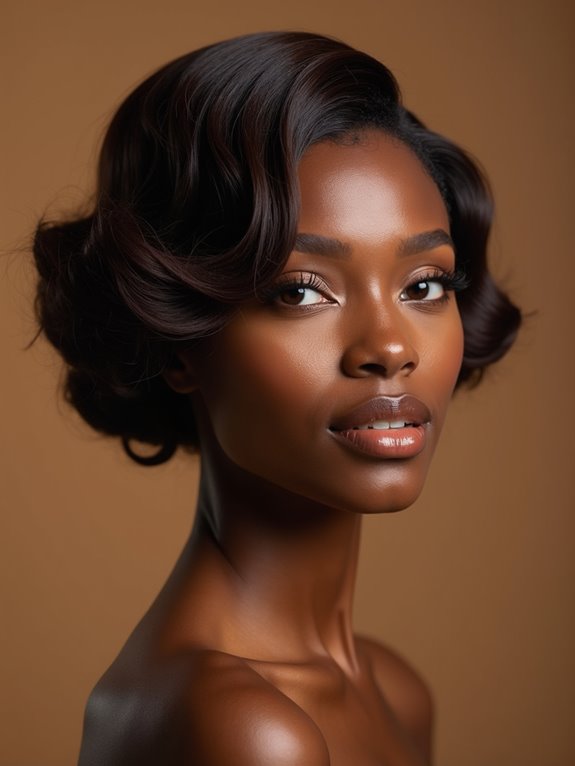
What if your hair looked its best on the mornings you did nothing to it? That’s the whole promise of a forgiving short cut, and it’s a real thing, backed by how these cuts are built. The secret is that some short shapes are engineered to be hard to mess up: built with texture and clever layering so they fall into place on their own, air-dry into shape, and even work with your cowlicks instead of exposing them.
So this isn’t a list of fussy, blow-dry-dependent styles. These are 15 truly low-maintenance short cuts, from a textured blunt bob to a choppy pixie to a cowlick-friendly crop, chosen because the cut does the work and you barely have to. If your idea of styling is a quick tousle and out the door, these are for you.
What Makes a Cut Forgiving
- Built-in texture and layering let a cut fall into place on its own, so it survives a rushed morning.
- The best forgiving cuts air-dry into shape, so you can skip the hot tools entirely most days.
- A cut shaped around your natural growth and cowlicks works with them instead of fighting them.
- Grow-out-friendly shapes still look intentional weeks after your trim, buying you time between salon visits.
The Textured Blunt Bob

A blunt bob usually needs a smooth blow-dry to look right, but add texture into the ends and the rules change: now it’s meant to look a little undone, so a slept-on, air-dried finish becomes the look, no longer a mistake. That’s what makes this one so forgiving.
The blunt line keeps it looking full and intentional, while the internal texture means bedhead passes for style. Scrunch a little texture spray through and you’re done, and it only gets better into a second day.
- Texture turns a blunt bob into a wash-and-go.
- Bedhead becomes the look itself.
- A quick scrunch of texture spray, and that is the entire routine.
The Low-Maintenance Textured Pixie
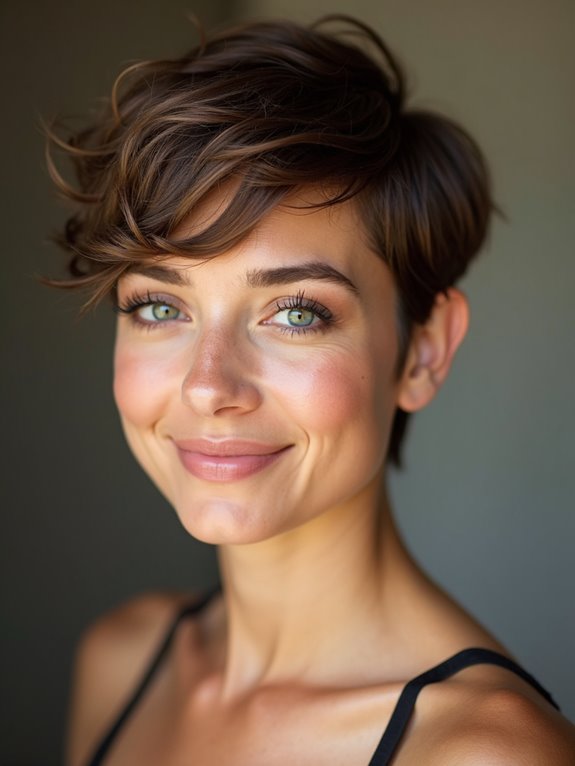
A textured pixie is the easiest cut on this whole list, because at that length there’s simply very little to go wrong. Cut with soft, piecey texture through the top, it falls into a soft, worn-in shape the moment you run your hands through it.
As Easy As It Gets
The texture is doing the styling for you, so a fingertip of paste and a tousle is the entire morning routine. No brush, no dryer, no fuss.
It flatters most faces and grows out softly, which makes it my go-to recommendation for anyone who wants maximum ease. See a soft pixie for a piecey take.
📋Signs a Short Cut Will Be Easy
- ✓It’s built with texture or soft layers, not one rigid blunt line only.
- ✓Your stylist shaped it to air-dry for your specific hair type.
- ✓It works with your cowlicks and growth patterns, not against them.
- ✓It grows out softly, so it still looks good weeks after a trim.
The No-Styling Cut
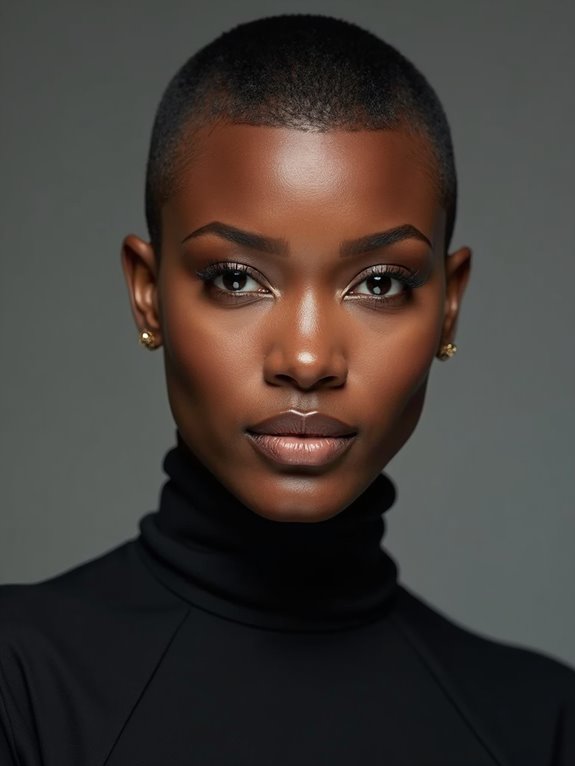
Some cuts are honestly designed to be styled by your pillow, and there’s no shame in wanting exactly that. A short cut built with the right layering and texture for your hair type will look intentional straight out of a towel, with nothing added at all.
The Cut Is the Style
The trick is being upfront with your stylist about it. I tell clients to say this out loud: you want a cut you can wash and wear, and a good stylist will then shape something that air-dries into place for your texture.
This is the most honest low-maintenance category there is: the cut is the style, full stop. For the truly time-poor, it’s a small revolution.
The Choppy Textured Pixie
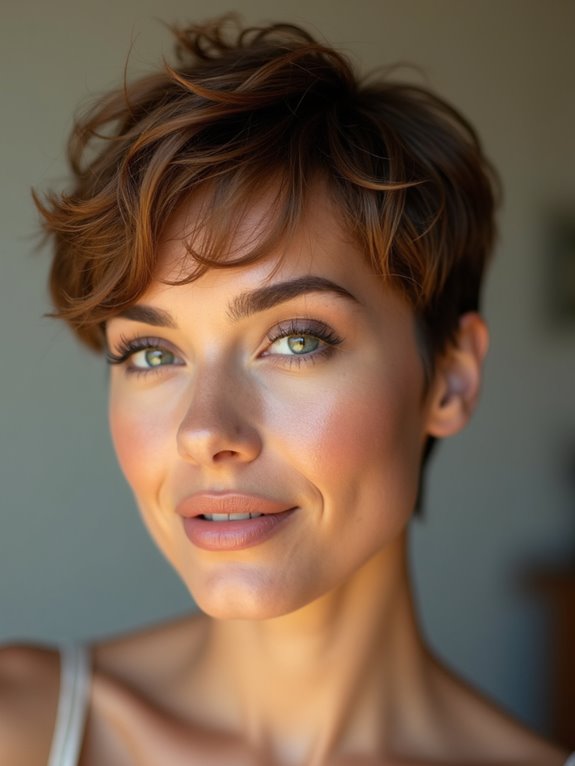
Where the soft pixie is gentle, the choppy version has attitude, with disconnected, chopped-in layers that give it a spiky, piecey edge. And because the whole point is a broken-up, textured finish, there’s nothing precise to maintain.
You just work a little clay through with your fingertips and let the choppiness do its thing. It only improves as the day wears on and the texture loosens up.
It’s the forgiving short cut for someone who wants a bit of grit and edge without any of the upkeep. Bold and low-effort at once.
Stacked, Air-Dried Ringlets
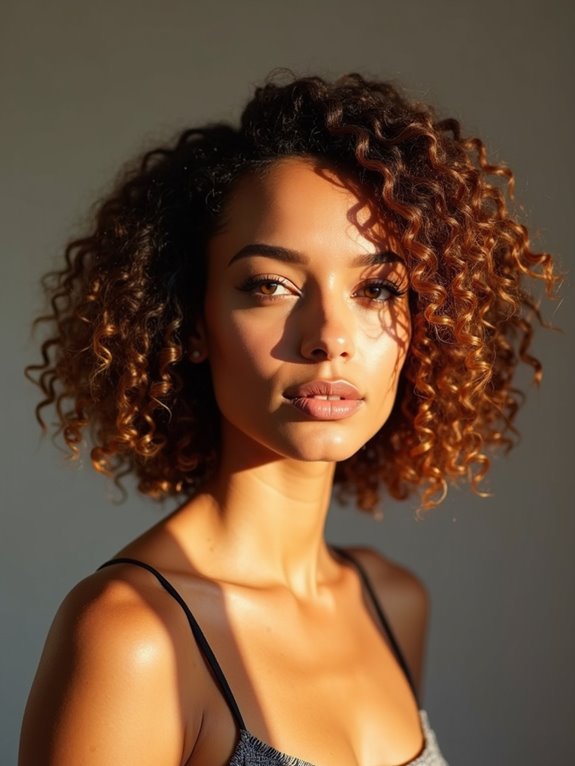
For naturally curly hair, the most forgiving short cut is one that lets your ringlets air-dry into a stacked, rounded shape with zero heat. Cut to your curl pattern so the curls stack and spring, you smooth a leave-in and a curl cream through dripping-wet hair, then step away and let the coils set themselves. No diffuser, no fuss, just defined curls doing what they naturally do. See curl care for the full routine.
- Cut to your curl pattern so ringlets stack and spring.
- Product on soaking-wet hair, then air-dry and leave alone.
- Zero heat, which keeps curly hair healthy too.
The Shaggy Jaw-Grazing Crop
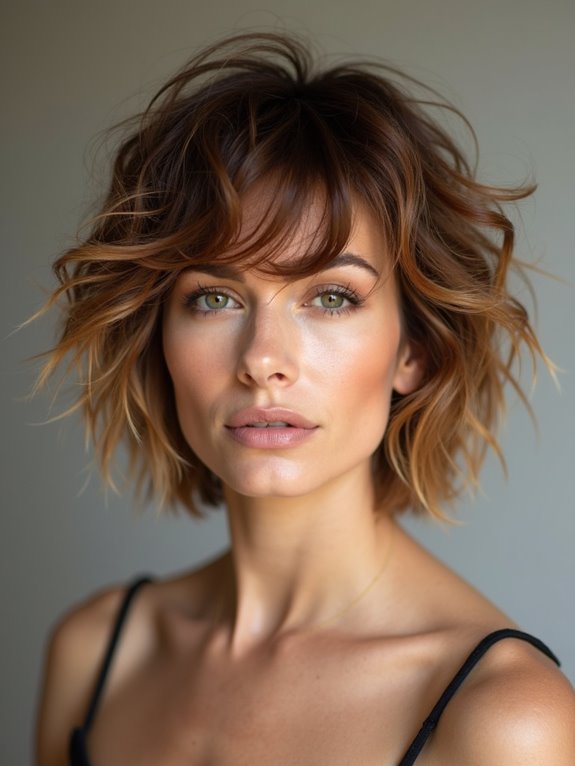
A shaggy crop that grazes the jaw is one of the most effortless-looking short cuts going, all soft, feathered layers and a bit of fringe that fall into a relaxed, textured shape. The shagginess is deliberate, so there’s no crisp line to keep up.
It air-dries beautifully, especially on hair with a natural bend, and a quick scrunch of texture spray is all it needs to look purposefully undone. The jaw length is universally flattering, too.
It’s a cut that looks cooler the less you do to it, which is exactly the point. See layered cuts for how the shag layers work.
ℹ️Good to Know
Air-drying isn’t just easier; it’s kinder to your hair. Skipping daily heat on a cut designed to dry into shape means less breakage and more shine over time. This is why the most forgiving short cuts are often the healthiest ones too: the low-effort routine and the low-damage routine happen to be the same thing.
The Messy Layered Wolf Cut

The wolf cut, that shag-mullet hybrid with heavy layers and volume up top, is built to look deliberately messy, which makes it wonderfully forgiving. There’s no neat shape to preserve, so the more tousled it gets, the more on-trend it looks.
- Heavy layers and crown volume with a tapered length.
- Meant to look messy, so it’s impossible to over-style.
- Air-dries into shape and thrives on natural texture.
- Grows out softly, buying time between trims.
The Cheekbone Blunt Bob

A very short blunt bob cut to skim the cheekbones is a bold, high-fashion shape, and its forgiveness comes from that strong blunt line, which holds its form even when you barely touch it. The geometry does the heavy lifting.
- The blunt cheekbone line holds shape on its own.
- Best on straight-to-wavy hair that keeps a clean edge.
- A smoothing serum and finger-comb is often enough.
- Draws attention up to the eyes and cheekbones.
The Italian Bob
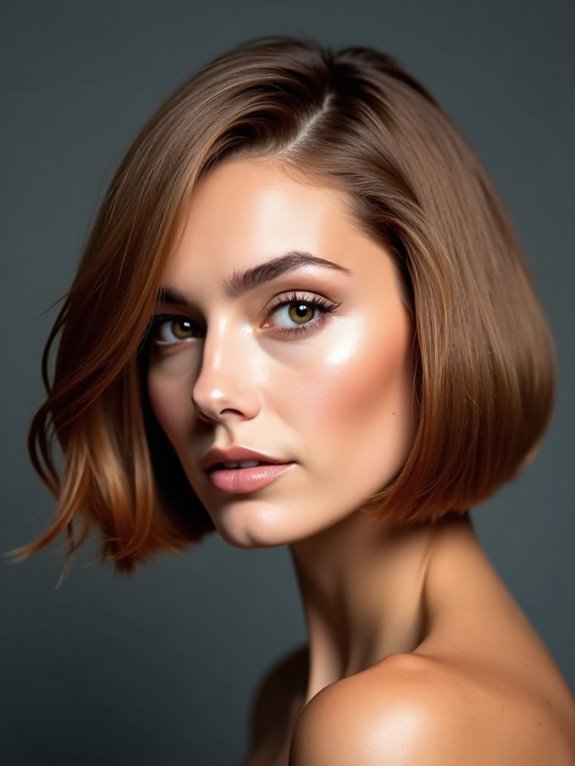
The Italian bob, a chin-length blunt cut with a bit of soft body, has that undone, la-dolce-vita ease built right into it. It’s meant to look casually chic, well short of perfectly polished, so a slightly tousled, air-dried finish is exactly right.
The chin length flatters nearly everyone, and the blunt weight keeps it looking full and healthy with little effort. A scrunch of mousse on damp hair and a natural dry gives you that relaxed, European-summer feel without trying.
The Jaw-Length Bob With Movement

A jaw-length bob with soft internal layers built in gives you a bob that moves and bounces on its own, so it never sits flat or lifeless even when you skip styling. The movement is cut in, which is what makes it forgiving.
- Internal layers give the bob built-in bounce.
- Never sits flat, even air-dried and untouched.
- The jaw length flatters and softens most faces.
- See the lob for a longer version.
The Ear-Grazing Bob
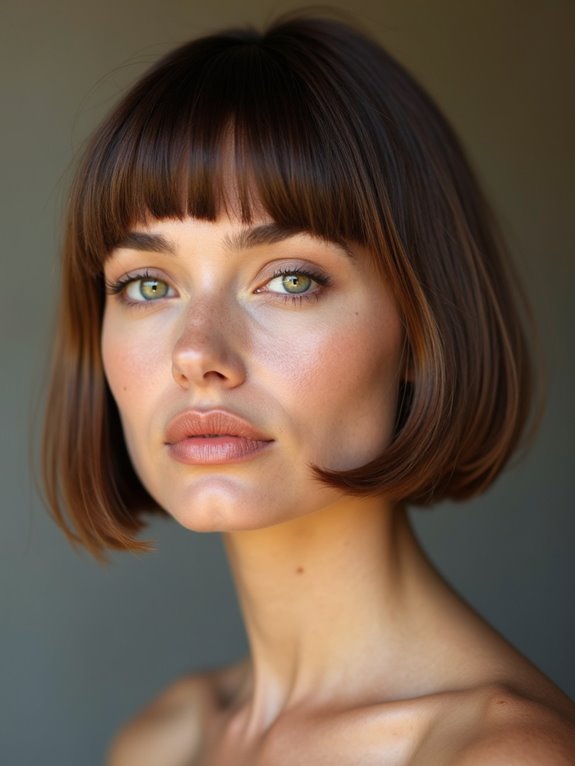
Sitting somewhere between a bob and a pixie, the ultra-short ear-grazing bob is a brilliantly low-maintenance shape, short enough to be quick but with just enough length to feel soft and feminine. It’s a lot of style for very little effort.
At that length there’s almost nothing to fuss over: it dries in minutes and needs only a little product to look finished. It’s a fantastic first step for anyone testing the waters before a full pixie, and it flatters delicate features especially.
👍A wash-and-go short bob
- +Dries into shape with little to no styling.
- +Bounces and moves thanks to built-in layers.
- +Flatters most faces at jaw length.
👎What to weigh up
- –Needs a good cut to air-dry well, so book a skilled stylist.
- –Very straight, fine hair may want a touch of product for lift.
- –Still needs a trim to keep the shape from going heavy.
The Modern Bowl Cut
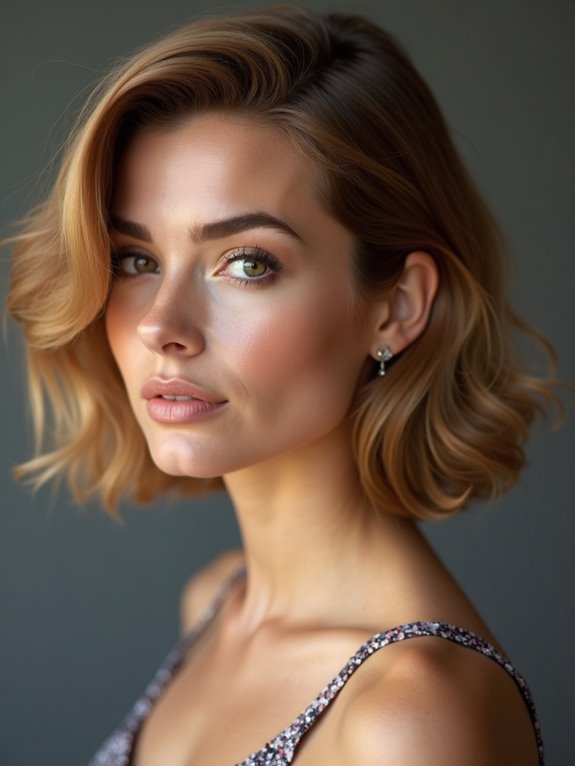
The bowl cut has grown up, and today’s rounded, cheekbone-framing version is soft, editorial, and surprisingly easy. Modern bowl shapes come textured and softened, a world away from helmet-like, so they settle into a rounded frame around the face on their own.
Because the shape is the whole statement, styling is minimal, just a little product to define the texture and it holds its rounded form. It’s a bold, fashion-forward choice that happens to be low-effort, and clients ask me for it far more than they used to.
It suits strong features and anyone wanting something a little different, and it’s far more wearable than its reputation suggests.
Collarbone Textured Waves

At the longer end of short, a collarbone cut with plenty of soft layers is made to hold a soft, worn-in wave, so a quick scrunch or an overnight braid gives you tousled texture that lasts all day. The layers are what let the wave sit without dropping.
The Longest of the Easy Cuts
This is the most versatile of the forgiving cuts, long enough to tie back on a truly lazy day, short enough to stay easy. It air-dries into soft texture on wavy hair with almost no help.
It’s the low-maintenance short cut I recommend to people who still want a little length to play with. A texture spray is the only tool you need.
💡Styling Tip
For any of these air-dry cuts, the golden rule is to add product to soaking-wet or damp hair, then leave it completely alone as it dries. Touching or scrunching mid-dry is what creates frizz and breaks up the shape. Apply, walk away, and only tousle once it’s fully dry.
The Modern Mullet

The modern mullet has left its retro image behind, and the gradual, choppy, heavily textured version today is a seriously cool, low-effort short cut. The graduation is soft and gradual, and the texture means there’s no precise shape to maintain.
It’s built to look choppy and undone, so it air-dries into place and only looks better as it messes up through the day. It’s the forgiving cut for someone who wants a real fashion statement without the upkeep to match.
- A soft, gradual, textured take on the mullet.
- Choppy by design, so it can’t really be over-styled.
- Air-dries into a cool, undone shape.
The Cowlick-Friendly Feathered Crop
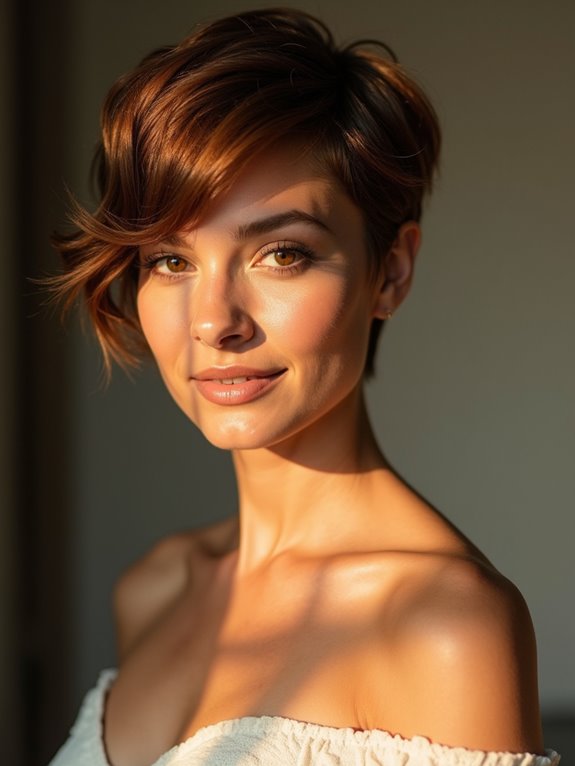
Here’s the cut for everyone who’s ever fought a stubborn cowlick: a feathered crop cut to work with your growth patterns instead of against them. A clever stylist reads where your hair naturally wants to fall and shapes the feathering around it, so the cowlick becomes part of the texture, no longer the enemy.
- Cut around your growth patterns, not against them.
- Turns a stubborn cowlick into part of the shape.
- Feathered texture that air-dries into place.
- The forgiving answer for tricky, hard-to-place hair.
Common Mistakes to Avoid
Even a forgiving cut can be undone by a few habits. The biggest mistake is choosing a low-maintenance style but a high-maintenance cut, then wondering why it needs daily work: if you want wash-and-go, you have to say so at the consultation, so the cut is shaped to air-dry for your texture.
The second is over-styling, piling on product or reaching for hot tools on a cut that was designed to be tousled and left alone. And the third is skipping trims, since even grow-out-friendly shapes eventually lose their form and start to need coaxing.
A couple more to sidestep: fighting your natural texture and cowlicks when a cut could work with them, and buying the wrong products, since a forgiving short cut usually needs just one good texture paste or cream, never a shelf full.
On cost, these cuts run roughly $40 to $90 and, because they’re grow-out-friendly, many stretch to a trim every eight to ten weeks rather than every four. Pick the cut that suits your real routine, be honest about how little you’ll do, and short hair will look its best on the days you touch it least.
Easy Short Hair Questions, Answered
?What is the most low-maintenance short haircut?
A textured pixie is about as easy as it gets, since at that length a fingertip of paste and a tousle is the whole routine. Close behind are a textured blunt bob, a shaggy crop, and a wolf cut, all built to air-dry into shape. The key with any of them is texture in the cut, which is what lets the style fall into place on its own.
?How do I get a short cut that air-dries well?
Tell your stylist directly that you want a wash-and-go you can air-dry, and ask them to cut texture and layers suited to your hair type. Air-dry-friendly cuts work with your natural texture rather than needing heat to force a shape. Product on damp hair, then leaving it alone to dry, does the rest.
?Can I have easy short hair if I have cowlicks?
Absolutely, and often it’s easier. A skilled stylist cuts around your cowlicks and growth patterns so they become part of the texture instead of sticking up. A feathered crop or textured pixie shaped to your growth turns a stubborn cowlick into an asset and ends the daily battle.
?How often do these cuts need trimming?
Because most of these shapes are grow-out-friendly, many stretch to a trim every eight to ten weeks rather than the four to six a precise cut needs. The choppier and more textured the cut, the longer it holds its look, since there’s no sharp line to lose. A blunt bob will need trimming a little more often to keep its edge.
?Are short cuts good for curly hair that I don’t want to fuss over?
Yes; a short cut shaped to your curl pattern and left to air-dry is one of the lowest-effort ways to wear curls. Work a leave-in and a curl cream through soaking curls, then let them dry undisturbed into stacked, springy ringlets. No heat, no diffuser, just defined curls, which keeps curly hair healthier too.
Let the Cut Do the Work
The thread through all 15 of these cuts is a simple, freeing idea: with the right short shape, your best hair days can be the ones you do the least on.
Whether it’s a textured blunt bob, a choppy pixie, air-dried ringlets, or a cowlick-friendly crop, these styles are built so the cut carries the look and you just tousle and go. The real trick isn’t in your morning routine at all; it’s in choosing the shape and being honest with your stylist about how little you want to do.
So pick the one that fits your texture and your patience, tell your stylist you want a true wash-and-go, and enjoy the rare luxury of hair that looks best when you leave it alone. Which of these easy, hard-to-mess-up cuts will you try first?
More Worth Saving