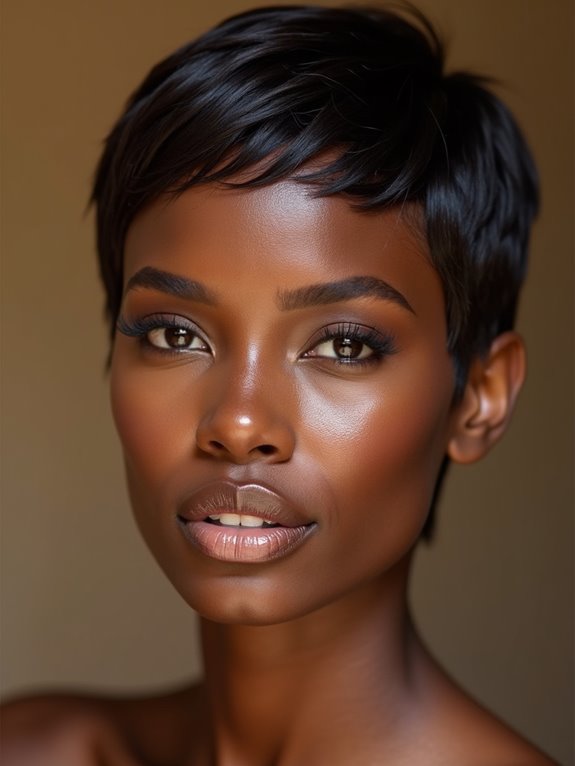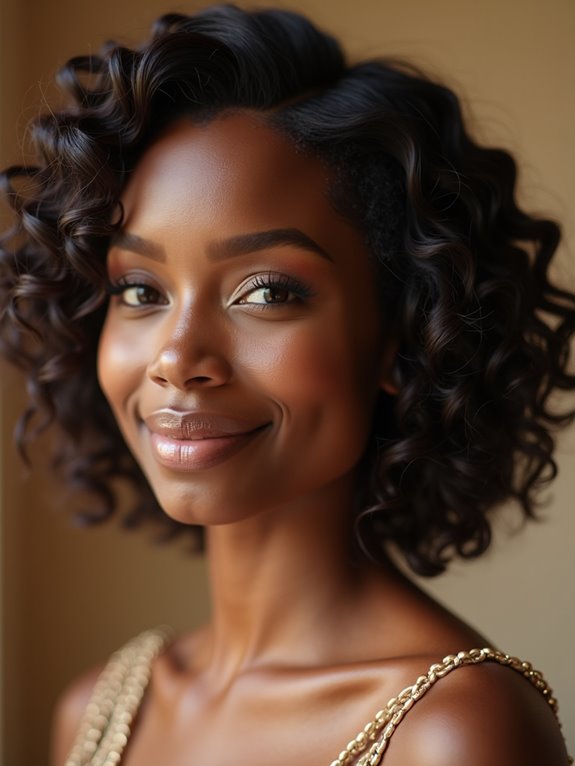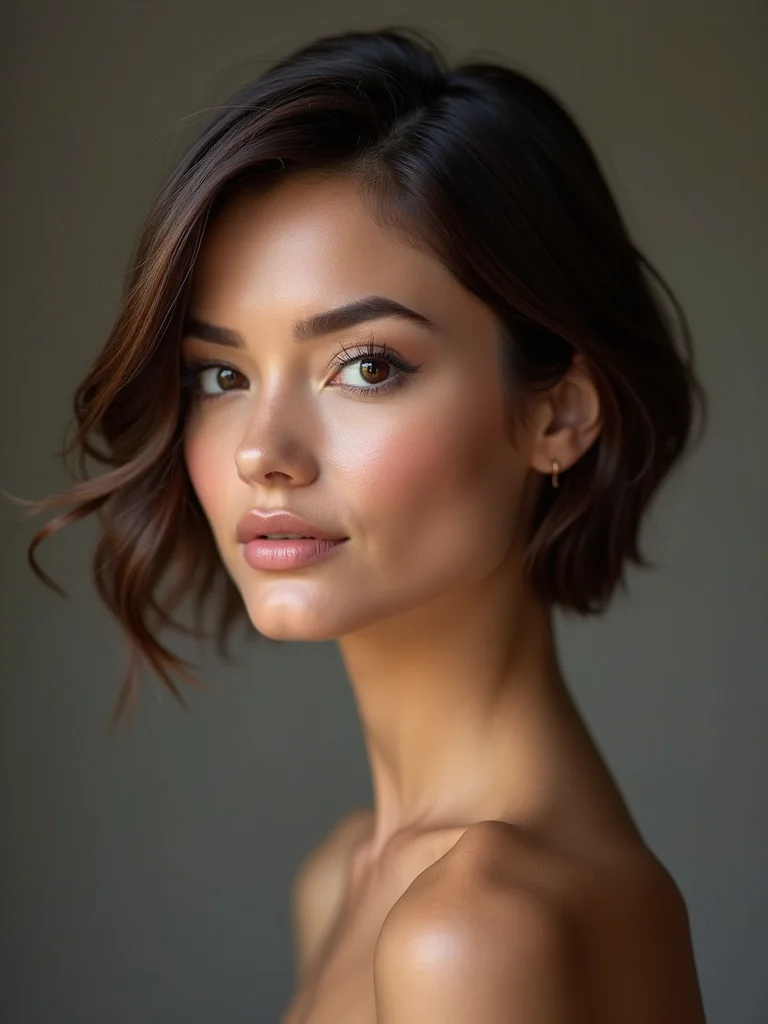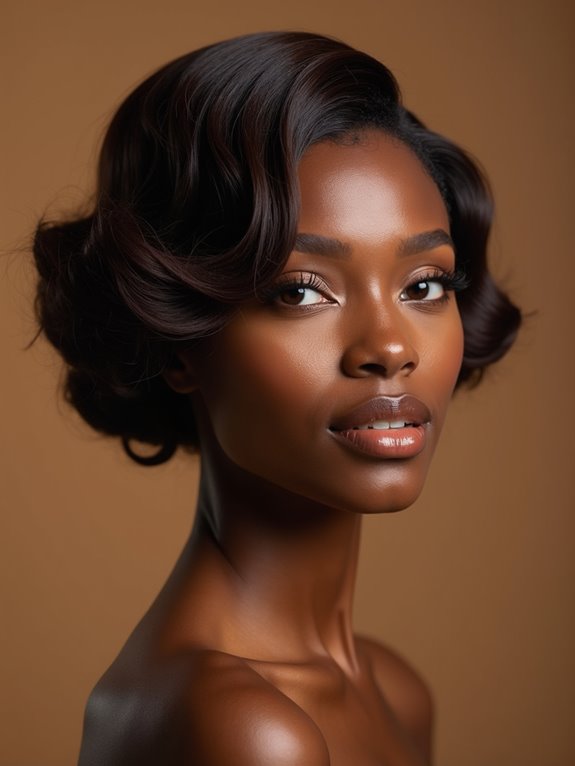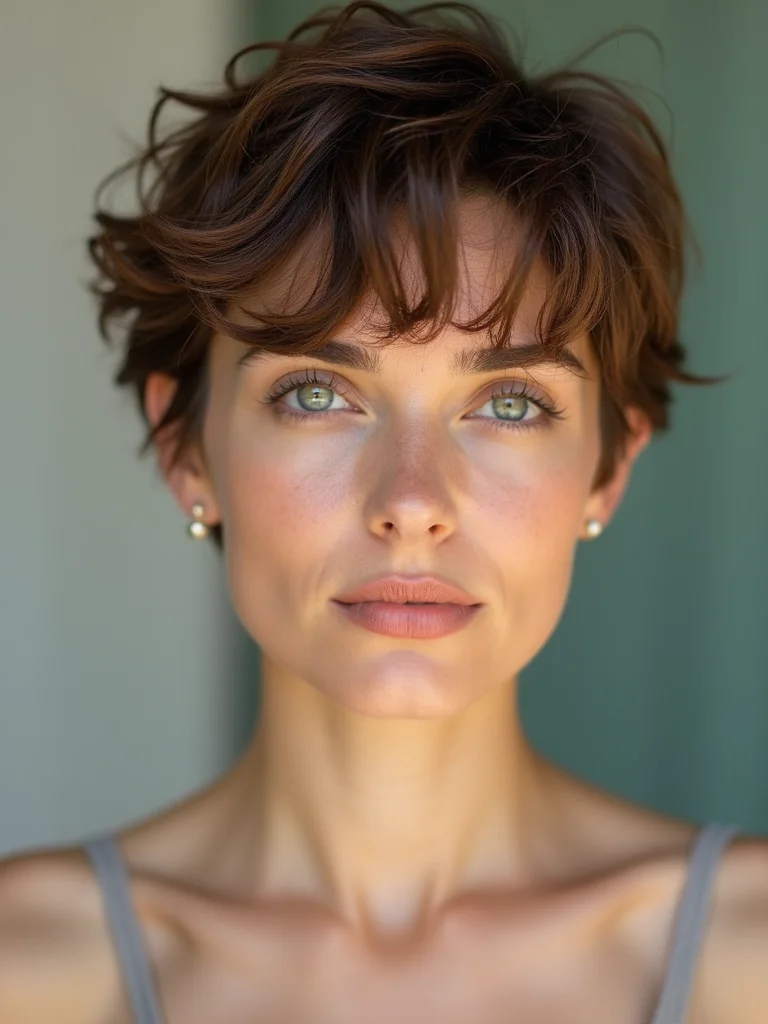
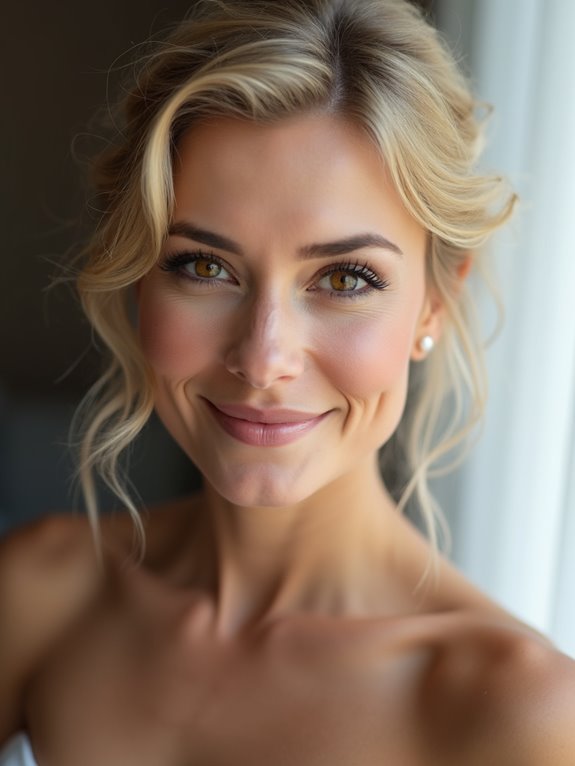
Short hair stops a lot of brides before they start, as if a pixie or bob automatically means fewer options on wedding day. The truth is simpler: texture, movement, and one strategic detail transform short styles into something distinctly bridal. These 15 cuts and styling ideas prove the real limitation isn’t length—it’s knowing what actually works.
Key Takeaways
- Polished blunt bobs with pearl pins at one ear create a striking focal point toward the cheekbone and jawline.
- Slicked-back wet-look pixies with firm gel offer a glossy, sculptural shape that anchors delicate accessories cleanly.
- Soft finger waves defined with setting lotion produce romantic, face-framing S-curves on chin-length hair.
- Mini floral pins tucked into a tapered undercut reveal hidden, light-catching detail when moving or turning.
- A velvet or crystal headband placed just behind the hairline transforms a minimal crop into instant bridal drama.
A Polished Bob With Pearl-Encrusted Pins
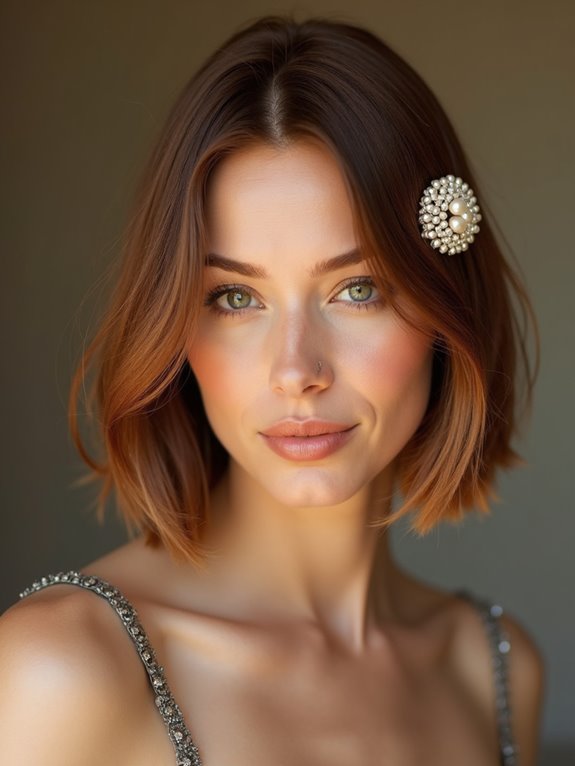
A sharp, chin-length bob becomes something entirely different the moment you pin pearls just above one ear. Instead of a symmetrical frame, you’re creating an unexpected focal point that draws the eye toward your cheekbones and jawline. The pearls catch light when you move, which is the real magic here. The clean lines of a blunt, chin-length cut give short straight hair a polished, modern structure that feels especially bridal.
Ask your stylist to keep your part clean and precise on the opposite side from where you’ll wear the pins. That contrast between the structured part line and the soft cluster of pearls is what makes this feel intentional rather than random. The sleek strands beside the pins pick up more shine when everything is blunt and polished.
Each pin should nestle right where your hair naturally falls, securing your style without needing constant adjustment. It’s the kind of detail that works because it’s genuinely minimal, not because it’s trying to be.
The Slicked-Back Wet-Look Pixie for Quiet Luxury
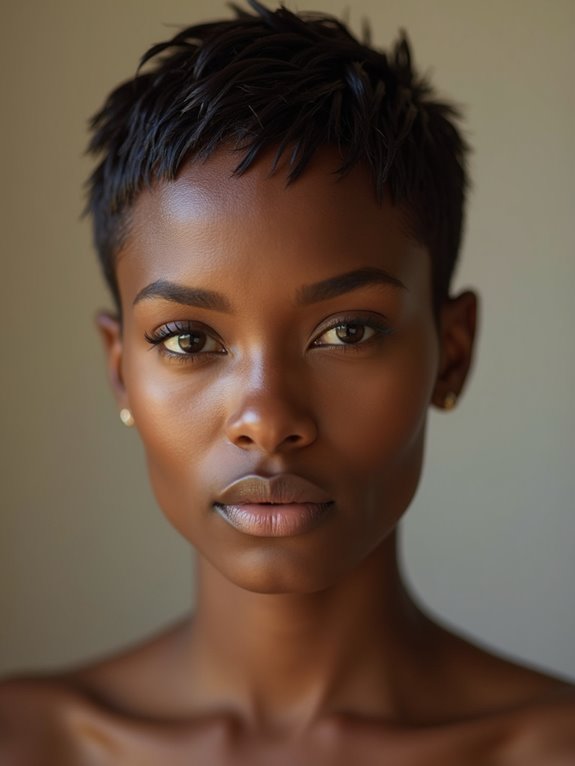
This cut sits close to your head with everything combed straight back from your face, creating clean lines from forehead to nape.
The wet-look finish is what sets it apart: glossy, flat, deliberately polished rather than textured or voluminous.
Start with styling gel on damp hair.
Work it through, then comb everything back and away from your forehead.
The result is a sleek, sculptural shape that reads as refined without trying.
Skip the volume entirely.
A flat, shiny surface is the whole point here, not shimmer or sparkle.
When you ask your stylist for this, mention you want the pixie tight and shaped rather than feathered or layered.
That precision matters.
Slick back hairstyles work especially well on short hair because the close-cropped length naturally lends itself to a controlled, sculpted finish.
Pair it with a minimalist gown and diamond studs, and you’ve made a statement that doesn’t announce itself.
Soft Finger Waves for a Vintage-Inspired Aisle Walk
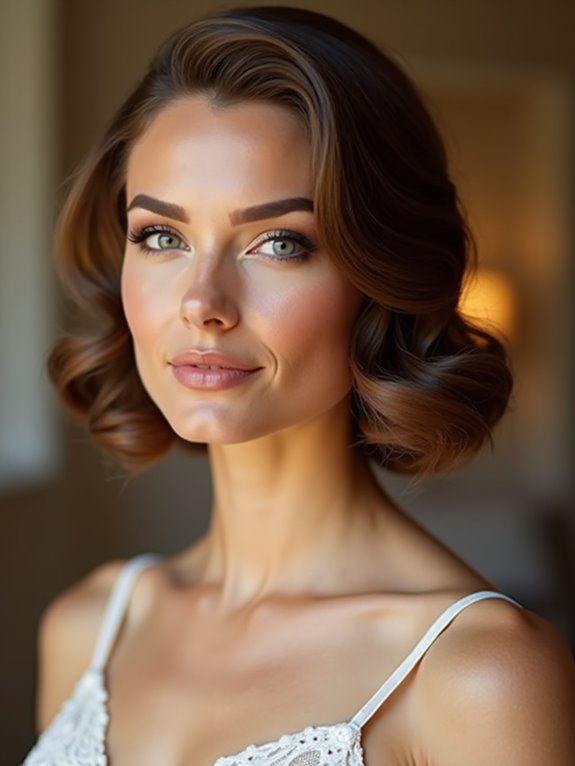
Finger waves are all about those S-shaped curves sculpted close to your head with just setting lotion and your fingers. On a chin-length crop, they create soft movement that reads romantic without the costume effect. The waves themselves do the talking as you walk down the aisle.
Different eras give you different wave personalities to choose from:
| Era Influence | Your Wave Character |
|---|---|
| 1920s Flapper | Tight, glossy, sculpted ridges |
| 1930s Starlet | Softer, looser, side-parted |
| 1940s Pin-Up | Deeper waves, rolled side |
| Modern Fusion | Loose waves, matte texture |
The key move: ask your stylist to focus the deepest waves near your face, where they’ll catch light as you’re walking. Looser waves toward the back keep things from feeling too structured. Setting lotion (not gel) is what holds the shape without that shellacked look. Think of it less as sculpting and more as coaching your natural texture into soft undulations. A dab of setting lotion worked through damp hair helps master the chin-length hair finger waves technique without stiffness.
Face-Framing, Side-Swept Curls on an Asymmetrical Bob
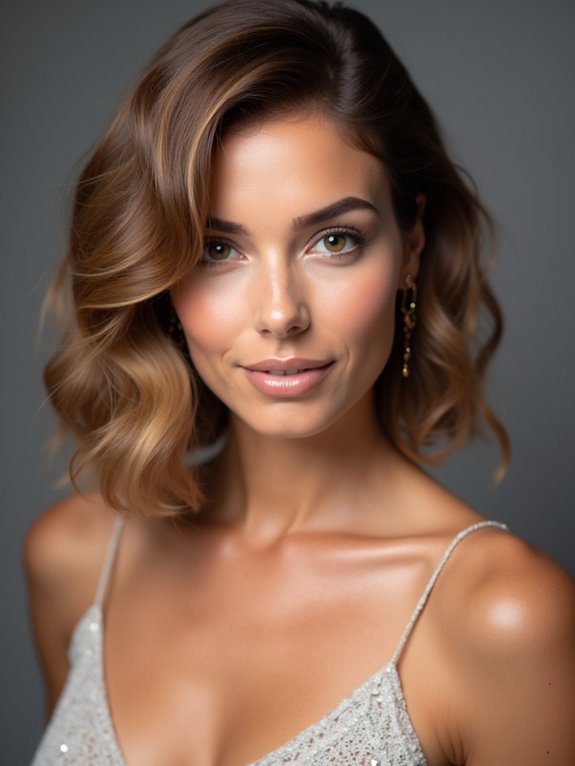
The magic here is in how the cut itself does half the work. Your longer layers naturally want to sweep across one side, and when you curl them, those spirals catch light as they move. The shorter side stays tucked behind your ear—clean, sharp, honest.
A deep part on the longer side amplifies volume where you need it. When your stylist uses a curling wand to shape defined spirals, ask them to pin the curls loosely while they cool so they hold their bounce without looking stiff. This keeps things romantic instead of rigid. This approach works smoothly on long bob haircuts that graze the collarbone.
The asymmetry balances something bold with something soft, so your features stay the focus rather than competing with too much movement everywhere.
An Embellished Headband Anchoring a Cropped Bridal Cut
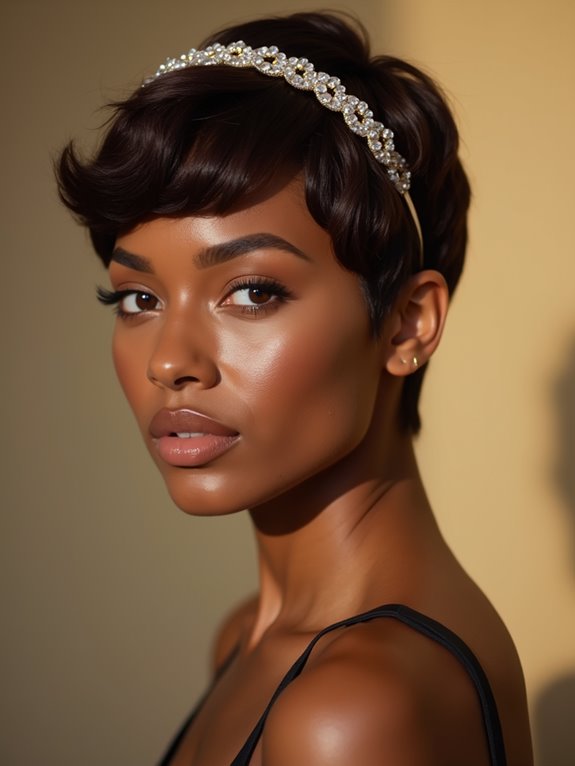
A really short crop—we’re talking chin-length or shorter—becomes something entirely different the moment you add a beaded or crystal headband. The cut itself stays minimal and clean, but the band does the talking for you. It sits just behind your ears, which keeps it stable and lets your face be the real focus rather than the accessory fighting for attention.
What makes this pairing work is the contrast. Your stylist can keep the crop blunt and precise, maybe slightly textured at the ends if you want a little movement, but the headband is what signals occasion. Pearls, crystals, or a combination of both catch light and draw the eye upward. Ask your stylist about placement specifically—anchored too far back and it slips, too far forward and it competes with your face shape.
The minimalism of the cut is what allows the headband to feel like the main event rather than overkill.
| Element | Purpose |
|---|---|
| Sleek Crop | Provides a clean canvas |
| Embellished Band | Adds instant bridal drama |
| Placement | Anchors behind ears for stability |
| Overall Effect | Balances edge with elegance |
A Textured Lob Paired With a Cathedral-Length Veil
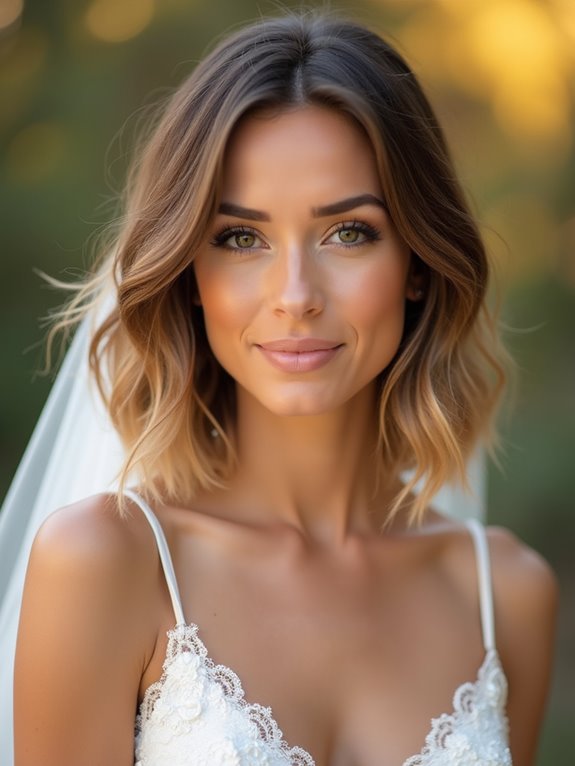
A cropped lob with layers that break up the ends gives you movement without looking like you tried too hard. Pair it with a cathedral-length veil and something shifts. The tulle catches the light as you walk, and suddenly your cut reads differently, more intentional. What matters here is the contrast: your hair is sharp and modern, cropped at the nape with real texture through the waves. Behind you trails something delicate and romantic.
When you ask your stylist for this, be specific about the layers. You want them shorter at the crown to give shape, longer underneath so waves have something to catch on. The veil does half the work, making your neck and the back of your head a focal point. People will notice the chic crop the moment you turn around. The veil’s drama means your hair doesn’t have to do all the heavy lifting, which actually works in your favor. Less pressure on the styling, more impact from the pairing itself.
Mini Floral Pins Tucked Into a Tapered Undercut
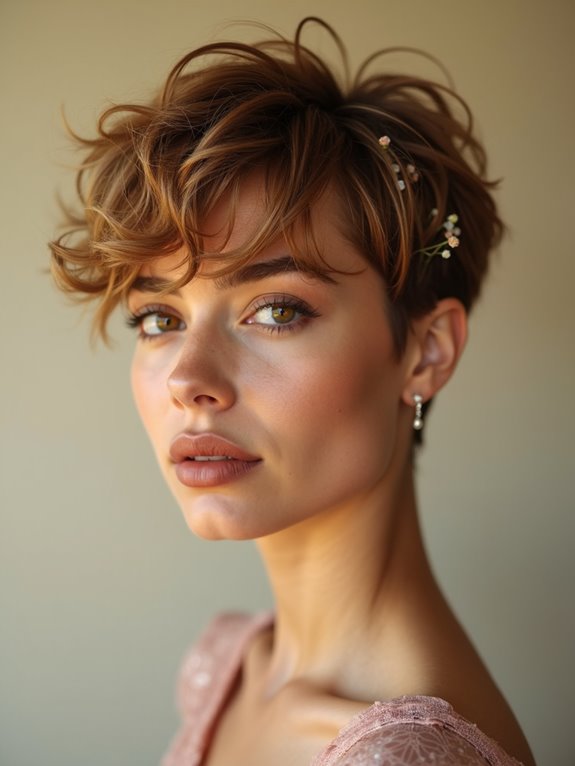
A tapered undercut gives you that clean, architectural foundation, and the shaved nape becomes your canvas. This is where the miniature floral pins live, tucked underneath longer layers so they stay hidden until you move. Tiny silk daisies scattered along the nape create these little reveals when you turn your head or tie your hair back.
What makes this work is the play between sharp and soft. The clippers create precision; the petals add something delicate. There’s no need for length to get impact here. The contrast does the work for you.
When you’re asking your stylist for this, be specific about the undercut depth. A true taper means the sides gradually shorten rather than a blunt line, which gives you room to layer the pins at different heights along the nape. Ask them to keep enough length on top so you can tuck those flowers underneath completely when you want them private. Guests catch glimpses when you move, never the full picture. That’s the whole point.
The Twisted Crown Braid for Chin-Length Hair
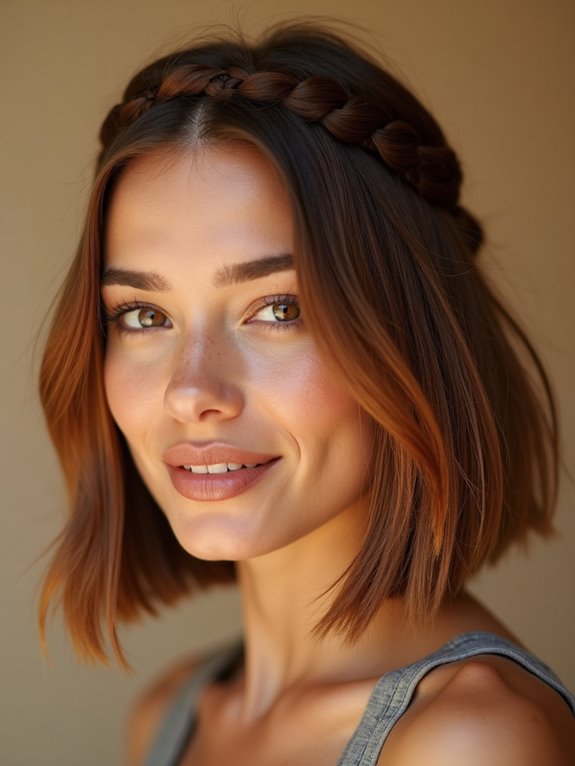
Chin-length hair has this natural advantage: it sits right where a braid can loop around your head without looking sparse or forced. The twisted crown braid capitalizes on that sweet spot. Take sections back from your temples, twist them gently, and pin as you work your way around. The shape arches upward and frames your face like a halo.
What makes this work is asking your stylist to point out where your natural growth pattern falls around the crown. Some people have hair that wants to twist clockwise, others counterclockwise, and fighting that costs you time and pins. Once you know your hair’s preference, the pinning becomes intuitive.
The result sits between polished and undone. It catches light differently than a flat braid would. There’s movement in it, and the pinned sections create texture rather than sleekness. Wear this when you want something that reads as intentional without looking staged.
Natural Curls Shaped With a Defining Mousse
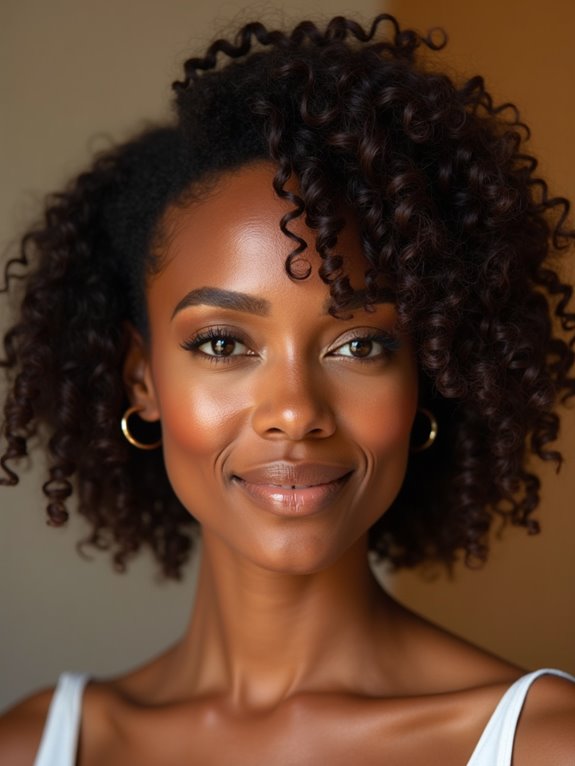
Your curl pattern has actual dimension and spring to it — the kind that looks best when you’re enhancing what’s already there rather than fighting it.
A mousse does the real work here: it grips each coil to keep them separated and defined while calming that frizz that comes with humidity. Apply it to damp hair, scrunching from the ends all the way up to your roots, then let air-dry or use a diffuser if you want more lift without messing with the shape.
When it sets, you’ll have spirals that sit close to your face with real structure.
A few strategic pins tucked into the underside can catch any pieces that want to slip loose throughout the day.
A Deep Side Part Accented With a Crystal Hair Vine
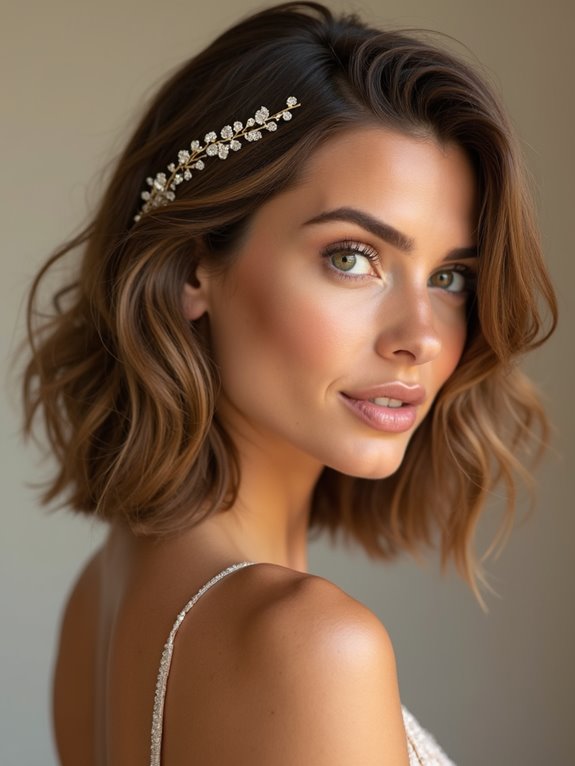
A deep side part on short hair creates real drama with minimal fuss, and a crystal hair vine woven through it adds polish without feeling like too much. The crystals catch light as you move, giving you that subtle sparkle that frames your face without overwhelming it.
- The vine’s delicate weight sits against your hair as a constant, shimmering reminder of the day.
- Each crystal picks up light in your reflection, hitting that “I’m a bride” note you’re after.
- When guests lean in close, they’ll spot the elegant woven glint and notice the detail.
- Threading the vine through a deep part transforms a simple style into something that feels intentional and special.
A Micro Tiara Perched on a Slicked-Back Pixie
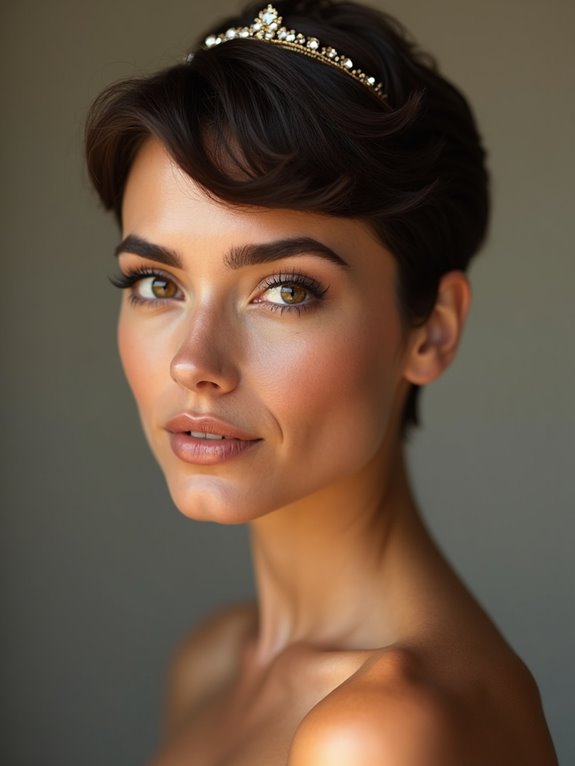
Short layers swept straight back with firm-hold gel create that wet-look finish, and a delicate gold or platinum tiara sits just behind your hairline.
The miniature crown doesn’t fight your cut—it actually lets your bone structure do the talking instead. When you ask your stylist to keep your pixie sharp and close, mention you want the back smooth enough to anchor a small accessory without it slipping.
The structured vibe here comes from clean lines meeting something just precious enough to feel intentional. Less decoration, more impact.
The Tucked-and-Pinned French Twist, No Extensions Needed
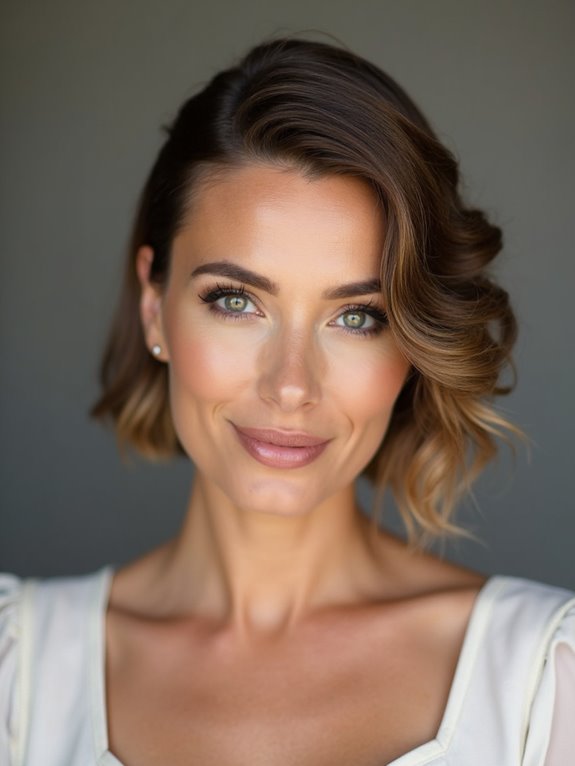
Here’s the thing about this style: it works because you’re not fighting your hair’s actual length. Every layer—whether you’ve got a choppy bob or longer pieces—gets swept up and secured close to the scalp.
The twist sits compact and polished at the nape, which is exactly what makes short hair look intentional instead of like you’re trying to hide it.
When you ask your stylist to cut layers that can actually tuck into a twist, mention that you want texture throughout, not just length. Those shorter pieces at the crown and around your face are what give the style dimension.
Pearl-tipped pins do practical work here too. They grip better than smooth ones, so your twist won’t slip by the ceremony’s end.
Catch them in light and they disappear into the hair rather than looking like fasteners.
- You feel the thrill of defying tradition.
- Your neck elongates with each pinned strand.
- You savor the shock of guests admiring your real hair.
- You clutch your bouquet with newfound confidence.
A Blunt Bob With a Statement Bow for the Ceremony
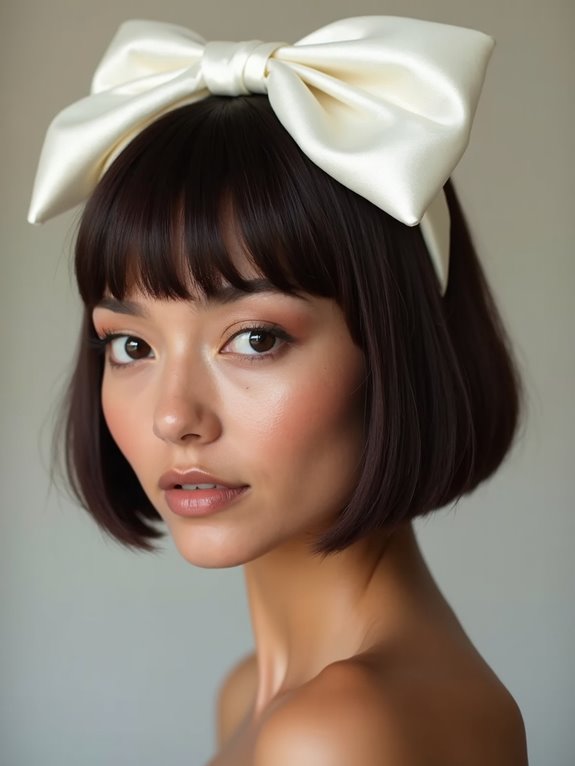
If you’re done with every strand pinned somewhere, a blunt bob gives you exactly what you want: a sharp, jaw-grazing cut with an even line all the way across. Modern and minimal by nature.
For the ceremony, the real move is adding a statement bow—think lush silk, oversized—positioned right above your ear or at the nape of your neck. It reads as bridal without softening what makes this cut work: that crisp, defined edge stays visible and graphic. Tuck one side behind your ear to show off a pearl stud.
Ask your stylist to keep the nape tight so the bow sits cleanly against the actual shape of your head. This look holds up in photos, needs no fussing mid-ceremony, and short hair carries the aisle with real presence.
A Root-Lifted Pixie With Velvet Headband for Fine Hair
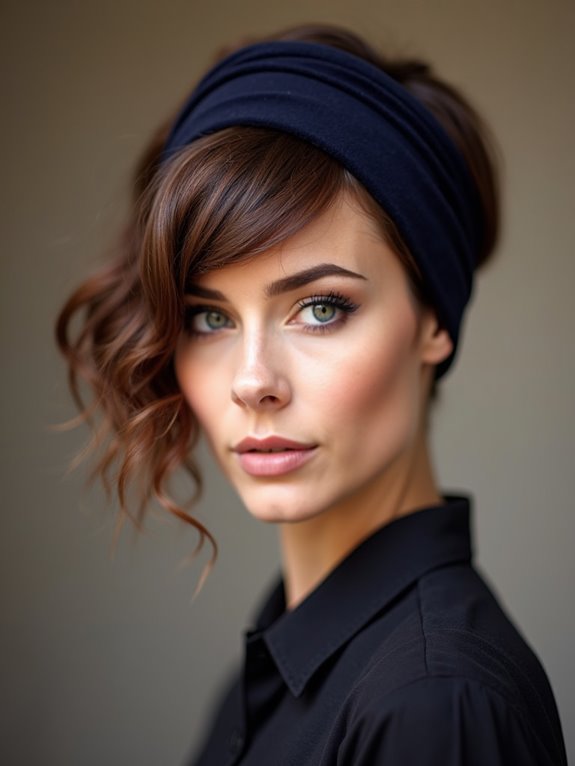
Fine hair in a pixie cut needs lift at the roots or it reads flat against your head. A root-lifting spray on damp hair before you blow-dry straight up and back makes the difference.
Once everything’s dry, gently tease the crown and smooth that top layer forward to keep it polished. Flexible-hold hairspray keeps the shape without stiffening it.
Here’s where the headband does its work: place a plush velvet band just behind your hairline. It gives you height that a pixie alone can’t hold, and it frames your face softly without drowning out the delicate cut you’ve had shaped.
- Your silhouette gains real volume where you need it most.
- Velvet feels like a quiet luxury against your skin all day.
- The headband’s color ties into your wedding palette.
- Your airy shape stays intact from the ceremony through the reception
Voluminous, Retro Waves on an Angled Lob
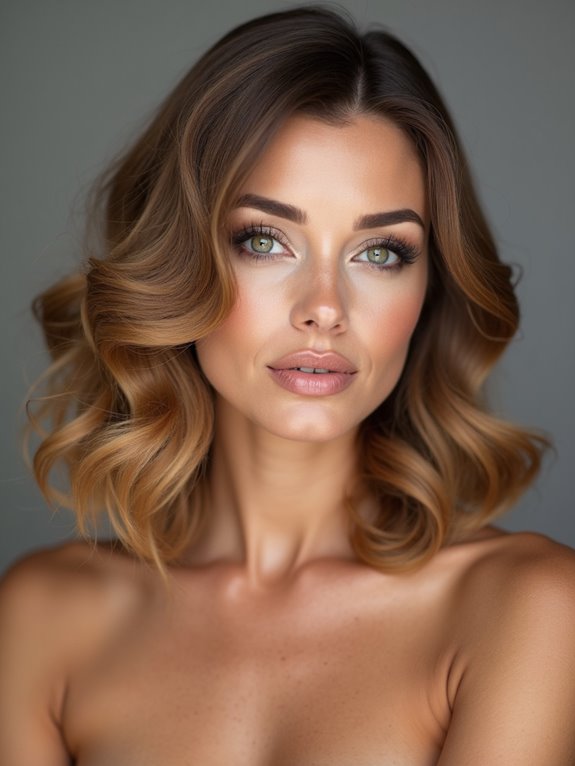
An angled lob that grazes your collarbone is your foundation here. The cut itself creates that swooping shape, especially when one side angles longer than the other. Set large rollers on a deep side part, directing everything away from your face, then let them cool completely.
Once they’re cool, brush out those curls into S-shaped waves. The real trick is teasing gently at the crown and then smoothing just the top layer over it, which gives you lift that actually stays put without looking choppy.
A sparkling barrette tucked behind your ear keeps the whole thing anchored in place. Finish with shine spray for that old-Hollywood gloss, and the waves hold their shape while looking relaxed rather than stiff.
Frequently Asked Questions
Will Extensions Damage My Already Short, Fine Hair?
Extensions can damage your short, fine hair if you’re not careful. You’ll risk breakage and thinning from the tension and weight they add.
Choose lightweight, clip-in options and avoid glue or tight bonds. Give your hair regular breaks between uses, and moisturize your scalp daily. Don’t leave them in too long—it’s your best defense against lasting harm.
How Do I Communicate With a Stylist Who Dislikes Short Bridal Hair?
You don’t need to defend your short hair; just focus on the vision. Book a consultation and bring clear photos of styles you love on short hair.
Say, “I’m keeping my length, and I’d love your expertise to create a bridal look we’re both proud of.” If she still pushes for extensions, you can politely but firmly say, “That’s not an option for me. Can you work with what I have?”
If she can’t, find another stylist.
Can Short Styles Hold up All Day in Humidity?
Yes, your short style can definitely hold up in humidity when you use the right strategy. You’ll want to work with your stylist to choose products that lock in texture—think strong-hold mousses or anti-frizz creams.
They’ll likely recommend a cut that embraces your hair’s natural movement, so it doesn’t fight the moisture. Ask them to apply a humidity-resistant hairspray and seal the style with a light oil.
You’re not helpless; with these steps, you’ll have a ‘do that stays fresh from the ceremony to the last dance.
How Far in Advance Should I Cut My Hair?
You shouldn’t get a drastic chop right before the wedding. Schedule your final cut about two to four weeks out. This timeframe lets your style settle and look natural, not too fresh.
If you’re keeping your current length, a trim one week ahead works perfectly. Don’t experiment with a new short style close to the date; you’ll need time to figure out how it moves and how to manage it on the big day.
What Neckline Works Best With a Short Bridal Style?
You’ll find sweetheart, off-the-shoulder, and V-necklines elegantly frame a short bridal style. These cuts expose your collarbone and neck, creating a lengthening effect that balances shorter hair.
Avoid high, fussy necklines like turtlenecks or heavy embellishments right at your throat—they’ll crowd your look. Instead, pick a simple, elegant neckline that lets your chic crop shine as the statement piece. It’s your day, so own that striking silhouette.
Conclusion
The real difference short hair makes on your wedding day comes down to texture and hold. Whatever style you choose, ask your stylist specifically about products and techniques that will keep it looking fresh through ceremony, photos, and dancing—because short hair needs a solid plan to stay put when you’re moving around all day.