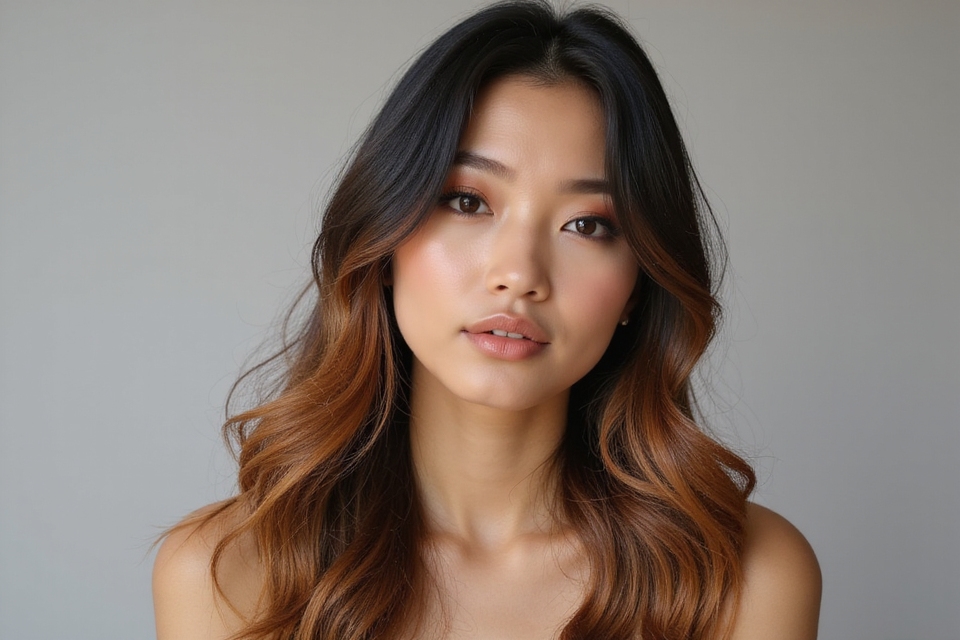
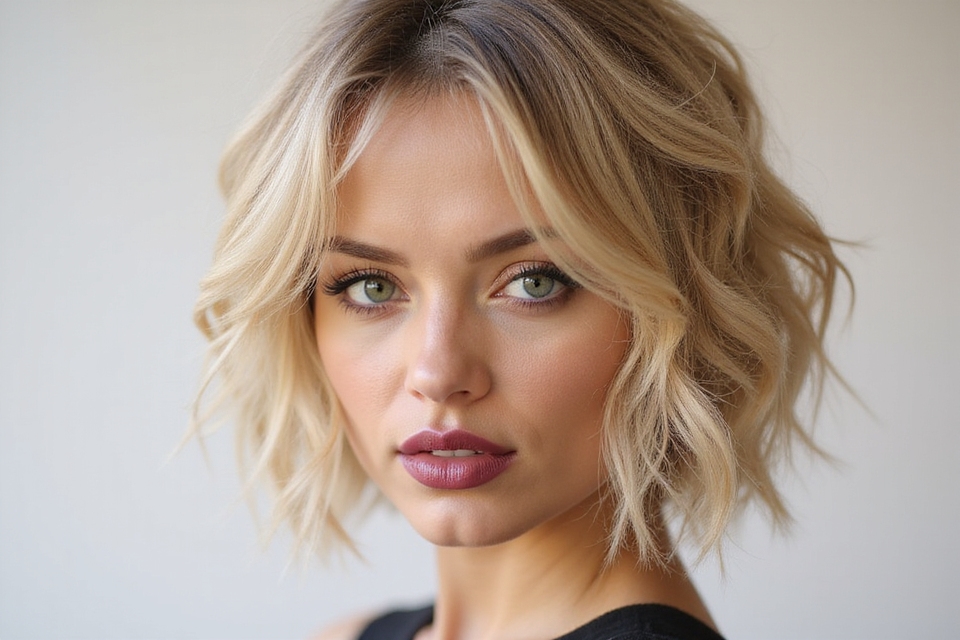
Ever left the salon with a cut that looked full for exactly one day, then went flat? Fine hair is a cutting problem more than a product one: the wrong shape, too long, over-layered, or thinned out, will fall flat no matter what you spray on it, while the right shape holds volume on its own. The good news is that the cuts that flatter fine hair are well established, and there are more of them than you’d think.
Below are 22 cuts and techniques built to make fine, thin hair look fuller, from a blunt bob to a wispy shag, each with why it works and who it suits. Styling comes after the cut, so get the shape right first.
Cutting Fine Hair, in Short
Fine hair isn’t a limitation; it’s a cutting challenge with well-known solutions. The whole game is choosing cuts that build the illusion of density, blunt lines that look thicker, strategic layers that add movement without removing weight, and lengths that hold volume, while avoiding the over-thinning and heavy length that flatten fine hair.
The single biggest mistake is thinning fine hair to ‘reduce bulk’ it doesn’t have; the second is going too long, which drags out any lift. Get the cut right and fine hair looks full and healthy with barely any product. The right shape does most of the work for you.
Fine Hair Has More Options Than You Think
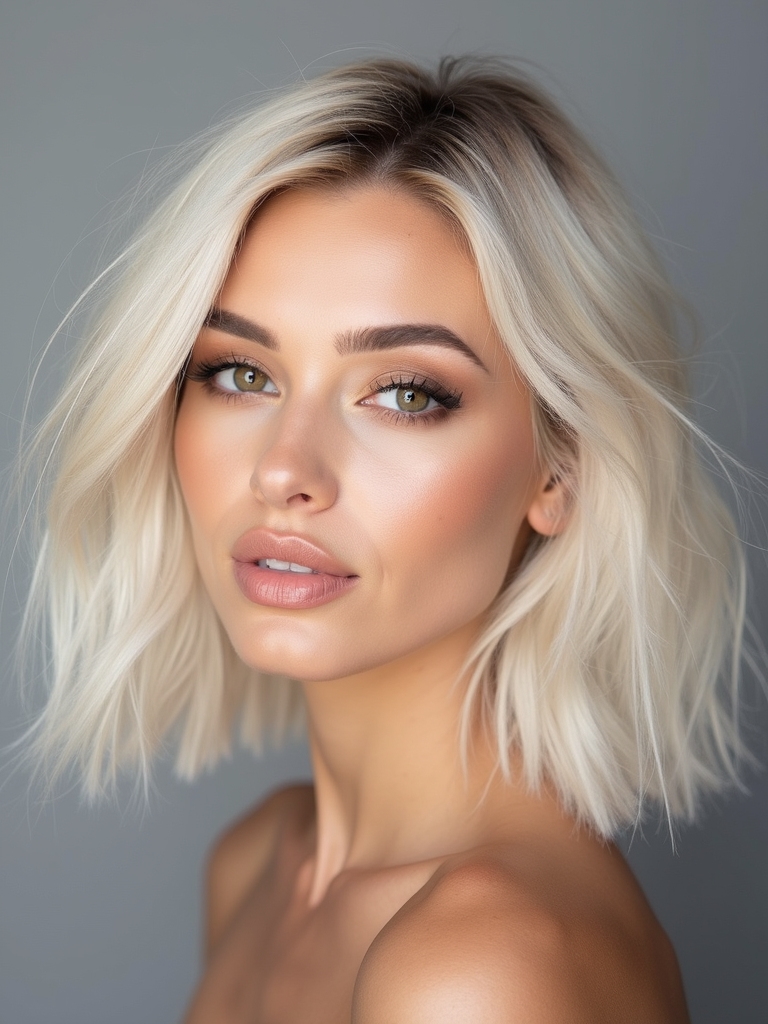
The first thing to unlearn is that fine hair limits you. Fine simply means each strand is thin; you may have a lot of it or a little, and either way the right cut can make it look full and healthy. What fine hair needs is a shape that creates the illusion of density, and there are many that do.
The enemies are weight and over-thinning: hair that’s too long drags flat under its own length, and thinning shears strip away the little body fine hair has. Nearly every cut here builds body by adding structure to the hair.
So the range is truly wide, from a sharp bob to a soft shag, and the trick is matching the shape to your length, face, and lifestyle.
Choosing Your Length
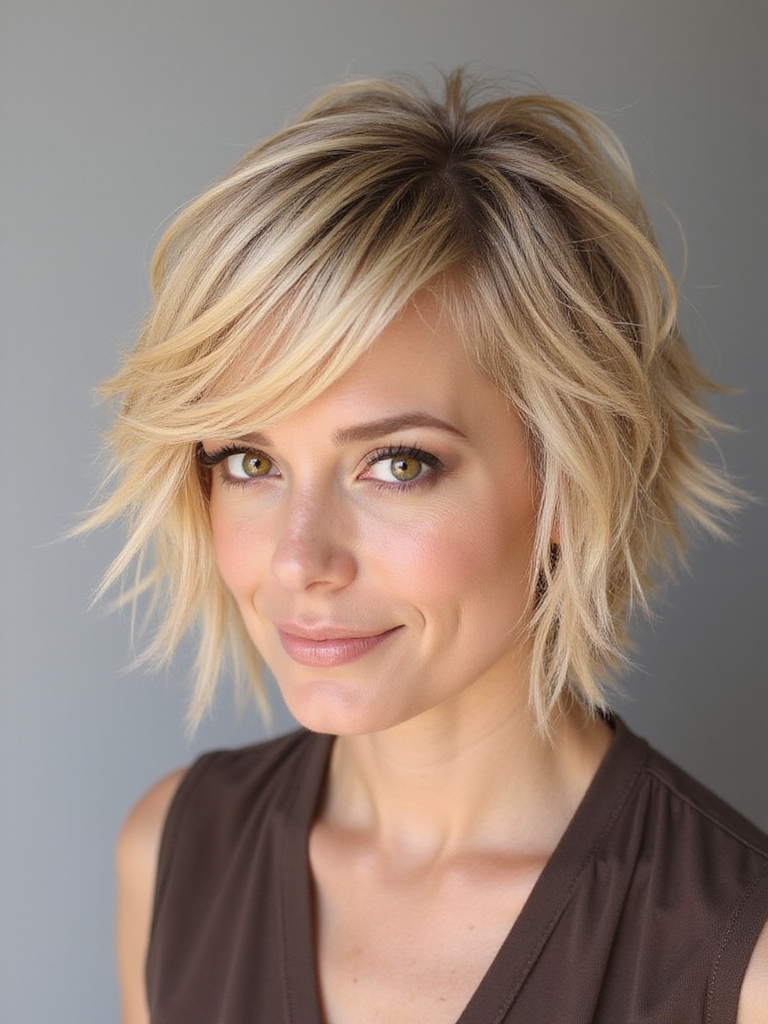
Length is the single most important decision for fine hair, because weight is what pulls it flat. As a rule, shorter to mid lengths, from a pixie to a collarbone lob, hold volume far better than long hair, since there’s less weight dragging the roots down.
Why Shorter Holds Volume
That doesn’t mean you can’t have longer hair, but past the shoulders, fine hair usually needs layers and a blunt perimeter to keep it from looking stringy at the ends.
In my chair, the length conversation is where I start with every fine-haired client, because getting it right makes everything else easier.
Layers for Movement
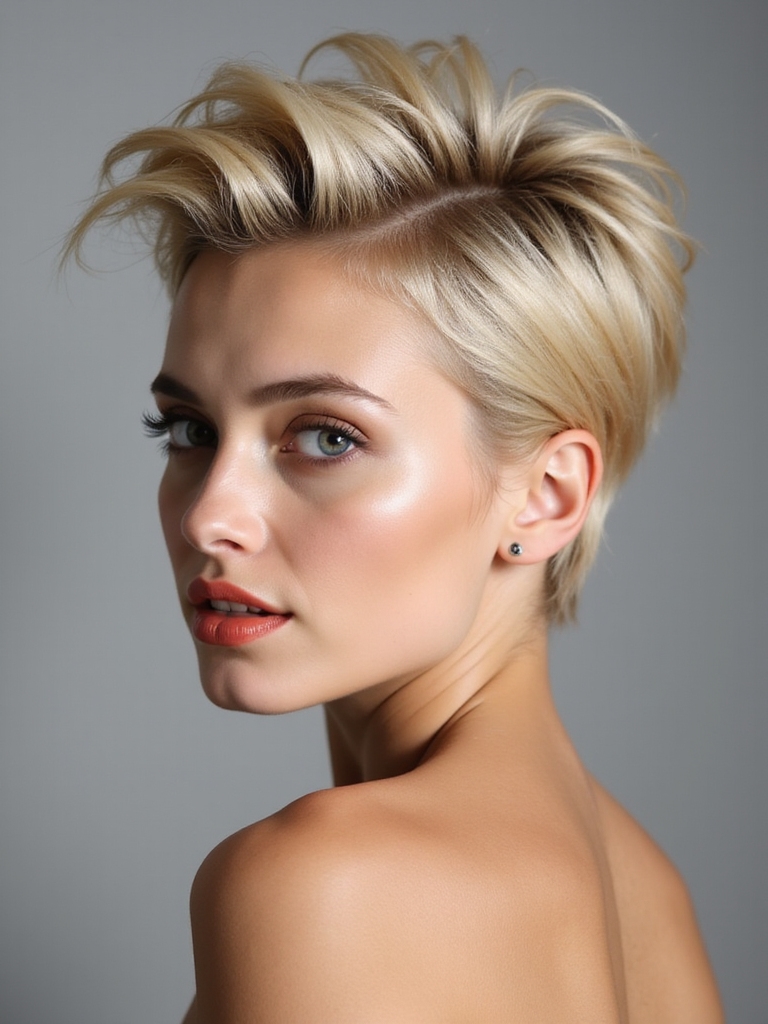
Layers are fine hair’s best friend when they’re done right, and its worst enemy when they’re overdone. A few strategic, longer layers add movement and lift and make hair look fuller, but too many short layers remove weight and leave fine hair thin and wispy at the ends.
The key is restraint: soft, long layers that build shape without stripping density. Ask for movement, not thinning. Placed well, layers give fine hair the body it can’t grow on its own. See layered hair for more.
Pick a fine-hair cut by how short you’ll go.
🎯Short
A textured pixie or graduated bob; no weight to drag the roots, maximum volume, lowest upkeep.
🎯Mid-length
A blunt lob, soft shag, or curtain-bang cut; volume plus versatility, holds body well.
🎯Longer
Keep a blunt perimeter and add soft long layers and face-framing; avoid over-thinning at the ends.
Graduated Cuts for Volume
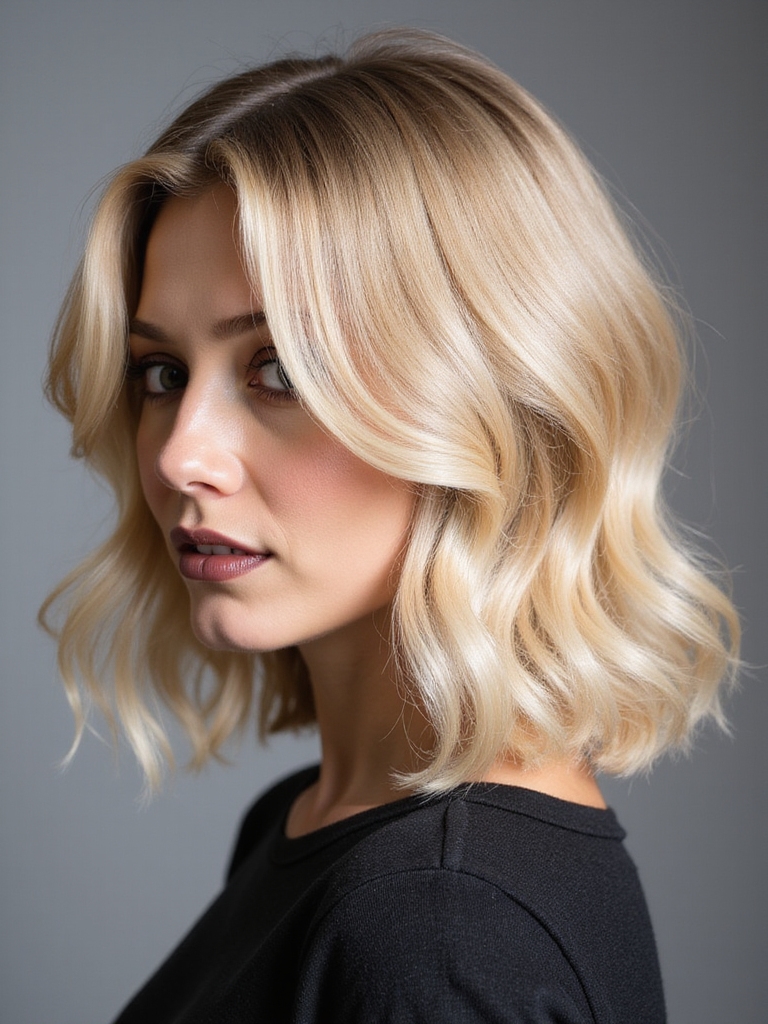
A graduated cut stacks the hair at the back, cutting the under-layers shorter so the top layers fall over them, which pushes the hair up and out for instant volume. It’s among the most reliable ways to build body into fine hair with the cut alone.
How Stacking Builds Body
A graduated bob is the classic example: shorter at the nape, longer toward the front, with that stacked back creating lift you don’t have to style in.
It suits fine, straight hair especially, where the stacking really shows. The structure holds even as the day goes on.
The Volume-Building Bob
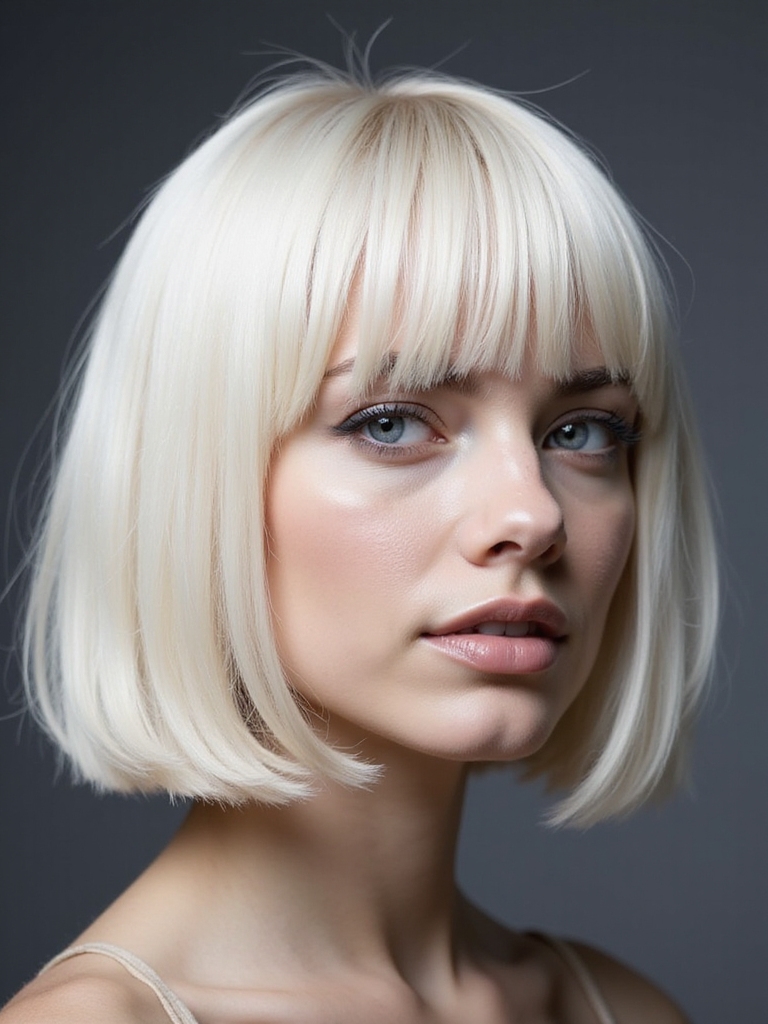
A bob is the gold-standard fine-hair cut, because a blunt, one-length perimeter makes the ends look thick and the whole head look fuller. A chin-to-collarbone bob, cut blunt, is flattering, modern, and holds volume beautifully.
The blunt line is the secret: every strand lands at one level along the bottom, which makes the perimeter look thick and full. Avoid heavy internal thinning, which undoes the effect.
It suits nearly every face shape and every fine hair type, and it’s the cut I recommend most often for thin hair. See the lob for a longer version.
The Low-Maintenance Pixie
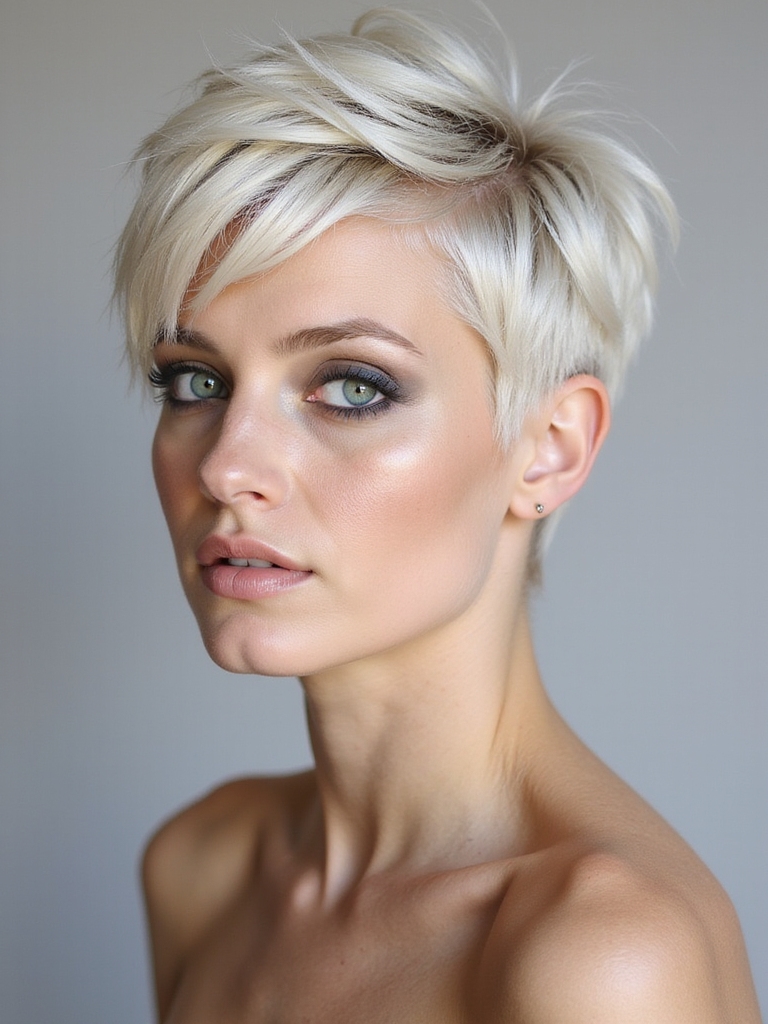
A pixie resets fine hair completely: cropped that short, nothing pulls the roots down, so the hair stands up and looks its fullest. A textured pixie with a little length on top gives height and shape, and it takes seconds to style.
It’s the lowest-maintenance cut here and one of the most flattering, since it puts the focus on your face. It suits fine hair of every texture, and a soft, piece-y finish keeps it from looking severe. See a messy pixie for a softer take.
- No weight to drag the roots, so hair stands up full.
- Length on top gives height and shape.
- The lowest-maintenance cut for fine hair.
- A piece-y finish keeps it soft and modern.
Fringe and Bangs
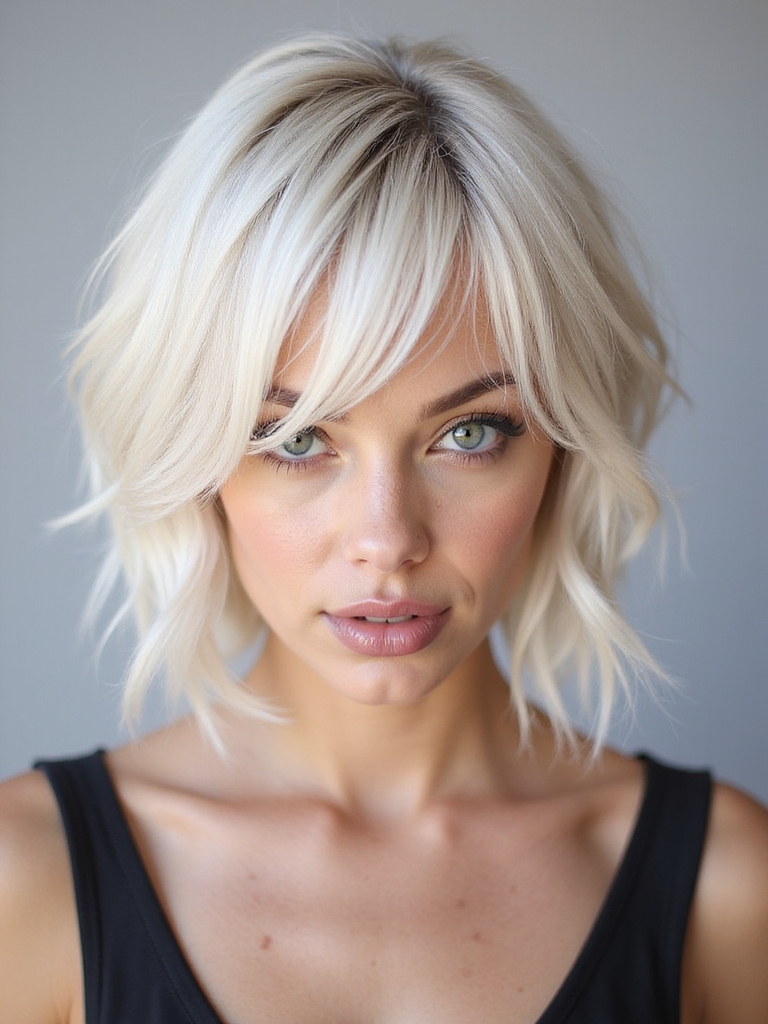
Bangs are a clever way to add the look of fullness to fine hair, since a fringe concentrates hair at the front and draws the eye there. A blunt or soft fringe makes the hairline look denser and frames the face, and it’s a low-commitment change that transforms a flat cut.
The key for fine hair is keeping the fringe soft and not too sparse, so it looks full at the hairline. Bangs suit most face shapes when the style is matched to you, and they pair well with almost every cut here.
- A fringe concentrates hair at the front for fullness.
- Makes the hairline look denser and frames the face.
- Keep it soft and not too sparse, so it isn’t see-through.
- Pairs well with almost every fine-hair cut.
Asymmetrical Cuts
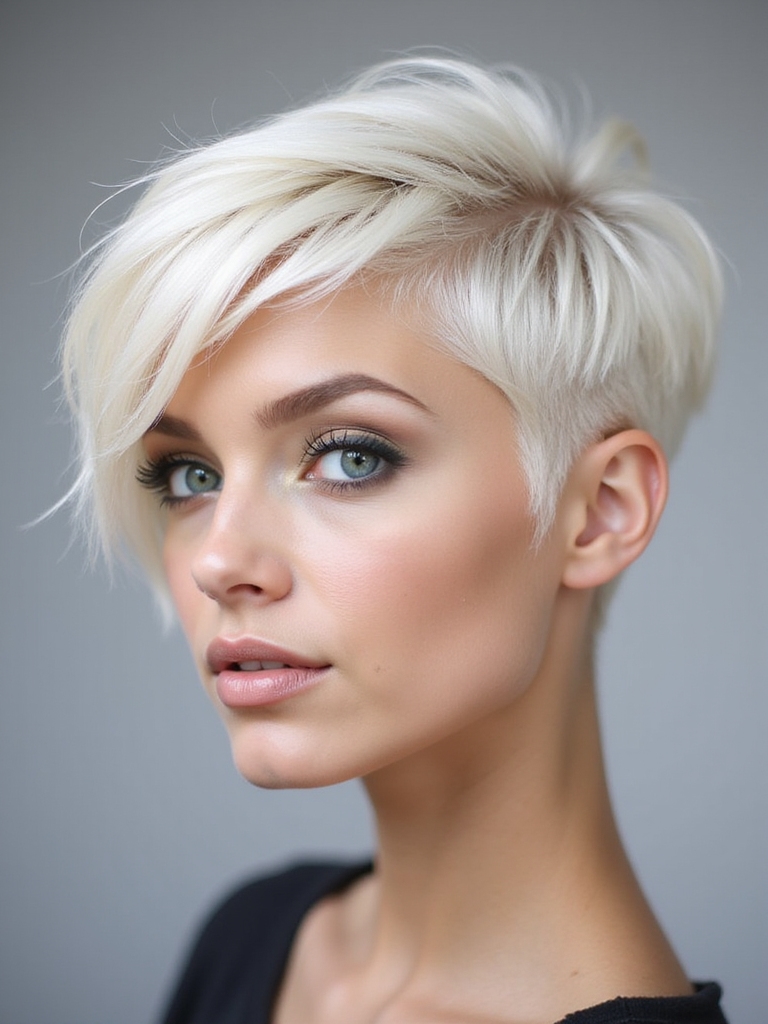
Cut longer on one side than the other, an asymmetrical shape adds visual interest and the illusion of volume to fine hair, since the angle and the movement it creates trick the eye into seeing more body. An angled bob or a side-swept pixie are the classic versions.
The off-balance shape also gives you built-in styling drama with no effort, and a deep side part on the longer side adds even more lift. It suits anyone after a modern, editorial edge, and it flatters most face shapes when the angle is chosen to suit you.
The Modern Shag
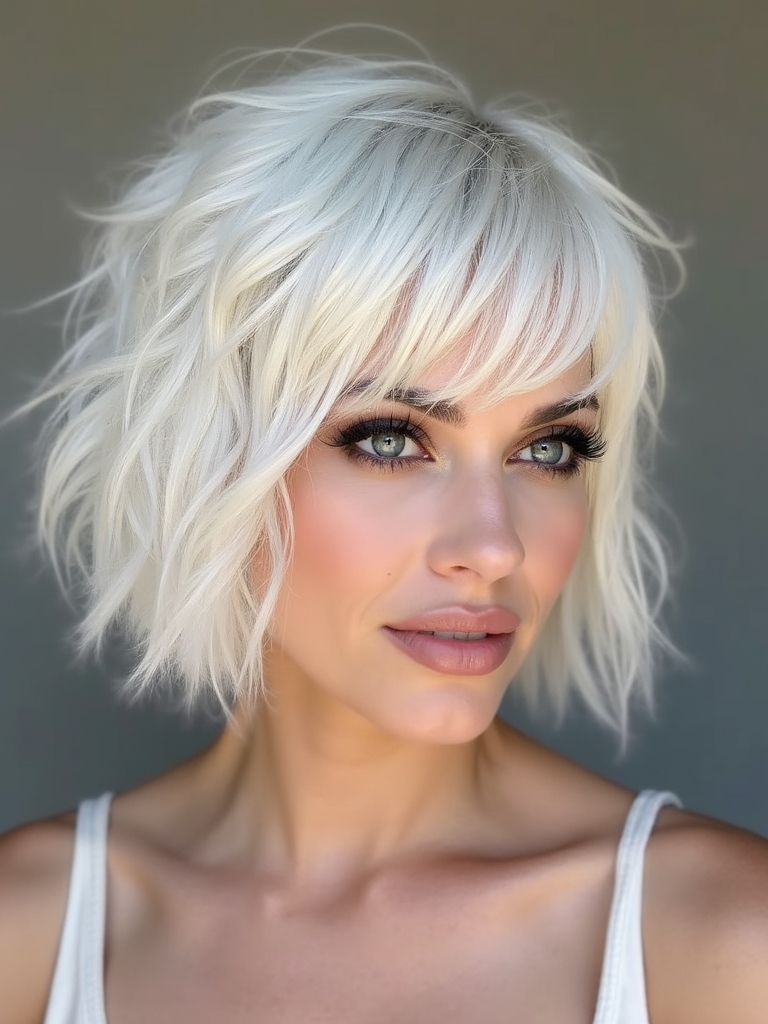
The shag is having a major moment, and it’s brilliant for fine hair when cut with restraint. Its soft, choppy layers and heavy fringe create tons of movement and a piecey, undone texture that looks like volume, so fine hair looks full and casually cool.
The trick for fine hair is keeping the layers soft and not over-thinned, so you get movement without losing density. A shorter or mid-length shag holds body better than a long one.
It suits fine, straight-to-wavy hair especially, and it wins over anyone chasing a relaxed, textured finish. See a shag for fine hair.
Curtain Bangs
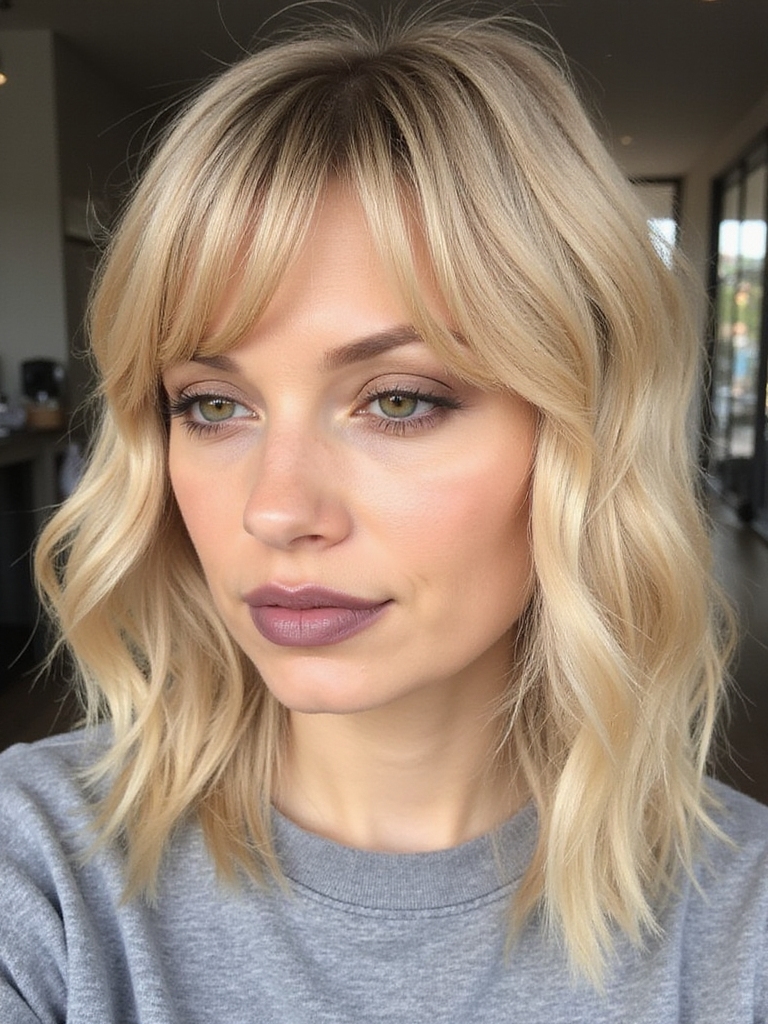
Curtain bangs, longer pieces parted in the middle that sweep back toward the cheeks, are the most flattering, low-commitment fringe for fine hair. They add softness and fullness around the face while skipping the frequent trims a blunt fringe needs.
Why Curtain Bangs Are Easy
For fine hair, curtain bangs are ideal because they blend into the rest of the cut and grow out gracefully, and the sweep adds face-framing movement that fills out the front.
They suit almost every face shape and pair with any length, which makes them the easy yes for anyone wanting a change. See curtain bangs.
Texturizing for Volume
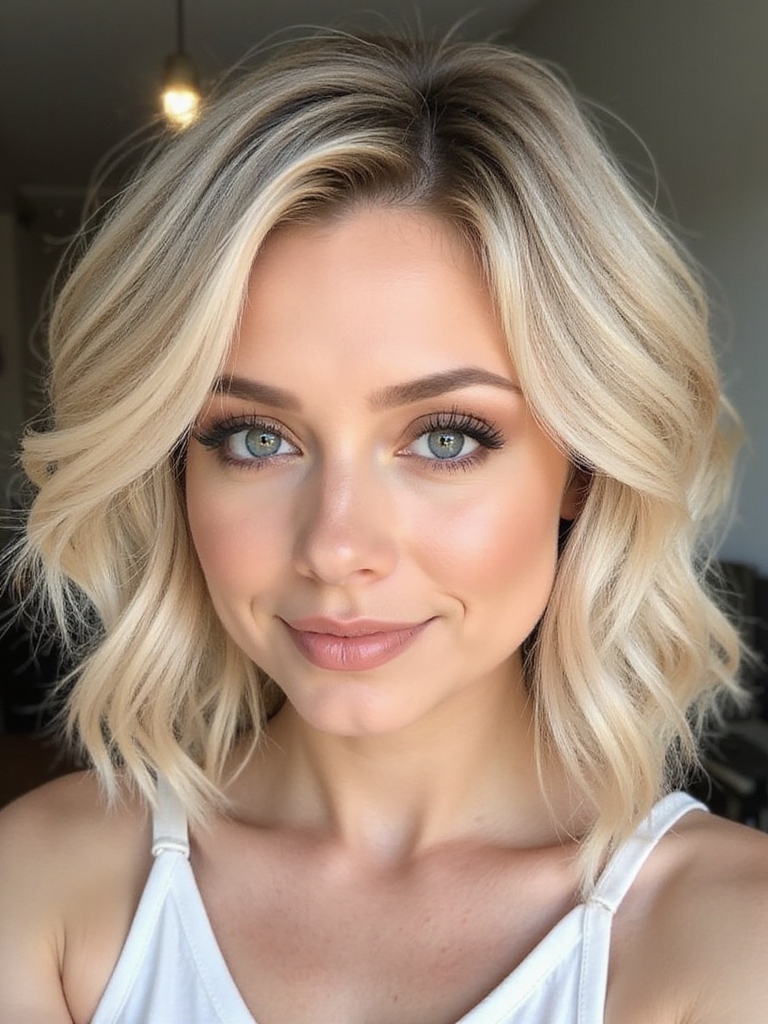
Texturizing is a finishing technique, and used correctly it adds volume to fine hair by creating subtle separation and movement so the hair doesn’t sit flat. The word that matters is ‘correctly’: a skilled stylist texturizes lightly at the ends or in specific spots to add piece-y movement, which is very different from thinning shears run through the whole head, which strips density fine hair can’t spare.
Ask for light point-cutting or texturizing at the ends only, and it gives fine hair a modern, piece-y movement. Done heavily, it’s the fastest way to ruin fine hair, so this one is all about restraint and a trusted stylist.
- Light texturizing adds separation and movement.
- Keep it to the ends or specific spots only.
- Never thin the whole head; fine hair can’t spare density.
- It’s all about restraint and a trusted stylist.
Razor Cuts, With Caution
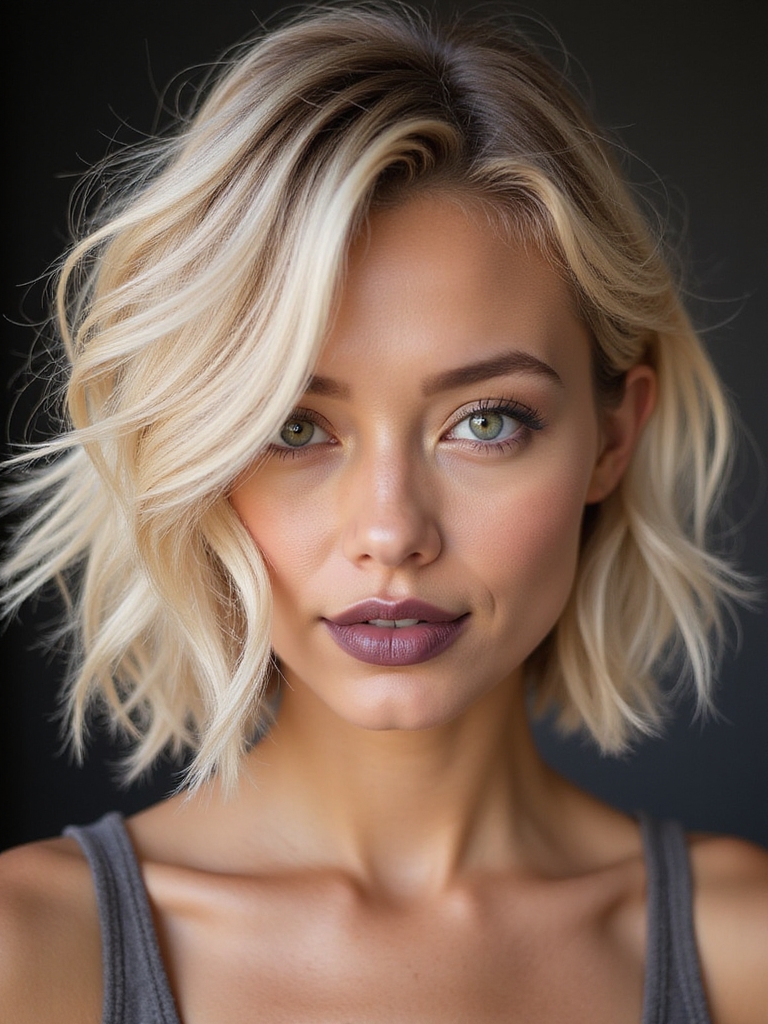
Razor cutting creates soft, wispy, piece-y ends and can add beautiful movement, but with fine hair that finish carries a real catch. A razor thins and tapers the ends, which can leave fine hair looking stringy and see-through if it’s overdone or done by an unskilled hand.
In the right hands, a light razored finish adds soft texture and a modern edge; in the wrong ones, it removes the density fine hair needs. If your hair is very fine or fragile, a blunt or point-cut finish is usually safer. Only go razor with a stylist you trust who understands fine hair, and ask them to keep it light.
- A razor thins and tapers the ends, adding wispy movement.
- Overdone, it leaves fine hair stringy and see-through.
- Very fine or fragile hair is safer with a blunt finish.
- Only razor with a trusted, fine-hair-savvy stylist.
Heads-Up
The fastest way to ruin fine hair is over-thinning, whether with thinning shears or a heavy razor. Fine hair needs its density kept intact. If a stylist reaches for thinning shears to ‘remove bulk’ on already-fine hair, speak up; ask for a blunt or light point-cut finish instead.
The Blunt Cut
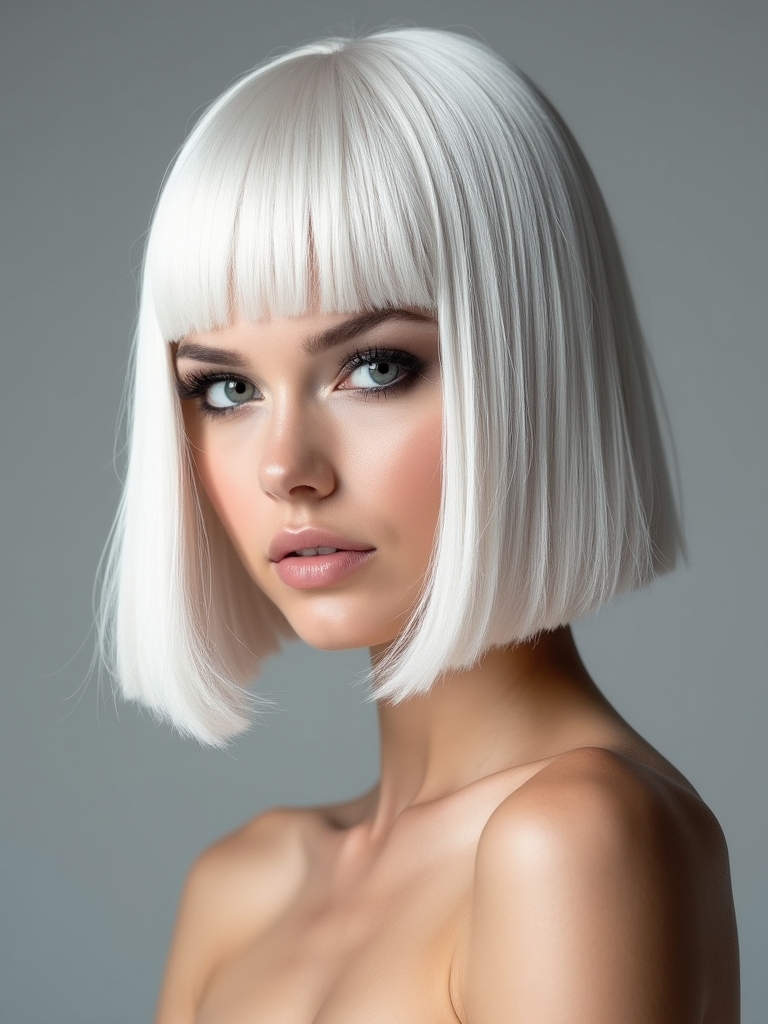
If you take one idea from this whole guide, make it the blunt cut. A blunt, one-length perimeter, whether on a bob, lob, or long hair, is the single most effective way to make fine hair look thicker, because the whole perimeter finishes at one level, so the bottom looks dense and full.
It’s the reverse of a razored or heavily layered edge, and it’s why blunt bobs look so full. You can still add soft internal layers for movement, but keeping that perimeter blunt is what fakes density. It suits every face and every fine hair type, and it’s the foundation of most flattering fine-hair cuts.
- A blunt perimeter makes the ends look dense and full.
- The single most effective fine-hair cutting trick.
- Add soft internal layers, but keep the perimeter blunt.
- The foundation of most flattering fine-hair cuts.
Volume for Fine Curls
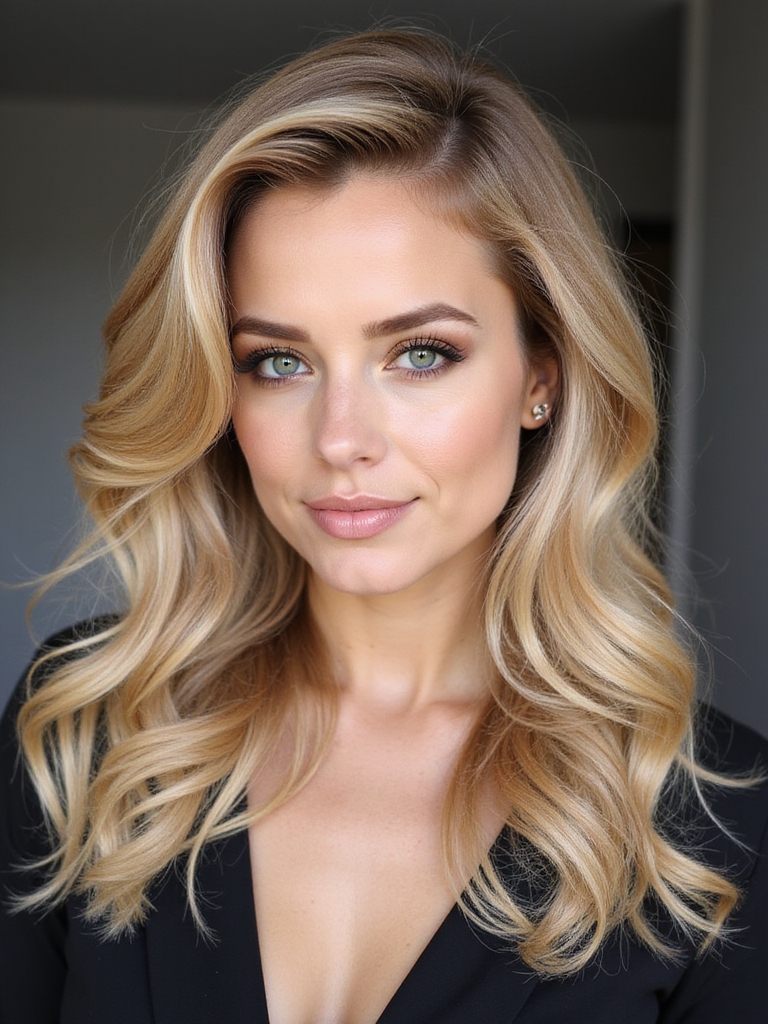
Fine hair isn’t only straight, and fine curly and wavy hair needs its own approach. Fine curls can look sparse if weighed down or cut wrong, so the goal is a shape that supports the curl pattern and lets it spring up for volume, often a rounded, layered shape cut to the curl.
A stylist experienced with curly hair, ideally cutting it dry, can shape fine curls so they stack and lift with body. Gentle, curl-specific layering adds height without thinning, and the right products keep fine curls defined and full.
- Fine curls need a shape cut to the curl pattern.
- A rounded, layered shape lets curls spring up.
- See a stylist who cuts curly hair, ideally dry.
- Curl-specific layering adds height without thinning.
Side-Swept Wispy Bangs
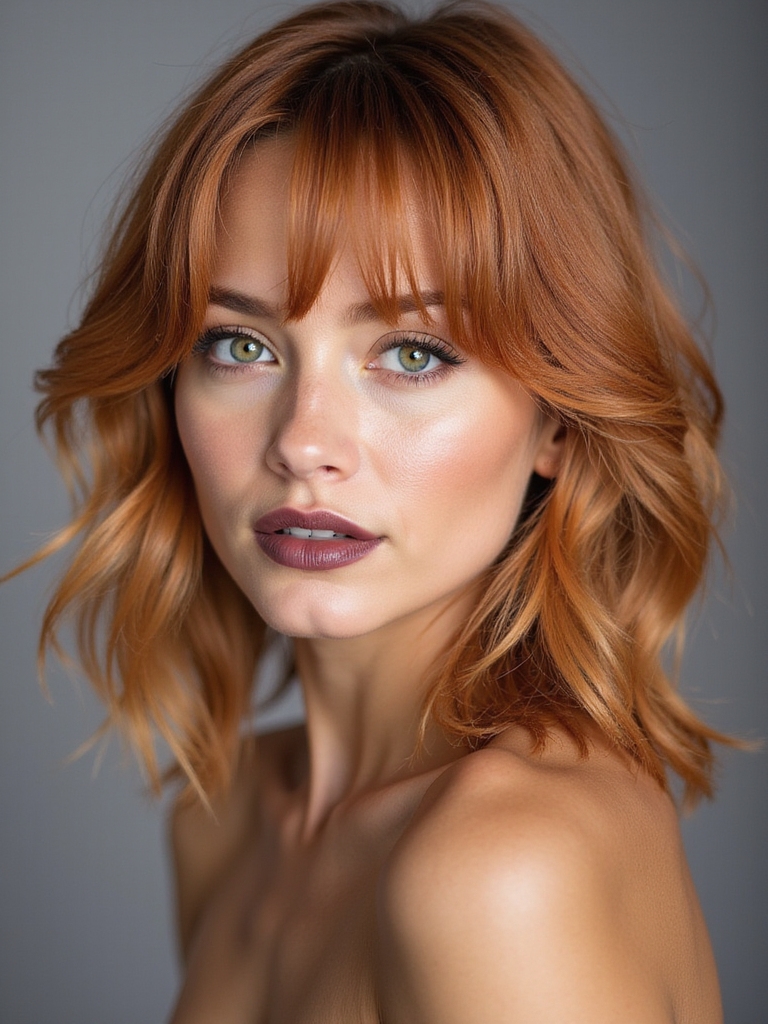
Side-swept wispy bangs are a soft, flattering fringe that suits fine hair beautifully, framing the face softly while asking for far less density than a full blunt fringe. The wispy, feathered texture keeps them light and modern.
Because they’re swept to the side, they blend into the rest of the cut and grow out gracefully, and the diagonal sweep adds a little lift and movement at the front.
They flatter most face shapes, especially rounder or fuller faces, where the diagonal line adds length. They’re a gentle, low-maintenance way to soften and frame the face.
Working With Natural Texture
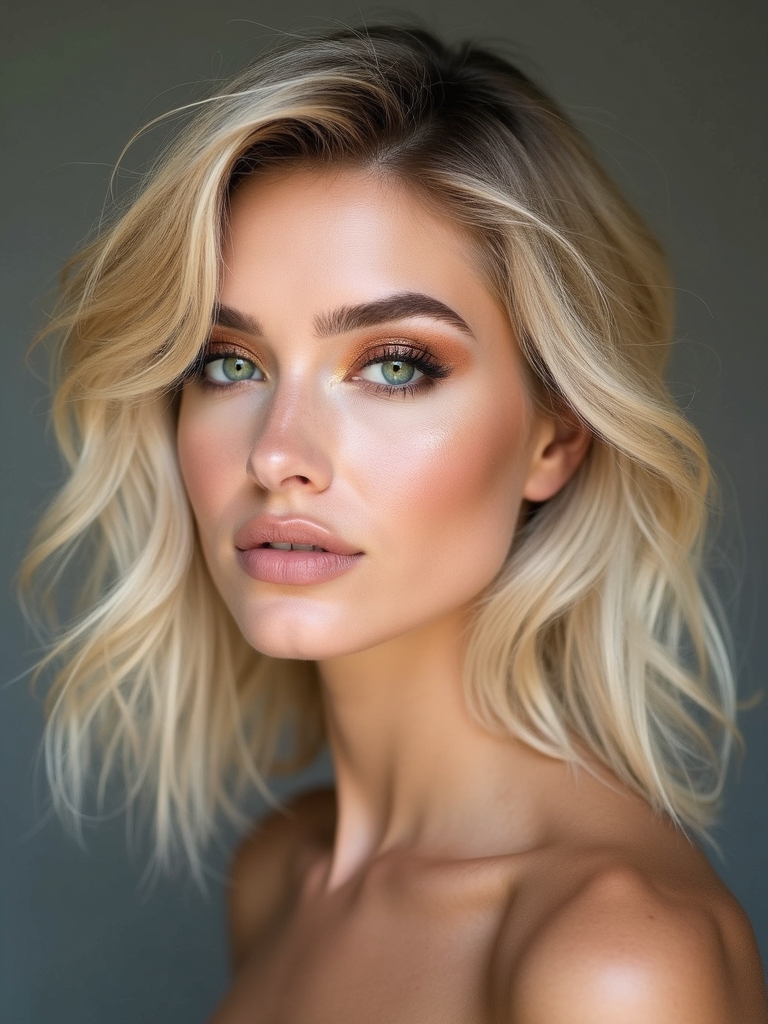
The most flattering fine-hair cuts work with your natural texture, not against it. If you have a slight wave, a cut that encourages it adds instant volume, since wave and bend create body that dead-straight fine hair lacks. Fighting your texture with heat every day just leaves hair flat and damaged.
Ask your stylist to cut for the texture you actually have, and to show you how to enhance your natural bend or wave. On fine hair of any texture, the less you fight it, the fuller and healthier it looks, and the less styling you’ll need.
- A cut that encourages your natural wave adds body.
- Wave and bend create volume straight hair lacks.
- Fighting your texture with heat leaves it flat.
- The less you fight it, the fuller and healthier it looks.
Layering for Texture
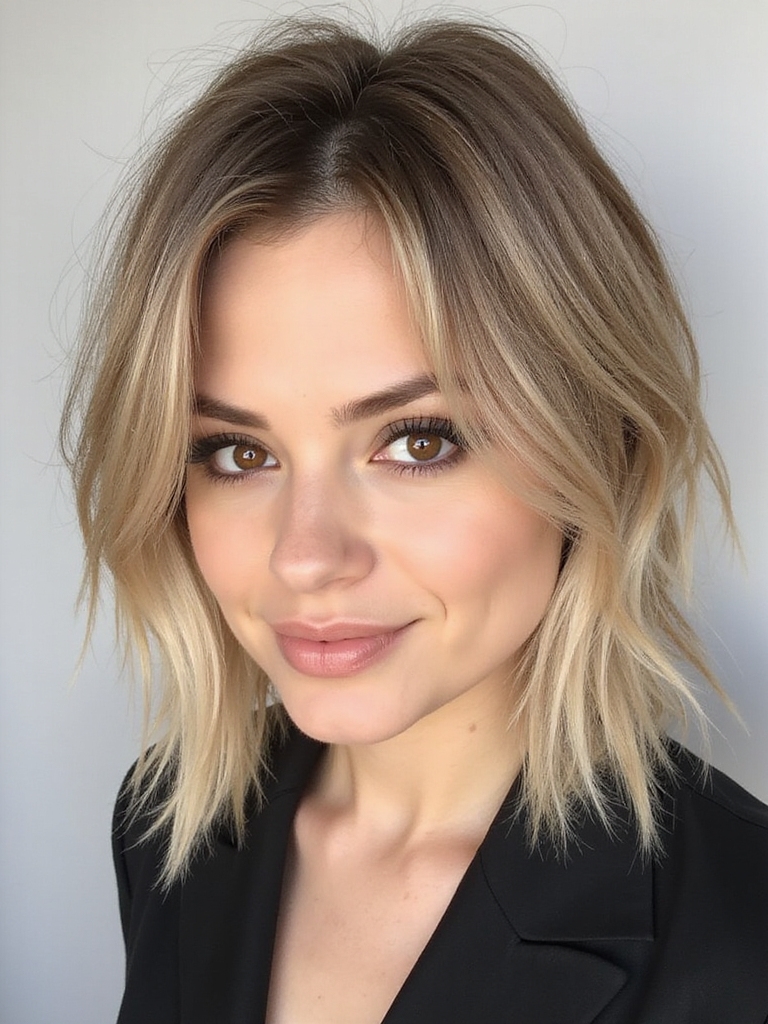
For fine hair with a wave or curl, gentle layering is what lets the texture breathe and lift, as long as it’s done with restraint. A few long, soft layers give waves room to bounce and stack, which builds volume, while removing so little weight that the hair stays dense.
The mistake is over-layering, which on textured fine hair creates frizz and thin, wispy ends. The right amount of layering enhances the natural pattern; too much destroys it. A stylist who understands both fine and textured hair is worth seeking out.
- Gentle layers let waves and curls lift and stack.
- Keep it restrained so the hair stays dense.
- Over-layering creates frizz and thin ends.
- Seek a stylist who knows fine and textured hair.
ℹ️Good to Know
‘Fine’ and ‘thin’ aren’t the same thing. Fine describes the thickness of each individual strand; thin (or low density) describes how many strands you have. You can be fine and dense, or coarse and thin. The cutting principles here, blunt lines, restrained layers, controlled length, help both, since both benefit from the illusion of fullness.
Layers to Frame Your Face
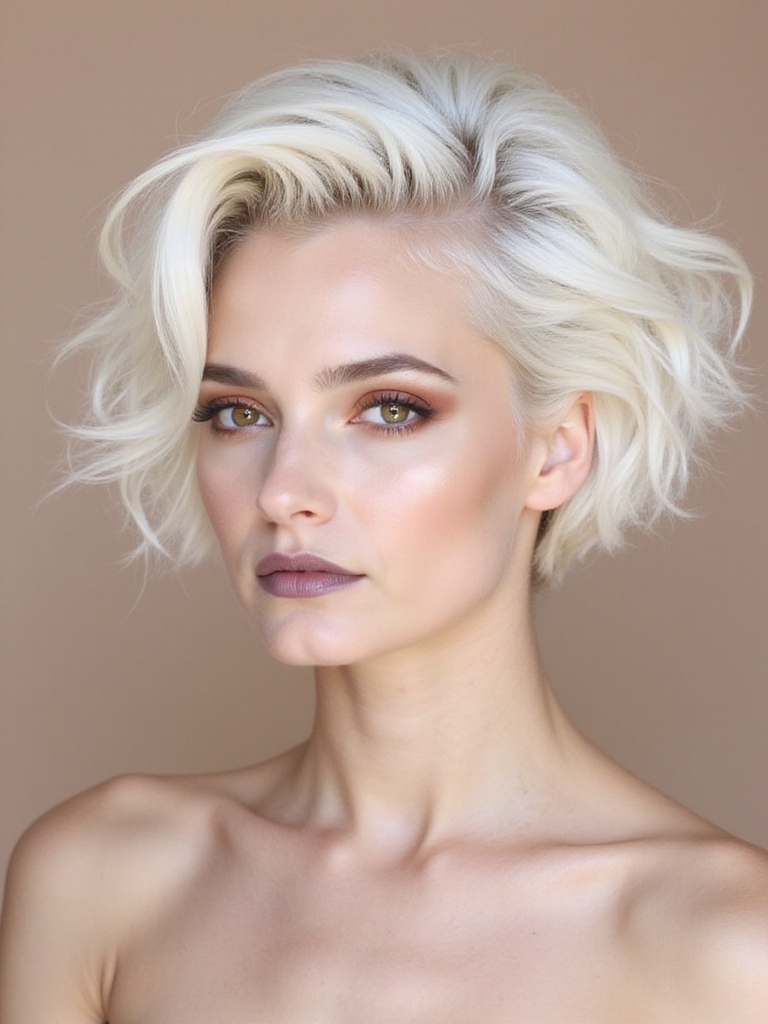
Beyond volume, layers can be placed to flatter your features and add fullness right where the eye lands. Longer pieces cut around the face frame it and pull the eye toward your best features and add softness and movement at the front, which looks fuller.
On fine hair, these frame the face without removing the weight you need elsewhere, since they’re concentrated at the front. A stylist can place them to soften a strong jaw, lengthen a rounder face, or draw out your cheekbones, which makes them one of the more personal, flattering additions to any fine-hair cut. Ask your stylist to place them for your face shape.
- Face-framing layers draw the eye to your best features.
- They add softness and fullness at the front.
- Tailored to soften a jaw or lengthen a round face.
- Concentrated at the front, so weight stays elsewhere.
Wispy Layers
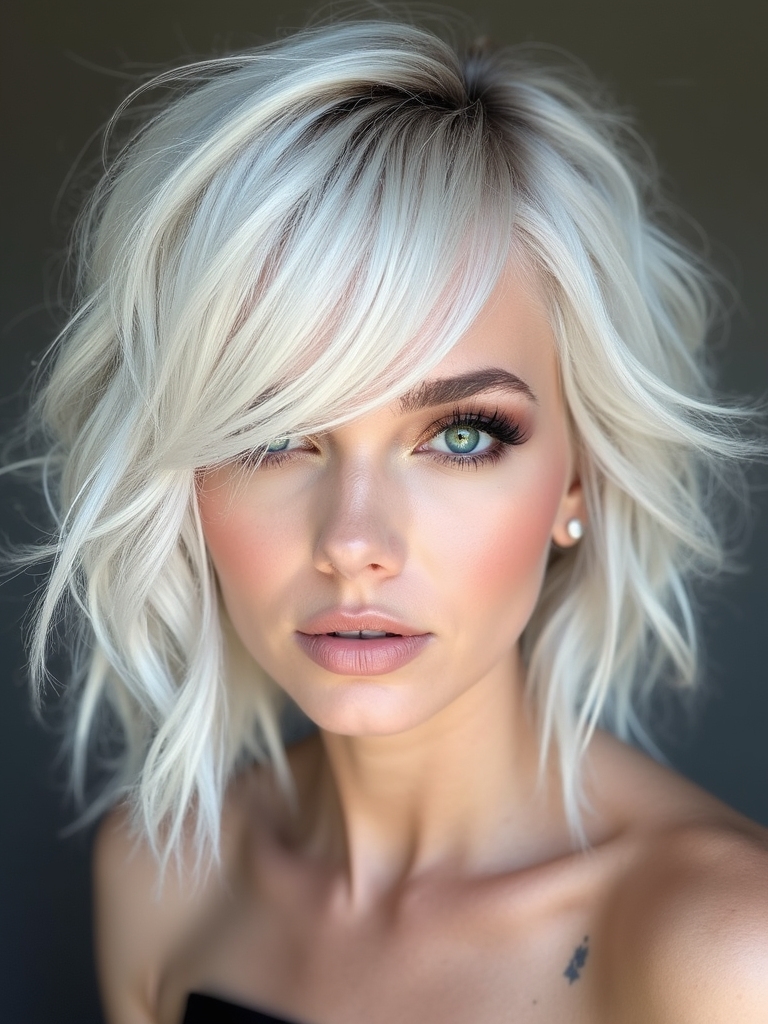
Wispy layers are soft, feathered, delicate layers that add airy movement and a modern, undone texture to fine hair. Used lightly, they give a soft, piece-y finish that passes for volume and looks current, especially on shorter cuts and shags.
The word to remember is ‘lightly’: wispy layers work as a soft accent; feathering the whole head thins fine hair out. A few wispy pieces at the ends or around the face add texture and lift; over-done, they leave fine hair sparse. It’s a pretty, modern finish when a skilled stylist keeps it in check.
- Soft, feathered layers for airy movement.
- A light, piece-y finish looks fuller.
- Keep them a soft accent, not the whole head.
- A few at the ends or around the face add lift.
Styling for Maximum Volume
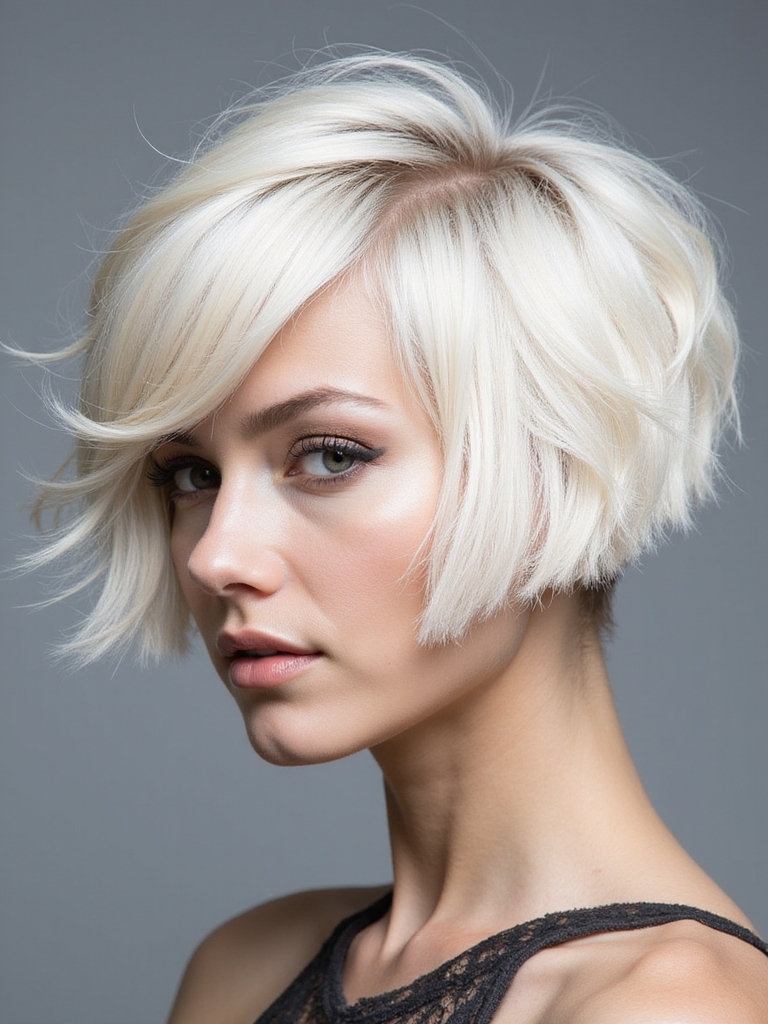
Even the best cut benefits from a little styling know-how, and fine hair responds to a few simple tricks. Blow-drying with your head flipped upside down, or lifting the roots with a round brush, builds volume at the base where it counts, and a cool shot sets it so it lasts.
Rough-drying to about eighty percent before you shape also helps fine hair hold body. Velcro rollers at the crown while you finish getting ready add easy lift.
The point is that styling should support the cut; it can’t rescue a bad one. On the right shape, a few minutes of root-lifting is all fine hair needs.
Balayage for Fake Depth
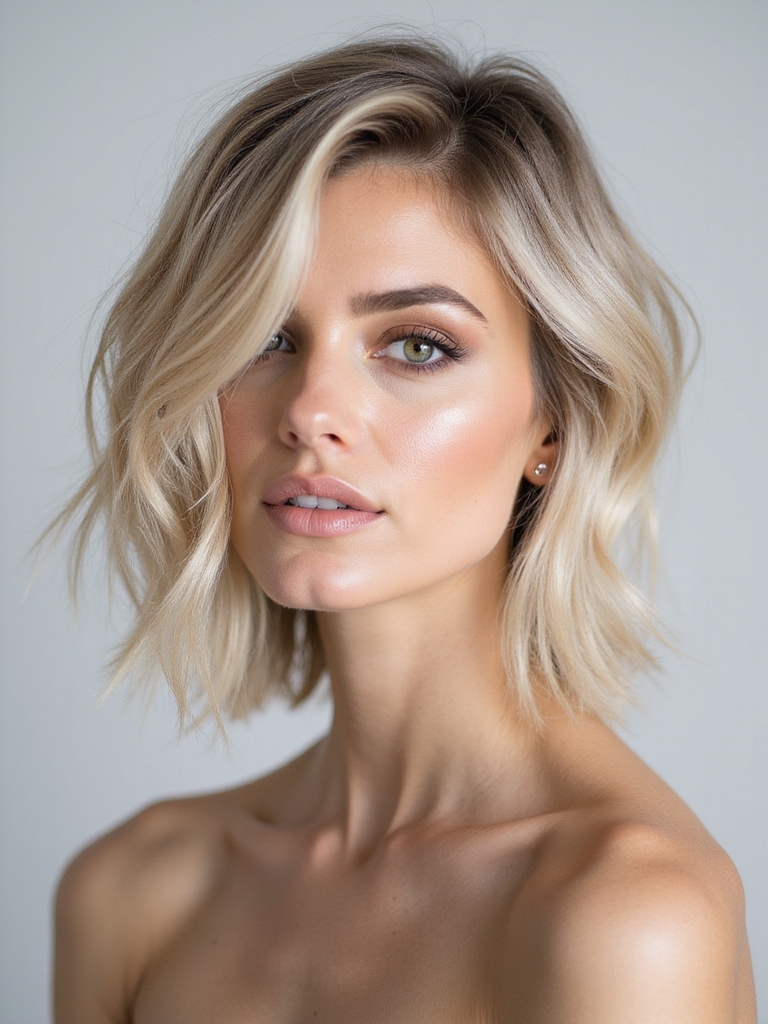
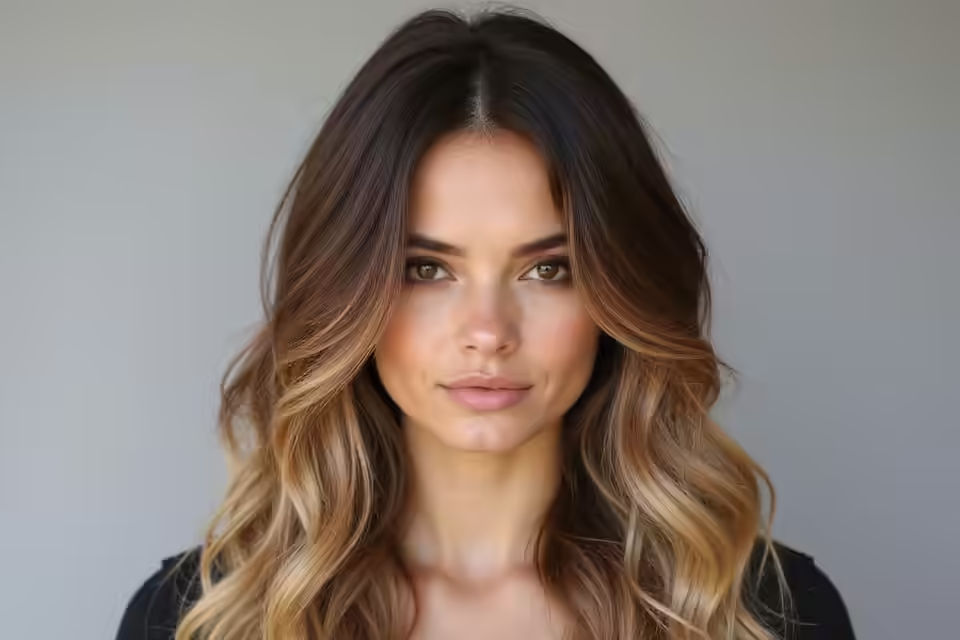
Color is a secret weapon for fine hair, because dimensional, multi-tonal color tricks the eye into seeing more depth and density than a flat, single shade. Balayage or fine highlights woven through create shadows and light that mimic texture and thickness.
The play of darker and lighter pieces makes fine hair look fuller, especially when a slightly deeper root adds shadow and depth at the base. Ask your colorist for dimension specifically to fake density. It’s a low-effort trick that really makes fine hair look thicker without touching the cut.
- Dimensional color tricks the eye into seeing more density.
- Balayage and fine highlights read as texture and thickness.
- A slightly deeper root adds shadow and depth at the base.
- A low-effort way to make fine hair look fuller.
👍Going shorter with fine hair
- +Less weight, so the roots lift and hair looks fullest.
- +Blunt short cuts read dense and healthy.
- +Lowest styling effort and product for volume.
👎What to weigh up
- –Short fine cuts need a trim every 6 to 8 weeks to hold shape.
- –Less length to tuck or tie back on off days.
- –A dramatic change to commit to, so be sure of the shape.
Keeping the Shape
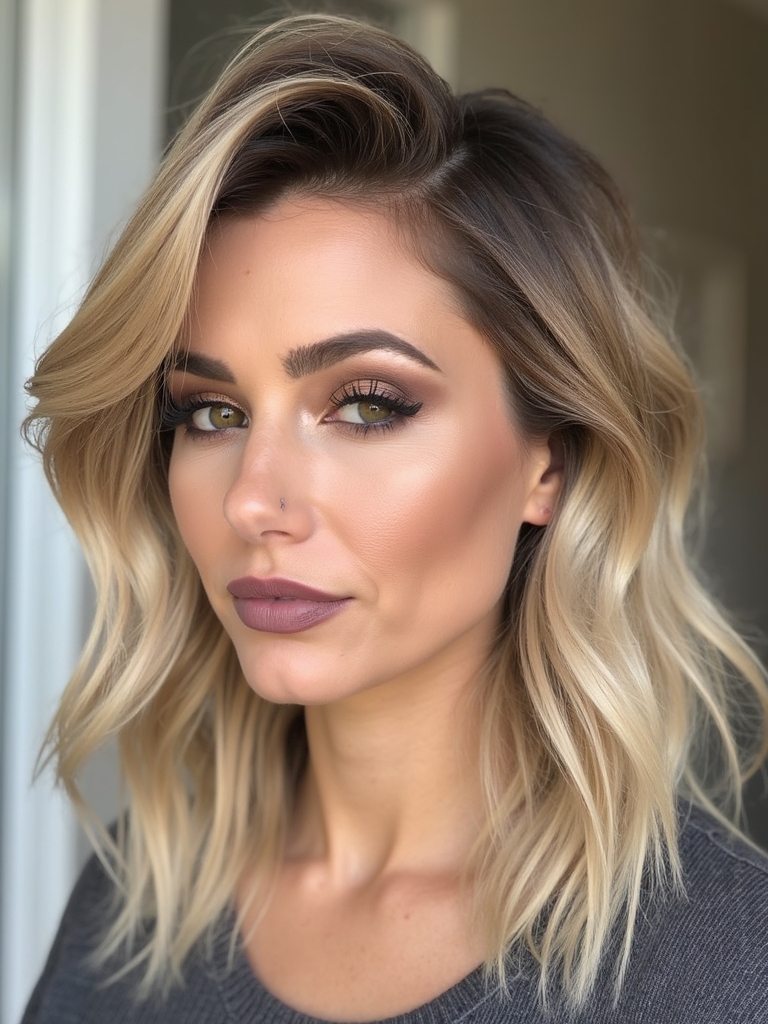
Fine-hair cuts live or die by regular trims, more so than thicker hair, because the precise shapes that build volume, blunt perimeters, graduated stacks, soft layers, lose their structure as they grow. A blunt bob that’s grown out two months looks thin and shapeless.
A visit to the salon every couple of months keeps the shape sharp and the volume built in, and nothing else you do for fine hair pays off quite as reliably. On cost, a precision fine-hair cut tends to land between $45 and $90 by region, and it is that steady upkeep that keeps the shape doing its job.
Lightweight Products
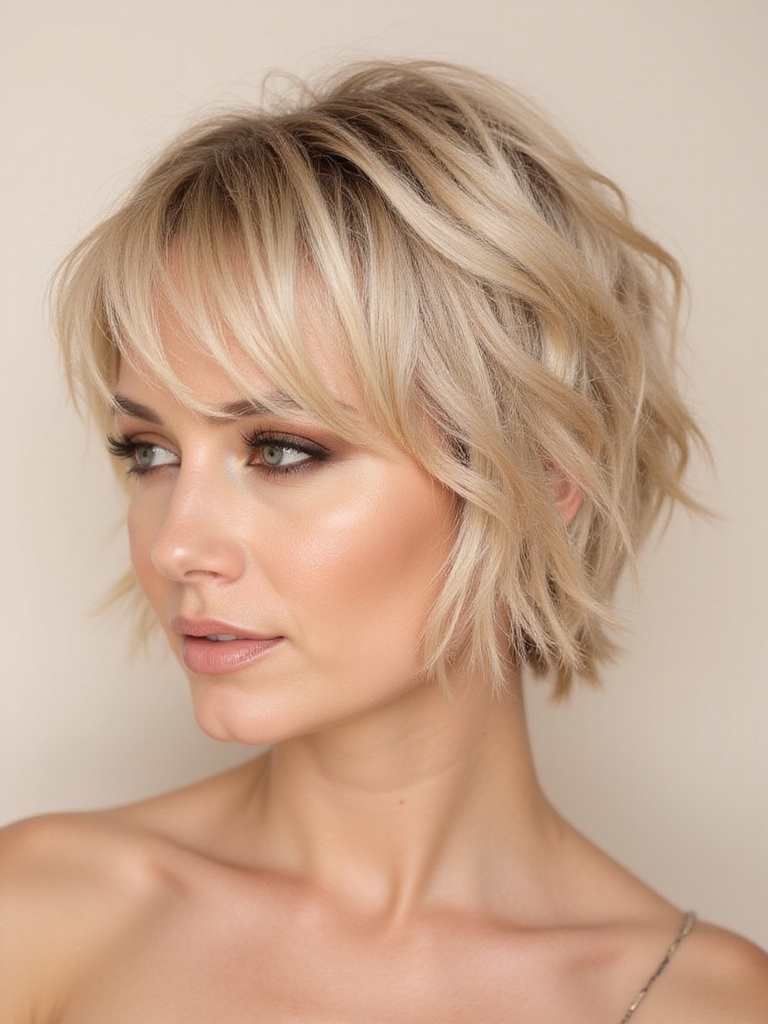
The right products support a good cut; the wrong ones undo it. Fine hair needs lightweight, volumizing formulas, mousses, root sprays, and light texture sprays, that add body without the weight that flattens it. Heavy creams, oils, and rich conditioners are what drag fine hair down.
A volumizing mousse at the roots on damp hair, or a root-lift spray before blow-drying, adds body that lasts. A light dry shampoo or texture spray refreshes lift between washes.
The rule is ‘less and lighter’: use a little of a lightweight product at the roots, and keep heavy products off the roots entirely. On fine hair, product weight is the enemy of volume.
Common Mistakes to Avoid
The biggest mistake with fine hair is thinning it. Thinning shears and heavy razoring remove the density fine hair can’t spare, leaving it stringy and see-through; almost every flattering fine-hair cut adds structure rather than removing hair.
The second mistake is going too long: past the shoulders, weight drags fine hair flat, so a shorter-to-mid length nearly always looks fuller. And the third is over-layering, which strips the weight that keeps ends looking dense.
A few more to sidestep: skipping regular trims (fine shapes grow out fast), fighting your natural texture with daily heat (which flattens and damages), and weighing hair down with heavy products. Get the cut right, keep it trimmed, work with your texture, and use lightweight products, and fine hair looks full and healthy with barely any effort. So, thinking about your own fine hair, is it the cut that’s letting you down, or the length?
Fine and Thin Hair Cut Questions, Answered
?What is the best haircut for thin, fine hair?
A blunt bob or lob is the most reliable, because a one-length perimeter makes the ends look dense and the whole head fuller. Pixies and graduated cuts also work brilliantly, since less weight lets the roots lift. Whatever the length, a blunt perimeter and restrained layers are what fake fullness on fine hair.
?Should fine hair be long or short?
Shorter-to-mid lengths almost always look fuller, since weight is what drags fine hair flat. A pixie, bob, or collarbone lob holds volume far better than long hair. You can wear it longer, but keep a blunt perimeter, add soft layers, and expect to work harder for volume the longer you go.
?Do layers help or hurt fine hair?
Both, depending on how they’re done. A few soft, long layers add movement and lift and help fine hair look fuller. Too many short layers, or heavy thinning, strip the density fine hair needs and leave the ends stringy. Ask for restrained, long layers, and keep the perimeter blunt.
?Are thinning shears bad for fine hair?
Usually, yes. Thinning shears remove density, which is exactly what fine hair can’t spare, and heavy use leaves it stringy and see-through. Light, careful texturizing at the ends by a skilled stylist can add movement, but running thinning shears through fine hair is the fastest way to ruin it. When in doubt, ask for a blunt finish.
?How can I make fine hair look thicker without a big change?
Three low-effort tricks: get a blunt trim so the ends look dense, add dimensional color or balayage so the eye sees more depth, and switch to lightweight volumizing products used only at the roots. A soft fringe or curtain bangs also concentrate hair at the front for instant fullness. None of these requires a dramatic cut.
Let the Cut Do the Work
The single most freeing thing to understand about fine hair is that fullness is a cutting job, not a lifelong struggle with products. A blunt perimeter, restrained layers, a length that doesn’t drag, and a shape that works with your texture will make fine hair look fuller than any volumizer ever could.
The cuts that flatter it, bobs, pixies, shags, and soft-layered mid-lengths, are plentiful, and the mistakes to avoid, over-thinning, too much length, over-layering, are simple to sidestep.
Start by being honest about your length and finding a stylist who understands fine hair, then let the shape carry the look. Whether you go for a sharp blunt bob or a soft wispy shag, the right cut means waking up to full, healthy-looking hair with barely any effort. So which is it for you, a fresh short shape, or a blunt, layered length?