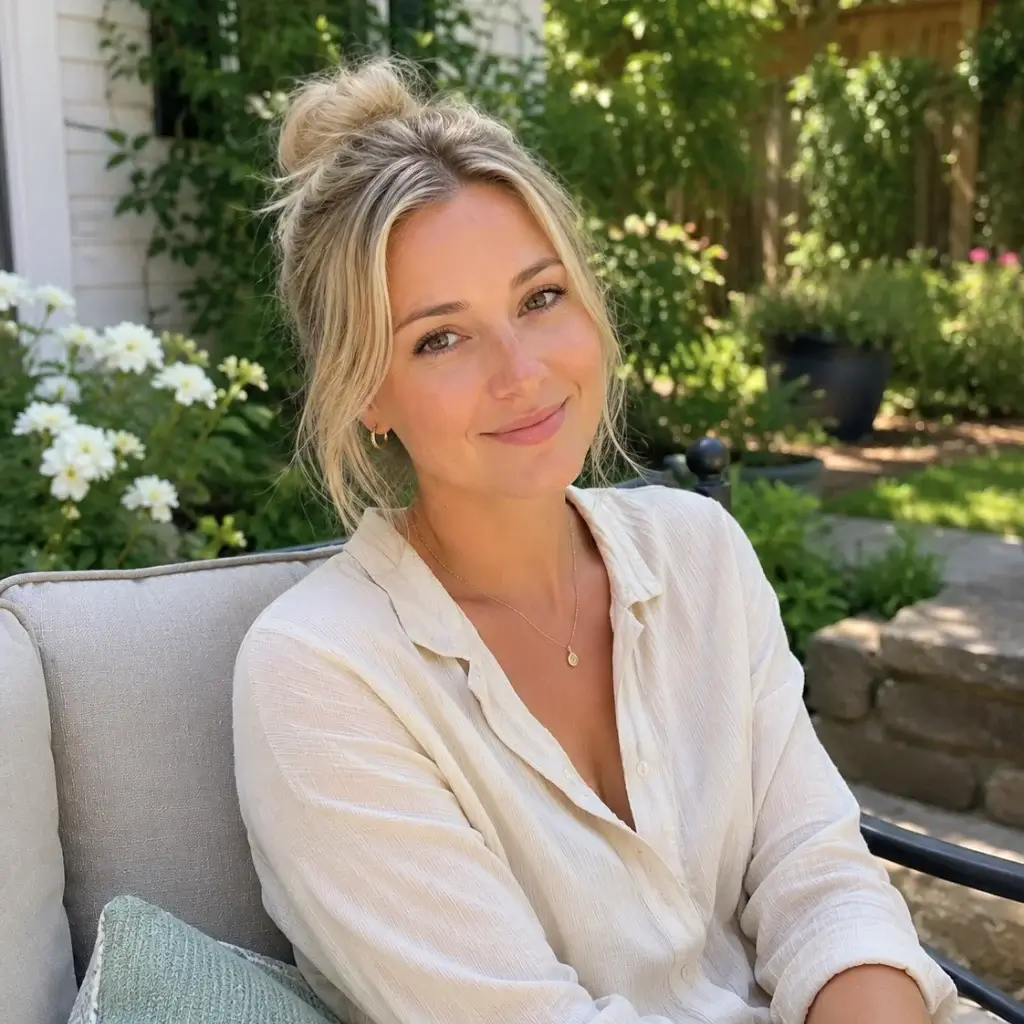
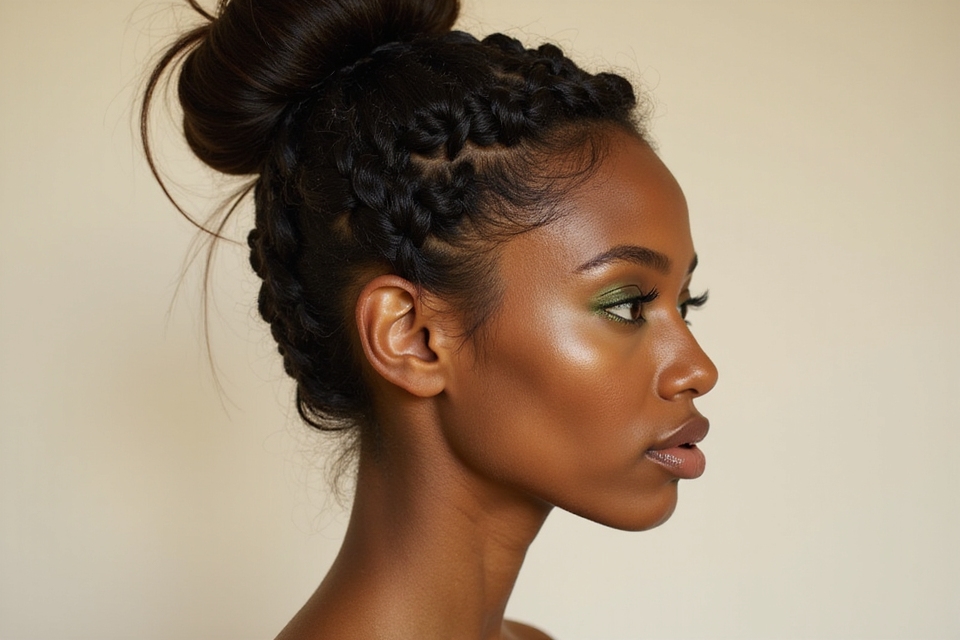
A braided bun is the rare style that works for a 7 a.m. school run and an evening wedding, the difference being only where you place it and how polished you make it. Twisted high it feels confident and modern; tucked low it turns soft and refined.
This is the honest, useful guide to all of it: the tools and basic braids behind a bun, the high and low variations, how to build one on short, medium, or long hair, and the care that keeps it neat without stressing your hairline. By the end you will have a bun for whatever the day asks of you.
What to Know First
- Placement sets the mood: a high bun looks bold and lifted, a low bun feels soft and elegant, from the very same braid.
- It works on any length: short, medium, and long hair each have a braided-bun approach, sometimes with a little padding or a few pins.
- The braid is the backbone: three-strand, French, Dutch, or fishtail braids each give the finished bun a different texture.
- Comfort matters most: a bun pulled too tight strains your edges, so keep the base relaxed, especially at the hairline.
Understanding the Adaptable Braided Bun

A braided bun is simply a braid, or a few, gathered and coiled into a bun and pinned in place. That basic idea stretches in countless directions depending on the braid you use, where you place the bun, and how neat or undone you leave it. A few reasons it earns its keep:
- Adaptable from a five-minute everyday style to a polished bridal look
- Protective, keeping your ends tucked away and off your shoulders
- Flattering on everyone, since you control the height, size, and finish
The Braided Bun’s Timeless Tradition

Gathering and coiling hair is one of the oldest styling instincts there is, and braided buns appear across cultures and centuries, from classical sculpture to ceremonial styles in communities around the world. The look has always carried a sense of refinement.
Why it never goes out of style
Braiding itself runs even deeper, with sectioned and plaited traditions holding real cultural meaning across Africa and beyond for generations. The braided bun draws on that long, shared history of treating hair as something to shape with care.
That heritage is part of why a braided bun still looks refined today. It is a style with roots, which is exactly what keeps it from ever feeling like a passing trend.
💡Stylist Tip
Braided buns hold best on second-day hair. A little natural texture and grip keep the braid tight and the pins from sliding, so skip the wash the morning of an event and your bun will last hours longer.
The Versatile Benefits of a Braided Bun

Beyond looking polished, a braided bun does practical work. By tucking your ends away and keeping hair off your face and neck, it protects fragile lengths from friction and weather, which is a small but real help for hair health.
It is also a genuine time-saver, holding for a full day without fuss once it is pinned. The benefits stack up:
- Protects your ends by keeping them tucked and shielded
- Saves time, since one bun carries you from morning to night
- Works in any setting, from the gym to a black-tie event
Essential Braided Bun Tools

You need surprisingly little to build a good braided bun, and most of it is probably already in a drawer:
- A brush or comb and a few clear elastics to braid and secure the base
- Bobby pins and a hair tie to coil and anchor the bun
- A light hairspray or edge product to smooth flyaways and set the finish
👍Why wear a braided bun
- +Works for any occasion, from gym to gala
- +Protects your ends and keeps hair off your neck
- +Holds all day once it is pinned
👎What to watch for
- –Too-tight braiding strains the hairline
- –Very short hair needs extra pins to cooperate
- –Heavy long hair can feel weighty by evening
The Classic Three-Strand Braid Technique

Almost every braided bun starts with a simple three-strand braid, so it is worth getting comfortable with one. Split a section into three, then cross the outer strands over the middle one in turn, keeping your tension even as you work down.
Even tension is the whole secret to a braid that sits neatly in a bun, not so tight that it pulls, not so loose that it unravels. Once you can do a basic three-strand braid without thinking, every variation in this guide opens up to you.
Braided Bun Styling Basics

Turning a braid into a bun is a quick three-step move once you have the braid itself. Here is the simple version:
- Braid your hair into one or more plaits, depending on the fullness you want
- Coil the braid around its own base into a round shape
- Pin it down with bobby pins, then gently tug a few edges to soften the look
Not sure which bun to try? Start with the moment.
🎯Rushed weekday morning
A low messy braided bun, five minutes and forgiving of loose pieces.
🎯Wedding or formal event
A sleek fishtail or twisted bun, polished, secure, and photo-ready.
A High Braided Bun for Polish

Placing the bun high on the crown is the boldest way to wear it, lifting your features and reading confident and modern. It is the version that turns a braid into a statement. To get it right:
- Gather at the crown and tip your head back to set the height before you braid
- Wrap the braid high and pin in a circle so it sits round and upright
- Smooth the base with a little gel or spray for a clean, lifted finish
The Low Tucked Braided Bun

Sitting at the nape, a low tucked bun is the softer, more refined cousin of the high version, and it is endlessly flattering. It looks quietly elegant for work or a wedding and stays comfortable for hours since the weight rests low. A few notes to wear it well:
- Keep the base loose at the hairline so it feels soft, not severe
- Tuck the ends under and pin them so the bun looks smooth and finished from behind
- Let a couple of pieces fall at the front to soften the line
Heads-Up
A braided bun should feel snug, never painful. Tension at the hairline is the leading cause of gradual edge thinning, so if your scalp feels tight or tender, loosen the braid at the front. Comfort protects your edges far better than an extra-sleek finish.
The Classic Twisted Braided Bun

Swapping a braid for a rope twist gives the bun a different, sculptural texture that catches the light beautifully. You make it by twisting two sections around each other, then coiling that twisted rope into a bun.
It is a touch quicker than a full braid and looks polished, which makes it a favorite for events. To keep it tidy:
- Twist firmly in one direction so the rope holds its shape
- Coil in the same direction you twisted to keep the texture clean
- Pin generously, since twists can loosen faster than braids
The Messy Braided Bun

The messy braided bun is the one I reach for on the days there is no time, and the beauty is that imperfection is the point. A little looseness comes across as relaxed and modern, as long as the shape underneath stays secure. To strike the balance:
- Braid loosely and pancake the braid by gently pulling its edges wider
- Coil casually without fussing over perfect placement
- Pull a few pieces loose around the face once it is pinned
A Braided Bun for Short Hair

Short hair and braided buns get along better than people assume. Even a bob can manage a small bun at the crown or nape, especially with a few extra pins and a little patience to gather the shorter pieces.
The trick is working in smaller sections and securing each one as you go, so nothing slips. A tiny braided bun on short hair looks intentional and chic, and it keeps grown-out layers off your face.
If pieces are too short to reach, twist them back and pin them along the edge of the bun. A few face-framing strands left down make the whole thing look styled rather than struggled-for.
The Medium-Length Braided Bun

Medium-length hair may be the easiest canvas for a braided bun, long enough to braid and coil with ease, short enough to stay manageable. Shoulder-to-collarbone lengths give you real range without much effort.
From here you can go high or low, single braid or double, sleek or messy, and the bun holds its shape without needing padding or extra hair. It is the length that makes the whole style feel easy.
A medium braided bun is also a smart everyday option, polished enough for the office and quick enough for a rushed morning. It is the version I show most often when someone wants one reliable go-to.
A Braided Bun With Long Hair

Long hair makes the most dramatic braided buns, with enough length to build full, generous coils that really turn heads. The only real challenge is managing the bulk so the bun stays comfortable and secure.
A few pointers for working with all that length:
- Use a strong tie and plenty of pins, since a heavy bun needs real anchoring
- Try a double bun or a wrapped braid to control the volume neatly
- Keep the weight balanced so it does not drag on your roots over a long day
The Double Braided Bun

Using two braids instead of one builds a fuller, more dimensional bun, with the plaits wrapping around each other for a woven, intricate look. It seems more elaborate than it actually is, which is exactly why it works for events.
Braid two sections, then coil them together or stack one over the other into a single bun. The double approach also adds volume for finer hair, since two braids fill out a bun that one alone might leave looking sparse.
Quick, Versatile Braided Bun Styles

Some braided buns are built for speed, and these are the ones to learn for a busy morning. None take more than five minutes once you have the hang of them, and all of them look far more done than they are.
Reach for one of these when the clock is against you:
- A single braid coiled low for instant, fuss-free polish
- A half-up braided bun that leaves length down while taming the top
- A twisted bun when you want speed with a little extra texture
A French Braid Into a Bun

Working a French or Dutch braid into the base before coiling the bun adds a beautiful, crafted detail along the scalp. The braid travels from your hairline back, then feeds straight into the bun for a polished, all-in-one look.
A French braid lies flat and soft against the head, while a Dutch braid pops up for more visible, three-dimensional rows. Either one turns a plain bun into something that looks like it took real skill.
This is a lovely choice for keeping hair fully off the face, and it suits both everyday wear and dressier occasions. For more woven looks, see braided updo hairstyles.
The Fishtail Braided Bun

A fishtail braid coiled into a bun looks intricate but uses a simple method: you cross small pieces from each side over to the opposite section, building a fine, woven pattern. Coiled up, that detailed texture becomes the star of the bun.
It is a favorite for weddings and photos because the woven surface looks expensive and special up close. Gently pancake the fishtail before coiling to make it look fuller, then pin it into a soft, textured bun.
Accessorizing Braided Buns Stylishly

The right accessory takes a braided bun from everyday to occasion-ready in seconds, and it is the cheapest upgrade you can make. A few ways to dress one up:
- A decorative pin or comb tucked at the base for a touch of sparkle
- A wrapped ribbon or scarf woven through for color and softness
- Fresh or fabric flowers pinned around the bun for a romantic, bridal feel
A Secure Bridal Braided Bun

For a wedding, a braided bun needs to look beautiful and survive hours of hugging, dancing, and photos. Building it to last is mostly about a secure foundation. The essentials:
- Start on second-day hair, which grips pins better than freshly washed strands
- Anchor with a hidden net or extra pins so nothing shifts through the day
- Do a trial run before the date, and see braided wedding hairstyles for inspiration
A Formal Braided Bun Transformation

Taking a braided bun from everyday to formal is mostly about precision and finish. Where a casual bun welcomes loose pieces, a formal one wants every strand smoothed and placed, with a sleek base and a polished, defined shape.
Everyday to evening
Add a deeper side part, a wrapped braid around the bun, or a sculptural twist, and the same basic style turns red-carpet-ready. A spritz of shine spray over the finished look seals the polished effect.
The point is that you do not need a different skill set for formal hair, just a more careful hand and a few finishing touches on the bun you already know how to build.
Spotlight-Inspired Braided Buns

Some of the most-saved braided bun looks come straight off awards-show red carpets, where the style appears sleek and sculptural one season and soft and romantic the next. You can borrow the idea without a glam team behind you.
How to copy the look
What makes those versions land is a single clean choice, an ultra-sleek base, an oversized braid, or a deliberately undone finish, rather than ten ideas at once. Pick the one element you love and build around it.
Take a reference photo along if you are recreating one for an event, and be honest about your hair length, since some red-carpet buns rely on added hair to reach that volume.
Braided Bun Care Tips

A braided bun is gentle on your hair when you treat it gently, and a few habits keep both the style and your strands in good shape. The goal is to enjoy the protection a bun offers without trading it for breakage. Keep these in mind:
- Do not pull it too tight, since constant tension at the hairline causes thinning over time
- Use snag-free elastics and pins to avoid breaking the hair you tuck away
- Loosen it at night or take it down to let your scalp and edges rest
Care Tips for Common Braided Bun Challenges

Most braided bun frustrations come down to a few fixable problems, and knowing the workaround saves the style. If your bun slips or feels loose, the usual culprit is too few pins or freshly washed hair that will not grip, second-day hair and a couple more pins solve it.
Flyaways and frizz are the other common gripe, easily tamed with a light mist of hairspray and a smooth of edge product over the surface. For a bun that looks lopsided, the fix is almost always in the coil, so unpin and re-center it before you grab more pins.
And if your scalp aches after an hour, the braid is too tight at the root. Take it down and rebuild it looser, because no style is worth a sore, strained hairline.
A Quick Everyday Braided Bun Tutorial

Here is the everyday braided bun to keep in your back pocket, the one you can do half-awake before work. Five minutes, no mirror gymnastics required:
- Sweep everything back into a low or mid ponytail
- Braid the ponytail in a simple three-strand plait and tie the end
- Coil and pin the braid around the base, then tug a few edges loose to finish
Maintenance and Care
A braided bun is one of the kinder styles you can wear day to day, but it still asks for a little care to stay that way. Reach for snag-free elastics and pins, keep the base comfortable rather than tight, and take the bun down at night so your scalp and edges get a rest. If you wear one most days, switch the placement around, high one day, low the next, so the same spot is not always under tension.
Looking after the hair itself matters just as much as the style. Keep your lengths moisturized and your ends sealed, since hair that is hydrated tucks and coils more smoothly and breaks less. Treated this way, a braided bun protects your hair as much as it flatters it, which is exactly what a good everyday style should do.
Braided Bun Questions, Answered
?Can I do a braided bun on short hair?
Yes. A bob or longer can manage a small braided bun at the crown or nape with a few extra pins. Work in smaller sections, secure as you go, and twist any too-short pieces back around the bun instead of forcing them in.
?How do I keep my braided bun from falling out?
Start on second-day hair, which grips better than freshly washed strands, and use enough bobby pins crossed against each other to anchor the coil. A light hairspray over the finished bun helps it hold through a long day.
?Are braided buns bad for your hair?
Not when worn gently. The risk is tension, so avoid pulling the braid tight at the hairline, use snag-free pins and elastics, and give your scalp a rest at night. Worn loosely, a bun actually protects your ends.
?What is the easiest braided bun for beginners?
A low three-strand braid coiled into a bun. Braid a low ponytail, wrap it around the base, and pin. It is forgiving of uneven braiding and looks polished even on a first attempt.
?Which braid looks best in a bun?
It depends on the vibe. A three-strand braid is clean and classic, a fishtail looks intricate and special, and a rope twist reads sculptural. For everyday speed, stick with three-strand; for events, try a fishtail.
One Bun, Every Occasion
The braided bun earns its reputation as a do-anything style because it does exactly that: twist it high for a bold day, tuck it low for a soft one, dress it up for a wedding, or throw it together in five minutes before work. The braid is the same; only your hands and the placement change.
So which version will you try first, the polished high bun or the soft low one? Master a basic braid, keep the base comfortable, and you will always have a put-together look ready, whatever the day brings.
More Hair Inspiration