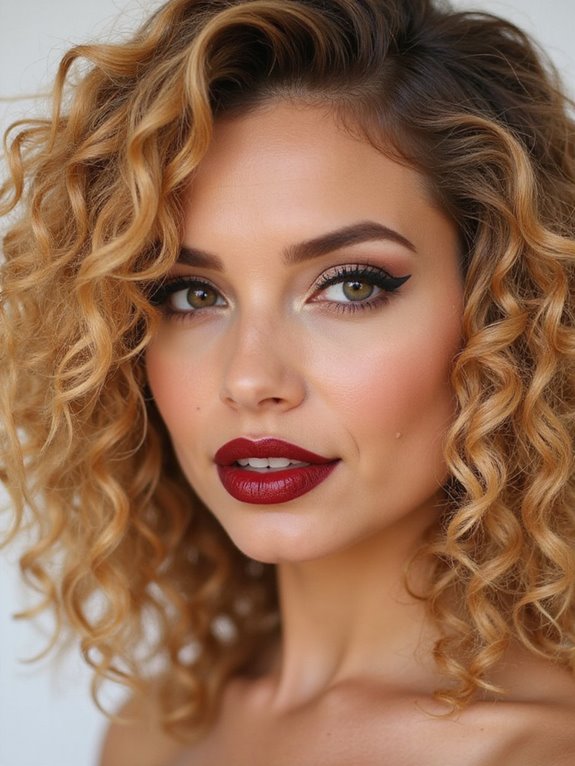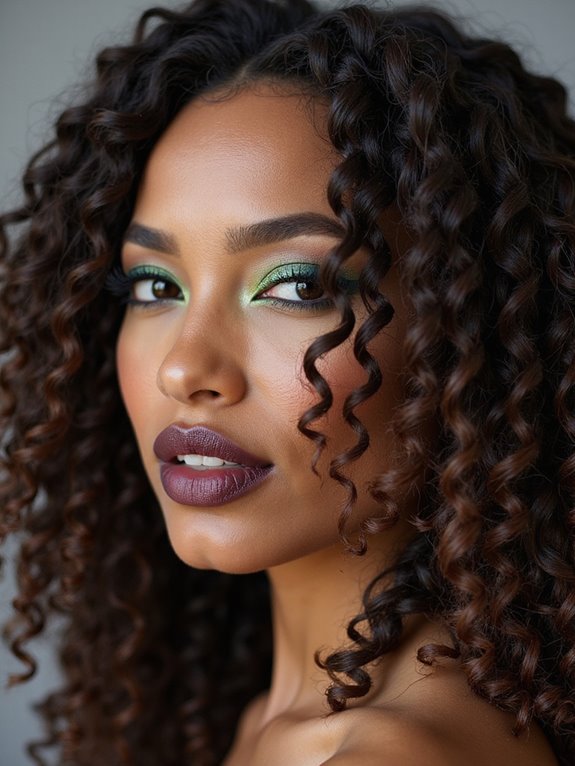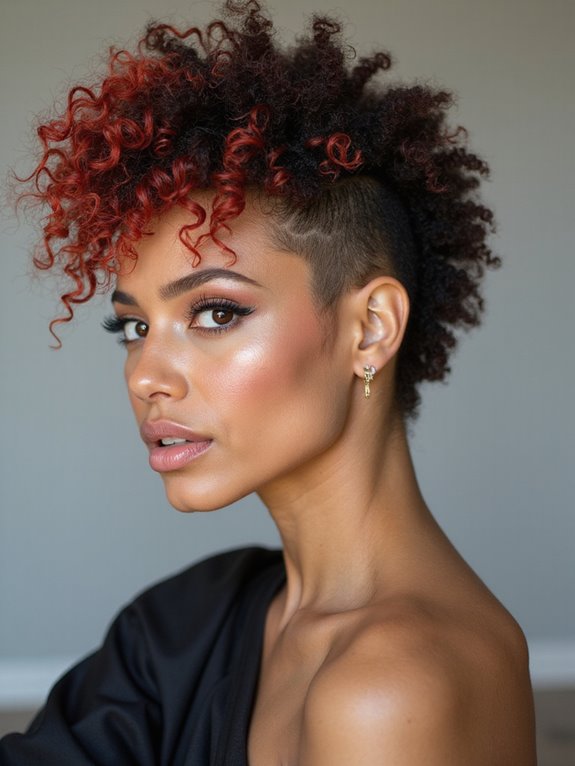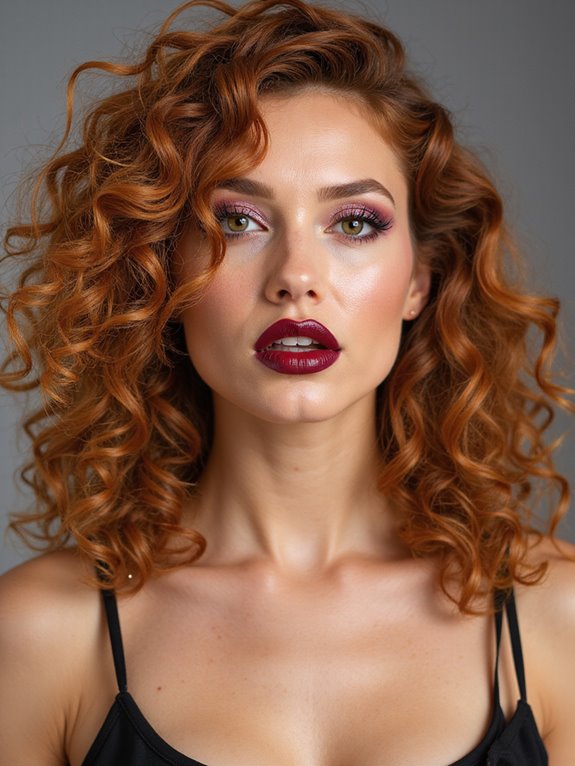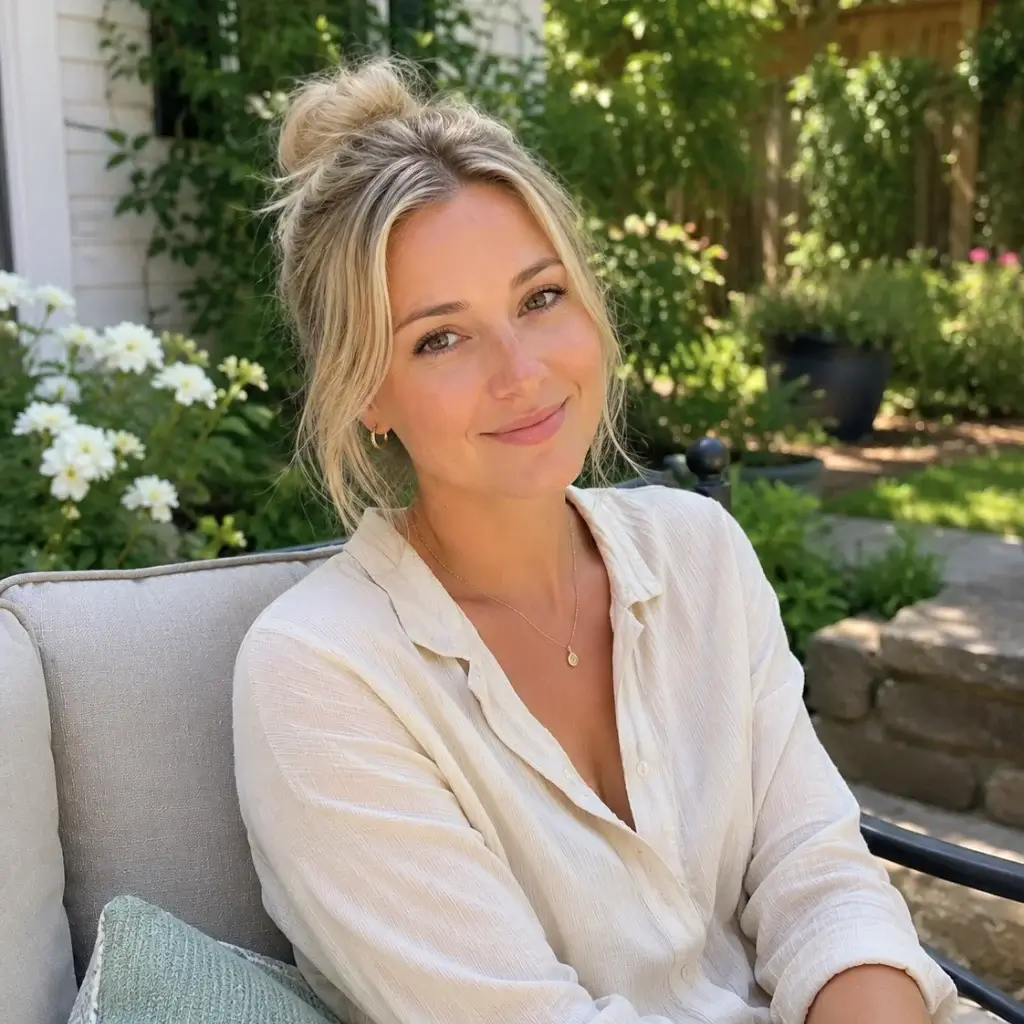

The curly bob is the rare cut that looks deliberate while asking almost nothing of you. Short enough to dry fast, long enough to pull back, and built on curls that hide a grown-out edge, it is about as near to wash-and-go as a head-turning cut gets. That combination is why it keeps trending season after season.
Below are twenty low-maintenance curly bob looks, from the classic chin-grazer to the pixie, the stacked, the angled, and the shag. Each one is sorted by curl type and upkeep so you can match it to your real routine, not a salon fantasy. If you want a fringe with yours, our curly bangs guide pairs perfectly with any of them.
Curly Bob Cheat Sheet
| Curly Bob | Best For | Upkeep |
|---|---|---|
| Classic chin-length | Most curl types, first-timers | Trim every 8 to 10 weeks |
| Curly pixie bob | Tight coils, bold wearers | Trim every 5 to 6 weeks |
| Long layered lob | Looser curls, nervous choppers | Trim every 10 to 12 weeks |
The Classic Curly Bob

Start here if you are new to the cut. The classic curly bob sits around the chin or jaw, a length that flatters almost every face and lets the curls fall into a natural, rounded shape. It is the safe, smart first move into short curly hair.
Why It Suits Beginners
What makes it so low-maintenance is the length. There is enough hair to weigh the curls into a clean shape, but not so much that drying drags on, so a quick diffuse or an air-dry is usually all it needs. Most people get away with a trim every eight to ten weeks.
This is what I suggest first for clients who want short curls but worry about going too short. It reads polished from day one. Better yet, it grows out without a single awkward stage.
The Curly Pixie Bob
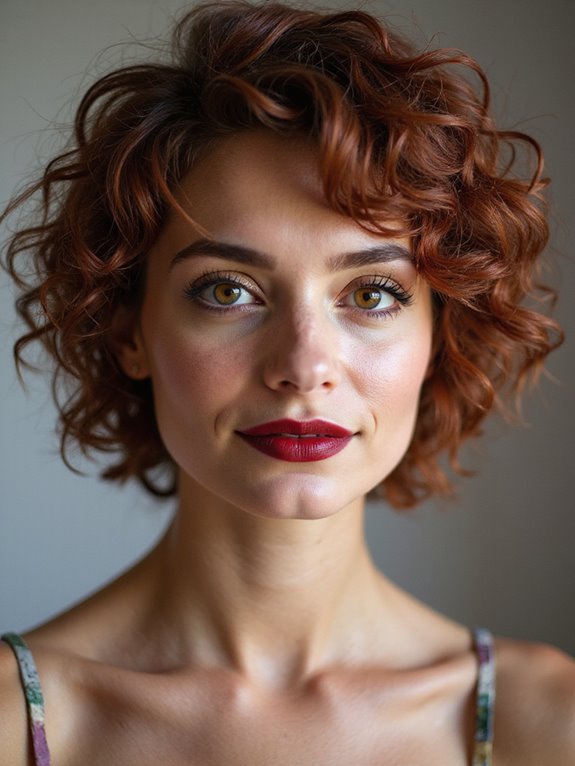
For the boldest take, the curly pixie bob crops the sides and nape close while leaving length and texture on top. It is striking on tight coils and kinky textures, where the density gives the crown real height and shape. The trade is upkeep: a crop this short wants a trim every five to six weeks to hold its line, but daily styling drops to almost nothing.
- Striking on coily and kinky textures with natural height
- Lowest daily styling of any bob on this list
- Needs the most frequent trims to keep its sharp shape
| Length | Trim Schedule | Daily Styling |
|---|---|---|
| Pixie / tapered / undercut | Every 5 to 6 weeks | Almost none |
| Classic chin-length | Every 8 to 10 weeks | Quick diffuse or air-dry |
| Long layered lob | Every 10 to 12 weeks | Scrunch and go |
Voluminous Natural Curls

Some curly bobs are about restraint; this one is about volume. Cut with internal layers to free the curls, it lets the hair stand full and round, the kind of shape that fills a doorway and owns it. Thick and medium curls carry it best, since they have the density to build real fullness.
The styling secret is moisture and a light touch. A leave-in conditioner under a curl cream keeps every coil defined, and then you leave it completely alone to dry. Do not touch it. Fussing flattens the volume that makes this look work.
- Internal layers free the curls to build height and width
- Best on thick or medium curls with natural density
- Define with product, then leave it untouched as it dries
The Long Layered Bob

If a true bob feels like too big a leap, the long layered version, often called a curly lob, sits at the collarbone and softens the commitment. The layers keep it from going heavy and triangular, while the extra length means you can still tie it back on a lazy day. It is the most forgiving cut here and the easiest to grow out, which makes it a favorite for first-time choppers.
- Collarbone length you can still pull into a clip
- Layers prevent the bottom-heavy curly triangle
- The gentlest way to test short curly hair
👍Why Curly Bobs Win
- +Dries fast and often air-dries with no heat
- +Curls hide an awkward grow-out, so it ages well
- +A shape for every curl type and density
👎Worth Knowing First
- –Cropped shapes need more frequent trims
- –Must be cut dry, so seek a curl specialist
- –Very tight blunt shapes can lose volume on fine hair
A Soft, Flowing Bob

Looser curls and waves get their own version: a soft, flowing bob with gentle movement and no hard lines. The curls are encouraged into loose ribbons rather than tight coils, giving a romantic, undone finish that suits a relaxed wardrobe and an even more relaxed routine. It air-dries beautifully with a little cream scrunched through.
This is the bob for anyone whose curls are more of a loose wave, the texture that often gets straightened by default. Worn natural in this soft shape, it finally gets to be the easy, pretty thing it always wanted to be.
Angled Curly Bob
An angled curly bob drops shorter at the nape and keeps real length through the front, a line that adds a modern, graphic edge while holding on to the softness of the curl. The forward length frames the face. The cropped back feels light and clean. It is a sharp choice for looser curls, where the angle reads most clearly.
Tighter coils can wear it too, though the shrinkage softens the angle, so bring a photo and talk it through. On any texture, the front length is what makes this one feel current.
The Inverted Curly Bob
Close cousin to the angled bob, the inverted version adds graduation at the back for a stacked, rounded shape that pushes the curls up and out. The result is built-in volume at the crown and a tapered, tucked nape. It is a smart pick if your curls go flat on top, because the cut engineers the height for you.
Upkeep sits in the middle of the pack. The graduated back asks for a tidy-up roughly every two months to keep its curve, but the payoff is volume you never have to fake with product.
Graduated Curly Bob
The graduated curly bob stacks short layers at the back to create a soft, rounded silhouette that hugs the head and fans the curls outward. It splits the difference between a blunt bob and a full inverted shape, giving structure without sharp lines. Think of it as the polished, put-together member of the family, the one that always looks like you tried even when you did not.
- Stacked back layers build a soft, rounded curve
- Reads polished with very little daily effort
- A middle ground between blunt and inverted shapes
Stacked Curly Bob
A stacked curly bob piles tight, short layers at the back of the crown for serious lift, then keeps the front a touch longer for balance. On fine curls especially, that stacking is a volume machine, turning limp coils into a full, bouncy shape. Flat hair, meet your fix. Few cuts do more for limp, lifeless curls.
The catch is precision. A stacked shape needs a stylist who understands curl, and it wants regular trims to hold the stack, so it suits someone happy to visit the salon every couple of months.
Curly Shag Bob
When you want movement and edge, the shag bob brings choppy, piecey layers throughout for a worn-in, rock-and-roll feel. The heavy layering gives the curls room to separate and spring, so the whole thing looks tousled and undone in the best way. It is the trendiest cut on this list and the most forgiving of a grow-out, since shaggy layers only get better as they soften. For more on the shape, see our choppy layered haircuts guide.
- Choppy layers give curls maximum separation and movement
- The most on-trend and grow-out-friendly bob here
- Pairs naturally with curtain or piecey curly bangs
Curly Bob With Bangs
Add a fringe and the curly bob takes on a whole new character. Soft curly curtain bangs frame the face and echo the rounded shape, while a fuller curly fringe leans bold and retro. Bangs are the quickest route to making a plain bob feel personal and intentional without losing any length.
Just factor in the extra upkeep, since a curly fringe wants its own care and the occasional trim. If that sounds like a lot, longer face-framing pieces give a similar softening effect with far less fuss.
Asymmetrical Curly Bob
For something truly daring, the asymmetrical curly bob leaves one side noticeably longer than the other. That off-balance line is dramatic and modern, and it flatters specific faces beautifully, since the longer side can soften a round shape or balance strong features. Pick it when you want the haircut itself to be the headline, and know that it wears especially well on looser curls where the contrast in length reads clearly.
- One side runs longer for a bold, graphic line
- Flatters round faces by adding length on one side
- Shows up best on looser curl patterns
Blunt Curly Bob
The blunt curly bob is having a real moment, trading the usual layered softness for one clean, dense perimeter. On curls, a blunt line gives weight and a striking rounded shape, almost like a curly helmet in the best sense. It looks expensive and architectural. People stop to ask about it.
It works best on thick, dense curls that can carry the weight without going flat. Finer textures may want a few hidden layers, so talk to your stylist about keeping the blunt look while adding a little movement underneath.
Tapered Nape Curly Bob
A tapered nape keeps the back and sides cropped close while leaving fuller curls up top, a clean, neck-baring shape that feels fresh and cool. It is a brilliant option in hot weather, since it lifts the hair off the neck entirely, and it shows off the natural curl pattern at the crown. Coily and kinky textures wear it with real presence.
The taper does ask for upkeep, needing a quick clean-up at the nape every few weeks. In return, the daily styling is close to zero, which is a trade plenty of people happily make.
Side-Parted Curly Bob
Sometimes the cut barely changes and the parting does the heavy lifting. A deep side part is an instant transformation, bringing volume, drama, and a touch of old-school glamour to any curly bob as it sweeps the curls to one side. It is the simplest restyle there is. It is also free. And it flatters nearly every face by softening the forehead and cheekbones.
- One side part lifts the curls and brings drama
- Costs nothing and takes seconds to change
- Softens the face on almost every curl type
Curly Bob With Undercut
For the most modern, edgy take, an undercut shaves or closely clips the hair underneath while the curls fall full on top. It removes bulk and weight, which is a quiet gift for very thick curly hair that runs hot and heavy, and it hides a secret graphic detail you can reveal when you pin the top up. It is bold, practical, and surprisingly low-effort once it is cut.
The undercut needs a buzz every few weeks to stay sharp, but the top is pure wash-and-go. One caution worth naming: if you pin the curly top up often, keep the pins and ties loose, since constant tension at the hairline can stress the roots over time. Style it gently and it is the cut for someone who wants serious presence with minimal morning fuss.
Keeping Any Curly Bob Easy
Whatever shape you land on, a few habits keep every curly bob in the low-maintenance lane. Cut it dry so the stylist works with your real shrinkage, feed it a leave-in conditioner so the curls stay defined, and sleep on a satin pillowcase so you wake up with a shape worth refreshing. A curl-safe trim runs $45 to $80 at most salons and is the smartest money you will spend on the cut.
Clients ask me how the people with the easiest curly bobs do it, and the answer is always the same. They picked a shape that flatters their real curl pattern and then stopped fighting it.
- Cut dry, every time, to respect the shrinkage
- Layer a leave-in and curl cream for lasting definition
- Satin at night protects the shape while you sleep
Who It Suits Best
The beauty of the curly bob is that there is a version for every curl type, density, and comfort level. Tight coils and kinky textures shine in the pixie, tapered, and undercut shapes that show off natural height; looser curls and waves do best in the soft, long-layered, and angled versions that let movement read.
Thick hair can carry blunt and stacked shapes, while fine curls lean on graduation and internal layers for fullness. The only people I send elsewhere are those set on a sleek, straight finish, since this cut is a celebration of texture.
Before you book, be honest about two things: your curl pattern and how often you will realistically sit in the chair. A longer, layered shape stretches between trims, while a cropped or undercut style wants regular upkeep.
Match the cut to both, and a curly bob delivers exactly what the name on this list promises: a shape that is honestly easy and reliably current. For a protective option between cuts, our curly braided hairstyles guide is a natural next read.
Curly Bob Questions
?Are curly bobs actually low-maintenance?
Yes, when they are cut for your curl type. The short length dries fast and often air-dries with no heat, and curls hide an awkward grow-out, so the cut stays wearable between trims. Cropped shapes like a pixie or undercut need more frequent trims, but their daily styling is close to zero.
?Should a curly bob be cut wet or dry?
Dry, always. Curls shrink as they dry, sometimes by half, so a wet cut can leave a bob far shorter than planned. A dry cut lets the stylist see your true length and pattern and shape each curl where it falls, which is why finding a curl specialist matters so much.
?Which curly bob is best for thick hair?
Thick, dense curls carry blunt and stacked shapes beautifully, since they have the weight to hold a strong line and build volume. An undercut also helps very thick hair by removing bulk underneath. The key is internal layers tuned to your density so the shape does not go heavy or triangular.
?How often do curly bobs need trimming?
It depends on the shape. A long layered lob can stretch to ten or twelve weeks, a classic chin-length bob wants a trim every eight to ten, and cropped pixie, tapered, or undercut styles need a shape-up every five to six weeks to stay sharp.
?Can I get a curly bob with fine or loose curls?
Absolutely. Fine curls do best with graduation and internal layers that build fullness, while looser curls and waves suit soft, long-layered, and angled shapes that let the movement show. The cut adapts to nearly every pattern; the trick is matching the shape to the texture you have.
The Cut That Works With You
What ties these twenty looks together is a single idea: the best curly bob is the one cut to flatter your texture as it already grows. The shapes that last and stay easy are the ones cut for the curl pattern you actually have, then left alone to do their thing. That is the whole low-maintenance secret, and it is why this cut keeps coming back into fashion.
So scroll back through, find the shape that matches your curls and your patience, and bring a photo to a stylist who cuts curly hair often. Cut it dry, keep it hydrated, and let the curls lead. The right curly bob is the one you forget you are even styling, and that is exactly the point.
More Styles to Try