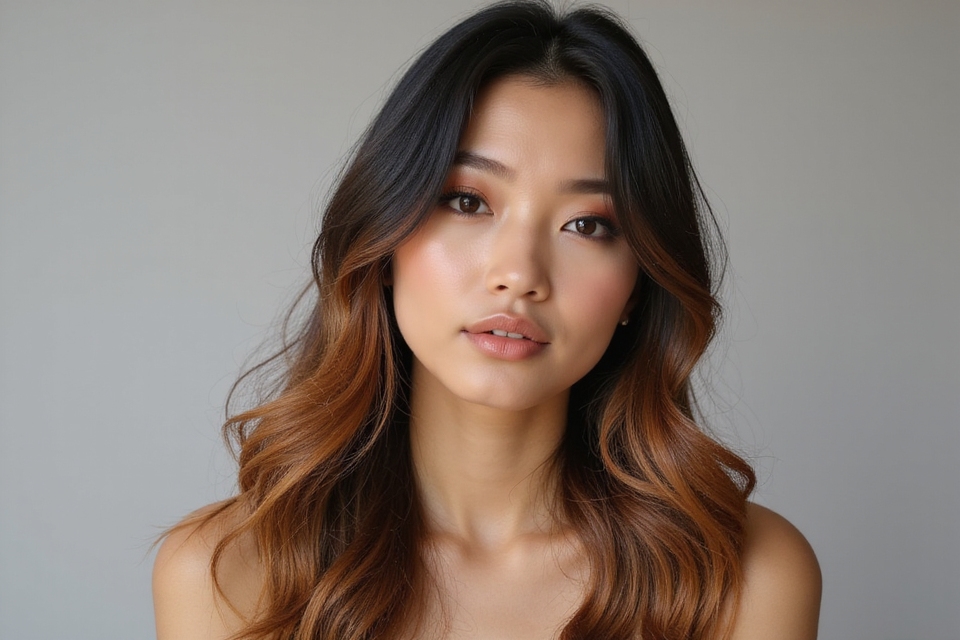

Step outside on a bright morning and a curly fringe does something a flat one never will. The light catches every coil, the shape lifts and softens, and the bangs you fought with at the mirror suddenly look alive. Sunlight is the honest test of curly bangs, and most of the time they pass it.
The catch is that the sun also dries, frizzes, and fades a fringe faster than the rest of your hair, because those front pieces take the most exposure. This guide is about working with that, not against it: how to cut, hydrate, protect, and style curly bangs so the version the sun shows off is the one you actually want. If you are still weighing the chop, our cute bangs guide covers the basics first.
Curly Bangs, At a Glance
- Always cut curly bangs dry, curl by curl, so the stylist sees your real shrinkage and pattern before a single piece is shortened.
- Hydration is everything. A well-moisturized curly fringe holds its shape and shrugs off frizz; a thirsty one puffs the moment you walk into the sun.
- Protect the front. The fringe takes the most UV, so a hat, a scarf, or a UV-protectant spray keeps color and condition from fading first.
Understanding Your Curl Dynamics

Before you touch a curly fringe, you have to understand how it moves. A curl springs, shrinks, and shifts with moisture and weather, so the length you see wet is not the length you get dry. That single fact explains almost every curly-bangs surprise. Get it, and the rest of this gets easier.
- Wet length is a lie; curls can shrink by half as they dry
- Each curl pulls up on its own, so the fringe is never one flat line
- Humidity and sun change the shape hour to hour
How Sunlight Influences Your Fringe

Sunlight is flattering and punishing at once. It lights up the dimension in a curl and makes the fringe look full of life, which is why curly bangs photograph so well outdoors. That is the upside, and it is a real one.
The Front Takes the Hit
The downside is exposure. The front pieces sit closest to the sun all day, so they dry out, frizz, and lose color tone faster than the hair tucked behind them. UV breaks down the proteins and pigments that keep a curl springy and rich.
None of this means hiding indoors. It just means treating the fringe as the most vulnerable part of your hair and giving it a little extra care, the kind a smart hat and a good leave-in handle on their own.
📋Before You Step Into the Sun
- ✓Fringe hydrated with a leave-in and sealed with cream or gel
- ✓A hat, scarf, or UV-protectant spray ready to shield the front
- ✓A small water-and-leave-in spray packed for a midday refresh
Sunlight Transforms the Look

Walk from a dim bathroom into daylight and your bangs change character. Indoor light flattens a curl, while sun rakes across it and reveals every loop and ribbon of texture. The fringe you judged as messy at the mirror often reads as full and intentional the second you step outside, so try not to write it off before you see it in real light.
- Daylight reveals depth that bathroom mirrors flatten out
- Backlight turns a frizzy halo into a soft glow
- Judge your fringe outdoors before you decide it is wrong
Identifying Your Curl Pattern

Curly is not one thing. A loose wave, a springy coil, and a tight zigzag all wear bangs differently, and knowing where your front pieces fall changes how you cut and style them. Looser patterns give a soft, sweeping fringe; tighter coils give a rounder, fuller one.
Texture matters as much as pattern. Fine curls need a lighter hand so the fringe does not separate into stringy pieces, while thick or coily hair can carry a deeper, denser bang with body to spare.
If you have coily or Afro-textured hair, your fringe has the most natural volume of all, and that is a gift. The shape wants to stand up and out, so the cut should celebrate that fullness and let it breathe.
💡Stylist Tip
Never cut curly bangs wet. Curls shrink as they dry, so a fringe that looks perfect soaking can spring up far too short. A dry cut shows the stylist your true length and pattern.
The Sunlight Challenges

The sun creates three honest problems for a curly fringe, and naming them helps you solve them. The first is dryness: UV and heat pull moisture from the hair shaft, and a dry curl is a frizzy, shapeless curl.
The second is color change. Sun lifts and fades tone, so colored or highlighted bangs go brassy or pale up front while the back stays true. Coppers and browns shift the fastest.
The third is the heat itself. A hot scalp makes you sweat at the hairline, and that moisture swells the fringe into a puff by midday. Each problem has a fix, and most of them are small.
Texture Effects to Expect

Your texture decides how the fringe behaves more than any product does. Fine curly hair gives a delicate, airy bang that moves with the slightest breeze but can fall flat if it gets weighed down with heavy cream.
Medium and thick curls give the classic full curly fringe, the one with bounce and presence that holds its shape through a long day. This is the texture most people picture when they imagine curly bangs.
Coily and kinky textures give the boldest fringe of all, dense and sculptural. A leave-in conditioner is the difference between defined and dry here, since these patterns drink up moisture the fastest.
“The clients happiest with their curly fringe are the ones who stopped straightening it. Once the bangs are cut for the curl pattern you actually have, the daily upkeep drops to almost nothing.”
Sunny Days Need Protection

On a long day in the sun, the fringe needs a shield the same way your skin does. The simplest one is physical: a wide-brim hat or a scarf keeps direct light off the front pieces and stops the worst of the drying and fading before it starts.
When a hat is not an option, a UV-protectant spray picks up the slack. Around twenty dollars buys a bottle that lasts a season, and a quick mist over the fringe before you head out makes a real difference by evening.
- A wide-brim hat is the most effective sun shield there is
- A light UV spray protects color and moisture when bare-headed
- Reapply protection after swimming or heavy sweating
Stylish Ways to Protect

Protection does not have to look like a compromise. A silk headscarf tied back from the face shields the fringe and reads as an outfit choice, and a structured straw hat does the same job while finishing a summer look. The point is that you can guard your curls and still feel pulled together.
Clients come to me convinced that sun protection means dull, practical accessories, and I tell them the opposite. The right scarf or hat becomes the best part of the look, and the fringe stays soft and rich underneath it all day.
ℹ️Good to Know
Curly hair can shrink by up to half its actual length as it dries. That is why a curly fringe always looks shorter than the same cut on straight hair, and why dry cutting matters so much.
Styling Techniques That Work

Styling a curly fringe is less about force and more about encouragement. Work with damp, not soaking, hair, apply your product, and shape each curl with your fingers before you let it dry undisturbed. The less you touch it while it sets, the cleaner the curls form, so resist the urge to keep fiddling with the front.
- Style on damp hair so the curls clump and define
- Shape with fingers, then leave it completely alone to set
- Scrunch upward to encourage spring and lift at the root
Hydration Enhances Definition

If there is one rule for curly bangs, it is this: a hydrated curl is a defined curl. Moisture is what lets the coil clump, spring, and hold its shape, and the fringe loses water faster than anywhere else. Build hydration in layers and the shape almost takes care of itself.
- Start damp and seal with a leave-in before anything else
- Layer a curl cream or gel over the leave-in for hold
- Refresh the fringe midday with a spritz of water and product
Frizz Control in the Sun

Frizz is simply a thirsty curl reaching for moisture in the air, and the sun makes it worse by drying the fringe out first. The fix is to keep the hair so well hydrated that it stops searching, then to seal that moisture in with a light layer of oil or gel. A smooth, sealed curl shrugs off humidity that would wreck a dry one.
- Seal damp curls with a pea of light oil to lock moisture in
- Skip touching the fringe once it is dry; hands cause frizz
- A satin-lined hat fights friction frizz on long sunny days
Maintenance Tools Worth Owning

You need surprisingly little gear to keep a curly fringe happy, but a few tools earn their place. A microfiber towel dries the hair without roughing up the cuticle, which is the cheapest frizz fix going at around ten dollars.
The other worthwhile buy is a diffuser. A good one runs $30 to $50 and dries the fringe gently while keeping the curl shape intact, so you are not stuck waiting on air-dry every morning.
- Microfiber towel or a cotton tee, never a terry towel
- A diffuser attachment for fast, curl-safe drying
- A wide-tooth comb or your fingers for gentle detangling
Care and Maintenance Basics

Healthy curly bangs come from a steady routine, not a shelf full of miracle products. Cleanse gently, condition generously, and never skip the leave-in, because the fringe forgives a lot when it is well fed.
Feed the Curl, Skip the Clutter
Wash day for curls is usually less frequent than for straight hair, since the natural oils take longer to travel down a coil. Most people do well washing every few days and refreshing the fringe in between with water and a little product.
Night care matters as much as day care. A satin bonnet or pillowcase keeps the fringe from flattening and frizzing against cotton while you sleep, so you wake up with a shape worth refreshing.
Heat Styling Without Damage

Most days a curly fringe needs no heat at all, but when you want a smoother or more defined finish, do it safely. Always use a heat protectant, keep the diffuser on a medium setting, and save the flat iron for the rare occasion rather than the daily routine. Heat-stressed curls up front lose their spring fast, and that is the hardest damage to grow out.
- A heat protectant is non-negotiable before any hot tool
- Diffuse on medium heat and low speed to protect the pattern
- Limit flat-ironing the fringe to occasional special days
Natural Management Tips

The easiest curly fringe is the one you let be itself. Fighting your natural pattern into a sleek straight bang is a daily battle you will lose by lunchtime, especially in the sun. Pick a shape that flatters your real texture and the upkeep drops to almost nothing.
I see this in my chair constantly: the people happiest with their bangs are the ones who stopped trying to make curls behave like straight hair. Once the fringe is cut and styled for the pattern it actually has, the whole thing gets easier.
- Choose a fringe shape your curl pattern already wants to make
- A morning refresh beats a full restyle every time
- Accept that some days the curl wins, and that is fine
Moisture Maintenance Routines

Because the fringe dries fastest, it needs the most frequent moisture top-ups. A small spray bottle of water mixed with a little leave-in lives on my counter for exactly this, and a quick mist brings a flat, dry fringe back to life in seconds. Think of it as watering the one plant that always wilts first.
- Keep a water-and-leave-in spray handy for midday refreshes
- Deep-condition the fringe weekly, especially in summer
- Drink water and protect at night; hydration is inside and out
Knowing It Is Time for a Trim

Curly bangs tell you when they need a trim if you know the signs. The shape starts to look bottom-heavy, the ends feel dry no matter how much you condition, and individual curls stop springing the way they used to. A small shape-up every six to eight weeks keeps the fringe sharp without losing length you want to keep.
- Watch for split, dry ends that no product can revive
- Book a dry trim so the stylist cuts to your real shape
- Six to eight weeks keeps a curly fringe defined
Embrace Your Natural Texture

There is a quiet confidence in a fringe that is unmistakably, happily curly. For years the standard was to straighten anything that coiled, and a lot of people are only now meeting their real texture as an adult. A curly bang worn proudly is part of that shift, and it suits the face in a way a forced-straight version never does.
Embracing the curl also means embracing shrinkage and a little daily unpredictability, which is the trade for a fringe full of life and movement. Once you stop expecting it to behave like straight hair, the surprises become part of the charm.
Sunny Day Hairstyle Picks

Some looks were made for the sun, and they all share one trait: they keep the fringe defined while pulling the rest of the hair off a hot neck. A high curly puff with the bangs left soft at the front is cool, practical, and shows the curl off in full light.
A half-up style works just as well, lifting the back while the fringe frames the face. For longer hair, loose curls with a defined bang and a scarf headband handle a whole day outdoors. Our curly bob guide has shorter cuts for anyone who wants a lighter load in the heat.
Everyday Care Tips

Beyond moisture, how you handle the fringe day to day decides how it looks. Detangle only when the hair is wet and slick with conditioner, working from the ends upward with your fingers or a wide-tooth comb. Pulling a dry brush through the front is the fastest route to a frizzy, broken fringe.
At night, pineapple the front by gathering the curls loosely up and forward, or tuck them under a satin scarf. That keeps the fringe from crushing flat against the pillow, so the morning is a quick refresh and not a full restart.
- Detangle wet, slick with conditioner, from the ends upward
- Reach for fingers or a wide-tooth comb on the front pieces
- Pineapple or scarf the fringe at night to hold the shape
How Climate Affects the Fringe

Your climate shapes your routine as much as your hair type does. In dry heat, the fringe loses moisture fast, so heavier creams and frequent refreshes keep it from going brittle and frizzy in the sun.
In humid heat it is the opposite problem. The air is full of moisture the curl wants to grab, so a stronger gel and a good seal stop the fringe from swelling into a puff the moment you step outside.
Coastal salt air and chlorinated pools add their own drying stress, so rinse the fringe with fresh water after a swim and follow with a leave-in. Matching the routine to the weather is half the battle won.
Accessory Ideas for the Fringe

Accessories do double duty on curly bangs, looking good while solving real problems. A simple headband pushes a grown-out fringe back on a bad-curl day, buying you time before a trim without a fight in the mirror.
Clips are the curly girl’s best friend for pinning the fringe up while you work or cook, then releasing it later with the shape mostly intact. Look for smooth, snag-free clips that will not catch and tear the curls.
Scarves earn their place yet again here, working as a headband, a wrap, or a full cover depending on the day and the sun. The right one turns a hair problem into the most interesting part of the outfit.
Protecting the Fringe from Sun

Protection only works if it is on the fringe at the right moments. Mist or cover before you step out, not after the front has already dried, and top it up at midday or after a sweaty stretch, since whatever you applied wears off the front first.
A quick re-mist when you duck back inside, paired with a little water for the curls, resets the fringe for the rest of the day. Make that timing a habit and the front stops being the part that always looks tired by evening.
- Protect before you head out, not after the fringe dries
- Top up protection at midday and after heavy sweating
- Re-mist when you come back in to reset the curls
When Bangs Bring Unpredictability

Nobody quite warns you about this before the chop: a curly fringe has a mind of its own, and some days it simply does its own thing. The curl might sit perfectly one morning and rebel the next, and the weather gets a vote you did not ask for.
Make Peace With the Wild Days
The trick is to stop seeing that as failure. The same unpredictability that frustrates you on a humid Tuesday is exactly what makes the fringe look so alive and natural in the sun on Saturday. You cannot have one without the other.
Once you make peace with that, curly bangs become a daily joy. Style it, protect it, and then let it be what it is, because the version that surprises you is usually the version other people love most.
Maintenance & Care
If you remember nothing else, remember that a curly fringe is the thirstiest, most exposed part of your hair, and it rewards a little extra attention more than anywhere else. Keep it hydrated, seal that moisture in, protect the front from the sun, and book a small dry trim every six to eight weeks. That short list covers ninety percent of what keeps curly bangs looking their best, and none of it takes long once it becomes habit.
Beyond the basics, let the fringe lead. Refresh it lightly, sleep on satin, and judge the shape in real daylight before you decide it is wrong. For a fuller textured look around the fringe, our choppy layered haircuts guide pairs well, and if you are exploring protective styling, the cornrow hairstyles guide is a natural next read.
Curly Bangs Questions
?Should curly bangs be cut wet or dry?
Dry, always. Curls shrink as they dry, sometimes by half, so a wet cut can leave the fringe far shorter than you wanted. A dry cut lets the stylist see your real length, shrinkage, and pattern and shape each curl where it actually falls.
?How do I stop my curly fringe from frizzing in the sun?
Keep it hydrated and sealed. A frizzy curl is a thirsty one, so layer a leave-in and a curl cream or gel before you go out, then shield the front with a hat or a UV spray. Well-fed, sealed curls shrug off the humidity and heat that wreck dry ones.
?How often do curly bangs need trimming?
Plan a small dry trim every six to eight weeks. Watch for dry, splitting ends and curls that stop springing, which are the signs the shape needs refreshing. Trimming on schedule keeps the fringe defined without sacrificing length you want to keep.
?Do curly bangs work on all curl types?
Yes, from loose waves to tight coils, including coily and Afro-textured hair. The cut and styling change with the pattern: looser curls give a soft sweep, while tighter coils give a fuller, rounder fringe with more natural volume. The key is cutting for the texture you actually have.
Let the Sun Show It Off
Curly bangs will always have a will of their own, and that is the whole point. They shrink, they spring, they catch the light and surprise you, and the small effort of hydrating, sealing, and shielding the front is what turns that wildness into something that looks alive and intentional.
So if you have been holding off because you are afraid of the upkeep or the unpredictability, try it and judge the result outdoors in real light. Cut it dry, feed it moisture, protect it from the sun, and let the fringe be what it is. The version the sunlight shows off is almost always the one worth keeping.
More Looks We Love