
Most haircuts blend their layers together. The jellyfish cut does the opposite on purpose. A short, blunt dome of hair sits like a bowl over a long, sleek lower layer, with a clear gap between the two, so the whole thing looks like a jellyfish trailing its tentacles.
It was one of the biggest hair moments of the last couple of years, equal parts avant-garde and surprisingly wearable. Here is everything I tell clients about jellyfish hair, from how the cut is built to who it suits, the price, and how to keep it looking sharp.
The Quick Answers
What is jellyfish hair? A jellyfish cut is a short, blunt dome or bowl-shaped upper layer that sits over a long, straight lower layer, so the two look disconnected, like a jellyfish and its tentacles.
Who does it suit? It is bold and best on straight or lightly wavy hair, where the contrast between the blunt dome and the long tail shows clearly, though it can be adapted for texture.
Is it high-maintenance? The cut needs reshaping roughly every six weeks to keep the dome blunt, and color adds upkeep, but the style itself takes only minutes to wear.
The Rise of the Jellyfish Hair Trend

The jellyfish cut exploded seemingly overnight. Really, though, it grew out of a few older ideas, the hime cut, the mullet, and the disconnected bowl, remixed into something new.
- A blunt upper layer over a long lower one, deliberately disconnected
- Rooted in older cuts like the hime and the mullet
- Went mainstream through social media and the red carpet
Jellyfish Hair on the Red Carpet

Part of what pushed the jellyfish cut into the mainstream was seeing it on stages and red carpets, worn by musicians and performers known for bold, editorial hair. I will not name names, but you have almost certainly seen a sleek, colorful version photographed under stage lights.
What those high-fashion versions share is precision, a razor-sharp dome and a glassy tail, which is what makes the look feel intentional and finished.
- Popularized by bold, editorial celebrity looks
- Precision is what makes it look intentional
- Stage and photo lighting show off the shape
The Social-Media Surge Behind Jellyfish Hair

Beyond the red carpet, the jellyfish cut is a social-media cut at heart. It photographs and films dramatically, the shape is instantly recognizable, and the transformation videos are irresistible, which is exactly the recipe for a viral trend.
Beauty creators drove the surge by showing both polished salon versions and brave at-home attempts, and the sheer visual drama did the rest.
- The bold silhouette photographs and films beautifully
- Transformation clips fueled its viral spread
- Creators showed both salon and DIY takes
The Visual Allure of Jellyfish Hair

The appeal comes down to contrast. A heavy, blunt top sits against a light, flowing bottom. That collision creates a striking silhouette the eye cannot ignore.
- The contrast between blunt top and flowing tail draws the eye
- The strong shape flatters and frames the face
- It reads bold and modern from every angle
ℹ️Good to Know
The jellyfish cut is a disconnected style, meaning the upper and lower layers are cut as two separate lengths with no blending in between. That deliberate gap is the whole signature of the look.
Designing the Bold Blunt Dome

The dome is the heart of the cut, a short, rounded, blunt upper layer that sits like a bowl over the crown, usually landing around the ears or cheekbones.
I cut it heavy and precise, with a clean, blunt edge, since any softness here weakens the whole effect. Some people blend a soft fringe into the front, which pairs it with long curtain bangs for a gentler face frame.
The blunter and glassier the dome, the more dramatic the finished cut.
The Art of the Sliced Tail

Beneath the dome sits the tail, the long, sleek lower layer that flows down like tentacles. It is often sliced or point-cut so the ends taper and move instead of sitting blunt. That movement matters.
I keep the tail long and light so it contrasts the heavy dome, and slicing the ends keeps it from looking like one solid curtain.
The interplay of blunt top and feathered tail is what gives the cut its signature drama.
Customizing for Different Hair Textures

The classic jellyfish reads best on straight hair, but it adapts to waves, curls, and coils with the right approach. On textured hair, the dome and tail are shaped to work with the curl pattern so the contrast still shows, usually with a bit more length to account for shrinkage.
I always cut curly and coily hair with its natural pattern in mind, so a curly jellyfish keeps its shape as it dries. Layering the underneath helps any texture move, much like a layered cut.
- Straight hair shows the blunt-versus-flowing contrast most clearly
- Curly and coily hair is cut for its pattern and shrinkage
- A little extra length keeps textured versions balanced
A few terms your stylist will use:
📖Disconnected cut
Two layers cut at separate lengths with no blending between them.
📖Slicing (point cut)
Cutting into the ends at an angle so they taper and move instead of sitting blunt.
📖Hime cut
A traditional Japanese style with a blunt front section and long back that inspired the jellyfish.
Pastel Balayage and Color Techniques

Color is what takes a jellyfish cut from cool to unforgettable. Because the dome and tail are separate, they are a natural canvas for two-tone color, a soft dome over a bright or pastel tail, or the reverse.
Pastel balayage on the tail is especially popular, since the flowing layer catches the light and shows the color off. It needs lightening first, so expect more upkeep and a bigger budget.
For the technique itself, these balayage looks break it down.
Maintenance Tips for Longevity

A jellyfish cut lives on its sharp shape. The blunt dome needs a shape-up about every six weeks to stay crisp. Let it grow out and the disconnected look softens into an ordinary layered style.
The tail is more forgiving and can go longer between trims. If you have colored it, use color-safe products and glosses to keep pastels from fading fast.
At night, a silk pillowcase and gentle detangling keep both layers smooth.
Styling Products for Jellyfish Hair

The right products make the shape read clean. A smoothing cream or light oil keeps the tail glassy, while a texture spray or light paste adds separation to a sliced tail.
For the dome, a little shine spray or a flat iron keeps the blunt edge crisp. A heat protectant is a must if you are ironing either layer.
- Smoothing cream or oil for a glassy tail
- Texture spray for a separated, sliced look
- Heat protectant before any ironing
Salon Styling Versus DIY

This is one cut I strongly recommend leaving to a professional, at least the first time. The disconnected shape and blunt dome are technical, and a home attempt often ends up uneven or too heavy.
- Get the initial cut done by a professional
- The disconnected shape is technical and easy to botch at home
- Maintain and style it yourself between salon visits
Bold Hair Color Variations

Beyond pastels, the jellyfish cut carries bold color beautifully, thanks to its built-in two-layer canvas.
Where the Color Goes
You can run a dark dome over a bright, contrasting tail, or a natural top over a rainbow or neon underneath. Peekaboo color hidden in the tail is a subtler option for anyone who wants to keep it work-appropriate.
The disconnection makes the color placement look deliberate and graphic.
Cultural Roots of Jellyfish-Style Cuts

The jellyfish cut did not appear from nowhere. It borrows heavily from the hime cut, a traditional Japanese style with a blunt, chin-length front section and long back, and from the disconnected shapes of the mullet and bowl cut.
Understanding those roots helps you communicate what you want to a stylist, and it is worth crediting the traditions the trend draws on instead of treating it as brand new.
- Draws on the Japanese hime cut’s blunt front and long back
- Related to the mullet and the classic bowl cut
- Knowing the roots helps you describe the cut you want
How bold do you want to go? Pick a lane:
1Subtle
Keep a natural dome and a soft pastel or peekaboo tail
2Statement
Contrast a dark dome with a bright, saturated tail
Why the Jellyfish Cut Went Viral

A few things made the jellyfish cut go viral where other avant-garde styles stayed niche. It is instantly recognizable, dramatically transformative, and just wearable enough that regular people, not only models, could pull it off.
Shocking but Achievable
It also rode the same wave as the wolf cut and the shag, part of a broader appetite for bold, layered, disconnected shapes. If a full jellyfish feels like too much, a wolf cut is the softer cousin.
Trends like this spread fastest when they are both shocking and achievable.
Fresh Ways to Style Jellyfish Hair

The cut is more versatile than it looks. You can wear the tail sleek and straight for full drama, wave it for softness, or pull it half-up so the dome frames the face while the tail flows. A little product changes the whole mood, from editorial to everyday, without touching the cut itself.
- Straight tail for maximum, editorial drama
- Waves for a softer, more casual version
- Half-up to frame the face with the dome
Professional Jellyfish Hair Tips

The most important step is bringing clear reference photos and finding a stylist who has actually cut a jellyfish before. This is not a beginner cut.
What to Ask in the Consultation
Ask about the disconnection, how short the dome will be, and how the tail will be finished, all before any scissors move. And be honest about your styling time, since a sleek version needs regular effort.
A good consultation prevents the most common regret: a dome cut shorter than expected.
A Mermaid-Inspired Variation

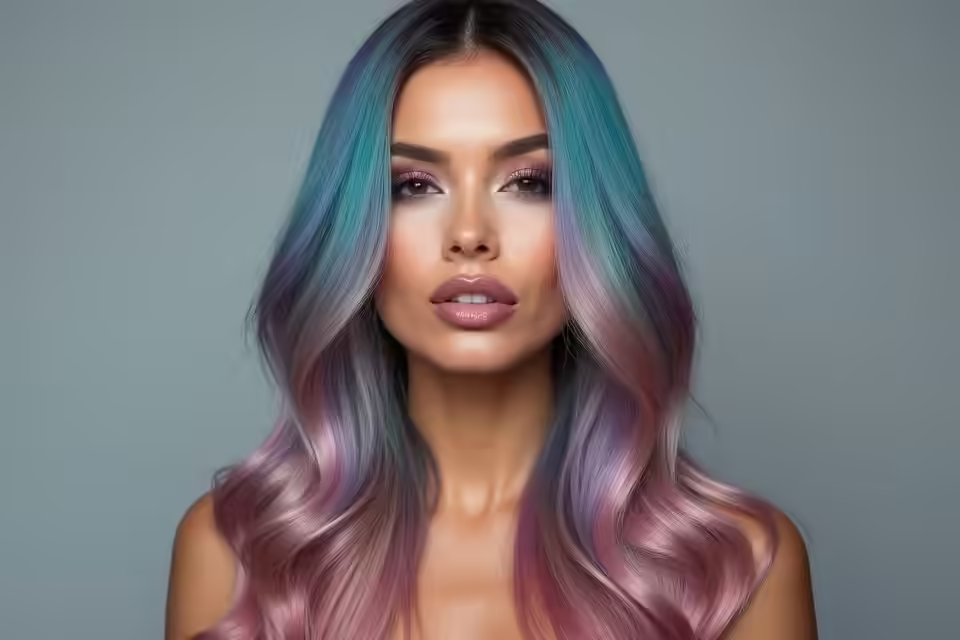
A softer, more romantic take swaps the sharp jellyfish edges for a mermaid-inspired version: a gently rounded dome over long, wavy, sea-toned lengths. It keeps the two-layer idea but trades avant-garde for ethereal.
Soft waves and a blue-green or pastel color make it feel oceanic and dreamy. It works for people who love the idea but find the sharp version too severe.
- A softer, rounded dome over long wavy lengths
- Sea-toned or pastel color for an oceanic feel
- A gentler option than the sharp classic
Stylish Pairings for the Jellyfish Cut

The jellyfish cut is a statement, so the rest of your look can either stay simple or lean into the drama.
- Pair it with clean, minimal makeup so the hair leads
- Or match its boldness with a strong lip and edgy style
- It sits in the same family as the shag and the wolf cut
An Easy, Versatile Everyday Style

Despite the drama, a jellyfish cut is surprisingly easy to wear day to day once it is cut. Most mornings it needs only a quick smooth-through of the tail and a touch of product on the dome.
The shape does the work, so you do not need to style it heavily. That low daily effort is a big part of why it caught on so widely.
- The cut holds its shape with minimal daily styling
- Smooth the tail and touch up the dome, and you are set
- Low effort once the shape is established
Budgeting for Jellyfish Hair

It helps to know the real costs before you commit to such a specific cut.
- The cut runs roughly $60 to $120 depending on your salon
- Two-tone or pastel color adds $100 to $300 or more
- Budget for a reshape roughly every two months to hold the dome
A quick daily style in four steps:
1Smooth
Run a flat iron or smoothing cream through the tail.
2Shape
Touch up the blunt dome with a little product.
3Separate
Add texture spray if you want the tail piecey.
4Set
Finish with a light shine spray or hairspray.
Seasonal Jellyfish Hair Adjustments

The cut adapts nicely through the year with small tweaks instead of a whole new style.
- Bright, pastel tails feel fresh for spring and summer
- Deeper, jewel-toned color suits fall and winter
- Wave the tail in humid months, when sleek is a losing fight
Personalizing Your Jellyfish Look

The best jellyfish cuts are the ones adapted to the person, not copied exactly from a photo. The dome length, the tail length, the amount of slicing, and the color are all dials you can turn.
Dials You Can Turn
I tailor the proportions to the face: a slightly longer dome softens a round face, a shorter one plays up strong features. Talk those choices through with your stylist.
Make it yours, and the cut goes from a trend you tried to a signature that suits you.
What to Expect
If you are considering a jellyfish cut, go in with clear expectations. It is a bold, high-commitment shape that takes a skilled stylist to cut and looks its best when kept sharp, so plan for regular trims and, if you color it, ongoing upkeep. The first appointment can run long, especially with color.
In return, you get a truly striking, head-turning style that photographs beautifully and, once cut, is surprisingly easy to wear. Bring references, choose an experienced stylist, and be honest about how much maintenance you will realistically do. Done right, it is one of the more memorable cuts around.
Jellyfish Hair Questions, Answered
?What exactly is a jellyfish haircut?
It is a disconnected cut with a short, blunt dome or bowl-shaped upper layer sitting over a long, sleek lower layer, with a visible gap between the two. The blunt top and flowing tail together resemble a jellyfish, which is where the name comes from.
?Does jellyfish hair work on curly hair?
Yes, when it is cut for your texture. Curly and coily hair is shaped with its natural pattern and shrinkage in mind, usually left a little longer, so the dome and tail keep their contrast as the hair dries. A stylist experienced with texture is essential.
?How much does a jellyfish cut cost?
The cut alone runs roughly $60 to $120 depending on your salon and location. Adding two-tone or pastel color can add $100 to $300 or more, since it usually requires lightening. Budget for trims every couple of months to keep the shape sharp.
?Is jellyfish hair hard to grow out?
It grows out more gracefully than you would expect. As the dome lengthens, the disconnection softens into a long, layered shape rather than an awkward line, so you are left with usable layers. A few shaping trims along the way make the transition smoother.
A Bold Cut, Made to Be Yours
The jellyfish cut earned its viral moment honestly: it is dramatic, instantly recognizable, and, once you get past the boldness, surprisingly wearable. The whole thing comes down to that deliberate contrast between a blunt dome and a flowing tail, and to a stylist skilled enough to cut it cleanly.
If the shape has caught your eye, start with a good consultation and a version tailored to your hair and face. Go as subtle or as statement as you like. Done right, it is the kind of cut people remember.
Where to Next