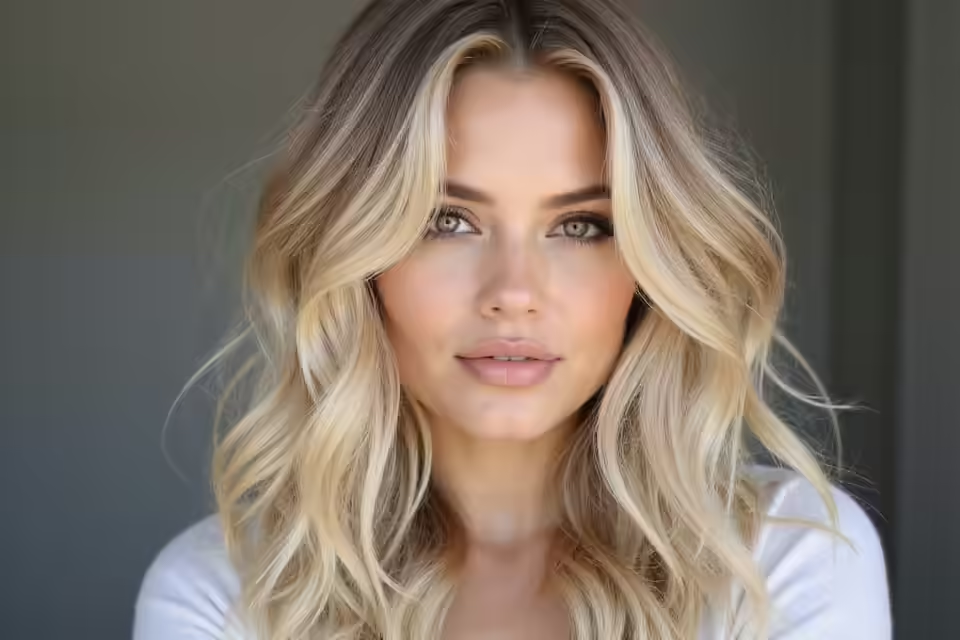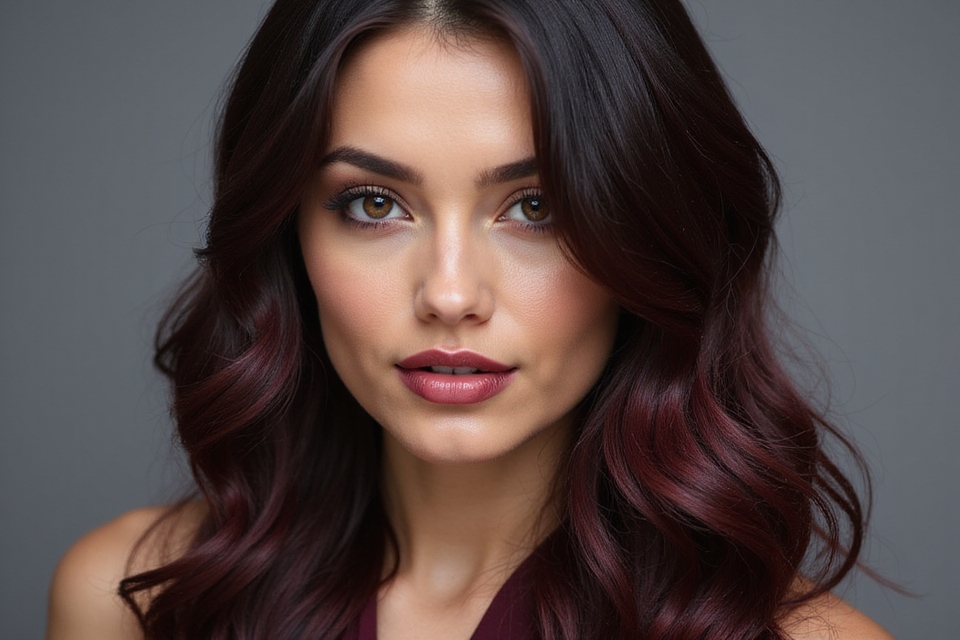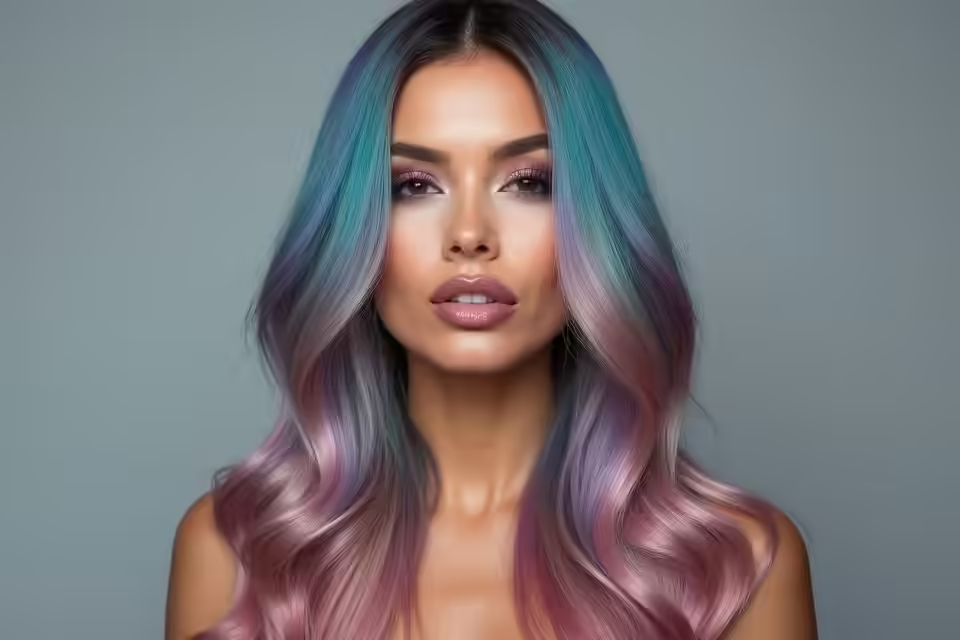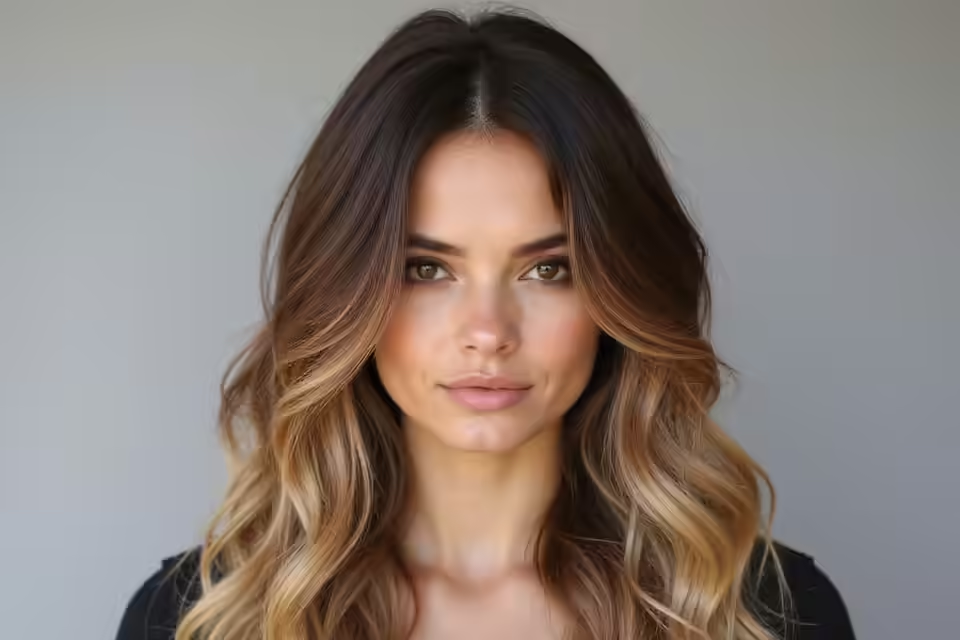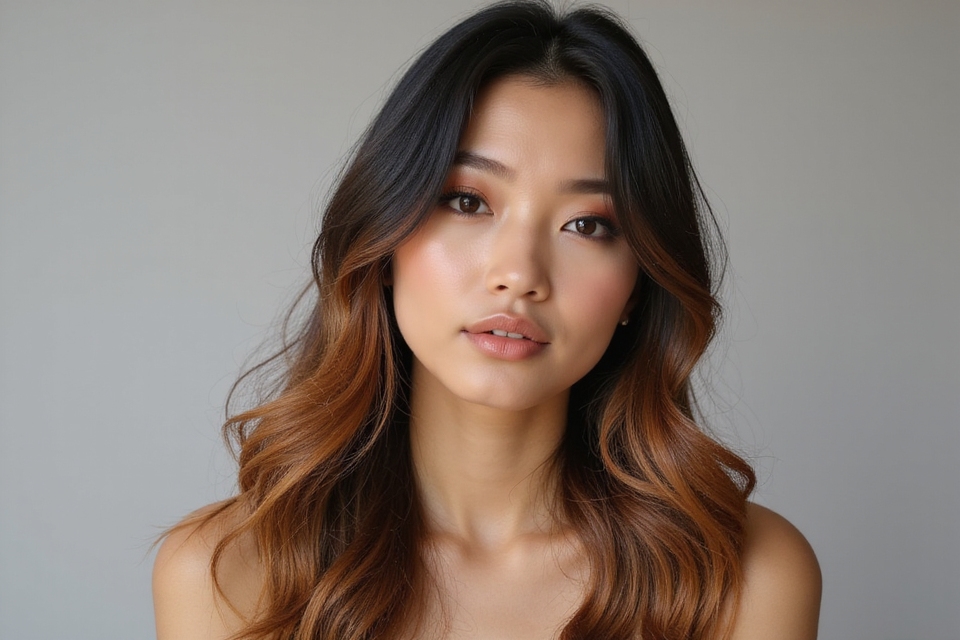
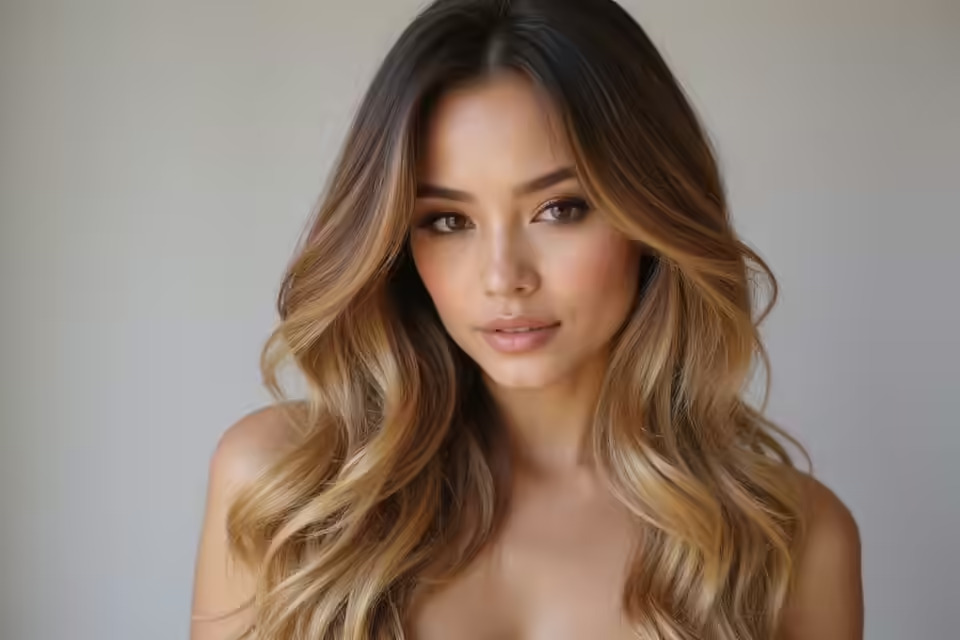
Balayage isn’t a color; it’s a technique, and understanding that one thing changes everything about how you ask for it. Foils lift hair in uniform stripes. Balayage is color hand-painted freehand onto the surface of the hair, heavier toward the ends and softer at the roots, so it grows out like sunlight, with no hard line. That’s why it looks natural, and why it can go months between appointments.
Below is a full guide to balayage: how the technique works, how to place it for your face and skin tone, what to ask your colorist for, and how to keep it looking fresh. Whether you want barely-there brown dimension or bright, face-lit gold, it starts with knowing how the paint lands.
Balayage, the Essentials
Balayage is a freehand painting technique, not a shade, so the same method gives you subtle brown dimension or bright blonde depending on how much color is painted and how light it’s taken. The signature is a soft, root-shadowed grow-out with no harsh regrowth line, which is what makes it lower-maintenance than foil highlights.
The magic is in placement: color concentrated on the ends and around the face brightens your complexion and frames the face, while a natural root keeps the upkeep low. Match the tone to your undertone, warm gold for warm skin, cooler ash for cool skin, and it flatters far more than a flat all-over dye.
The Sun-Kissed Balayage Technique
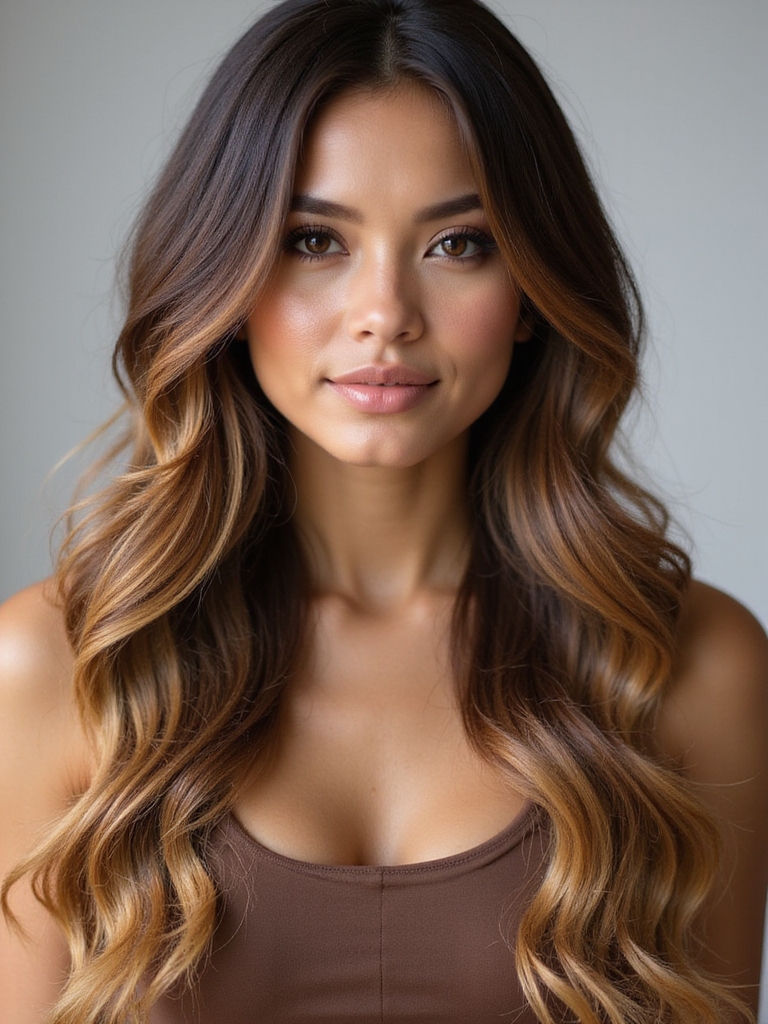
Balayage, from the French for ‘to sweep,’ is color painted by hand onto the surface of the hair. A colorist sweeps lightener on freehand, concentrating it where the sun would naturally lighten your hair: the ends, the mid-lengths, and the pieces around your face.
Because the color is feathered up the hair, it fades into your natural base with no line, which is the whole reason it grows out so softly. The result looks like hair that has spent a summer outdoors.
This freehand control is also why no two balayages are identical; each one is painted to suit the head it’s on, which is what makes it feel custom.
Precision in Color Placement
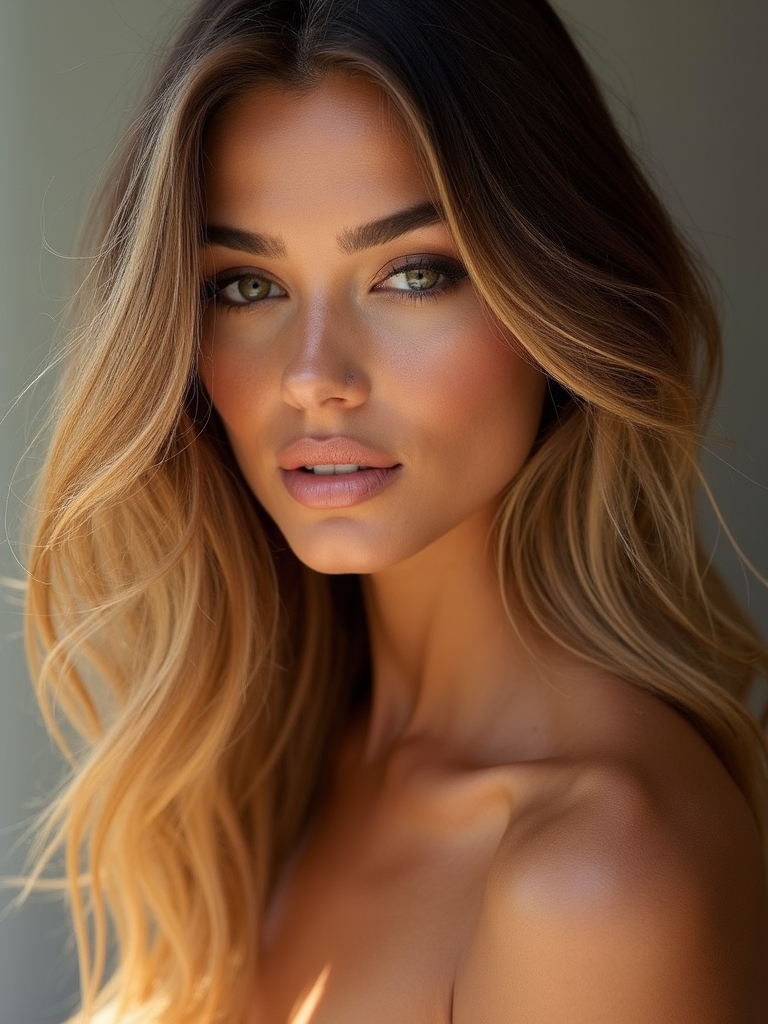
The single biggest factor in whether balayage flatters you is placement. Brightness painted around the face lifts your complexion and draws the eye up, while a natural, shadowed root keeps the grow-out invisible and the upkeep low.
A skilled colorist places the lightest pieces where light would hit and where they flatter your features, then blends the rest so nothing looks striped. In my chair, I spend as long deciding where the color goes as I do applying it.
This is why a photo helps but a consultation matters more: the same technique placed differently gives a completely different result on your face.
🅰️Balayage
Hand-painted, freehand color with a soft, rooty grow-out and no harsh line; lower-maintenance, natural dimension.
🅱️Foil highlights
Color in foils for uniform, all-over lift and brightness; more dramatic and even, but roots show sooner.
Choosing Your Base Color
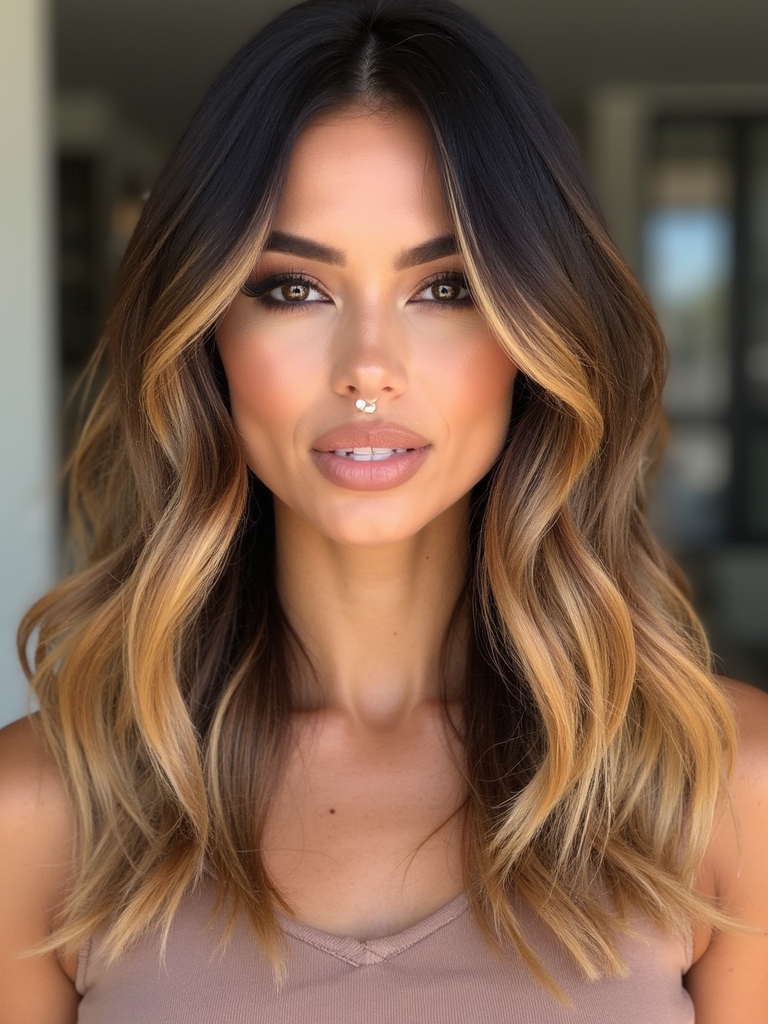
Balayage is really two decisions: the base and the paint. Your base is the depth the color grows from, and keeping it close to your natural shade is what makes the grow-out soft and the upkeep gentle.
Why the Base Matters
If your natural base is dark, a colorist may add a soft root-shadow or lowlights to keep depth and stop the balayage looking washed out. If it’s already light, less lifting is needed to reach a bright result.
Deciding the base honestly with your colorist is what keeps the finished color balanced, dimensional, and easy to live with.
A Soft Warm Balayage Blend
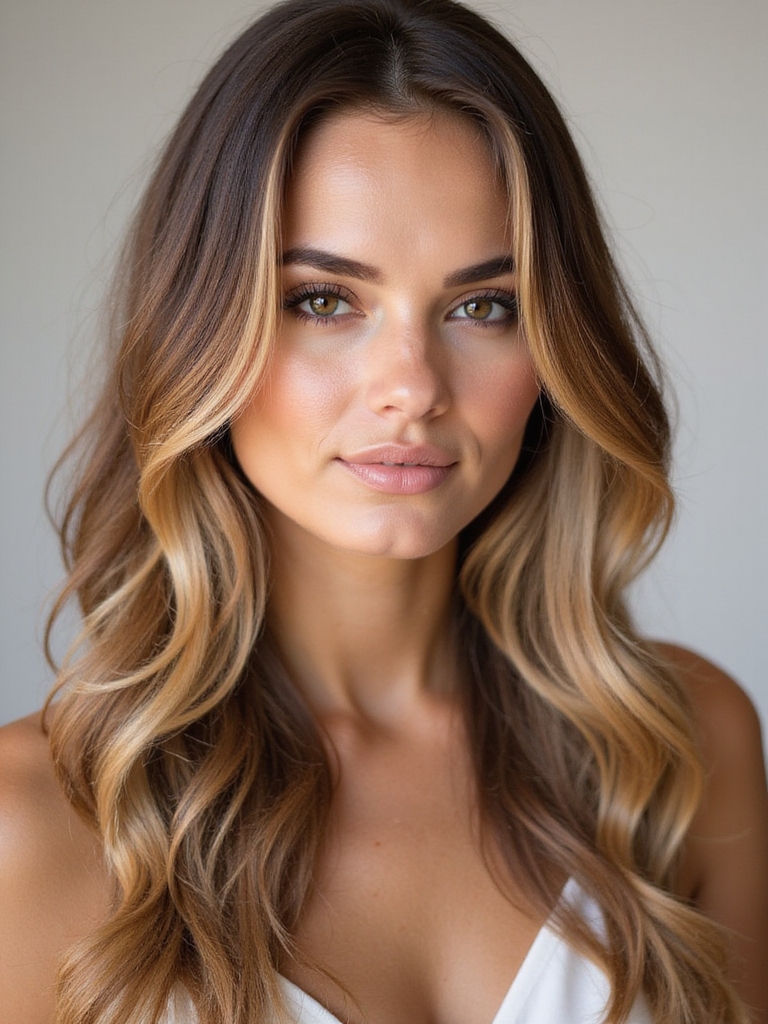
A warm balayage weaves honey, caramel, and gold through a brown base for glow and dimension without going fully blonde. The warmth flatters golden, olive, and deep skin especially, echoing the warmth in the complexion, and it grows out beautifully thanks to the natural root.
Ask for the warmth kept ‘soft gold, not brassy’ if your hair pulls orange easily, and keep the brightest pieces around your face. See caramel highlights on brown hair for a warmer take.
A few balayage terms to help you talk to your colorist.
📖Money-piece
The brighter face-framing pieces at the front that lift and flatter your complexion.
📖Root shadow
A soft, darker root blended in so the grow-out stays soft and low-maintenance.
📖Gloss / toner
A semi-transparent treatment that sets the exact tone and adds shine between full appointments.
Sun-Kissed Highlights
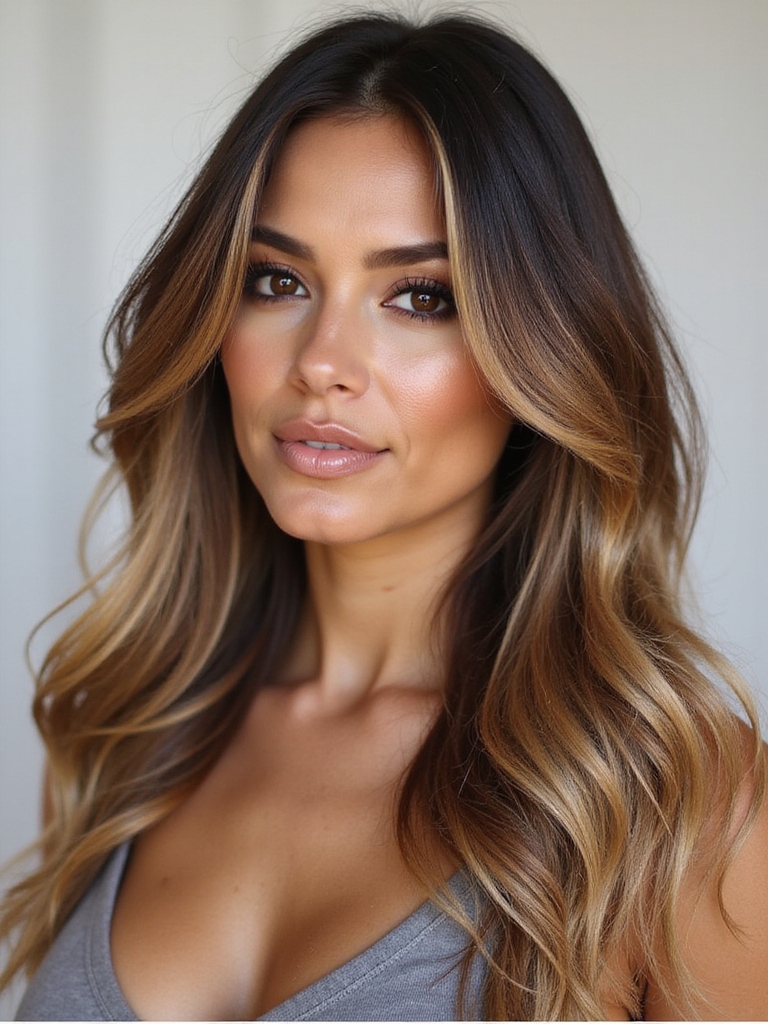
Sun-kissed balayage highlights place the brightest pieces exactly where the sun would naturally lift your hair, the top layers, the ends, and the front, so the effect looks earned rather than done. It’s the most natural-looking way to go lighter, and it flatters almost everyone.
The key is keeping the roots and under-layers darker so the brightness reads as sunlight catching the top of your hair. It’s low-maintenance because there’s no stark regrowth, and a gloss every couple of months keeps it fresh.
- Brighten the top layers, ends, and front, not the whole head.
- Keep the roots and under-layers darker for realism.
- Grows out softly, so touch-ups can wait months.
- Refresh with a gloss every couple of months.
Blending That Looks Natural
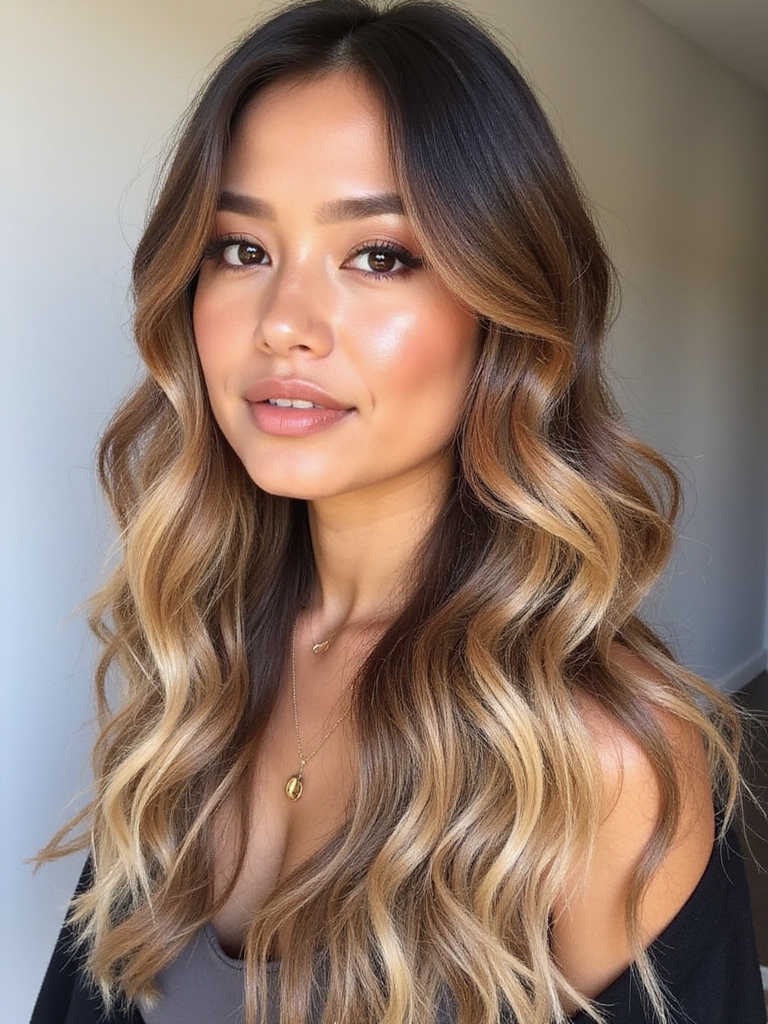
The mark of good balayage is a soft transition with no visible line between your base and the painted color. That blend comes from feathering the lightener up into the hair and from adding lowlights, darker pieces woven back in, so the color has depth instead of one flat band of brightness.
A colorist may also glaze the finished color to melt the tones together. If your balayage ever looks stripy or harsh, it’s usually a placement-and-blending issue, not the technique itself, and a good colorist can soften it. This melted, dimensional finish is what separates expensive-looking balayage from a basic highlight.
- Feather the color up into the hair so there’s no hard line.
- Add lowlights so the color has depth, not one flat band.
- A glaze melts the tones together for a soft finish.
- Stripy balayage is a blending issue, not the technique.
Balayage for Your Personal Style
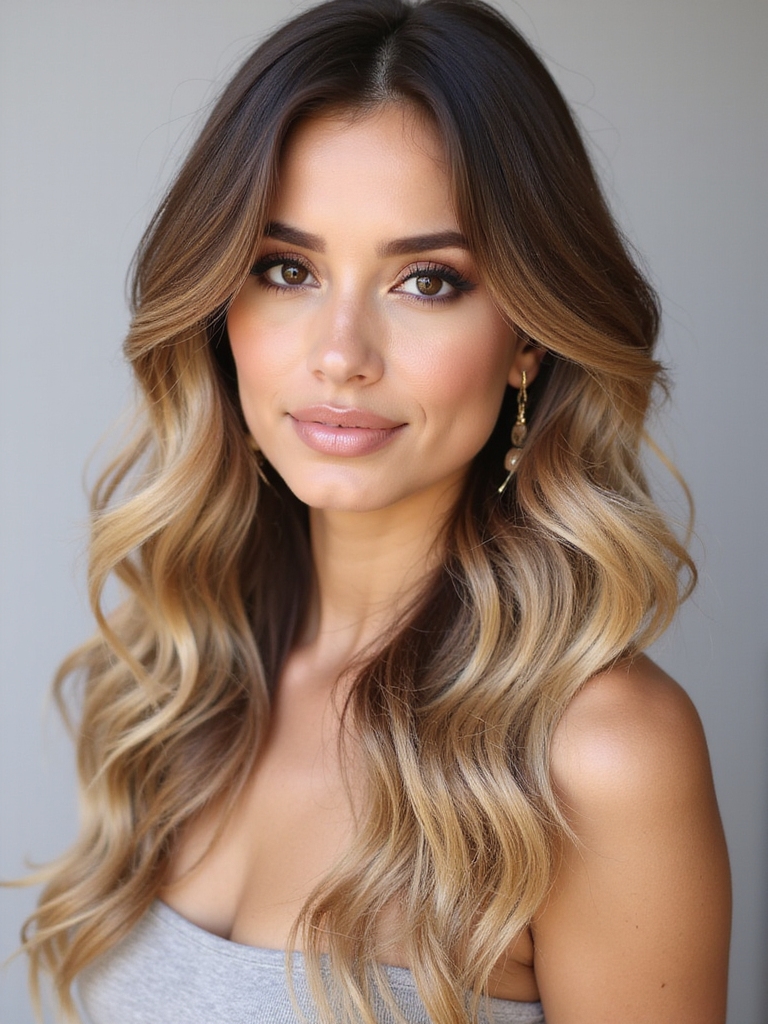
One of balayage’s strengths is how much it flexes to your taste. The same technique gives you a barely-there few pieces of dimension or a bright, beachy, all-over lift, just by changing how much is painted and how light it’s taken.
If you want low-key, ask for subtle, face-framing brightness on a natural base. If you want a statement, ask for more pieces, lighter ends, and a brighter face-frame.
Being clear about how bold you want to go, and how much upkeep you’ll realistically keep up with, is what gets you a result you’ll actually love.
👍Why people love balayage
- +Grows out softly with no harsh regrowth line.
- +Lower-maintenance than foils; months between visits.
- +Custom, natural dimension painted to suit your face.
👎What to weigh up
- –Higher upfront cost and longer time in the chair.
- –Dark or box-dyed hair may need two or three sessions.
- –Lightened ends still need bond treatments and glosses.
Balayage for Your Skin Tone
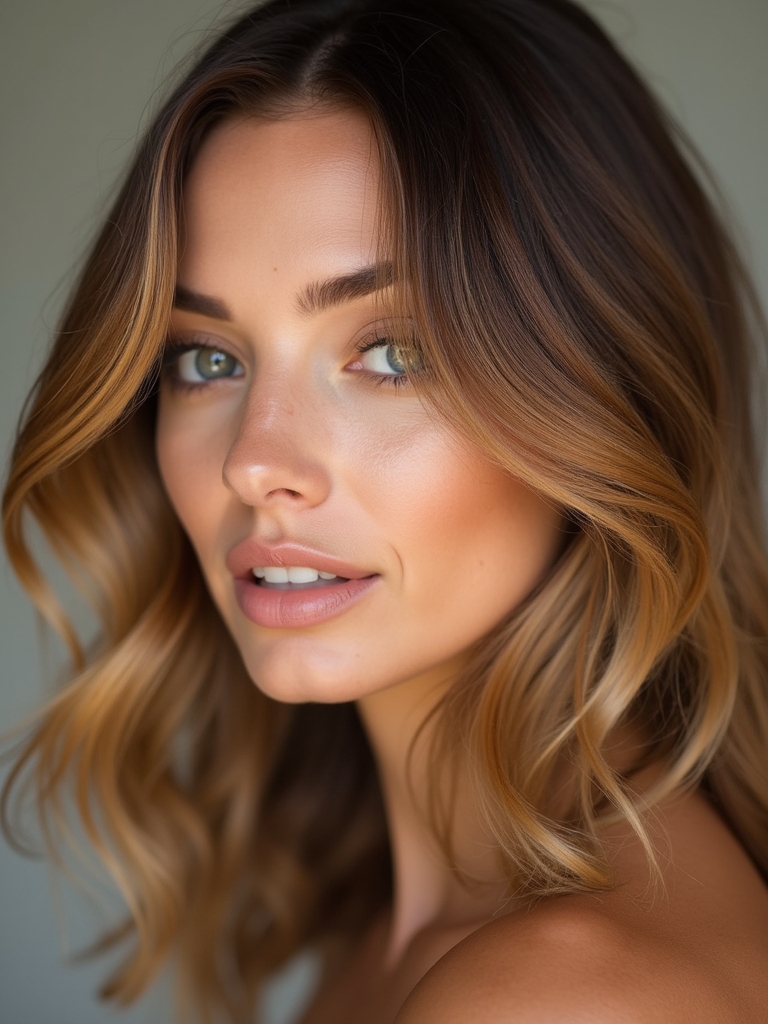
The tone of your balayage should flatter your skin, and undertone is the guide. Clients ask me about tone more than anything, and undertone is the answer. Warm, golden, and olive skin glows with honey, caramel, and gold balayage; cool, pink-based skin suits cooler, ashier, beige-gold tones; and deep skin looks beautiful in rich, warm caramels and toffees painted in for dimension.
- Warm and olive skin: honey, caramel, and gold balayage.
- Cool skin: ashy, beige-gold, and cooler blonde tones.
- Deep skin: rich warm caramels and toffees for dimension.
- Hold a swatch to your jaw in daylight to check it lifts your face.
A Sun-Kissed Everyday Balayage
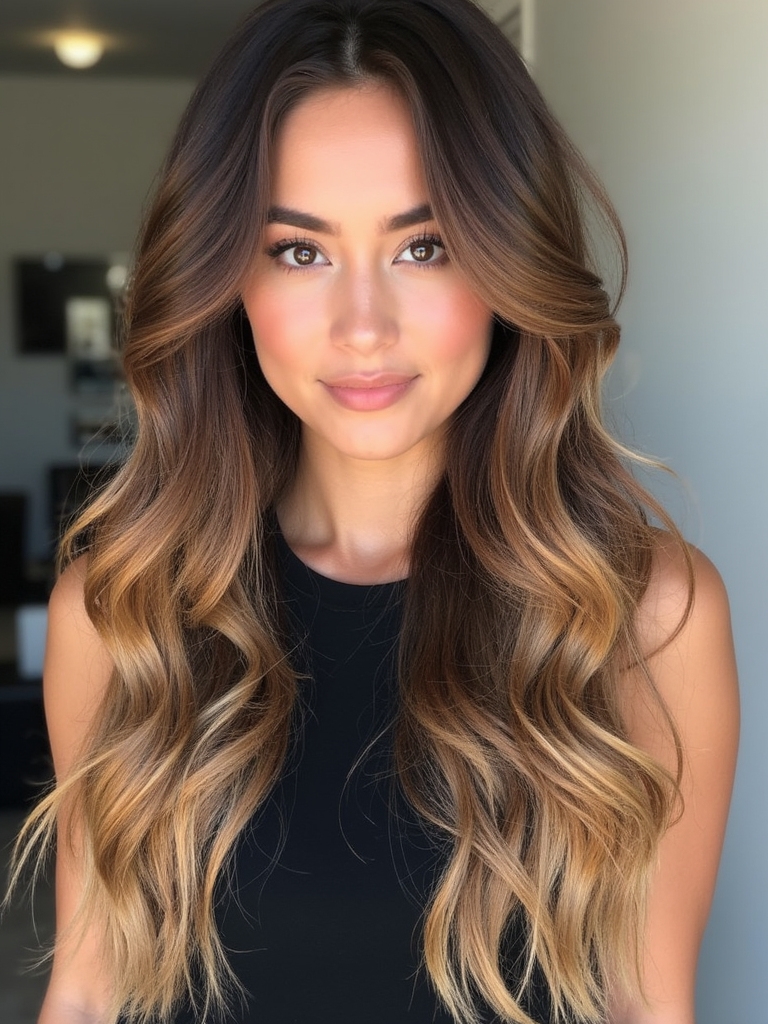
The most popular balayage of all is the soft, everyday version: gentle, natural dimension that looks like your own hair on its best day. A few shades of soft lift painted through a natural base, brighter at the ends and around the face, gives glow without a dramatic change, which is exactly why it suits nearly everyone and works for any age or lifestyle.
It’s the balayage I recommend most to first-timers, because it’s the easiest to live with and the least jarring transition. Keep it warm or cool to match your skin, and a gloss keeps it looking freshly done.
- Soft, natural dimension that looks like your own hair, better.
- Brighter at the ends and around the face.
- The easiest balayage to live with for a first-timer.
- A gloss keeps it looking freshly done.
Subtle, Low-Contrast Blends
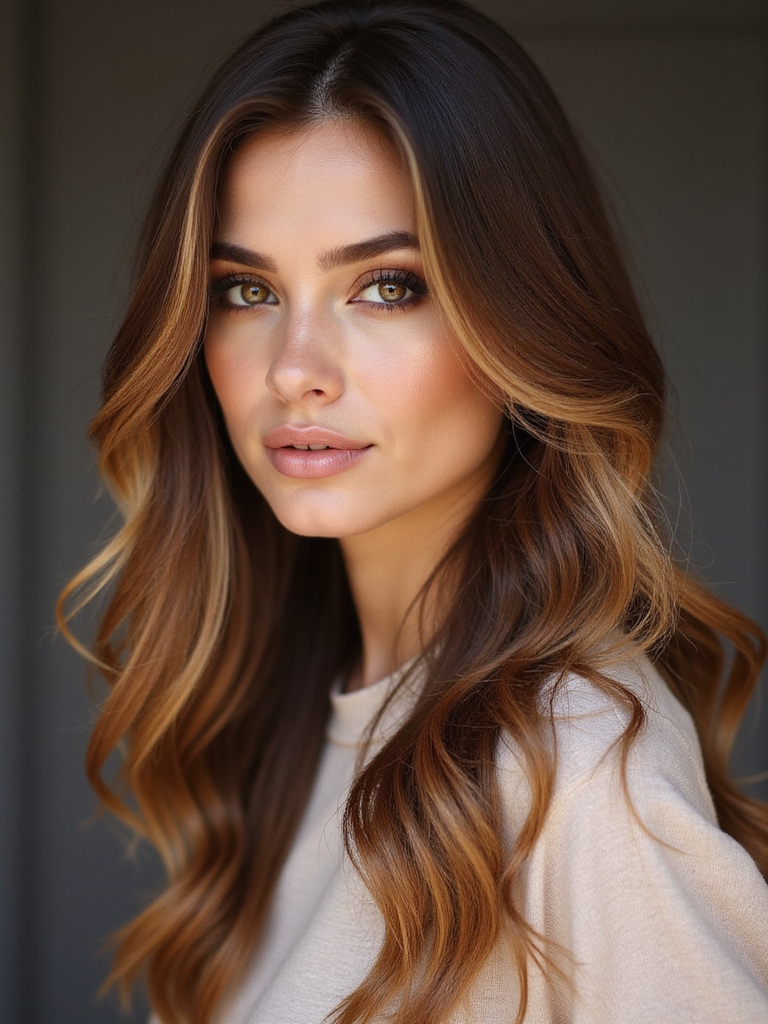
For the quietest option, a low-contrast balayage keeps the painted pieces within a shade or two of your base, so the effect is dimension you sense more than notice. It’s perfect for anyone who wants their hair to look richer and more expensive without an obvious color change, and it grows out with almost no visible regrowth.
- Keep the painted pieces within a shade or two of your base.
- The effect is subtle dimension rather than obvious color.
- Grows out with almost no visible regrowth.
- Ideal for a natural, expensive-looking finish.
The Brown Balayage Spectrum
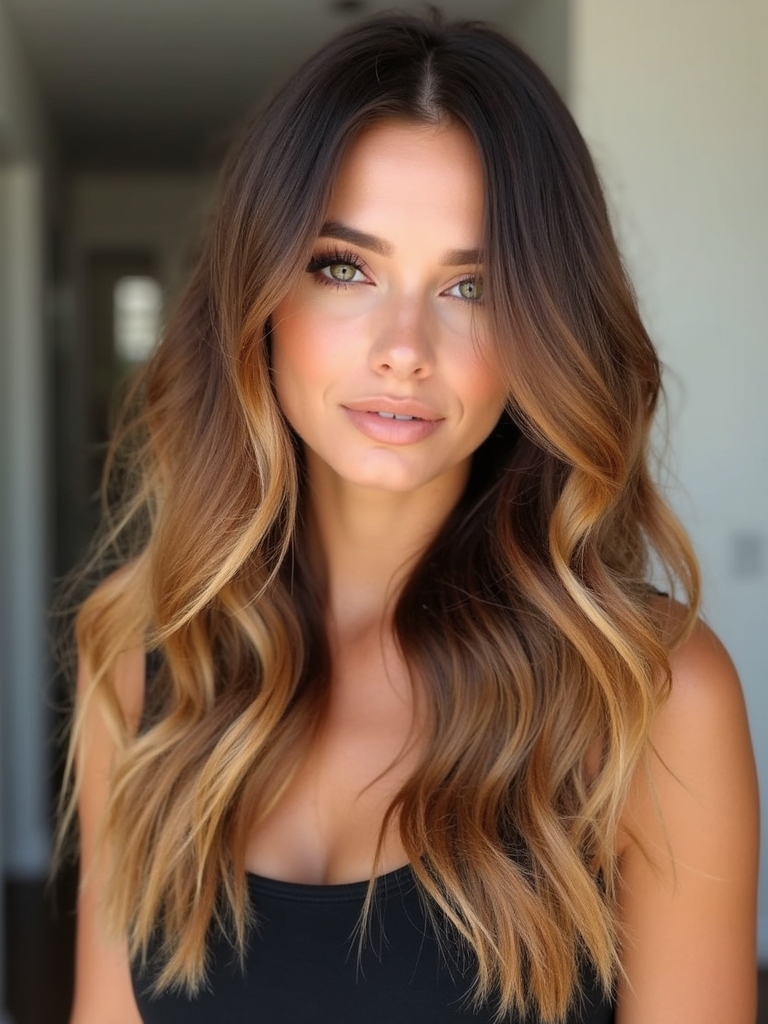
You don’t have to go blonde for balayage to transform your hair. Brunette balayage paints lighter browns, chocolate, chestnut, caramel, through a darker brown base, so the color stays rich and low-maintenance while gaining real dimension and movement.
It’s the ideal choice for anyone who loves being a brunette but wants their color to look expensive rather than flat. It flatters every skin tone and keeps the upkeep gentle since the base stays dark. See brown color ideas for more brunette shades.
- Paint lighter browns through a darker brown base.
- Stays rich and low-maintenance while gaining dimension.
- Ideal for brunettes who want depth, not a big change.
- Flatters every skin tone with a gentle grow-out.
Golden, Light-Cascading Balayage
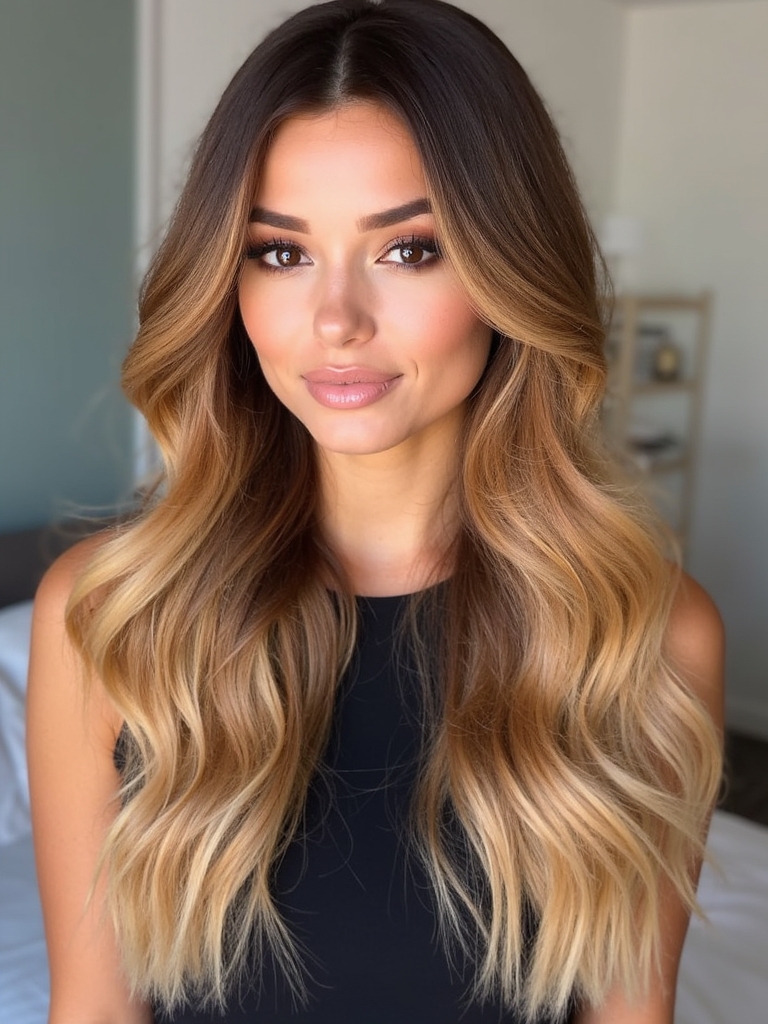
A golden balayage takes the brightness further, cascading warm gold down through the lengths so the hair looks lit from within as it moves. It’s a brighter, more noticeable look than a subtle blend, all sunny warmth and glow, and it flatters warm and neutral skin especially.
The warmth needs care to stay gold rather than brassy, so a gold-leaning gloss and sulfate-free products are key. It’s a favorite for spring and summer, when the extra brightness feels right. Pair it with a honey blonde blend for maximum glow.
Cool Ashy Balayage
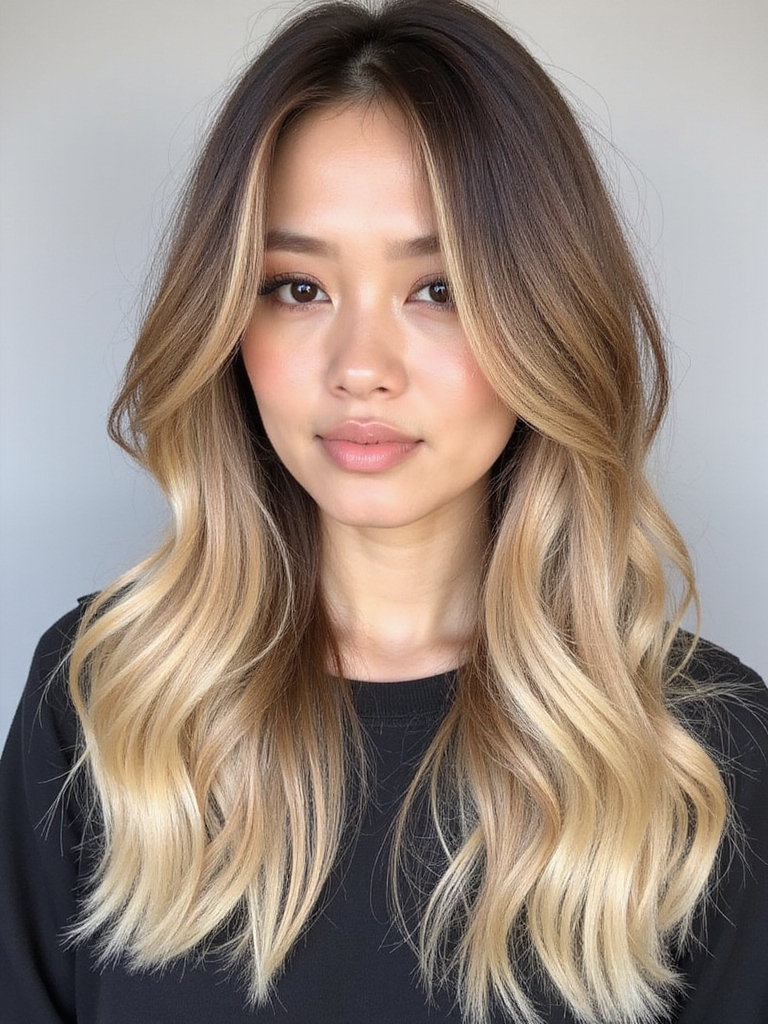
For anyone whose hair pulls too warm or who simply prefers a cooler look, an ashy balayage tones the painted pieces toward beige and ash rather than gold. The cool tone reads modern and expensive and flatters cool, pink-based skin especially, where warm gold can look brassy against the complexion.
- Tone the painted pieces toward beige and ash, not gold.
- Flatters cool, pink-based skin especially.
- Needs regular toning, since cool tones fade warm.
- See ash tones for cooler options.
Neutral Balayage Techniques
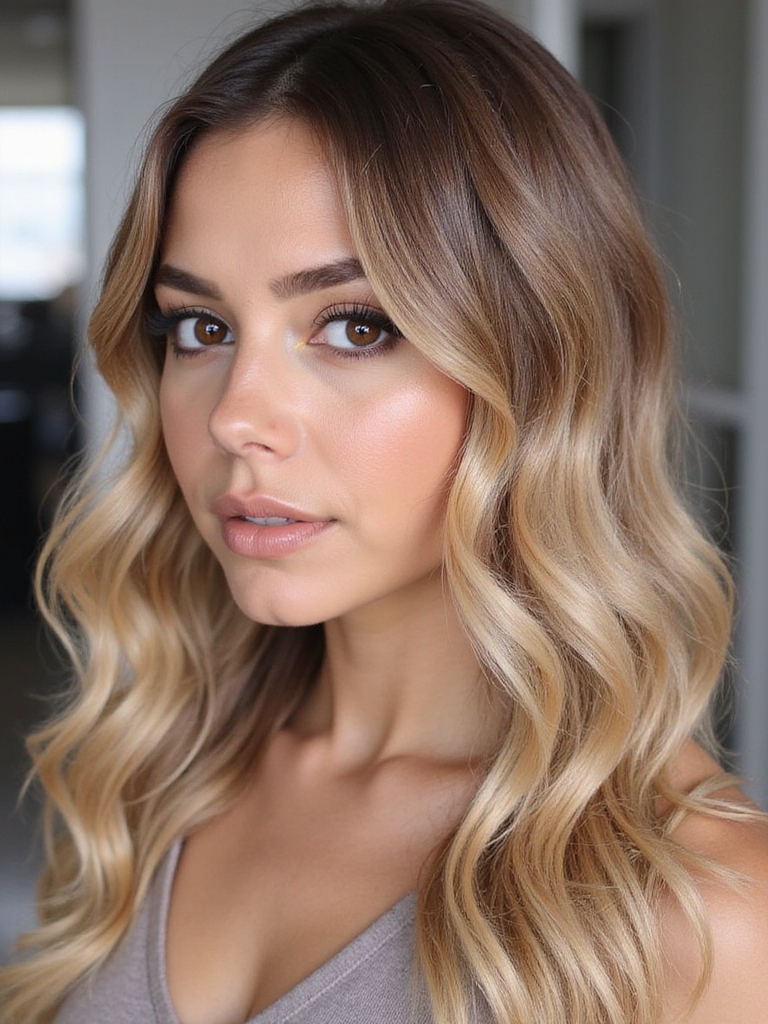
A neutral balayage sits between warm and cool, avoiding both brassiness and an ashy, drab finish. It’s the most universally flattering option, since a balanced tone works with almost any undertone and skin.
When to Choose Neutral
Getting neutral right is a toning skill: the colorist cancels unwanted warmth without pushing the color grey, landing on a clean, balanced beige-blonde or soft brown.
It’s a great choice if you’re unsure which way your undertone leans, or if you want a color that stays flattering as your skin changes with the seasons.
Face-Framing Highlights
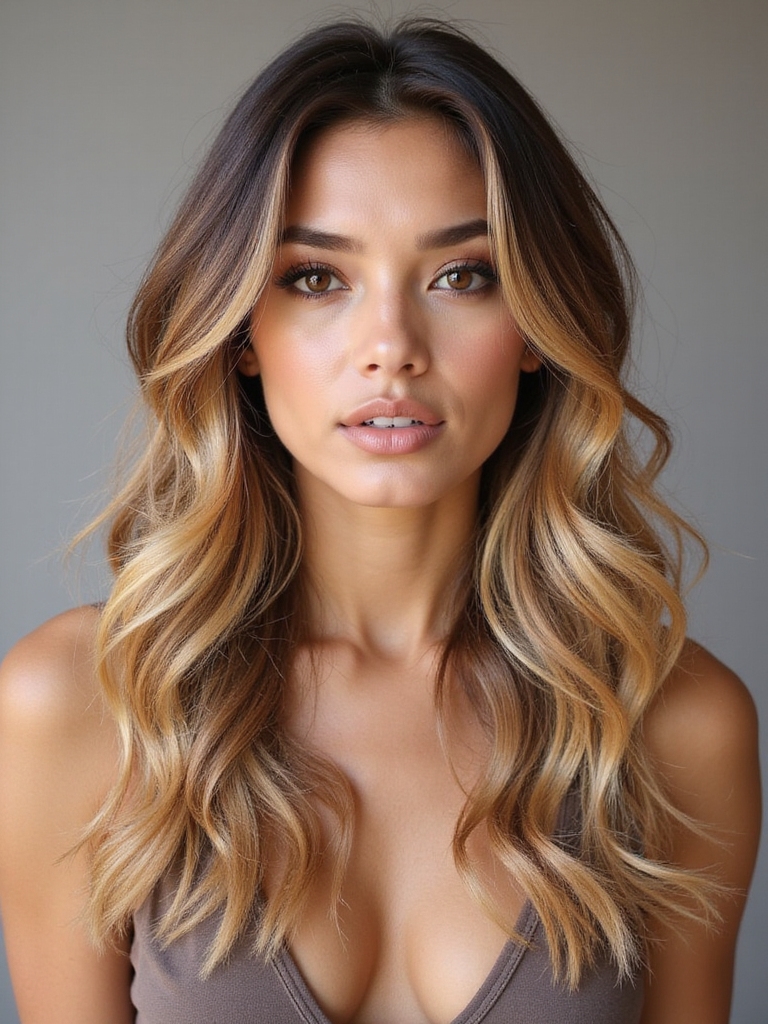
The most flattering thing balayage does is frame your face. Concentrating the brightest, warmest pieces right around your hairline, the money-piece, lifts your complexion and softens your features like good lighting.
Even a subtle balayage feels transformative when the face-frame is placed well, which is why colorists focus so much attention there. It’s the single most impactful piece of any balayage.
If you get nothing else, a few brighter face-framing pieces on your natural base is the lowest-commitment way to see what going lighter does for you.
Beachy Golden Balayage
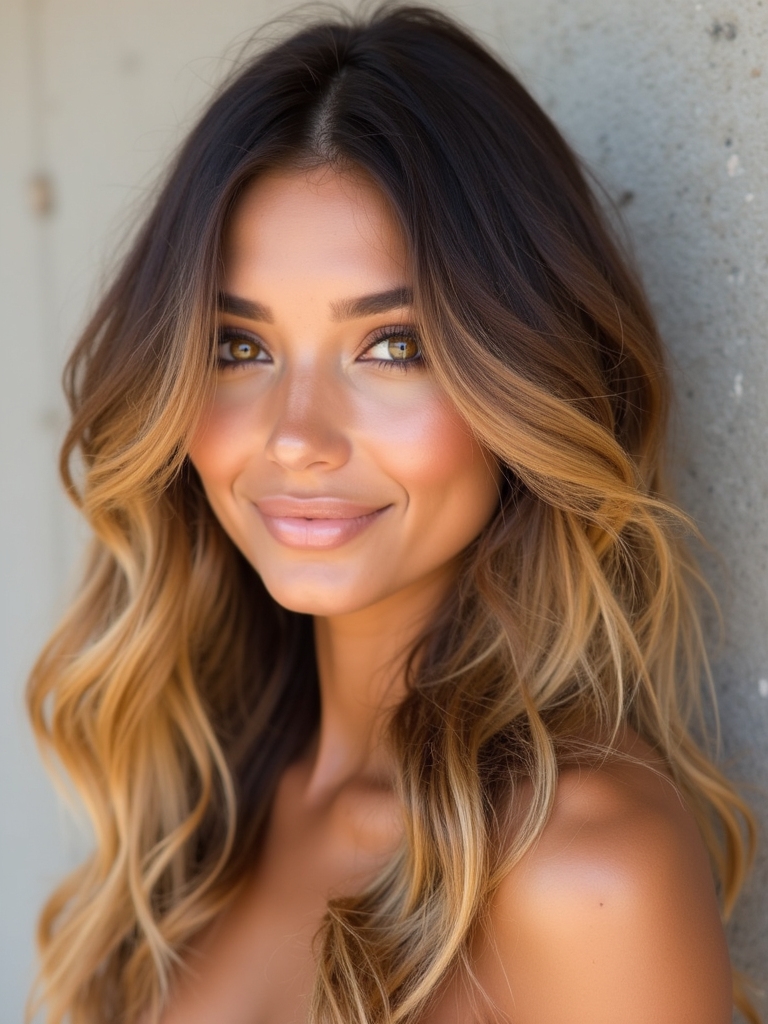
Beachy balayage is the brightest, most casual version: warm, sun-bleached ends and a tousled, relaxed finish that looks like a long summer by the sea. The ends are painted lightest, with the brightness building down the hair for that grown-out, holiday feel.
Keeping Bright Ends Healthy
It suits warm and neutral skin and looks its best on wavy or tousled styles, where the movement shows off the sun-bleached ends. It reads young, fresh, and easygoing.
Because the brightness is on the ends, it grows out gracefully, though the lighter ends need bond treatments and gloss to stay healthy and gold.
A Full Balayage Transformation
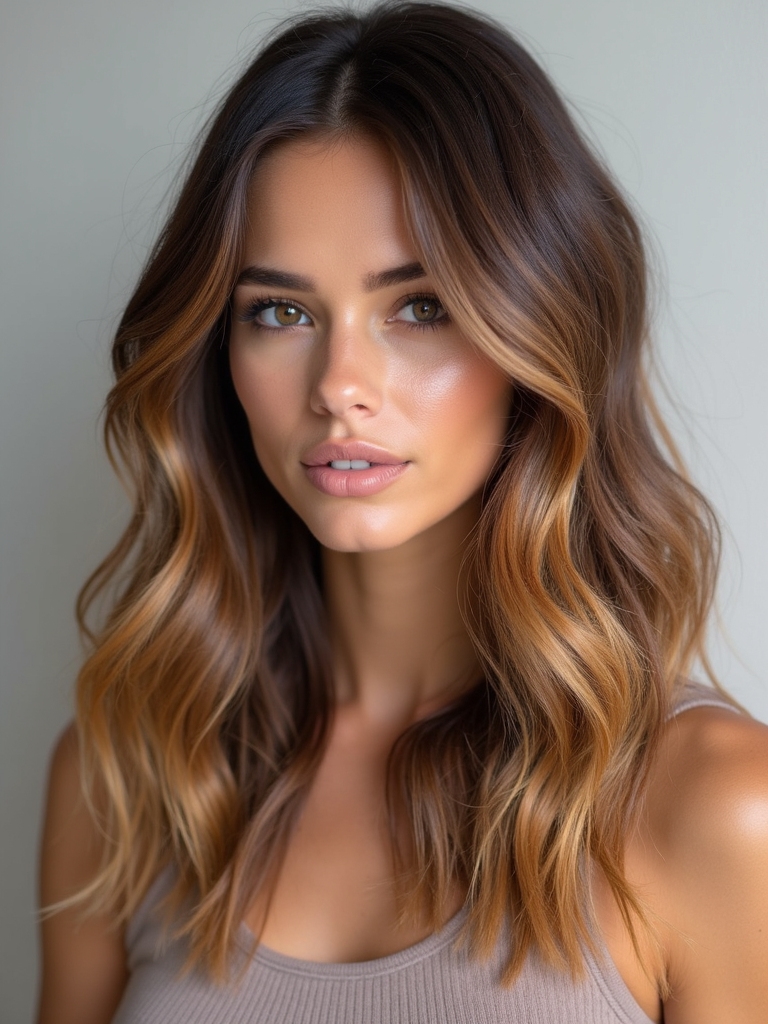
When you want a real change, a full balayage paints more pieces, takes the ends lighter, and brightens the whole face-frame for a noticeable, glowy transformation, while keeping a natural root, so it still grows out softly.
This is the biggest balayage can go while staying low-maintenance, and it’s ideal if you want dramatic brightness while skipping the frequent root touch-ups an all-over blonde demands. It usually takes longer in the chair and may need more than one session on darker hair, so plan for that.
Luxurious Shades of Gold
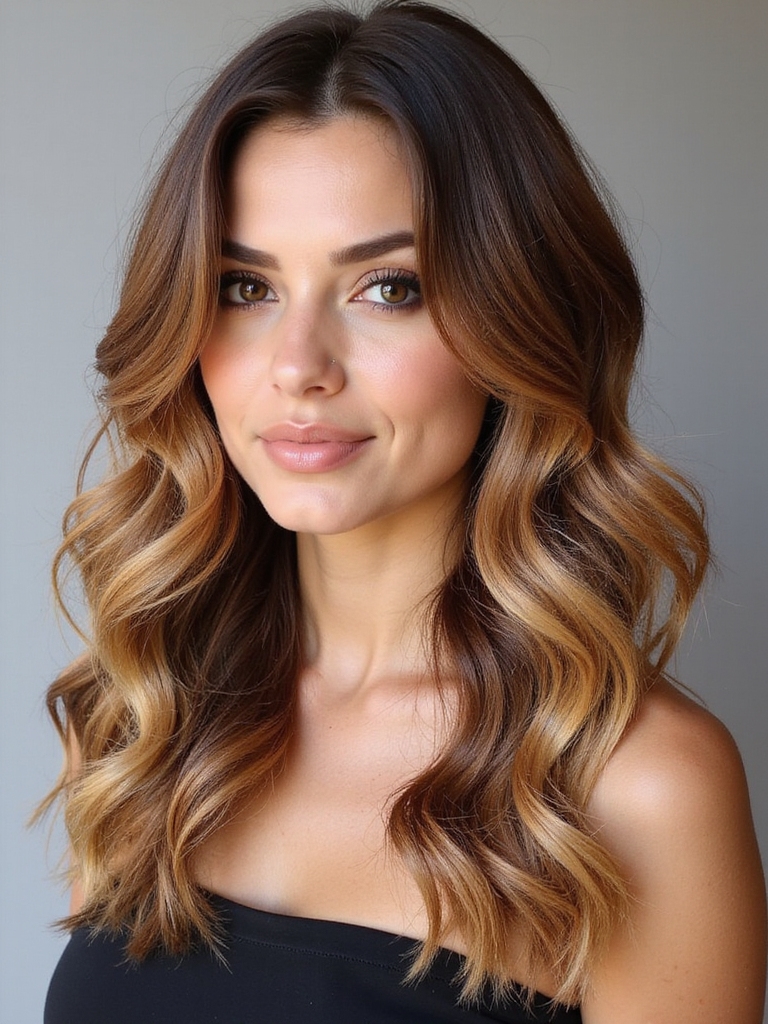
Gold is the most requested balayage family for a reason: warm, rich, and universally flattering, it makes hair look expensive and full of light. From soft honey-gold to deep, buttery caramel-gold, painting several golden tones together gives the color the dimension that a single flat gold never has.
The trick to luxurious gold is depth, keeping some darker, richer pieces so the gold has contrast to shine against. It flatters warm, olive, and deep skin especially, where gold echoes the skin’s own warmth.
Face-Brightening Placement
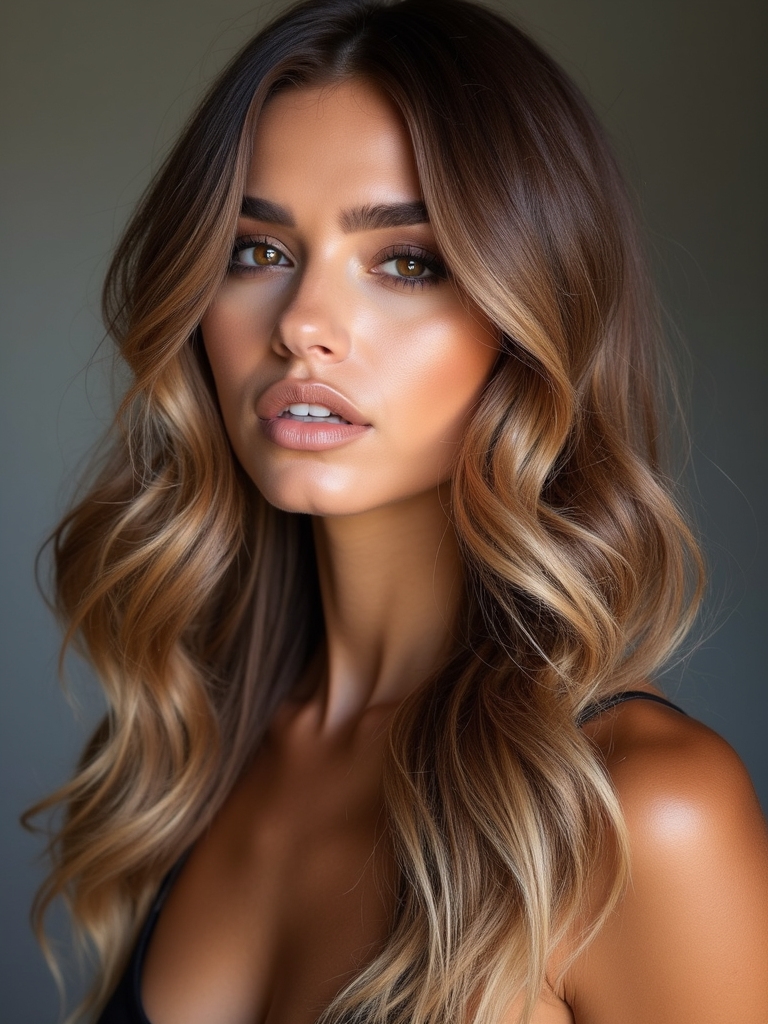
Balayage can truly brighten your face, and it comes down to placing warm, light pieces where they bounce light up onto your complexion. Brightness at the front and around the jaw softens shadows and makes skin look more awake, which is why a good face-frame feels like a subtle filter.
Warm, golden tones do this best on most skin, while cool skin may want a soft beige-gold rather than a stark cool tone that can drain color. The right placement can take years off a tired-looking complexion.
- Place light pieces at the front and around the jaw.
- Warm gold brightens most complexions best.
- Cool skin suits a soft beige-gold face-frame.
- Good placement makes skin look more awake.
The Color Consultation
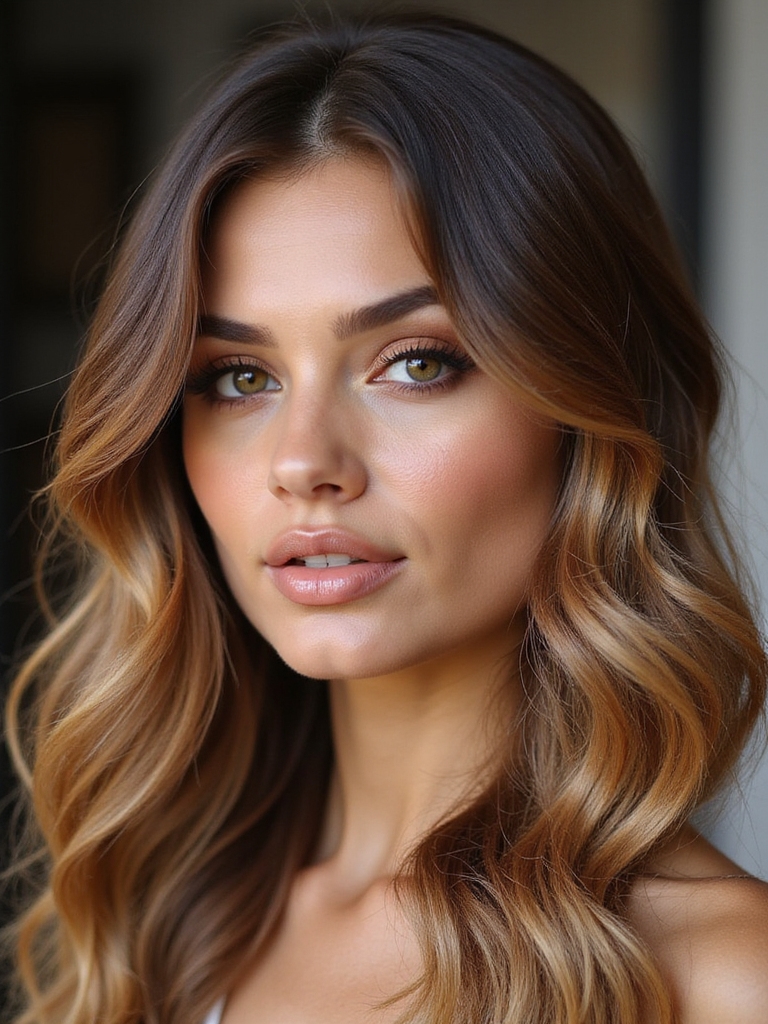
The best balayage starts before any color is mixed, in the consultation. This is where you and your colorist agree on the base, the tone, the placement, the brightness, and, above all, the upkeep you’re signing up for. Bringing two or three reference photos in different lighting helps hugely.
Be honest about your hair’s history, since previous color or box dye affects how it lifts, and about how often you’ll realistically come back. A good colorist will adjust the plan before leaving you with a color you can’t maintain.
- Agree on base, tone, placement, brightness, and upkeep.
- Bring two or three reference photos in different lighting.
- Be honest about color history and how often you’ll return.
- A good colorist tailors the plan to your real life.
| Skin undertone | Best balayage tone | Keep in mind |
|---|---|---|
| Warm / olive | Honey, caramel, gold | Gold-leaning gloss to avoid brass |
| Cool / pink | Beige, ash, cool blonde | Regular toning to stay cool |
| Deep | Rich warm caramel, toffee | Dimension over a dark base |
Balayage Maintenance Basics
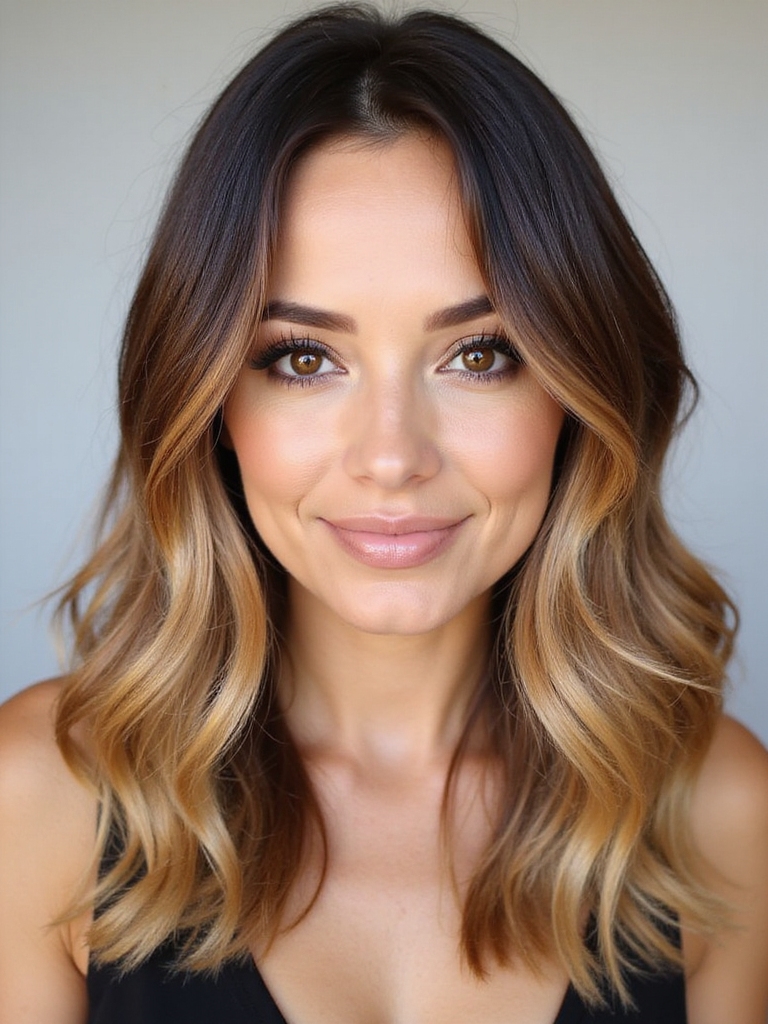
Balayage is lower-maintenance than foils, but the lightened pieces still need care to stay bright and healthy. Because the ends are the oldest, most-processed hair, they fade and dry first, so hydration and toning are the two pillars of upkeep.
Use sulfate-free, color-safe products, a weekly bond or mask on the ends, and a gloss every couple of months to reset the tone. Cut back to fewer washes in cooler water to slow the fade. Textured and curly hair especially needs the extra moisture, since lightened curls run drier.
- Use sulfate-free, color-safe products and wash less often.
- Weekly bond or mask on the lightened ends.
- A gloss every couple of months resets the tone.
- Curly and coily hair needs extra moisture on lifted pieces.
Touch-Up Tips Between Visits
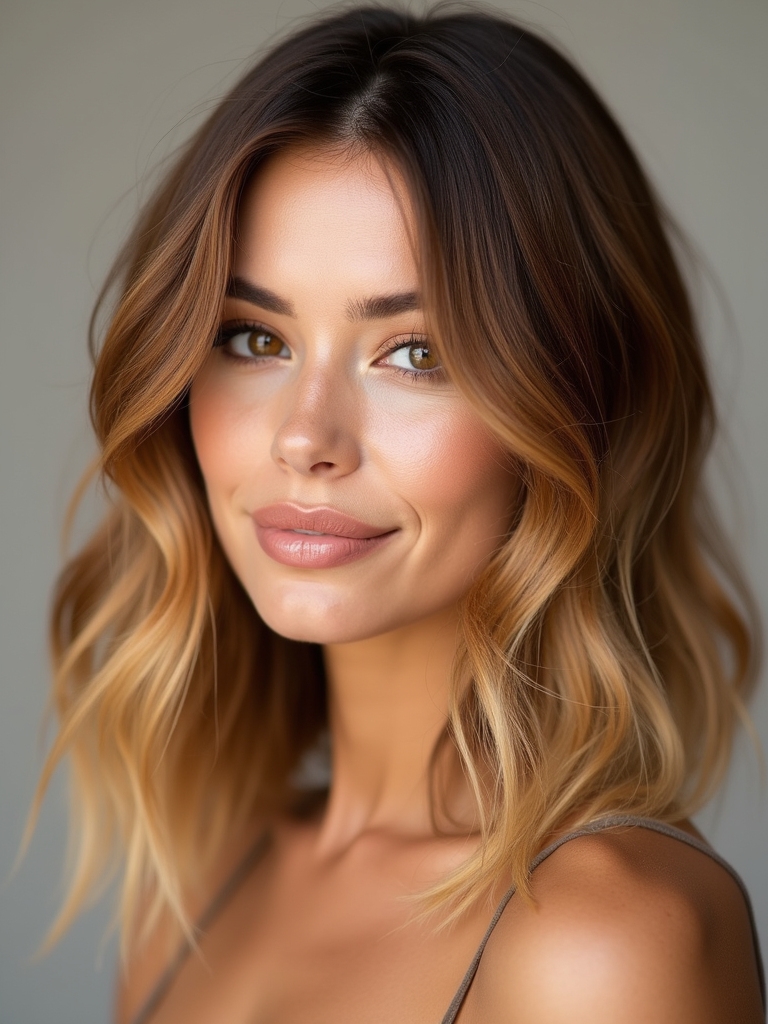
The beauty of balayage is how long it lasts, and a few habits stretch it even further. A toning or purple product keeps warm blondes from going brassy, a gloss refreshes shine and tone at home or in a quick salon visit, and a UV or heat protectant slows the fading that sun and hot tools cause.
Because the roots are meant to be soft, you can happily go three to four months between full appointments, booking only a gloss in between. This is exactly why balayage is the go-to for anyone who wants beautiful color without living at the salon.
- Use a toning product to keep warm blondes from going brassy.
- A gloss refreshes shine and tone between full visits.
- UV and heat protectant slow fading from sun and tools.
- Go three to four months between full appointments.
Current Balayage Color Trends
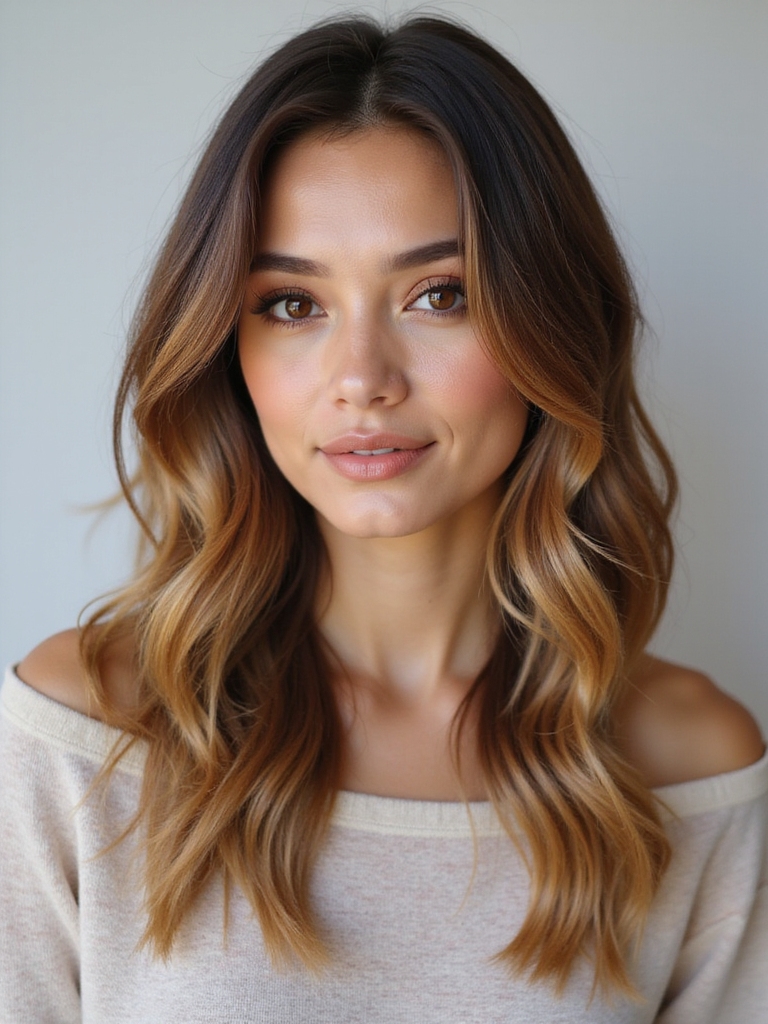
Balayage keeps evolving, and lately the mood is softer and more natural than the heavy, high-contrast ombrés of a decade ago; realism leads now. Right now, soft, worn-in, expensive-looking brunette balayage, cooler ‘expensive brunette’ tones, and money-piece face-framing are everywhere, along with a return to gentler, rooty blondes over stark platinum.
The through-line is realism: color that looks like your own hair, only richer. Whatever the trend, the technique adapts, so you can always ask your colorist to bring a current tone into a placement that suits your face rather than chasing a look that doesn’t.
- The mood now is soft, rooty, and natural, not high-contrast.
- Expensive brunette and money-piece framing are everywhere.
- Gentler, rooty blondes over stark platinum.
- Realism is the trend: your hair, only richer.
Red-Carpet-Inspired Balayage
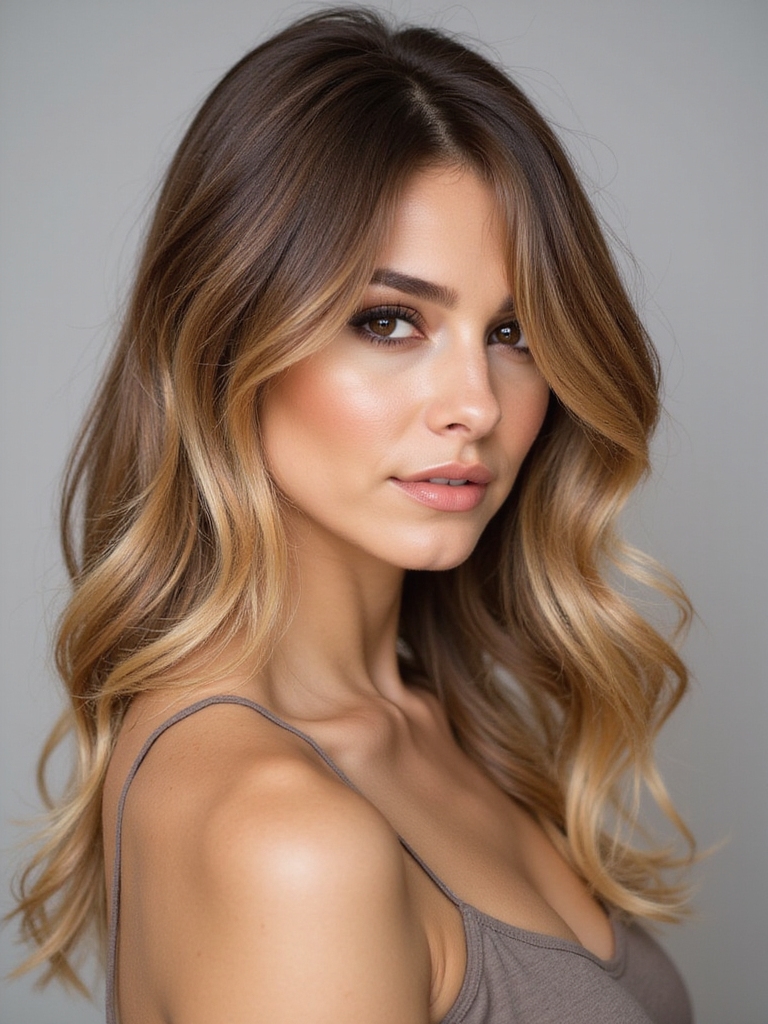
Some of the most-saved balayage looks come from red-carpet and magazine photos, where natural brunettes are lifted into warm, dimensional, face-lit color. The appeal is always the same: it looks quietly expensive.
You don’t need a famous name to get the look. Screenshot the dimension and face-framing you love, and ask your colorist to adapt it to your base and undertone rather than copy it exactly.
A look that flatters a photo often needs adjusting for your coloring, which is exactly what a good colorist does, translating an inspiration into a version that suits you.
How to Get the Look
Getting great balayage comes down to three things: the right colorist, a clear consultation, and honest maintenance. Book someone whose balayage work you’ve seen and liked, bring reference photos, and be upfront about your hair’s history and how often you’ll return. On darker or previously-colored hair, expect it to take two or three sessions to lift safely, so plan for that rather than rushing the lift and risking breakage.
On cost, a full balayage runs about $150 to $350 at a salon depending on length and brightness, with gloss and toning appointments around $40 to $80 every couple of months.
That upfront cost buys months of low-maintenance color, which is what makes it worth it for so many people. Keep up with sulfate-free products, bond treatments, and glosses, protect it from sun and heat, and your balayage will look freshly painted far longer than a flat all-over color ever could.
Balayage Questions, Answered
?How is balayage different from highlights?
Balayage is a freehand painting technique; traditional highlights use foils for uniform, all-over lift. Balayage concentrates brightness on the ends and face for a soft, natural, grown-out effect with no harsh regrowth line, which makes it lower-maintenance. Foils give a brighter, more even result but the roots show sooner.
?Does balayage work on dark or textured hair?
Yes to both. On dark hair, a colorist paints lighter browns and caramels for dimension, or lifts over two or three sessions to go brighter safely. On curly and coily hair, balayage is painted to your curl pattern for beautiful dimension; it just needs extra moisture, since lightened textured hair runs drier.
?How much does balayage cost and how often do I need it?
A full balayage runs about $150 to $350 depending on length and brightness, with gloss or toning appointments around $40 to $80 in between. Because the roots are meant to grow out softly, most people go three to four months between full appointments, which is what makes balayage lower-maintenance despite the higher upfront cost.
Painted to Suit You
The single most useful thing to understand about balayage is that it’s a technique, so it can be anything from a whisper of brown dimension to a full face-lit gold, all painted to grow out softly and flatter your face. Get the placement and tone right for your undertone, and it gives you the rarest thing in hair color: a look that’s both custom and low-maintenance.
Related Reads