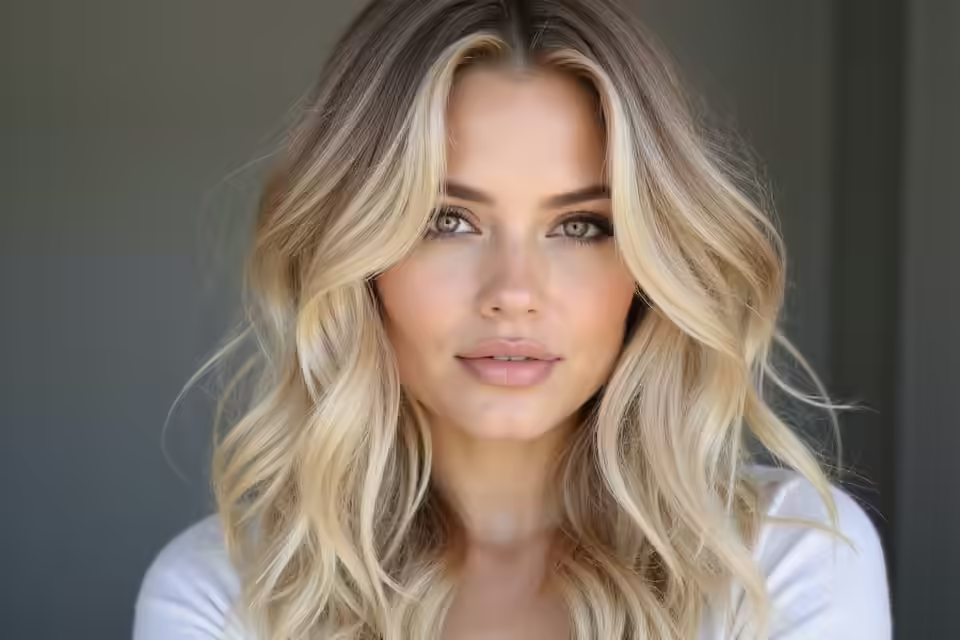

I can usually tell fine hair the moment someone sits down. It catches the light in a thinner, softer way, and it tends to slip out of a clip instead of gripping it. The worry is almost always the same: a cut that looks full at 9 a.m. and goes limp by lunch. That deflated-by-noon feeling is exactly what good chin-length hairstyles for fine hair women are built to fight, because shorter length carries less weight and lets the roots stand up.
A chin-length cut is one of the smartest moves fine hair can make. Take away the long, heavy ends that drag everything down, and suddenly there is lift at the crown, swing through the sides, and a shape that reads thicker than it is. The trick is in the details: where the layers sit, how the ends are cut, and which products you trust at the roots. Get those right and the body lasts all day.
Fine-Hair Chin-Length, the Short Version
- Less length means more lift. A chin-length cut removes the weight that pulls fine hair flat, so the roots can finally stand up.
- The cut carries the volume. Point-cutting and a few soft internal layers build body that no amount of product can fake.
- Lightweight products, placed only at the roots, keep that body going from morning to night without greasing out the ends.
Styling Tips That Respect Fine Hair

Fine hair gets a bad reputation it does not deserve. The strands are simply smaller in diameter, which means each one bends and falls more easily than thick or coarse hair. That is why a heavy serum or a rich cream can flatten it in seconds, and why the same hair can look full in the morning and tired by mid-afternoon.
Why Chin Length Suits It So Well
The good news is that fine hair is wonderfully responsive. It takes a curl fast, it holds a blow-dry beautifully, and it moves with real swing once the dead weight is gone. The job is simple: lean into that lightness. A smart cut does most of the heavy work, and the small daily habits stacked on top are what carry the body from your morning coffee all the way through a late dinner without a single flat patch.
Fine hair also tends to show oil sooner, since there is less surface area to spread it across. A little dry shampoo at the roots, used before you actually need it, keeps the body from collapsing by evening.
The Classic Bob That Builds Volume

The classic chin-length bob is the cut I suggest first when someone wants fuller-looking hair without a dramatic change. Landing right at the jawline, it draws attention to your features and fakes density exactly where fine hair tends to thin out. The fix I make most often on a flat bob is adding a few soft internal layers and breaking up the ends with point-cutting, so the shape keeps real movement all day.
If you want a deeper look at the cut itself, my full guide to the chin-length bob walks through every variation. For fine hair specifically, these are the details that matter most:
- Ask for a blunt or near-blunt perimeter, which makes the ends look thicker and denser.
- Keep internal layers minimal and soft, since too many will thin out fine hair fast.
- Have the ends point-cut, not blunt-chopped straight across, for built-in texture.
A simple morning order that keeps fine chin-length hair full past noon:
1Mist damp roots with volumizing mousse
Concentrate it right at the scalp, since that is where lift is born.
2Dry upside down, roots first
Flip your head and aim the dryer at the roots for thirty seconds to set the height.
Textured Layers for Real Body

Texture earns fine hair more body than almost anything else. A few graduated layers stacked through the mid-lengths give the hair something to push against, so it lifts away from the head and holds that height through the afternoon. The key word is few. Over-layered fine hair turns stringy and wispy at the ends, which is exactly what nobody wants, so a good stylist keeps the layering restrained and purposeful.
Face-framing pieces are the other half of this. Cut a little shorter around the cheekbones and styled with a slight bend, they add fullness exactly where the eye lands. The effect reads soft and pretty, and it makes the whole cut feel intentional and styled. If your hair leans wavy, even gentle texture will photograph as serious body.
Side-Swept Bangs for Instant Lift

Side-swept bangs are a quiet powerhouse for fine hair. Cut at a slight angle and swept to one side, they add the look of thickness around the face and give you a built-in reason to lift the roots every morning. A round brush under the fringe as you dry it sets a soft, lasting bend. Here is what I walk a first-timer through before we cut bangs into fine hair:
- Go for a softer, wispier bang; a heavy, solid fringe can look sparse on fine hair.
- Cut them to graze the cheekbone so they sweep into the rest of the cut.
- Dry them first, while damp, so they fall the right way before they set.
The biggest misconception I hear about fine hair and layers:
❌ Myth: More layers mean more volume.
✅ Reality: Too many layers thin fine hair out and leave the ends stringy. A few soft, well-placed layers build far more body than heavy layering ever will.
❌ Myth: Fine hair cannot hold a style.
✅ Reality: It actually holds beautifully. The issue is almost always heavy product or skipped root prep, not the hair itself.
The A-Line Bob and Its Built-In Lift

The A-line bob is a fine-hair favorite for one structural reason: it stacks weight at the back of the head and leaves length toward the face. That stacking creates real height at the crown, which is usually the first place fine hair goes flat. Seen from the side, the shape lifts up and away, and the longer front pieces keep it from feeling too short or severe.
Ask your stylist to cut shorter at the nape and angle gradually longer toward the chin. Keep the layers light, because the A-line builds its volume from the shape itself, so heavy internal cutting only thins it out. A round brush at the crown while you dry it pushes that built-in height even further.
This is the cut I point clients toward when they want a noticeable change but still want something they can tuck behind their ears. It photographs full, it grows out gracefully, and it suits a surprising range of face shapes.
Choppy Ends That Add Movement

Choppy ends are the difference between a bob that swings and a bob that sits there. When the ends are softly chipped into, fine hair picks up a piece-y, lived-with quality that catches movement all day. Pair that with subtle graduation through the body and you get a cut that looks fuller from every angle. A few ways to wear it:
- Scrunch a pea-sized bit of texture paste through the ends for separation.
- Pin one side back to reveal the choppy, uneven edge.
- Add a half-inch flick at the very tips with a flat iron for extra attitude.
💡Stylist Tip
Use dry shampoo the night before a big day, not only the morning of. Letting it sit overnight gives it time to absorb oil at the scalp, so you wake up with grip and lift already built in.
Lightweight Products, Heavier Results

Product choice can lift fine hair up or drag it down, and the approach is simple: light formulas, placed with intention. Heavy creams and oils belong on coarse hair. On fine strands they just smother the body. These are the four I actually keep on my station, in the order I use them:
- A volumizing mousse, golf-ball sized, worked into damp roots before drying.
- A texturizing spray misted at the mid-lengths once dry for piece-y hold.
- Dry shampoo at the roots to absorb oil and prop up the body between washes.
- A lightweight leave-in on the ends only, so tangles ease without the weight.
Cutting Techniques That Create Lift

The right cutting techniques matter more than any styling product, because they build volume into the hair itself. Point-cutting, soft invisible layers, and careful weight removal are what let fine hair stand up on its own. This is worth spending money on, and a skilled fine-hair cut usually runs $40 to $80 depending on where you live. Things to confirm before the scissors come out:
- Ask for point-cutting at the ends to soften the line and add texture.
- Request layers that start no higher than the chin, so the top keeps its density.
- Skip heavy thinning shears, which can leave fine hair wispy and see-through.
👍Why fine hair loves chin length
- +Less weight means the roots finally stand up
- +Blunt ends read thicker and denser
- +The cut itself carries the volume, not just product
👎What to keep in mind
- –Needs a trim every five to six weeks to hold shape
- –Over-layering can leave it wispy and thin
- –Heavy creams and oils flatten it fast
Daily Volume Habits That Hold

Volume is not a one-and-done event in the morning. It is a handful of small habits that keep the body alive through the day. The single most effective one costs nothing: flip your head upside down and direct the dryer at the roots for the last thirty seconds, then flip back up. That alone resets flat roots and adds noticeable lift.
A silk pillowcase helps overnight, cutting down the friction that flattens hair while you sleep. I also tell people to use dry shampoo the night before a big day, which gives it hours to absorb oil at the scalp and build grip while you sleep. A two-minute scalp massage when you wash gets blood moving to the roots and feels lovely besides.
None of this is fussy once it becomes routine. After years of helping people troubleshoot flat hair, I have found the upside-down dry is the habit that changes the most for the least effort. Stack the rest on slowly and your chin-length cut holds its shape from coffee to dinner.
Heat Styling and the Protectant Step

Fine hair takes heat fast, which is both a gift and a risk. A gift because a quick pass sets a curl or a flick in seconds, and a risk because those delicate strands scorch more easily than thick ones. The non-negotiable first step is a lightweight heat protectant, misted evenly before any hot tool touches your hair. Skip it and you trade today’s volume for tomorrow’s breakage.
The Quick Bursts Method
Keep your tools on low to medium heat. Fine hair simply does not need the high settings, and lower heat is gentler on the cuticle, which keeps the surface smooth and shiny. For root lift, blast short bursts of warm air at sections held straight up from the scalp, then hit them with cool air to lock the height in place.
Cool air is the underrated finisher here. Heat shapes the hair, but cool air is what makes the shape last past noon.
Root-Lifting Techniques Worth Learning

Everything starts at the scalp, because that is where the illusion of fullness is born, so a few targeted root techniques pay off more than anything you can do at the ends. Once you learn two or three of these, flat mornings basically disappear. My go-to moves:
- Target the roots before the lengths, lifting sections straight up with a round brush as you go.
- Work volumizing mousse into the roots only, then dry from underneath for lift.
- Set velcro rollers at the crown for ten minutes while you do your makeup, then remove for instant height.
Strategic Color for Visual Dimension

Color is a fine-hair secret weapon, because depth and contrast trick the eye into seeing more hair than is actually there. Flat, single-process color reads thin, while dimension makes the same head of hair look layered and full. If you are considering a bigger shift, my notes on cherry red show how a deeper base can read rich on fine hair. For subtle fullness, build it like this:
- Weave babylights around the face to brighten and frame without heavy lift.
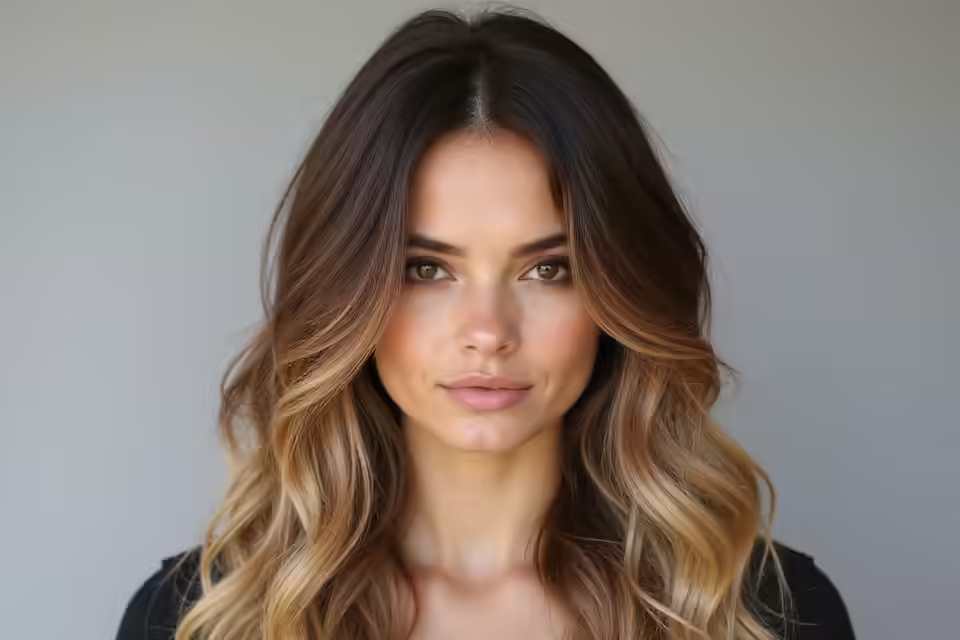
- Add a few balayage pieces through the mid-lengths for soft, natural depth.
- Place lowlights underneath the top layer, so the surface looks denser than it is.
- Drop in face-framing money pieces to draw the eye up and out.
The Styling Tools Worth Owning

You can style fine chin-length hair with just a few tools, no overflowing drawer of gadgets required. A ceramic round brush paired with an ionic dryer is the combo I trust for volume, since the round brush builds lift at the roots while the ionic dryer smooths the surface and cuts frizz. A medium barrel works best on chin-length, giving enough bend without over-curling.
Round out the kit with a flat iron that has adjustable heat, so you can stay on the low end, and a set of velcro rollers for quick crown lift between washes. That is honestly all most fine hair needs. Spend on the dryer and the brush first, since those two quietly do the everyday work of keeping your roots lifted and your ends smooth from one wash to the next.
Common Mistakes That Flatten Fine Hair

Most flat-by-noon problems trace back to the same handful of home habits. The cut is rarely the culprit. I watch these slip-ups happen again and again, and the fixes are almost always small ones you can make tonight. If your chin-length shape keeps deflating by lunch, run through this list before you ever blame the scissors.
The pattern I see most is a great cut quietly undone at home: a heavy serum here, a daily wash there, a flat iron used without protectant. None of it seems major on its own, but together it drains the body right out of fine hair. Tidy up these four and the same haircut suddenly holds:
- Using too much product, or the wrong heavy kind, which drags fine hair down by midday.
- Skipping heat protectant, which leads to breakage that thins the hair further over time.
- Washing every single day, which strips the natural texture that gives fine hair grip.
- Over-layering, which leaves the ends wispy and the whole shape limp.
How to Ask Your Stylist
The fastest way to a good fine-hair cut is walking in able to describe what you want. Say the words your stylist needs to hear: a blunt or near-blunt perimeter for density, soft point-cut ends for texture, and minimal internal layers starting at chin level. Mention that your hair tends to go flat, and ask specifically for face-framing pieces and a shape that holds root volume. Those few sentences steer the cut far better than a single photo.
Bring a picture too, but use it to show the overall vibe, not the exact layering. And be upfront about your real routine. If daily blow-drying is not happening, say so, so they can cut a shape that air-dries with some body. A cut you can actually maintain at home beats a salon-perfect one you cannot recreate by Tuesday.
Fine Hair Chin-Length Questions
?Does a chin-length cut really make fine hair look thicker?
Yes, and it is mostly about weight. Long, fine hair pulls itself flat under its own length, while a chin-length cut removes that drag so the roots lift and the ends look denser. A blunt or near-blunt perimeter adds to the effect by keeping the ends full and dense.
?How often should I trim a fine-hair bob?
Every five to six weeks is the sweet spot. Fine bobs lose their shape faster than longer cuts because there is less length to hide growth, and a quick trim keeps the blunt line and the face-framing pieces crisp. Letting it grow out too far is when the volume starts to sag.
?What is the single best trick for all-day volume?
Drying your roots upside down. Flip your head, aim the dryer at the scalp for the last thirty seconds of drying, then flip back up and finish with a blast of cool air. It resets flat roots and locks in lift better than any single product.
?Which products should fine hair avoid?
Anything heavy: rich oils, thick creams, and most leave-in conditioners applied root to tip. They weigh fine hair down and grease it out by midday. Stick to a lightweight mousse at the roots, a texturizing spray, and a small amount of leave-in on the ends only.
?Can I get a chin-length cut if my fine hair is also wavy?
Absolutely, and wave is an advantage here, since even gentle bend photographs as fuller hair. Ask for soft point-cut ends to encourage the texture, go easy on heavy products, and let it air-dry with a little mousse for natural, lasting body.
Your Fullest Fine Hair Yet
Fine hair at chin length is not a compromise. It is a remarkably flattering direction, because every choice you make, from the blunt perimeter to the upside-down dry, stacks toward more body and more swing. The cut sets the foundation, the products keep it light, and a couple of small habits carry the volume from morning to night.
Book the shape, learn the root-lift trick, and give it a week to become routine. Once it clicks, the flat-by-noon worry fades for good, and you are left with hair that looks fuller than the strands ever promised. If your texture leans wavy or curly, my guide to curly chin-length cuts takes it from here.
More to Explore