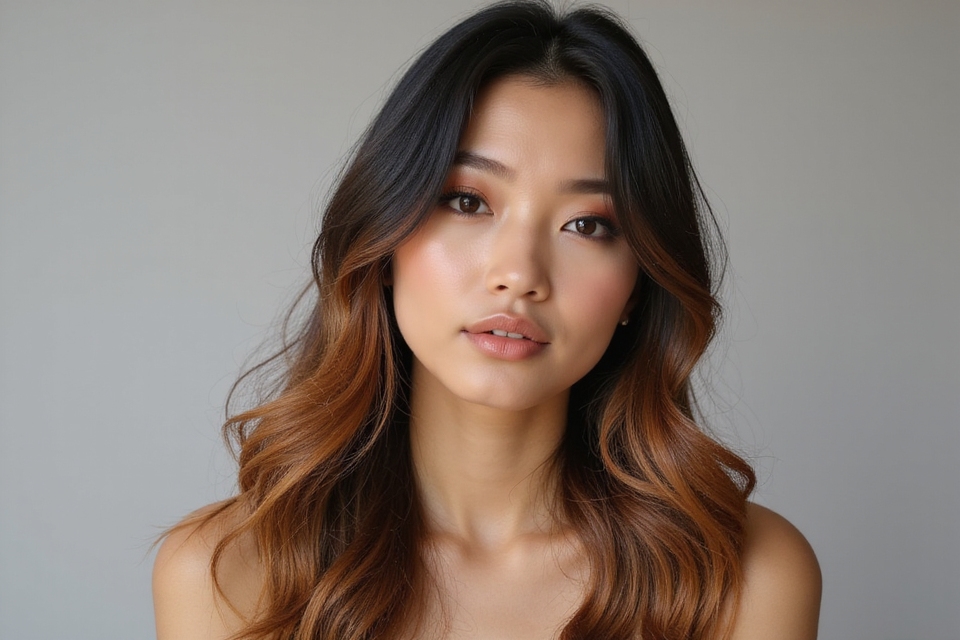
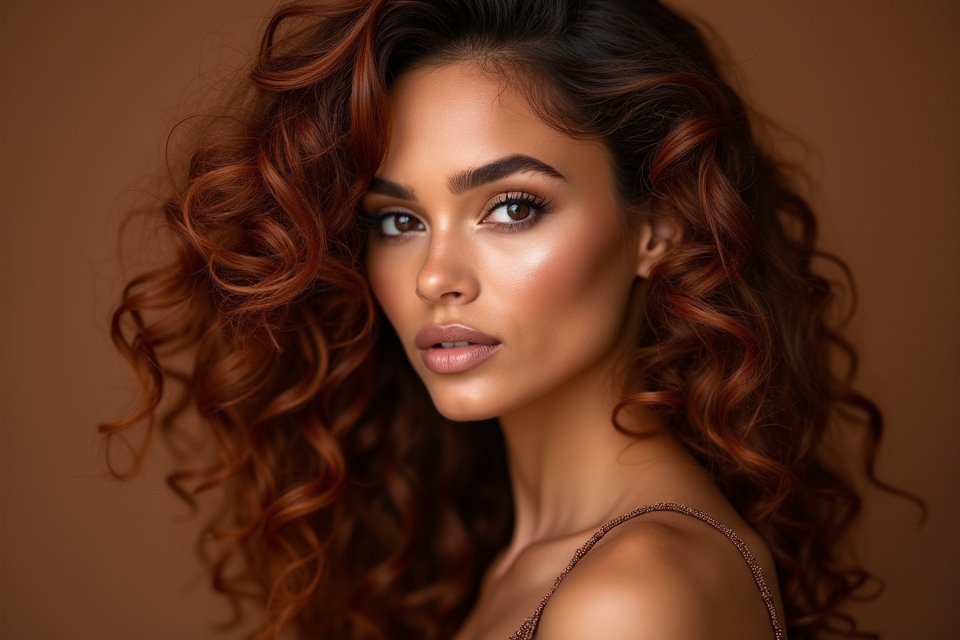
Soft, bouncy, defined curls do not come from a single miracle product; they come from a routine. The difference between curls that fall flat and frizzy and curls that hold their shape and spring all day is almost always care, not luck, and the good news is that the care is learnable. Once you understand what your curls actually want, the bounce follows.
This guide is the how, not just the what. It covers your curl type, hydration, the handful of products that matter, and the techniques, from diffusing to twist-outs to overnight preservation, that keep curls soft and full from wash day to day four. Master these and a good curl day stops being an accident and becomes the norm.
The Bounce Cheat Sheet
| Goal | The Move | Why |
|---|---|---|
| Definition | Product on soaking-wet hair | Wet application lets the curls clump |
| Bounce | Diffuse or air-dry, hands off | Touching wet curls breaks the pattern |
| Lasting curls | Pineapple and satin at night | Friction is what flattens and frizzes |
Discover Your Curl Type
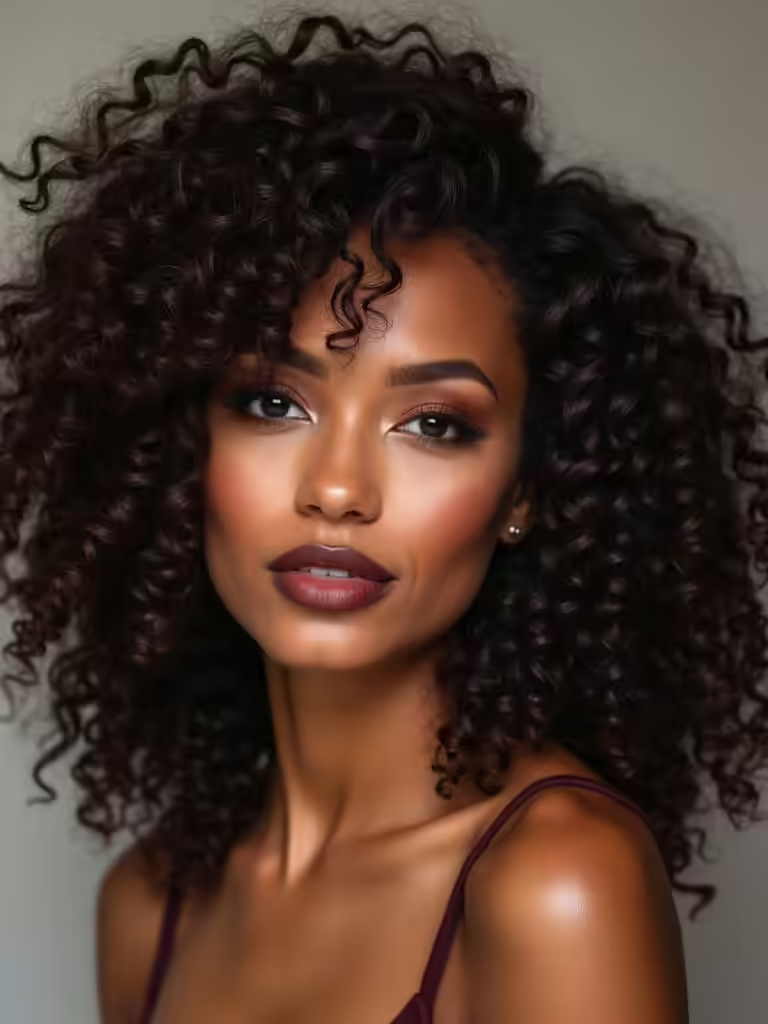
Every good routine starts with knowing your curls. The standard system spans type 2 waves, type 3 curls, and type 4 coils, and where you land decides how much moisture, hold, and definition your hair will want.
Most heads carry more than one pattern, often looser at the crown and tighter underneath, which is completely normal. Styling for your dominant pattern while accounting for the rest is the goal.
No type is harder or better than another; they simply ask for different care. Knowing yours just tells you which of the techniques below your hair will love most. Our curly girl hairstyles guide breaks the spectrum down in detail.
Transforming Your Curls
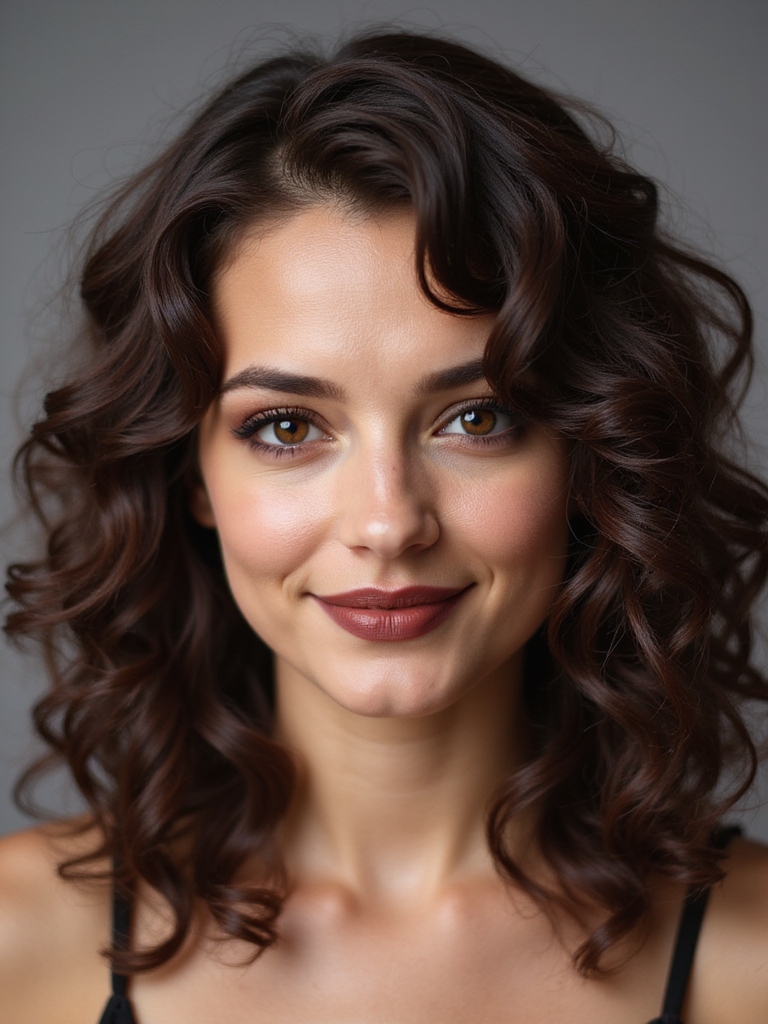
If your curls have been straightened, bleached, or neglected for years, the first transformation is recovery. Damaged curls struggle to clump and spring, so the early weeks of a real routine are about rebuilding moisture and trimming away the worst of the damage.
Be patient with the process, because the change is gradual rather than overnight. As hydration and health return, the pattern tightens and the bounce comes back, often surprising people who thought their curls were looser than they are.
The payoff is worth the wait. Hair that once fell limp starts holding a defined, springy shape, and that is the moment the whole routine clicks.
The best thing I ever did for my curls was stop fighting them and start feeding them. Bounce is a byproduct of moisture.
Hydration for Healthy Curls
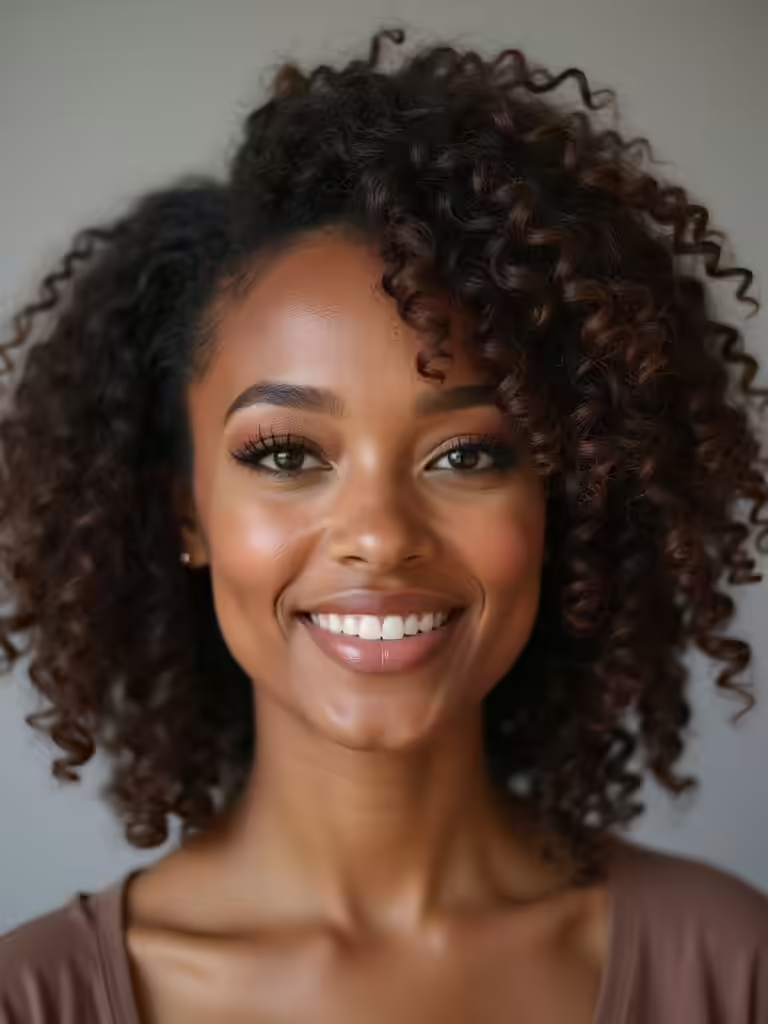
If there is one rule that governs all the rest, it is this: a hydrated curl is a defined, bouncy curl. Curly and coily hair is naturally drier than straight hair, since the scalp’s oils have a hard time sliding all the way down a coiled strand. Putting moisture in and then locking it down is the foundation everything else rests on.
- Start every style on damp or soaking-wet hair, never bone-dry
- Layer a leave-in first, then seal with a cream or oil
- Deep-condition weekly to keep the moisture topped up
Must-Have Products
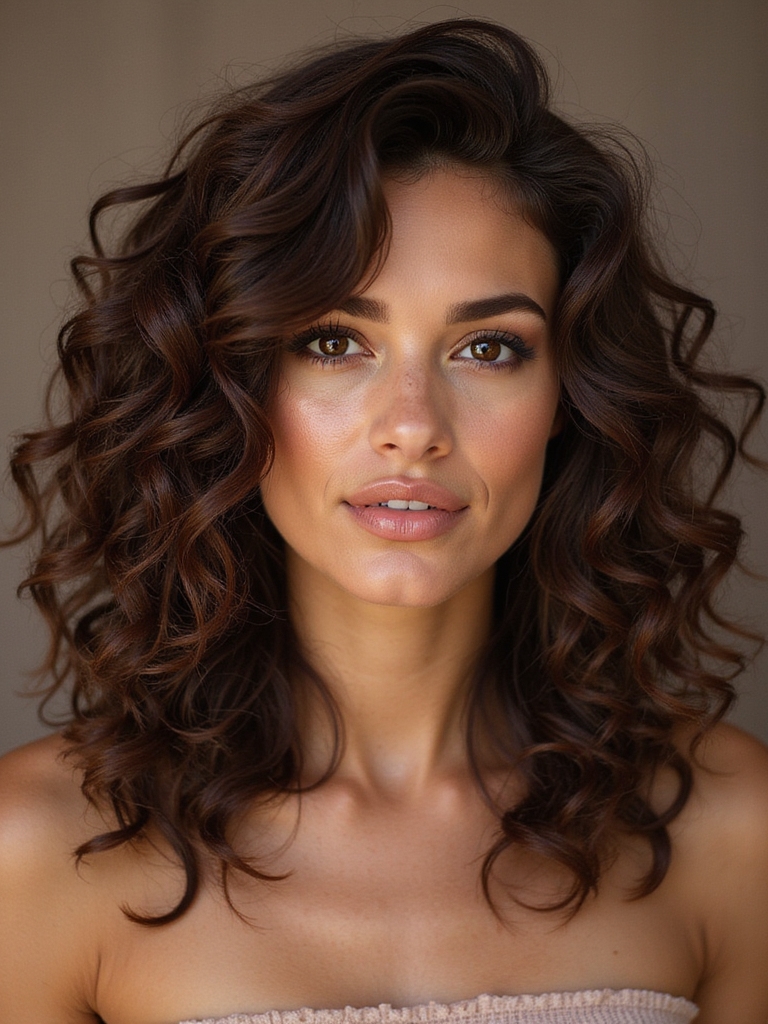
You do not need a bathroom full of bottles, only a handful chosen to pull their weight. A leave-in conditioner to moisturize, a cream or gel to define and hold the shape, and a light oil or serum to finish are all most curls need across the spectrum.
Quality Over Quantity
Match the weight to your pattern. Fine curls want light formulas that will not drag the bounce down, while thick coils drink up richer creams and butters without going limp.
You can build the whole shelf for somewhere around $50, which proves good curls are far less about spending than about using the right few products correctly. Quality over quantity wins every time.
ℹ️Good to Know
Curly and coily hair is drier than straight hair by nature: the scalp’s natural oils cannot easily wind their way down a spiraled strand to the ends. That is why hydration, not product count, is the real key to bounce.
A Simple Care Routine
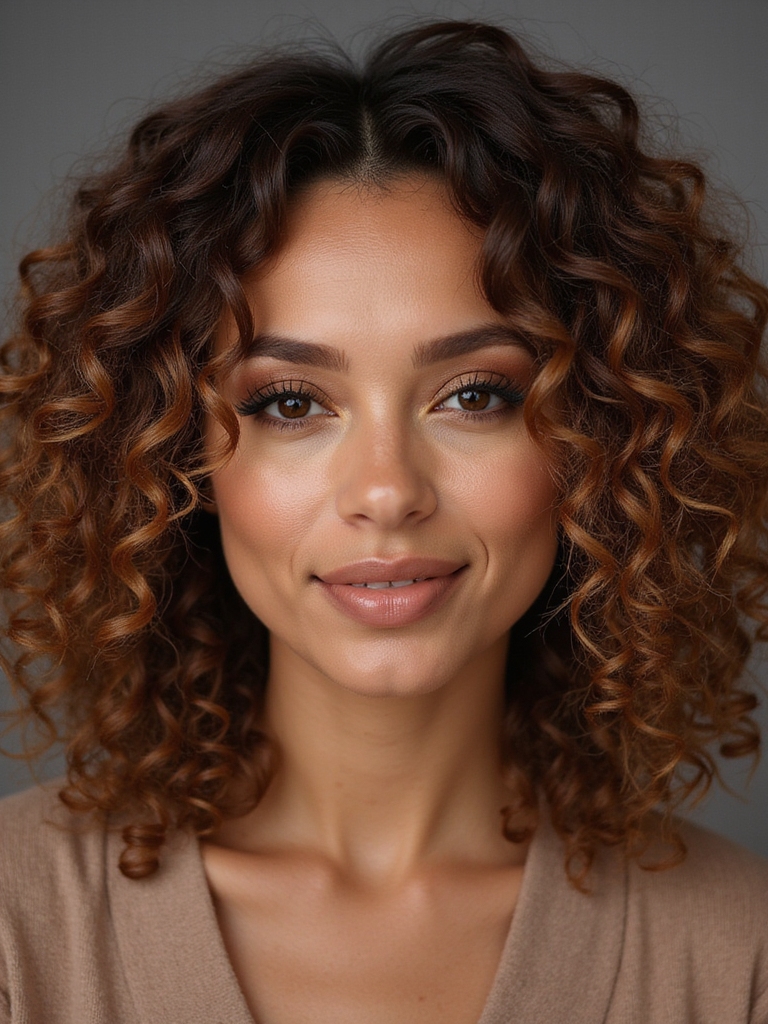
A reliable wash-day routine is the backbone of bouncy curls, and it is simpler than the internet makes it look. Cleanse gently, condition generously, detangle in the conditioner, then apply your styling products to soaking-wet hair and dry with as little disturbance as possible.
Consistency beats complexity here. A simple routine you actually repeat every wash will always outperform an elaborate one you manage now and then, so build something light enough to keep.
- Cleanse gently, then condition and detangle in the shower
- Style on soaking-wet hair for the best clumping
- Dry with minimal touching to protect the pattern
Detangle With Patience
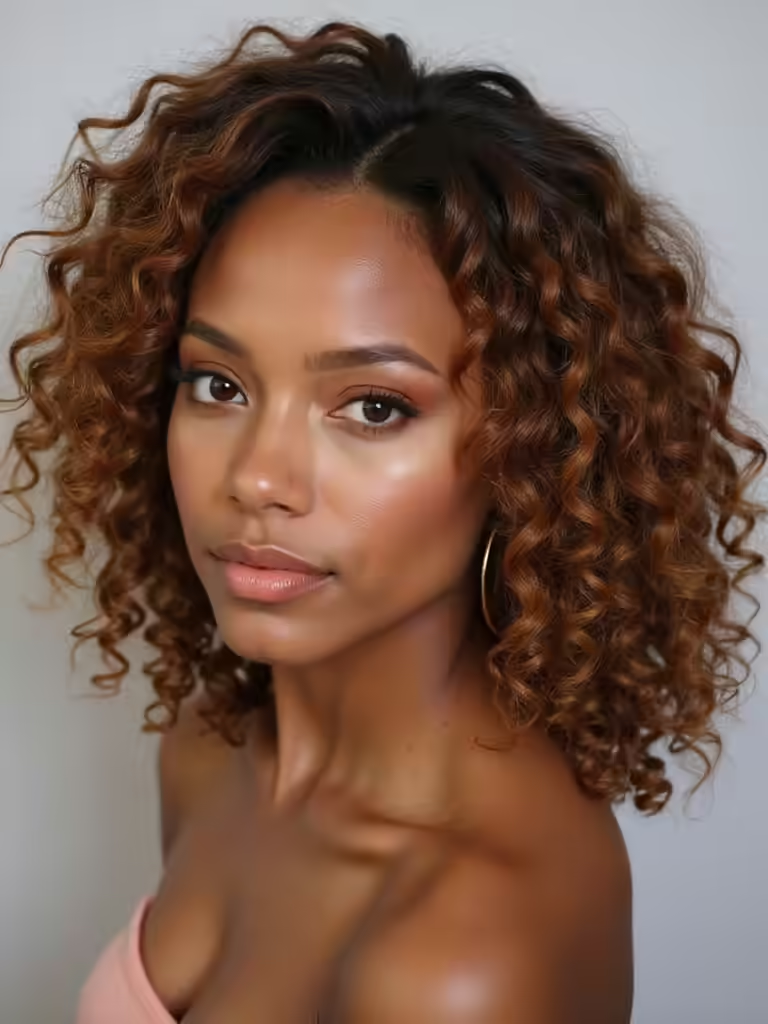
Detangling is where a lot of curl damage happens, and almost all of it is avoidable. The golden rule is to detangle only when the hair is wet and slick with conditioner, never dry, since dry curls snap under a comb.
Work from the ends upward, not the roots down, easing knots apart with your fingers or a wide-tooth comb. Starting at the top just drags tangles into a bigger knot at the bottom.
Take your time and split the hair into sections if it helps. A patient detangle protects both the length you have grown and the curl pattern you are trying to show off.
| Pattern | Reach For | Go Easy On |
|---|---|---|
| Fine waves and curls | Light gels and mousses | Heavy butters and oils |
| Thick curls and coils | Rich creams and custards | Drying, high-alcohol gels |
Diffusing for Bounce
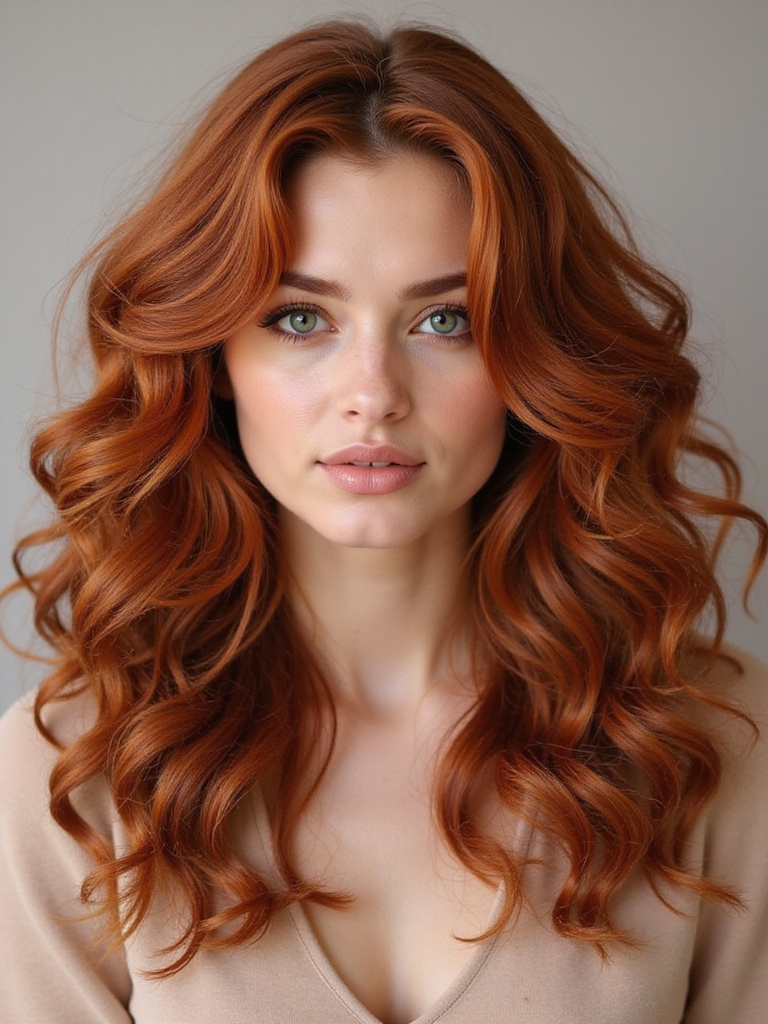
A diffuser is the single best tool for building bounce, and it is worth learning to use well. The bowl-shaped attachment spreads the airflow so it dries the curls without blasting them apart, which is exactly what a regular nozzle does to a curl pattern.
Hover, Cup, Do Not Shake
The technique is hover and cup. Set the dryer on low heat and low speed, cup sections of curl into the bowl, hold without moving until nearly dry, then move on, lifting at the roots for height.
A good diffuser runs about $30 to $50 and pays for itself in time saved. The trick is patience: rushing or shaking the diffuser is what turns a bouncy dry into a frizzy one.
Heat Styling, Sparingly

Most of the time curls need no heat at all, but when you do reach for a hot tool, protect them. A heat protectant is non-negotiable, and keeping the temperature moderate guards the curl pattern from the damage that makes hair go limp and lose its spring.
Save flat-ironing and silk presses for occasional treats rather than a routine, since repeated high heat is the fastest way to loosen and damage a curl pattern over time. Your curls bounce back best when heat is the exception.
💡Stylist Tip
Style on the wettest hair you can. The more soaked the curls are when you apply product, the better they clump, and clumping is what gives you definition and bounce instead of frizz.
The Air-Dry Method for Bouncy Curls
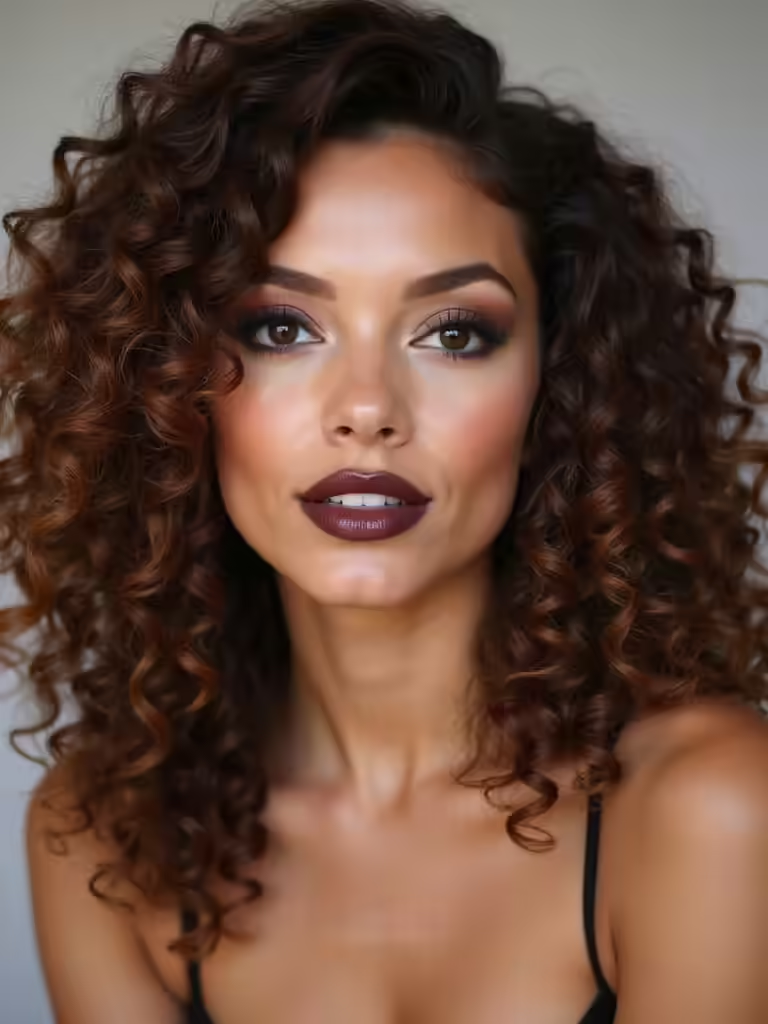
Air-drying is the gentlest way to dry curls, and on a day with time to spare it gives a soft, natural bounce with zero heat. The keys are to style on soaking-wet hair, then leave the curls completely alone while they dry, since touching them mid-dry is what causes frizz.
Plopping helps it along. Cradling the wet, product-coated curls in a microfiber towel or an old cotton tee for a few minutes soaks up excess water and encourages the pattern before you let the rest air-dry undisturbed.
Overnight Preservation
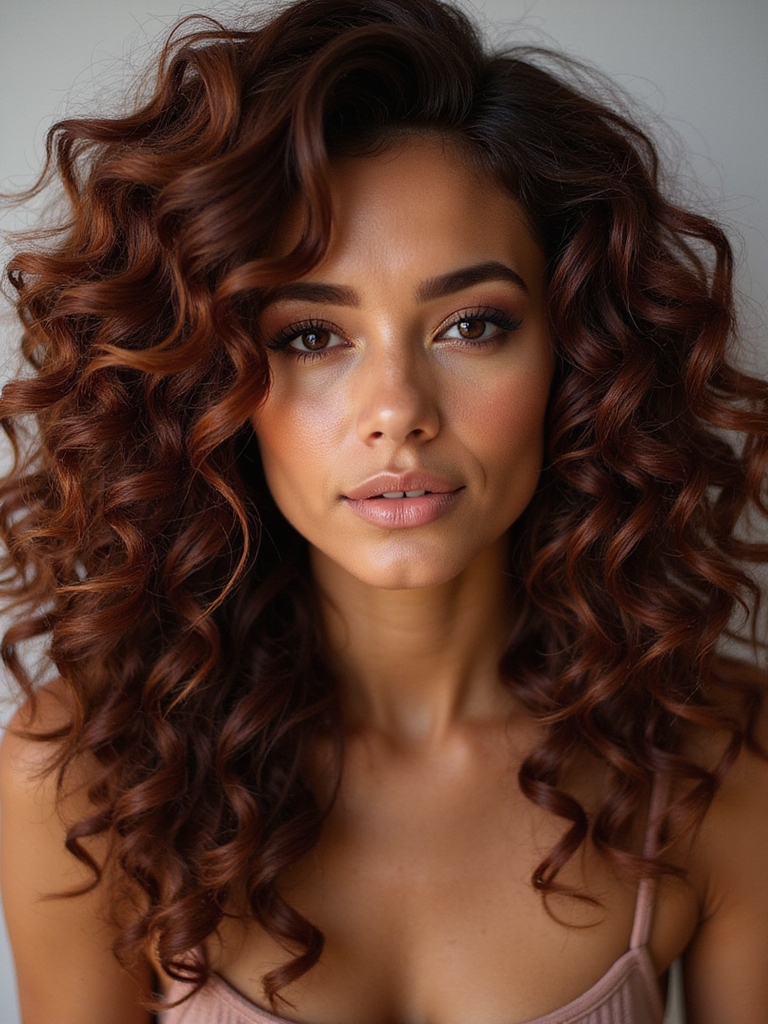
What you do at night decides what your curls look like in the morning, so protecting them while you sleep is half the battle. The pineapple, which piles the curls loosely at the very top of your head, plus a satin bonnet or pillowcase to cut friction, keeps the pattern from crushing flat against cotton and waking up frizzy.
- Pineapple long curls loosely on top of the head
- Swap to a satin pillowcase or wear a satin bonnet
- Refresh in the morning rather than restyling from scratch
Define Your Curls With Gel
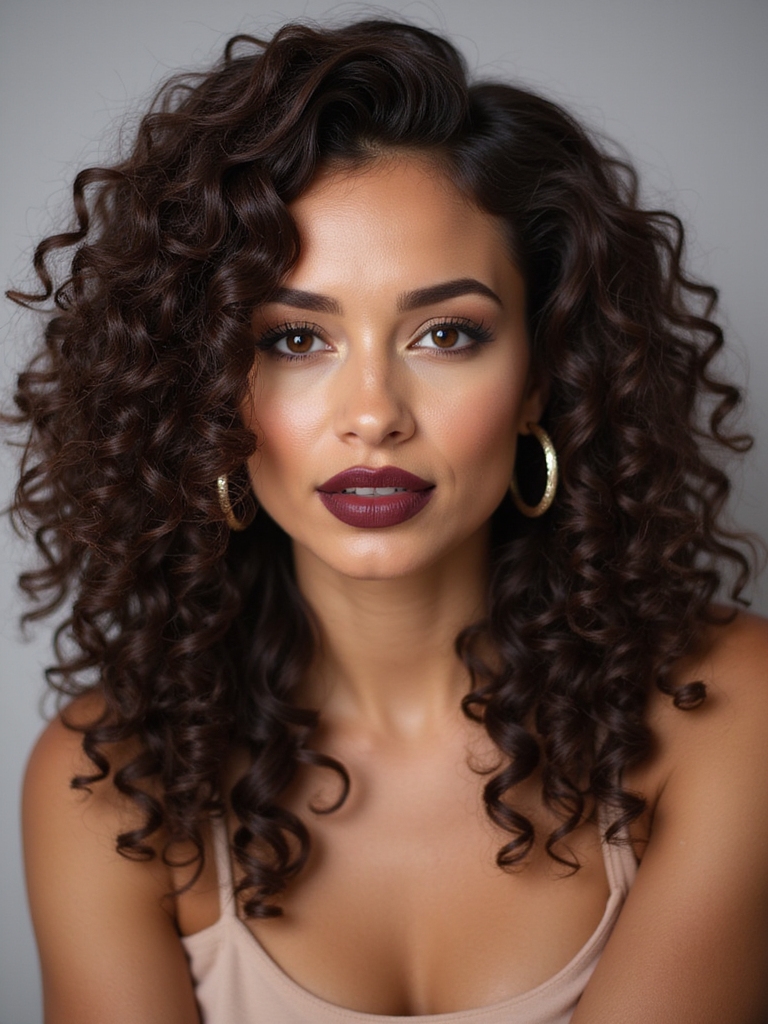
Gel is the secret to curls that hold their shape all day, and the technique that makes it work is the cast. Applied to soaking-wet hair, a styling gel dries into a hard cast around each curl, locking the shape in place and protecting it from humidity.
The Crunch Is Temporary
Then you scrunch that cast away. Wait until the hair has dried completely, then work a little oil between your palms and scrunch upward to crack the crunch, leaving soft, defined, frizz-free curls underneath.
It feels strange the first time, but the crunch is temporary and the definition is not. Skipping the scrunch-out is the only thing that leaves curls stiff.
The Twist-Out Method
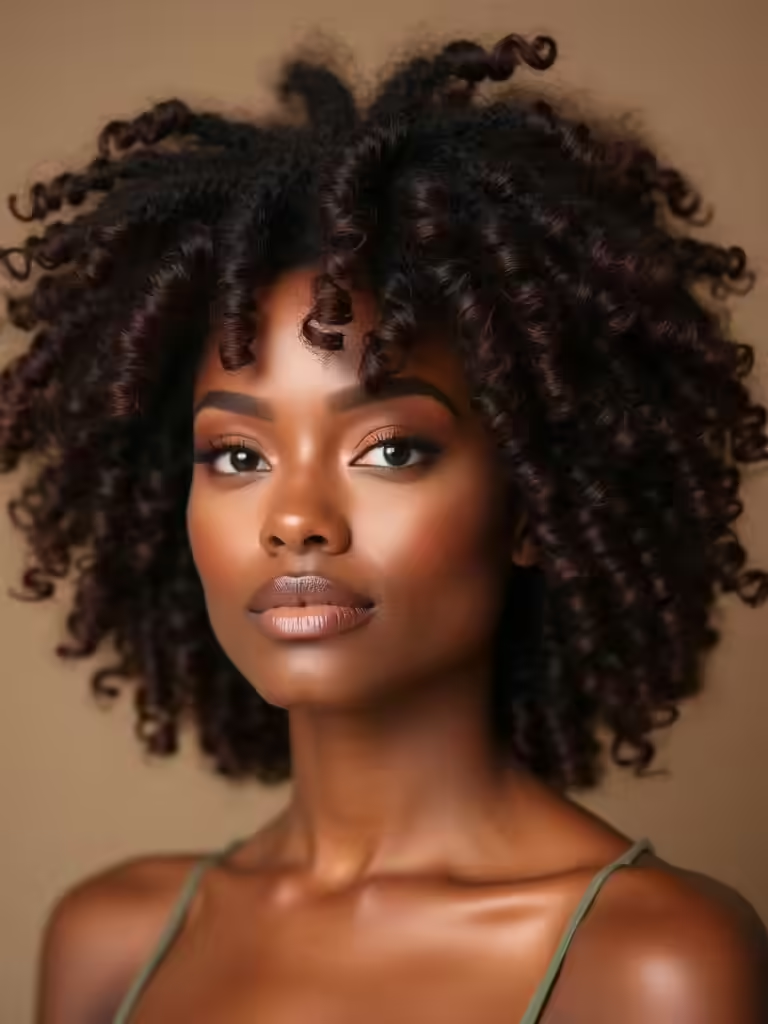
A twist-out is one of the most reliable ways to get uniform, defined curls with no heat, especially on coils and looser natural hair. You twist damp, product-coated sections, let them set completely, and unravel them into soft, consistent waves and curls that last for days.
- Twist damp, cream-coated sections, then let them dry fully
- Unravel gently with oiled fingers to avoid frizz
- Bigger twists give looser waves, smaller ones tighter curls
Combating Frizz With Serums
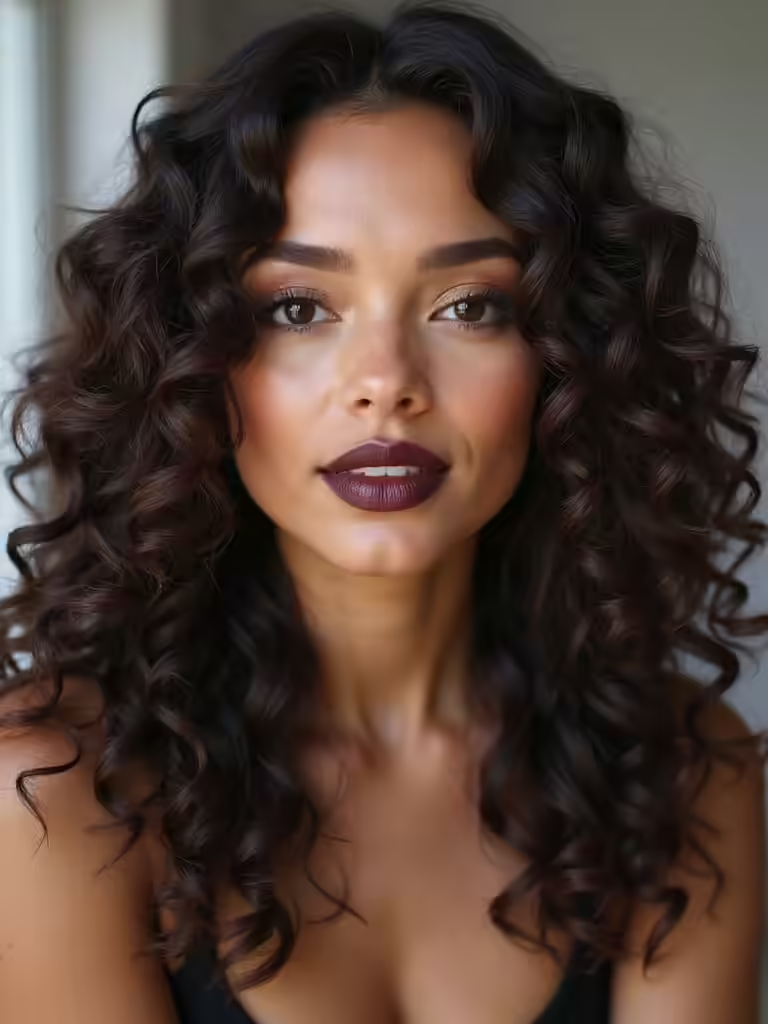
Frizz is simply a thirsty curl reaching for moisture in the air, so the real fix is hydration, but a finishing serum or oil seals the deal. A light layer smoothed over dry curls flattens the surface flyaways and locks moisture in, so humidity has less to grab onto.
The trick is restraint and the right amount. Too much serum weighs curls down and looks greasy, so warm a few drops between your palms and press, do not rub, them over the top layer of your curls.
Get Creative With Your Curls
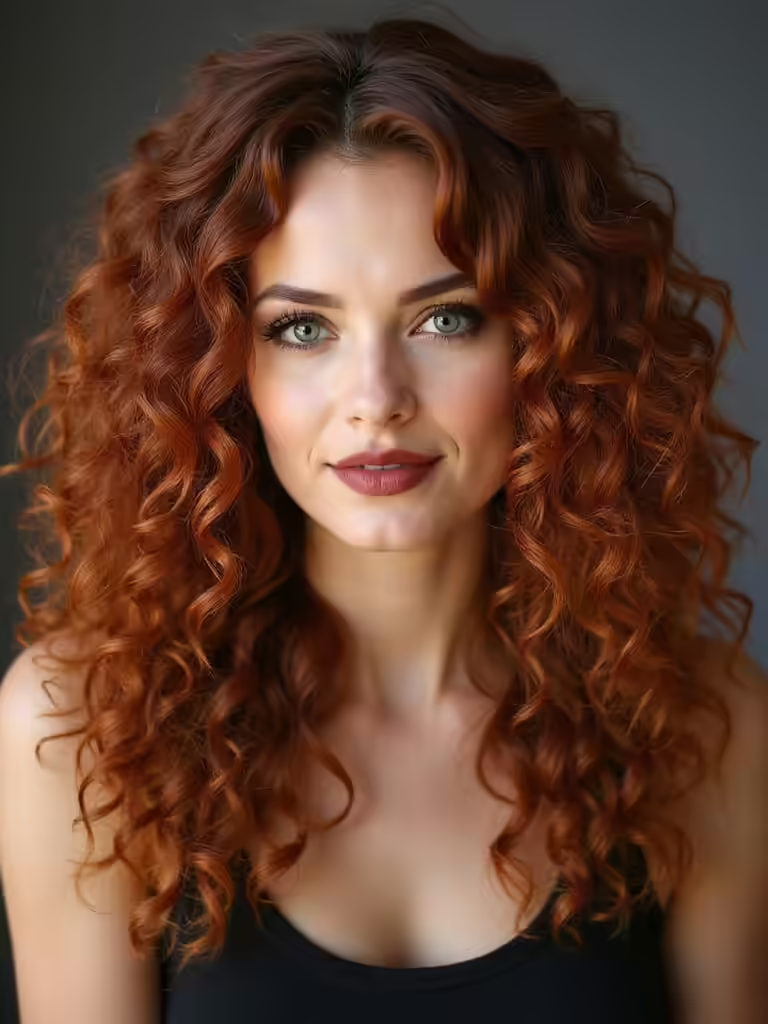
Once the care basics are in place, the fun begins. Healthy, defined curls are a starting point for half-ups, puffs, braids, accessories, and quick updos, and the better conditioned the hair, the better every one of those styles holds.
Treat styling as the reward for good care. A well-hydrated curl takes a braid, a twist, or a pin far more willingly than a dry one, which is why the routine and the styling are really two halves of the same thing.
- Half-ups, puffs, and braids all hold better on healthy curls
- Accessories add interest with zero damage
- Good care is what makes every style behave
Frizz-Reducing Accessories
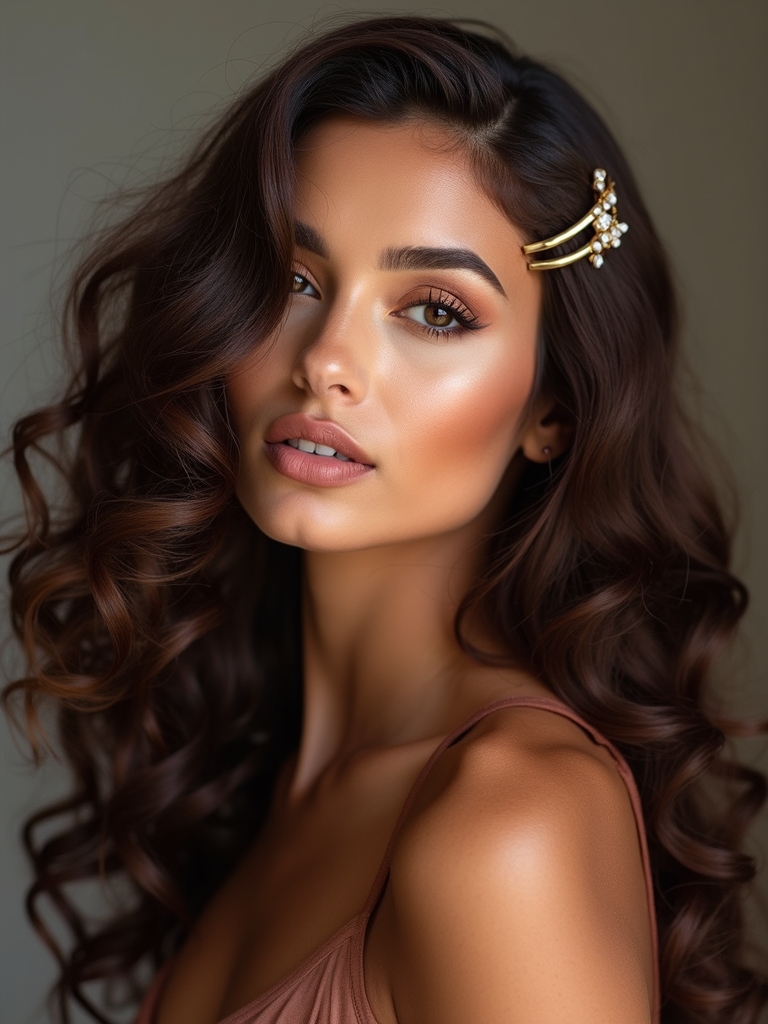
Some accessories do double duty, styling your curls while actively protecting them from the friction that causes frizz. Silk scrunchies, satin-lined headbands, and snag-free clips hold the hair without the snapping and creasing that ordinary elastics and metal clips cause.
- Silk or satin scrunchies instead of tight elastics
- Satin-lined headbands to guard the hairline
- Smooth, snag-free clips that will not tear the curls
A Simple Updo Technique
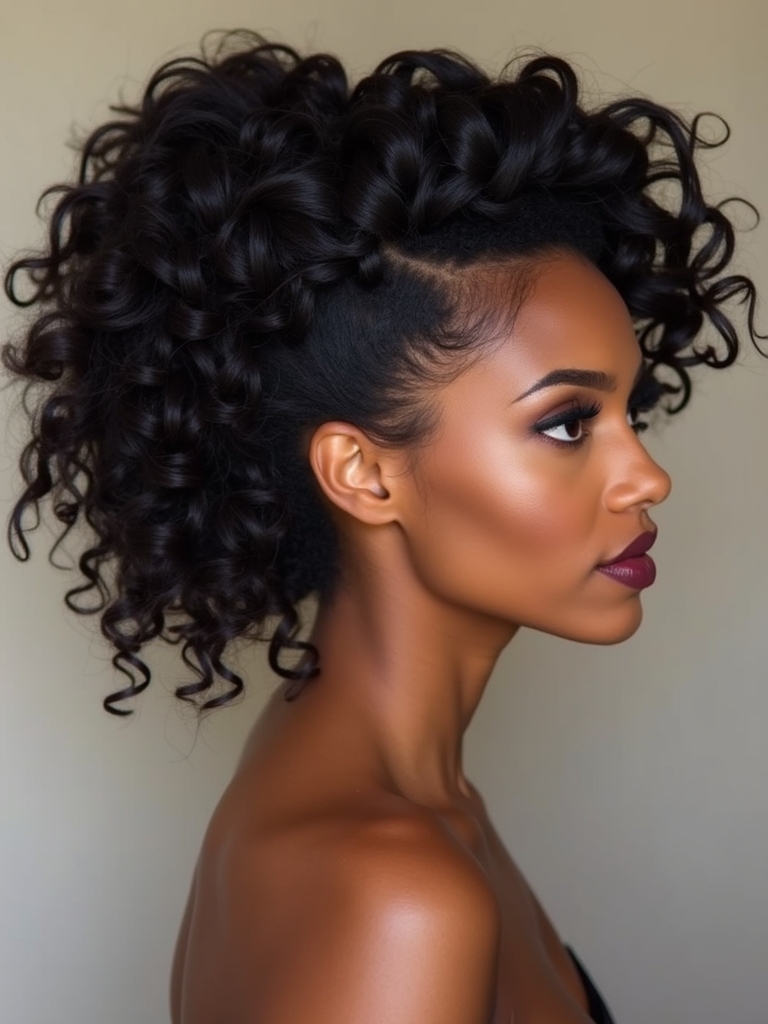
A quick updo keeps curls off your face on busy days while doubling as a protective style, and the technique matters as much as the look. Gather the curls loosely, twist or pin them up without harsh tension, and leave a few pieces free, so the style protects the ends without straining the hairline. For more bun and updo ideas, our curly bun guide has options.
- Gather and pin loosely, never tight enough to sting
- Tuck the ends away to protect them from friction
- Leave a few curls out to keep it soft
Quick Daily Maintenance
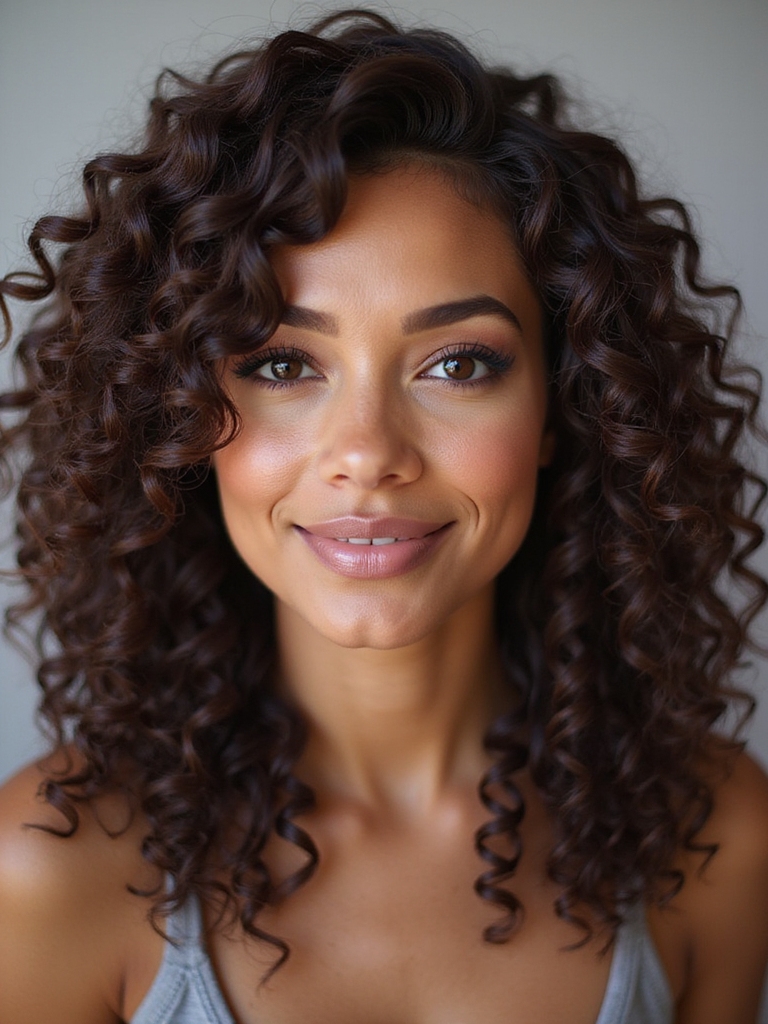
Bouncy curls are not just a wash-day achievement; they need small daily upkeep to stay that way. A quick morning scrunch with a little water or a refreshing spray brings yesterday’s curls back to life in seconds.
Mostly, Leave Them Alone
Keep your hands out of your hair during the day, too. Constant touching transfers oil and breaks up the clumps, which is the quiet cause of midday frizz.
I tell clients in my chair that the best curl routine is mostly about leaving the curls alone once they look good. Restraint is an underrated technique.
Reviving Between Washes
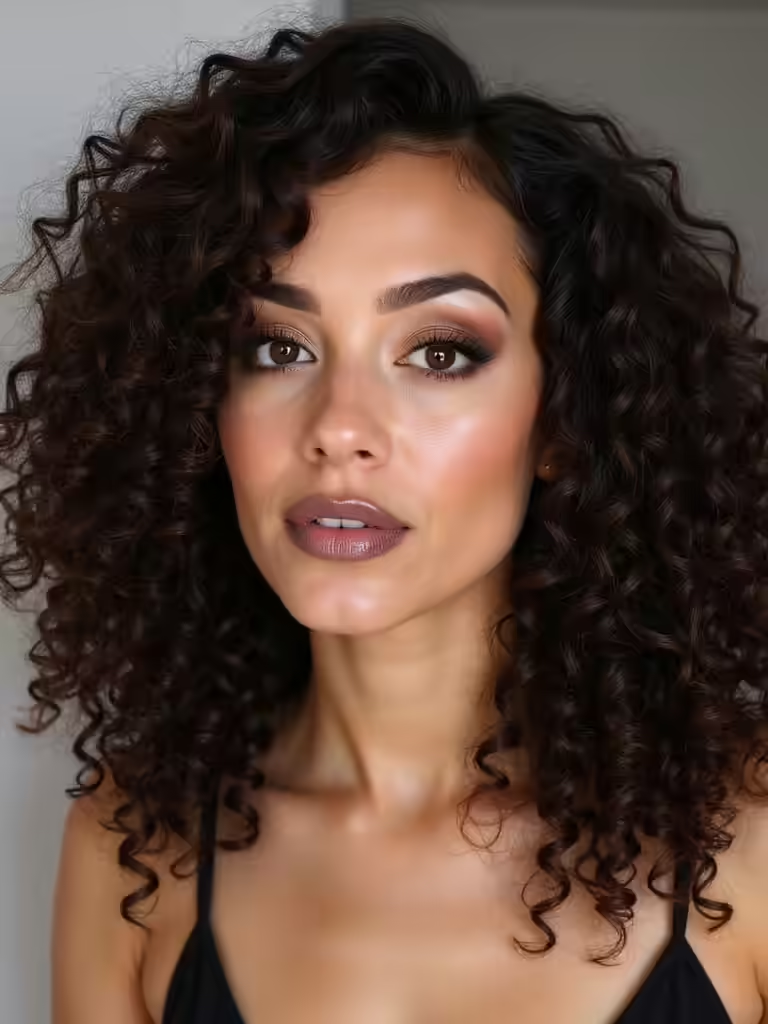
Curly hair does best washed less often than straight hair, so the skill of reviving curls between washes is what stretches a style to day three and beyond. A spray bottle of water mixed with a little leave-in is the workhorse here, bringing flattened, dry curls back to life.
A Refresh Beats a Rewash
Mist a section, smooth a tiny bit of product through it, and scrunch to re-form the curl. Focus on the areas that flatten most, usually the back and the spots you slept on.
Done well, a refresh takes a couple of minutes and saves a full wash day. Over-washing is what strips the moisture that bounce depends on.
Seasonal Curl Care
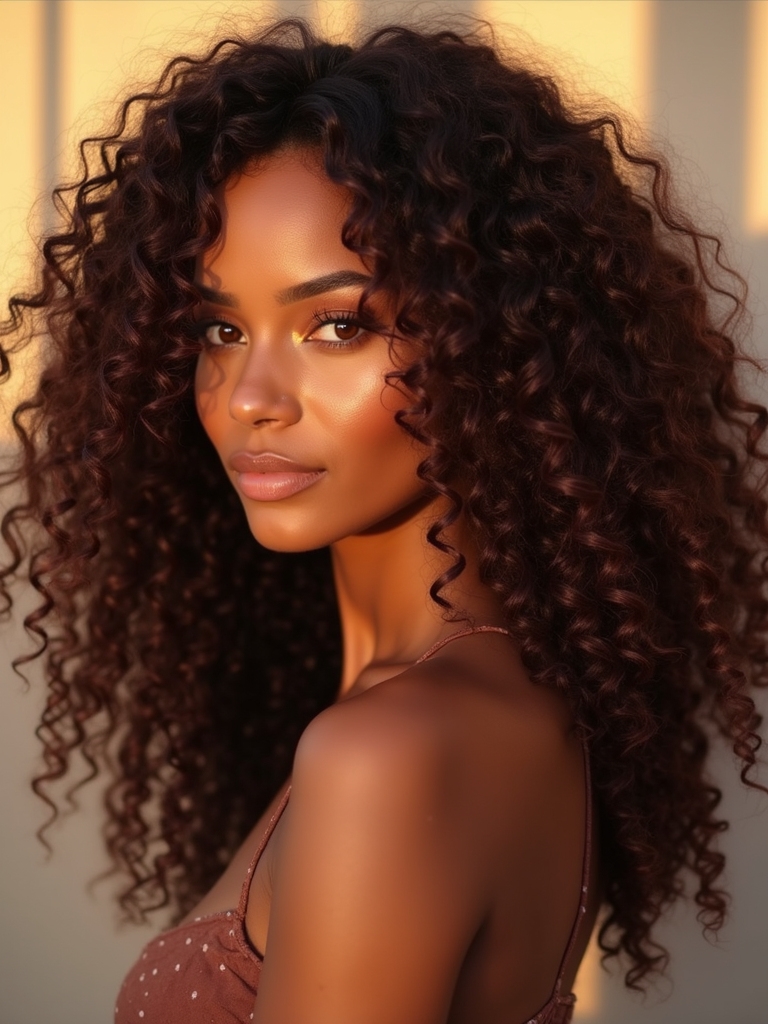
Your curl routine should shift with the weather, because what works in dry winter air fails in summer humidity. The amount of moisture, the strength of your hold, and how often you refresh all change with the season, and matching the routine to the climate is half the battle of year-round bounce.
- Humid months: reach for a stronger gel and a good seal
- Dry, cold months: layer richer creams and refresh more often
- Protect curls from sun, salt, and chlorine in summer
Timeless Inspiration

Once your curls are healthy and defined, the styles open up, and some of them never go out of fashion. A defined wash-and-go, a soft updo, a half-up, and a full, natural bounce have looked right for decades and still do.
Classic curly looks endure because they work with the hair rather than against it. They do not depend on a trend or a tool, just well-cared-for curls allowed to be themselves.
Build a small repertoire of these reliable looks and you will always have something to reach for. For a gallery of style ideas to try, our curly hairstyles guide has twenty-five.
How Curl Trends Evolve
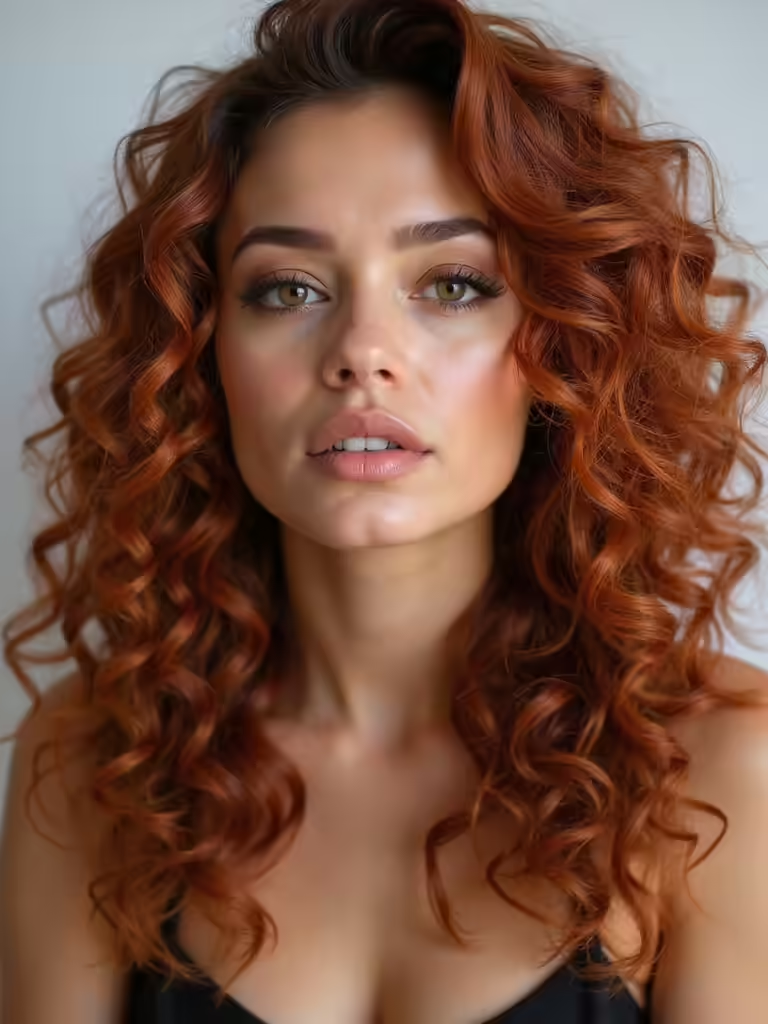
Curly hair has had a real cultural shift, moving from something many people were once told to straighten toward something celebrated and worn proudly. That change has driven a wave of better products, more curl-literate stylists, and far more representation.
Health Over Manipulation
The trend now leans firmly toward health and authenticity over manipulation. Defined natural texture, protective styling, and minimal heat are where curly hair is heading, which is good news for the hair itself.
It is a welcome direction. The more the culture embraces real texture, the easier it gets to find the products, cuts, and advice that actually serve curls.
Embrace Your Natural Curls
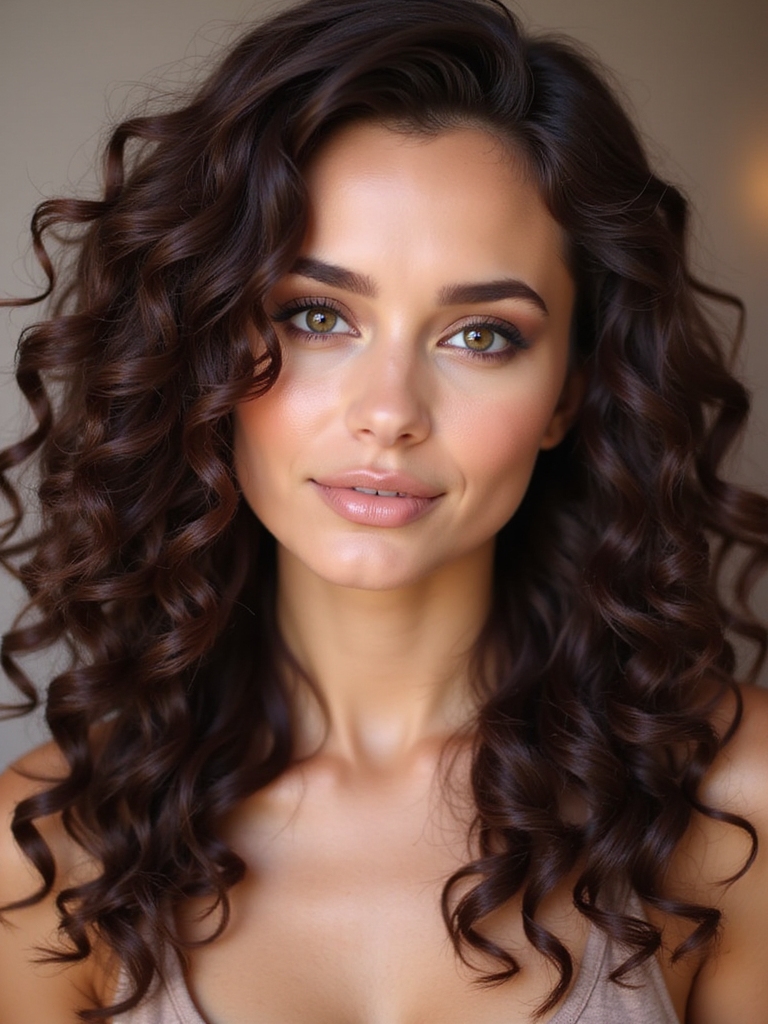
Underneath every technique here sits one shift in mindset: working with your curls instead of against them. The bounce, the definition, and the softness all come more easily once you stop trying to force your hair to be something it is not and start giving it what it actually needs. That acceptance, more than any product, is what brings out great curls.
- Style for the pattern you have, not the one you wish for
- Hydration and gentle handling beat force every time
- Confidence in your texture is the best finishing product
What to Expect
If you are starting a real curl routine for the first time, set honest expectations. The first few wash days might not look like the videos, especially if your curls are recovering from heat or harsh products, but the pattern strengthens steadily as the moisture and health build.
Give it a few weeks of consistent, gentle care before you judge the results, because curls reward patience more than almost any other hair type, and the bounce that seems impossible early on becomes routine.
Expect some trial and error with products and amounts, too, since what defines a loose wave will flatten a tight coil, and what a coil drinks up will weigh a wave down. Once you learn your own hair’s preferences, the whole routine speeds up and a good curl day stops feeling like luck. Keep it simple, stay consistent, treat your curls gently, and the soft, bouncy, defined hair the title promises becomes the version you wear every day.
Bouncy Curl Questions
?Why are my curls not bouncy or defined?
Almost always, the culprit is dryness or too much handling. Curls need moisture to clump and spring, so style on soaking-wet hair with a leave-in and a curl cream or gel, then leave them completely alone as they dry. Touching wet curls mid-dry is the fastest way to lose definition and bounce.
?How often should I wash curly hair?
Less often than straight hair, usually every few days to once a week, since the natural oils take longer to travel down a curl and over-washing strips the moisture bounce depends on. Refresh the curls with water and a little leave-in between washes rather than cleansing every day.
?Do I need a diffuser for bouncy curls?
Not strictly, since air-drying works beautifully, but a diffuser dries curls faster while protecting the pattern, which is why it is the most recommended tool. Use it on low heat and low speed, cupping sections and holding still, and lift at the roots for height and bounce.
?How do I keep my curls defined overnight?
Protect them while you sleep. Pineapple longer curls loosely on top of your head, and switch to a satin pillowcase or wear a satin bonnet to cut the friction that flattens and frizzes curls against cotton. In the morning, a quick refresh with water revives the shape.
Bounce Is Built, Not Born
The soft, shape-holding, full-of-bounce curls in the title are not a lucky genetic draw; they are the result of a routine anyone can learn. Know your type, keep the hair hydrated, use a few good products on soaking-wet hair, dry it gently, and protect it at night, and the bounce stops being occasional and becomes your everyday default.
So start with one habit, maybe styling on wetter hair or protecting your curls at night, and build from there. Be patient with the recovery, lean on your natural pattern, and treat your curls kindly. Do that, and you will spend far less time fighting your hair and far more time enjoying exactly how soft and springy it can be.
Worth a Look