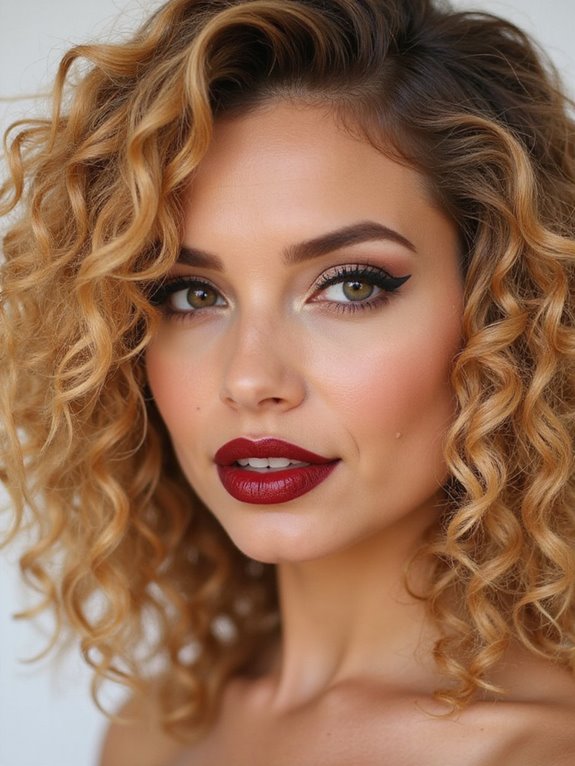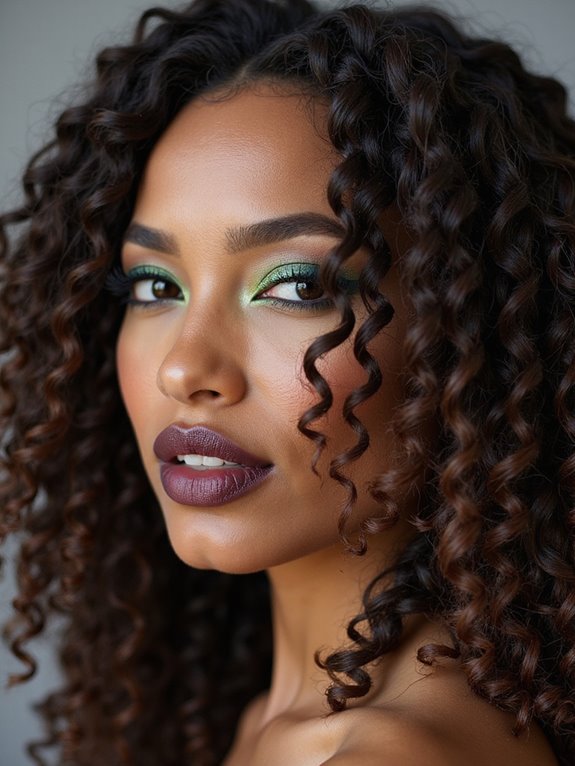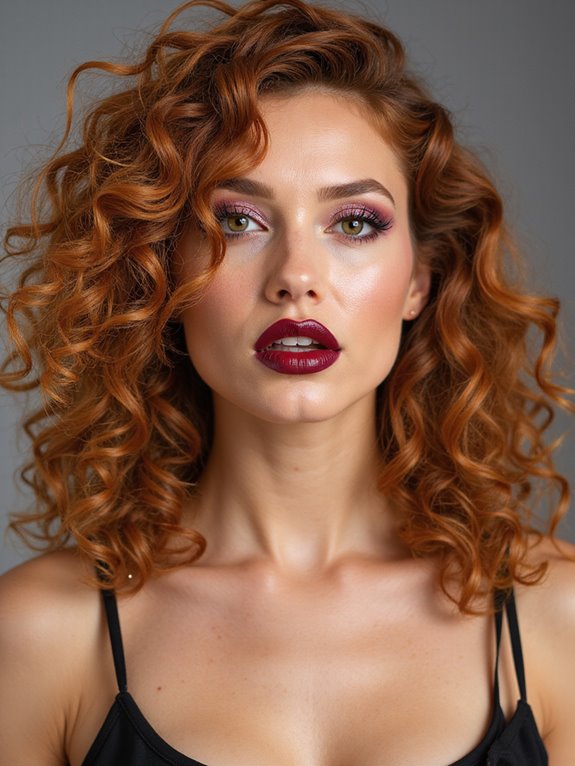
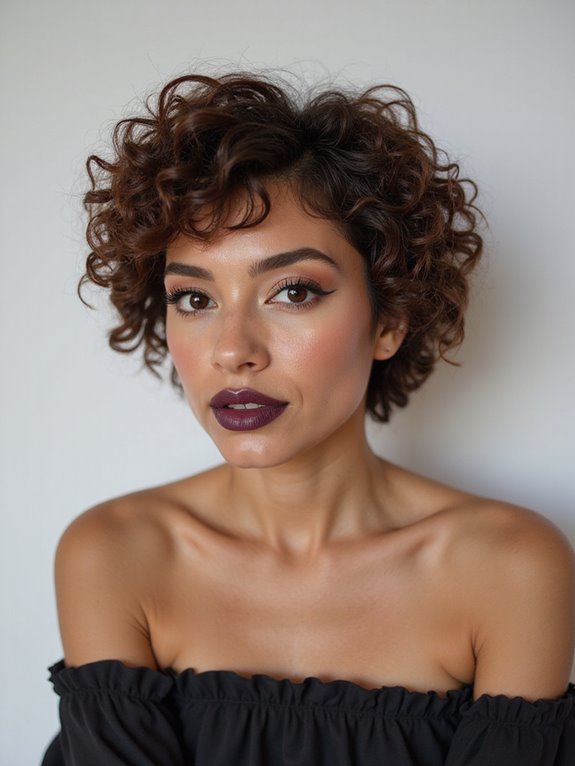
Can short hair really do justice to curls? After years of watching women hesitate at the salon door, I can tell you the answer is a loud yes. A curly pixie does not hide your texture. It concentrates it, putting every coil and wave right up front where the light catches it.
What makes one work is simple: a good curly pixie is cut for your curl pattern, not against it. The thirteen looks below range from soft bob-pixie hybrids to shaved-side crops, each with honest notes on shrinkage, upkeep, and who the shape actually flatters.
Before You Book the Chop
A curly pixie trades length for impact. With less weight pulling them down, curls spring up and out, so the cut reads fuller and bolder than the same hair worn long. Expect a shaping trim every four to six weeks, and a real conversation about shrinkage before any scissors come out.
These styles span tight 4c coils to loose 2b waves, and the right one depends as much on your face shape and density as your curl type. Save the looks that speak to you and bring photos to your stylist, because translating a pixie to your exact texture is where the real skill lives.
Bold Curls, Confident Style: The Classic Curly Pixie
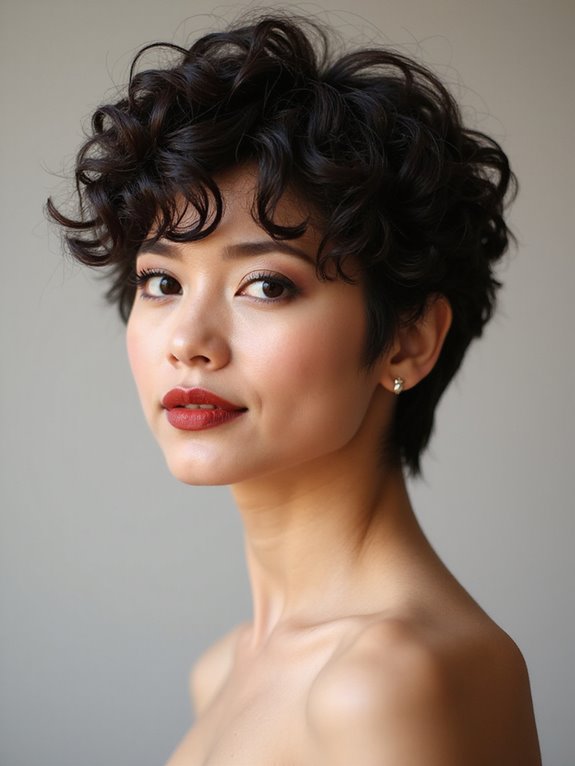
The classic curly pixie keeps a little length on top and tapers close at the sides and back, letting your curls form a soft, rounded crown. It is the most universally flattering version, because the shape bends to whatever your curls already do. In my chair, this is the cut women agonize over the most and then quietly adore. The freedom catches them off guard. No more hiding length in a bun. No more an hour of styling before work.
You wash, you scrunch, you walk out the door, and the cut does the rest. The whole approach rests on one idea: your stylist should work with your natural curl pattern rather than impose a uniform shape on hair that was never going to sit uniformly. A pixie cut on someone with springy 3c curls and a pixie on loose 2b waves are barely the same haircut, and a good stylist treats them that way.
- Best for curls that already carry natural volume and spring
- Ask for a dry curl-by-curl cut, with each coil read and shaped before any scissors move
- Plan a shaping trim every four to six weeks, roughly $25 to $45 at most salons
The Bold Asymmetrical Curly Pixie
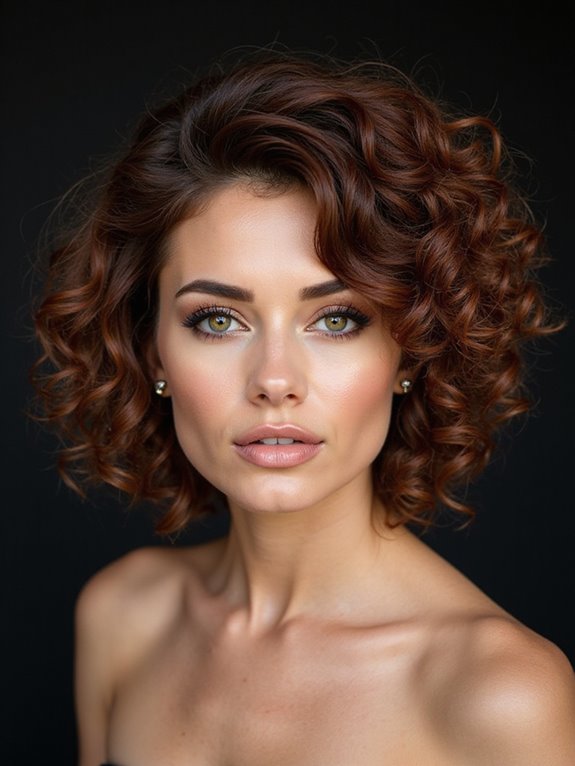
An asymmetrical curly pixie leaves one side noticeably longer than the other, and that imbalance is the whole appeal. The longer side adds drama and movement. The shorter side keeps it sharp. On curly hair the effect is even stronger, because the uneven lengths make your coils look deliberately stacked rather than random.
It flatters angular and square faces especially well, softening a strong jaw with that diagonal sweep of curls. If your face is rounder, keep the long side past your cheekbone to pull the eye downward. I have talked more than one first-timer into this shape, and the movement is almost always what wins them over once they see it in the mirror.
Upkeep runs a little higher than a balanced pixie, because the contrast blurs as it grows. A reshape every five weeks keeps the line clean. Between cuts, a light styling cream on the longer side keeps it defined without dragging the shorter side flat.
One styling note worth knowing: train the longer side with your fingers as it dries, coaxing it in the direction you want it to fall, and it will start to behave on its own within a few wash days, no daily fight required.
💡Stylist Tip
Bring a photo of your hair both wet and dry to your consult. Stylists who only see it stretched at the basin tend to underestimate your shrinkage, and that is the number one reason a curly pixie comes out shorter than you pictured.
Soft Waves and the Bob-Pixie Hybrid
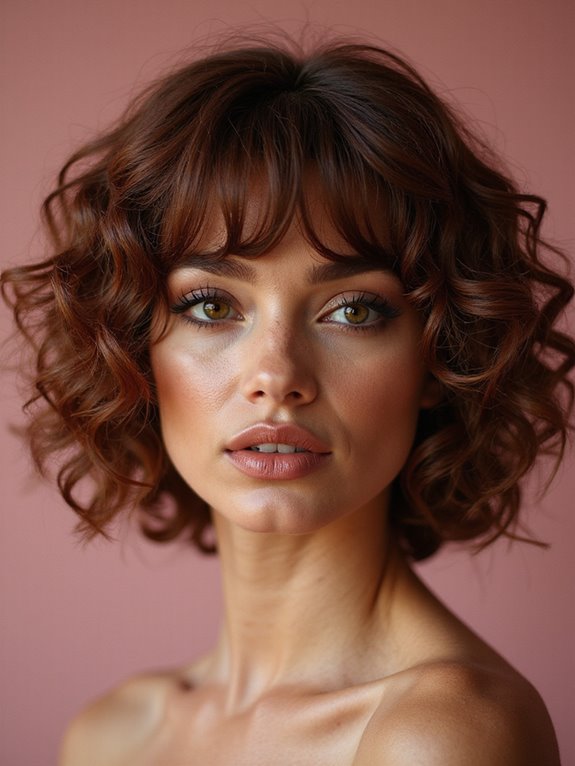
Not ready to go fully short? The bob-pixie hybrid is the bridge. It borrows the short back and sides of a pixie but leaves enough length at the front to graze your jaw, so loose waves and looser curls get room to fall and frame your face. It is the gentlest entry point into short curly hair, and the easiest to grow back into a low-maintenance curly bob if you change your mind a few months in.
This shape loves a 2b to 3a wave or a loose curl. Tighter coils can wear it too, though you will want extra length up front to account for shrinkage. The face-framing pieces do a lot of the work here, softening the whole look, much like curly bangs do on longer cuts. Think of it as a pixie that still lets you tuck, sweep, and play, and that built-in flexibility is what reassures people who are nervous about cropping their curls at all.
- Keep the front pieces long enough that day-two hair tucks neatly behind your ear
- Diffuse the front sections forward so they frame your face instead of jutting out
- A flexible-hold mousse keeps the waves soft rather than crunchy
Bold Shaved Sides for High Contrast
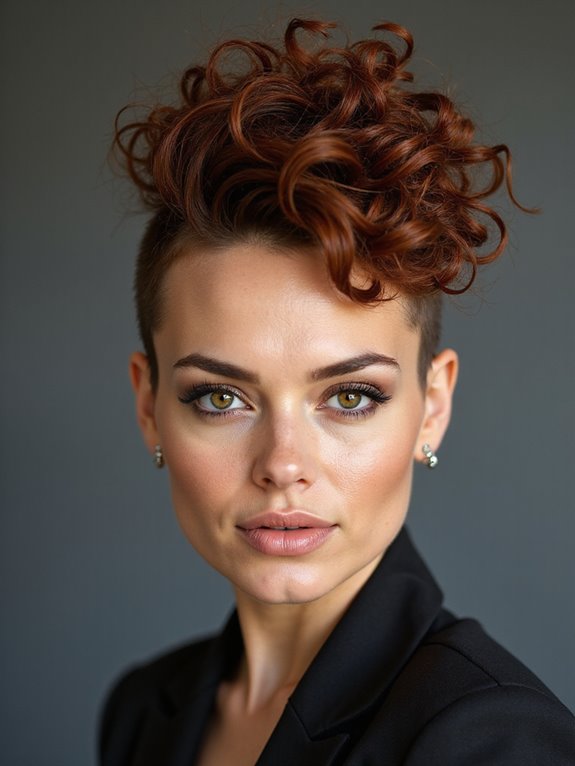
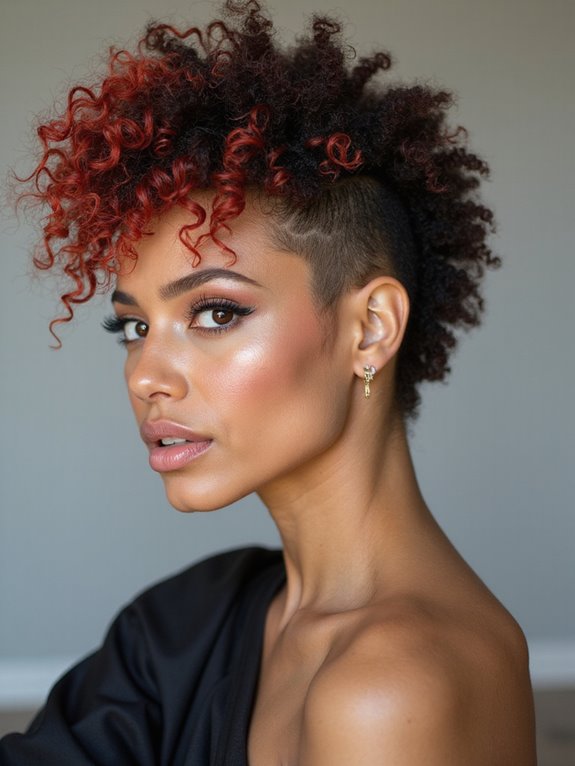
For the boldest version, take the sides down to a fade or a clean shave and let the curly crown do all the talking. The contrast between bare sides and a dense, springy top is striking, and it puts your texture center stage. It is a favorite among women with thick type 4 hair, since the shave manages bulk while the crown shows off real definition.
Every time I take a client down to shaved sides, the reaction is the same: a beat of disbelief, then a grin. If you want even more drama up top, a bold curly mohawk pushes the same idea further. Just go in clear-eyed about the upkeep, because a fade is a standing appointment, not a one-time decision.
- Refresh the fade every couple of weeks so the shaved sides stay sharp and clean
- Protect your hairline: ask for a shave that respects your edges rather than chasing them too high
- Define the crown with curl cream on wet hair, then pick it out gently at the roots for height
Heads-Up
Going short is a real commitment, and so is growing it back out. From a pixie, expect six months to a year of in-between stages before you reach a bob. Make sure you love the short version before you book the chair.
The Curly Pixie With Bangs
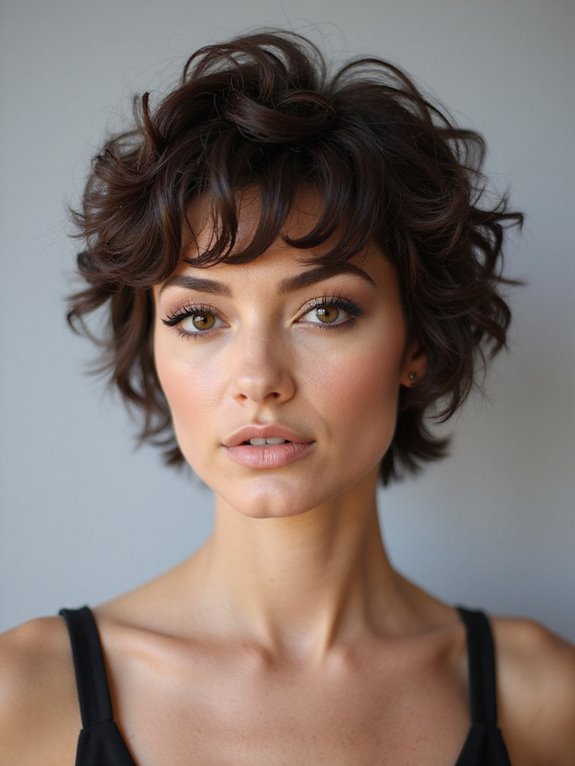
Bangs change everything on a curly pixie. A soft, curly fringe rounds out a strong forehead, draws attention to your eyes, and adds a romantic note to an otherwise sharp cut. Because curly bangs shrink dramatically as they dry, your stylist should cut them long and let them spring up, never trim to the exact length you want them to land.
Who Should Try Bangs
Side-swept curly bangs are the most forgiving and suit nearly everyone, softening angles with zero commitment. A blunter, fuller curly fringe makes more of a statement and pairs beautifully with tighter coils, a look you also see on curly styles for Black women. Either way, the bangs are the detail that turns a standard pixie into something that feels designed for you.
The honest trade-off is maintenance. Curly bangs want their own refresh each morning, a quick mist and finger-coil to wake them up, plus a roughly monthly fringe trim so they stay clear of your lashes. If your mornings are already rushed, this may not be your match, and there is no shame in choosing a low-fuss face-framing layer instead.
Matching the Cut to Your Curl Type
Not every pixie suits every curl, and pretending otherwise is how people end up disappointed. Looser 2b and 2c waves do best with a little more length and movement, like the bob-pixie, because a too-short crop can leave them looking flat rather than full. Springy 3a through 3c curls are where the classic curly pixie truly belongs, since they hold a rounded shape on their own with almost no coaxing.
Tight 4a to 4c coils shine in micro cuts, tapered shapes, and shaved-side styles, where shrinkage becomes a feature instead of a worry. There is a flattering pixie for every texture; the real mistake is copying a friend’s version when your curls do something completely different.
Density matters just as much as curl pattern. Fine hair wants a softer, layered pixie that fakes fullness, while thick hair often needs internal layers or a fade to keep the shape from turning into a helmet. Whenever I plan a cut, I weigh both at once: how tight the curl is and how much of it there is.
The clients I see who love their results are usually the ones who came in with a photo but stayed open, because the version that flatters you may turn out to be a cousin of the one you walked in wanting. Trust your stylist to make that call with you.
What to Expect
The biggest surprise after a curly chop is shrinkage. What I tell clients on day one is to give it two full weeks before judging anything. Your curls will sit higher and tighter than they did with length weighing them down, sometimes by a few inches, so the cut you saw in the photo can look very different on your own head until you adjust.
The bounce is the reward. Almost everyone falls for it once the initial shock wears off, and the women who panic on day two are usually the same ones blowing kisses at the mirror by day fourteen.
Day to day, a curly pixie is light on effort, though it is not effort-free. You still wash, condition, and refresh your curls; you just do it on far less hair.
Keep a leave-in spray by the sink for morning revival, sleep on a satin surface to hold the shape, and book your trims on schedule, since a curly pixie leans on its cut more than any other style. Skip a couple of trims and the clean shape you loved slowly loses its outline, which is the one thing that truly dates this haircut.
Short Hair, Big Texture
A curly pixie is less about going short and more about getting out of your curls’ way. Strip off the length and the weight, and what is left is pure texture, the part of your hair that was doing the most interesting work all along.
If one of these shapes keeps pulling your eye, that is usually your answer. A curly pixie rewards the women who stop treating short hair as a gamble and start seeing it as the fastest way to put their texture first. The cut is bold, no question, but it is also the most freeing thing a lot of my clients have ever done with their hair, and almost none of them go back.
Hand-Picked for You