
The first scene cut I ever did was on a teenager clutching a phone full of choppy layers and electric blue bangs. She was sure she had to flat-iron her curls to pull it off. We did the opposite, building the angles into her natural texture, and she walked out looking like the boldest version of herself with every coil intact.
That is the whole point of curly scene hair. The choppy layers, the swoopy bangs, the loud color, all of it reads even better with texture than without it, and the look is having a real moment again right now. These thirteen ideas show how to get the edge without fighting your curls, plus honest notes on color, cost, and keeping it alive between washes.
The Short Version
- Scene style means choppy layers, volume up top, and bold swoopy bangs, and it works on curls without straightening them.
- Color is half the look. Two-tone, bright bangs, or balayage all fit, and a salon version runs roughly $80 to $200 with regular upkeep.
- Your curl pattern is an asset here, since coils and curls hold the piecey, layered shape that straight scene hair has to fake.
The Layered, Voluminous Curly Scene Cut
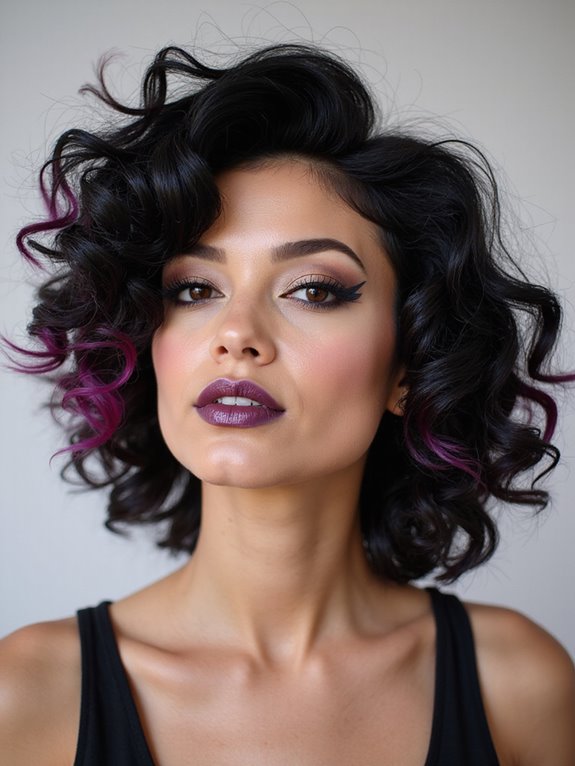
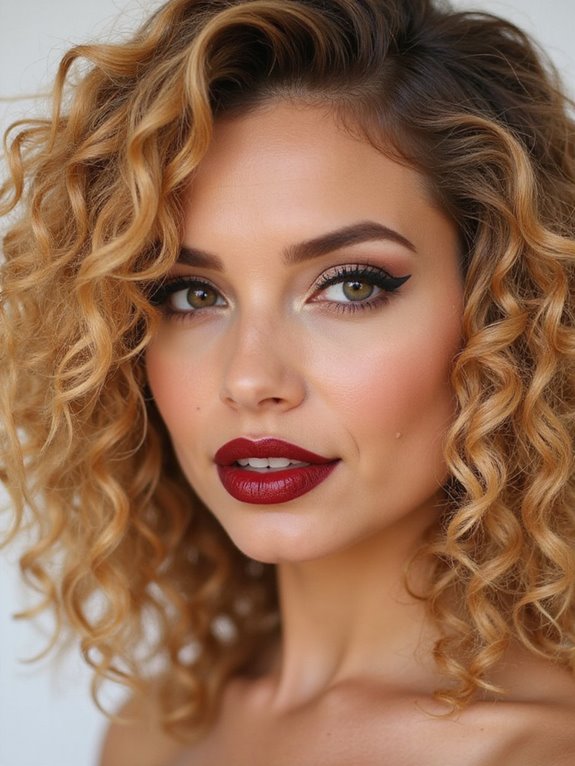
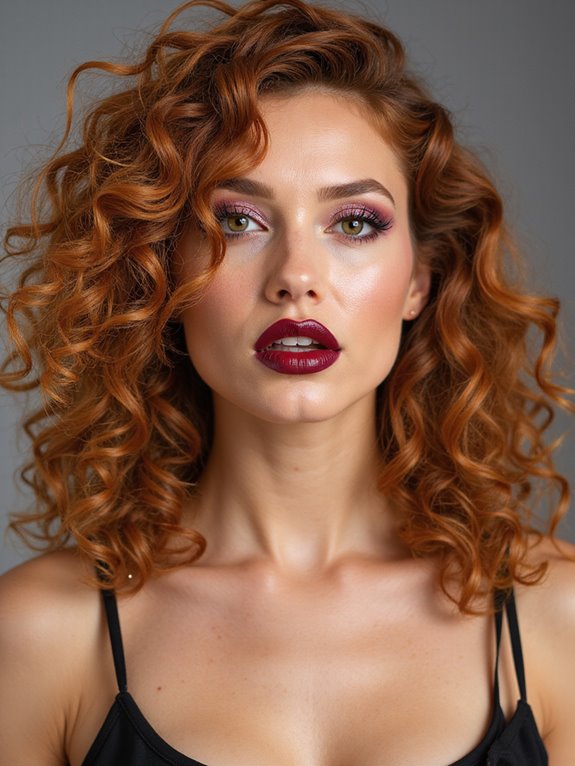
Every scene look starts with the cut. For curls, that means graduated, choppy layers that pile volume at the crown and break the length into pieces. The layers do two jobs at once. They build that signature top-heavy shape, and they give your curls room to separate into distinct, defined sections instead of one solid mass.
In my chair, this is the request I see most from people new to scene hair, and it is the right place to begin. A skilled stylist carves the layers to follow your curl pattern, so the shape looks intentional rather than random, which is the whole difference between a real scene cut and a mess.
This suits most textures, but it is especially flattering on 3a to 3c curls that already want to stack with height. Tighter coils can wear it too, just with more length to play with after shrinkage. Expect to pay around $40 to $70 for the cut and to come back every couple of months as the layers grow out. If you like the piecey, layered idea, it lives in the same family as a curly wolf cut and a curly shag.
- Ask for choppy, graduated layers that follow your natural curl pattern
- Keep the most volume at the crown for that top-heavy scene shape
- Refresh the layers every eight to ten weeks before they lose their edge
Bright Bangs and Two-Tone Curls
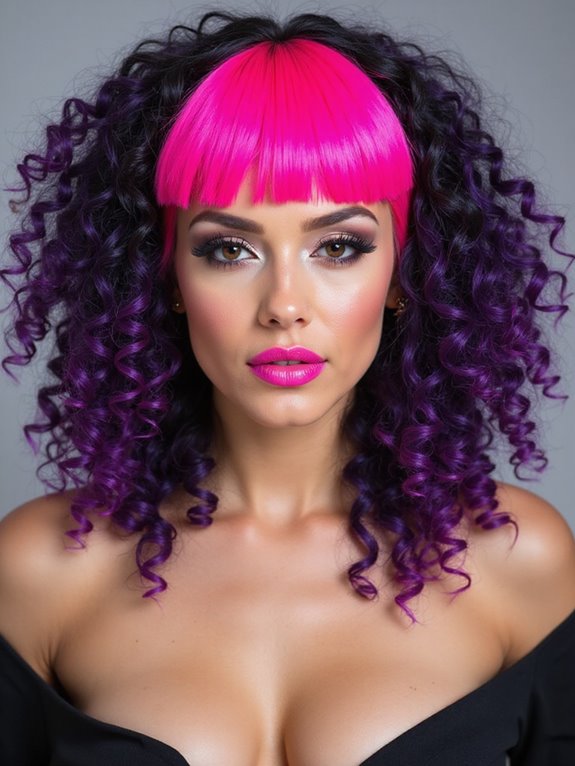
If the cut is the skeleton of scene hair, color is its loud personality, and nothing says scene like bright bangs over two-tone curls. The classic move is a contrasting fringe, electric blue, hot pink, or bleach blonde, against a darker or differently colored length. On curls the effect is even stronger, because every coil catches the color shift and the whole head reads dimensional.
Leaving out a few curly bangs in a bold shade is the single fastest way to look scene without committing to a full color overhaul. Just go in clear-eyed: bright color on curls means bleach, and bleach on textured hair needs a colorist who understands porosity, plus a serious moisture routine afterward to keep your curl pattern intact.
- Pick one bold shade for the bangs and a contrasting tone for the length
- Book a colorist experienced with bleaching textured hair to protect your curls
- Refresh roots and gloss about every two months to keep the color crisp
📋Scene Curl Starter Kit
- ✓Volumizing mousse and a defining curl cream
- ✓Strong-hold gel or spray for the choppy, piecey shape
- ✓Claw clips, a studded headband, and a tail comb for parts
Asymmetrical Curls for Bold, Side-Swept Drama
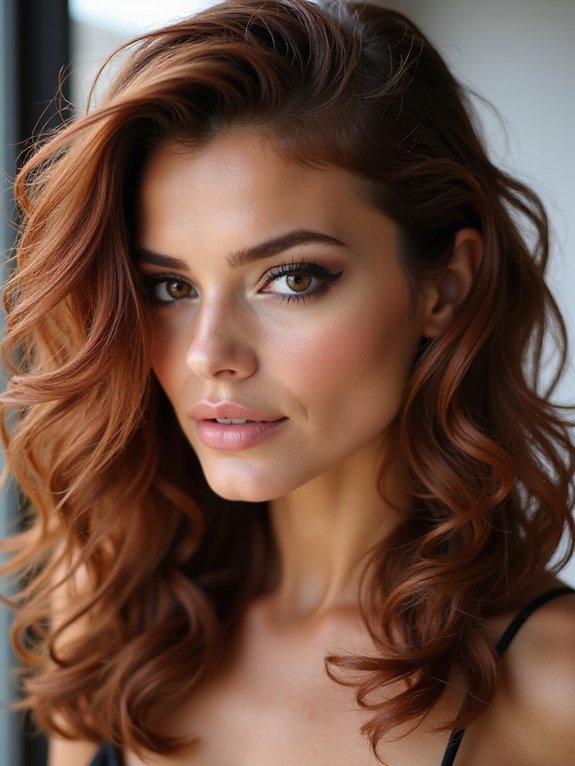
Asymmetry is pure scene energy. Sweeping your curls hard to one side, whether through the cut itself or just how you style it, creates instant drama and a face-framing edge that flatters almost everyone. The long side skims your jaw and cheekbone while the shorter side keeps things sharp, and the imbalance is exactly what makes it feel intentional and a little rebellious.
This is the easiest look on the list to test without commitment, since you can fake the sweep with a deep side part and a strong-hold product before you ever ask for an asymmetrical cut.
When a client wants edgy but is nervous about scissors, this is where I start them, because it delivers the attitude with zero permanent change. Live with the swept shape for a week or two, see how it feels walking into a room, and only then decide whether to make it real with a cut.
- Create a deep side part and train curls across with your fingers as they dry
- Anchor the swept side with a strong-hold gel so it holds the drama all day
- Want it permanent? Ask for an asymmetrical cut that is longer on the sweep side
A Playful Curly Pixie With Scene Edge
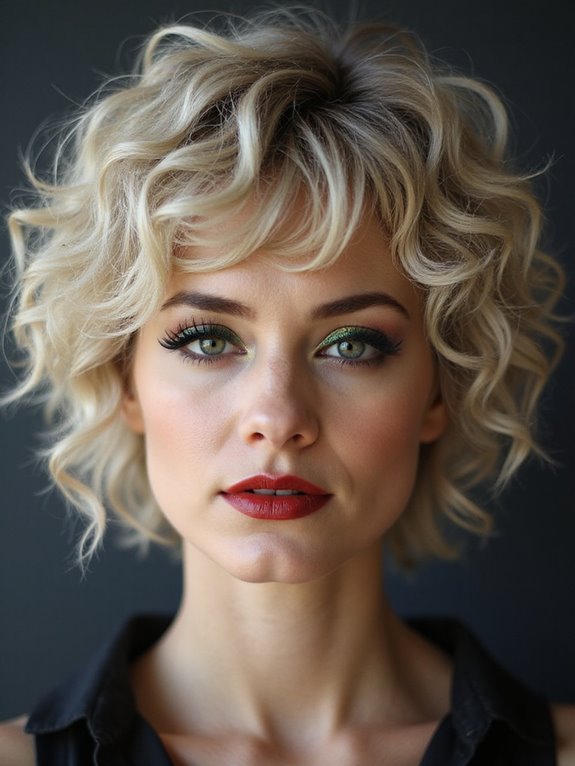
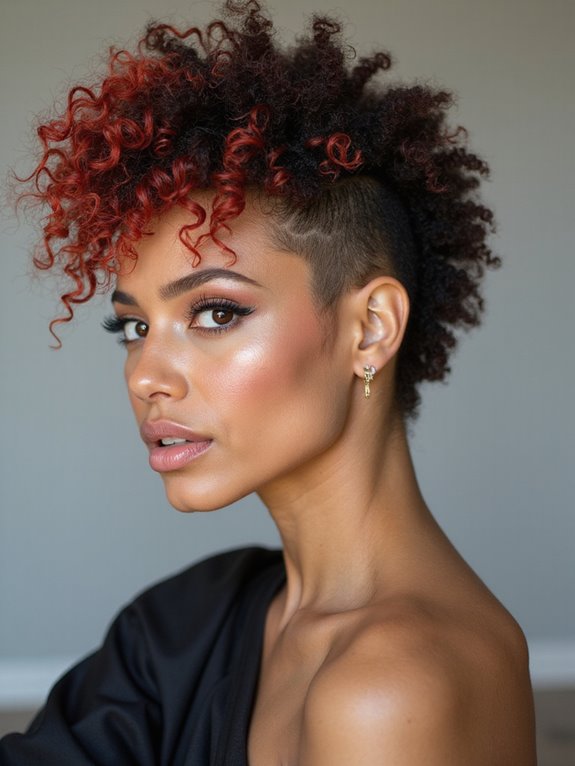
Scene and short hair were made for each other. A curly pixie with choppy layers, an undercut, or a streak of bold color turns the spirited scene vibe into something you can wash and go. The shortness actually amplifies the edge, since there is less hair to soften the angles and your curls sit right up front where the choppiness shows.
It is playful and confident. It is also about as low-effort as edgy gets. You wash, you scrunch, you add a clip, and you are done, which is a rare thing for a look this bold. For anyone who has been curious about going short anyway, the scene angle gives you a reason to finally do it.
Push the scene factor with details rather than length. A shaved or faded side adds instant attitude, a streak of color through the front reads unmistakably scene, and choppy, uneven layers keep it from looking too neat. The honest trade-off is upkeep: a short scene cut needs a reshape roughly every five to six weeks, and any undercut means a quick line-up in between. If you love attention up top, it is a short hop from here to a full curly mohawk.
Scene vocabulary, decoded.
📖Swoopy bangs
Long, side-swept fringe that sweeps across the forehead and frames the eyes, a scene signature.
📖Money piece
A bold, contrasting color placed only on the front face-framing sections for high impact and low upkeep.
Mohawk-Inspired Curly Updo Styles
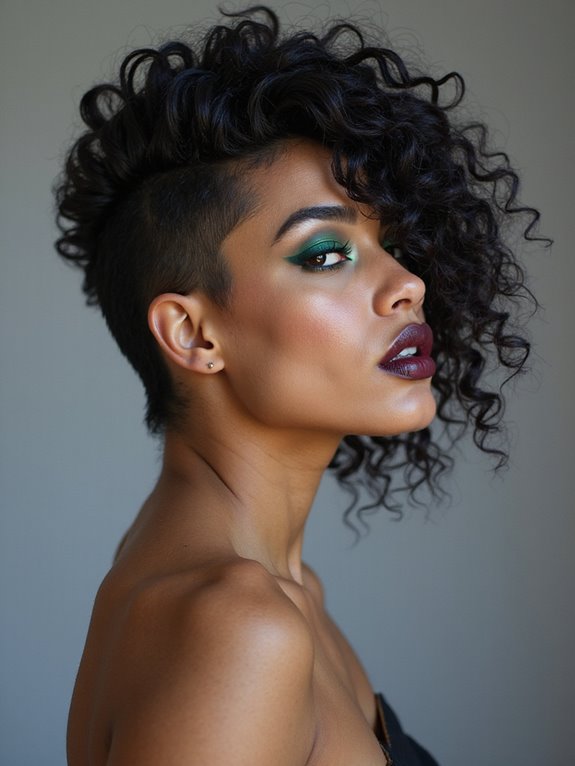
When you want the scene look turned all the way up, gather your curls into a mohawk-inspired updo. You pin the sides in tight and let the center curls stand tall, faking a mohawk silhouette with zero shaving, or you build on real shaved sides if you already have them. It is dramatic, sculptural, and a genuine showstopper for a concert or a night out.
Pinning It Without Stressing Your Edges
The build is simpler than it looks. Smooth and pin the side sections low and snug, then tease and shape the center curls upward, locking the height with a strong-hold product. Bold accessories, spiked headbands, chains, or a row of small clips along the pinned sides, push the edge even further. Tease for height, but pin the sides gently, since a too-tight pull on your edges night after night is the fast track to thinning.
Keep the tension honest. This is a style for occasions, not every single day, precisely because the pinning asks a lot of your hairline. I tell clients to save the tight, sky-high version for nights that earn it. Wear it loud when you want to. Then give your edges a real rest in something softer the next day, because a hairline only gets pulled so many times before it complains.
Scene Color, From Bright Bangs to Balayage
Color is where scene hair gets personal, and you do not have to go full rainbow to nail it. Ombre and balayage curls let you fade from a darker root into a brighter or lighter length, a softer take that grows out gracefully and needs less frequent touch-ups than an all-over bleach.
Two-tone splits, dark on top and bright underneath, give you a peekaboo effect that flashes color only when your curls move. And a single bold money piece at the front delivers maximum scene impact for minimal commitment.
Whatever you choose, respect what color does to texture. Lightening curly and coily hair raises the cuticle and can loosen your pattern if it is done carelessly, so a moisture-first routine of leave-ins, deep conditioning, and bond-building treatments is not optional once you go bright.
Budget realistically too: a full creative color sits at the upper end of that $80 to $200 range, sometimes more for multiple shades, and the upkeep is ongoing. Color is the most fun part of scene hair and the part that asks the most of you.
Accessories, Styling, and Keeping It Alive
Accessories are the cheapest way to lean scene, and curls hold them beautifully. Think patterned clips snapped along a part, a spiked or studded headband, a bandana folded into the crown, or a scatter of small claw clips through the layers. They cost a few dollars. They let you dial the edge up or down by the day.
Pair them with the right styling lineup, a mousse for volume, a curl cream to define, and a strong-hold gel or spray to lock the shape, and your scene look has both attitude and staying power. Honestly, accessories are how I tell most clients to start, because they let you live with the vibe before you ever touch the scissors or the bleach.
Keeping it alive between washes is mostly about gentleness. Refresh your curls by misting with water and a little leave-in, then scrunching and reshaping rather than brushing, which only disrupts the pattern and invites frizz. At night, sleep on a satin surface or loosely pineapple your curls on top of your head to preserve volume and definition.
Working with your natural curl pattern instead of against it is what keeps a scene style looking sharp on day three, not just day one.
Make the Scene Yours
Curly scene hair is not about copying a 2000s yearbook photo. It is about taking the parts that still feel exciting, the choppy layers, the swoopy bangs, the loud color, and building them onto the texture you already have. Your curls do half the work that straight scene hair has to manufacture.
Start where it feels easy. Fake an asymmetrical sweep, clip in some accessories, or leave out a bold money piece before you commit to a full cut or color. Scene was always about self-expression more than rules, so take the pieces that feel like you and wear them like you mean it.
More Hair Ideas