
Long hair on a kid is beautiful and a genuine workout: there’s more of it to tangle, more to fall in their face mid-cartwheel, and more to wake up matted by morning. The styles that actually work aren’t the prettiest ones, they’re the ones that hold through recess, soccer, and a full night’s sleep without a single redo.
Everything here is built for that. I picked the looks that keep long hair secure and out of the way while a child runs the world, a playground ponytail that won’t budge, bubble and Dutch braids that survive sport, overnight styles that beat morning tangles. Each comes with the quick method and the trick that makes it last, because with long hair, lasting is the whole game.
Long-Hair Kids’ Styles, Answered Fast
What’s the most secure style for an active kid with long hair? A braided ponytail or Dutch braids. Braiding the whole length, beyond a simple tie, means there’s nothing loose to whip free, so it holds through running, sport, and play.
How do I stop long hair from tangling overnight? Loosely braid it before bed and use a satin pillowcase. A braid keeps the strands from rubbing into knots, so mornings start with smooth hair instead of a matted mess.
How do I keep styling from hurting? Detangle on damp, conditioned hair from the ends up, and keep every tie and braid just snug enough to hold. Long hair is heavy, so tension at the roots adds up fast.
A Hair-Care Routine for Long Locks
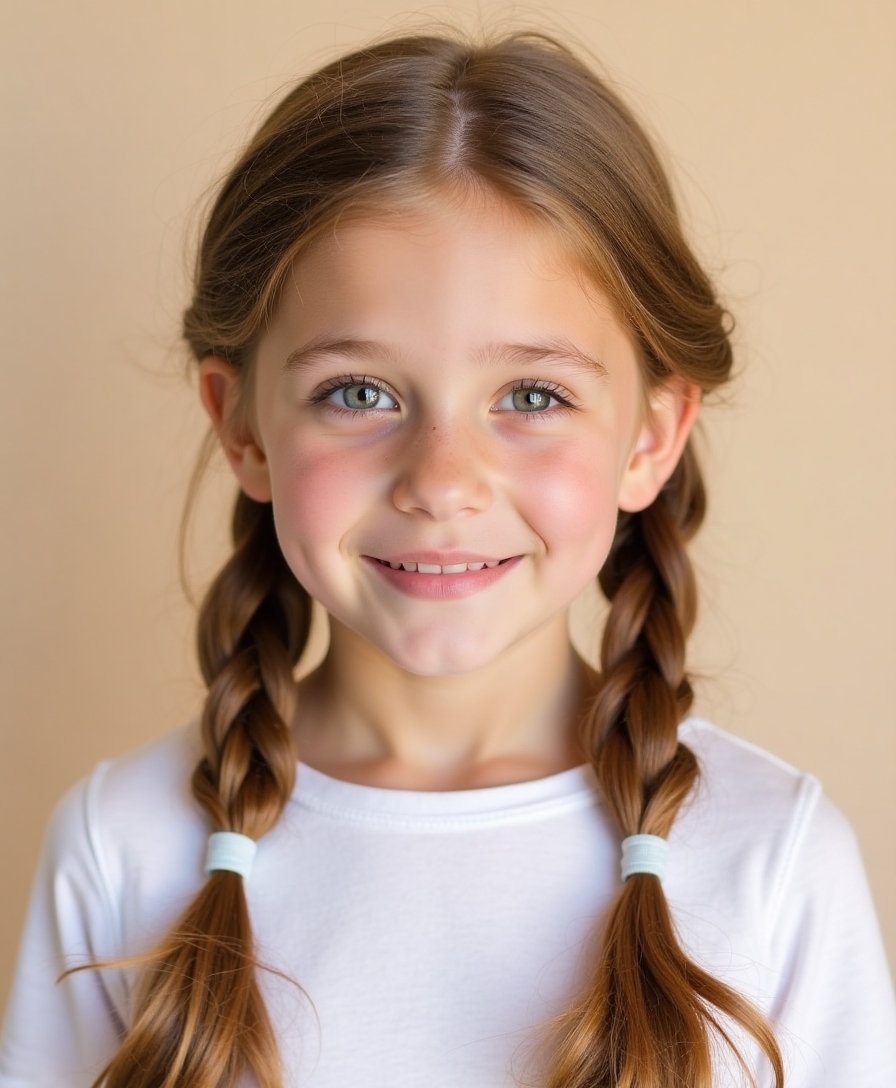
Before any style holds well, long hair needs a little upkeep, because the longer the strand, the more the ends dry out and tangle. A short, consistent routine is what makes the styles below actually behave.
The basics are a daily detangle on damp hair, a leave-in or detangler for slip, and a weekly trim-check on the ends. None of it takes long, and it saves you from fighting knots every single morning.
- Detangle gently from the ends up, working slowly toward the roots.
- Mist with water or a leave-in before brushing so the comb glides through.
- Keep the ends moisturized, since they’re the oldest, most tangle-prone part of long hair.
Braiding Basics Worth Learning First
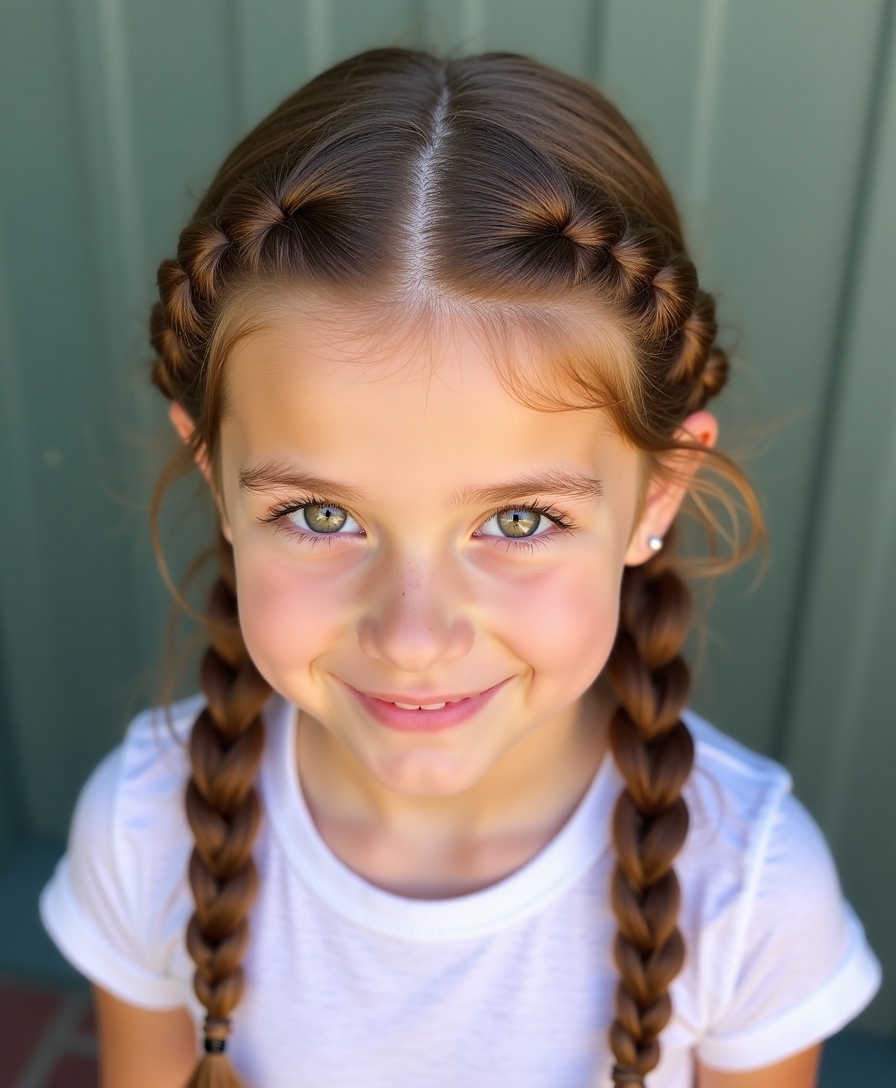
If you learn one skill for long-haired kids, make it a basic three-strand braid, because almost every durable style here is a braid in some form. Once your hands know the over-under rhythm, ponytails, pigtails, and updos all get faster.
Start by practicing on dry hair, or even on a doll, until the motion feels automatic. The hardest part is just keeping even tension across the three sections so the braid sits straight.
Once the basic braid clicks, the Dutch braid, French braid, and bubble braid are small variations on the same move. Build your confidence on the plain three-strand first, and the rest follow quickly. My easy braided hairstyles guide breaks the patterns down further.
The Secure Playground Ponytail
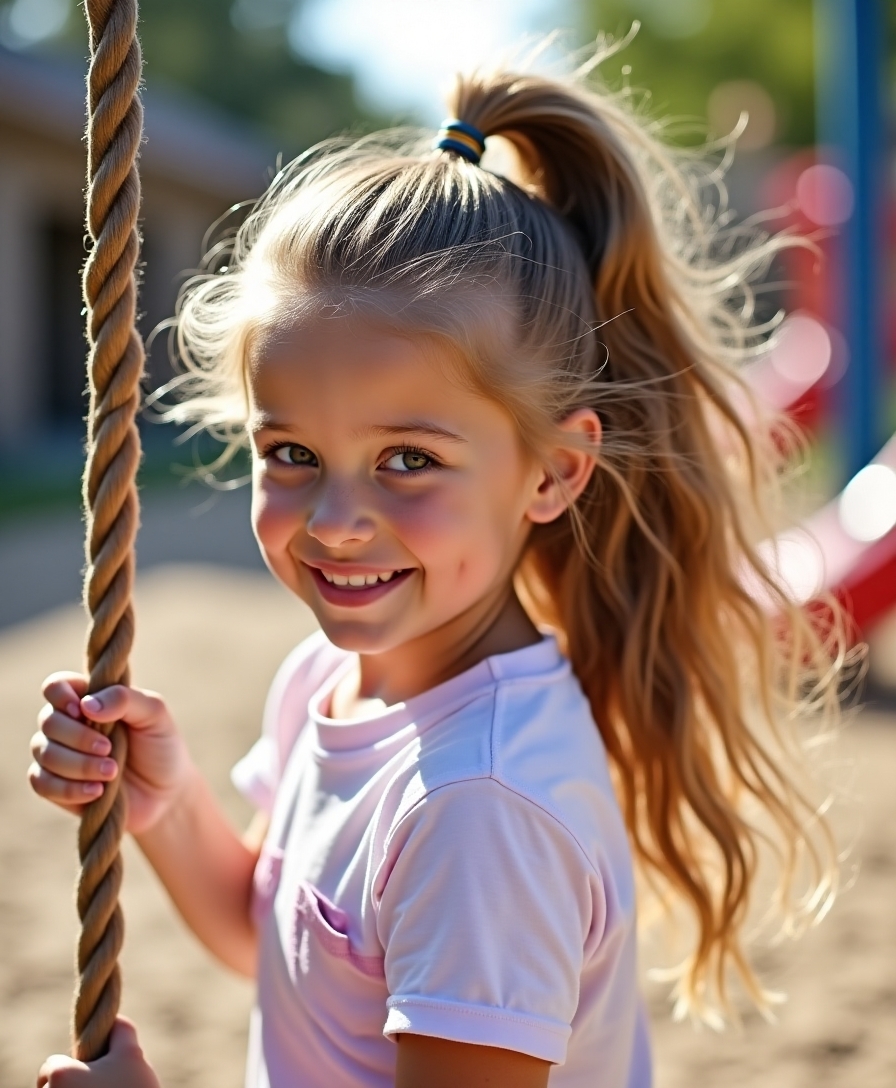
A regular ponytail slips; a playground ponytail is built to survive monkey bars and tag. The difference is all in how you secure it, with smart placement doing the work.
The fix for long, heavy hair is to spread the load across more than one tie, which is what the steps below do:
- Brush the hair smooth, gather it high, and wrap a strong fabric elastic two or three times.
- Loop the tail halfway through on the last wrap for a half-up bun-tail that can’t slide out.
- For long, heavy hair, split the elastic’s grip by tying a second soft tie an inch down the tail so the weight doesn’t drag the whole thing loose.
📋Long-Hair Styling Starter Kit
- ✓Strong fabric-covered elastics and a few satin-lined scrunchies
- ✓A wide-tooth comb, a soft brush, and a spray bottle for detangling
- ✓A leave-in or detangler, plus bobby pins and snap clips for updos
- ✓A satin pillowcase or bonnet for tangle-free nights
The Bouncy Bubble Braid
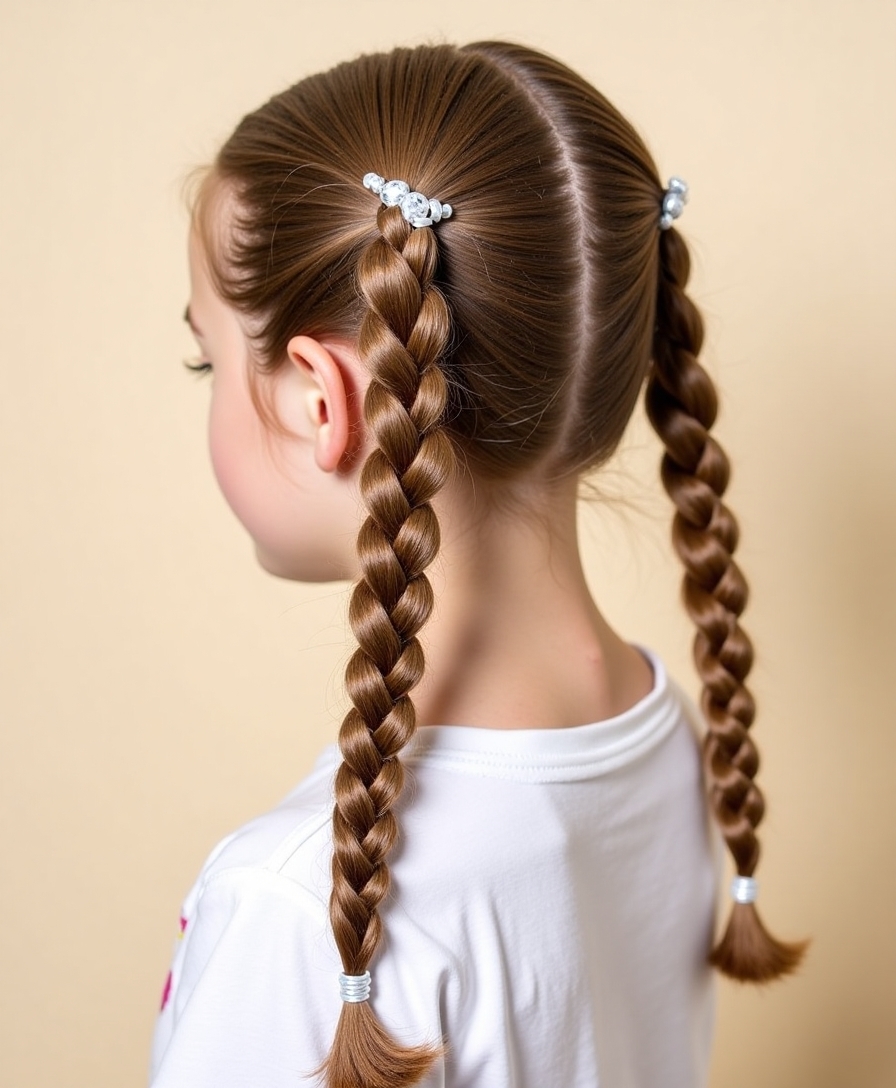
The bubble braid looks like real effort but needs zero braiding skill, just a row of elastics down a ponytail, which makes it perfect for long hair that has plenty of length to work with. It’s playful, secure, and holds all day:
- Tie a ponytail, then add soft elastics down the length every couple of inches.
- Gently tug the hair outward in each gap so every section puffs into a round bubble.
- On very long hair, keep adding bubbles all the way to the ends so there’s no loose tail left to tangle.
A Simple Twisted Style for Long Hair
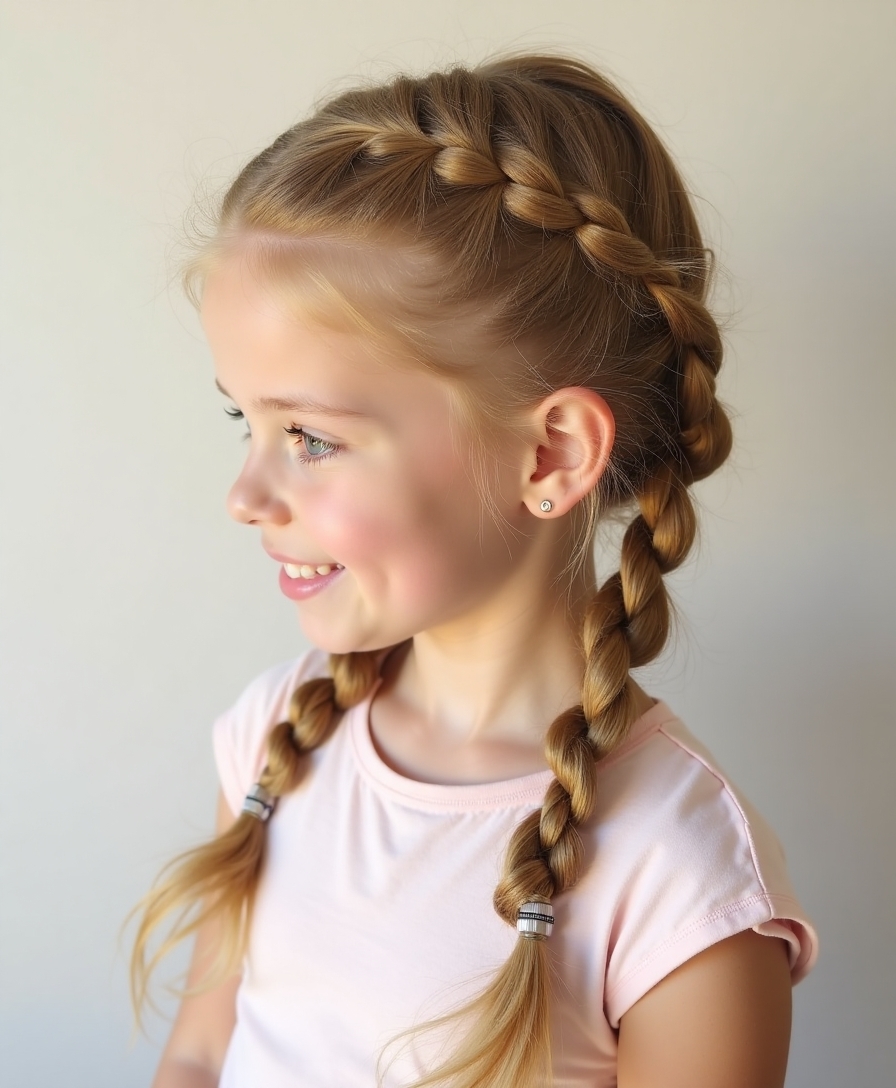
A two-strand twist is the lazy-day shortcut when even braiding feels like too much: you just wind two sections around each other, and the length of long hair makes a long, pretty rope. It holds better than a plain ponytail and takes half the time of a braid:
- Divide a ponytail in half and give each half a tight twist, both turning the same way.
- Cross the two twisted halves over one another the opposite way, all the way down, then tie off the end.
- That counter-wind is what locks the rope in place, so it holds where a single twist would spring open.
The Secure Half-Up Braid
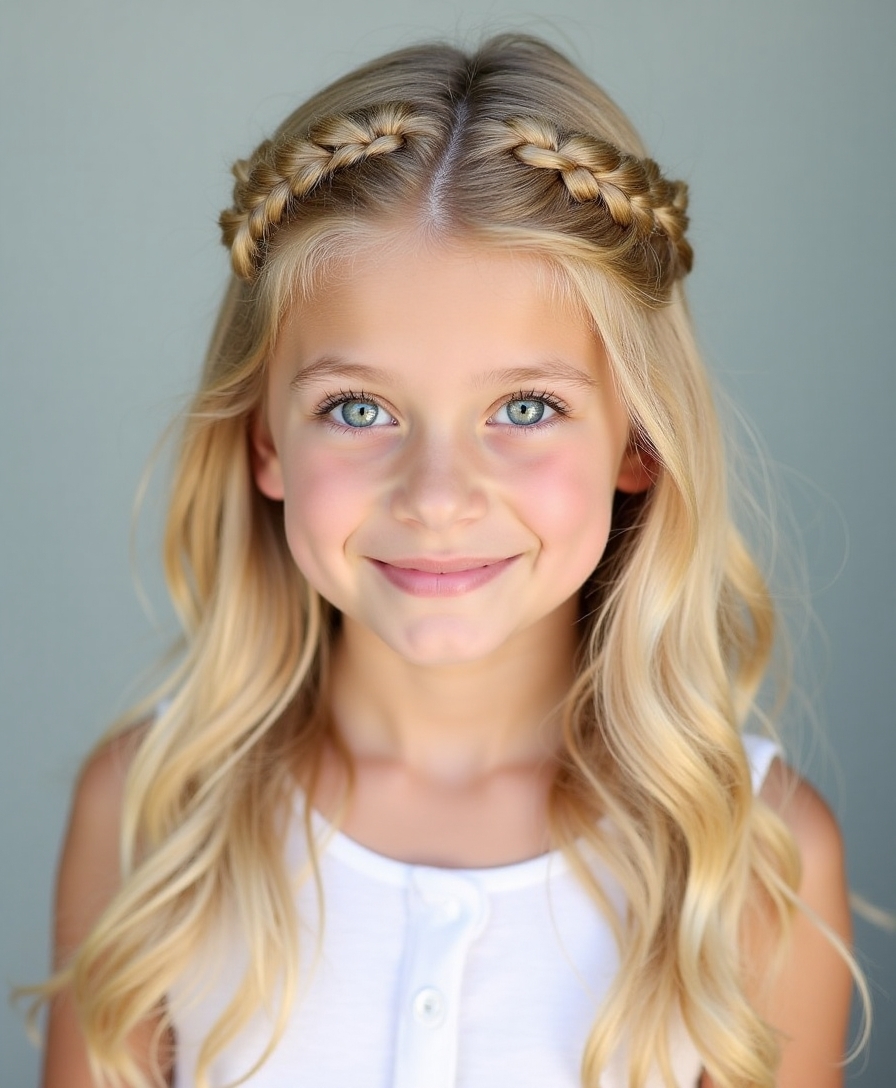
The half-up braid is the answer when a child wants their length down but needs it out of their eyes, which is most days with long hair. You braid just the top section and leave the rest flowing, so it’s pretty and practical at once.
Gather the top third of the hair, braid it straight back or to one side, and tie it off where it meets the loose length. It keeps the front out of the face through art class and lunch while the long hair still gets to be down, and it takes under two minutes once you’ve got the braid rhythm.
ℹ️Good to Know
Long hair is heavier than it looks, and that weight is why high, tight ponytails can ache or slip on kids. A mid or low placement, or braiding the length so the weight is distributed, holds more comfortably and lasts longer than a single high tie straining against all that hair.
Sporty Dutch Braid Variations

Dutch braids are the gold standard for sport, because they sit tight against the head and keep every strand locked down through running, swimming, and tumbling. For long hair, they’re the most secure option there is:
- Braid one or two Dutch braids straight back, crossing the sections under instead of over so they pop up off the scalp.
- Carry the braid all the way into the length and tie it, so nothing is left loose to come undone.
- Two Dutch braids into a single ponytail or bun is the ultimate no-budge sport style for long hair.
Secure Side Braids for Busy Days
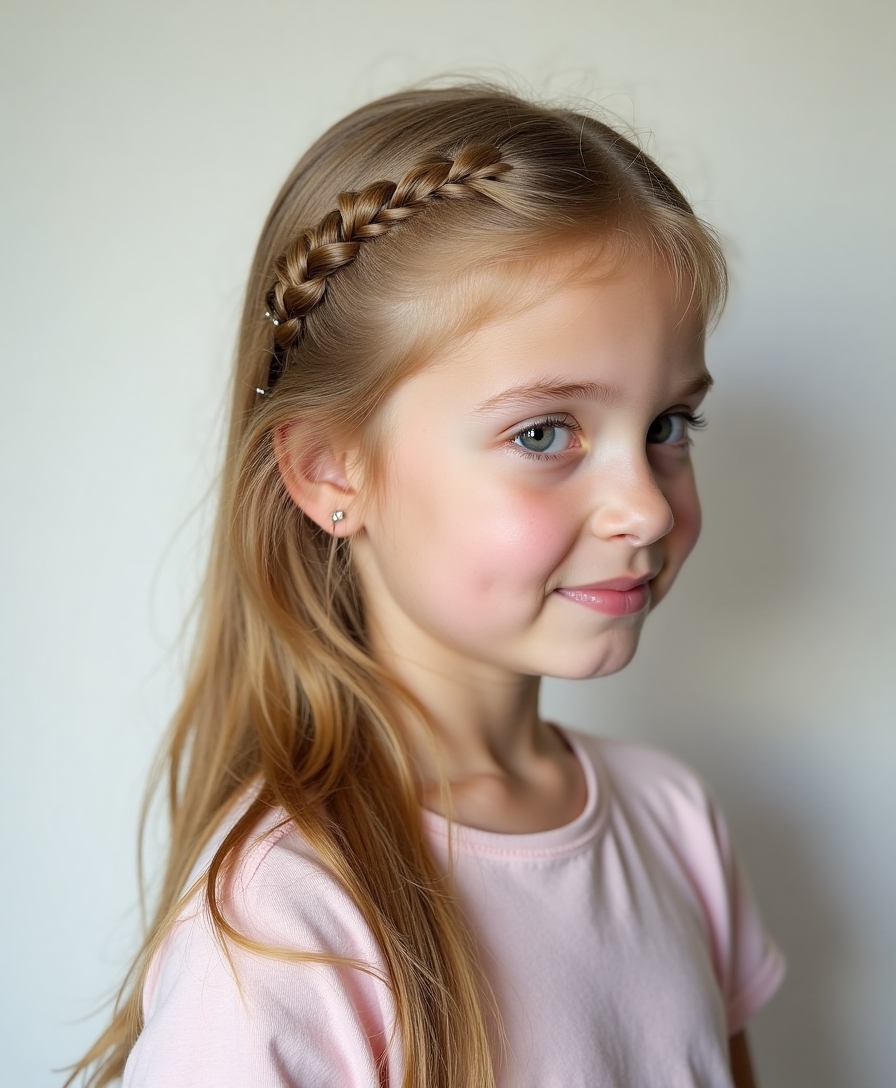
A side braid keeps long hair contained and off one shoulder, which is ideal for a kid who’s writing, eating, and crafting their way through a busy day. It looks soft and easy while still keeping everything in one neat rope.
Why a higher start point holds heavy hair better
Sweep all the hair to one side, braid a simple three-strand down to the ends, and tie it softly. Because long hair is heavy, starting the braid a little higher (near the ear rather than the nape) keeps it from dragging down and loosening as the day goes on.
Pull the braid a touch wider once it’s tied for comfort and a fuller look. It’s the style I reach for when a kid needs their hair handled but hates anything that pulls.
Protective Overnight Styles
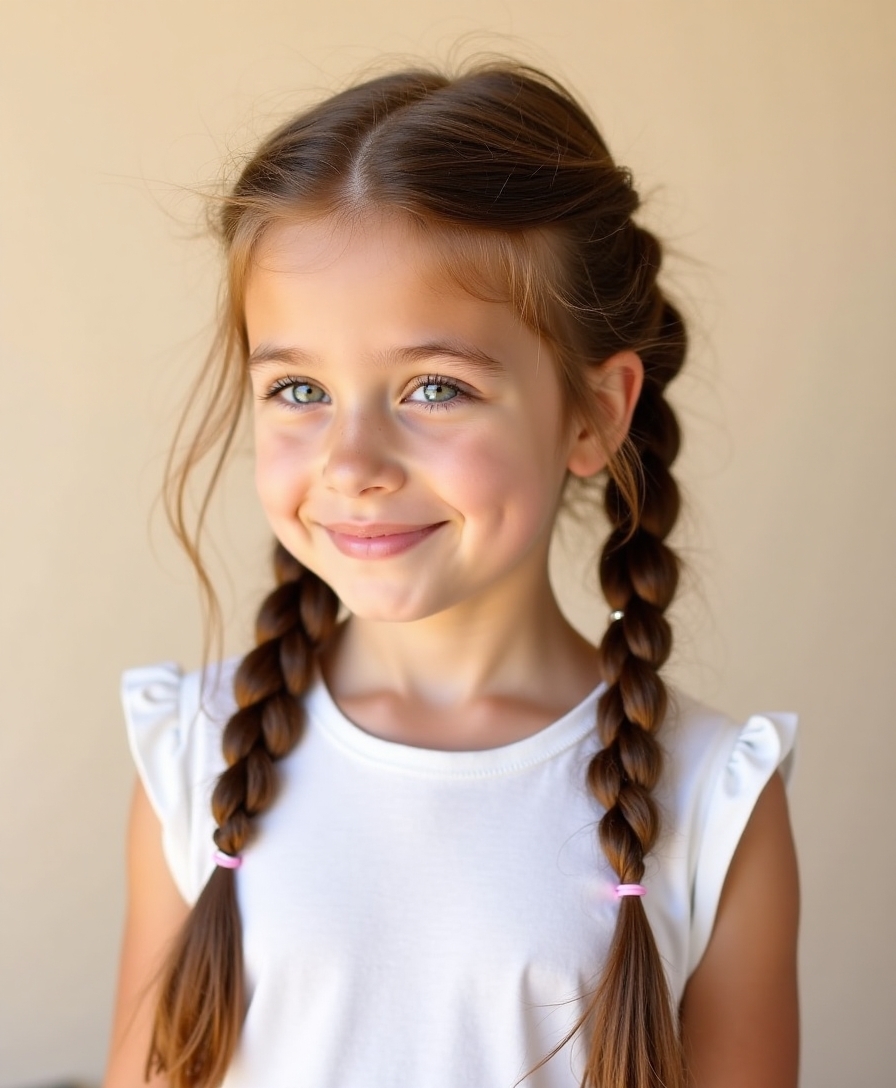
What you do at bedtime decides whether morning starts with smooth hair or a screaming match over knots, and with long hair the stakes are higher. A loose protective style overnight is the single biggest tangle-saver there is.
Why a loose braid beats leaving long hair down at night
A loose braid or two is all it takes: it keeps the strands from rubbing against each other and the pillow all night, which is exactly what creates those morning mats. Keep it loose, since a child sleeps for hours and tension that long can stress the hairline.
Add a satin or silk pillowcase and you’ve cut morning tangles dramatically, because satin lets the hair glide across it where cotton grabs and roughs up the cuticle. My gentle styles for Black kids’ hair guide goes deeper on satin and night care for textured hair.
Sport-Day Hairstyle Solutions
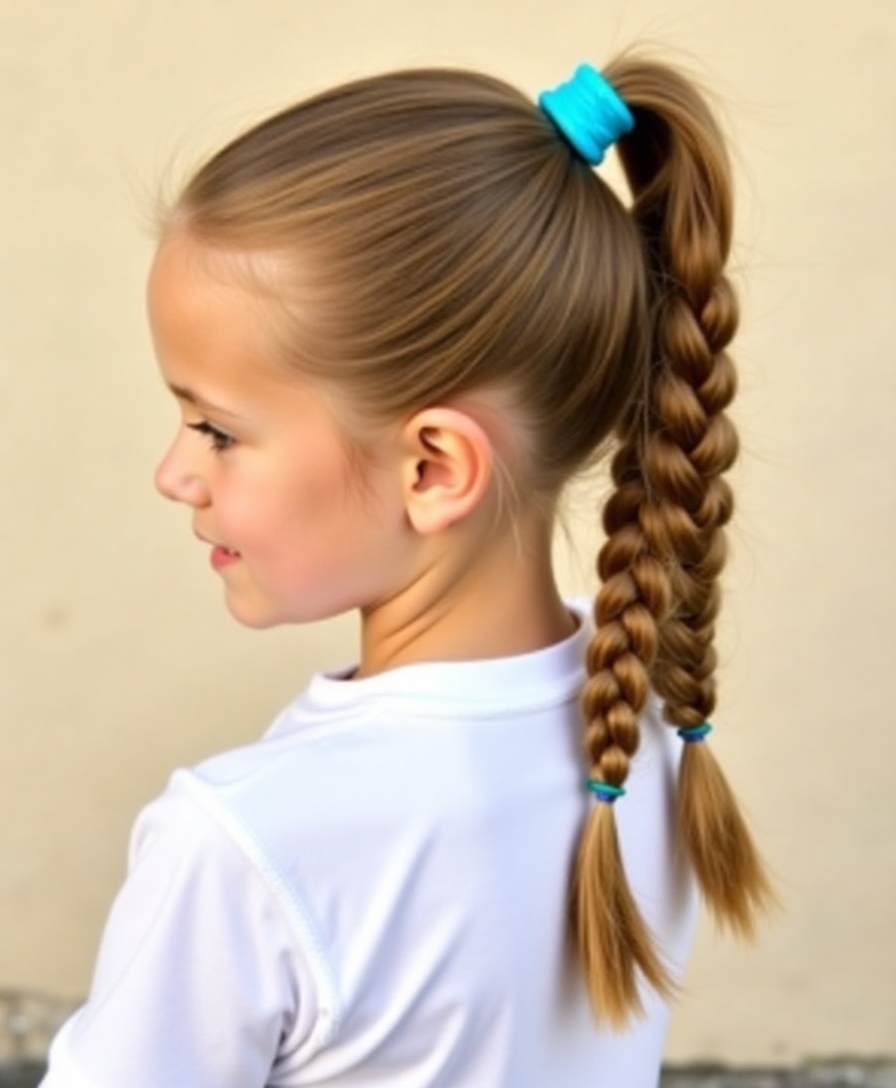
Sport day with long hair is its own challenge: it has to survive sweat, helmets, and full-speed movement without ending up in a child’s eyes at the worst moment. The goal is everything braided and nothing loose.
The braid-then-bun combo that survives any sport
The winning formula is a Dutch braid or two braided into the length, then looped up into a low bun and pinned, so there’s no swinging tail at all. A low bun sits comfortably under a helmet or against a mat better than a high one.
Use sweat-friendly, grippy elastics and skip the slippery satin ribbons on sport days. Tuck any short face pieces back with a couple of small clips so nothing escapes mid-game.
An Elegant Braided Updo
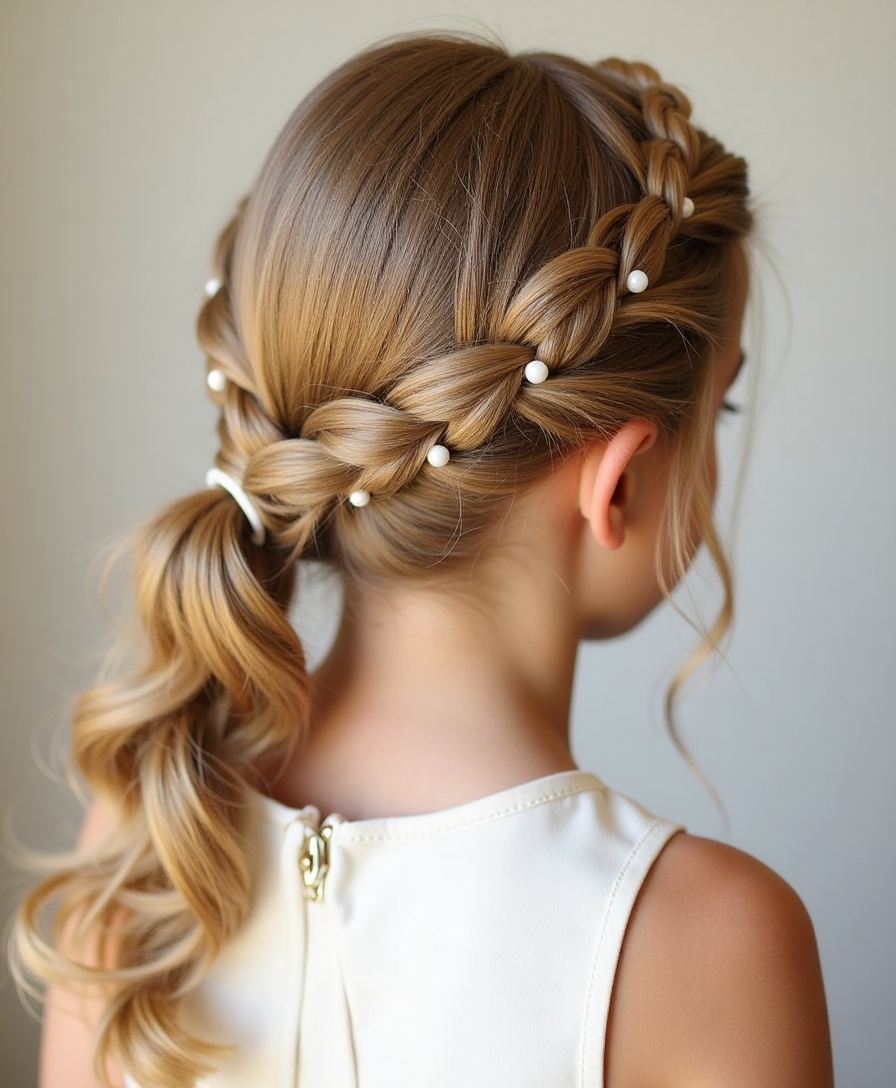
For a wedding, recital, or photo, long hair has the length to do a truly impressive updo, and a braided one still counts as easy. It looks like a salon did it but comes together from braids you already know:
- Make two or three braids, then coil and pin them into a low bun or wrap them around the crown.
- Tuck the braid ends underneath and pin them hidden so the updo looks smooth from every angle.
- Add a ribbon, a few small flowers, or sparkly clips to dress it up for the occasion.
Quick and Tidy Everyday Looks
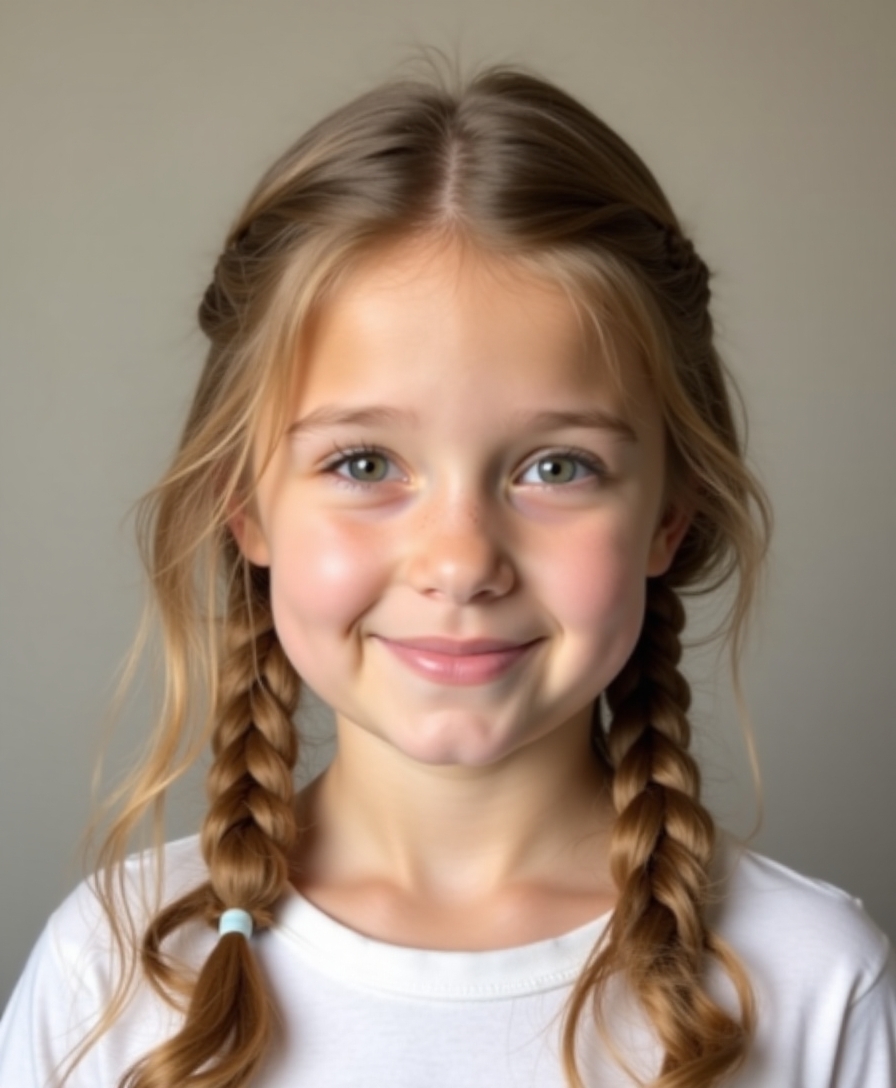
Most days don’t need anything fancy, they need fast and tidy, hair handled in under two minutes so everyone gets out the door. For long hair, tidy mostly means contained.
Building a two-minute morning rotation
A low ponytail, a quick side braid, or a twisted half-up all qualify, and the trick is doing them on detangled hair so they come out neat with no fuss. A spritz of water and a quick brush is usually all the prep a style needs.
Keep a few go-to looks in rotation so you’re never inventing a style at 7 a.m.; my quick school-morning kids’ styles guide has more fast options. Once a child can help with the simple ones, even better, the more they pitch in, the faster mornings go.
Summer Hair Management
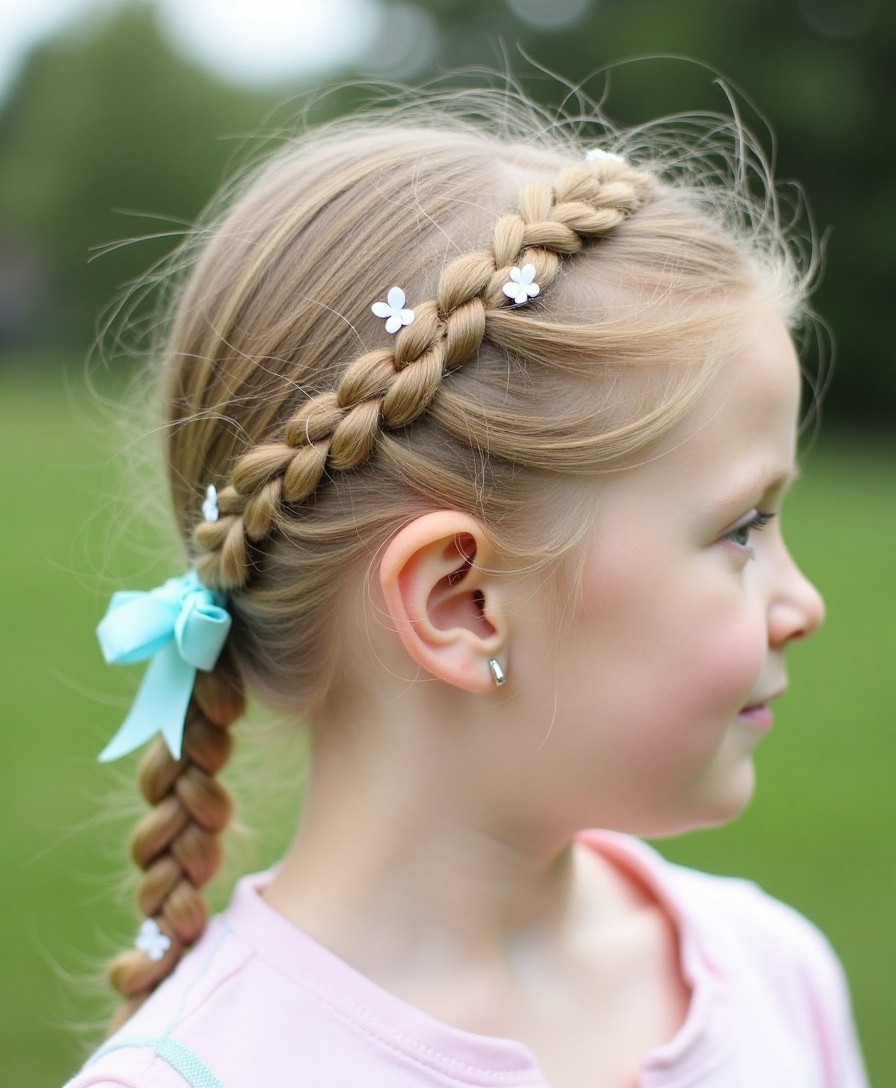
Summer is hard on long hair: heat, sweat, pools, and humidity all conspire to tangle and frizz it, so the season calls for getting it up and off the neck. Braids and buns earn their keep from June through August:
- Keep long hair braided or in a bun on hot days so it stays off a sweaty neck and out of the way.
- Always wet and condition the hair before swimming so it drinks clean water instead of chlorine.
- Rinse and re-moisturize after the pool, and braid damp for easy heat-free waves the next day.
Creative Pigtail Styles
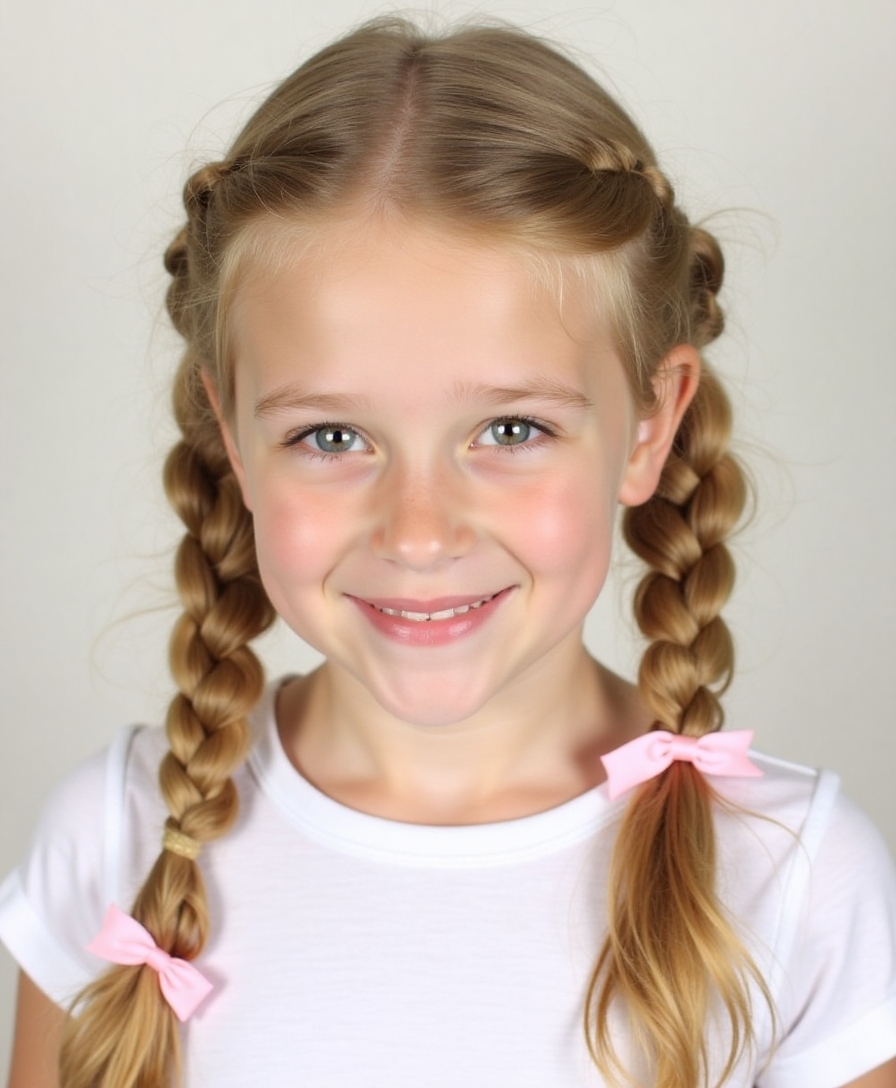
Pigtails work well past the toddler years, and long hair makes the most fun versions: braided pigtails, twisted pigtails, or bubble pigtails all read playful and keep the weight evenly balanced on both sides. Splitting long, heavy hair in two also takes strain off the scalp:
- Part the hair down the middle and braid or twist each side for pigtails that hold all day.
- Try bubble pigtails by adding elastics down each one for a cute, no-skill upgrade.
- Stagger the height (a little higher or lower) to suit the day, from sporty-high to sweet-low.
Heads-Up
With long hair it’s tempting to pull a tie extra-tight so it lasts, but tension at the hairline is the leading cause of thinning edges over time. A braid or twist holds because of technique, not tightness, so keep every gather gently snug, and if your child winces or can’t move their forehead, it’s too tight, redo it looser.
Stage-Ready Dance Hair
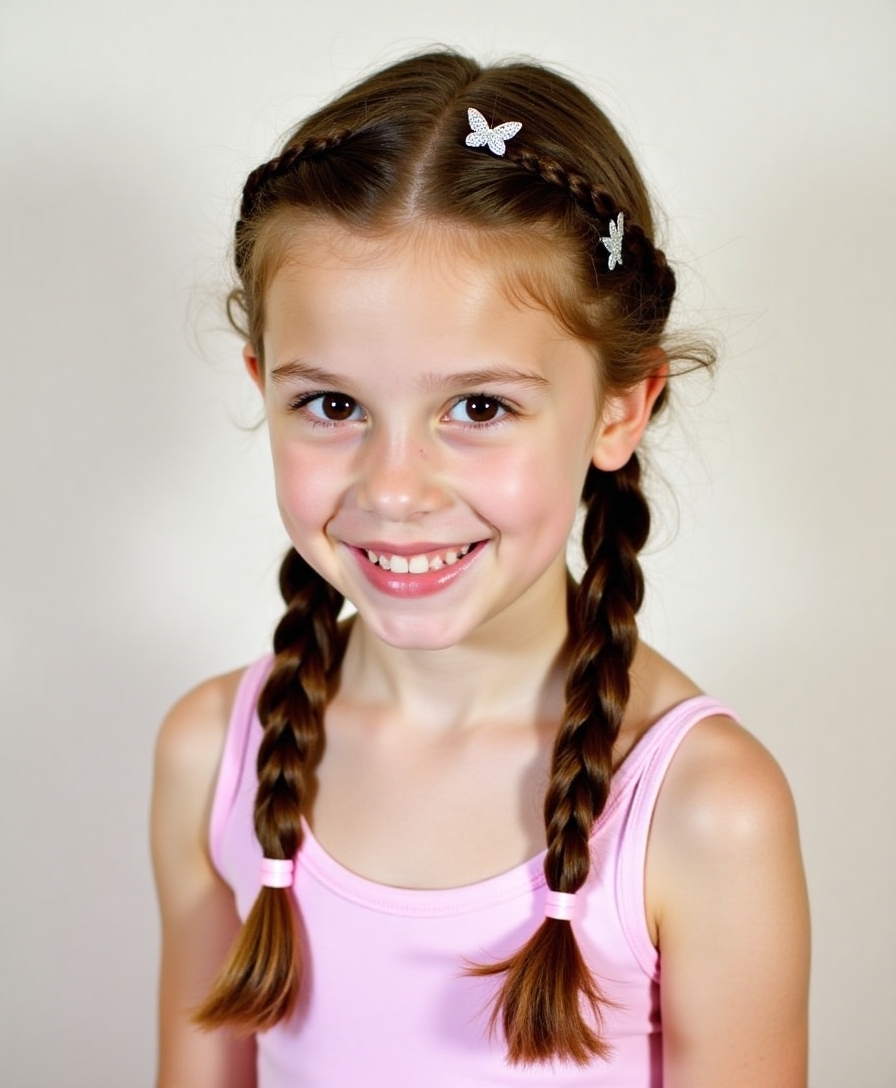
Dance and gymnastics demand a specific thing: slicked-back, rock-solid, and identical to the rest of the team, usually a high bun. Long hair is perfect for it because there’s enough length to make a full, secure bun that won’t move through a routine:
- Brush the hair sleek with a little gel or smoothing cream into a high ponytail, then wrap it into a bun.
- Pin the bun all the way around and add a hairnet over it for a performance that stays put.
- A spritz of strong-hold spray and you’ve got a stage-ready bun that survives spins and flips.
Weather-Proof Styles for Long Hair

Wind and rain are long hair’s enemies, turning a neat morning style into a tangled mess by the time a kid reaches the school door. Weather-proofing just means containing the length so the elements have less to grab.
Braids beat ponytails in bad weather every time, since a braid holds the strands together where a loose tail whips and tangles in the wind. A hood-friendly low braid or bun keeps everything tucked and protected.
On rainy days, a little smoothing cream tames the frizz that humidity brings, and a fully braided style means there’s nothing loose for the damp to puff up. Tuck the ends in so the weather has nothing loose to catch.
Stylish and Safe Hair Accessories
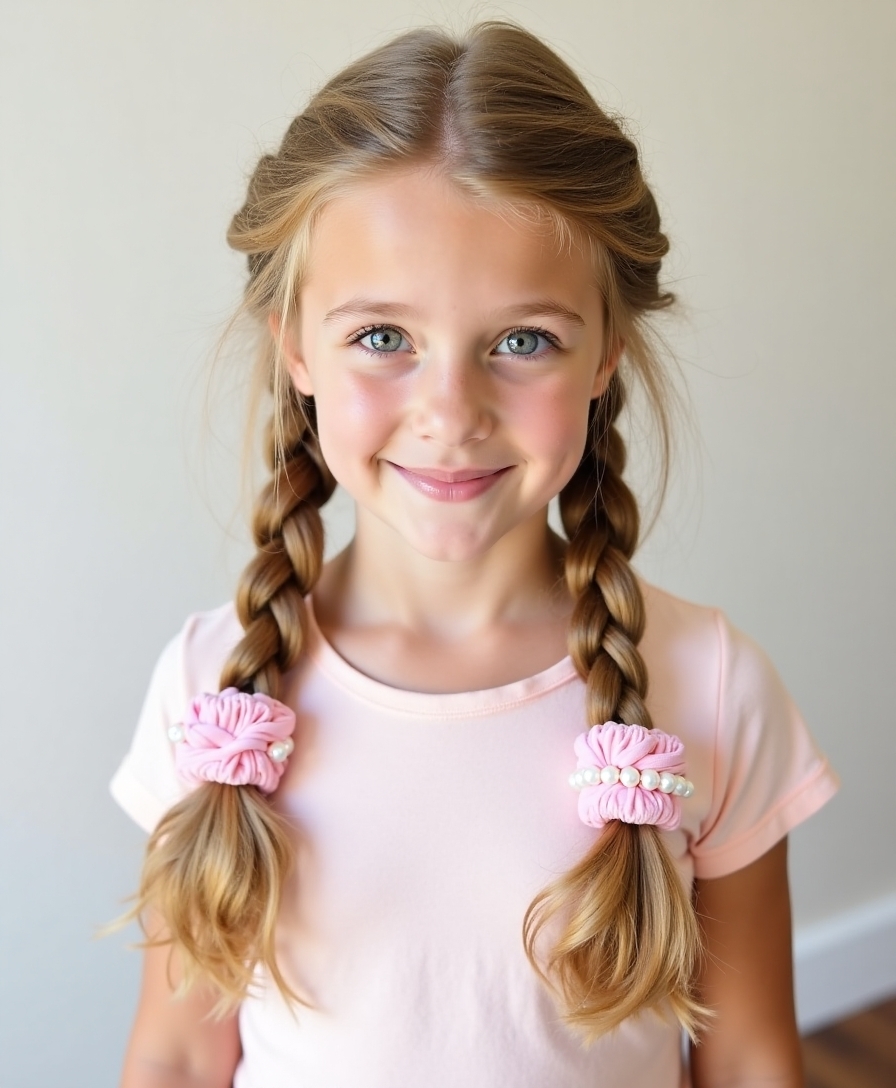
The right accessories make long-hair styling faster and gentler, and the wrong ones cause most of the breakage you see. With long, heavy hair, what holds it matters even more, because flimsy ties simply give out.
Which ties actually hold heavy long hair
Reach for strong fabric-covered elastics, snap clips, and satin-lined scrunchies that hold without snagging, and skip thin rubber bands and anything with a metal seam that catches on long strands. A handful of bobby pins handles any updo.
Let your child pick the colors and clips they love, since accessories are where they get to make a style their own. The buy-in makes hair time smoother for everyone.
Quick Hair-Taming Tricks

Some mornings you have ninety seconds, and long hair still needs to be handled. A few quick-taming tricks get a child presentable without a full styling session.
None of these is a real style, they are the in-between fixes that buy you a tidy head until there is time to do it properly:
- Spritz with water and run a wide-tooth comb through to revive yesterday’s braid or pony.
- A quick low bun or twisted half-up hides bedhead in seconds when there’s no time to start over.
- Keep a detangler and a brush by the door for last-minute fixes on the way out.
An Easy Party Updo
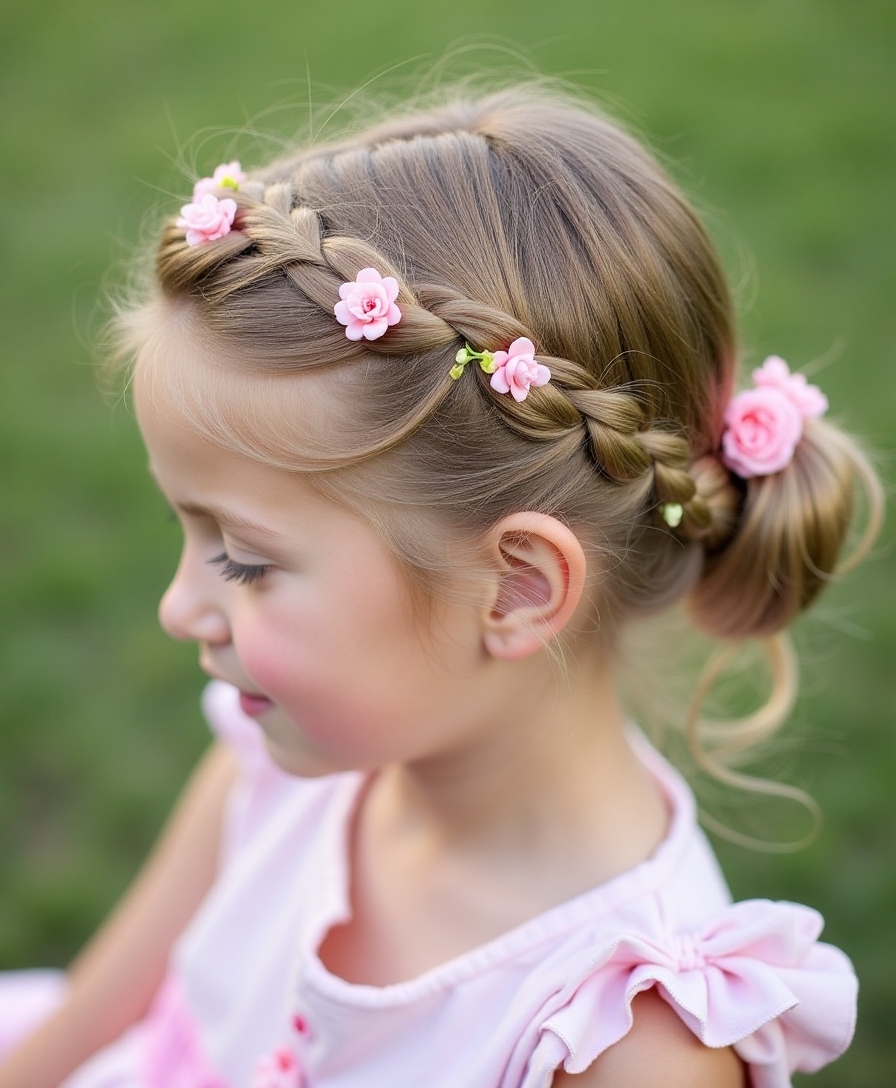
When there’s a party and you want long hair to feel special without an hour of work, a soft messy updo does it. Long hair gives you so much to work with that even a quick version looks dressed-up.
Twist the hair into a loose, low bun, pin it, and pull a few soft pieces out around the face to keep it soft and sweet. A pretty clip or a ribbon turns an everyday bun into a party look in one step, and it holds through cake, games, and dancing.
| The day | Best style | Why |
|---|---|---|
| Sport or PE | Dutch braids into a low bun | Nothing loose to swing; sits under a helmet |
| School day | Secure ponytail or side braid | Out of the face, comfortable for hours |
| Party or photo | Soft low bun or braided updo | Dressed-up but still quick and comfortable |
| Overnight | Loose braid + satin pillowcase | Stops the strands matting into morning tangles |
Tangle-Free Bedtime Styles
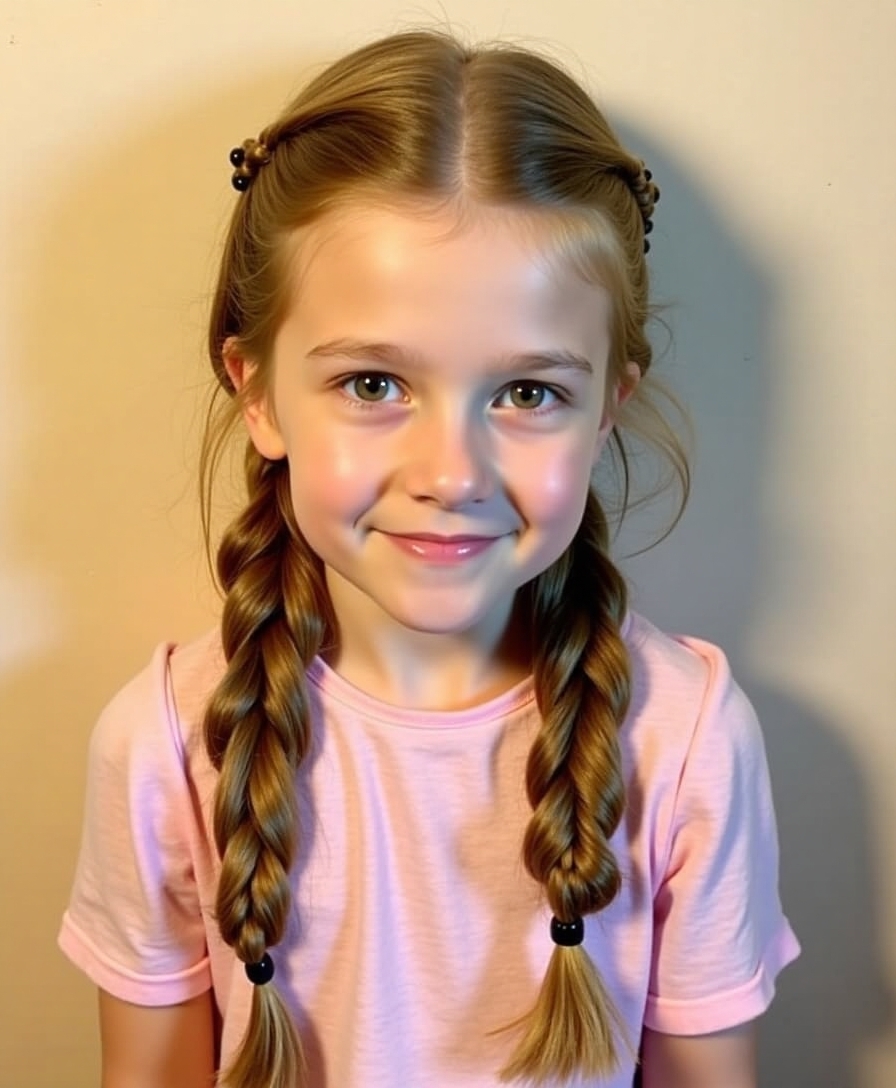
Bedtime is where long-hair tangles are won or lost, so it’s worth one last easy step before sleep. The right bedtime style is the reason morning hair is smooth instead of a knotted nightmare.
A loose braid, a loose twist, or two soft braids all keep the strands from matting against the pillow overnight, and none of them takes more than a minute:
- Braid it loosely, since hours of tension can stress the hairline as a child sleeps.
- Add a satin pillowcase or bonnet so the hair glides freely all night.
- Detangle gently in the morning and the style mostly just needs refreshing, not redoing.
Long-Hair Kids’ Styles, Answered
?What are the easiest long-hair styles for a busy morning?
A secure ponytail, a simple side braid, or a twisted half-up are the fastest, all under two minutes on detangled hair. The key is doing them on hair you’ve combed through the night before or misted that morning, so you’re styling smooth hair, not fighting knots.
?How do I keep my child’s long hair from tangling at night?
Loosely braid or twist it before bed and use a satin pillowcase. A braid keeps the strands from rubbing into knots overnight, and satin lets the hair glide where cotton grabs, so mornings start smooth and combed-out.
?What’s the most secure style for sport or dance?
Dutch braids carried into the length, then looped into a low bun and pinned, with a hairnet for dance. Braiding the whole length means there’s nothing loose to swing free, and a low bun sits comfortably under helmets and through tumbling.
?How do I make styling long hair hurt less?
Always detangle on damp, conditioned hair working from the ends up, and keep every tie and braid just snug enough to hold. Long hair is heavy, so high, tight ties strain the scalp; a lower placement or a braid spreads the weight and feels far better.
?At what age can a child help with their own long hair?
Most kids can start helping around five or six, holding the spray bottle, picking accessories, or smoothing a ponytail. Letting them take small jobs builds independence and makes hair time more cooperative, even if you’re still doing the braids yourself for a few more years.
Long Hair, Handled
Long hair on a busy kid really comes down to one principle: contain the length, and almost everything else takes care of itself. Braid it for sport, bun it for dance, twist it for everyday, and loosely plait it for sleep, and you trade daily tangle battles for styles that hold from breakfast to bedtime.
Pick two or three of these to get automatic, a fast secure ponytail, one reliable braid, and a loose bedtime plait, and you’ll have long hair working with you on busy mornings. Every smooth, calm hair session is also teaching your child that their long hair is something to enjoy, and that’s worth as much as the style itself.
More Worth Saving