
There is a particular calm that settles over the braiding chair once the first few rows are in, a few hours of patience traded for weeks of protected, easy hair. Braids have done that work for generations.
Right now, the latest braided hairstyles people are saving range from low-tension knotless braids to sculptural cornrows and featherlight passion twists. Below are the ones filling my chair and my saved folder alike, most of them protective styles rooted in Black hair traditions, with honest notes on what suits your hair, how to protect your scalp and edges, and how long each really lasts.
The Short Version
- Most of these are protective styles, braids and twists that tuck away your ends and cut daily manipulation to help length retention.
- Low tension is everything: knotless braids, correct sizing, and never braiding too tight protect your edges and scalp.
- A braid appointment runs about $150 to $400 and several hours, and most protective styles last four to eight weeks with good care.
Protective Braids and Twists for Healthy Hair

Before the individual styles, it helps to understand what makes braids a protective style in the first place.
- They tuck your ends away from friction and the weather
- They cut daily manipulation and heat, which helps length retention
- They stretch the time between washes and simplify your routine
- The key is installing them without tension, so they protect rather than stress the hair
Knotless Braids for a Low-Tension, Natural Look

Knotless braids have become the go-to for good reason. The braider adds braiding hair in gradually, with no knot sitting at the root at all, so there is far less tension on the scalp and hairline. That makes them more comfortable and much kinder to your edges. For anyone whose hairline has thinned from years of tight styles, the switch to knotless can be a genuine relief.
Why Knotless Protects Your Edges
They lie flat, move naturally, and can be parted and styled in every direction. I size them medium rather than tiny when a client’s edges are fragile, since smaller sections add weight and pull.
Refresh the edges and moisturize weekly, and a good knotless install holds six to eight weeks. Any longer and the new growth at the root starts to add its own quiet pull.
A few braiding terms worth knowing:
📖Knotless braids
Braids fed in gradually with no knot at the root, for less tension on the scalp and edges.
📖Feed-in
Adding braiding hair in stages as you braid, so the root stays flat and comfortable.
📖Protective style
Any style that tucks your ends away and reduces daily manipulation to help retain length.
Classic Box Braids, the Iconic Protective Style

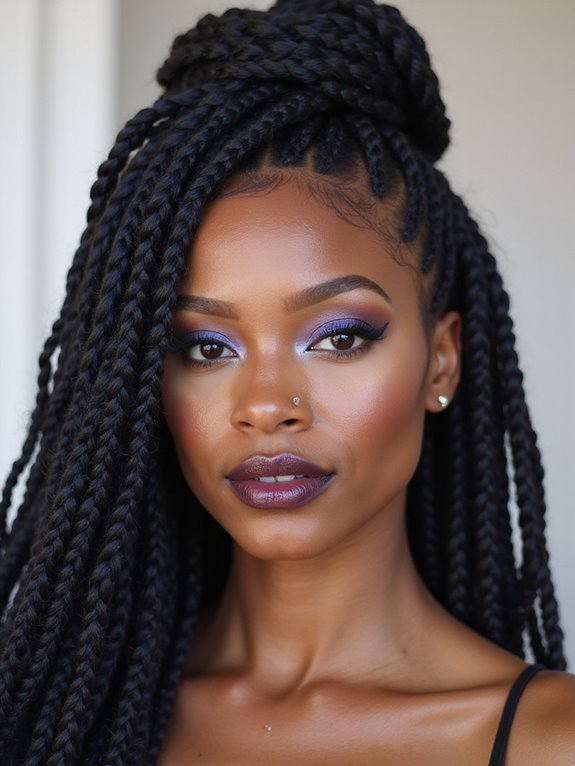
Box braids are the icon: individual three-strand braids sectioned into clean squares, worn for decades as a versatile protective style.
- Endlessly versatile, worn up, down, or in a bun
- Long-lasting with low daily maintenance
- Shield your natural hair for weeks at a time
- Style them countless ways with these box braids
Fine, Versatile Micro Braids
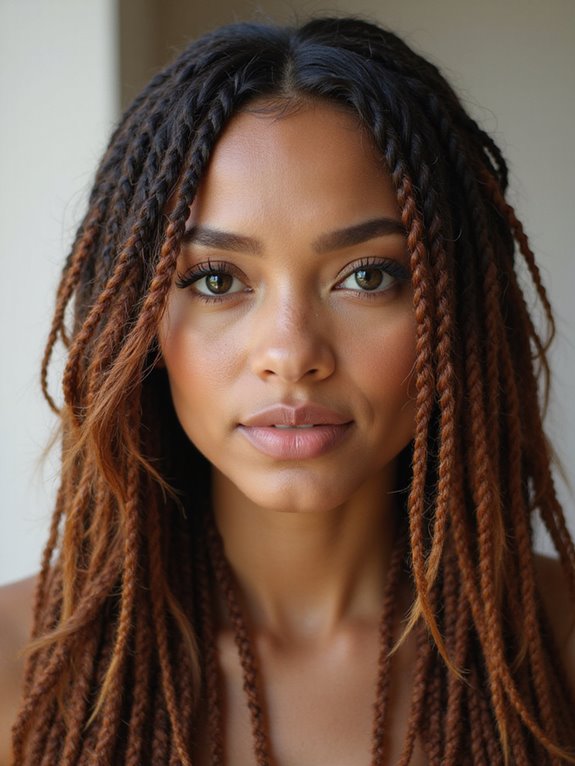
Micro braids are tiny individual braids that move like loose hair while still protecting your strands. They give the most natural, free-flowing look of any braid style and are wonderful for intricate updos.
The trade-off is time and weight. They take hours to install and, because there are so many, can stress the hairline if left in too long. I cap wear at about six weeks and keep the roots moisturized. They are also one of the pricier, more time-intensive installs, precisely because each tiny braid is done by hand, so they are a commitment of both budget and patience.
- The most natural, free-flowing braided look
- Great for detailed updos and half-up styles
- Do not leave them in too long, since the sheer number adds tension
ℹ️Worth Knowing
Box braids and cornrows carry deep cultural history in Black communities, where braiding has long been both an art form and a way to protect and care for natural hair. Wearing and crediting them with that respect matters.
Lightweight Passion and Senegalese Twists

Twists are the featherlight cousins of braids. Passion twists have a soft, coily, bohemian texture, while Senegalese twists are smooth, sleek, and rope-like, and both stay lightweight and gentle on the scalp.
They install faster than many braids and read a little more polished. Passion twists lean romantic and undone; Senegalese twists lean sophisticated. Both pair beautifully with a boho braided look. Because they are lighter than heavy braids, they also tend to be gentler on fine or fragile hair, and they take a few hours less to install than a full head of small braids, which shows up in a slightly lower salon bill too.
- Passion twists: soft, coily, bohemian texture
- Senegalese twists: smooth, sleek, and sophisticated
- Both are lightweight and lower-tension than heavy braids
Cornrows and Goddess Braids
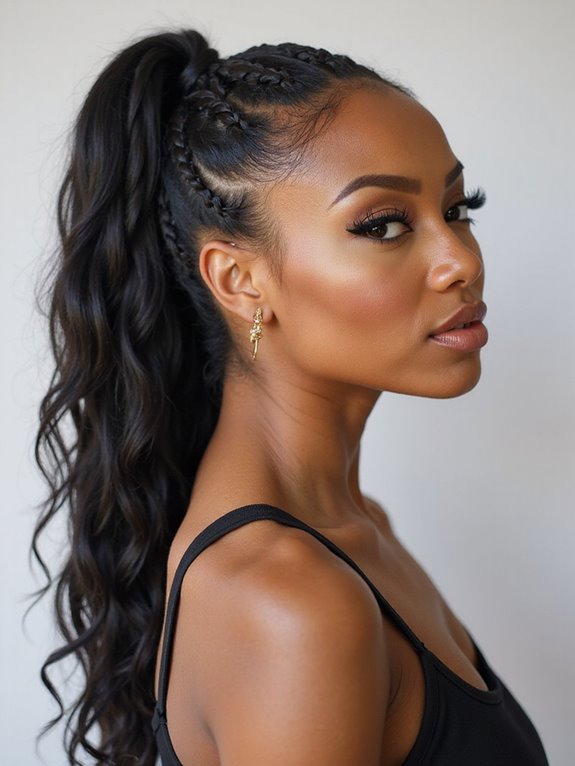
Cornrows are braided close to the scalp in neat rows, and they are as much art as hairstyle. The pattern itself is the design. Feed-in techniques, geometric partings, and curved patterns turn the scalp into a canvas.
They are a foundational protective style and the base for countless others, from braided crowns to feed-in ponytails. A skilled braider can spend hours mapping a single intricate pattern, which is part of why cornrowing is respected as genuine artistry.
Goddess braids are their bolder cousin, thicker, sculptural cornrows worn in statement patterns. Both are protective, long-wearing, and deeply rooted in Black braiding traditions, where braiders have passed these techniques down through families for generations, and these cornrow styles show the range of patterns possible.
Bohemian Braids and Boho Waves
Bohemian braids, often called boho braids, blend the structure of a braid with the freedom of loose, wavy pieces left out. Curls or waves are added along the length for a soft, romantic, undone effect that frames the face beautifully.
You can wear them as boho box braids or knotless braids finished with curly ends, or as a simple loose side braid on looser hair. The one rule is to avoid braiding too tightly, so that relaxed, easy feeling comes through. They are a favorite for weddings and festivals, where the pretty, undone texture really shines.
Classic French, Dutch, and Fishtail Braids
Not every braid is a weeks-long protective style. The classic braids, French, Dutch, and fishtail, are quick, everyday techniques that work beautifully on looser textures and as accents on any hair.
A French braid lies flat and elegant; a Dutch braid sits raised and textured because the strands cross under one another; a fishtail looks complex but comes down to two sections woven together. They are the fastest way to add polish to an ordinary day, and they dress up as easily as they dress down. Best of all, once you learn the basic three, you can do them on yourself in a few minutes flat.
French Braid Updos for Any Occasion
The French braid is the workhorse of everyday braiding, and woven into an updo it turns classic and elegant fast. A single high French braid wrapped into a bun reads polished for the office, two French braids meeting at the nape feel romantic, and a French braid crown suits a wedding.
These lie flat and hold beautifully, keeping flyaways in check, which makes them a favorite for professional settings and special occasions alike. They work best on straight to wavy hair, though a skilled hand can French-braid many textures, and a ribbon woven through adds a festive touch when you want one. Because the braid is anchored to the head, it holds through a long day of dancing or a full shift better than most pinned updos.
Braided Ponytails, Buns, and Half-Up Styles
Some of the most-saved looks are not a full head of braids at all, but braided accents on a familiar style. A braided ponytail adds high impact for low effort, a braided bun secures an updo elegantly for events, and half-up braids give you the best of both worlds.
These work across textures and are quick to do, whether you are braiding your own hair or accenting an install. Browse ideas in these braided ponytails and braided buns.
Braids for Short Hair
Short hair is not a barrier to braids. Cornrows, small feed-in braids, and braided accents all work on shorter lengths, and feed-in techniques let you add braiding hair for length and fullness when you want it.
On short natural hair especially, cornrows and mini braids are a chic, low-maintenance protective option that keeps the hair tucked and growing. They are also a smart bridge style while you are growing out a big chop, giving you something polished to wear at every awkward in-between length.
A skilled braider can build real style on far less length than most people expect. Braiding hair can also be fed in to add length, so even a short natural cut can wear long box braids or a flowing braided ponytail when you want the change.
Common Mistakes to Avoid
The most damaging braid mistakes all come down to tension and time. Braids installed too tightly, the ones that leave you with little bumps or a sore scalp, are the leading cause of traction stress on the hairline. If it hurts, it is too tight, and you should say so in the chair. Leaving braids in too long is the other big one, because as your hair grows and the braids loosen, the weight starts to pull on your roots.
Skipping scalp and edge care while braided shows up later too, so moisturize your scalp, oil your edges gently, and wrap your hair in satin at night to keep frizz and dryness at bay.
Take braids down slowly rather than rushing, since ripping through matted roots causes real breakage, and give your hair a week to rest and rehydrate between protective styles. It also helps to clarify and deep-condition on that off week, before the next install. Done thoughtfully, braids protect and grow your hair. Done carelessly, they can stress it.
Braids That Protect and Express
What runs through all of these is that a good braid does double duty: it looks striking and it protects your hair, tucking your ends away and giving your strands a real rest from heat, combing, and the daily handling that wears hair down over time.
From low-tension knotless braids to sculptural cornrows and quick fishtail accents, there is a braided style for every texture, length, and occasion. That range is exactly why braids never really go out of style.
So which one are you saving for your next appointment, the sleek box braids, the romantic passion twists, or an intricate cornrow pattern? Whichever one you choose, keep the tension gentle and the care consistent, and your braids will give your hair weeks of protected, healthy rest in return.
Keep the Inspiration Going