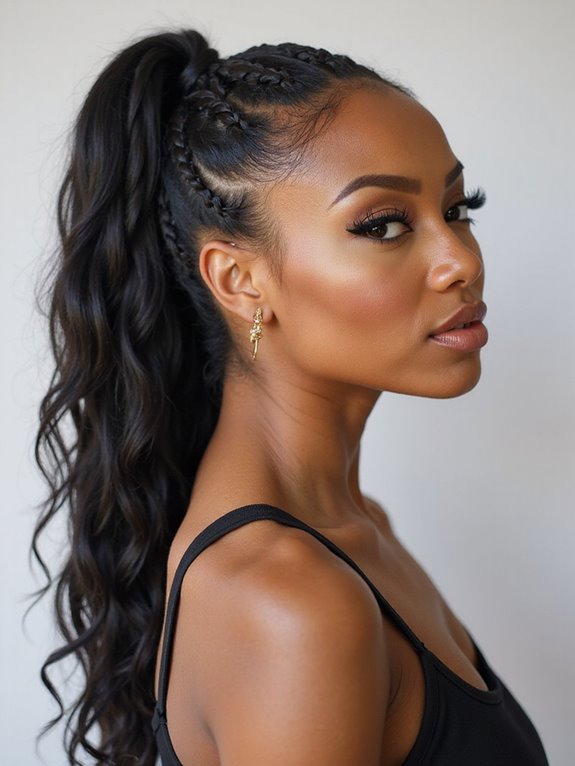
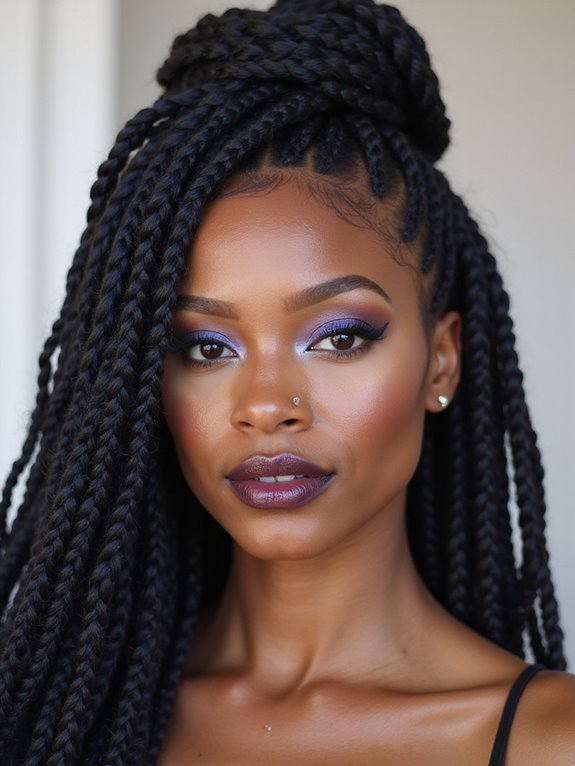
The best advice I ever got about styling textured hair came from a client who’d been doing her own for thirty years: work with the curl pattern, never against it, and let the texture do half the styling for you. That’s exactly why these braided and protective styles look so good so fast, coily and curly hair grips, holds, and builds volume in ways that make a simple twist or cornrow read rich and intentional.
These five styles, defined coils, two-strand twists, cornrows, a braided crown, and box braid looks, are the foundation of easy textured styling, and most double as protective styles that tuck your ends away and cut down on daily manipulation.
For each I’ll walk through how to get it clean, the moisture and edge care that keeps your hair healthy underneath, and how long it lasts. Pick whichever one suits the hair you are working with and the kind of week ahead of you, and let your natural texture carry the look.
Quick Guide to These Styles
| Style | Best for | How long it lasts |
|---|---|---|
| Defined coils | Showing off your curl pattern | A few days, refresh nightly |
| Two-strand twists | Low effort, stretch and definition | Up to a week, or a twist-out after |
| Cornrows | Sleek, off-the-face, protective | 1 to 2 weeks with care |
| Box braids | Long-wear protective style | 4 to 8 weeks |
Defined Natural Coils
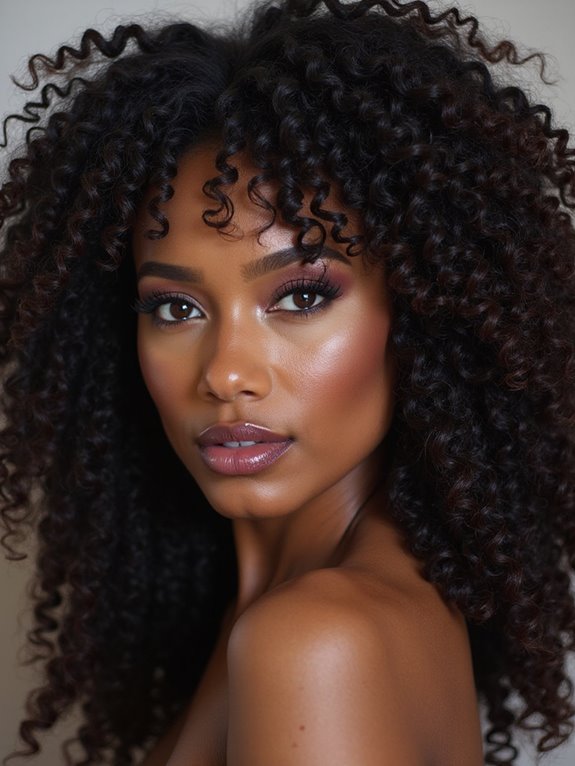
When your curl pattern is already beautiful, the easiest style is one that simply defines what’s there. Finger coils and a wash-and-go let your natural coils spring up shiny and separated, with no braiding skill required, just product and patience while they dry:
- Start on soaking-wet hair so the curls clump; apply a curl cream and a gel in sections, raking then scrunching to encourage definition.
- For finger coils, wrap small sections around your finger to set each coil; for a wash-and-go, just smooth product through and let the pattern form on its own.
- Dry undisturbed (air-dry or a diffuser on low), then gently separate and fluff the roots for volume. Resist touching the hair while it dries, since that is what causes frizz, and refresh the coils each night with a little water and a satin bonnet. My natural hair styling guide goes deeper on definition.
Quick Two-Strand Twists

Two-strand twists are the workhorse of easy textured styling, low-effort, beginner-friendly, and useful two ways at once. Worn as twists, they’re a tidy protective style that stretches the hair and shows definition; taken down after a day or two, they leave behind a beautiful twist-out with stretched, defined waves.
Two looks from one style: twists and the twist-out
The method is forgiving. Part the hair into sections, split each into two strands, and wind them around each other to the ends, smoothing a little cream or butter through as you go so they hold and stay moisturized.
Bigger sections give chunky twists and a faster style; smaller sections give more definition and a fuller twist-out later. Either way, work on damp, moisturized hair and seal the ends so they don’t unravel. It’s the style I recommend most to anyone new to doing their own hair, since mistakes barely show and the payoff is high. Sleep in a satin bonnet to keep them fresh.
Neat Versatile Cornrows

Cornrows are a classic for a reason: sleek, off the face, and truly protective, they keep your hair tucked and tidy for a week or two while looking polished the whole time. They carry deep cultural history as well, and the styling possibilities, straight back, curved, geometric parts, are endless once you have the basic technique.
The braid itself is an underhand three-strand fed with hair from the scalp as you go, which takes practice but rewards it.
- Part a clean row, then braid close to the scalp, adding small amounts of hair to each strand as you move back, keeping the tension even and never tight at the hairline.
- Straight-back rows are the simplest starting point; once comfortable, try curved or geometric parts for more interest.
- Moisturize the scalp and edges while they’re in, and take them down by a week or two to protect your hairline. My cornrow guide covers patterns to grow into.
A protective-style myth worth correcting:
❌ Myth: Protective styles automatically grow your hair.
✅ Reality: Not on their own. Protective styles help by reducing daily manipulation and tucking your ends away, which lets hair retain length instead of breaking. But they only work if the hair underneath is kept moisturized and the tension is gentle. A too-tight braid left in too long does the opposite, it stresses the edges and causes breakage. Protection comes from the care, not just the style.
Elegant Half-Up Braided Crown

When you want something that feels special with very little fuss, a half-up braided crown is the answer, a few braids gathered and pinned up and around like a halo, with the rest of your hair, in a fro, twist-out, or braids, left to do its thing below.
Why a crown suits textured volume so well
It works beautifully on textured hair because your natural volume gives the crown body and the loose part fullness, so it looks lush rather than flat.
Take two or three braids or twists from the front and sides, wrap them up and over the crown of the head, and pin them in place, tucking the ends under. Leave the rest down in whatever texture you’re wearing. It dresses up a wash day in minutes and is lovely for an event or just feeling put-together. Keep the gathered braids comfortably loose so the crown doesn’t pull on your edges. My braided crown guide shows more ways to wrap it.
Versatile Box Braid Styles
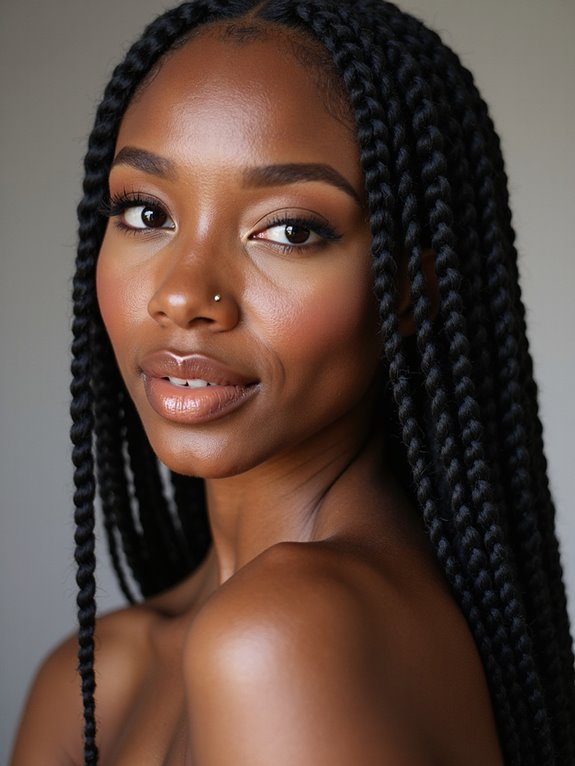
Box braids are the long-wear protective MVP, individual braids, often with added hair, that tuck your natural hair away for weeks and then become a styling base all their own. Once they’re in, the easy looks are endless and take seconds.
Why box braids buy you weeks of easy mornings
That’s the real beauty of box braids for a busy life: the hard part (the install) buys you a month or more of two-minute styles.
Gather them into a high bun or a low one, sweep them into a half-up, pull them into a ponytail, or just wear them down, each takes moments and looks done. Keep the styling gentle on your edges, since the added length is heavy and a tight, high style worn daily can strain the hairline.
Moisturize your scalp and the braids while they’re in, sleep on satin, and take them down by the eight-week mark to keep your natural hair healthy. My box braid guide covers styling them every way. The braids also take well to accessories, a few gold cuffs or a wrapped section, when you want to dress them up further.
“If you only build one habit around protective styles, make it the satin bonnet at night. Cotton pillowcases quietly undo a whole wash day, drawing moisture out of your hair and roughing up the cuticle while you sleep. A bonnet or a satin pillowcase keeps twists, coils, and braids fresh for days longer and protects the hard work you put in. It is the cheapest, highest-impact thing you can do for textured hair.”
Matching the Style to Your Wash Day
One reason these five cover so much ground is that they sit at different points on the time-and-commitment scale, so the right pick really depends on what your week looks like. On a busy stretch when you barely have ten minutes, a wash-and-go for defined coils asks for nothing but product and drying time, and it shows your curl pattern at its best.
When you want a few low-effort days that also stretch and protect the hair, two-strand twists are the sweet spot, quick to put in, and they hand you a twist-out for free when you take them down. And when you truly want to set it and forget it, cornrows or box braids buy you a week to two months of mornings where styling takes seconds.
It also helps to think about where the style sits on the protective scale. A wash-and-go leaves your ends out and exposed, so it is lovely but not protective; twists and cornrows tuck things away more; box braids fully protect your natural hair for the longest stretch.
Many people rotate through all of them across a month, a low-manipulation wash-and-go week to let the edges rest, then a protective stretch in box braids or cornrows, then back again. Choosing with both your schedule and your hair health in mind, rather than just the look, is what turns these from pretty styles into a real, sustainable routine for your texture.
Caring for Your Hair Underneath
The thing that makes all of these styles truly good for your hair, not just convenient, is the care underneath, and it comes down to two priorities: moisture and gentle tension. Textured hair is naturally drier because the scalp’s oils travel down a coiled strand less easily, so keeping it hydrated is the foundation of healthy braids and twists.
Moisturize before you style (damp hair with a leave-in or cream is your starting point for almost everything here), and keep moisturizing while a protective style is in, misting with water and sealing the scalp and lengths with a light oil every few days. At night, a satin or silk bonnet or pillowcase is non-negotiable; cotton wicks moisture and roughs up the cuticle, undoing your work while you sleep.
The second priority is protecting your edges and hairline, which is where the most common, and most preventable, damage happens. Braids, twists, and box braids should never be installed tight enough to hurt or to make little bumps along the hairline; gentle tension is the rule, and a style that pulls is a style to loosen or take down.
Don’t leave protective styles in too long either, one to two weeks for cornrows, up to eight for box braids, since buildup and the weight of long braids eventually stress the roots. Rotate your styles, give your hairline rest days in a low-manipulation look like a wash-and-go, and these braids will protect your hair exactly as they’re meant to. If you ever notice thinning at the temples, ease up on the tension and the frequency.
Easy Braided Styles for Black Women, Answered
?Which of these styles is easiest for a beginner?
Two-strand twists, hands down. The technique is forgiving, mistakes barely show, and you get two looks from one style, the twists themselves and a twist-out when you take them down. A wash-and-go for defined coils is also nearly foolproof, since it’s mostly about product and letting the hair dry rather than any braiding skill.
?How do I keep braided styles from drying out my hair?
Moisture is everything with textured hair. Start on damp, moisturized hair, and while a style is in, mist with water and seal the scalp and lengths with a light oil every few days. Sleep in a satin or silk bonnet, never cotton, which pulls moisture out. Keeping the hair hydrated underneath is what makes a protective style actually protective.
?How long can I leave protective styles in?
It depends on the style: cornrows are best taken down within one to two weeks, while box braids can stay in four to eight weeks. Leaving them in longer risks buildup, matting, and stress on your edges from the weight. When you take them down, give your hair a wash, a deep condition, and ideally a few rest days before the next style.
?How do I protect my edges with braided styles?
Gentle tension is the rule. No braid, twist, or box braid should ever be tight enough to hurt or to raise little bumps along your hairline, that’s a sign of too much tension and a real risk to your edges over time. Keep styles loose where they meet the hairline, avoid the same tight style every day, and rest your edges in low-manipulation looks between protective styles.
?Do these styles work on looser curl patterns too?
Yes, though they behave a little differently. Looser curls and waves can do all five, but twists and twist-outs may hold less defined and drop faster, and box braids and cornrows may need a bit more product for grip. The same principles apply across textures: start on moisturized hair, keep the tension gentle, and work with your pattern rather than against it.
Style That Works With Your Texture
What ties all five of these together is that they lean into what textured hair does naturally rather than fighting it, the coils that spring, the strands that grip, the volume that gives a braid body. That’s why they look so good so quickly: a two-strand twist or a row of cornrows reads rich and finished in a way the same effort rarely buys on other hair types. And most of them protect your hair while they style it, which is the best of both worlds.
Start with the one that matches your week, a wash-and-go on a busy stretch, twists for a low-effort few days, cornrows or box braids when you want to set it and forget it. Keep the moisture up, keep the tension gentle on your edges, and rotate so your hairline gets to rest. Which of these is going to make your next wash day easier?
Keep Reading