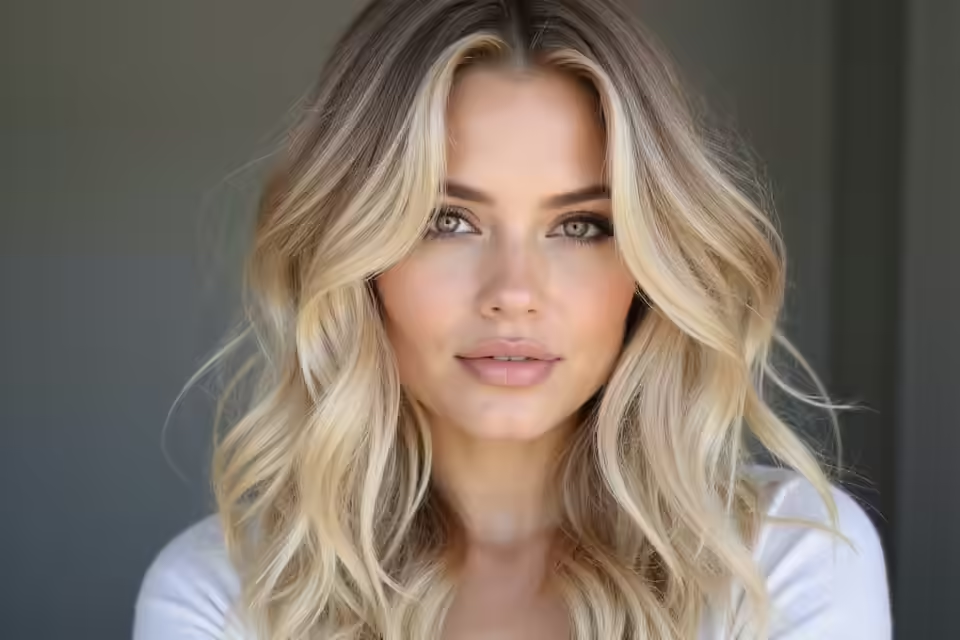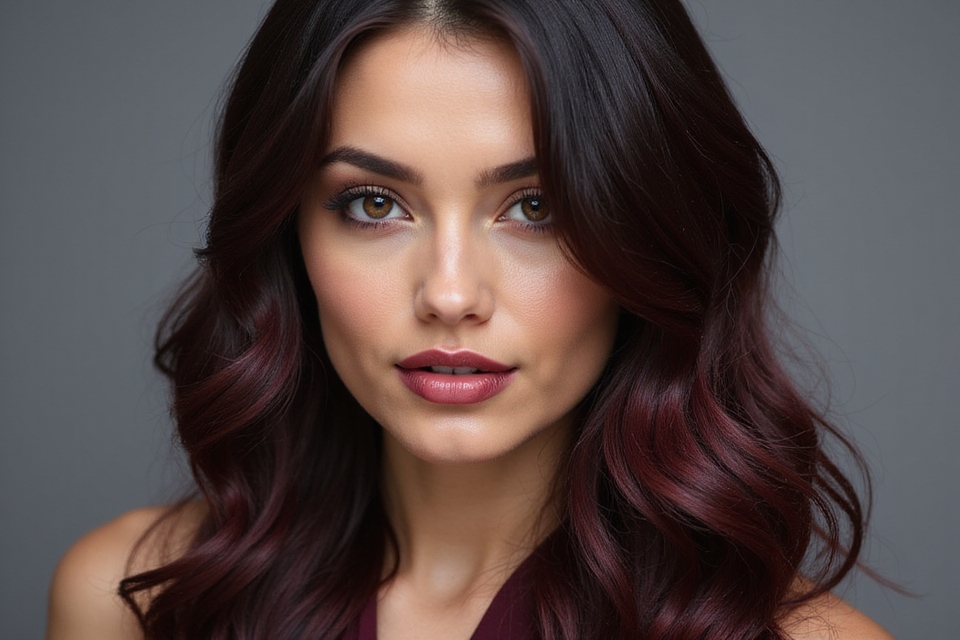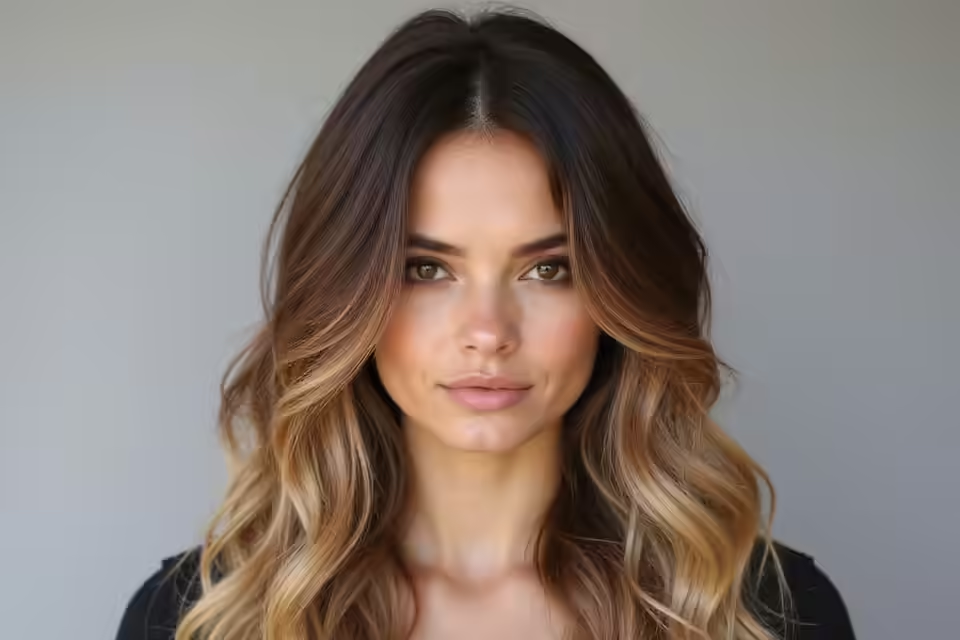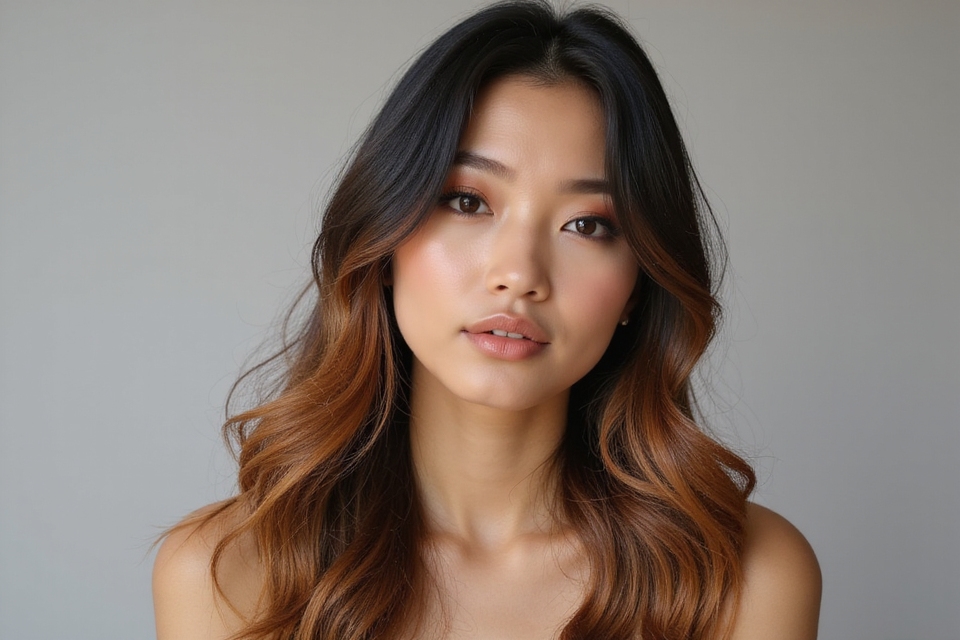

Thick hair is a blessing that does not always feel like one, especially when long lengths turn heavy, hot, and hard to handle. The fix is rarely going short, it is landing at the shoulder, where the weight comes off but the body and movement stay.
These thirteen shoulder hairstyles for thick hair all work with density rather than against it, using layers, texturising, and the right shape to tame bulk while keeping the lushness. Each comes with the cut detail that makes it genuinely manageable.
Key Takeaways
- Internal layers and texturising remove weight so thick hair moves instead of sitting blocky.
- Razoring and point-cutting suit thick hair (unlike fine hair) for a lighter, piecey feel.
- Thick hair holds a wave, curl, and blunt fringe beautifully, so it photographs full and rich.
- Graduated and inverted shapes channel the bulk at the back into a clean silhouette.
- Expect regular trims, because thick hair grows fast and blunt lines show it.
| Cut | How it handles thickness | Effort |
|---|---|---|
| Blunt bob + layers | Strong shape, layers lighten the face | Medium |
| Layered shag | Heavy layering removes the most bulk | Low, air-dry |
| A-line / inverted | Graduation flattens a bulky back | Medium |
| Razored choppy bob | Razoring breaks up density | Low |
| Wavy or curly lob | Turns volume into lush texture | Low |
- your hair feels heavy or hot worn long
- you want movement without losing density
- you are happy with a quick blow-dry or air-dry
- you want zero styling time (thick hair needs a little shaping)
- you love a sleek, pin-straight finish daily
- you are not ready for the regular trims thick hair needs
13 Shoulder Styles for Thick Hair
Blunt Bob With Face-Framing Layers
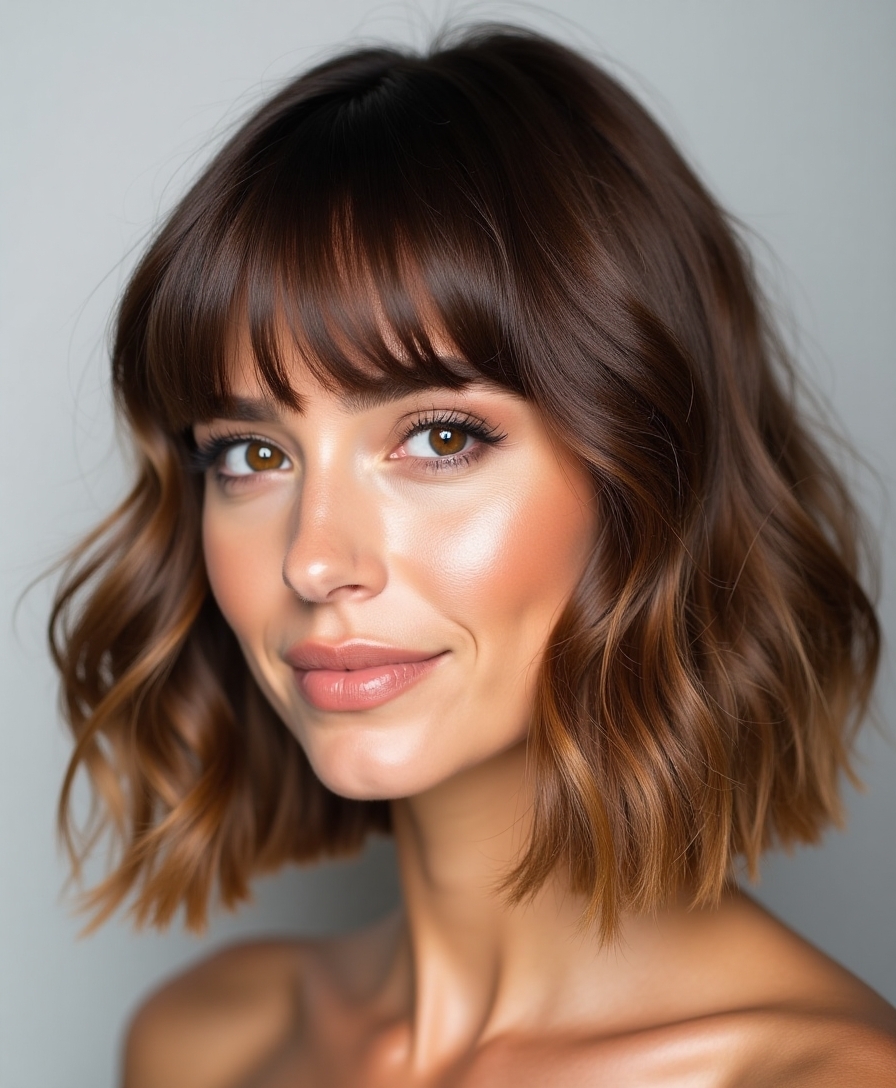
A blunt bob gives thick hair a strong, deliberate shape, but on its own all that density can sit like a heavy helmet. A few face-framing layers are the antidote, removing just enough weight around the face to let the cut move.
The balance matters: keep the perimeter blunt for that dense, healthy edge, but add subtle internal layers so it swings. Thick hair is one of the few textures that can carry a truly blunt line without looking thin, which is exactly why it works here.
Ask your stylist to remove weight from inside rather than thinning the outline, and to cut the shortest face-framing piece at your cheekbone. A blow-dry with the ends turned slightly under finishes it, and it stays sharp with a trim every six to eight weeks.
Textured Lob With Subtle Waves
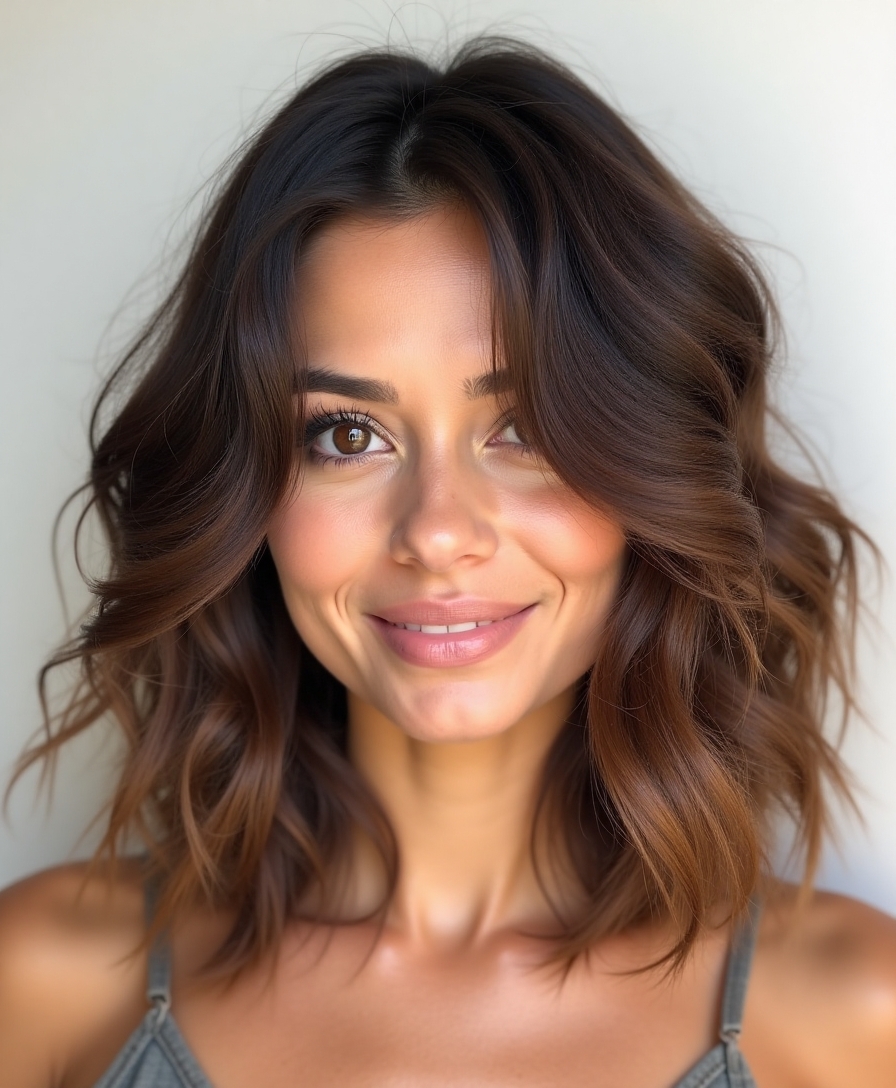
Thick hair carries a lob beautifully because there is so much natural body to work with, and texturising through the lengths is what keeps it from looking blocky or pyramid-shaped.
Ask for this
Request internal texturising to remove bulk, then add a soft wave so the density reads as lush rather than heavy. Air-dry with a wave spray for the easiest finish, and explore the full range of shapes in these long bob cuts.
Asymmetrical Bob With Deep Side Part
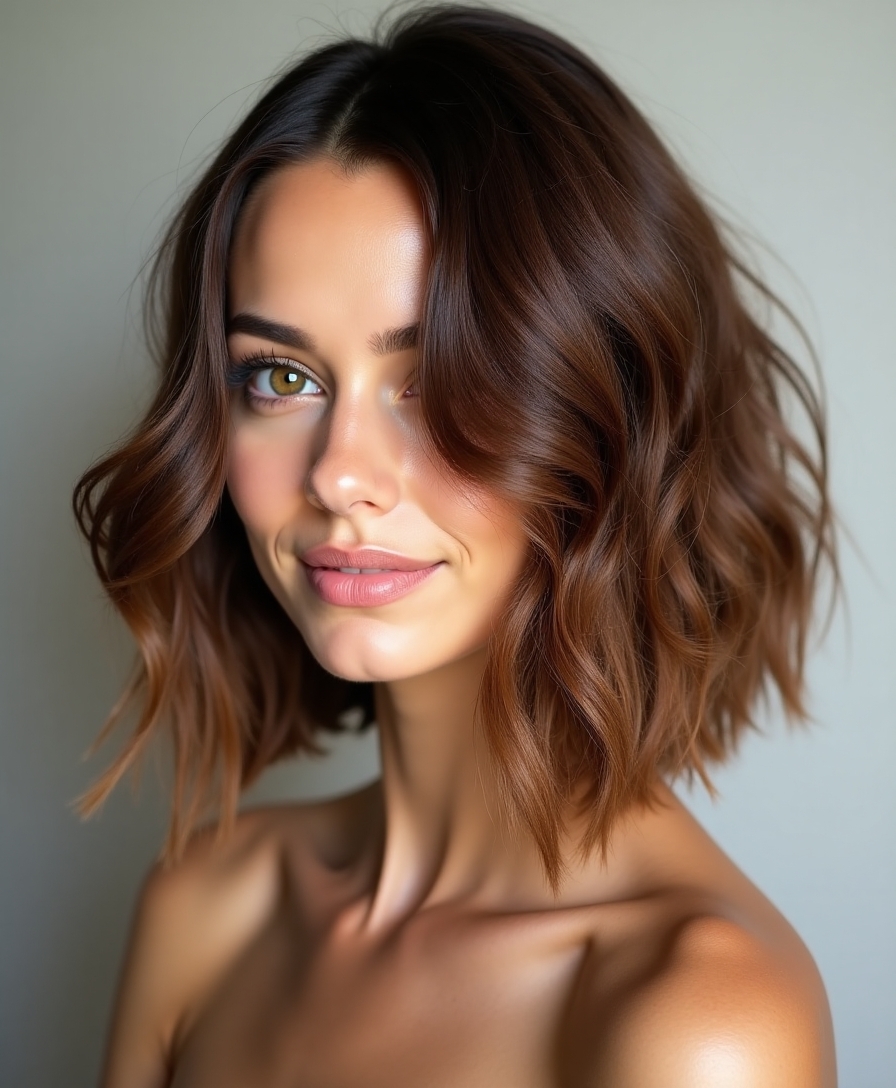
An asymmetrical bob uses thick hair’s density to hold a bold, graphic line that finer hair would struggle to keep. Cutting one side longer than the other builds in drama and a flattering diagonal.
A deep side part adds volume on the fuller side, and the clean ends keep the whole shape sharp. Thick hair holds the asymmetry so well that it looks deliberate even air-dried, which makes it a low-effort statement.
Layered Shag With Curtain Bangs
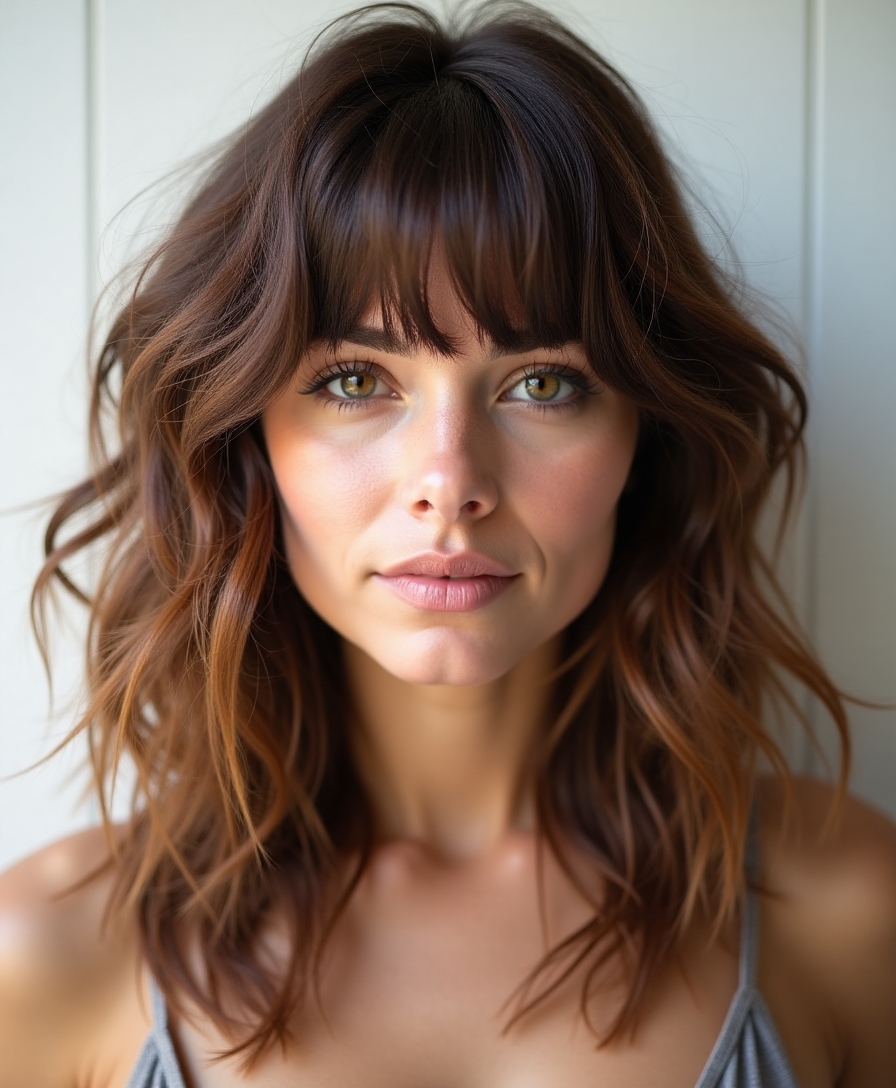
The shag was practically invented for thick hair: heavy layering removes bulk and adds movement, while curtain bangs frame the face. Together they tame density without thinning it into nothing.
- Ask for choppy internal layers throughout the lengths.
- Add a curtain fringe blended into the face-framing layers.
- Style on second-day hair with a little paste for that undone finish.
Read more on the cut in layered haircuts, and on the fringe in these curtain bangs.
Sleek A-Line Bob With Graduated Layers

An A-line bob, longer in front and graduated shorter behind, channels thick hair into a clean, controlled silhouette. The graduation quietly removes the weight at the back where thick hair tends to pile up and look bulky.
Flat-iron it sleek to show off the angle, and ask for enough internal graduation that the back lies flat rather than ballooning. It is the polished, architectural option for thick hair.
Beachy Waves With Long Layers
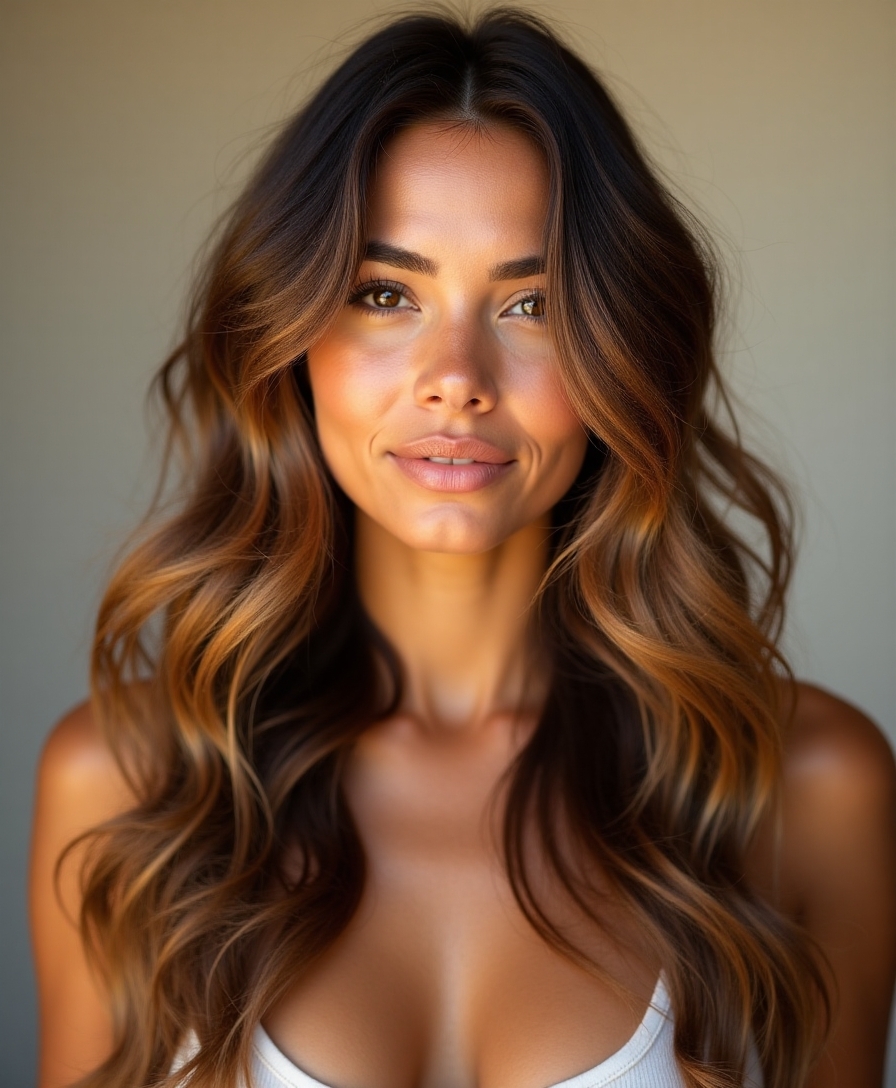
Long layers let thick hair move, and beachy waves turn all that density into lush, full texture rather than a heavy block. This is thick hair at its most effortless and flattering.
Ask for long layers to lighten the ends without sacrificing the body, then mist sea-salt spray and scrunch in soft waves. The fullness that frustrates you when the hair is straight becomes the best part once it is waved.
Because thick hair holds a wave for days, this is a genuinely low-maintenance look once it is cut right, just refresh with a little spray and your fingers on the second day.
Choppy Bob With Razored Ends

Razored, choppy ends are a thick-hair favourite because they break up density and create piecey, modern texture, so the cut feels lighter without losing any length.
Why razoring suits thick hair
Unlike fine hair, which frays when razored, thick hair takes a razor beautifully, the technique thins and separates the ends for an undone finish. Work texturising paste through the tips to define them, and see more of this energy in these choppy bob hairstyles.
Classic Bob With Blunt Bangs
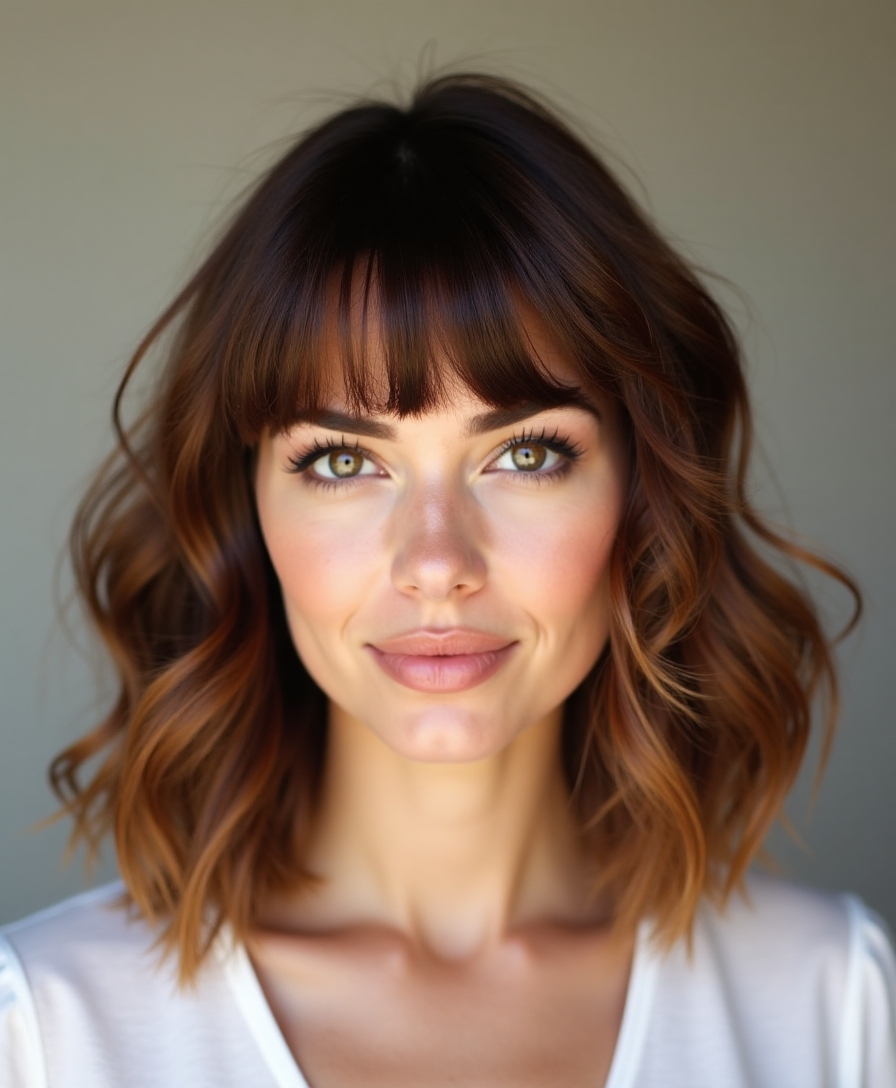
Thick hair is the ideal canvas for a full blunt fringe, because it has the density to make the bangs look rich and lush rather than sparse and stringy. Paired with a classic bob, it is a bold, graphic look.
Keep both the bob and the fringe blunt and dense, and be ready for regular trims, since clean lines on full hair show grow-out fast. The payoff is a striking, intentional style that few other textures can pull off.
Tousled Lob With Lived-In Texture

Lean all the way into the volume with a tousled, lived-in lob that treats thickness as the feature, not the problem. The undone texture reads cool and needs almost no daily effort.
- Ask for plenty of internal texturising so the lob moves freely.
- Rough-dry most of the way, then finger-style rather than brush.
- Work a little paste through the ends for separation.
Inverted Bob With Stacked Back
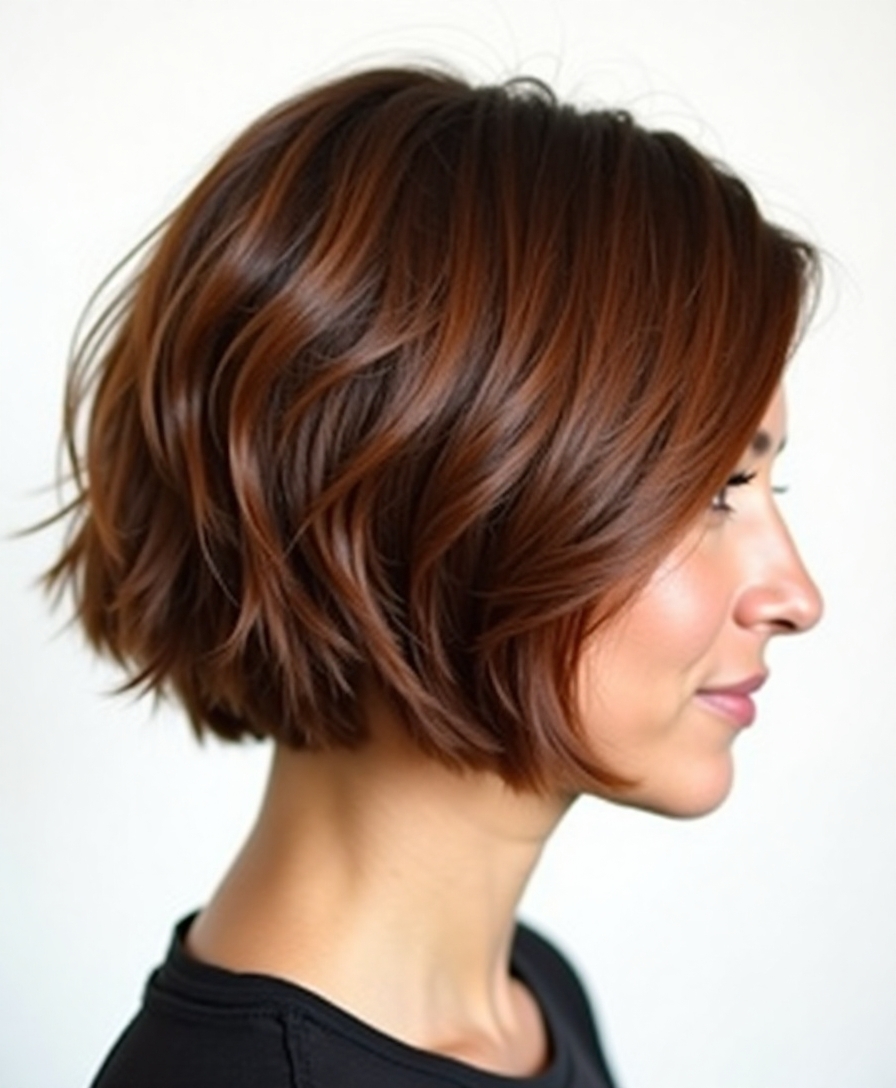
An inverted bob stacks the back short and angles longer to the front, which gives thick hair a structured shape and stops the back from looking blocky, a common thick-hair frustration.
The stacking channels all that density into a sleek, deliberate silhouette. Blow-dry the back rolling under to set the stack and smooth the front pieces forward for a clean, modern line.
Wavy Lob With Side-Swept Fringe

A side-swept fringe softens a wavy lob and uses thick hair’s natural body to hold the sweep all day, where fine hair would go limp by noon. It is romantic and surprisingly easy.
Wave the lob, sweep the fringe across from a deep part, and let the density do the work of keeping everything in place. There is no fighting for volume here; the challenge with thick hair is usually the opposite.
A drop of lightweight oil on the ends keeps thick hair glossy rather than frizzy, and a flexible spray holds the sweep without stiffness.
Voluminous Layers With Soft Curls

Thick hair holds a curl like nothing else, so soft, voluminous curls through long layers look full, bouncy, and last well into the night. This is the glamorous end of the thick-hair spectrum.
Keep the curls from going pyramid
Layering is what stops big curls from piling into a triangle at the bottom, so ask for plenty of it. Set with a wand and brush out for soft volume rather than tight ringlets, and the density means the curls hold far longer than on fine hair.
Modern Shag With Feathered Ends

A modern shag with feathered ends softens thick hair’s edges while keeping its volume, the feathering lightening the perimeter so the cut flows rather than sits heavy.
Ask for feathered, softly graduated layers rather than blunt chops, cut to your texture. Scrunch a little cream through and air-dry for that easy, feathered movement, and the cut largely styles itself.
Managing Thick Hair Day to Day
The right cut does most of the work, but a few habits keep thick hair easy. Rough-dry it most of the way before you style, since thick hair holds water and takes forever to air-dry fully, which is what leaves it looking heavy and flat at the roots.
Use a lightweight oil or cream on the ends rather than the roots to control frizz without weighing it down, and lean on texture and salt sprays over heavy mousses. Book trims every six to eight weeks, because thick hair loses its shape almost as fast as it grows.
Frequently Asked Questions About Shoulder Hairstyles For Thick Hair
What is the best shoulder-length cut for thick hair?
A layered shag or a textured lob. Both use internal layering to remove the bulk that makes thick hair feel heavy, while keeping the body and movement. The shag lightens the most; the lob keeps it a little more polished.
How do I make thick hair less bulky at the shoulders?
Ask for internal layers and texturising, or razored ends, to thin the weight from inside without losing length. Graduated and inverted shapes also flatten a bulky back. Avoid one-length blunt cuts with no layering, which sit like a block.
Does thick hair need more frequent trims?
Yes. Thick hair grows quickly and loses its shape as the weight returns, so a trim every six to eight weeks keeps layers and lines working. Skipping trims is what makes a good thick-hair cut feel heavy again.
Can thick hair pull off bangs?
Beautifully. Thick hair has the density to make a full blunt or curtain fringe look rich rather than sparse. The only thing to plan for is regular fringe trims, since the bangs grow fast along with the rest.
Work With Your Thickness, Not Against It
The shoulder length exists for exactly this: it lets thick hair breathe without sacrificing the body most people would love to have. Choose a layered or textured shape, keep up with trims, and the density that frustrates you long becomes the best thing about your hair.
Follow along on Pinterest for more thick-hair cuts that actually behave, and save this one for your next salon visit.