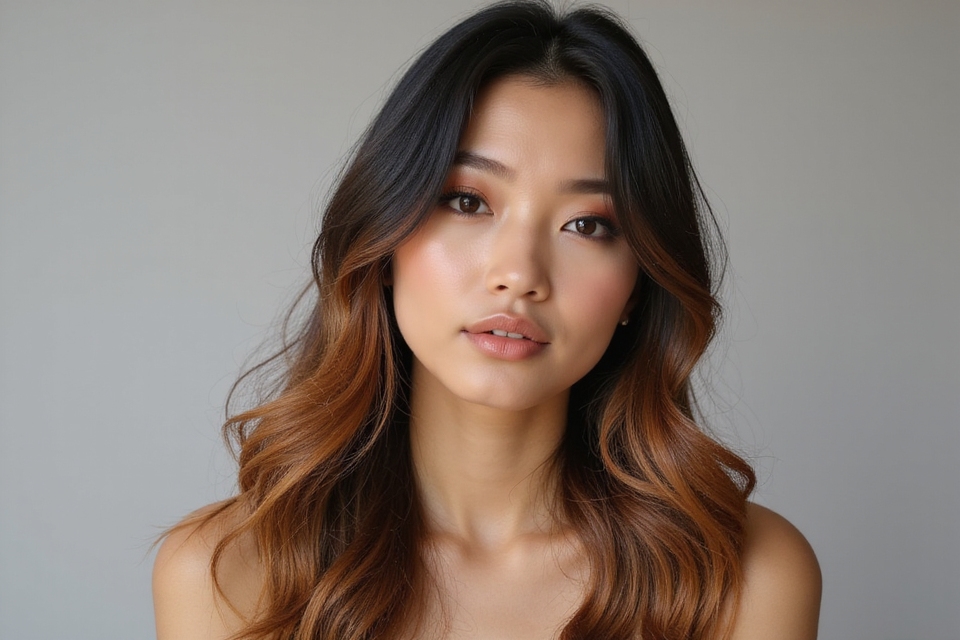
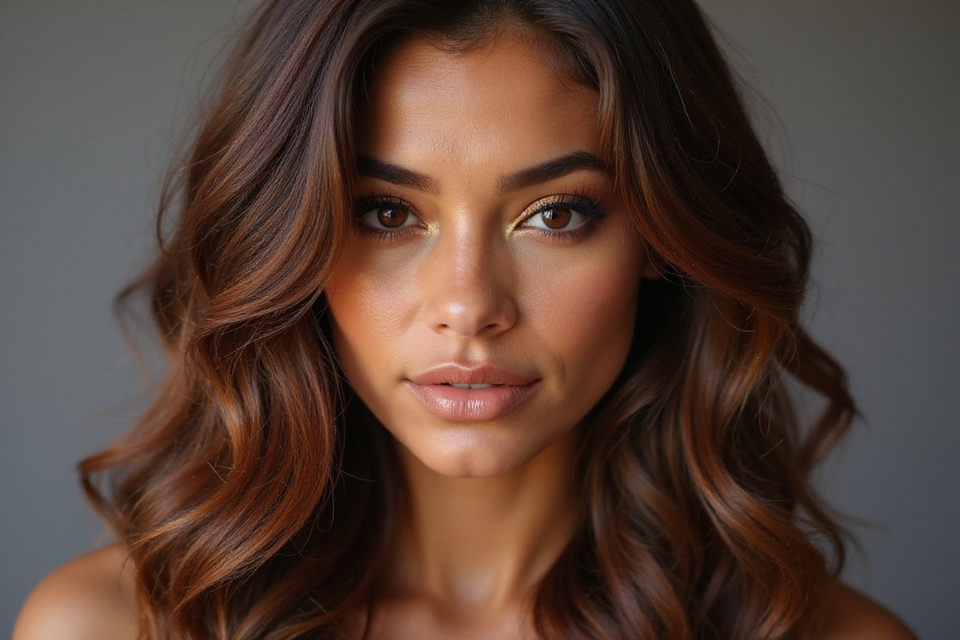
The first time I glossed a client’s over-lightened, ashy ‘blonde’ back to a warm honey-caramel, she teared up at the mirror, because for the first time her hair looked like it belonged to her face. That’s the difference the right color makes on brown skin: the wrong tone can leave you looking gray and drained, a ghost of yourself, while the right one lights your whole complexion from within.
Brown skin is made for rich, warm color, and it wears shades that pale skin can only dream of. Below are the tones that glow, from luxurious chocolate to fiery red to unexpected plum, plus how to read your own undertone so you choose a color that makes you glow, not ghost.
Hair Color for Brown Skin, the Essentials
- Brown skin has undertones too, warm/golden, olive, or red, and matching your hair to yours is what makes color glow instead of wash you out.
- Warm, rich shades, chocolate, honey, caramel, copper, auburn, and mahogany, flatter most brown skin by echoing its natural warmth.
- The ‘ghosting’ trap is cool, ashy tones and over-lightening to gray, which drain warmth from the face; keep warmth in the color.
- Bold colors, burgundy, plum, deep red, and even pastels, look beautiful on brown skin when the depth and warmth are right.
- Textured and curly hair needs gentle lifting, bond-builders, and extra moisture, since lightened coils run drier.
Why Undertone Is Everything
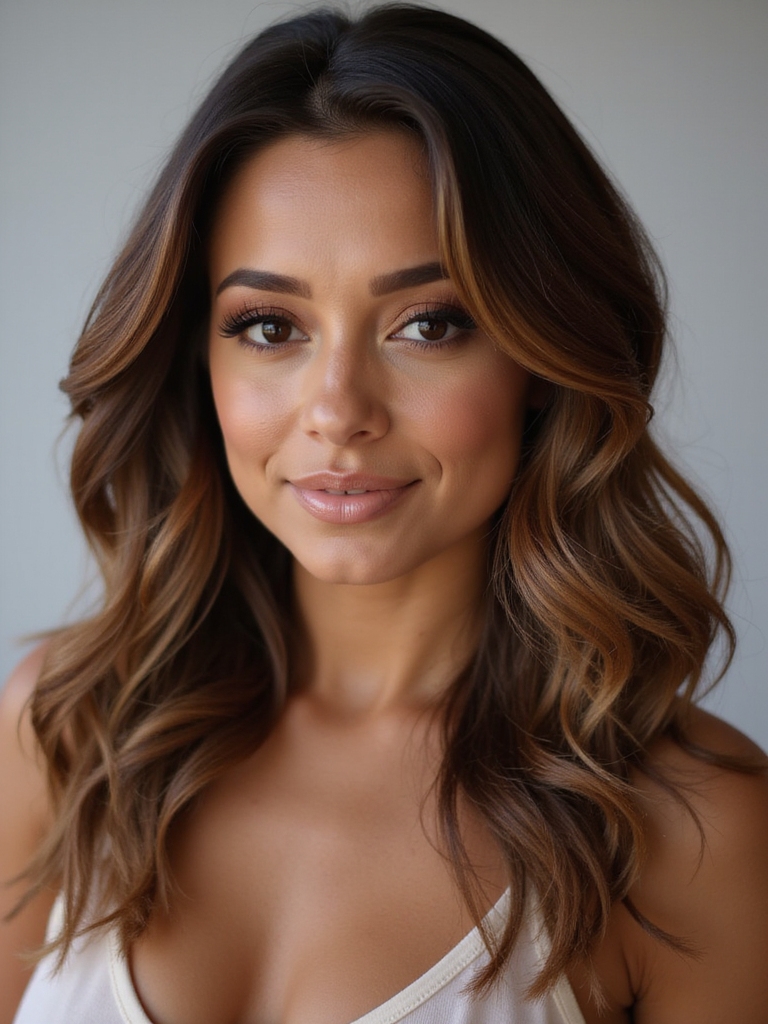
Brown skin is not one color, and neither is its undertone. Deep and medium-brown complexions can run warm (golden, yellow, or red undertones), olive (a green-gold cast), or neutral, and that undertone, not the depth of your skin, is what decides which hair colors glow on you. Matching warm hair to warm skin, and keeping cool tones soft, is the whole secret.
A quick way to read yours: glance at your inner-wrist veins in good light and notice which jewelry flatters you. Greenish veins and gold jewelry point warm; a mix points neutral or olive. When in doubt, warm-leaning color is the safer, more flattering bet on brown skin.
- Brown skin runs warm, olive, or neutral; undertone guides the color.
- Depth of skin matters less than undertone here.
- Green veins and flattering gold jewelry point warm.
- Warm-leaning color is the safer bet when unsure.
Choosing Complementary Colors
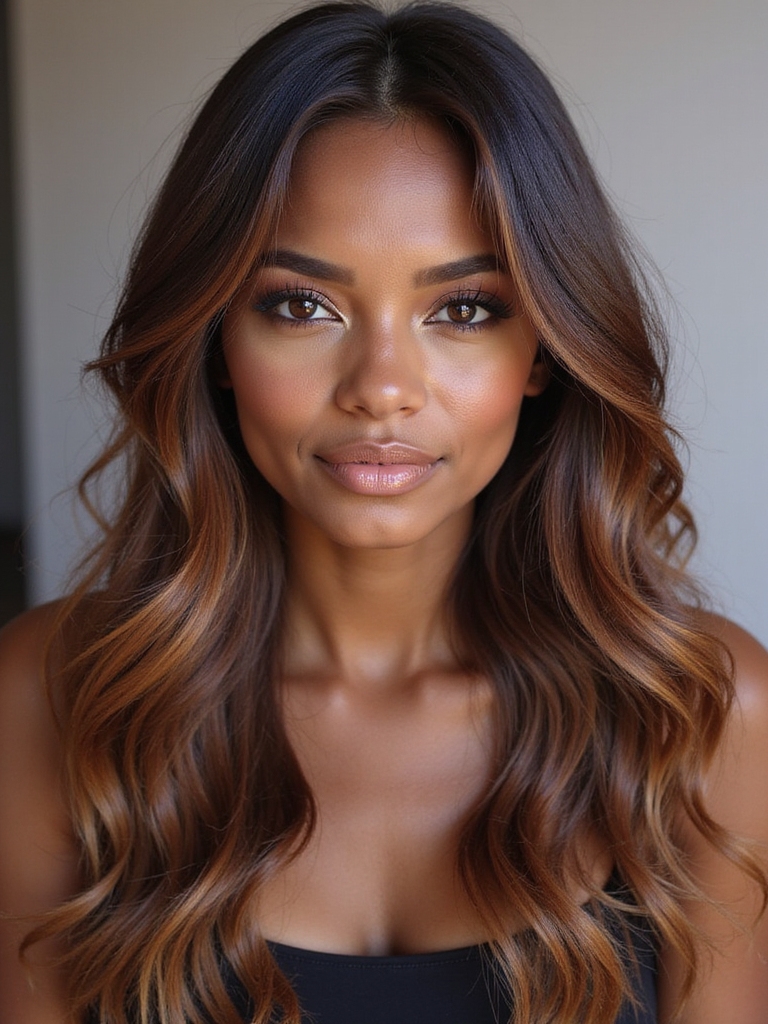
The colors that make brown skin glow are the ones that share its warmth: golds, coppers, caramels, warm browns, and warm reds all echo the skin and light the face. The colors that ‘ghost’ you are cool and ashy, stark platinum, blue-black, and drab mushroom tones that pull warmth out of the complexion and leave you looking gray.
This doesn’t mean you can never wear a cool tone; it means keeping warmth somewhere in the color, or glossing to add it back, so your face stays lit. If a shade makes your skin look dull or ashen in the mirror, that’s the ghosting effect, and warming the tone will fix it.
- Warm golds, coppers, caramels, and warm browns light the face.
- Cool, ashy, and drab tones can drain and gray the complexion.
- Keep warmth in the color, or gloss to add it back.
- Dull or ashen skin in the mirror means the tone is too cool.
🅰️Glows
Warm, rich, shiny tones, chocolate, honey, caramel, copper, auburn, warm black, that echo the skin and light the face.
🅱️Ghosts
Cool, ashy, flat tones and heavy over-lightening that pull warmth from the complexion and leave it looking gray.
How to Choose Your Perfect Shade
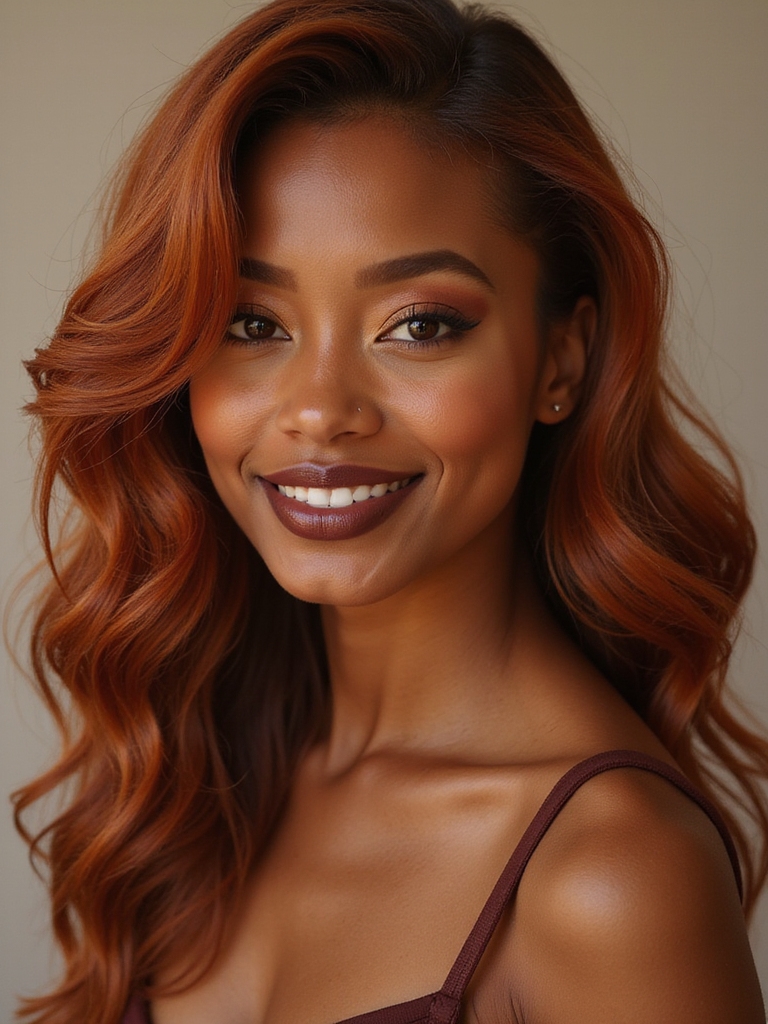
Beyond undertone, two things guide the perfect shade: how much contrast you want with your skin, and how much upkeep you’ll keep up with. High contrast (light hair on deep skin) is striking but shows regrowth and needs more care; low contrast (rich tones close to your depth) is softer and lower-maintenance.
Contrast and Upkeep
Think about your eyes, too, since warm browns and golds bring out brown and hazel eyes beautifully. And be honest about maintenance, because lightening deep hair takes commitment.
In my chair, I always start brown-skinned clients with their undertone and their lifestyle, then find a shade that flatters both, rather than chasing a photo that may not suit them.
Luxurious Chocolate Browns
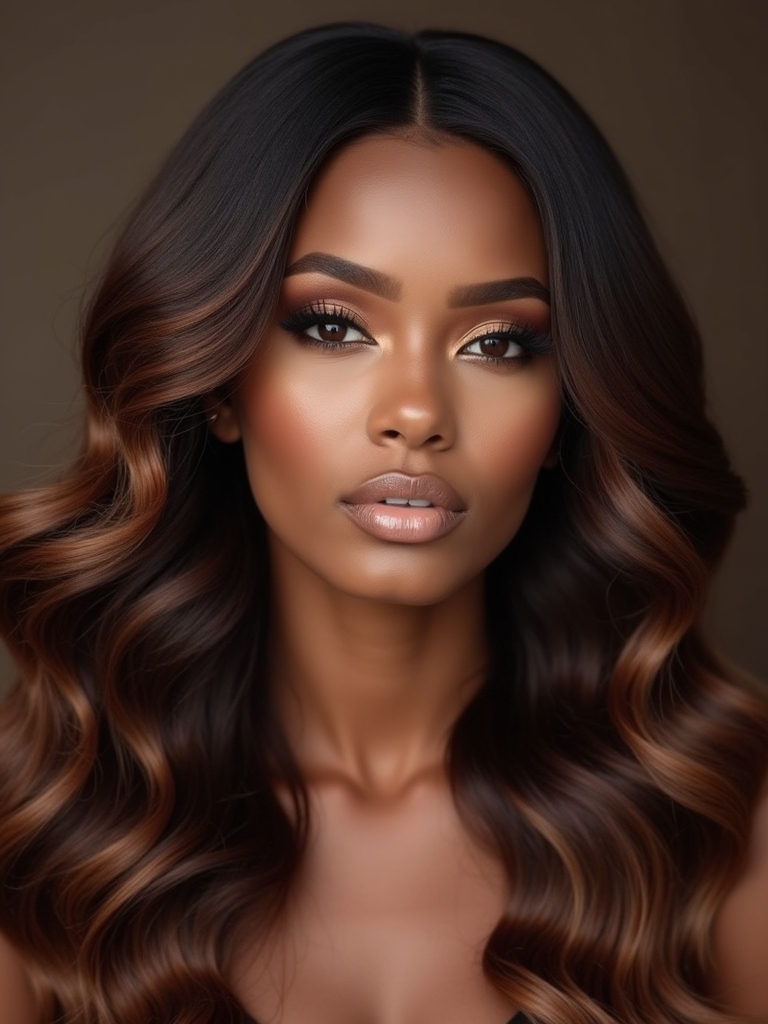
Rich chocolate brown is a near-universal winner on brown skin: deep, glossy, and warm enough to flatter without any lightening at all. Its warmth makes the complexion glow, the high shine reads healthy and expensive, and because it’s close to most natural bases, it’s among the lowest-maintenance colors you can choose.
Clients ask me for chocolate more than any other brown, and it rarely misses. A warm, coffee-leaning chocolate suits warm and neutral undertones; olive skin can take a slightly cooler chocolate as long as it stays rich, not ashy. A warm gloss every eight weeks or so keeps it glassy. See chocolate brown ideas.
A few terms to help you talk to your colorist.
📖Undertone
The warm, olive, or neutral cast beneath your skin’s depth; the real guide to which colors flatter you.
📖Gloss
A semi-transparent tone that adds warmth and shine and resets faded color; the cheapest way to keep color glowing.
📖Ghosting
When a too-cool or over-lightened color drains warmth from the face and leaves the skin looking gray.
Golden Honey Highlights
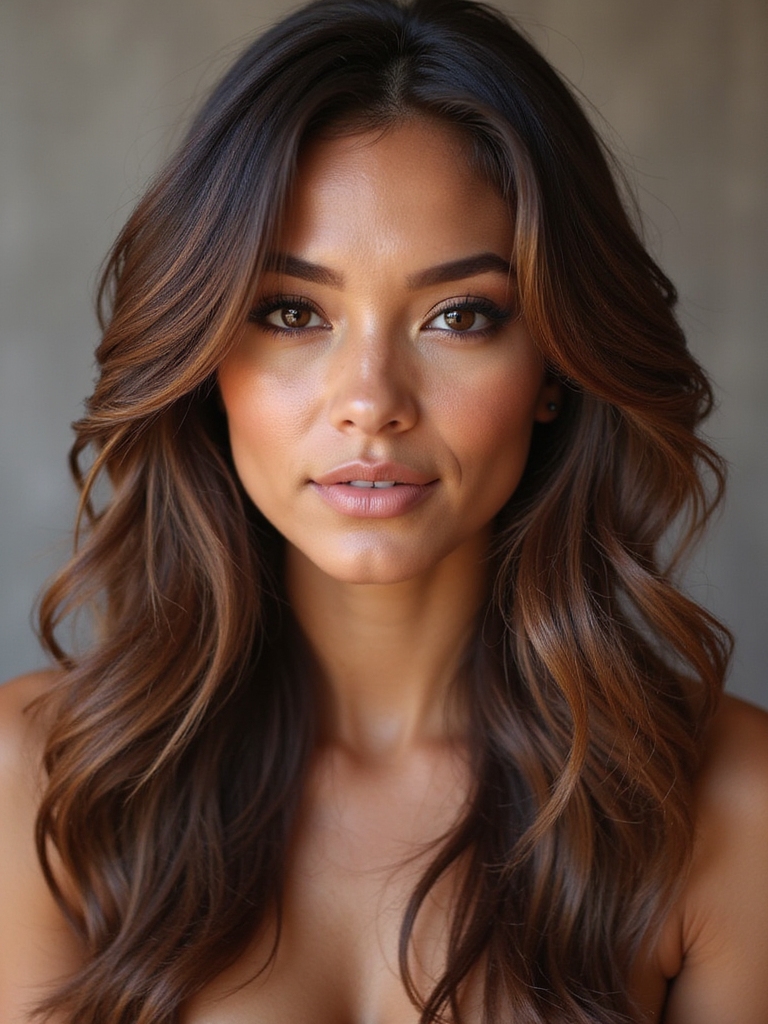
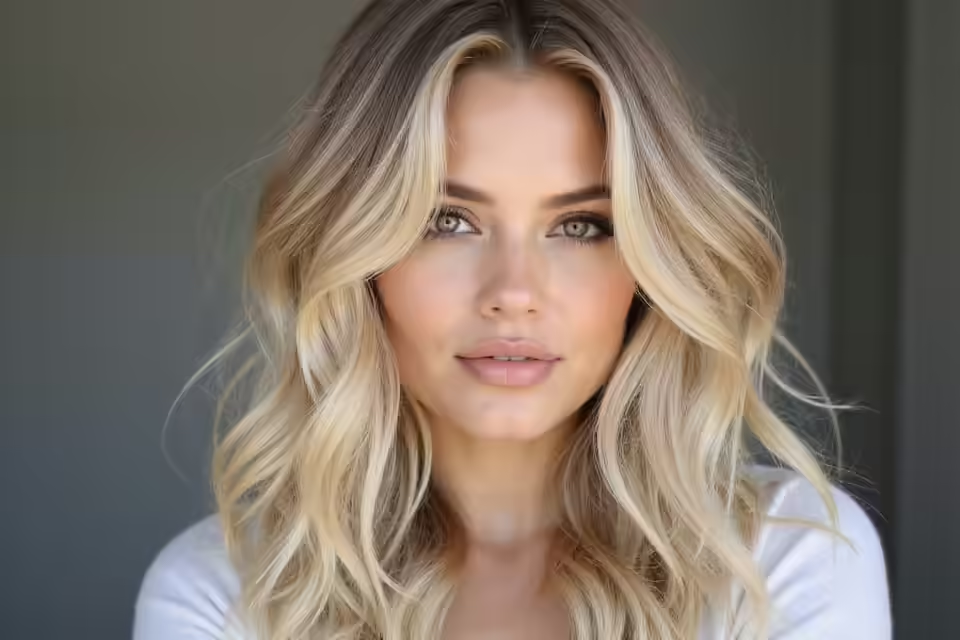
Golden honey highlights are the glow-getter for brown skin: warm, buttery pieces woven through a brown base that catch the light and brighten the whole face. The gold echoes the warmth in the skin, so it lights you up rather than washing you out, which is exactly why it flatters so beautifully.
Placing the Warmth
Keep the base rich and dark and concentrate the honey around the face, where it brightens most. Warm and deep skin especially glow in honey tones.
The warmth needs a gold-leaning gloss to stay honey rather than brassy. See honey blonde blend for the softest version.
Timeless Auburn
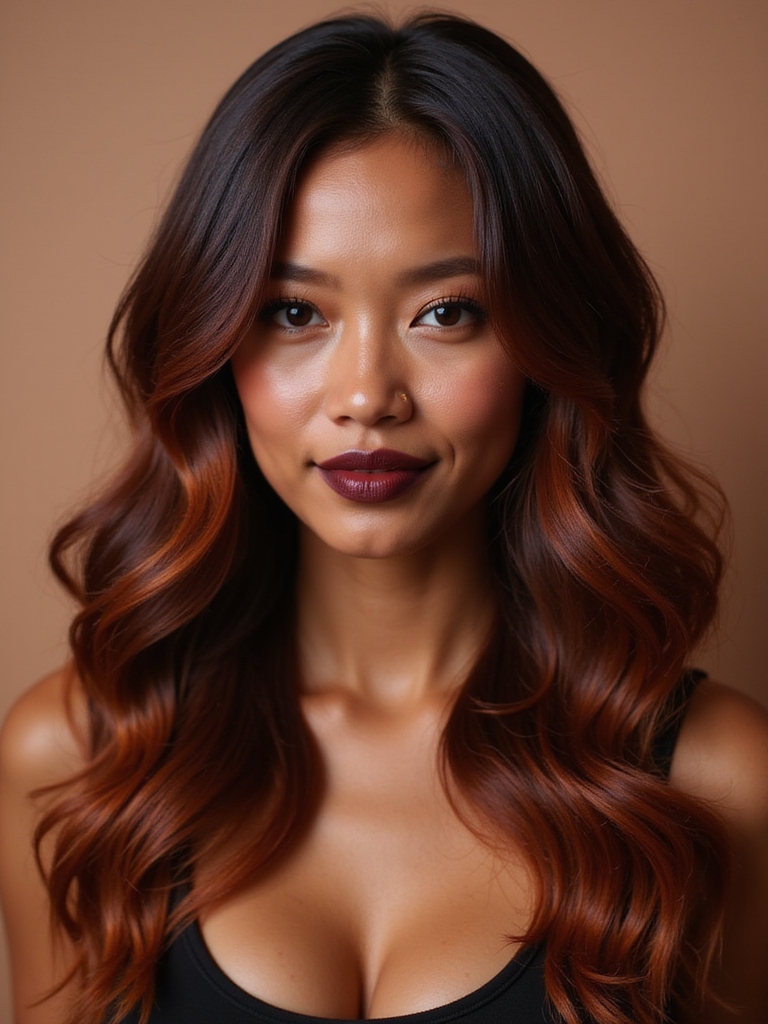
Auburn, a warm red-brown, is among the most flattering colors on brown skin, because the red warmth brings a glow to the complexion that few other shades match. It’s bold and wearable, since the brown grounds the red, and it suits warm and neutral undertones especially.
Deeper auburns flatter deep skin richly, while a lighter, coppery auburn suits medium-brown, warm skin. The key is keeping the red warm and rich rather than letting it fade to a muddy brown.
Red pigment fades fastest, so color-safe products and a red gloss keep it glowing. See auburn shades for the full range.
How to read your undertone at home.
1Check your veins
In daylight, greenish veins on the inner wrist point warm; bluish points cool; a mix points neutral or olive.
2Test your jewelry
Gold that flatters you points warm; silver that flatters points cool; both working points neutral.
3Hold a swatch up
Against your jaw in daylight, the right shade lifts your face; the wrong one makes your skin look gray or dull.
Warm Copper Tones
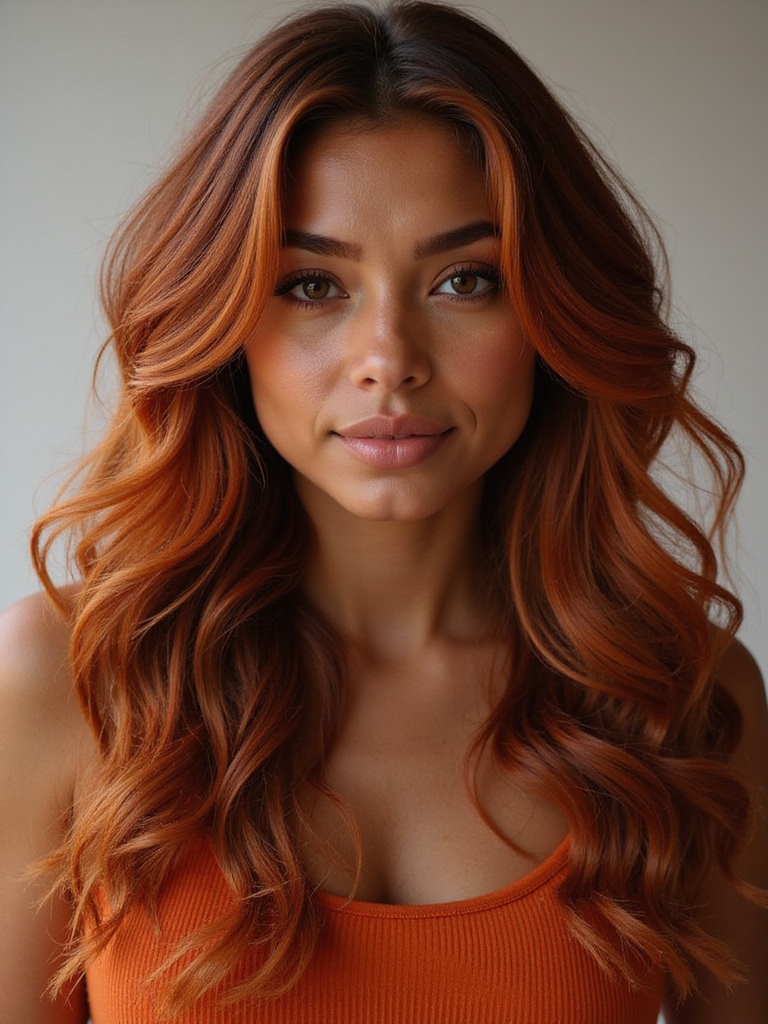
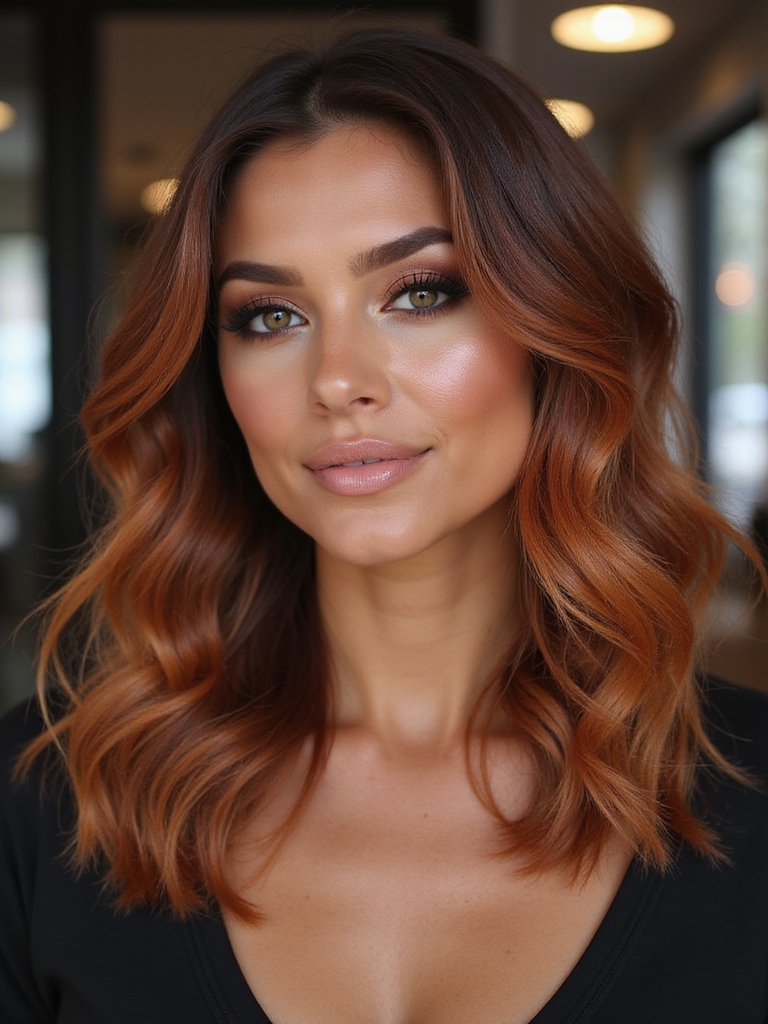
Copper is a showstopper on brown skin: a warm, glowing orange-red that looks incredible against golden and deep complexions, lighting the face with its warmth. It’s a bolder choice than auburn, brighter and more vivid, and it flatters warm undertones especially, where the copper and the skin share the same glow.
It ranges from a deep, burnished copper for a subtler look to a bright penny-copper for full impact, so there’s a version for every comfort level. Copper fades quickly, so it needs color-depositing conditioner and a gloss to stay bright. It’s a joyful, flattering color for a warm-toned brown complexion. See copper red shades.
- A warm orange-red that glows against golden and deep skin.
- Range from deep burnished copper to bright penny-copper.
- Flatters warm undertones especially.
- Use color-depositing conditioner, since copper fades fast.
Bold Burgundy
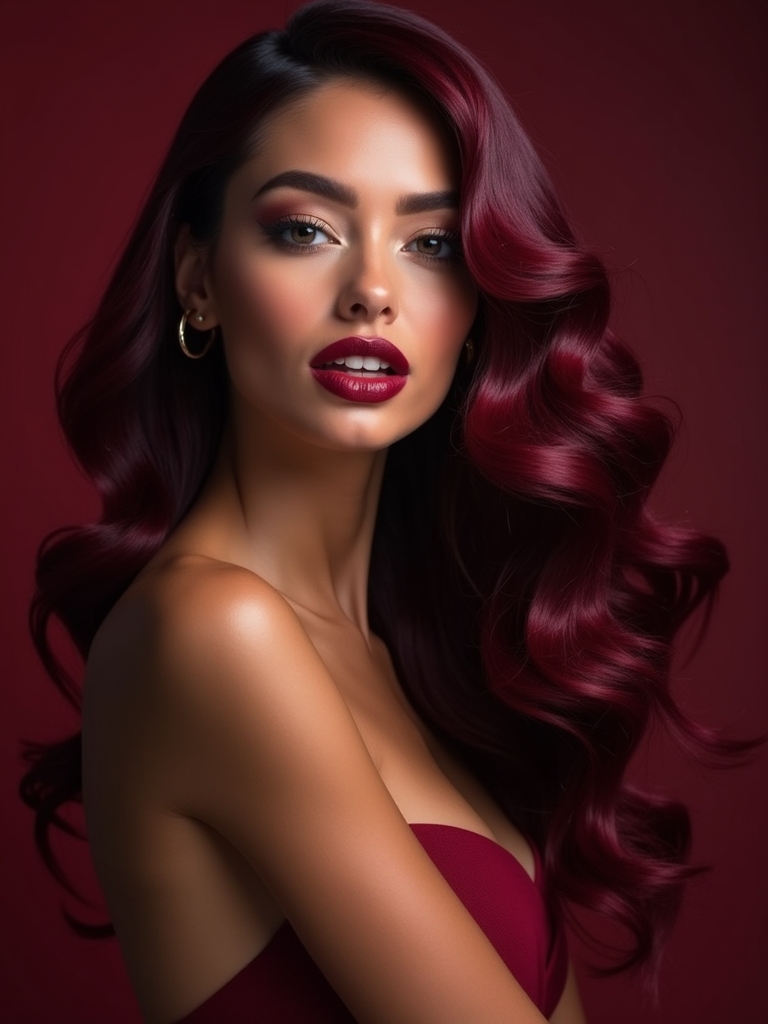
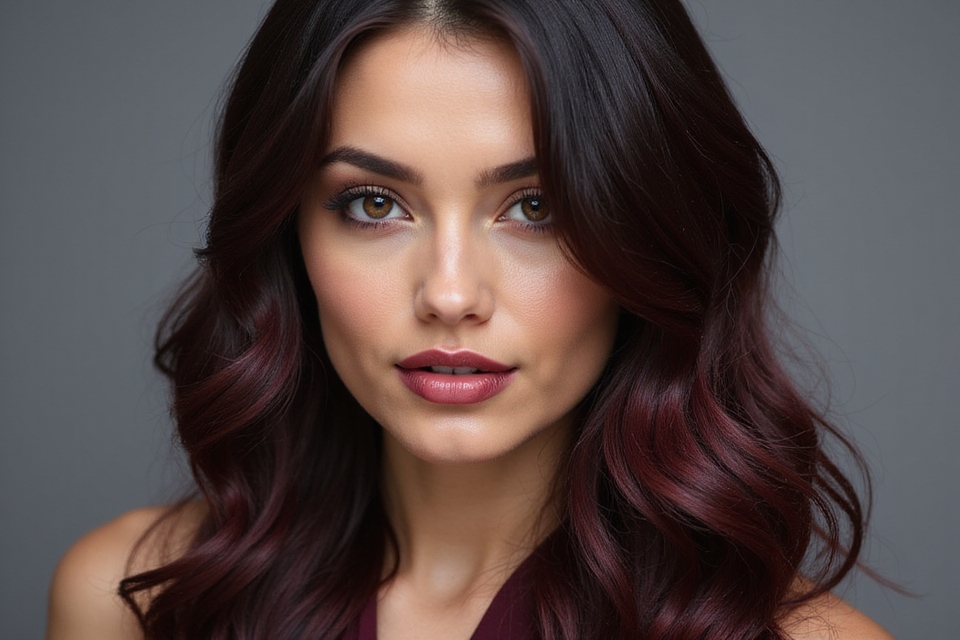
Burgundy, a deep wine red, is bold, glamorous, and rich on brown skin, since the rich red-purple depth flatters deep complexions without any lightening. It’s dramatic and wearable, and it looks especially striking on deep and olive skin, where the wine tone glows richly against the complexion.
A warmer, brick-leaning burgundy suits warm skin, while a cooler, more purple wine flatters olive and neutral tones. Burgundy’s red-violet base fades faster than brown, so a burgundy gloss and color-safe products keep it deep and glowing. See burgundy shades.
Rich Mahogany Hues
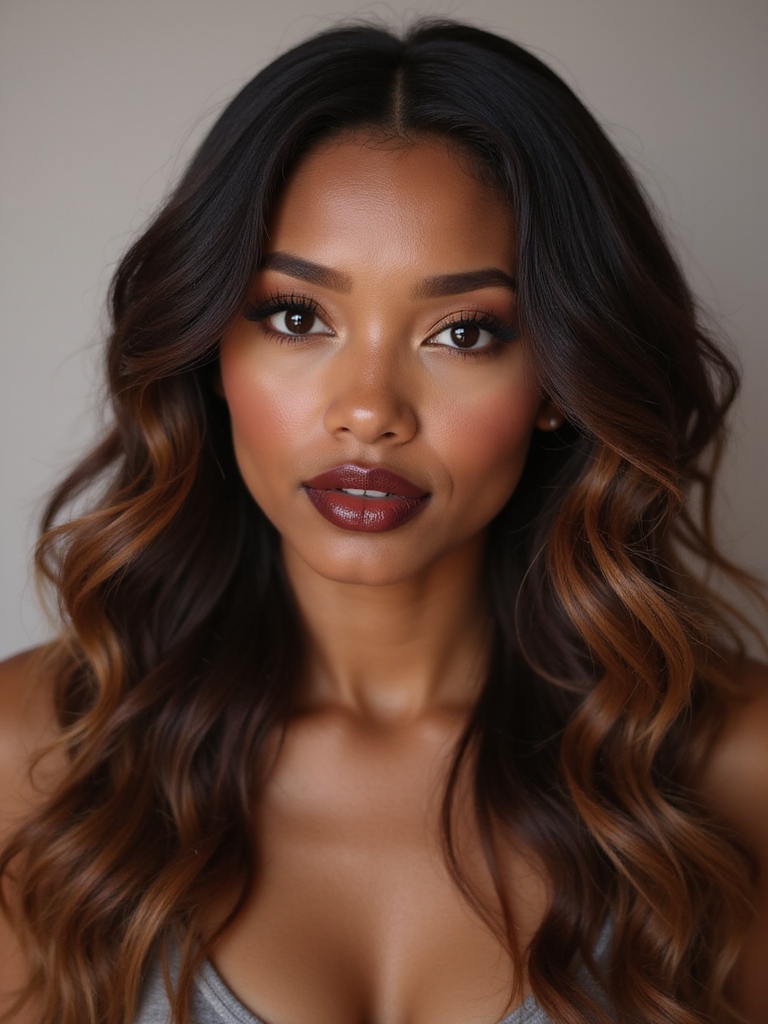
Mahogany is a deep red-brown with a purple-red undertone, glossy and rich like the wood it’s named for, and it’s a lovely, low-drama route to red warmth on brown skin. It’s subtler than a true red and warmer than a plain brown, a perfect middle ground and a great first step into red tones.
It flatters deep, olive, and warm-brown skin alike, and the depth keeps it lower-maintenance than a bright red. A mahogany gloss keeps the red-violet from fading to a flat brown.
- A deep red-brown that brings warmth without going full red.
- A great first step into red tones.
- Flatters deep, olive, and warm-brown skin.
- A gloss holds the red-violet from dulling.
Sun-Kissed Caramel Balayage
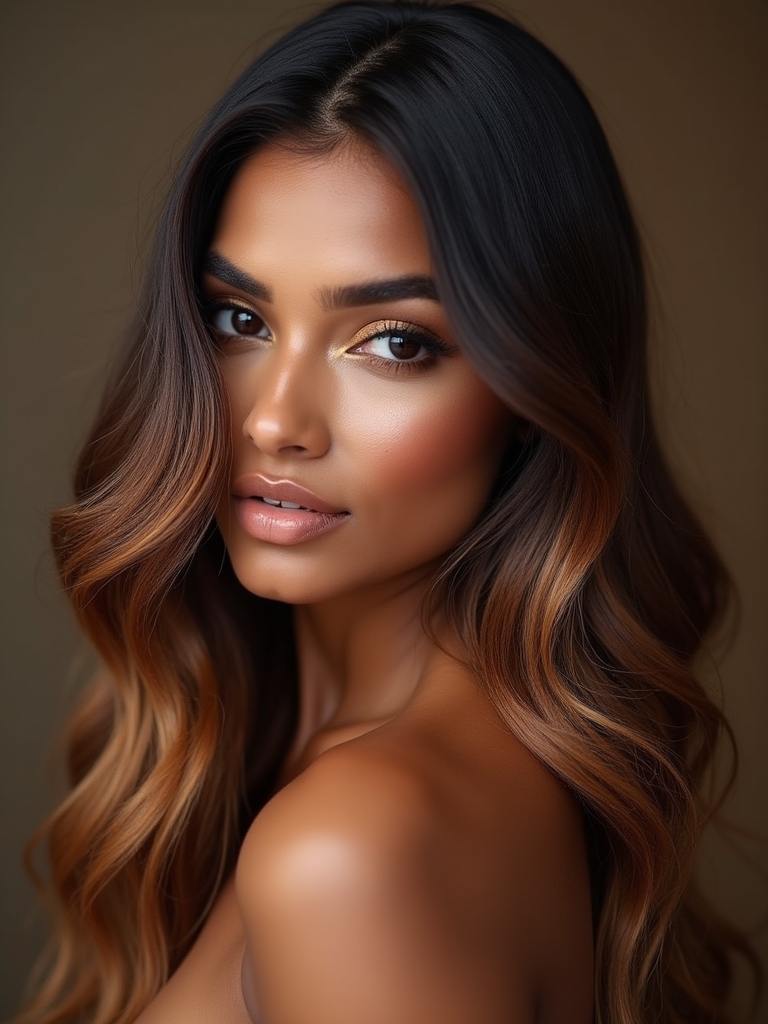
Caramel balayage is one of the most-requested looks for brown skin, and for good reason: hand-painted warm caramel through a dark base gives glow and dimension without the harsh regrowth of foils. The warm caramel lights the face while the dark base keeps depth, so it flatters and grows out softly.
Why Balayage Suits Brown Skin
Concentrate the caramel around the face for the most brightening effect, and keep the base rich. It suits warm, olive, and deep skin especially.
Because balayage keeps the roots natural, it’s lower-maintenance, which makes it ideal for anyone who wants dimension without frequent salon trips. See caramel highlights.
Glowing Chestnut
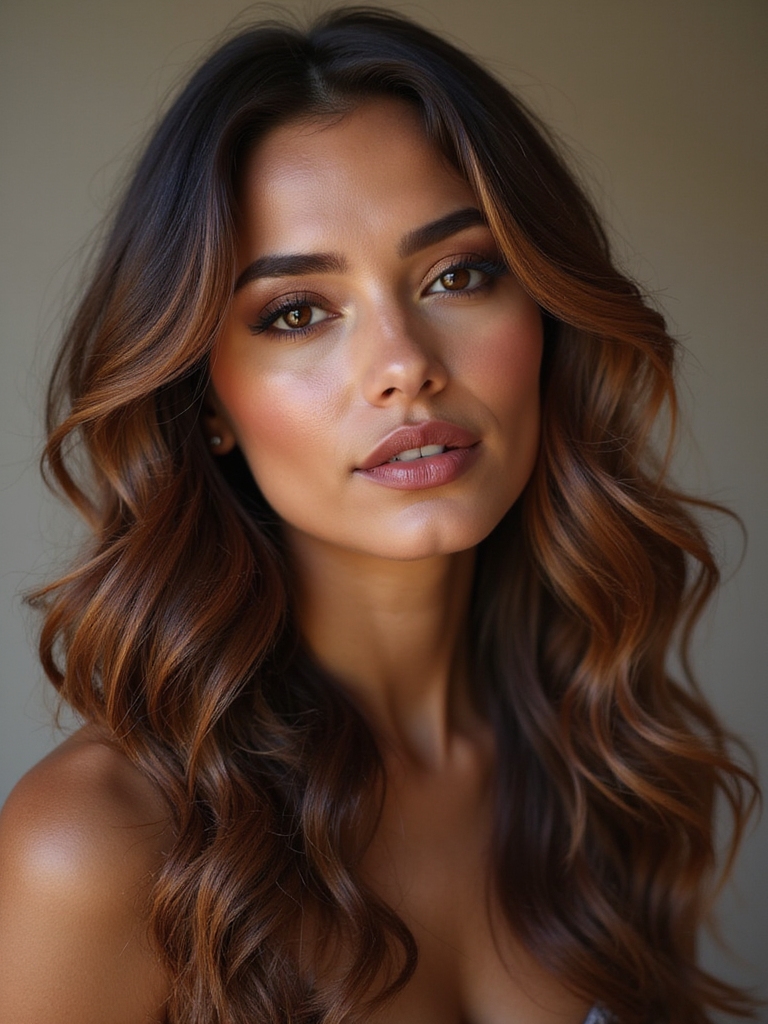
Chestnut brown, a warm brown carrying a whisper of red, is a safe, universally flattering choice for brown skin that never looks flat. The warmth brings life to the complexion, and the depth keeps it low-maintenance, since regrowth blends easily. It’s the color for anyone who wants a warm, glossy brown that glows without a big change or much upkeep.
- A warm brown with a hint of red that glows on brown skin.
- Low-maintenance, since regrowth blends into the depth.
- Universally flattering across warm and neutral undertones.
- A warm gloss keeps the red undertone from fading.
Bold Glossy Black
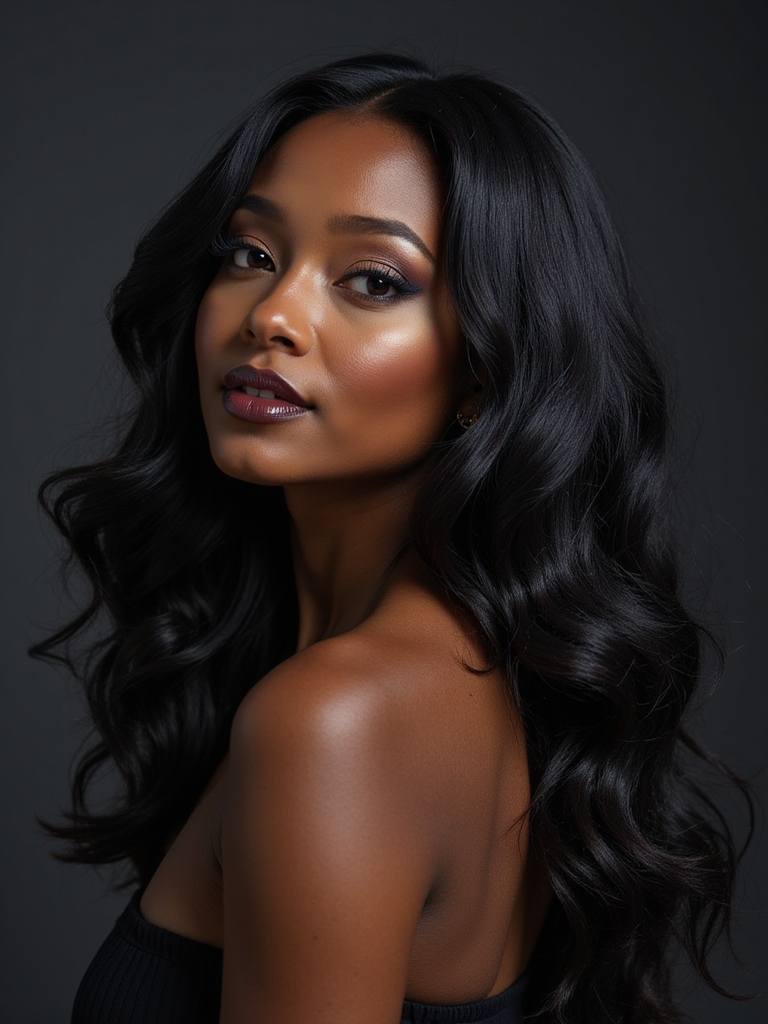
Never underestimate black on brown skin. A rich, glossy black, especially a soft, warm-leaning black rather than a harsh blue-black, is dramatic, elegant, and endlessly flattering, making the skin look luminous and the eyes pop. The high shine is everything here: a glossy black looks expensive and intentional, where a matte one falls flat and lifeless.
It’s one of the lowest-maintenance colors going, since regrowth barely shows, and it suits every undertone as long as you keep it warm rather than icy. On textured and coily hair, a glossy black looks especially rich, and a shine gloss keeps it from looking dull between washes. It’s proof that the most flattering color isn’t always the lightest.
- Choose a soft, warm-leaning black over a harsh blue-black.
- Shine is everything; a glossy black looks expensive.
- One of the lowest-maintenance colors, since regrowth hides.
- Looks especially rich on textured and coily hair.
Soft Ash Brown
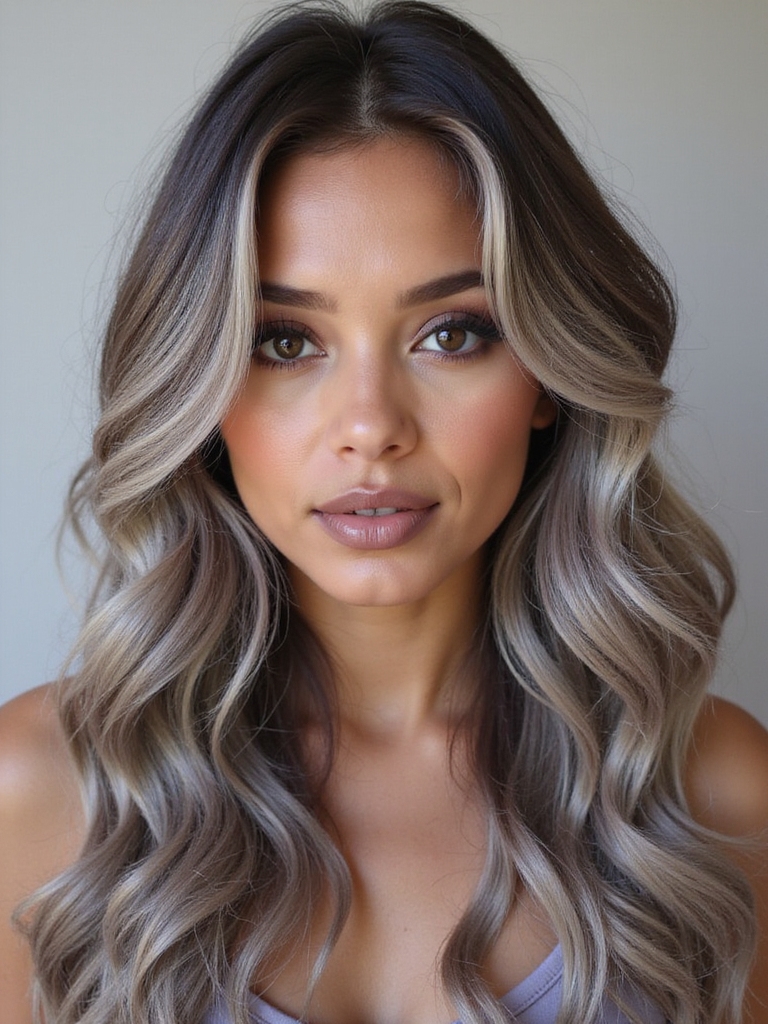
Ash brown is the one cool tone that can work on brown skin, but it takes care, because a too-cool ash is exactly the shade that ghosts you. The trick is a soft, warmed ash, cooled just enough to look modern but with warmth kept underneath so it doesn’t drain the face.
This works best on olive and neutral undertones, which can carry a cooler tone, and less well on very warm skin, which fights an ashy finish. Hold a swatch to your face first: if it makes your skin look gray, warm it up.
If you love a cool-toned brown, this is how to wear it, warmed just enough to keep you glowing rather than ghosting.
Playful Plum and Violet
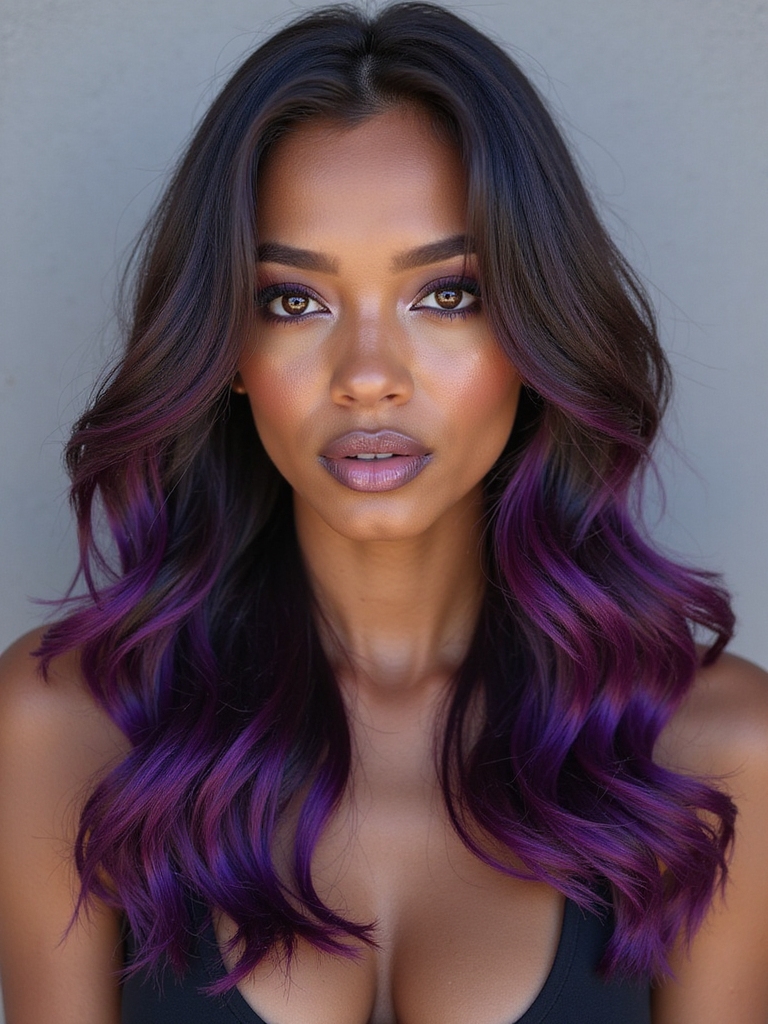
For something bolder, deep plum and violet are unexpectedly flattering on brown skin, since the rich purple depth glows against warm and deep complexions. Kept deep, plum looks sophisticated and grown-up, and it’s a striking way to wear a fashion color that still suits your skin.
Keeping Plum Wearable
A warm-leaning plum suits warm skin, while a cooler violet flatters olive and neutral tones. On deeper skin, a rich aubergine looks especially luxurious.
Purple fades fast, so it needs color-depositing products and glosses to stay deep. It’s a fashion shade that, worn deep, it truly flatters brown skin rather than fighting it.
Sun-Kissed Ombré
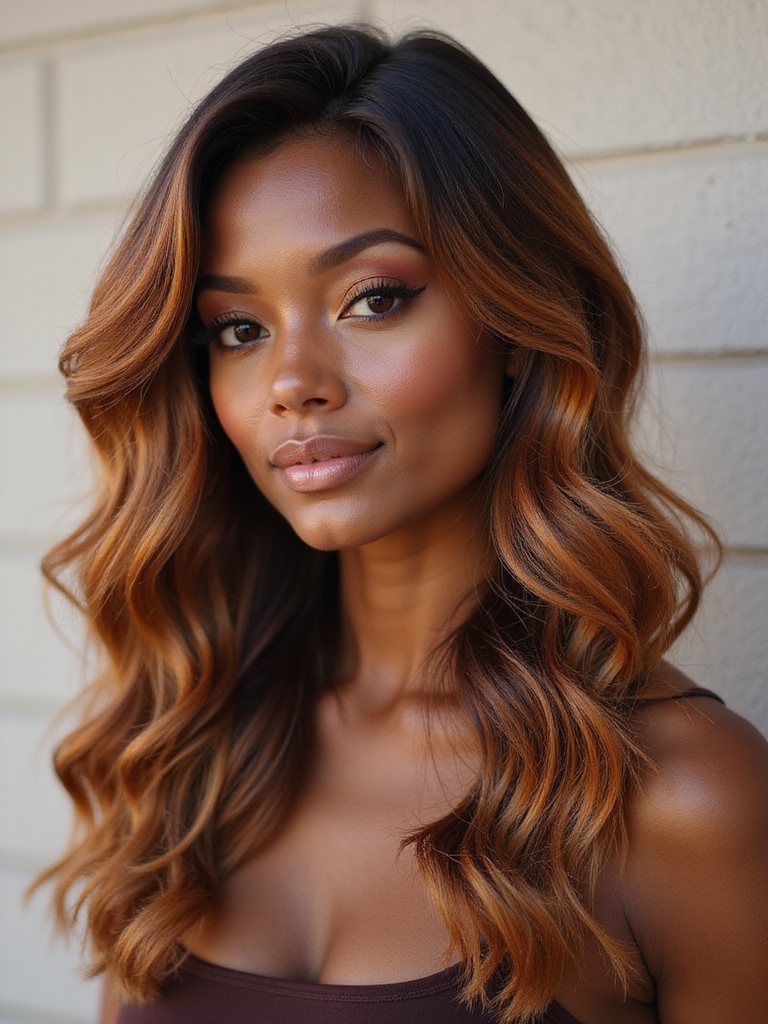
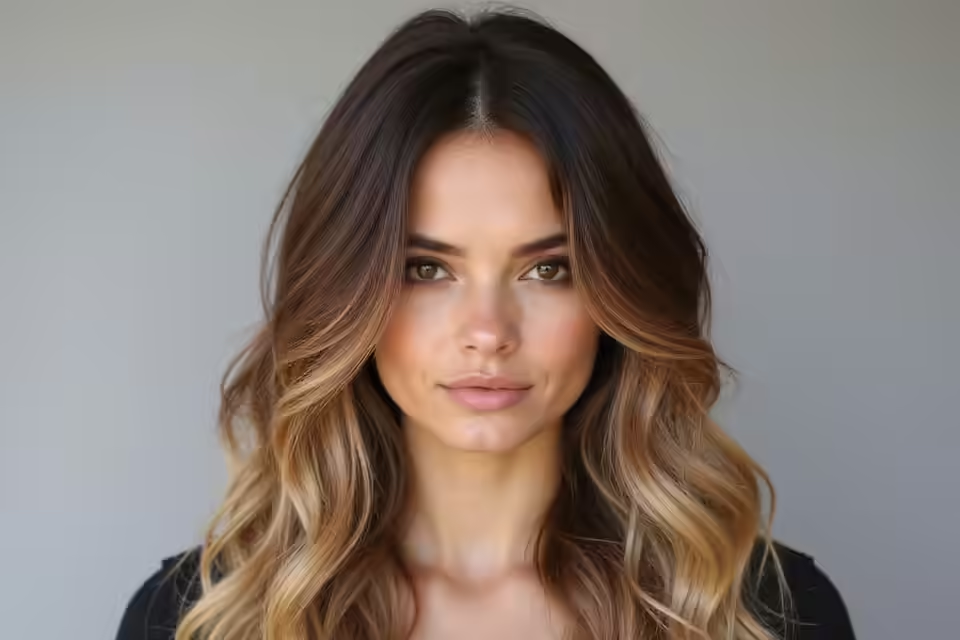
A warm ombré fades a dark base down into brighter, warmer ends, caramel, honey, or copper, for a glowy gradient that flatters brown skin and grows out gracefully. Because the roots stay dark and natural, it’s lower-maintenance than an all-over lift, and the warm ends brighten without draining the face.
Keep the ends warm-toned, gold, caramel, or copper rather than ashy, so the whole look glows. It suits warm and deep skin especially, and the dark roots hide regrowth beautifully.
- Fade a dark base into warm caramel, honey, or copper ends.
- Dark roots keep it low-maintenance and hide regrowth.
- Keep the ends warm, not ashy, so the face stays lit.
- Especially flattering on warm and deep skin.
Fiery Reds, Worn Boldly
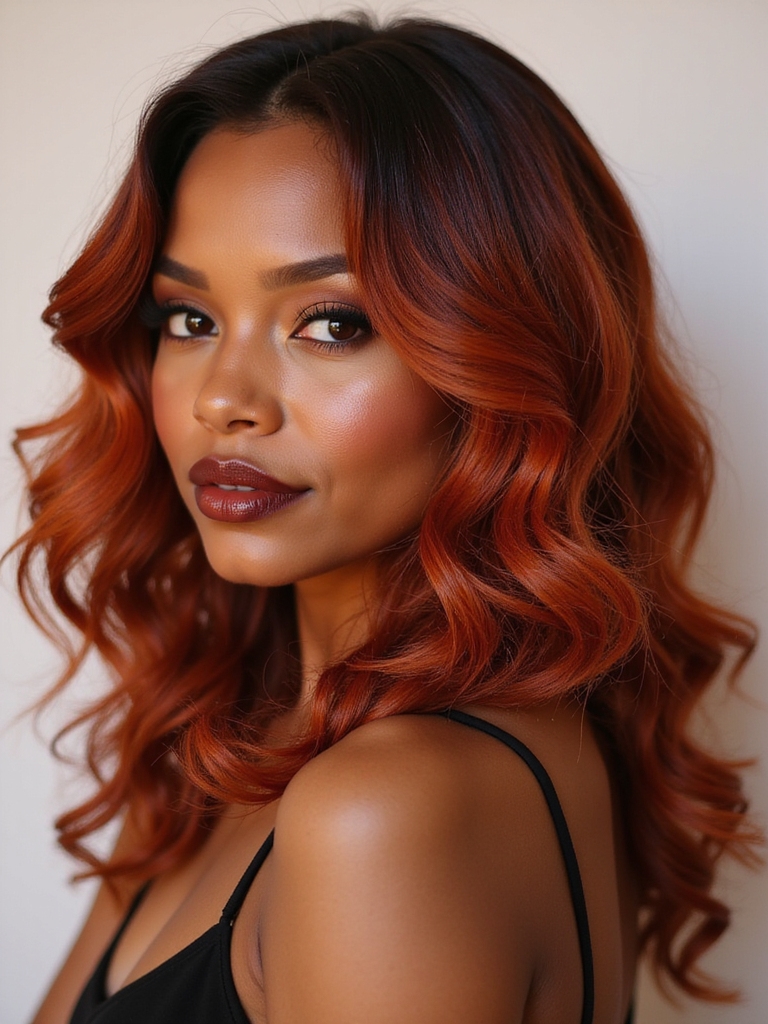
True fiery red, a bright, saturated fire-engine or cherry red, is a bold statement that looks phenomenal on brown skin, where the vivid warmth glows against the complexion instead of overwhelming it. It’s not for the shy; on the right person it’s pure confidence, and brown skin carries a bright red better than almost any other complexion.
A warm, orange-red flatters warm skin, while a cooler, cherry-red suits olive and neutral tones. Bright red is the highest-maintenance color here, fading fast and needing frequent color-depositing care, but the payoff is a truly head-turning glow.
- Bright red glows against brown skin rather than overwhelming it.
- Warm orange-red for warm skin; cherry-red for cool.
- The highest-upkeep option, fading fast without care.
- Use color-depositing conditioner to hold the brightness.
ℹ️Good to Know
Brown skin can wear bright and fashion colors, red, copper, plum, even pastels, more successfully than pale skin, because the depth of the complexion stands up to a saturated tone. The ‘you can’t wear that’ rules usually come from pale, washed-out versions that need very light hair to show; a richer, more saturated version works beautifully.
Pastels on Brown Skin
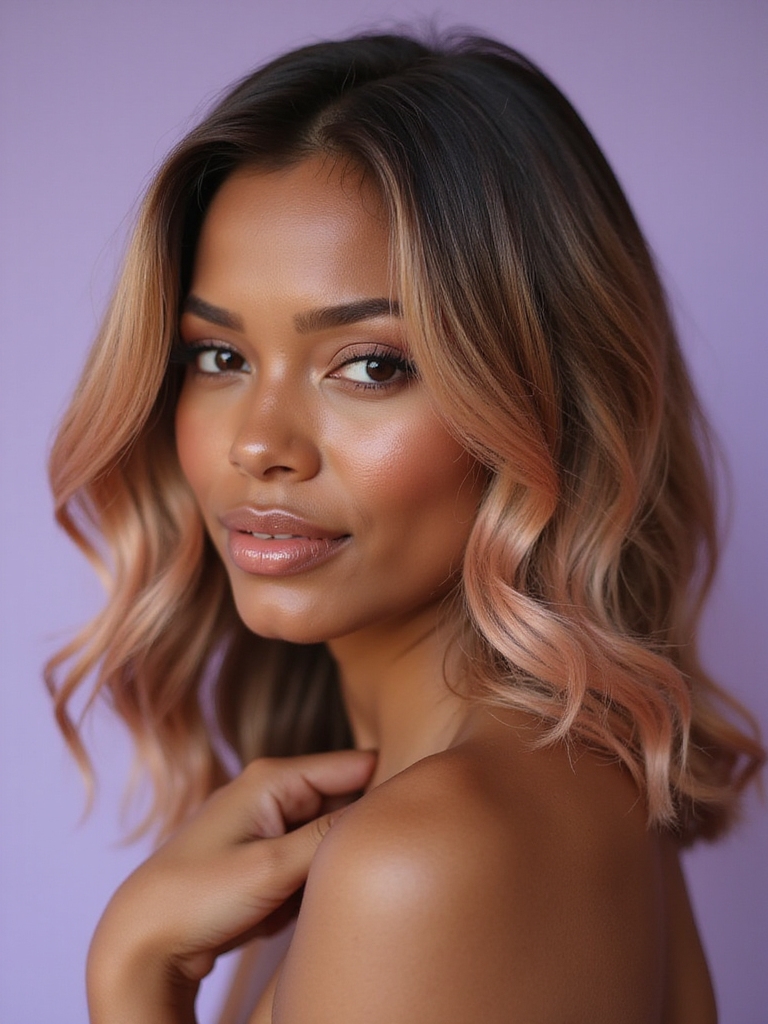
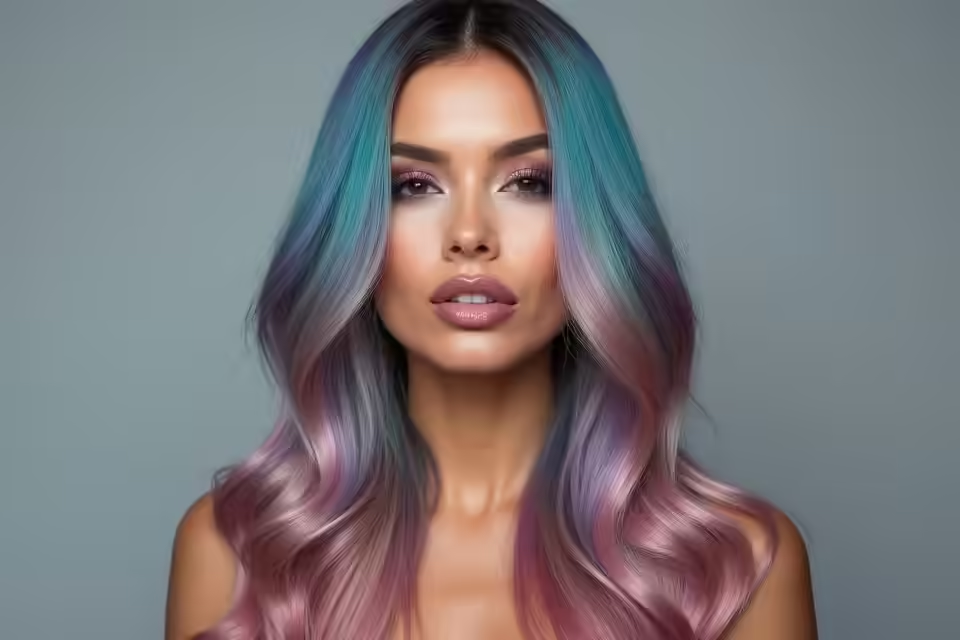
Pastels are often wrongly called off-limits for brown skin, when in fact they can look magical, the myth comes from pale, chalky pastels that need very light hair to show. The secret for brown skin is either richer, more saturated pastel tones, a deep rose, a smoky lavender, a muted teal, or wearing pastels on the ends over a dark root so the contrast flatters.
A saturated pastel holds up against a rich complexion where a washed-out one disappears, and keeping the roots deep grounds the color beautifully. Pastels need pre-lightening and fade fast, so they’re a commitment, but they are absolutely wearable and striking on brown skin. Don’t let anyone tell you otherwise.
- Choose richer, more saturated pastels over chalky pale ones.
- Wear pastels on the ends over a deep root for contrast.
- Saturated tones hold up against a rich complexion.
- Pastels are absolutely wearable and striking on brown skin.
Keeping Color Rich
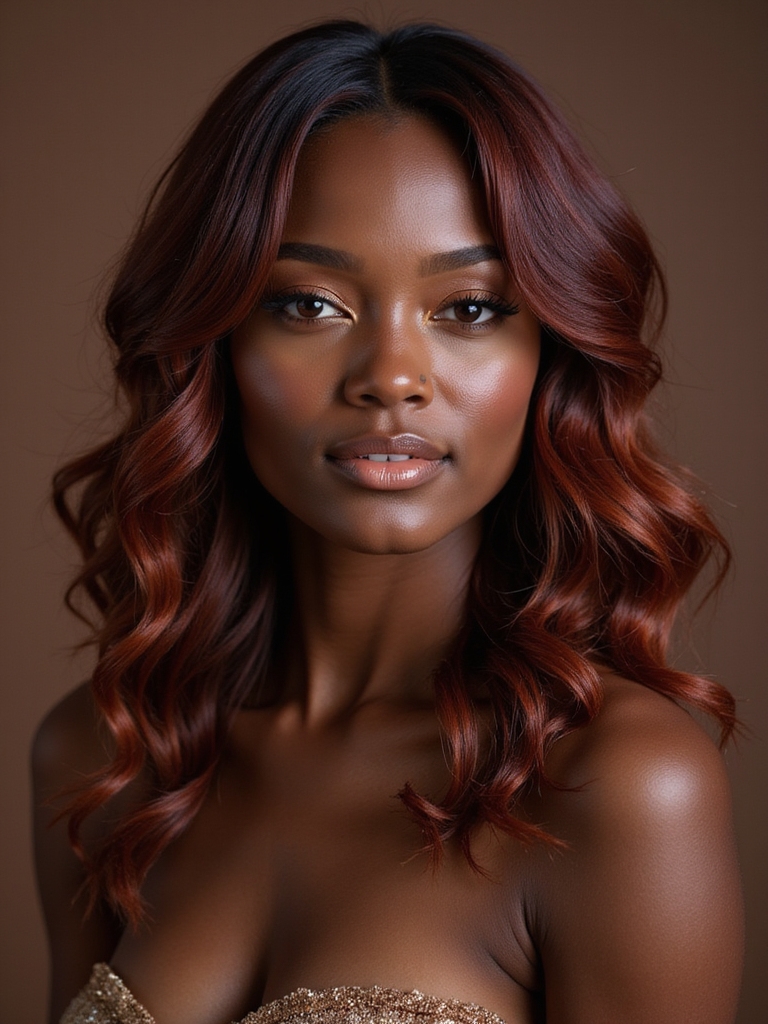
Whatever shade you choose, the warmth and shine that make color glow on brown skin need upkeep, since warm and red tones fade fastest and lightened hair dries out. The routine is about holding warmth and moisture: color-safe, sulfate-free products, a periodic gloss in your target tone to reset the warmth, and rich conditioning to keep the shine that makes color look expensive.
For textured and coily hair, moisture matters even more, since lightened curls run drier; a leave-in and a weekly deep-conditioning mask keep them healthy. Cut back on washing and use cooler water to slow the fade, plus heat and UV protection, since both dull warm tones fast. Healthy, shiny hair is what makes any color glow.
- Use color-safe, sulfate-free products and wash less often.
- A gloss in your target tone resets warmth between visits.
- Deep-condition often; lightened textured hair runs drier.
- Protect from heat and UV, which dull warm tones fast.
When to See a Professional
Some brown-skin color is safe to do at home, a gloss, a rich chocolate, a warm at-home dye close to your base. But anything involving lift, going lighter, red, copper, pastels, or balayage, is where a professional earns their fee, especially on dark or textured hair.
What to Leave to a Pro
A skilled colorist knows how to lift deep hair without breakage, how to keep warmth in the tone so you glow, and how to place brightness to flatter your face. Look for someone whose work on brown skin and textured hair you’ve seen and liked.
Going more than a couple of shades lighter, or coloring previously-dyed hair, is worth the salon visit; over-lightening at home is the fastest route to breakage and a ghosting, ashy result.
What to Expect
The single most important thing to take away is that brown skin is made for warm, rich color, and the ‘rules’ that call so many shades off-limits are simply wrong.
Almost any color works, chocolate, honey, copper, auburn, burgundy, plum, even pastels and bright red, as long as you keep warmth in the tone and match it to your undertone. The colors to approach carefully are cool, ashy ones and heavy over-lightening, which can drain and gray the complexion; warm them up and they work too.
On cost, a gloss or single-process color runs about $60 to $120, while lifting for balayage, copper, red, or pastels is closer to $150 to $350 and may need two or three sessions on dark hair. Whatever you choose, protect the warmth and shine with sulfate-free products, glosses, and rich conditioning, and give textured hair extra moisture. Try a warm gloss or a caramel balayage first, and see how the right color lights up your whole face.
Hair Color for Brown Skin, Answered
?What hair colors look best on brown skin?
Warm, rich, shiny shades: chocolate brown, golden honey, caramel, copper, auburn, mahogany, burgundy, and a glossy warm black all glow on brown skin by echoing its warmth. Bold colors like plum and bright red, and even saturated pastels, work beautifully too. The key is keeping warmth in the tone and matching it to your undertone.
?What hair colors should brown skin avoid?
Not so much avoid as handle with care: very cool, ashy tones, stark platinum, and heavy over-lightening can ‘ghost’ you, draining warmth and making skin look gray. You can still wear cooler shades if you keep warmth underneath or gloss it back in. If a color makes your skin look dull in the mirror, it’s too cool, and warming it will fix it.
?Can brown skin wear blonde or light hair?
Absolutely, with the right tone. Warm blondes, honey, caramel, and golden, flatter far more than cool, ashy ones, which tend to wash brown skin out. Keeping the roots deep and the blonde warm and face-framing gives glow without ghosting. Lifting deep hair safely is a job for a skilled colorist, often over two or three sessions.
?How do I color textured or coily hair without damage?
Go slow and moisturize. Lightening textured hair takes a gentle hand, bond-builders, and ideally a colorist experienced with coily hair, since curls are more fragile and lift unevenly. Afterward, lightened coils run drier, so a leave-in, a weekly deep-conditioning mask, and gentle washing keep them healthy and the color rich.
Color That Lights You Up
The whole difference between glowing and ghosting comes down to warmth: brown skin lights up in rich, warm, shiny color and dims under cool, ashy, over-lightened tones. Read your undertone, keep warmth in whatever shade you choose, and protect the shine, and almost any color, from the deepest glossy black to the brightest copper, becomes yours to wear. The old rules that fence brown skin into ‘safe’ shades simply don’t hold.
Start with your undertone and how much upkeep you want, then pick a warm shade that makes your face glow. Try a warm gloss, a caramel balayage, or a rich auburn first, and watch how the right color lights up your whole complexion.