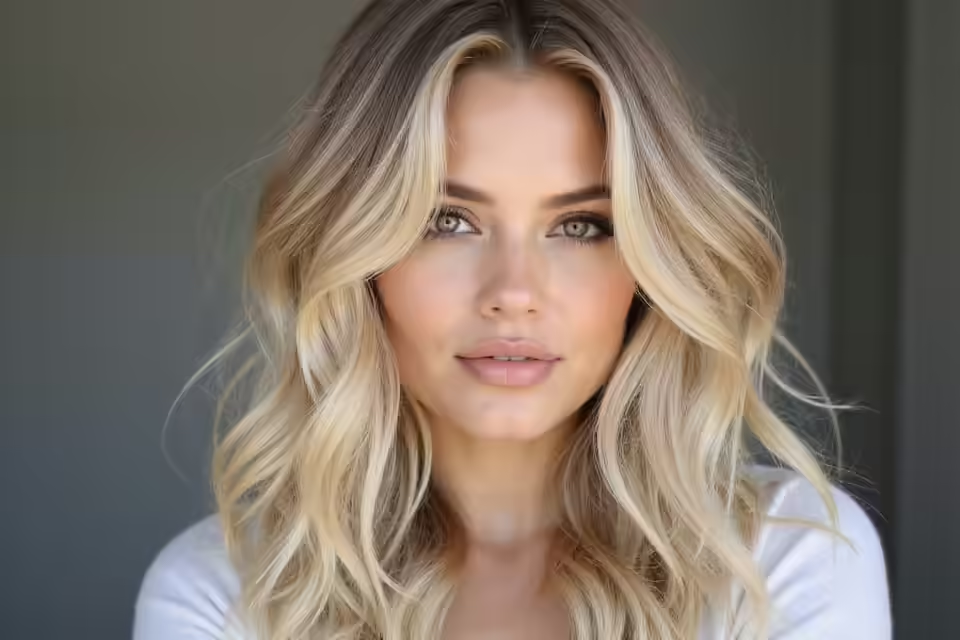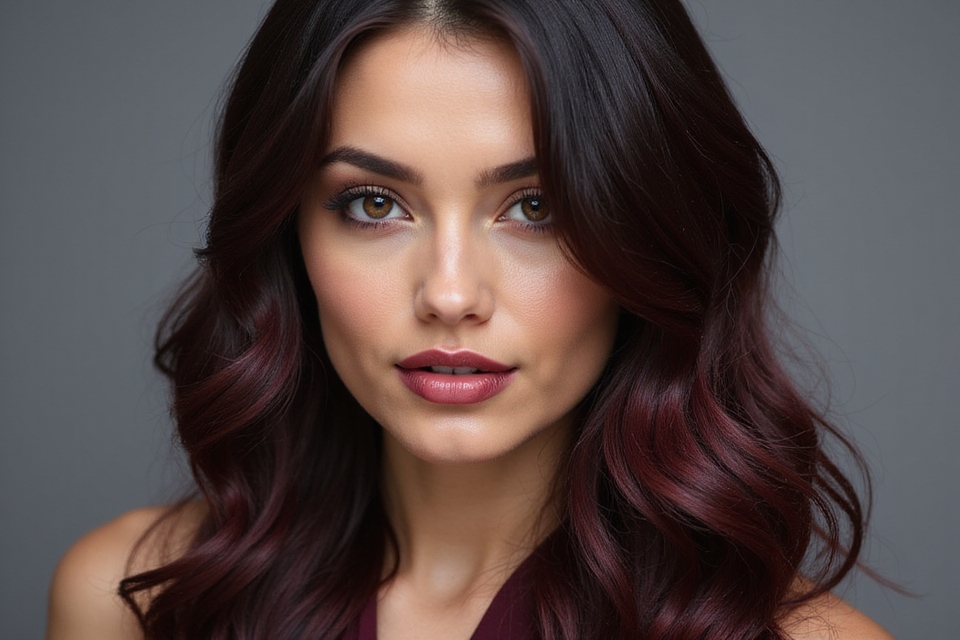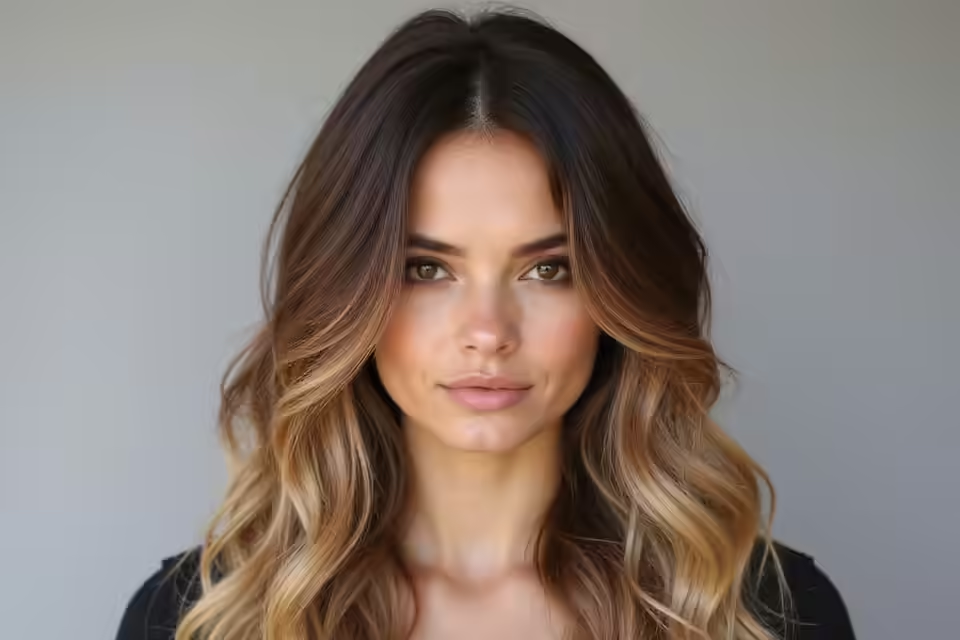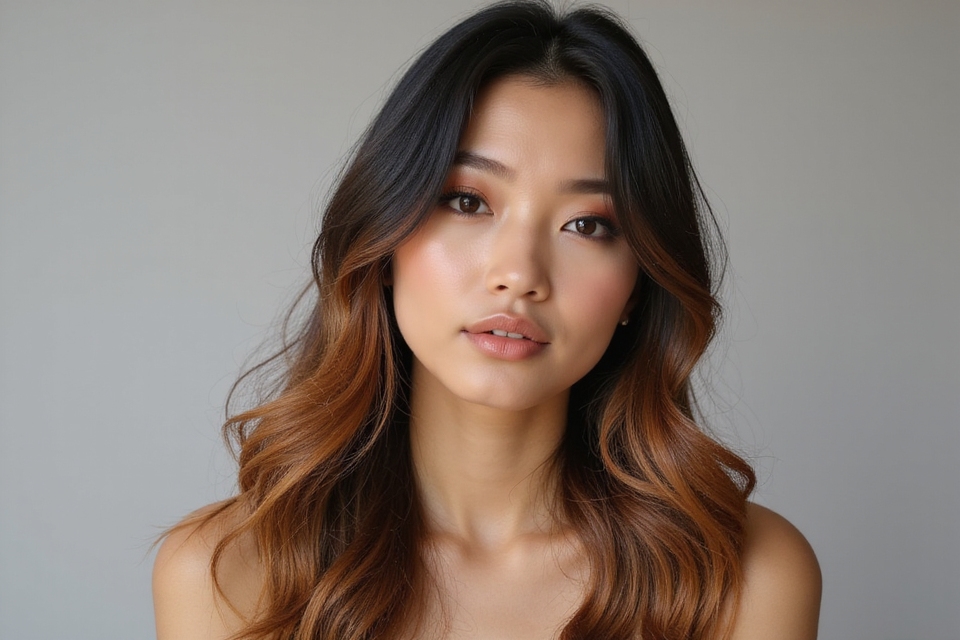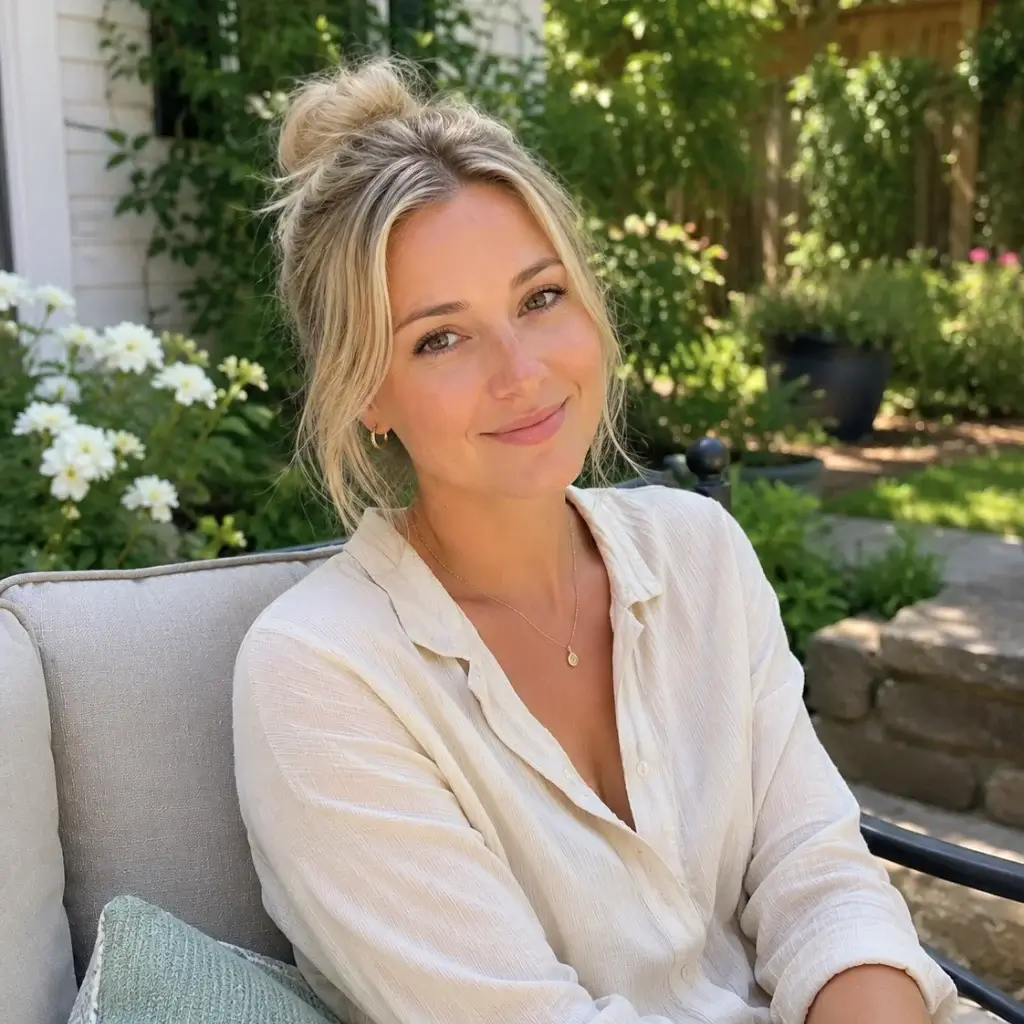

A client once told me curtain bangs were the only change that made her feel like herself again after years of growing her hair long and never touching the front. One soft, center-split fringe later, her whole face opened up, and she has kept them ever since. That is the quiet power of curtain bangs on long hair: a small cut that reframes everything below it.
On long hair specifically, curtain bangs do a particular job. They break up all that length, add movement around your face, and give you a styled look without committing to a real chop. This guide covers choosing them, cutting and blending them into long layers, getting the daily split to sit right, and growing them out painlessly when you want a change.
Curtain Bangs on Long Hair, Fast Facts
| Question | Short Answer | Detail |
|---|---|---|
| Will they suit my length? | Almost always | Long hair gives bangs room to blend into face-framing layers |
| How often to trim? | Every 4 to 6 weeks | A bang dust runs about $15 to $30, or free at home |
| Hard to grow out? | The easiest fringe to grow | They lengthen straight into your face-framing layers |
Why Curtain Bangs Suit Long Hair
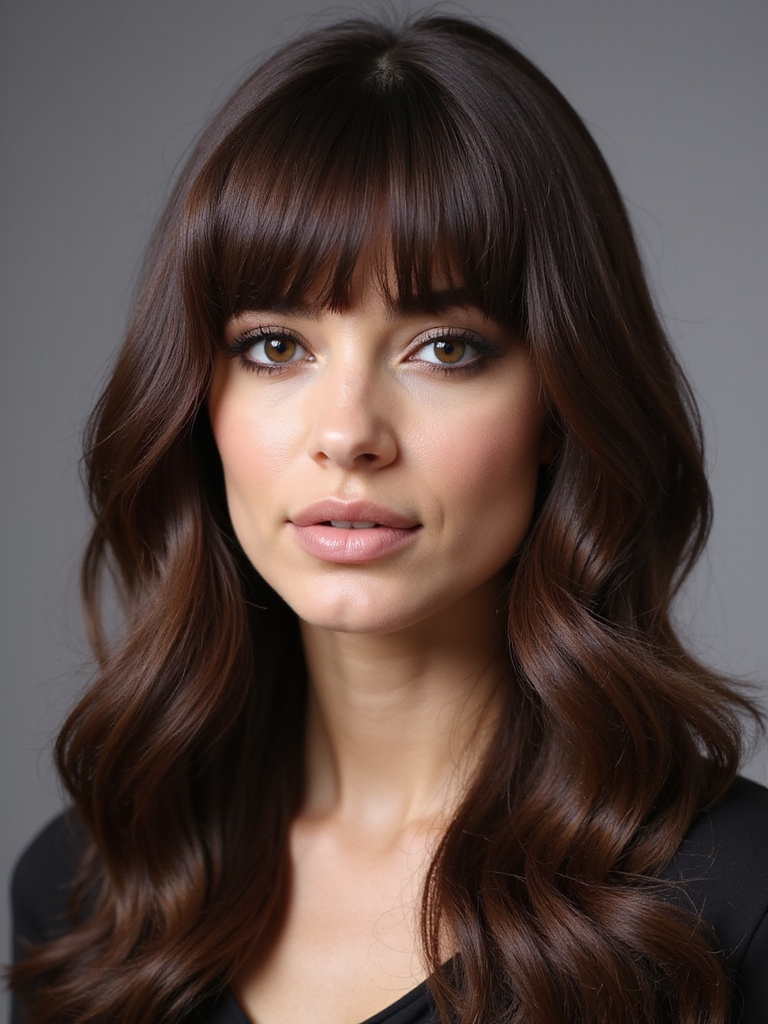
Curtain bangs split down the middle and sweep softly to each side, framing your face like, well, a pair of curtains. On long hair, that framing has somewhere to go, melting into your lengths instead of sitting as a separate block of fringe.
That is exactly why they read so flattering on long hair. The eye travels from the soft front pieces all the way down, and the contrast between the shorter fringe and your length adds movement most long styles lack.
They are also the lowest-commitment way to change a long look. You keep all your length and still get something that feels brand new in the mirror.
A Low-Maintenance Way to Transform Long Hair
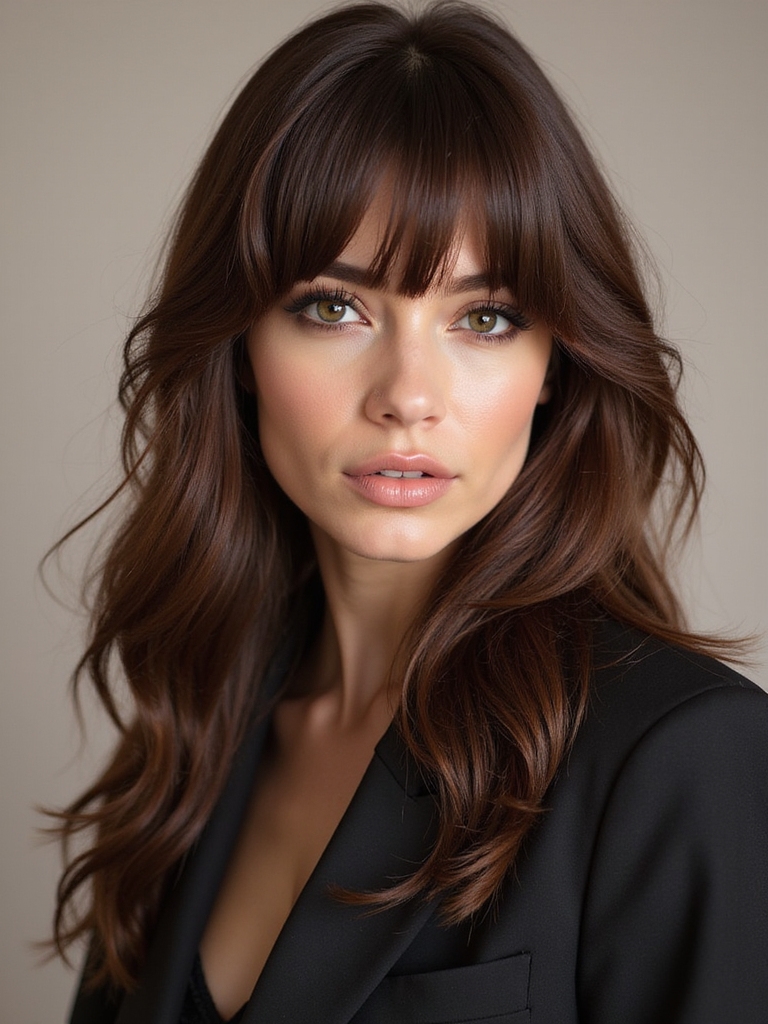
People assume bangs mean fuss, but curtain bangs are the gentlest of the bunch. Because they are meant to part and fall away from your face, a slightly grown-out or imperfect day still looks intentional.
On a busy morning you can twist them back, tuck them into a half-up, or just finger-comb the split and go. There is no blunt line that has to be perfect, which is the whole appeal.
For long-haired clients who do not want a daily styling ritual, this is the change I suggest first. Maximum impact, minimum upkeep.
Maintaining curtain bangs at home in four steps.
1Dry and section
Work on fully dry hair and section a triangle from your brow peaks to your part.
2Twist the section
Twist the bangs together so the ends fan out for a soft, graduated cut.
3Point-cut upward
Snip upward into the twist a little at a time, never straight across.
4Check and refine
Release, comb down, and only then take a tiny bit more if needed.
Choosing a Flattering Length and Shape
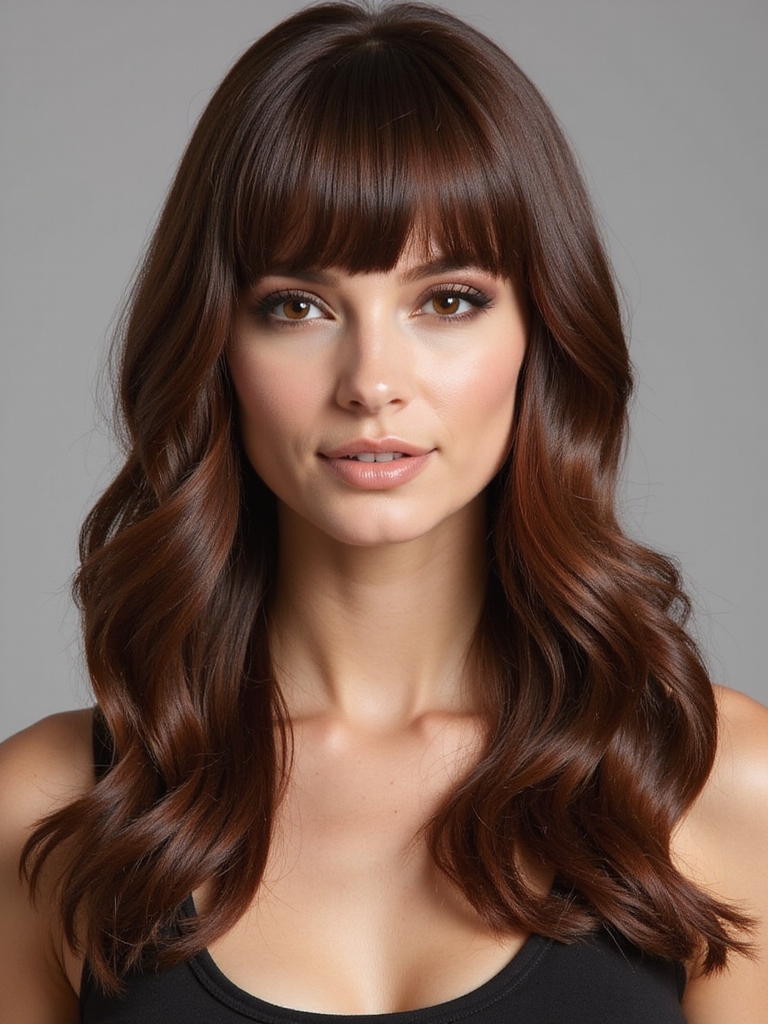
The length you cut the bangs decides the whole mood. Cheekbone-length curtain bangs feel soft and romantic and blend most smoothly into long hair. Shorter, eyebrow-skimming bangs make a bolder, more retro statement but need more styling to sit right.
There is no single correct answer, only what suits your features and how much effort you want. When in doubt on long hair, start longer; you can always trim up, but you cannot add length back.
- Cheekbone length: soft, romantic, easiest to blend and grow out
- Eyebrow length: bolder and retro, but higher daily maintenance
- Start longer than you think, then trim up gradually
The Versatile Appeal of Curtain Bangs
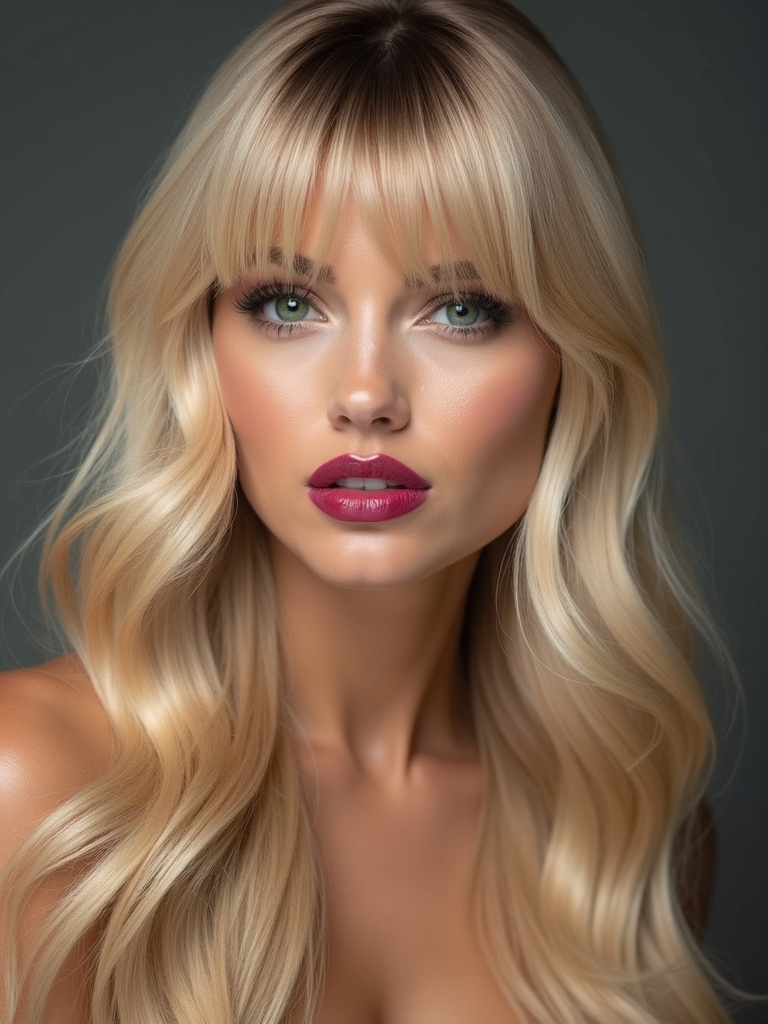
What keeps curtain bangs in style year after year is how many ways they can be worn. The same cut goes sleek and polished with a blow-dry, soft and tousled air-dried, or pushed fully off your face for a no-bang day. On long hair, that range matters even more, because your fringe needs to work with ponytails, updos, and second-day styling without looking out of place.
Few fringes are this adaptable, which is what makes them such a safe first step into bangs. They flatter long hair with face-framing layers especially well.
- Wear them sleek, tousled, or swept fully off your face
- They cooperate with ponytails and updos, not just hair down
- An easy entry point if you have never had bangs before
| Face Shape | Best Bang Length | Why |
|---|---|---|
| Round or full | Cheekbone or longer | The long diagonal slims and lifts |
| Oval | Almost any length | The most flexible shape, so play freely |
| Long or narrow | Brow to cheekbone | Shorter width adds balance across the face |
Understanding Your Hair Texture
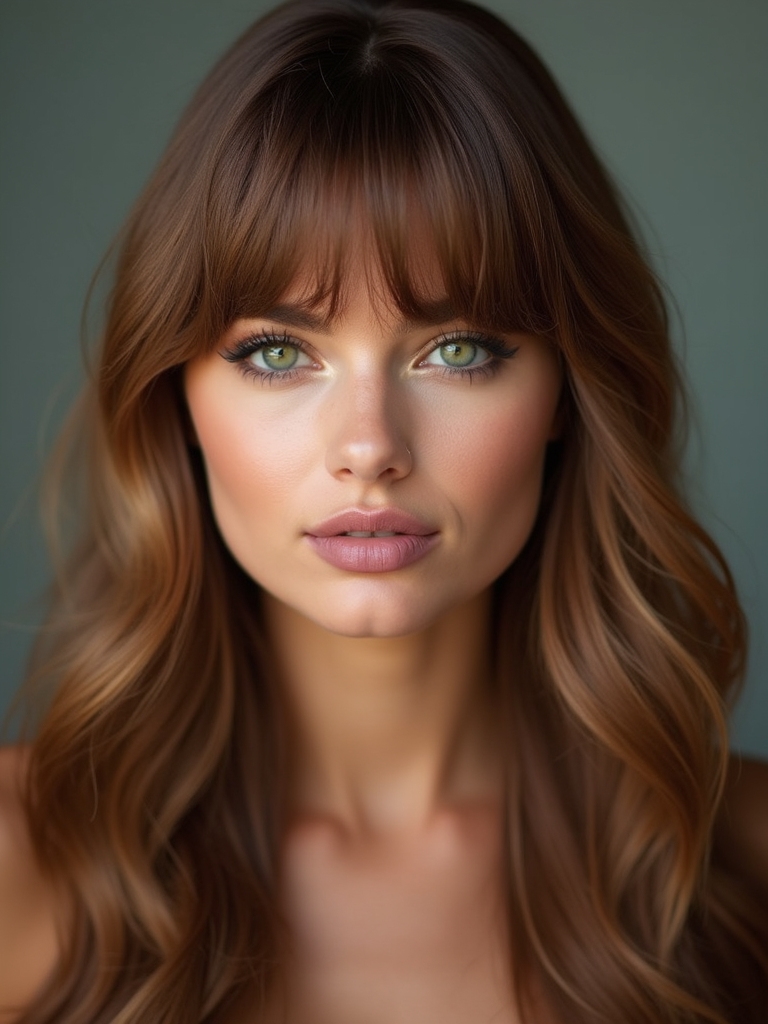
Before any scissors come out, be honest about your texture, because it changes everything about how curtain bangs behave. Straight and fine hair takes the cut cleanly but can go flat, so it benefits from a little length and root lift.
Thick or coarse hair holds the shape beautifully but needs internal thinning so the fringe does not sit heavy. Wavy and curly hair shrinks as it dries, so the bangs must be cut longer to land where you want. Knowing which camp you are in is the difference between bangs that work with your hair and bangs you fight every morning.
- Fine and straight: cut a touch longer, add root lift for body
- Thick and coarse: thin internally so the fringe is not heavy
- Wavy and curly: cut long to allow for shrinkage as it dries
Tools for Cutting and Styling
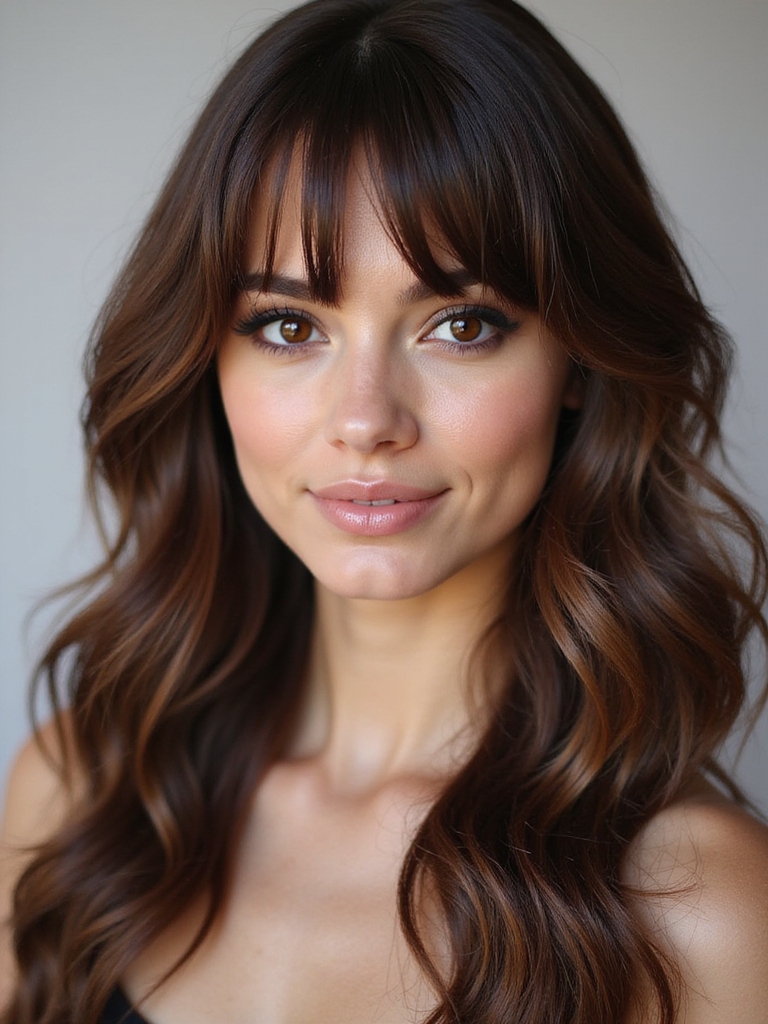
If you trim at home, the right tools save you from a bad week. Use proper hair-cutting shears, never kitchen or craft scissors, which fray the ends and cause split, frizzy bangs. A fine-tooth comb sections cleanly, and small hair clips keep the rest of your hair out of the way.
For styling, a round brush and a blow dryer give curtain bangs their signature swoop, and a little dry shampoo extends the look to day two. That is honestly all you need, and the cut itself takes about ten minutes in a stylist’s hands. This is not a fringe that demands a drawer of gadgets to wear well.
Soft or bold? A quick gut check.
1Want easy and romantic?
Go cheekbone-length and air-dry. It blends and grows out beautifully.
2Want a statement?
Try eyebrow-length, but commit to a daily round-brush to keep it sharp.
Finding the Perfect Parting
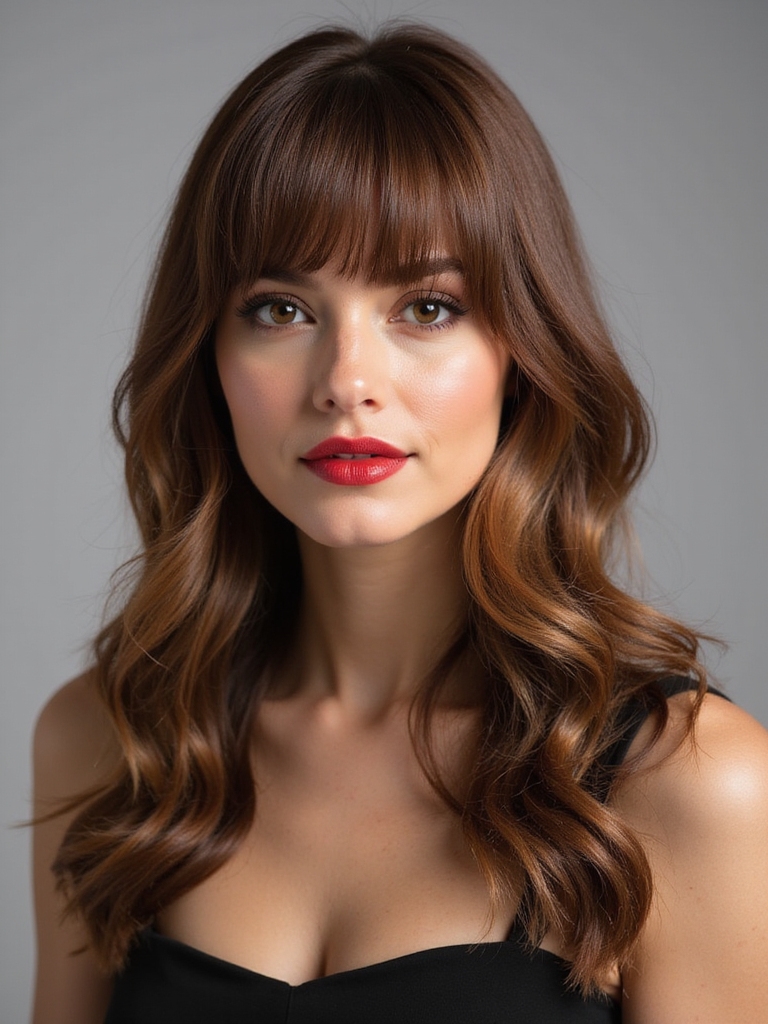
Half the success of curtain bangs is the part, and most people fight their natural one instead of using it. Find where your hair already wants to split, usually revealed when you push wet hair back and let it fall, and build the bangs around that. Working with your natural part means the fringe sits flat and even instead of separating into a gap.
A center part is classic for curtain bangs, but a slightly off-center split softens a longer or narrower face. Experiment over a few days before you decide your bangs are wrong; often it is just the parting that needs adjusting.
Cutting Technique for Curtain Bangs
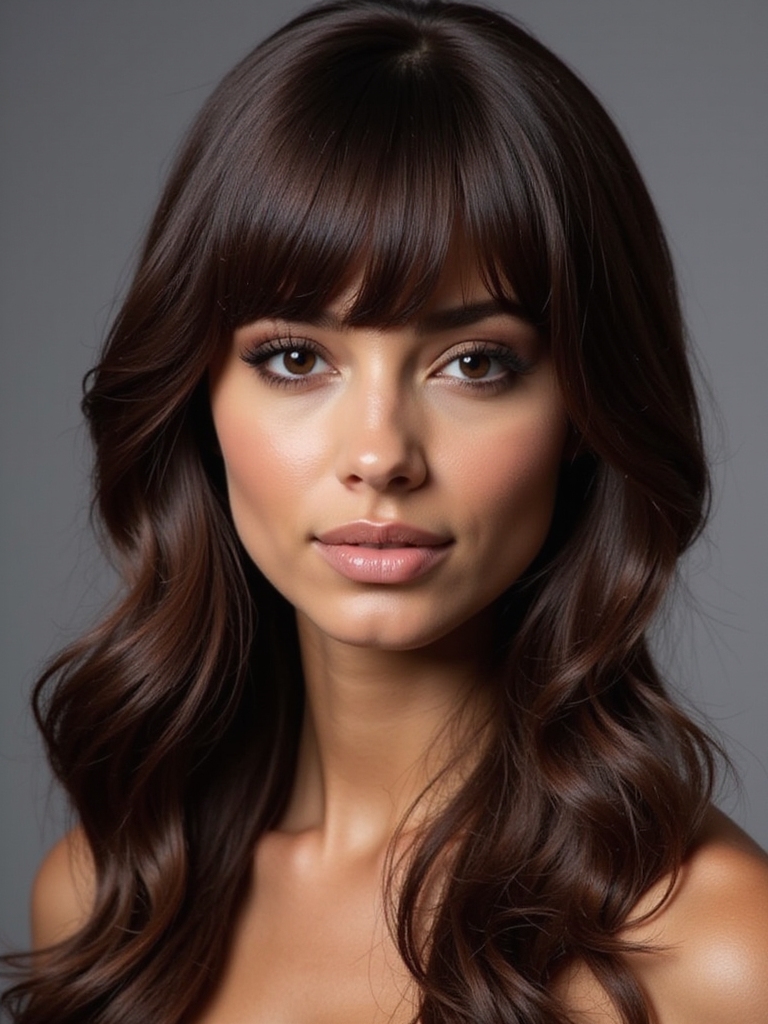
If you cut at home, go slow and conservative. Section a triangle from the peaks of your eyebrows back to your part, twist it, and snip upward into the twist rather than straight across, which is what creates that soft, wispy, graduated edge instead of a blunt line. Cut on dry hair every time, so the length you see is the length you keep, especially with any wave.
Honestly, though, for a first set on long hair I send people to a stylist. A pro cuts the angle that blends into your length, and a salon bang trim is cheap. After that, you can maintain at home between visits.
- Section a triangle from brow peaks back to your part
- Twist and point-cut upward for a soft, graduated edge
- Always cut dry, and take less than you think
Two curtain-bang personalities.
🎯Wispy and sheer
Light, see-through bangs that feel modern and barely-there, easiest on fine hair.
🎯Full and swoopy
Denser, more dramatic bangs with a strong swoop, best on thick hair that holds shape.
Blending Bangs Into Long Layers
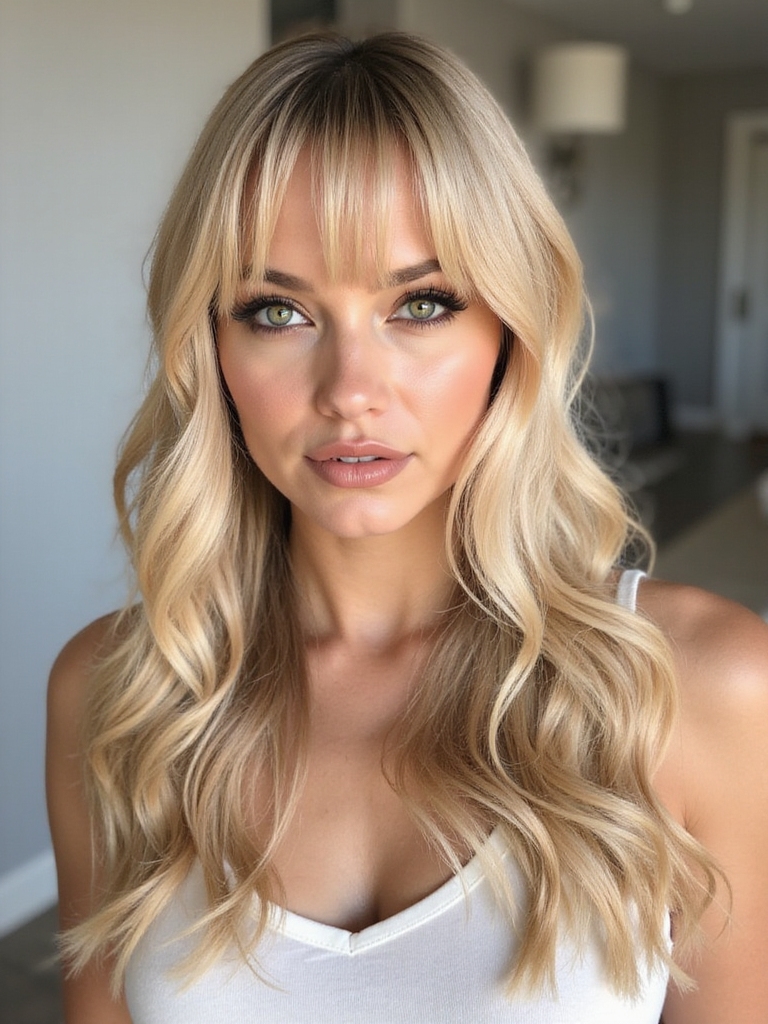
The magic of curtain bangs on long hair is the blend, where the fringe melts into face-framing layers with no visible seam between the two. Ask your stylist to connect the bangs to a few layers around your face, so the shortest piece at the front travels smoothly down to your lengths.
Without that blend, bangs can look stuck on, like they belong to a different haircut. A soft wave through the front pieces also helps everything mingle, which is why curtain bangs and long, worn-in layers are such a natural pair.
Playful Everyday Styling
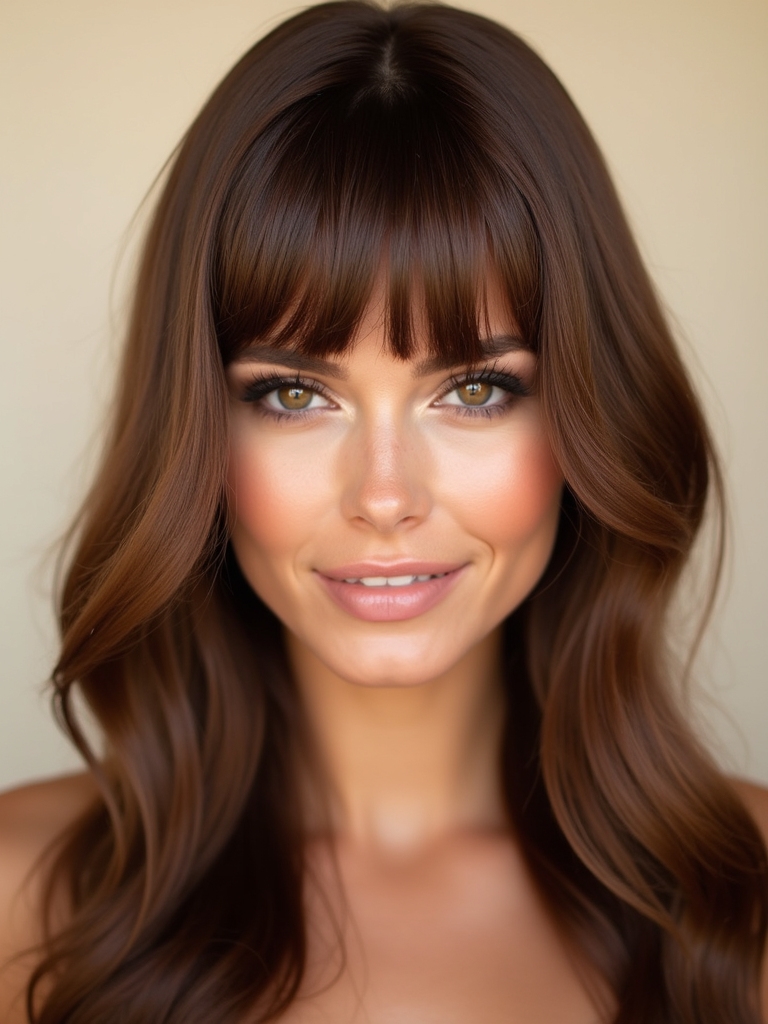
Day to day, curtain bangs are forgiving and a little fun. Most mornings need nothing more than a quick refresh: a spritz of water or dry shampoo, a fast brush-through, and a finger-shaped split.
Reset Them in Seconds
If they wake up flat or wonky, do not panic. A few seconds with a round brush or a flat iron resets the swoop, and a cool blast locks it in.
On no-effort days, pin them back, tuck them behind your ears, or sweep them into a half-up. Curtain bangs were built for exactly this kind of flexibility.
How to Blow-Dry Curtain Bangs
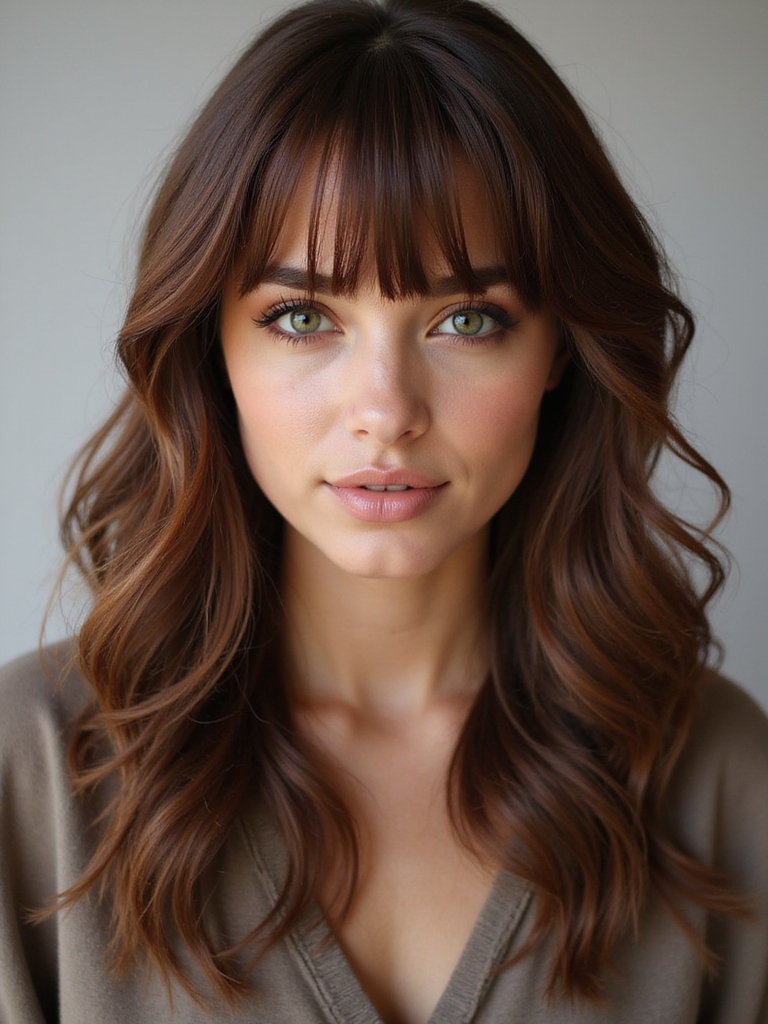
The signature curtain-bang swoop comes from one move done right. Start with damp, not soaking, bangs, since drying them first keeps them from setting in an awkward direction as the rest of your hair dries.
Take a round brush, roll the bangs back and away from your face, and follow with the dryer on medium heat. Over-direct each side slightly past where you want it to land, then let it fall.
Finish with a shot of cool air so the shape sets. That cool shot is the step most people skip, and it is what makes the swoop last all day.
Using Heat Tools Safely
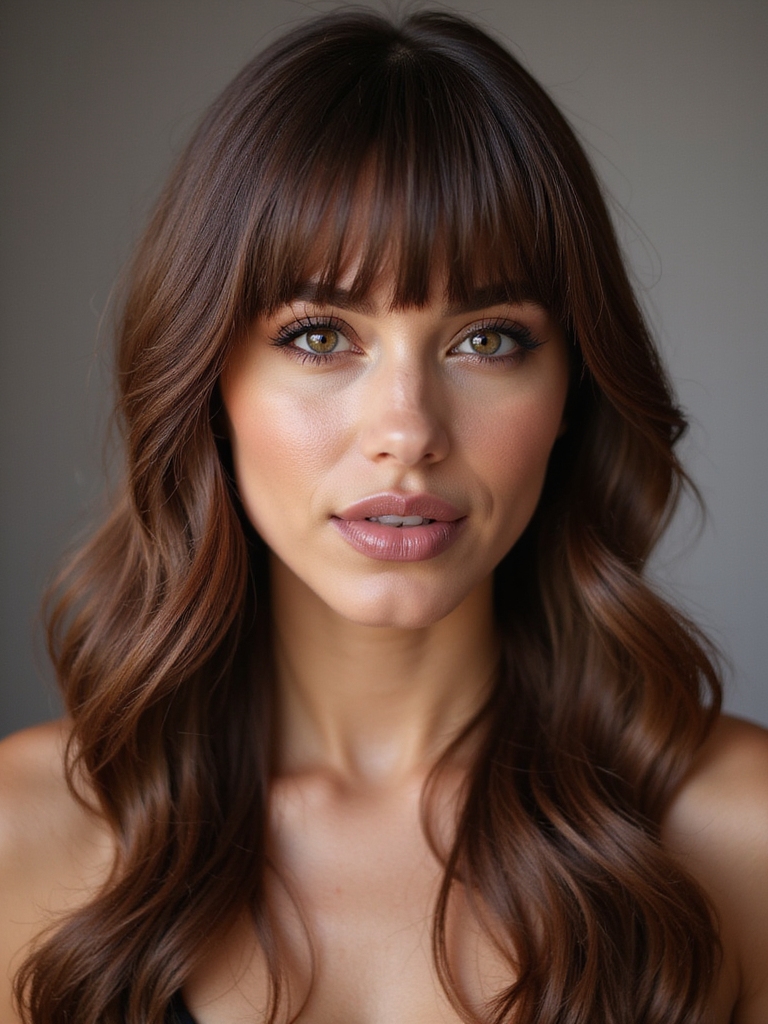
A flat iron or a small curling wand can perfect curtain bangs in seconds, but the front of your hair takes daily heat and shows damage first. Protect it. Always mist a heat protectant before any tool touches your bangs, keep the temperature moderate rather than maxed out, and move quickly instead of clamping in one spot.
Because bangs are thin and frame your face, even a little breakage or frizz here is obvious, so this is the one area worth babying. Used with care, heat tools give you a clean swoop; used carelessly, they fry the most visible hair you have.
- Mist on a heat protectant before any hot tool comes near
- Keep the heat moderate, since fine bangs scorch fast
- Move quickly and never clamp in one spot
Your Trimming and Maintenance Schedule
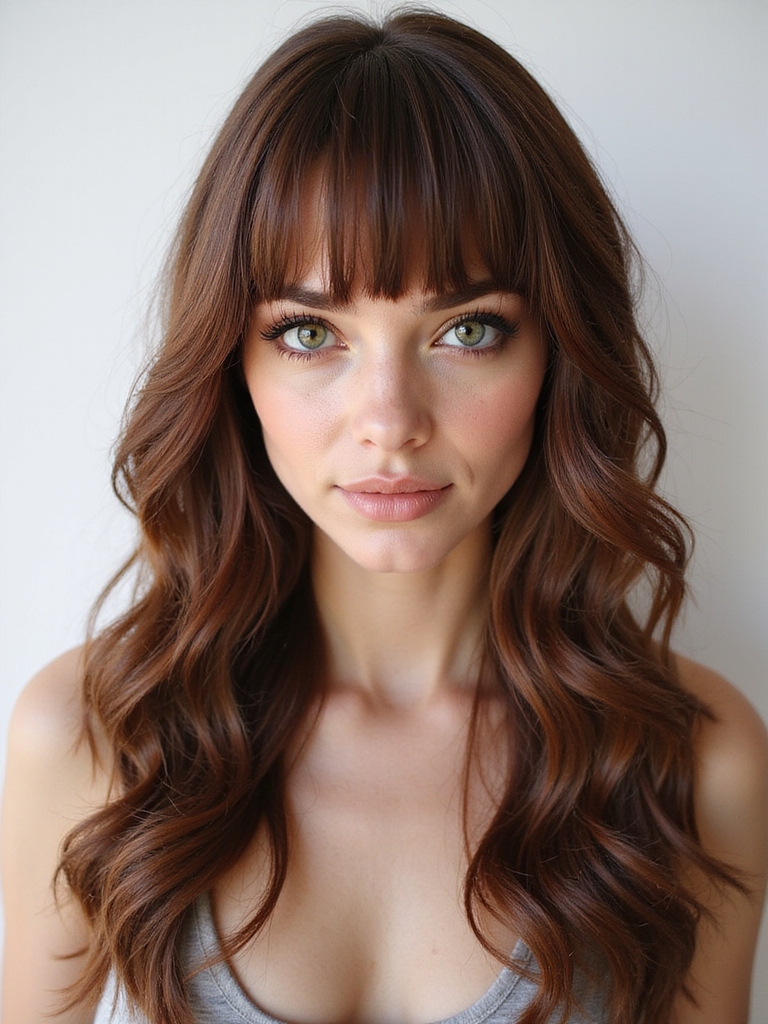
Curtain bangs grow fast, and on long hair the contrast makes that growth obvious, so a schedule keeps them looking sharp. Plan a trim every 4 to 6 weeks, whether at the salon or carefully at home.
Cheap, Quick, Worth It
The good news is that a bang trim is quick and cheap, often free if your stylist offers it between cuts, or about $15 to $30 as a standalone. It is the single best-value appointment in hair.
Skip too many trims and the bangs blur into your length, which is fine if you are growing them out, but not if you want the framed look to stay crisp.
Managing Wayward Bangs
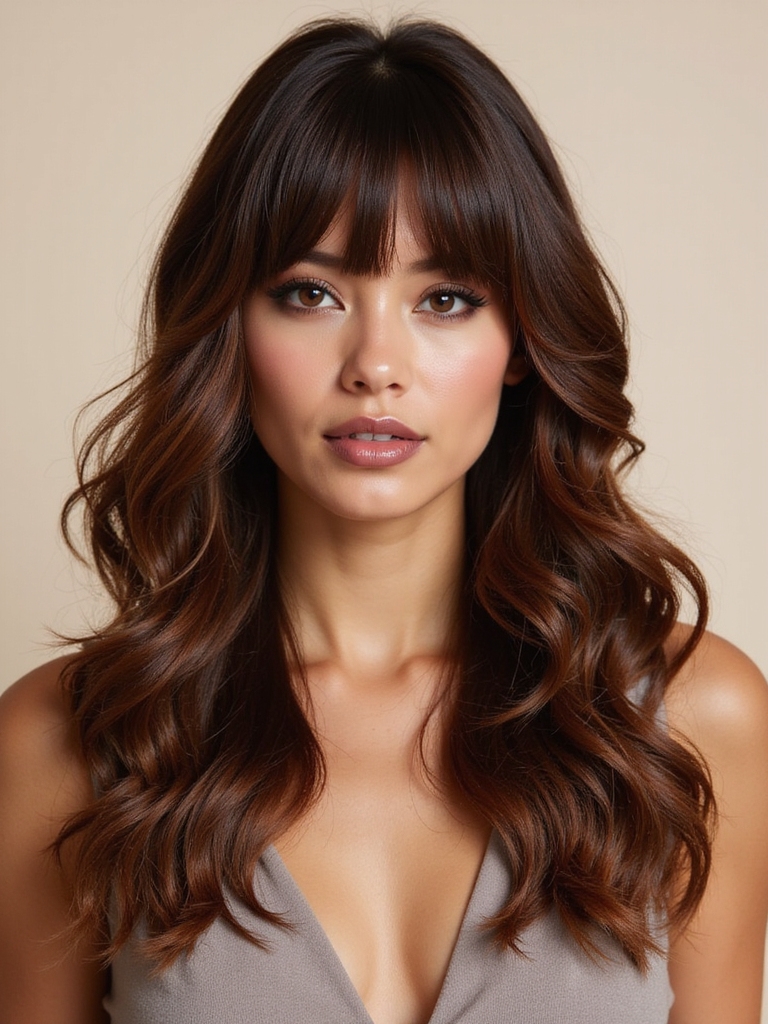
Every bang wearer has the morning when the fringe will not cooperate, splitting wrong, sticking up, or going limp. The fixes are simple. For a stubborn split or a cowlick, dampen the roots and re-dry in the right direction; dry styling on top of a bad set never holds.
For greasy, flat bangs, dry shampoo at the roots is your best friend, since the front gets oily fastest from your hands and face. And for a truly lost cause, a cute clip or a twist-back turns a bad bang day into a deliberate style in seconds.
Curtain Bangs With Long Layers
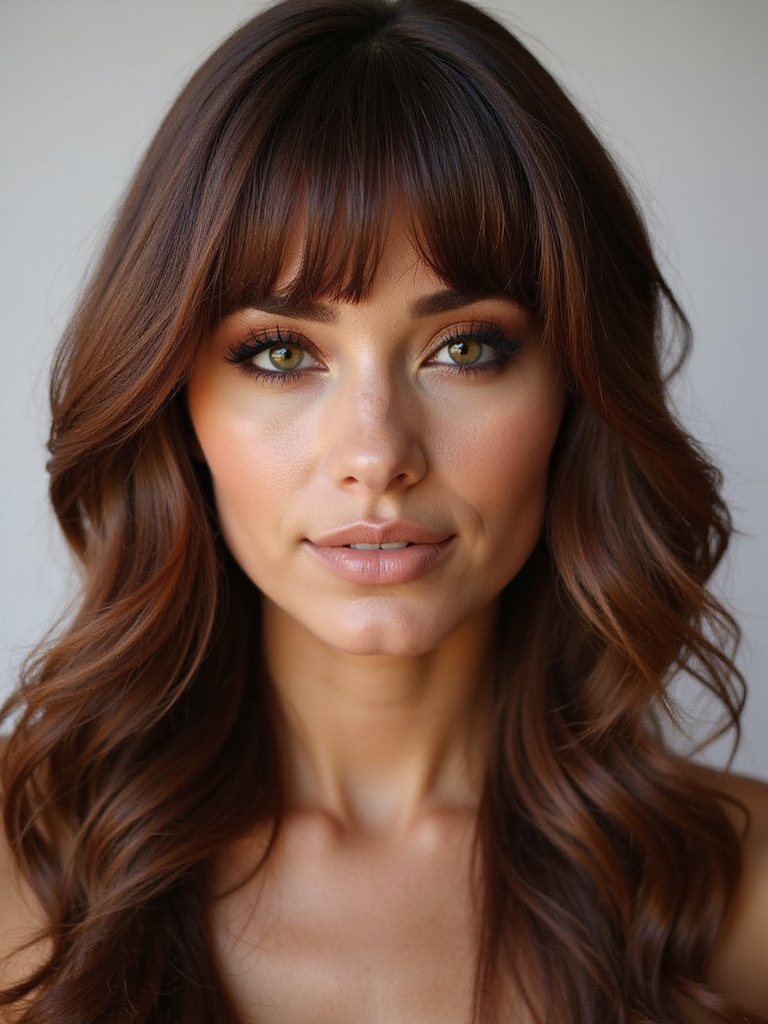
Curtain bangs and long layers are a classic pairing for a reason: both add movement, and together they create that worn-in, expensive-looking flow. The layers pick up where the bangs leave off, carrying the face-framing shape down your lengths.
If you have long, one-length hair, adding a few soft layers around the face when you get your bangs makes the whole cut hang together. Ask for the shortest layer to connect to the longest bang piece for a smooth transition.
- Long layers continue the face-framing the bangs start
- Connect the shortest layer to the longest bang piece
- Together they create movement one-length long hair lacks
Soft Waves With Curtain Bangs
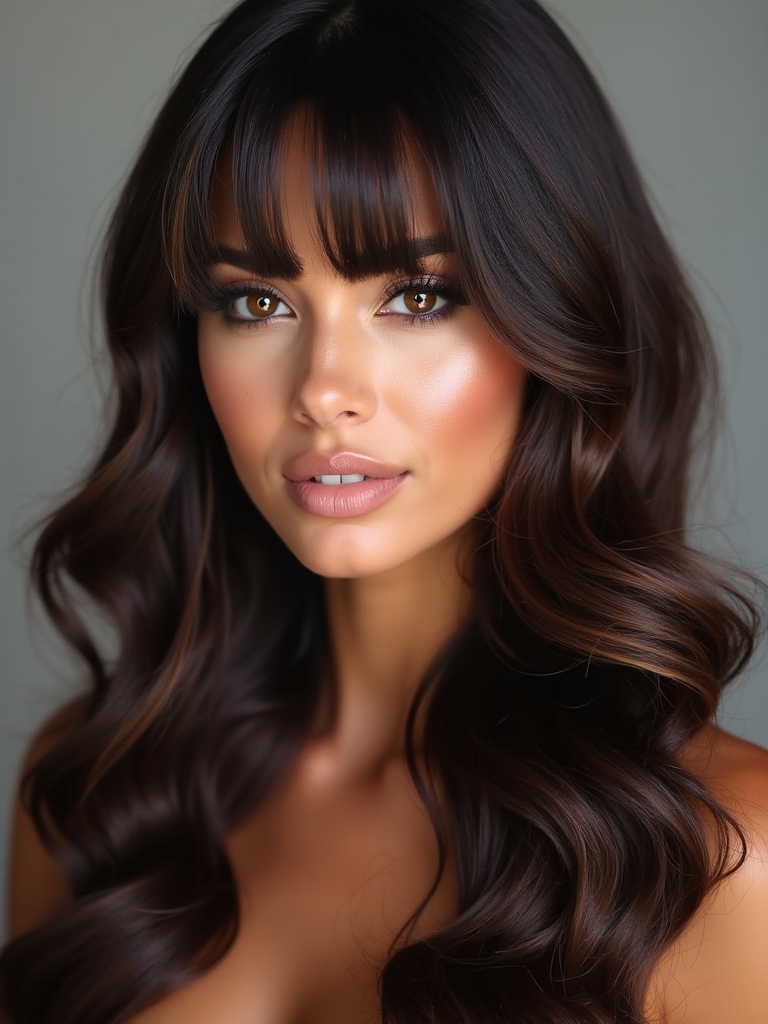
Loose waves are the most flattering everyday look for long hair with curtain bangs. The bend in the lengths echoes the soft swoop of the fringe, and the whole thing reads polished without trying. Wave your hair with a large-barrel iron or a heatless overnight set, then style the bangs separately so they keep their clean shape.
Keep the waves soft and undone rather than tight and uniform, which would fight the casual ease curtain bangs are known for. A texture spray adds the worn-in finish that ties it together.
- Wave the lengths, but style the bangs separately for a clean swoop
- Keep waves loose and undone, not tight and structured
- A texture spray adds the worn-in, casual finish
Updos With Curtain Bangs
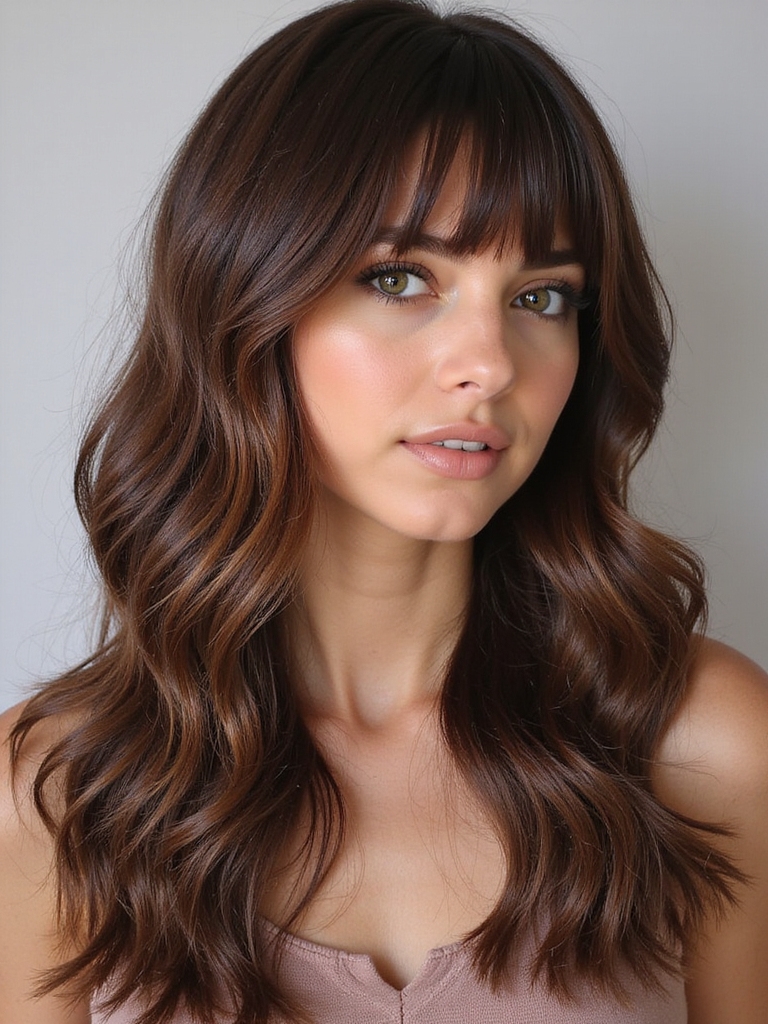
One of the best things about curtain bangs on long hair is that they make every updo look more finished. Sweep your length into a bun, a ponytail, or a soft curly updo, and the bangs left out instantly soften the style and frame your face.
Because curtain bangs are designed to fall to the sides, they suit pulled-back looks better than blunt fringe ever could, never looking stranded or awkward when the rest is up. For events, a quick blow-dry on just the bangs lifts a simple updo into something polished. This is the secret reason so many long-haired brides and bridesmaids keep their fringe.
- Bangs left out soften any bun or ponytail
- They suit updos better than blunt fringe, never looking stranded
- Blow-dry just the bangs to dress up a simple updo
Framing Your Eyes With Bangs
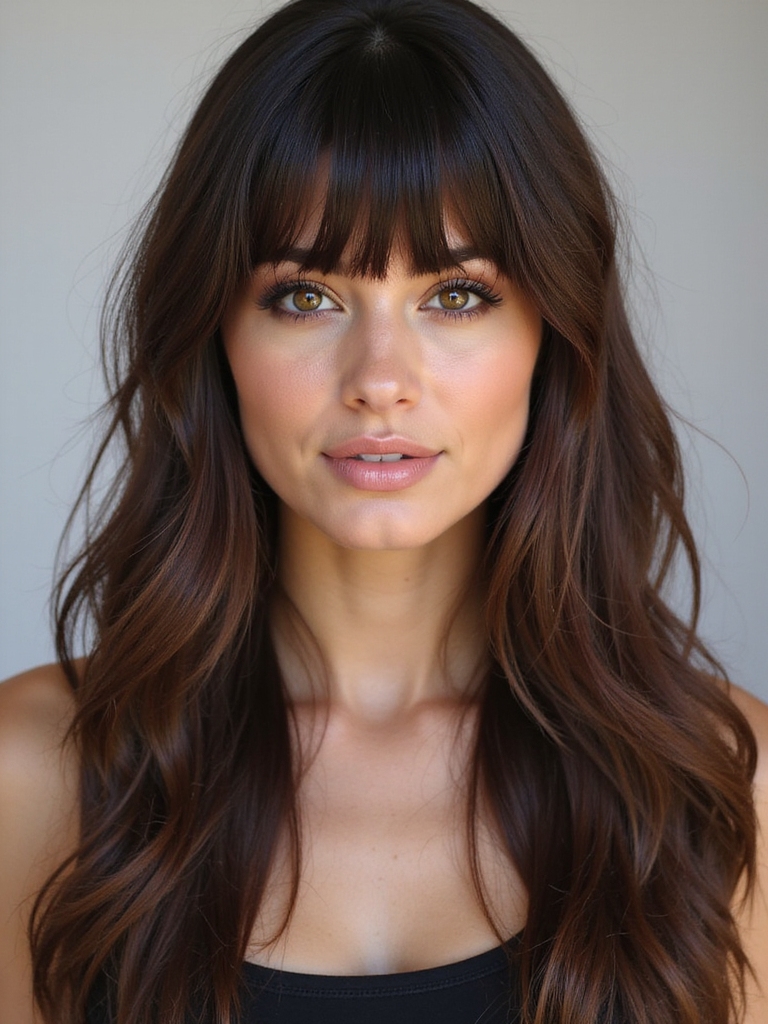
Curtain bangs are quietly the best way to draw attention to your eyes. Cut to graze or sit just below the brow, they frame your gaze the way a good pair of glasses does, pulling focus to the center of your face. That framing is especially flattering if you love eye makeup, since the bangs spotlight exactly where it shows.
For the most eye-flattering version, keep the inner bang pieces a touch shorter and the outer pieces longer, so the fringe opens around your eyes rather than curtaining them off. Small adjustment, big difference.
How Curtain Bangs Enhance Your Jawline
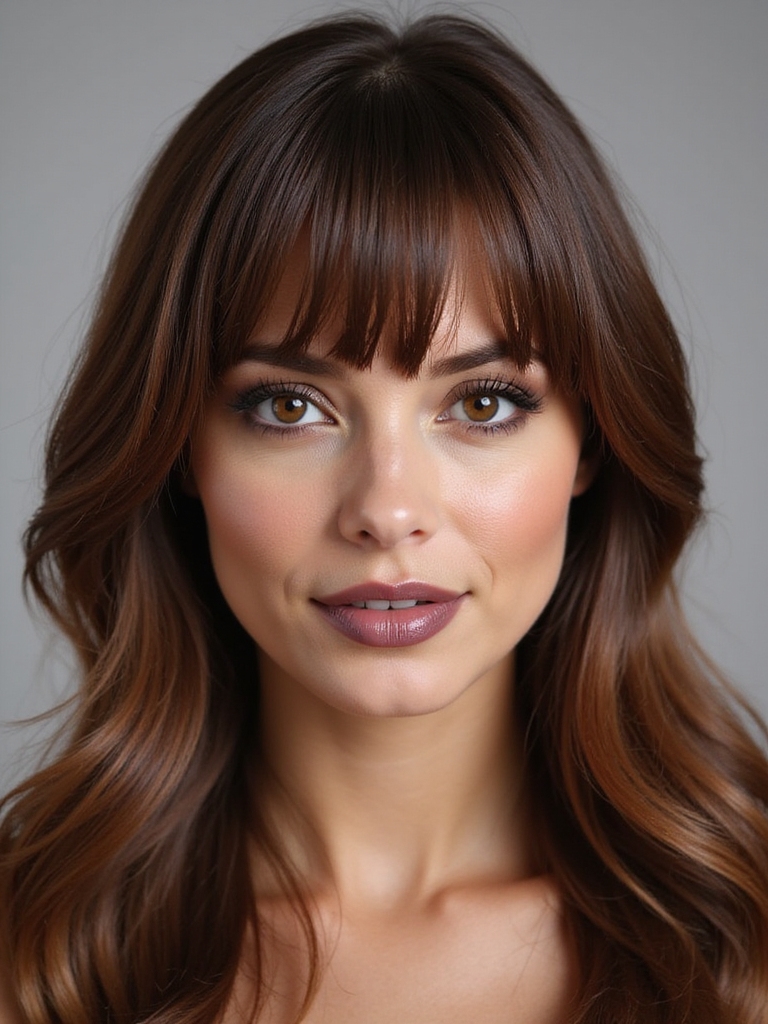
Beyond your eyes, curtain bangs do subtle work on the lower half of your face. Because the longest pieces fall toward your cheekbones and jaw, they draw a soft diagonal line that flatters and slims, especially on rounder or fuller faces.
On long hair, where the lengths can sometimes drag the face down, that upward, outward sweep at the front lifts everything. The trick is keeping those outer bang pieces long enough to reach your cheekbone, where they do the most flattering work. Cut too short, and you lose the contouring effect that makes curtain bangs so universally loved.
- The longest pieces draw a soft, slimming diagonal to the jaw
- Keep the outer bangs cheekbone-length for the contouring effect
- Especially flattering on rounder and fuller faces
Seasonal Styling Tips
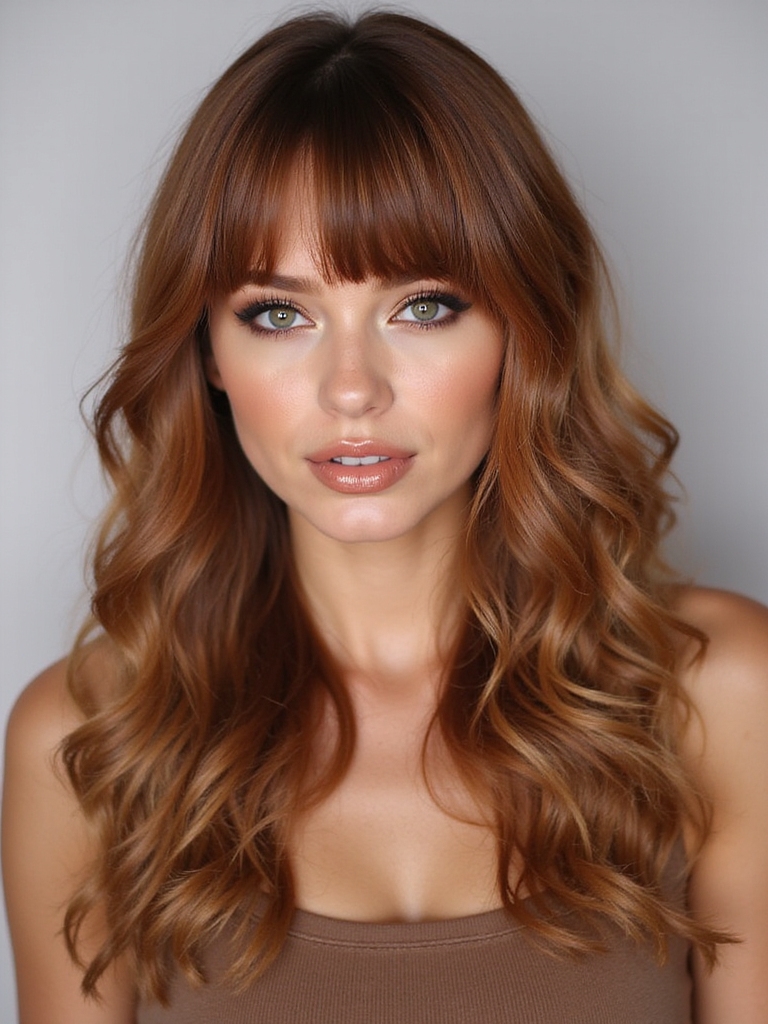
Bangs feel the weather before the rest of your hair does, since they sit against your forehead. In summer heat and humidity, sweat and frizz are the enemy, so a lightweight anti-humidity product and a willingness to pin them back on the worst days save you.
In winter, dry air and hat hair flatten the swoop, so dry shampoo and a quick round-brush reset become your routine. The cut stays the same year round; only your products and your patience flex with the season. Plan for it and your bangs stay sharp through every month.
- Summer: anti-humidity product and pin-backs for frizz days
- Winter: dry shampoo and a round-brush reset for hat hair
- Keep the cut, just flex your products with the weather
Common Bang Mistakes and Fixes
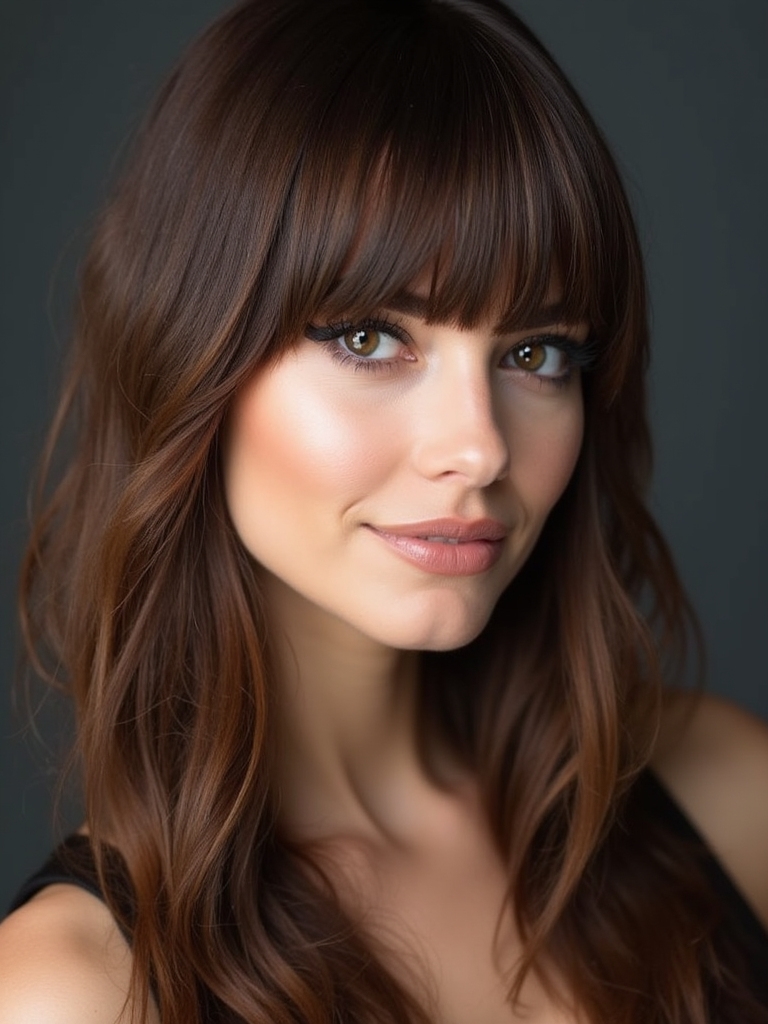
The biggest mistake is cutting bangs too short, usually by cutting wet hair that then springs up shorter as it dries. Cut dry, and take less than feels right, every time.
The second is fighting your natural part, which leaves the bangs splitting into a gap. Work with where your hair wants to fall instead of forcing a part it rejects.
The third is touching them all day. Hands transfer oil, so the more you fuss, the faster they go flat and greasy. Style once, then leave them alone.
Protective Styles With Bangs Left Out
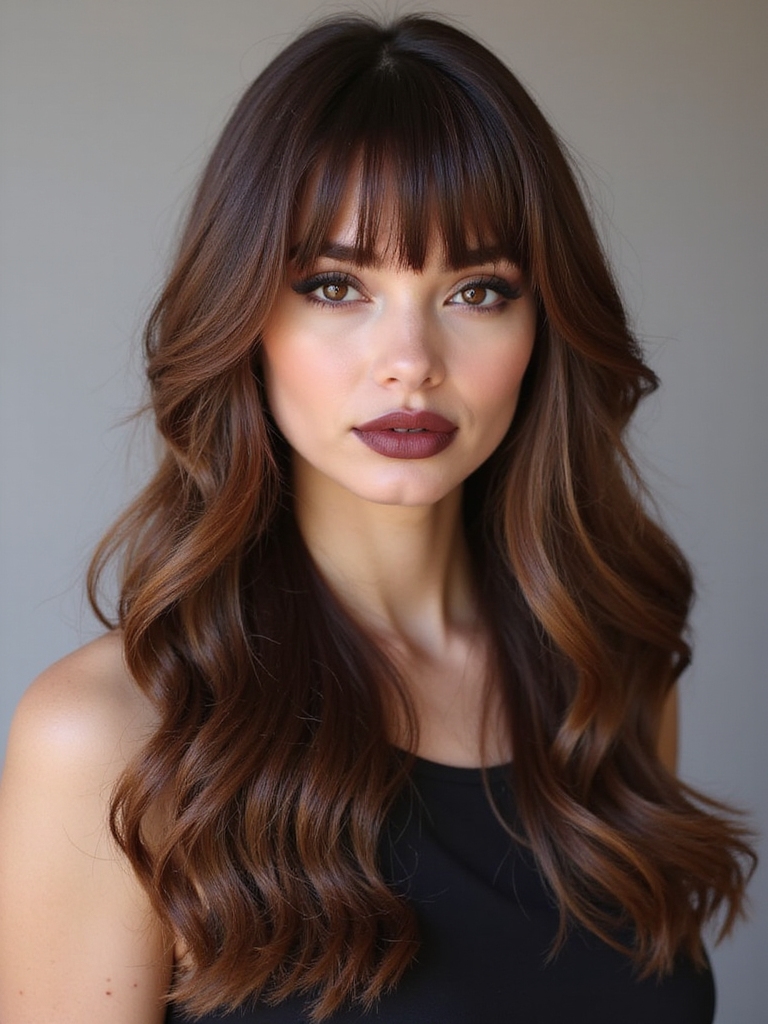
If you wear braids, twists, or other protective styles on long hair, leaving out a curtain fringe softens the whole look and keeps it from feeling severe. The bangs give a face-framing break against the sleekness of a braided or pulled-back style, and they let you keep some of your natural texture on show.
Just be gentle with the left-out hair, since the fringe is doing extra work and skipping the protection the rest of your hair gets. Moisturize it, limit heat, and it will hold up. For more texture-forward options, curly bangs pair beautifully with protective styles.
- A left-out fringe softens braids and pulled-back styles
- Keeps some natural texture and face-framing on show
- Be gentle with the left-out hair, since it skips the protection
Dressing Curtain Bangs Up or Down
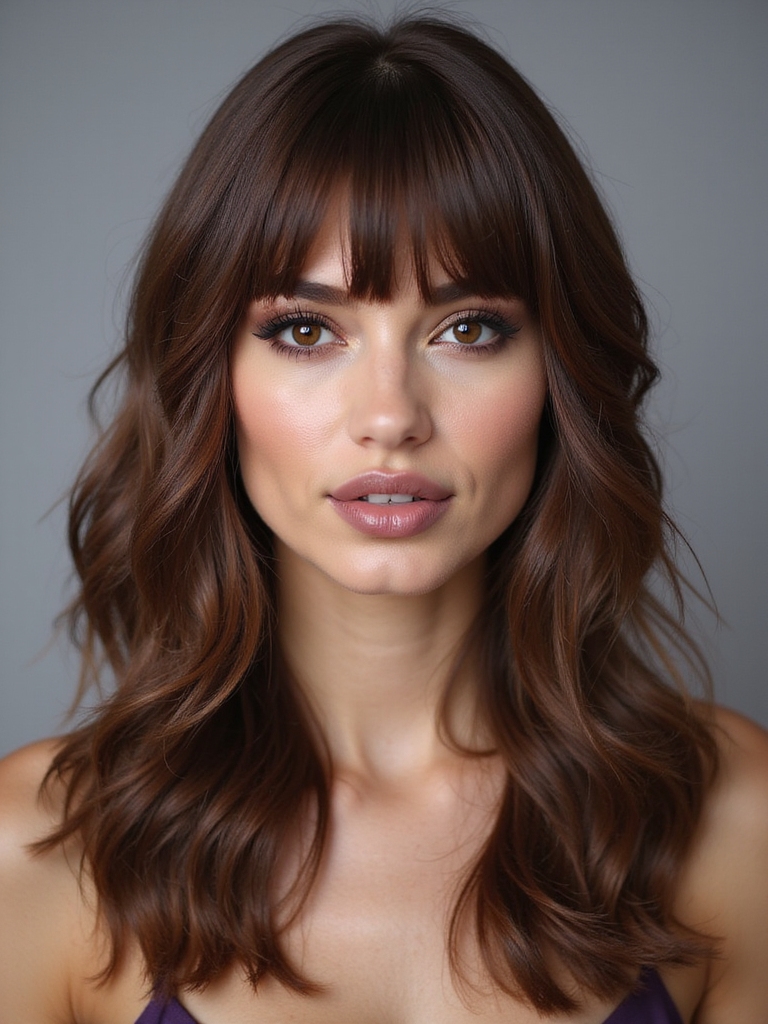
The same set of curtain bangs can read casual or polished depending entirely on the finish. Air-dried and tousled, they feel relaxed and everyday. Smoothed with a round brush and set with a cool blast, they look done and dressy enough for an event.
That range is a gift on long hair, where you want one cut to carry you from a weekday to a wedding. Learn the quick blow-dry version for the times you want polish, and let them air-dry the rest of the time.
- Air-dried and tousled for casual, everyday wear
- Round-brushed and set for a polished, dressy finish
- One cut covers both, no recut required
Curtain Bangs on Curly Long Hair
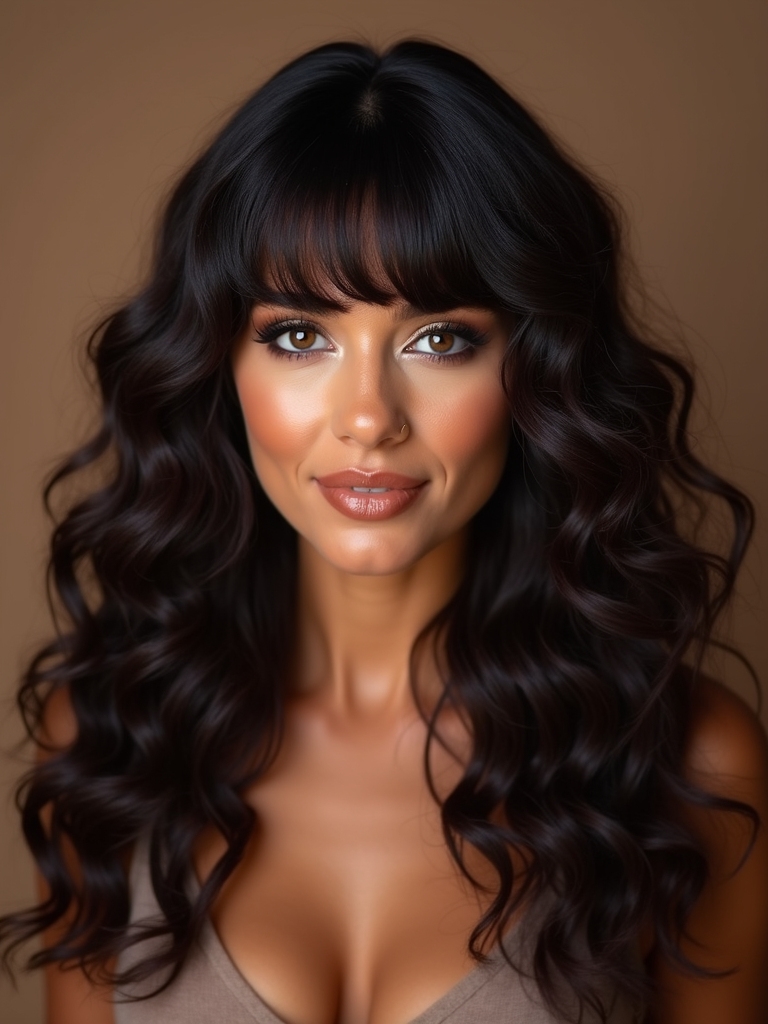
Curtain bangs absolutely work on long curly hair, but the rules shift. Curls shrink dramatically as they dry, so the bangs must be cut much longer than the length you want them to land, and they should be cut dry, curl by curl, never wet and stretched.
Done right, a curly curtain fringe is soft and romantic, springing into a face-framing shape with zero heat. The key is leaving them long enough that shrinkage works in your favor, then defining them with a little curl cream alongside the rest of your hair. A curl-literate stylist makes all the difference here, since a generic bang cut shrinks into a surprise.
- Cut curly bangs long, dry, and curl by curl for shrinkage
- Define them with a little curl cream, no heat needed
- See a curl specialist; a generic cut shrinks unpredictably
Where to Find Curtain Bang Inspiration
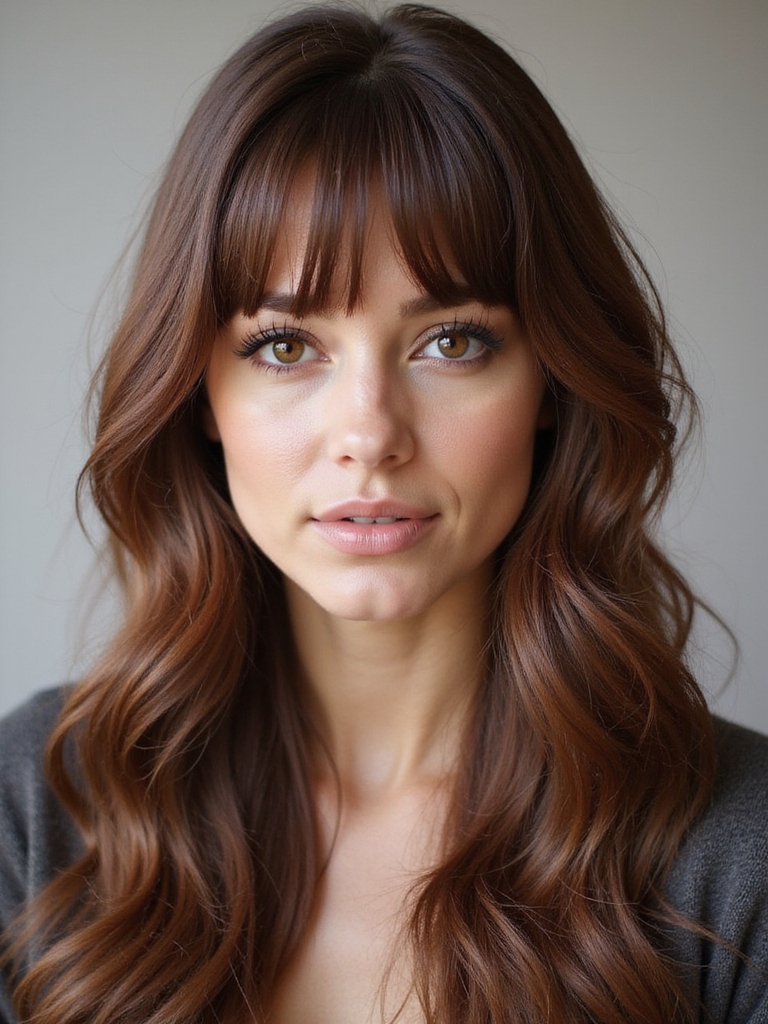
When you go looking for ideas, gather more than one perfect photo. Save several curtain-bang looks that share your hair texture and length, including a couple shown air-dried, so you see how they really behave day to day.
Collect Real, Air-Dried Looks
Stylist portfolios and real client galleries are far more honest than heavily styled campaign shots, where the bangs are blow-dried to perfection no one maintains at home.
Bring your collection to your appointment. A clear visual conversation beats any description, and it keeps you and your stylist aimed at the same result.
Maintenance & Care
On long hair, the weight of your length can drag the bangs flat faster than on a cropped cut, so the daily reset matters a little more. Keeping them sharp is mostly rhythm. Trim every 4 to 6 weeks, wash the bangs more often than your lengths since the front gets oily fast, and reset the swoop with a quick round-brush or a damp re-dry whenever they fall flat.
Protect them from daily heat with a heat protectant and a moderate temperature, because the most visible hair you have is also the first to show damage. Keep your hands off them through the day, and they stay fresher far longer.
Above all, lean into what curtain bangs do best: low-effort flexibility. They are forgiving by design, they grow out straight into your face-framing layers with none of the awkward blunt-fringe phase, and they reframe long hair without costing you a single inch of length. That painless grow-out, more than anything, is what makes them worth trying on long hair.
The Easiest Change You’ll Love
Curtain bangs are the rare cut that gives long hair a whole new feeling without asking you to lose your length or your low-maintenance mornings. They frame your eyes, flatter your jaw, dress up every updo, and forgive the days you barely touch them.
If you have been hesitating, this is about as low-risk as a hair change gets, because the same softness that makes them flattering makes them painless to grow out. Save a few real, air-dried references, find a stylist who blends them into your layers, and give your long hair the front-row upgrade it has been missing.