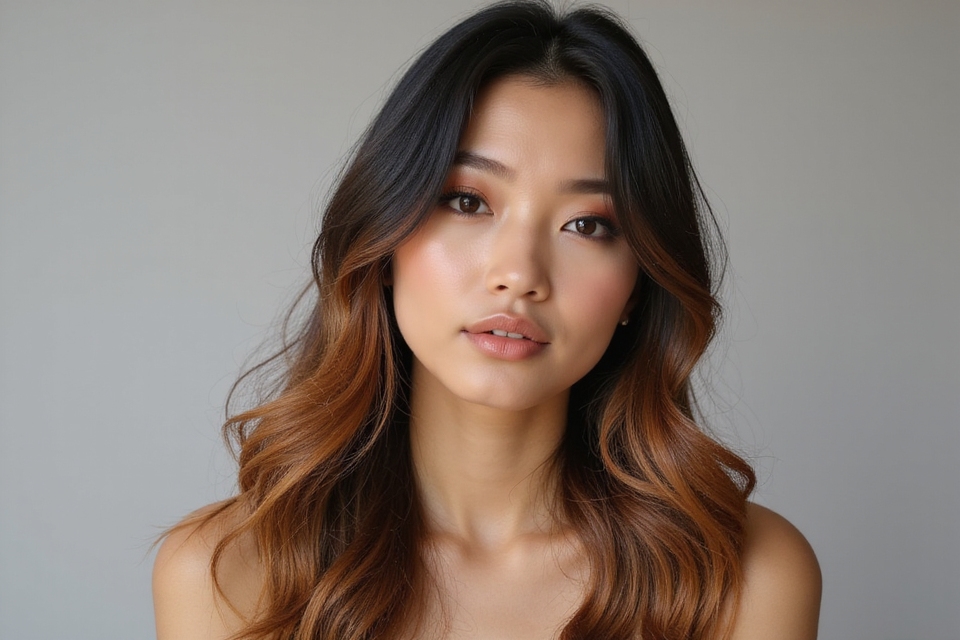

Here’s the honest thing most shade charts won’t tell you: nearly every dark hair color you’re looking at can be reached without bleach, and the one that actually suits you comes down to undertone, not the photo on the box. Cool skin wants ash and blue-black; warm skin glows under espresso, mocha, and chestnut.
So instead of just naming pretty shades, I’ve sorted these 25 by undertone and walked through who each one flatters, whether it needs lightening first, and roughly what it takes to keep it from fading muddy. Find the temperature that matches your skin, then pick the depth you can keep up with.
How to Read This List
- Match the undertone first: cool shades (ash, blue-black, plum) for pink or neutral skin, warm shades (espresso, mocha, mahogany) for golden or olive skin.
- Most true-dark colors deposit onto unbleached hair, so going darker is the lowest-damage color change you can make.
- Red-based darks (burgundy, black cherry, mahogany) fade fastest and need a color-depositing conditioner to stay rich.
- A salon dark color runs roughly $80 to $150; a box or semi-permanent at home is $10 to $20 but harder to undo if it grabs too dark.
Espresso Brown, the Easy Everyday Dark

If you want dark without the commitment of black, espresso is where I send most people. It’s a deep warm brown with a coffee richness that catches gold in sunlight, so it never goes flat the way true black can on warm skin. It deposits onto natural hair with no lightening, which makes it one of the gentlest changes you can make.
- Best for golden, olive, and warm-neutral skin; it can look heavy on very cool, pink complexions.
- No bleach needed, so it’s low-damage and beginner-friendly at home.
- Refresh the warmth with a brown gloss every six to eight weeks as it fades toward flat brown.
Sleek Jet Black With Real Contrast

True jet black is the most dramatic shade here and the most permanent, so it’s the one I make people sit with before we commit. The high contrast against skin is the whole appeal: it sharpens features and gives that wet-glass shine when it’s healthy.
Why black is harder to undo than to do
The catch is going back. Black dye sinks deep into the strand, and lifting it out later usually means a long, damaging session of color removal. If you’ve never gone this dark, a semi-permanent black lets you test it for a few weeks before anything sticks.
Shine is everything with black, because a dull black just looks like roots. Keep it glossy with cool water rinses and a clear or black-tinted gloss treatment.
Rich Mocha and Its Layered Warmth

Mocha is espresso with a little more red-brown warmth woven through, and it’s the shade I mix in when a flat brown looks dull. The layered tones, some deeper, some lighter, give hair a dimensional look even when it’s all one color family, so it photographs with movement.
It suits warm and neutral skin beautifully and shifts well from day to evening. Because it leans warm, it grabs brassiness as it fades, so a quarterly toning gloss keeps the mocha from sliding into orange-brown.
Midnight Blue You Only Catch in Sunlight

Midnight blue is the sneaky cool option: indoors it looks almost black, but step into daylight and a deep inky blue surfaces through the strands. It’s a way to wear a fashion color that still passes as professional under office lighting.
On already-dark hair it tints without bleach, though the blue shows up brightest on lighter brown bases. It’s a true cool tone, so it suits pink and neutral undertones; against very warm skin the blue can look a touch cold. Expect the blue to be the first thing to wash out, so a blue-tinted conditioner earns its place in the shower.
Dark Chocolate Depth With Cocoa Warmth

Dark chocolate sits between espresso and black: deep enough to feel dramatic, warm enough to stay soft on the skin. The cocoa and mahogany undertones keep it from going cold, which is why it works for so many people who find black too harsh.
- Glides onto unbleached hair, so it’s a low-risk first dark color.
- Warm undertones flatter golden and olive skin and add a healthy-looking glow.
- Use a sulfate-free wash so the red-warm tones don’t strip out and leave you flat brown.
Luminous Ebony With a Glossy Finish

Ebony is black’s softer cousin: still very dark, but with a touch more depth and dimension so it doesn’t fall completely flat. The defining feature is shine, that glassy gleam that makes dark hair look expensive and well-kept.
The cool-rinse trick for shine
Getting there is easy, since it deposits without lifting. Keeping the gloss is the work. Once a week I’d add a shine treatment or a clear glaze, and always finish a wash with a cold-water blast so the cuticle lies flat and light bounces off evenly.
It’s near-universal across skin tones because it’s not a stark blue-black; the slight warmth keeps it from looking severe on most faces.
Charcoal, the Soft Side of Black

Charcoal is a smoky, gray-leaning black that looks like black seen through a little fog. It gives you the drama of a dark color with a softer, more modern edge, and it’s a beautiful bridge if you’re moving toward gray naturally and want to blend it in.
This one usually needs a colorist. Getting a clean cool gray often means pre-lightening, especially on dark or previously colored hair, because gray pigment won’t show over warmth. On naturally light hair it’s gentler.
It leans cool, so it suits pink and neutral skin. Purple toning shampoo every few washes keeps the gray from yellowing.
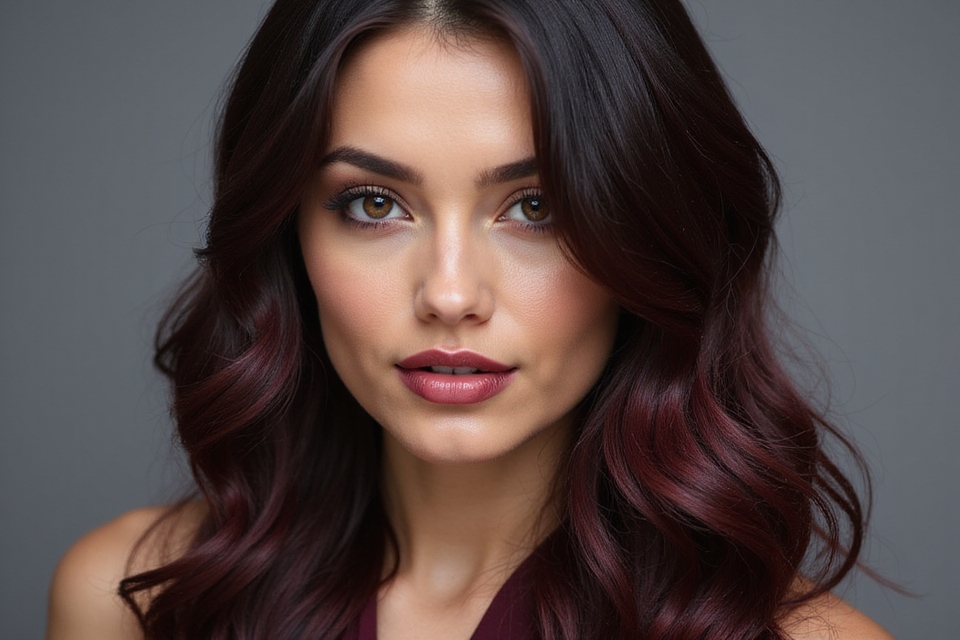
Sultry Burgundy, a Deep Red Blend

Burgundy is where dark turns romantic: deep reds and purples blended into a wine tone that shifts under different lights. It’s bold without being neon, which is why it works on people who want a color statement that still feels grown-up.
On dark hair it shows as a subtle red shimmer; on lighter brown it turns fully wine. If you want it vivid, it may need a little lifting first. For the full range, my guide to burgundy shades breaks down which lean red versus purple.
- Flatters both warm and cool skin depending on how red or purple you take it.
- Reds fade fastest of any dark color, sometimes within four to six weeks.
- A red-depositing conditioner is non-negotiable to keep it from washing to brown.
Deep Chestnut, Warm and Versatile

Chestnut is the dark shade that acts like a neutral: a red-brown that warms the skin and catches gold when the sun hits, sitting comfortably between brown and red. It’s the one I suggest for people who want a little life in their dark hair without anyone calling it red.
Those warm undertones light up golden, tan, and olive complexions especially well. It deposits without bleach and grows out softly, so it’s forgiving on upkeep, just a gloss to revive the warmth every couple of months.
Raven Black, the Timeless One

Raven is the classic blue-cool black, the one that looks like a crow’s wing with that faint dark shimmer. It’s the most striking of the blacks and the most photogenic, which is why it never really leaves fashion.
Because it’s a cool black, it’s beautiful on cool and neutral skin and gives deep, rich-toned complexions a beautiful high-shine finish. On very warm skin it can look a little stark, so a softer ebony might suit better. Treat it like any black on upkeep: shine is the whole game.
- Deposits without lifting, so the color itself is low-damage.
- Cool blue base looks beautiful on pink, neutral, and deep skin tones.
- Keep a clear gloss in rotation; dull raven loses all its drama.
Three terms worth knowing before you pick a dark shade:
📖Deposit-only
Color that adds pigment without lightening, so no bleach and minimal damage. Most true-dark shades work this way.
📖Undertone
The warm (gold/red) or cool (ash/blue) base of a color. Matching it to your skin is what makes a shade flatter you.
📖Gloss or glaze
A semi-transparent toner that revives shine and color between dye jobs, usually every few weeks.
Plum-Infused Darkness

Plum darkness is a near-black laced with purple, so it looks dramatic indoors and reveals amethyst and currant tones in bright light. It’s a subtle way to wear purple if a full violet feels like too much.
On dark hair the plum stays whispery; on lighter bases it gets richer and may need a little lift. It’s a cool-purple tone, so it lights up cool and neutral skin. If you love how it surfaces in the light, my plum shade breakdown covers brighter versions too. Purple fades quick, so a violet-depositing conditioner keeps it alive.
Shadowy Ash Black for Cool Skin

Ash black is a cool, slightly matte black with a smoky slate undertone and none of the blue or warmth of other blacks. It’s the most modern-looking black, the kind that photographs flat-cool and expensive, and it sits best against cool and neutral complexions.
- Cool slate undertone suits pink and neutral skin; it can look ashy on very warm tones.
- Often needs a colorist to keep the cool from grabbing brassy, especially over old warm dye.
- Lean on protective, color-safe washing so the smoky depth stays put instead of fading warm.
Black Cherry Burst With Hidden Depth

Black cherry is a dark base with sultry red flashes that catch the light, like a black coffee with a splash of cherry cola in it. It’s among the most flattering bold darks because the red stays mostly hidden until you move.
It plays on most complexions, which is part of the appeal, the red warmth softens it on warm skin while the dark base keeps it grounded on cool skin. If you like that brown-with-a-red-secret effect, the cherry cola version pushes the same idea a shade lighter.
Like all red-darks, it fades fastest, so a red gloss every few weeks keeps the cherry from disappearing into plain dark brown.
🅰️Cool Dark
Ash black, blue-black, plum, and sable suit pink, neutral, and olive-cool skin and look crisp and modern, but they drift warm as they fade and need cool-toning to stay true.
🅱️Warm Dark
Espresso, mocha, chestnut, and mahogany suit golden and olive skin and glow in sunlight, but the warm tones can grab brassy over time and want the occasional gloss.
Onyx Opulence, Pure Enigmatic Black

Onyx is black at full saturation, no warmth, no obvious blue, just deep and total. It’s the boldest, most confident version of dark hair and it makes a real statement, especially on a sleek blunt cut where the density shows off.
When full black suits you and when it overwhelms
It deposits easily and looks dramatic on nearly everyone, but it asks for commitment. The deeper and more saturated the black, the harder it is to lighten later, so this is a shade to be sure about.
Keep it from looking heavy by pairing it with healthy shine and movement in the cut, so it doesn’t sit on you like a helmet.
Cool-Toned Sable for Icy Undertones

Sable is a deep espresso pulled cool, so it has the richness of dark brown without any of the gold or red. It’s the dark brown for people who get told warm colors make them look sallow, the cool base is made for icy and olive-cool complexions where a warm espresso would clash.
It does ask for upkeep, since cool browns drift warm as they fade. Regular cool-toning glosses keep the icy quality, which is the whole reason to choose sable over a standard brown.
- Cool espresso base for cool and olive-cool skin that warm browns wash out.
- Deposits without bleach on most natural dark hair.
- Plan on a cool gloss every six weeks to fight the warm drift.
Blue-Black Beauty in Low Light

Blue-black is the most overtly cool black, with a clear blue gleam that’s visible even indoors, not just in sunlight like midnight blue. It has a gothic, polished quality that looks incredibly sleek on a glossy straight style.
It’s the blackest-looking option for cool and deep skin tones, where the blue undertone glows rather than fades out. Against warm skin the blue can read cold. Like raven, it lives and dies on shine, so keep it glassy.
- Strong blue undertone sits well on cool, neutral, and deep complexions.
- Shows most vividly over a darker base; very light hair may need a pre-tone.
- A blue-violet conditioner stops the cool from sliding warm.
Black Currant, a Berry-Dark Hue

Black currant blends rich purples into an inky base for a berry-dark color that’s a little fruitier than plum and a little deeper than burgundy. It’s romantic and a little unusual, quiet enough for someone who wants something off the standard menu.
The purple-red mix sings against cool and neutral skin, where the berry tones come alive on the complexion. On lighter hair it shows fully; on dark hair it stays a subtle shimmer that surfaces in good light.
Berry tones share the fast-fade fate of all reds and purples, so a depositing conditioner in a matching tone keeps it from going muddy.
Midnight Highlights for Subtle Dimension

Not every dark color is one solid block. Midnight highlights are tone-on-tone pieces, a slightly different dark woven through a dark base, so you get dimension and movement without any obvious lightness. It’s how you make black or deep brown look styled even on a wash-and-go day.
Low-contrast dimension that grows out clean
Because the contrast is so low, it’s subtle and grows out with no harsh line, so the regrowth almost never shows, which puts it among the easiest ways to add interest to dark hair. A colorist usually places these for the most natural blend.
It works on any base and any skin tone, since you’re staying in the same dark family and just adding depth.
💡Colorist Tip
If you’re nervous about going dark, start with a semi-permanent version of the shade you want. It fades out over four to six weeks, so you get a real-life test drive before you commit to anything permanent that’s hard to reverse.
Coffee Bean, a Deep Brown Finish

Coffee bean is a deep, warm, roasted brown, a touch warmer than espresso and very wearable. It has that cozy, lived-on richness that feels natural rather than dyed, which is exactly why it’s such an easy first dark color.
The warmth suits golden and olive skin and keeps the face looking lit rather than drained. It deposits with no lift and grows out softly.
- Warm roasted brown for golden, tan, and olive skin.
- No bleach, low damage, forgiving regrowth.
- A warm gloss every couple of months revives it as it dulls.
Inky Black Luster With Charcoal Gloss

This is black turned all the way up on shine: a deep inky base finished with a charcoal-gloss sheen so it looks almost liquid. The depth plus the gloss is what gives it that sculptural, magazine-cover quality on a sharp cut.
The color part is simple, since it deposits without lifting. The luster is the effort, weekly glaze or shine treatment, cool rinses, and a smoothing serum on the lengths so light travels cleanly down the strand.
It suits anyone who can commit to the shine routine; without it, a glossy black just becomes a dull one.
Dark Mahogany, Rich and Earthy
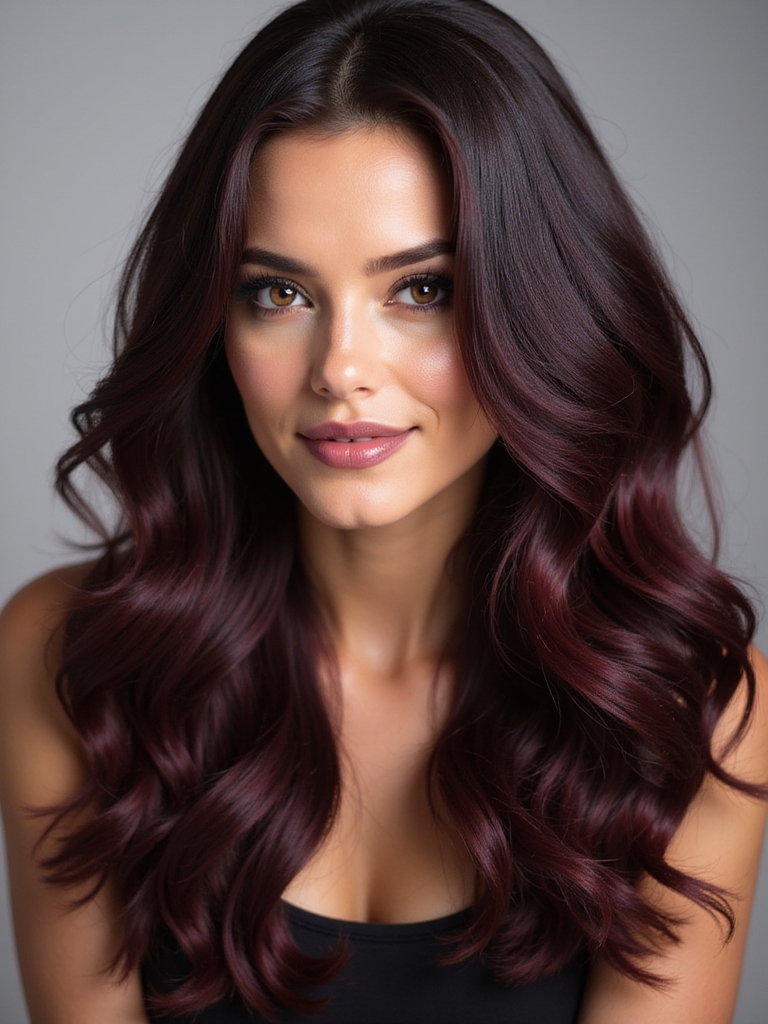
Mahogany is a dark brown with wine-red undertones, earthy and warm like polished wood. It catches deep red in the light and gives dark hair a richness that plain brown can’t, which is why it’s a perennial fall favorite.
Why mahogany glows on warm skin
Those red undertones flatter warm and warm-neutral skin and add a glow to the complexion. It deposits onto natural hair without bleach.
The red is the part that fades, so treat it like a red on upkeep: sulfate-free washing and a red-leaning gloss to keep the wine alive.
Auburn-Hinted Noir at Twilight
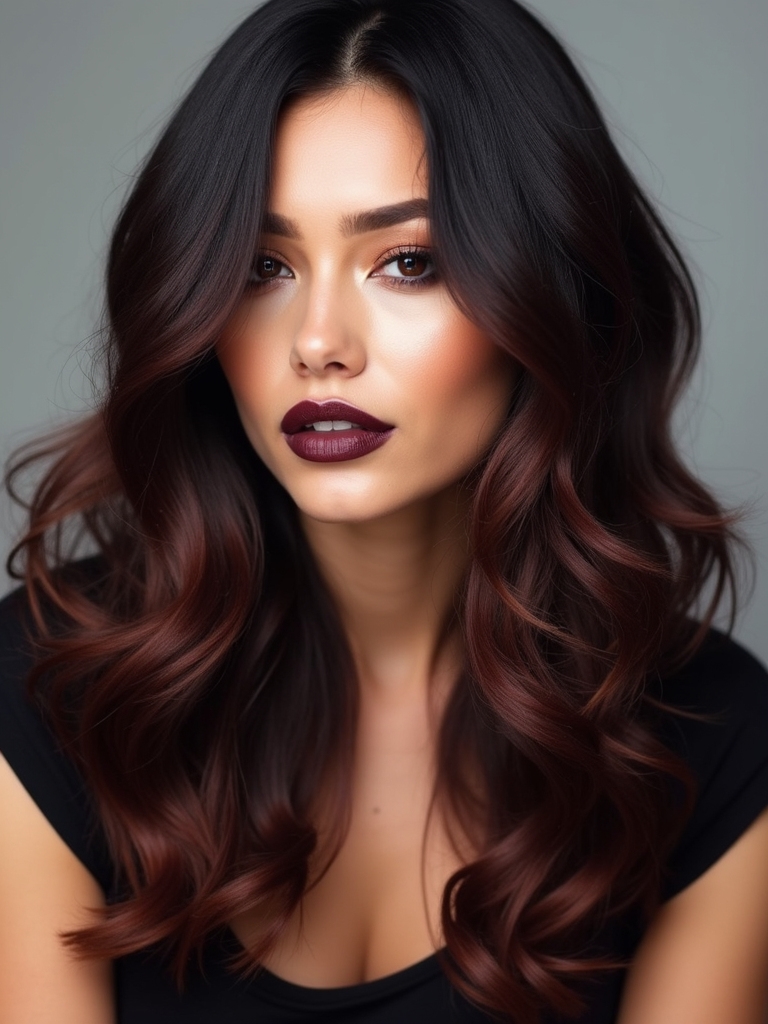
Auburn-hinted noir is a near-black that hides ember warmth, so it surfaces a soft auburn glow in sunlight while staying dramatically dark indoors. It’s the warm answer to midnight blue, same trick, opposite temperature. If you love the auburn flashes, my full auburn guide covers the lighter, spicier end.
- Warm ember undertone looks beautiful on golden, olive, and warm-neutral skin.
- Deposits over dark hair; the auburn shows brightest on a slightly lighter base.
- Keep a warm-red gloss handy, since the ember tone fades before the dark does.
ℹ️Good to Know
Red and purple-based darks (burgundy, black cherry, mahogany, plum) fade faster than any other color because those pigment molecules are the largest and rinse out first. A color-depositing conditioner in a matching tone is the difference between rich for two months and muddy in three weeks.
Smoky Black Undertones

Smoky black is a deep black softened by a hazy, slightly diffused undertone, like black seen through twilight. It’s less stark than a true jet or blue-black, so it gives drama with a quieter, more lived-on feel.
Smoky versus stark black
That softness makes it forgiving across skin tones, it doesn’t have the hard cool edge that can overwhelm warmer faces. It deposits without lifting on dark hair.
Its depth is the draw, so keep it from going dusty with regular conditioning and the same cool-rinse, gloss-now-and-then routine every black wants.
Reflective Glossy Black

If there’s a thesis hiding in this whole list, it’s that black lives or dies on shine, and reflective glossy black is that idea taken to the extreme: a mirror finish where every strand catches light. On a healthy blunt cut it looks like polished glass.
The color is the easy half. The mirror finish is built through cut, condition, and care, blunt healthy ends, weekly gloss, cool rinses, and a light serum so nothing scatters the light. It looks striking on everyone who keeps it healthy; damaged black can’t reflect.
- Universally striking, but only when the hair is in good condition.
- Deposits without bleach; the work is all in the shine upkeep.
- A clear glaze every few weeks is the single biggest shine payoff.
Violet-Black Fusion With Cosmic Depth

Violet-black closes the list where dark meets fantasy: a deep black fused with violet so it shifts from near-black to a clear purple cast as the light moves. It’s the boldest of the cool darks and the most fun, a fashion color you can still wear to work under fluorescent light.
The violet glows on cool and neutral skin and gives deep complexions a beautiful jewel-toned shine. It shows strongest over a darker base, and like every purple-dark it fades from the violet inward, so a violet conditioner keeps the cosmic part from washing out to plain black.
- Cool violet undertone works on cool, neutral, and deep skin.
- Most vivid over a dark base; lighter hair may grab brighter than expected.
- Violet-depositing conditioner is what keeps the shift alive.
Dark Hair Color, Answered
?Do I need to bleach my hair to go dark?
Almost never. Dark colors deposit pigment onto your existing hair rather than lifting it out, so going from light to dark, or dark to darker, takes no bleach and does very little damage. Bleach only enters the picture if you want a vivid red or purple to show brightly over a dark base.
?Which dark colors fade the fastest?
Anything red or purple-based: burgundy, black cherry, mahogany, plum, and black currant. Those pigments rinse out first and can fade noticeably in four to six weeks. Browns and blacks hold much longer; their main issue is dulling, not fading, which a gloss fixes.
?How do I keep dark hair from looking flat and dull?
Shine is what separates rich dark hair from flat dark hair. Finish washes with a cool rinse to seal the cuticle, add a clear gloss or glaze every few weeks, and use a smoothing serum on the lengths. Healthy, reflective strands are what make any dark color look expensive.
?What dark shade suits deep skin tones best?
Deep and rich complexions look striking in cool, high-shine darks like raven, blue-black, and violet-black, where the cool undertone glows against the skin. Jewel-toned darks such as plum and black cherry also flatter beautifully. The key, as with any tone, is keeping the color saturated and the shine high.
?Is it better to go dark at home or at a salon?
Simple deposit-only browns and blacks are among the safest at-home colors, since there’s no lightening to go wrong, just follow timing and do a strand test. Cool grays, true ash tones, and anything that needs lifting are worth a colorist, because correcting an unwanted warm or patchy result is harder than getting it right the first time.
Pick Your Temperature First, Then Your Depth
Walk back through these with your own skin in mind and the list gets a lot shorter, fast. Cool skin, you’re looking at ash black, blue-black, plum, and sable. Warm skin, espresso, mocha, chestnut, and mahogany are yours. Once the temperature is right, the only real question left is how much maintenance you’re willing to take on, since the reds and purples ask the most.
And remember the gentlest news in all of this: going darker almost never needs bleach, so a dark color is the lowest-damage transformation in the book. If black is calling specifically, the full range of black shades is worth a look before you decide how deep to go.
You Might Also Like