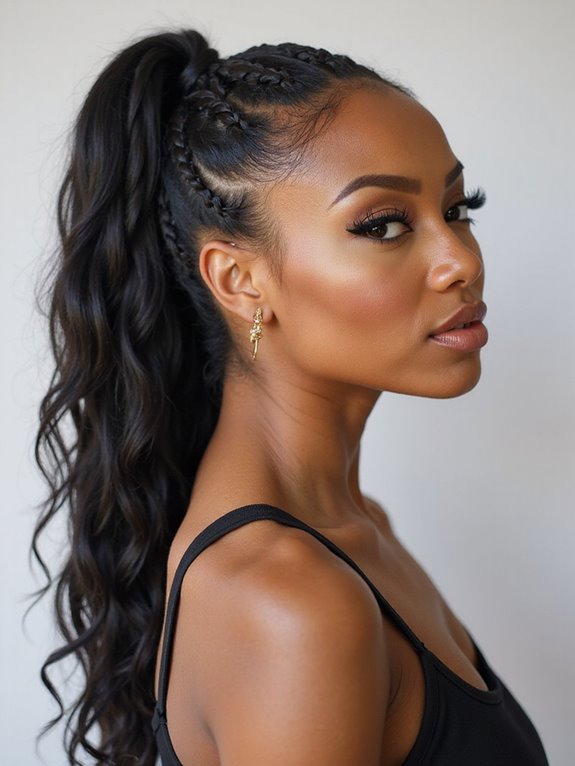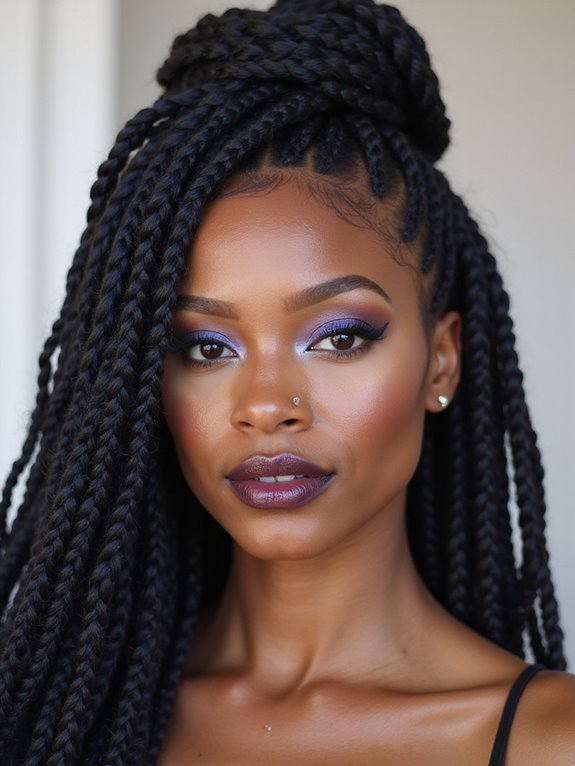

Box braids are not a trend, and treating them like one misses the point entirely. They are a cornerstone protective style born from Black hair culture and worn for generations as a way to shield natural hair, save styling time, and make a statement all at once.
What I love about them is the range. The same technique gives you sleek waist-length braids, a chic braided bob, or a soft half-up style, and every one of them buys your natural hair a rest from daily handling. Below are the box braid looks I come back to, plus the honest truth about sizing, tension, and care that keeps the style kind to your hair.
Box Braids At A Glance
- Box braids are a protective style: your natural hair is sectioned into squares and braided, usually with added hair.
- Size sets the timeline: smaller braids take longer to install and last longer; jumbo braids are fast but heavier.
- Tension is everything: braids should never sting, and tight installs are the leading cause of edge damage.
- With a satin scarf at night and gentle care, a good install lasts six to eight weeks before takedown.
What Box Braids Really Are

Box braids get their name from the square, box-shaped sections the hair is parted into before each braid is created. Each section is braided from the root to the tip, almost always with added braiding hair worked in for length, fullness, and to protect the natural strands. That is the whole foundation of the style.
Why They Count As Protective
Their real purpose is protection. By tucking your natural hair away into braids, you shield it from daily combing, heat, and weather, which lets it rest and retain moisture and length. This is why box braids are considered a protective style rather than just a look, and why they have been a staple in Black communities for centuries.
Worn with that understanding, they are one of the most rewarding things you can do for textured hair. The key, which runs through everything below, is that the install must be gentle. A braid should never hurt, and respecting both the craft and your own hairline is what keeps the style healthy. For more in this family, see my guide to curly braided protective styles.
Classic Long Box Braids

The long, classic box braid is the image most people picture, and for good reason. Falling anywhere from the shoulders to the waist, they are striking, versatile, and endlessly styleable, the kind of install that turns heads while quietly protecting every strand underneath.
Length gives you options. Long braids can be swept into a high bun, half-up, braided into larger plaits, or simply worn down, so a single install carries dozens of looks over its weeks of wear. The trade-off is weight: longer, fuller braids pull more on the scalp, so the size and number need to suit what your hair and edges can comfortably carry.
If you have finer hair or delicate edges, smaller and fewer braids at a moderate length protect you better than a heavy waist-length set, and a good braider will tell you so honestly rather than overloading your hairline.
- Style them up, down, or half-up for endless variety.
- Heavier and longer braids need careful tension to protect edges.
- A satin scarf at night keeps the length smooth and frizz-free.
A few box braid terms worth knowing:
📖Protective style
A style that tucks natural hair away to shield it from daily wear and help retain length.
📖Takedown
The careful process of unbraiding, best done gently to avoid breakage.
📖Edges
The fine hair along the hairline, most vulnerable to tension damage from tight braiding.
Jumbo Braids For A Quick Install

When time is short, jumbo box braids are the answer. Because the sections are larger, there are far fewer braids to create, so an install that might take many hours in a small size can be done in a fraction of the time, often a couple of hours rather than a full day. They make a bold, graphic statement, too, which is half their appeal.
The thing to watch is weight: while there are fewer braids, large sections packed with added hair can still tug at the scalp, so the same gentle-tension rule applies. Jumbo braids also tend to last a little less long than small ones, since the bigger partings loosen sooner, but for a fast, striking, lower-commitment install they are hard to beat.
- Far quicker to install than small or medium braids.
- A bold, eye-catching look with chunky, defined braids.
- Often lighter in count, though large sections can still pull, so keep tension gentle.
The Box Braid Bob, Step By Step

A box braid bob takes everything people love about braids and crops it into a sharp, modern shape. Shorter braids are lighter on the scalp, easier to manage, and quick to style, which makes the bob a favorite for anyone who wants the protection without the weight of waist-length hair.
It is the install I most often suggest to a first-timer in my chair, because the lighter load is gentler while you get used to wearing braids. Here is how the look comes together.
- Choose a chin- to shoulder-length braid for the bob shape.
- Have your braider keep the tension gentle, especially at the hairline.
- Dip the ends in hot water to seal them so the bob sits clean.
- Style with a middle or side part for a sleek, modern finish.
- Wrap in a satin scarf nightly to keep the shape crisp.
| Size | Install Time | Best For |
|---|---|---|
| Small | Long (often a full day) | Longest wear and the most styling options. |
| Medium | Moderate (several hours) | A balance of wear time, weight, and install length. |
| Jumbo | Short (a couple of hours) | A quick, bold look that is lighter on your schedule. |
Soft Half-Up Box Braid Styles

The half-up style is my go-to recommendation when a client wants a fresh look without redoing anything. You simply gather the top section of braids and secure them up, leaving the rest down, which lifts the face and shows off the length all at once. It takes only a few seconds to put together, and it reads polished and intentional every single time.
Dressing The Half-Up Up Or Down
From there, the variations are endless. The gathered top can become a bun, a few large plaits, or a soft knot, and you can wrap a braid around the base to hide the tie. Add a couple of gold cuffs or a ribbon and the same simple style turns into something special for an event.
This is also one of the gentlest ways to wear braids day to day, since it keeps the hair off your face without adding tension at the roots. Just avoid pulling the half-up section too tight, and switch up where you gather it so you are not stressing the same spot every day. For a permanently cropped version, my braided bob guide goes further.
Getting The Tension Right
Above everything else here, hold onto one rule: a box braid should never hurt. The single most common cause of damage from braids is tension that is too tight, especially along the hairline, where the hair is finest and most fragile. Tightness is not a sign of a neat, long-lasting install; it is a warning.
Persistent pulling, little white bumps along the parting, or a headache after an appointment all mean the braids are too tight, and over time that strain leads to traction alopecia, a gradual thinning of the edges that can become permanent. None of that is the price of a good style. A skilled braider works with gentle, even tension that holds beautifully without stress.
So speak up. The moment a section feels tight in the chair, say so, and a good braider will loosen it without taking offense. You can also ask for your edges to be left out or braided especially loosely. Protecting your hairline now matters far more than squeezing an extra week out of the install.
Caring For Box Braids Day To Day
Box braids are low-maintenance, not no-maintenance, and a little care keeps both the style and the hair underneath healthy. Your scalp still needs attention, so wash it gently every week or two using watered-down shampoo aimed straight at the roots, then rinse thoroughly and let the braids dry completely to avoid any mustiness.
Keeping the hair moisturized is the second half of caring for braids. A light oil or a water-based spray on your scalp and the length keeps your natural hair supple inside the braids, which protects against breakage when it is time to take them down. A lightweight leave-in works well; just avoid heavy products that build up and leave residue.
Nighttime is when braids fray and edges suffer, so cover your hair before bed every single night. A satin or silk scarf or a large bonnet keeps the braids smooth, prevents frizz, and protects your hairline from friction against cotton. This one habit does more for how long your install looks fresh than anything else.
Knowing When And How To Take Them Down
Box braids are not meant to stay in forever, and leaving them too long does more harm than good. Most installs are best taken down at six to eight weeks. Past that, new growth at the roots begins to tangle and matt, the weight pulls harder on the scalp, and shed hair that would normally fall away gets trapped, which can cause serious knotting.
The takedown itself should be slow and gentle. Unravel each braid carefully rather than yanking, and never rush it, since this is a moment where impatience causes breakage. Working a little oil through the braids first helps them slide apart and loosens any trapped shed hair.
Once the braids are out, your natural hair will be ready for some love. Detangle gently from the ends up, give it a good cleanse and a deep conditioning treatment, and let it rest for a few days before your next protective style. That recovery window is part of what makes the protective cycle actually protective.
Braids That Honor The Hair
Box braids endure because they do two jobs at once: they look beautiful and they protect, giving your natural hair weeks of rest while you enjoy the style. Whether you choose waist-length classics, a sharp braided bob, or a soft half-up, the principles are the same: gentle tension, the right size for your hair, and faithful nighttime care.
If you are booking your first set, find a braider who specializes in textured hair, pay them what their craft is worth, and speak up the moment anything pulls. Treat the style and its roots with respect, and box braids will give your hair back more than they ever take. Which length will you try first?
More Hair Inspiration