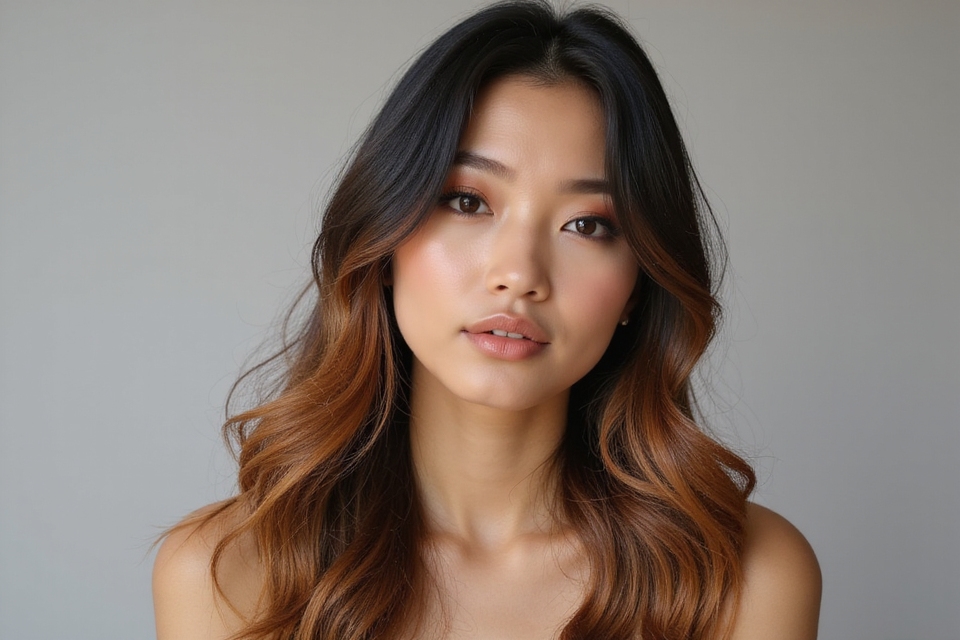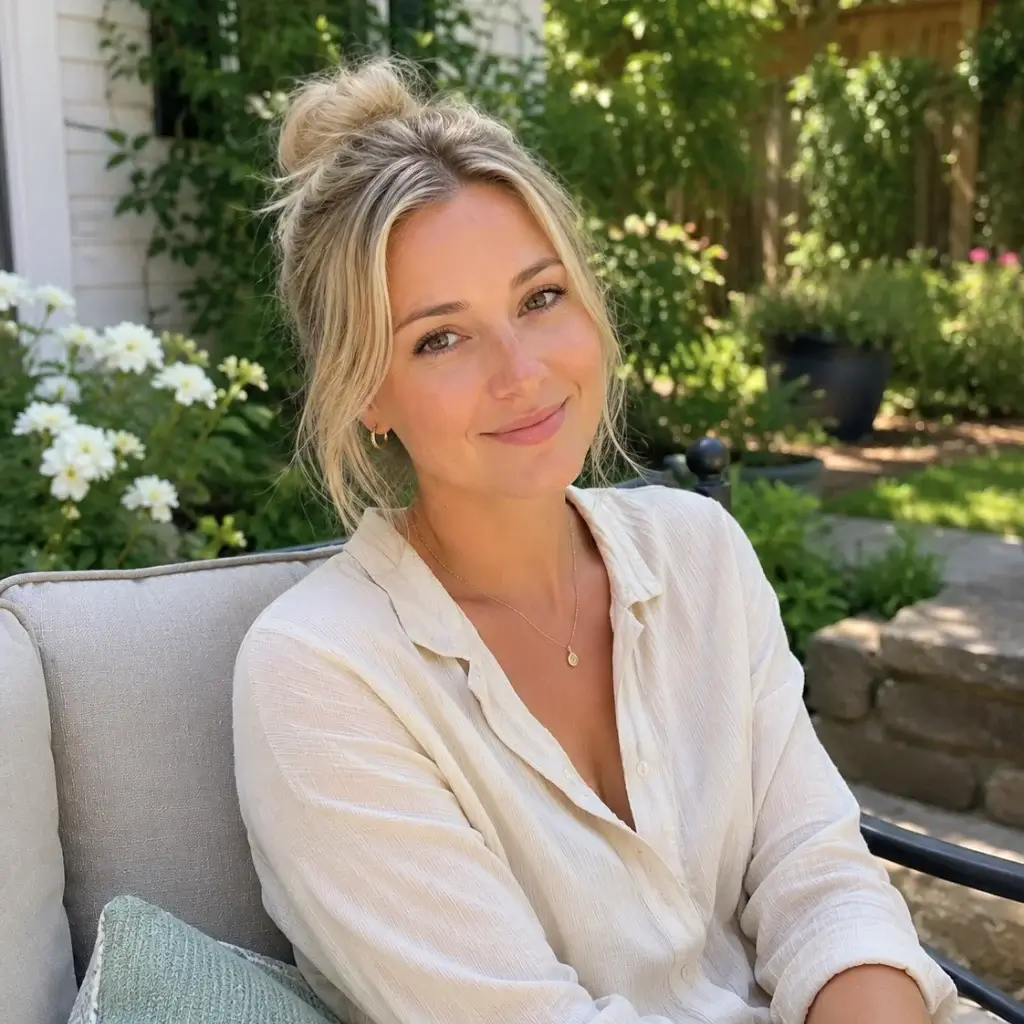
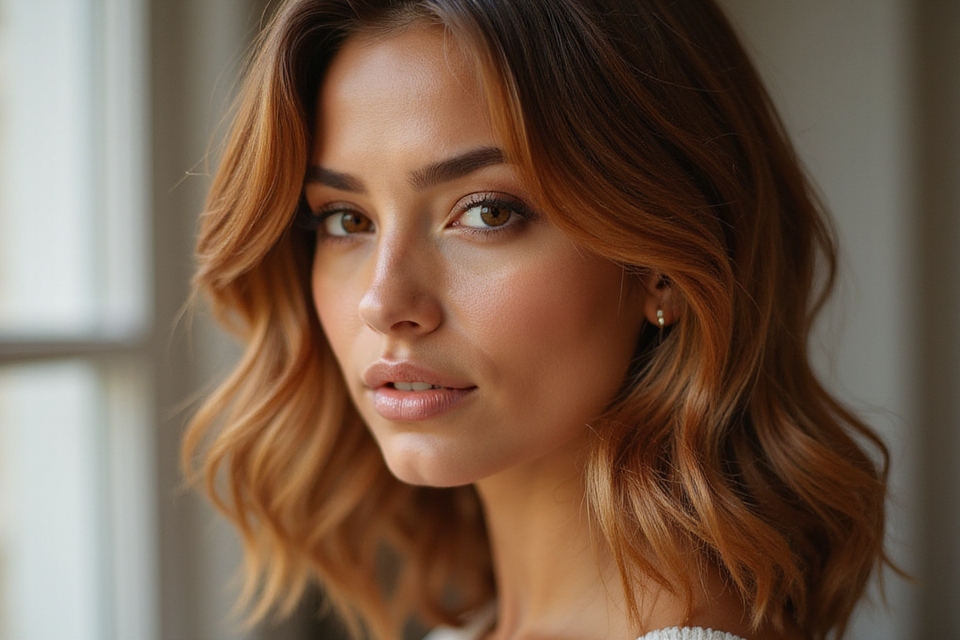
Tan skin has a lucky problem with hair color: it glows in warm, sun-lit shades, but those same warm tones are the ones most likely to tip into brass. Get the balance right and honey, caramel, and gold light your whole face; get it wrong and the color goes orange and cheap-looking within weeks. The whole game with tan skin is warmth without brassiness.
Below is a guide to color that flatters tan and medium skin, from cool blondes to bold brunettes to vivid reds, plus how to read your undertone and, most importantly, how to keep warm shades glowing instead of going brassy. It starts with knowing which way your skin leans.
Color for Tan Skin, at a Glance
| If you want | Best tones | Watch for |
|---|---|---|
| Warm and glowy | Honey, caramel, warm brunette | Brassiness; use a gold-not-orange gloss |
| Cool and modern | Ash blonde, cool brunette, beige | Going too ashy and draining warmth |
| Bold statement | Vivid red, copper, fashion shades | Fast fading; color-depositing care |
Matching Color to Tan Skin
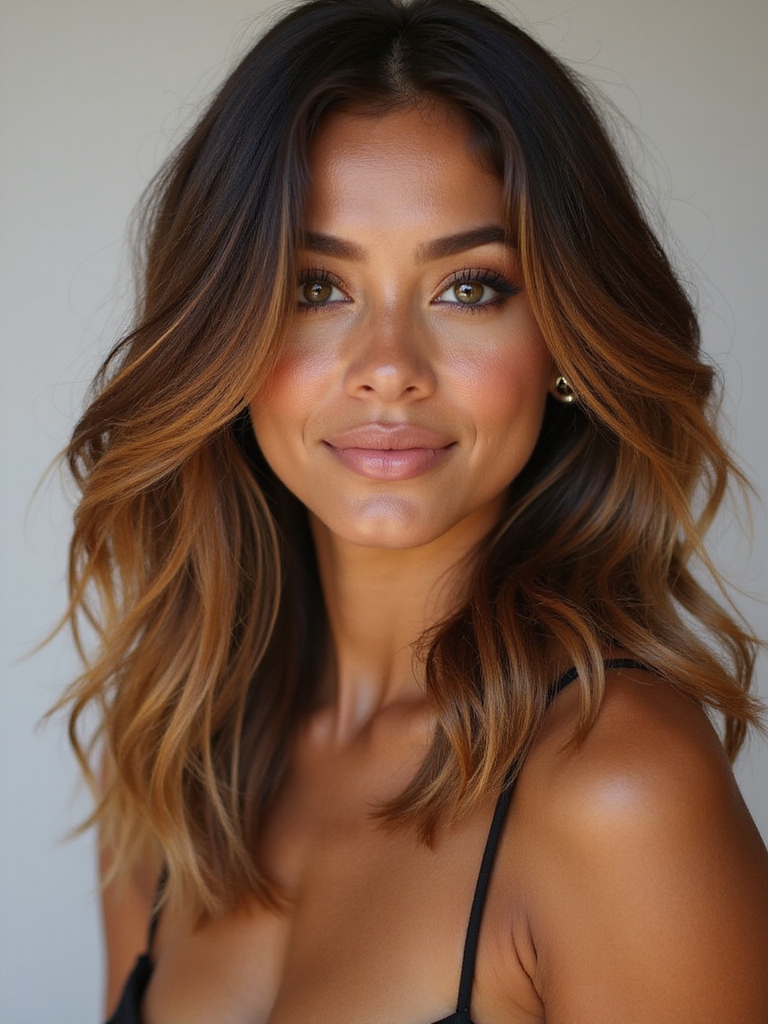
Tan and medium skin isn’t one undertone, and reading yours is the first step. Warm tan skin (golden or peachy) glows in warm hair but browns easily; olive tan skin (a green-gold cast) can carry cooler, ashier tones beautifully; and neutral tan takes both. Your undertone, not your tan itself, decides which colors flatter.
Check your inner-wrist veins and your best jewelry in daylight: green veins and flattering gold point warm; a mix points neutral or olive. Olive skin is the one that can take the cool tones warm-skinned people should avoid.
- Warm tan glows in warm color but browns easily.
- Olive tan can carry cooler, ashy tones well.
- Neutral tan takes both warm and cool.
- Undertone, not the tan itself, guides the color.
The Golden Glow Advantage
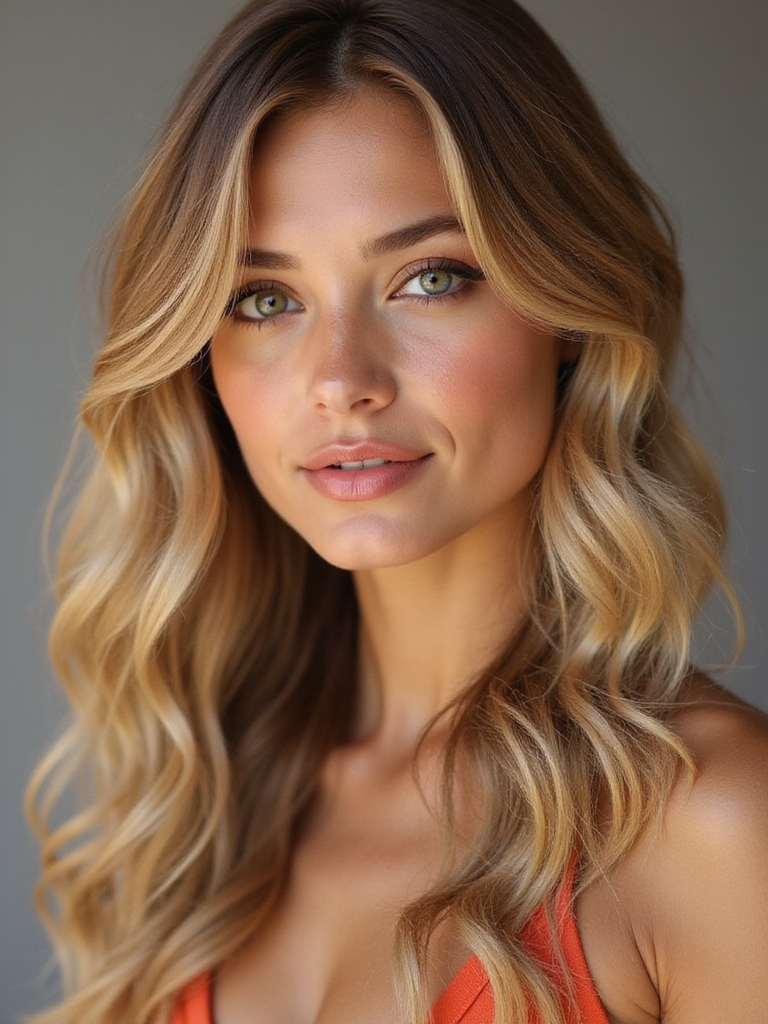
The upside of tan skin is that it wears warm, golden color better than almost any complexion. Honey, caramel, gold, and warm brunette all echo the sun-warmth in tan skin and make the face glow, which is why sun-kissed color looks so natural here. This is your home territory, the shades that flatter with almost no effort.
The one caveat is that these are the shades that go brassy, so the whole trick is keeping the warmth gold rather than orange. Done right, warm color on tan skin looks expensive and lit-from-within.
- Honey, caramel, gold, and warm brunette flatter easily.
- Warm color echoes the sun-warmth in tan skin.
- The catch is keeping the warmth gold, not orange.
- Done right, it looks expensive and lit-from-within.
Avoiding Brassiness
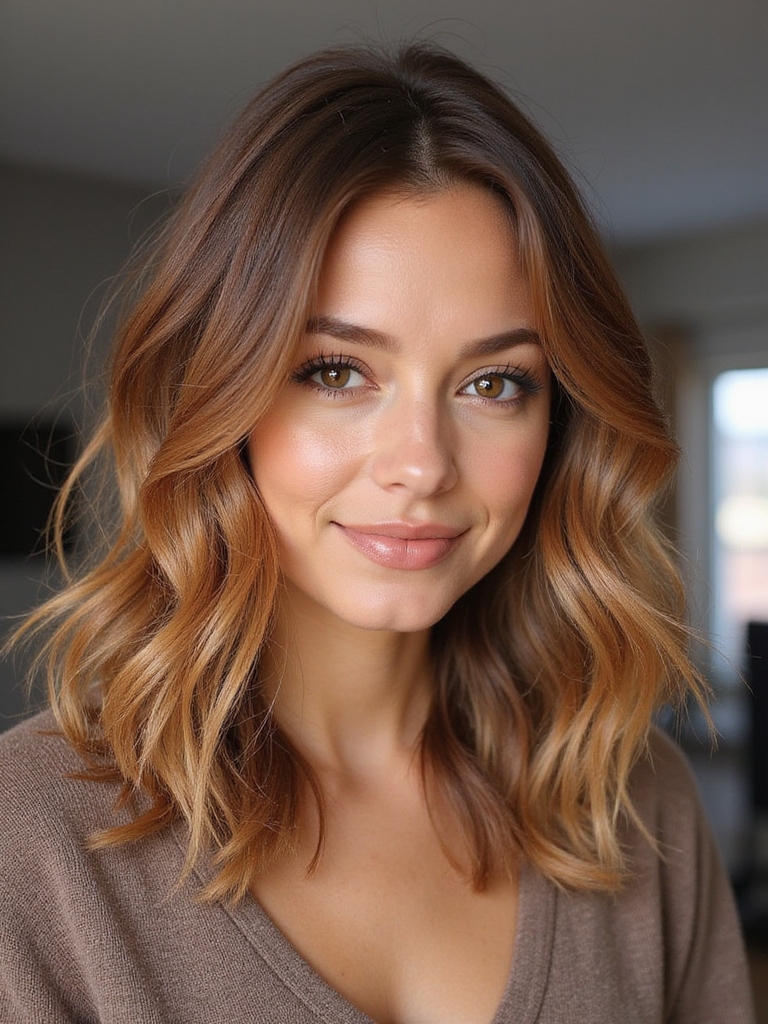
Brassiness is the number-one hair-color complaint for tan skin, and it happens because warm and lightened hair naturally oxidizes and fades toward orange and gold over time. The fix is toning: a gloss or toner in the right direction cancels the unwanted orange and resets your intended shade, whether that’s a cool beige or a clean, true gold.
At home, a purple shampoo neutralizes yellow-brass and a blue one neutralizes orange-brass, used once a week so they don’t over-tone. Wash in cooler water, use sulfate-free products, and gloss every eight weeks or so, and your warm color stays glowing rather than turning brassy.
Cool Blonde on Tan Skin
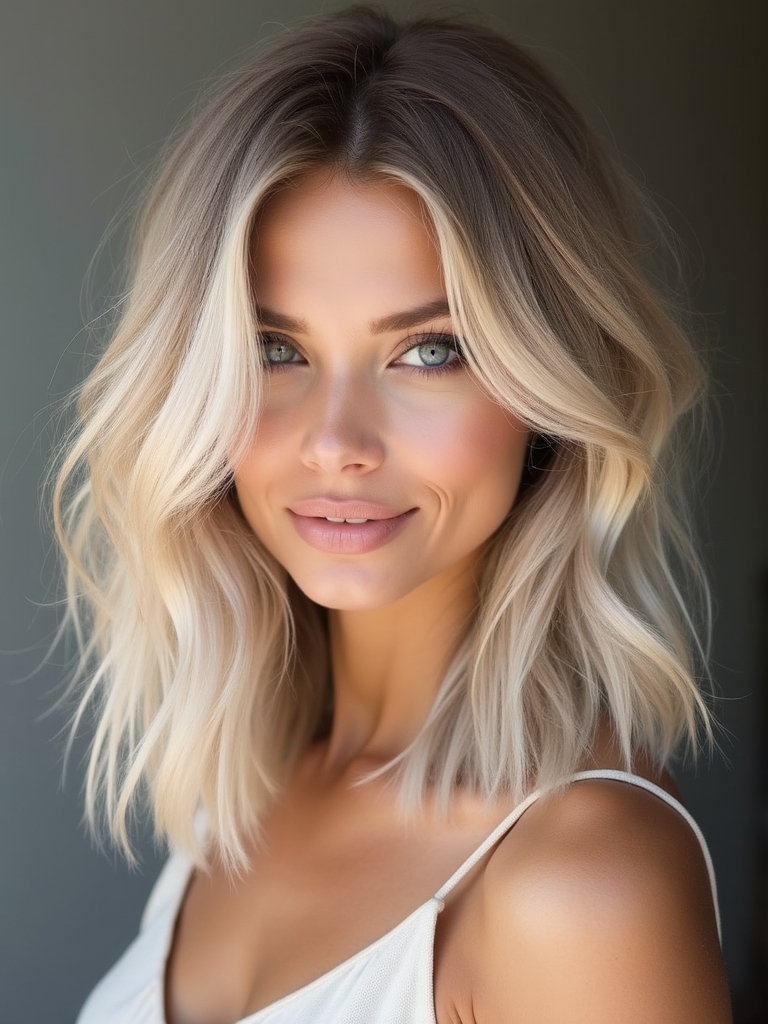
Cool blonde is possible on tan skin, but it takes care, since a too-icy blonde can look stark against warm skin. The most flattering cool blonde here is a soft beige or neutral blonde, cooled just enough to feel modern while keeping warmth so it doesn’t drain the face. Olive and neutral tan skin carry it best; very warm skin may prefer to keep a little warmth in.
- Choose a soft beige or neutral blonde over stark platinum.
- Cool it just enough to feel modern, not draining.
- Olive and neutral tan carry cool blonde best.
- Keep some warmth if your skin runs very warm.
🅰️Warm direction
Honey, caramel, gold, warm brunette: flatters tan skin naturally, but tone gold-not-orange to fight brass.
🅱️Cool direction
Beige, ash, cool brunette: modern on olive and neutral tan, but keep warmth underneath so it doesn’t drain the face.
Warm Blonde Shades
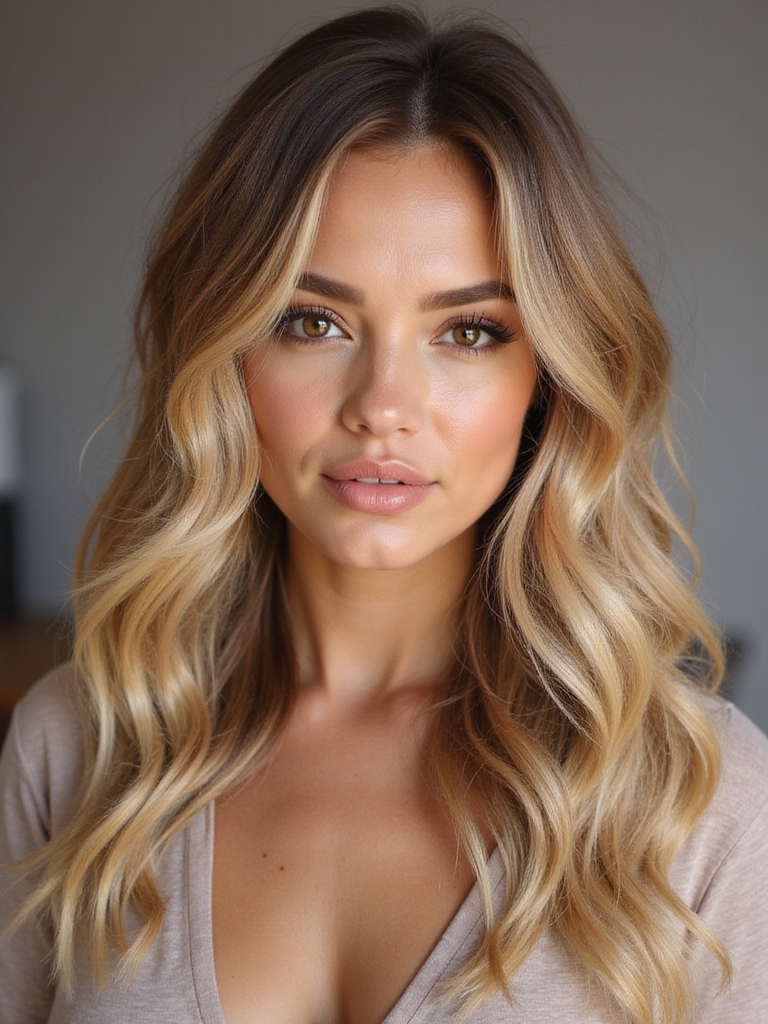
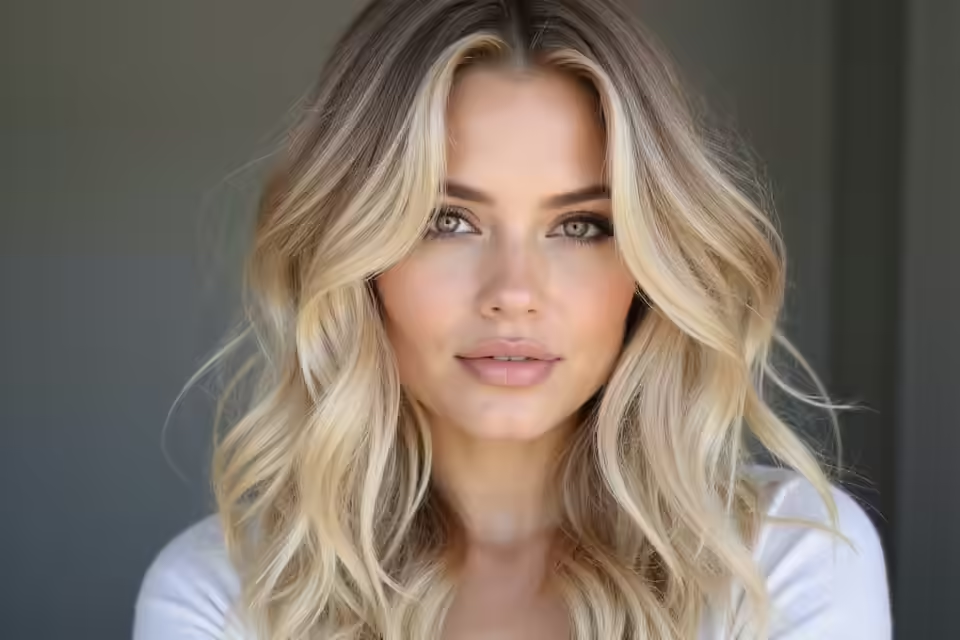
Warm blonde is the natural fit for tan skin: honey, gold, and buttery blonde light the complexion and look like a season in the sun. Because the warmth echoes the skin, it flatters with barely any effort, and that is why it tops the request list for tan and medium skin.
Keep the roots a touch deeper so the blonde looks sun-kissed and soft, and gloss it gold-not-orange to hold off brass. See blonde color ideas for more warm blonde options.
- Honey, gold, and buttery blonde flatter tan skin naturally.
- Keep the roots deeper for a sun-kissed effect.
- Gloss gold, not orange, to hold off brass.
- The easiest, most flattering blonde for tan skin.
Bold Brunette
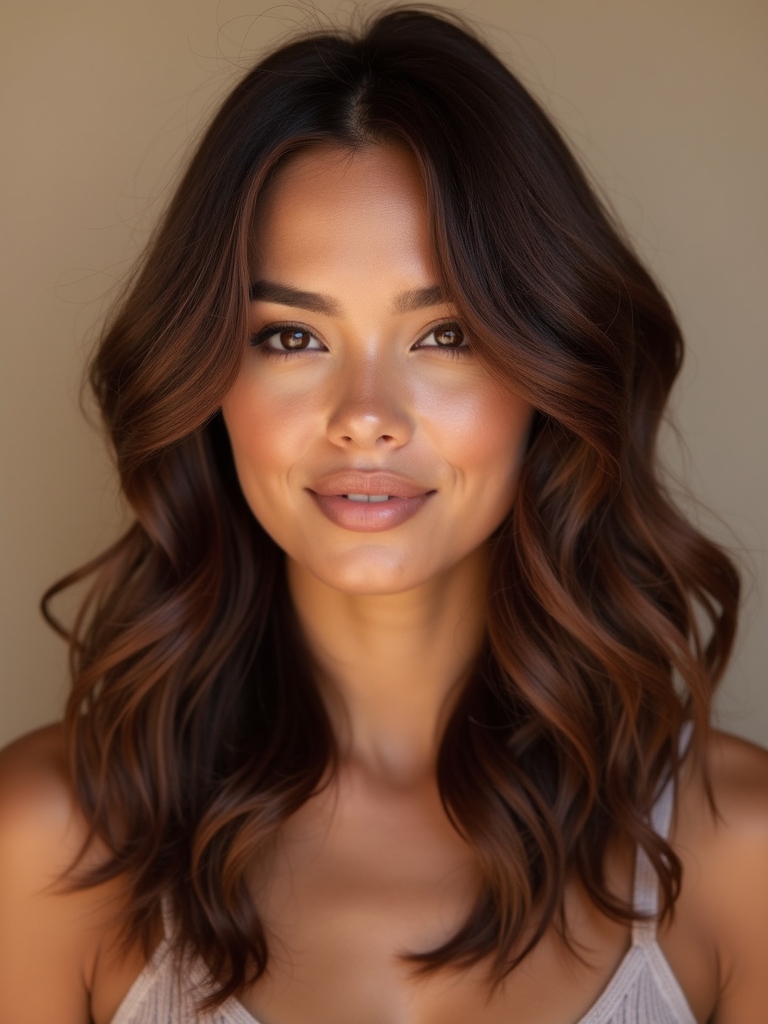
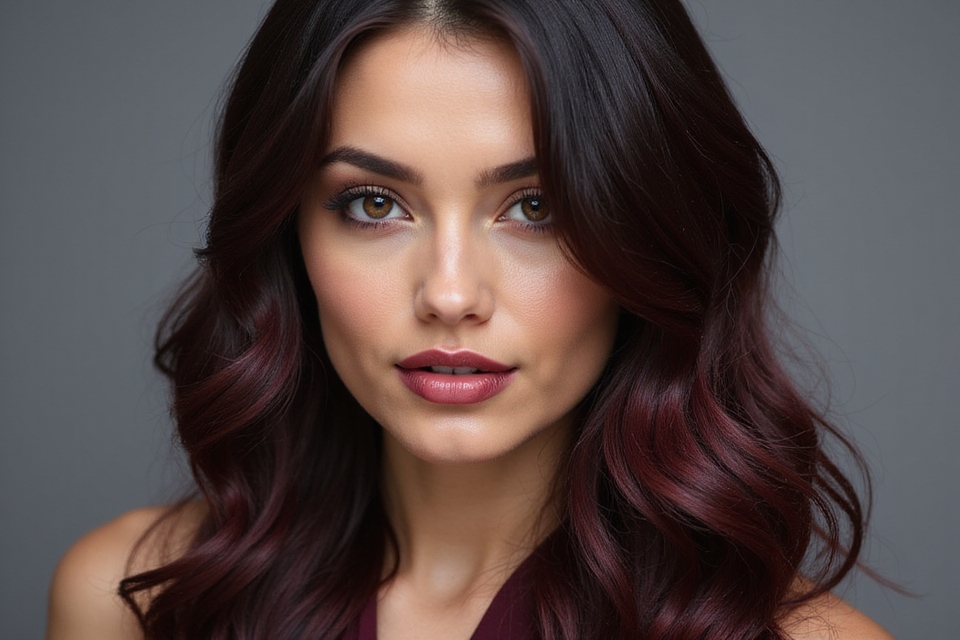
Rich brunette is a near-foolproof choice on tan skin: deep, glossy chocolate and chestnut browns flatter the complexion, add shine, and stay low-maintenance since they’re close to most natural bases. A warm chocolate suits warm tan skin, while a cooler, neutral brown flatters olive tones. The depth makes tan skin look luminous, and it’s one of the lowest-upkeep colors going. See brown color ideas.
- Deep chocolate and chestnut flatter and add shine.
- Warm chocolate for warm tan, cooler brown for olive.
- Low-maintenance, since it’s close to natural bases.
- The depth makes tan skin look luminous.
A few terms for keeping tan-skin color glowing.
📖Brassiness
The orange or overly-gold tone warm and lightened hair fades toward; the main challenge for tan skin.
📖Toner / gloss
A semi-transparent treatment that cancels brass and resets your exact shade; the key to warm color on tan skin.
📖Purple vs blue shampoo
Purple neutralizes yellow-brass on blonde; blue neutralizes orange-brass on brunette and darker lifted hair.
Caramel Highlights
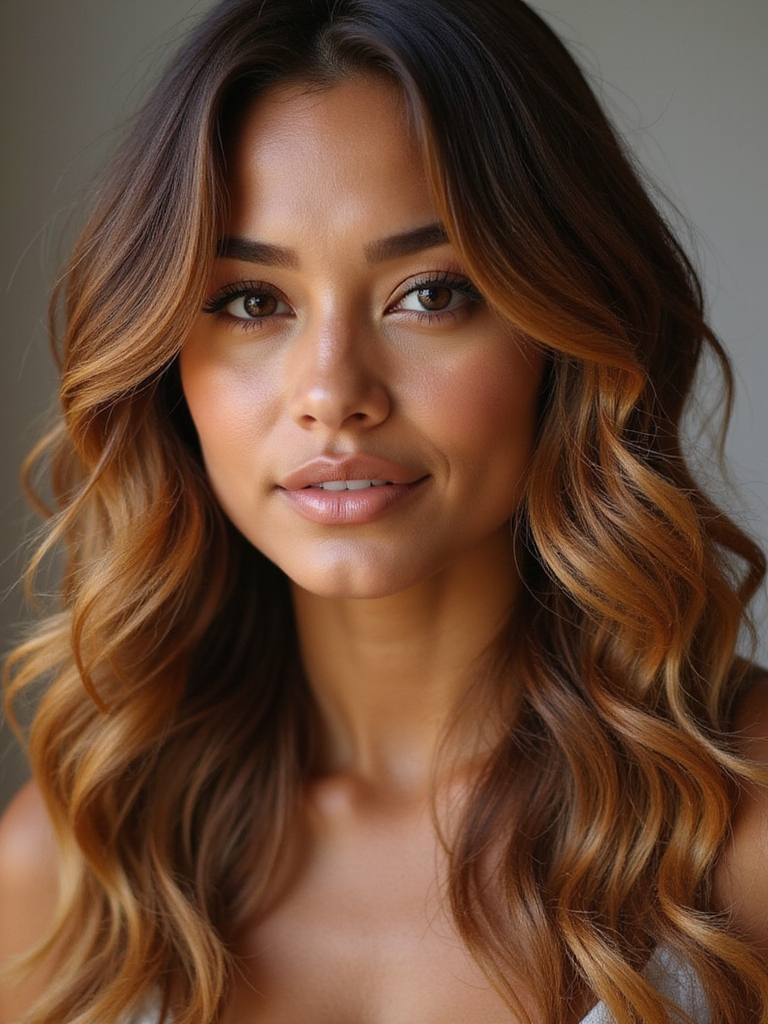
Caramel highlights are the perfect middle ground for tan skin: warm, buttery pieces through a brown base that add glow and dimension without the upkeep of full blonde. The caramel warmth flatters tan and olive skin especially, and because the base stays dark, it grows out softly.
It’s my most-requested look for medium and tan skin, since it delivers a big change with gentle maintenance. Keep the caramel gold-leaning so it doesn’t fade brassy. See caramel highlights.
- Warm caramel pieces add glow without full-blonde upkeep.
- Flatters tan and olive skin especially.
- Grows out softly thanks to the dark base.
- Keep it gold-leaning so it doesn’t fade brassy.
Vivid Red Shades
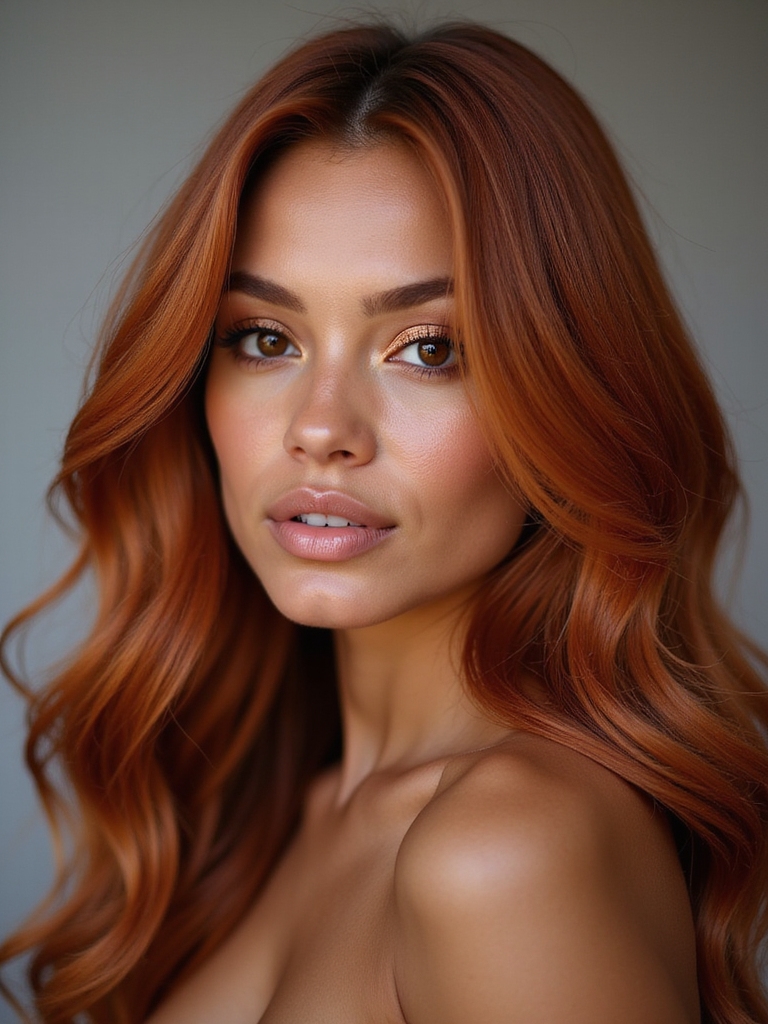
Tan skin wears red beautifully, and the warmth of the complexion lets you go bolder than most. Clients ask me for warm reds constantly, and tan skin wears them beautifully. Warm reds, copper, auburn, and cherry, glow against tan skin, while the sun-warmth in the skin keeps even a bright red looking harmonious rather than clashing.
A warm, orange-red suits warm tan skin; a cooler cherry or true red flatters olive and neutral. Red fades fastest of all, so color-depositing conditioner and a red gloss are essential to keep it from dulling to brown. See copper red shades.
Ash Tones for Balance
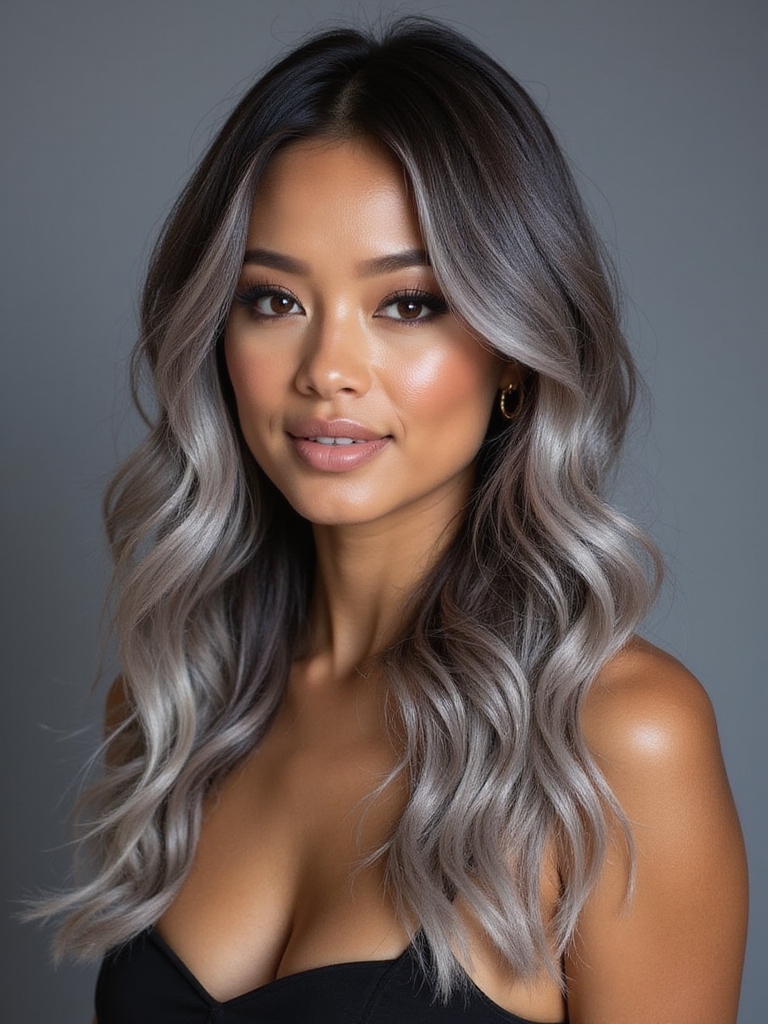
Ash tones, cool, smoky browns and blondes, are a useful tool on tan skin, less because they always flatter and more because a touch of ash balances warmth and stop color going brassy. Used carefully, an ashy brown reads modern and expensive on olive and neutral tan skin.
The risk is going too far: a heavy ash can drain the golden glow that makes tan skin beautiful, leaving it looking flat or gray. The sweet spot is a soft ash with warmth kept underneath.
This works best on olive undertones, which can carry cool. Very warm skin usually looks better keeping ash to a subtle balancing role rather than an all-over shade. See ash tones.
Bold Fashion Colors
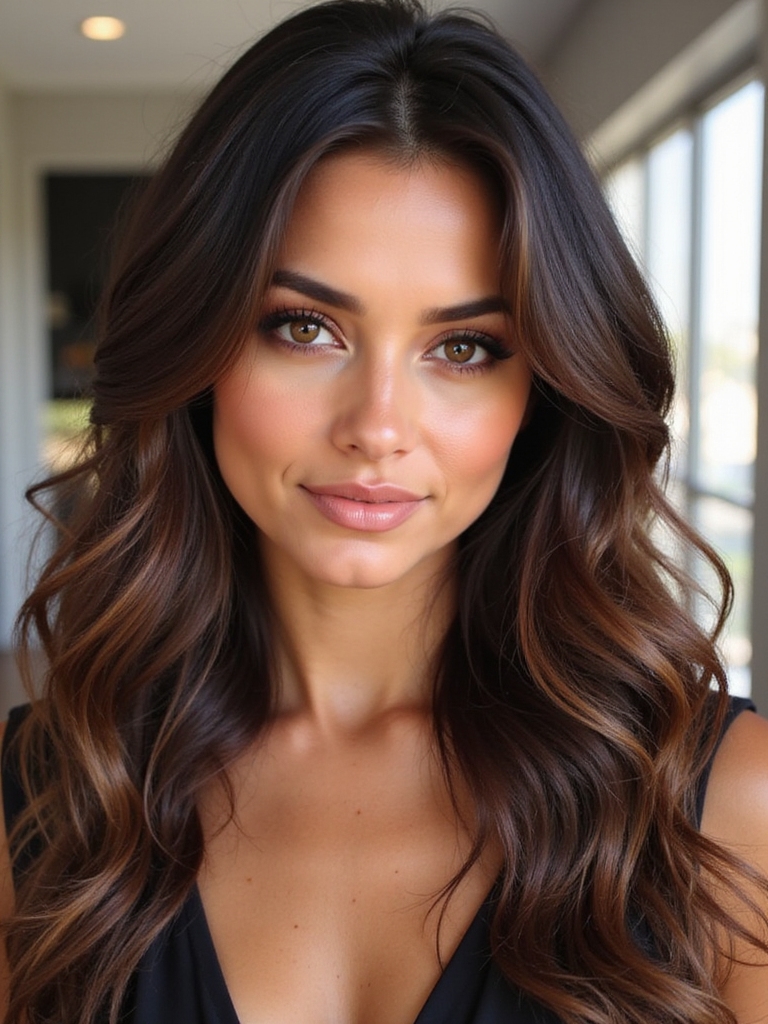
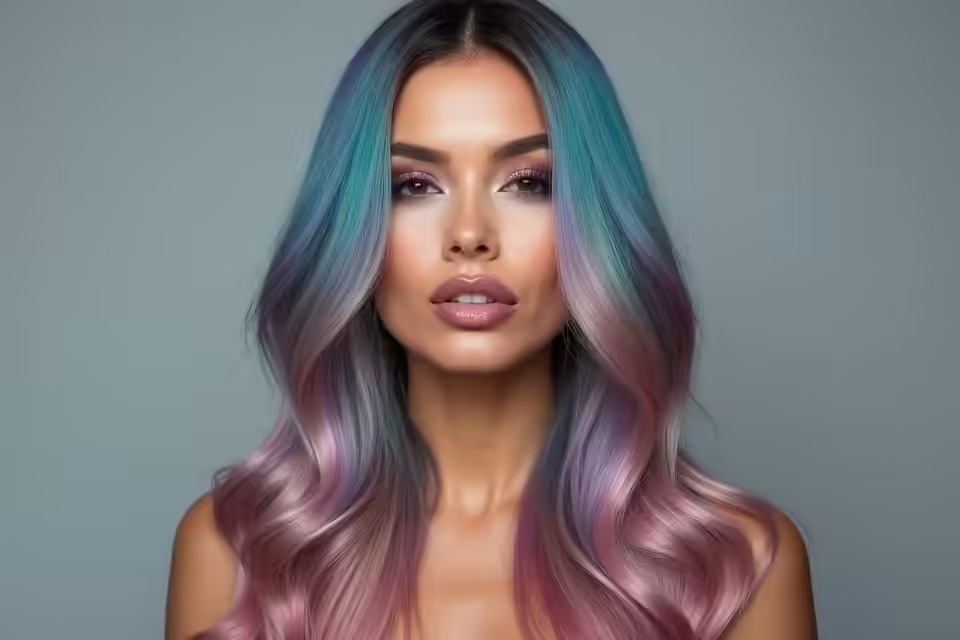
Tan skin is a great canvas for bold fashion colors, since the warm, medium depth stands up to a saturated shade. Rich jewel tones, deep teal, emerald, sapphire, and warm-leaning fashion colors like rose-gold and copper-pink flatter tan skin especially, echoing or complementing its warmth.
Cooler pastels can work on olive tan skin, while warm skin glows in warmer brights. These need pre-lightening and fade fast, so they’re a commitment, but tan skin carries a bold color with real confidence.
Subtle Natural Highlights
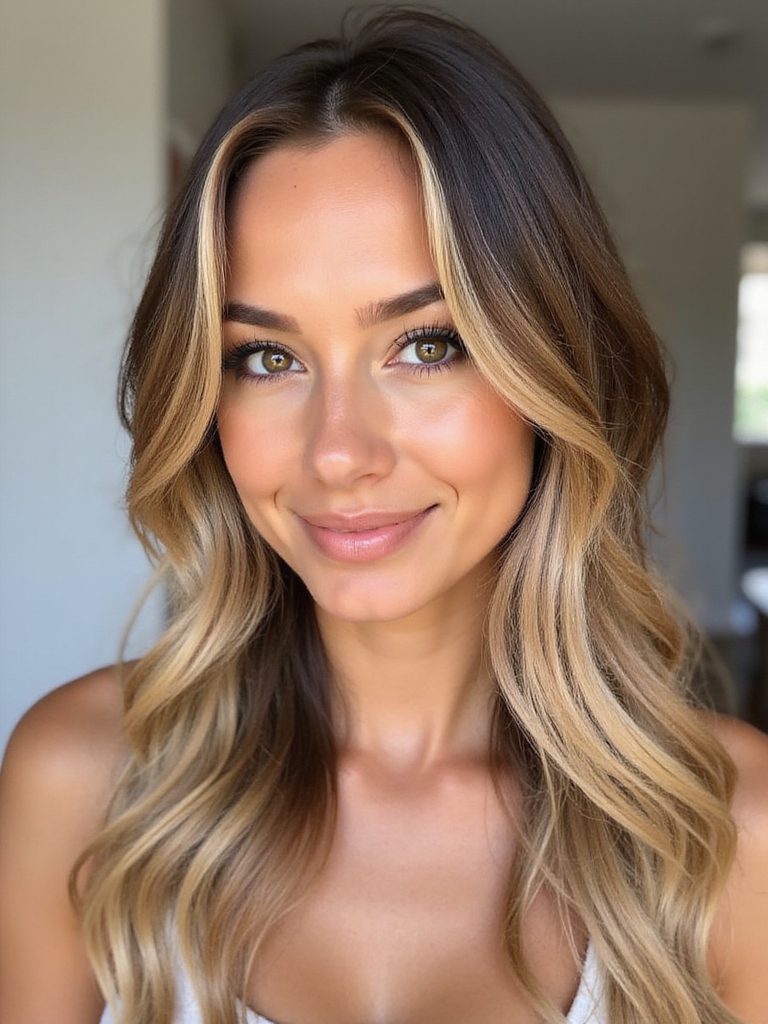
If you love your natural color and just want a lift, a few subtle highlights around the face brighten tan skin without a big change. Soft, warm face-framing pieces catch the light and lift the complexion, and they’re the lowest-commitment way to add glow.
Keep them warm and close to your base so they blend, and concentrate them at the front where they flatter most. It’s a gentle, grown-out-friendly option that suits anyone who wants their color to look like their best natural self. A gloss keeps the pieces from fading brassy, and the soft placement means touch-ups can wait.
- A few warm face-framing pieces lift the complexion.
- Keep them close to your base so they blend softly.
- Concentrate brightness at the front where it flatters.
- Low-commitment and grown-out-friendly.
Balayage for Tan Skin
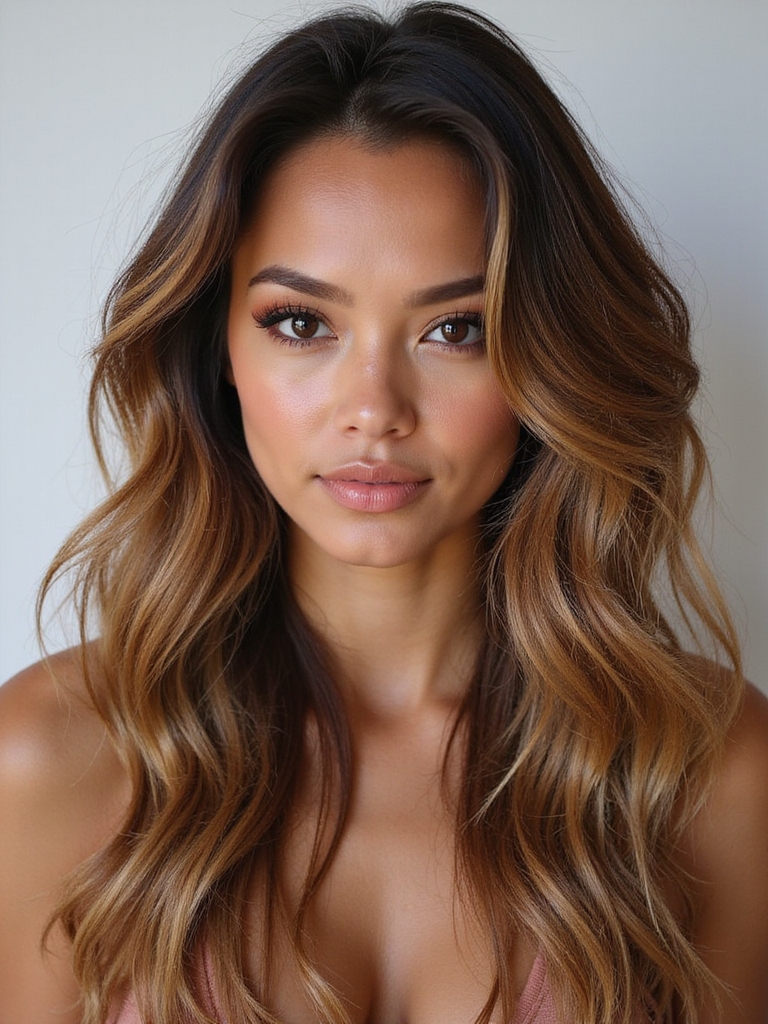
Balayage is ideal for tan skin, because hand-painted, gold-leaning dimension gives you sun-kissed warmth with a soft, low-maintenance grow-out. The painterly technique lets a colorist place warm brightness exactly where it flatters your face while keeping a natural root.
Keeping Balayage Gold, Not Brassy
The key for tan skin is asking for the warmth to stay gold, not brassy, and placing the brightness around the face. Warm and olive tan skin both glow in a caramel or honey balayage.
Because the roots stay natural, it’s lower-maintenance than all-over color, which makes it perfect for anyone who wants glow without frequent salon trips. A periodic gloss holds the tone true.
How to fight brassiness at home.
1Tone weekly
Use a purple or blue toning shampoo once a week, depending on whether your brass is yellow or orange.
2Wash cool and gentle
Wash less often in cooler water with sulfate-free products to slow the fade toward brass.
3Gloss on schedule
Book a gloss every six to eight weeks to reset the tone and refresh the shine.
Ombré on Tan Skin
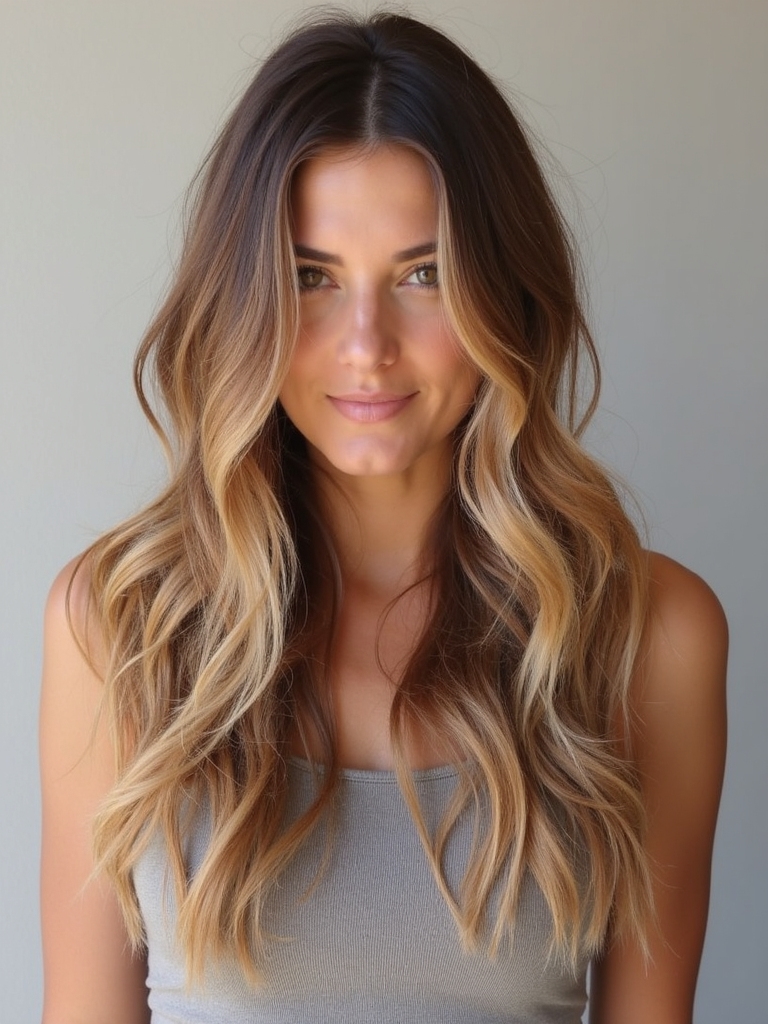
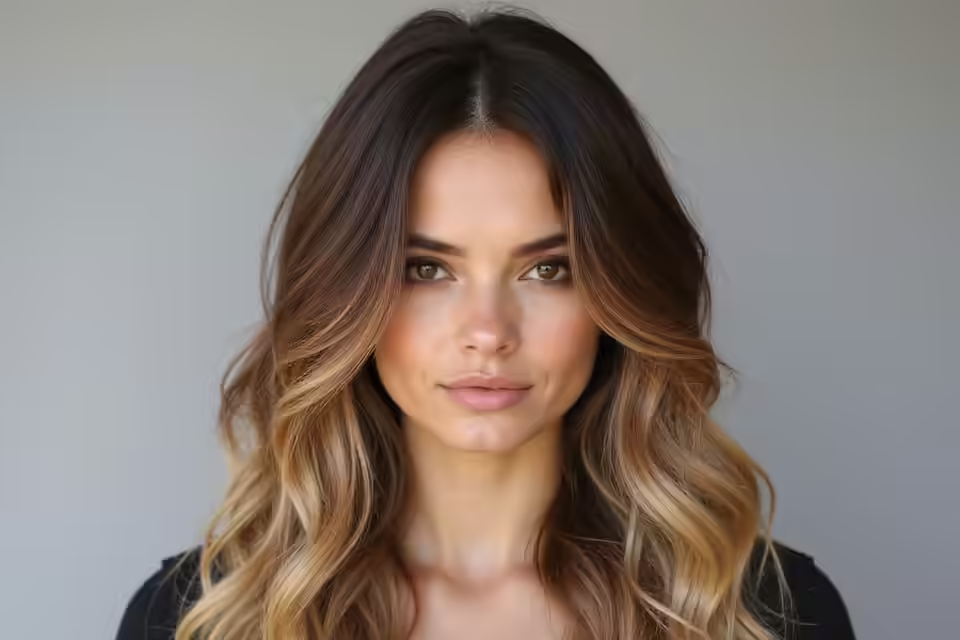
A warm ombré, dark roots melting into brighter caramel or honey ends, looks striking on tan skin and grows out gracefully since the roots stay dark. The warm ends brighten the face while the depth up top keeps upkeep low.
For tan skin, keep the ends warm, caramel, gold, or copper, rather than an ashy blonde that can look stark against the warmth. The gradient looks best on medium to long hair, where there’s length for the fade.
Because the brightness is on the ends, it’s a lower-maintenance way to go lighter, and a gloss keeps the ends from fading brassy.
Color Care for Longevity
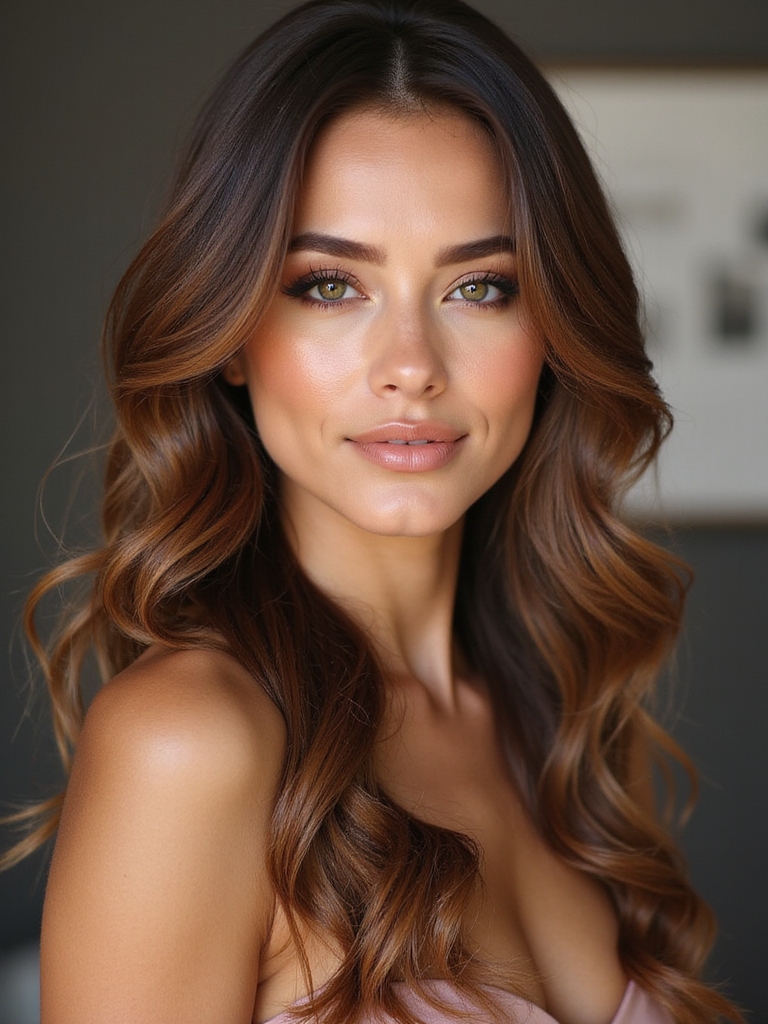
Warm color on tan skin lives or dies by care, since the warm and lightened tones fade toward brass fastest. A gentle routine keeps color glowing: sulfate-free, color-safe products, a weekly bond or mask on lightened lengths, and a toning product to hold off brass. Wash less often and in cooler water, and protect from heat and UV, both of which speed brassy fading. Textured and curly hair needs extra moisture, since lightened coils run drier.
- Use sulfate-free, color-safe products and wash less often.
- A weekly bond or mask on lightened lengths.
- A toning product holds off brass between glosses.
- Protect from heat and UV, which speed brassy fading.
“If your warm color keeps going brassy, ask your colorist to tone it a step cooler than you think you want. Warm and lightened hair drifts warm as it fades, so starting a touch cooler means it lands on your ideal gold weeks longer before the brass creeps in.”
Salon vs DIY
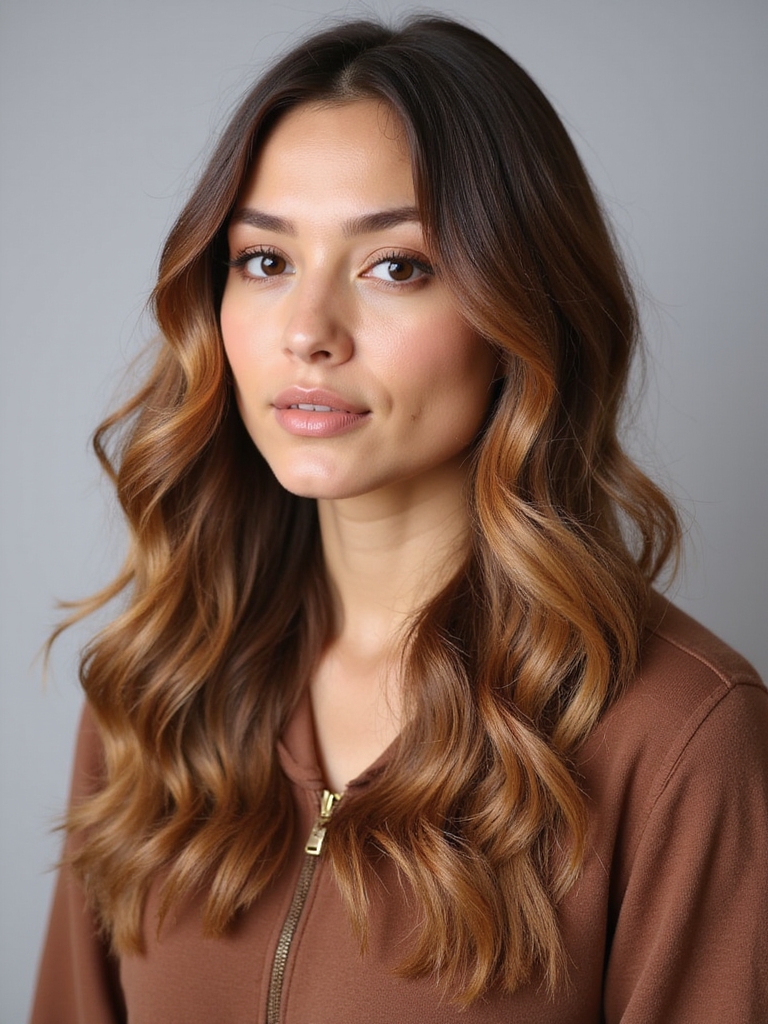
Some tan-skin color is safe at home, a gloss, a rich brunette close to your base, a toning treatment to fight brass. But anything involving lift, going lighter, red, balayage, or fashion color, is where a colorist earns their fee, especially the toning skill that keeps warm color gold rather than brassy.
Getting the anti-brass balance right is notoriously hard at home, which is why so many DIY jobs go orange. For lifting or any color you want to stay a clean, specific tone, the salon is worth it.
- At home: glosses, rich brunettes, toning treatments.
- Salon: lifting, red, balayage, and fashion color.
- The anti-brass toning skill is hard to nail at home.
- DIY lift is the most common cause of brassiness.
Seasonal Color Shifts
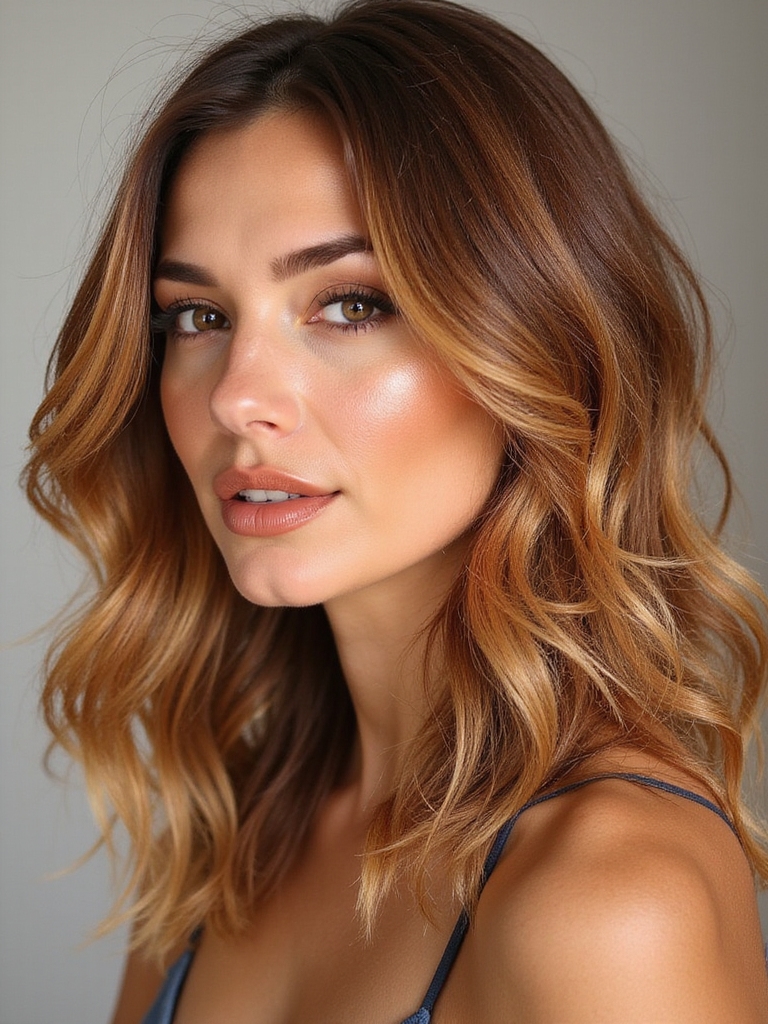
Tan skin often changes depth with the seasons, deeper in summer, lighter in winter, and your hair color can shift to match. Many people go a touch brighter and warmer in summer to echo sun-lit skin, then deepen to rich caramel or brunette in winter when the tan fades. Adjusting your gloss tone seasonally, warmer in summer, cooler in winter, keeps your color flattering year-round without a full recolor.
- Go brighter and warmer in summer to echo sun-lit skin.
- Deepen to caramel or brunette as the tan fades in winter.
- Shift your gloss tone seasonally to stay flattering.
- A gloss tweak avoids a full seasonal recolor.
Keeping Color Brass-Free
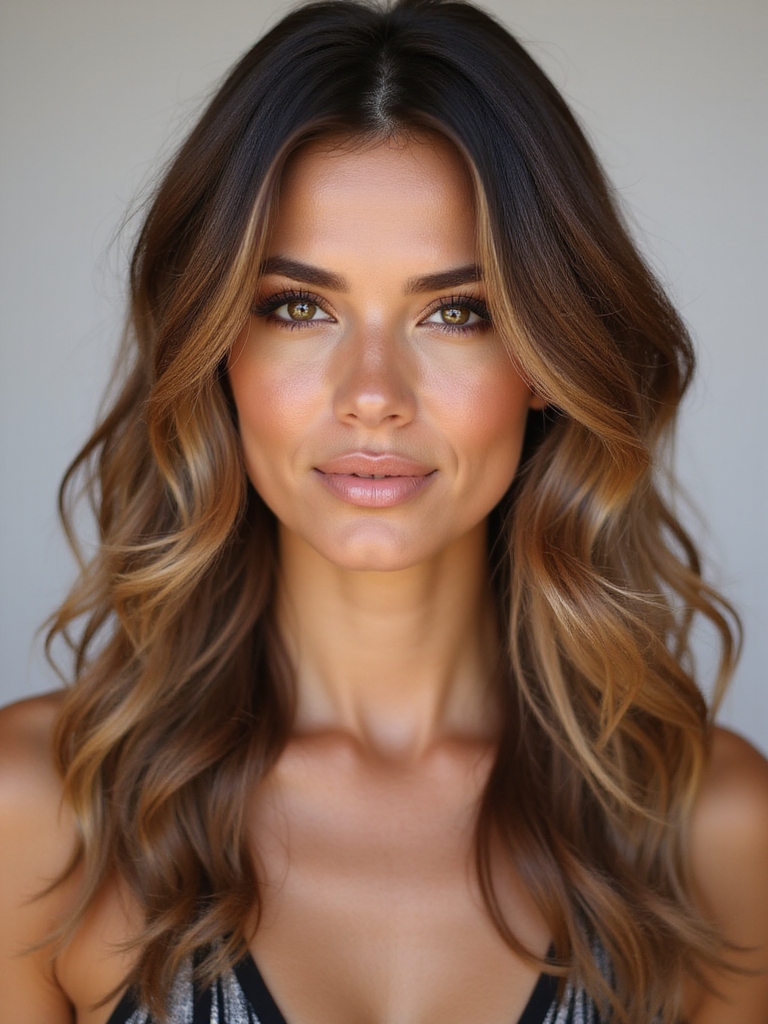
Since brassiness is the recurring enemy for tan skin, a dedicated anti-brass routine is what keeps color looking freshly done. Reach for a toning shampoo (purple for yellow-brass, blue for orange), gloss roughly every two months to reset the tone, and keep washes cool to slow oxidation.
In my chair, I tell tan-skinned clients that a gloss is the single best investment for keeping warm color glowing, since it refreshes both the tone and the shine that fade first. Stay on top of it and your gold stays gold.
- Tone weekly: purple for yellow-brass, blue for orange.
- Refresh the tone with a gloss roughly every two months.
- Wash in cooler water to slow brassy oxidation.
- A gloss is the best investment for keeping color fresh.
Finding Your Inspiration
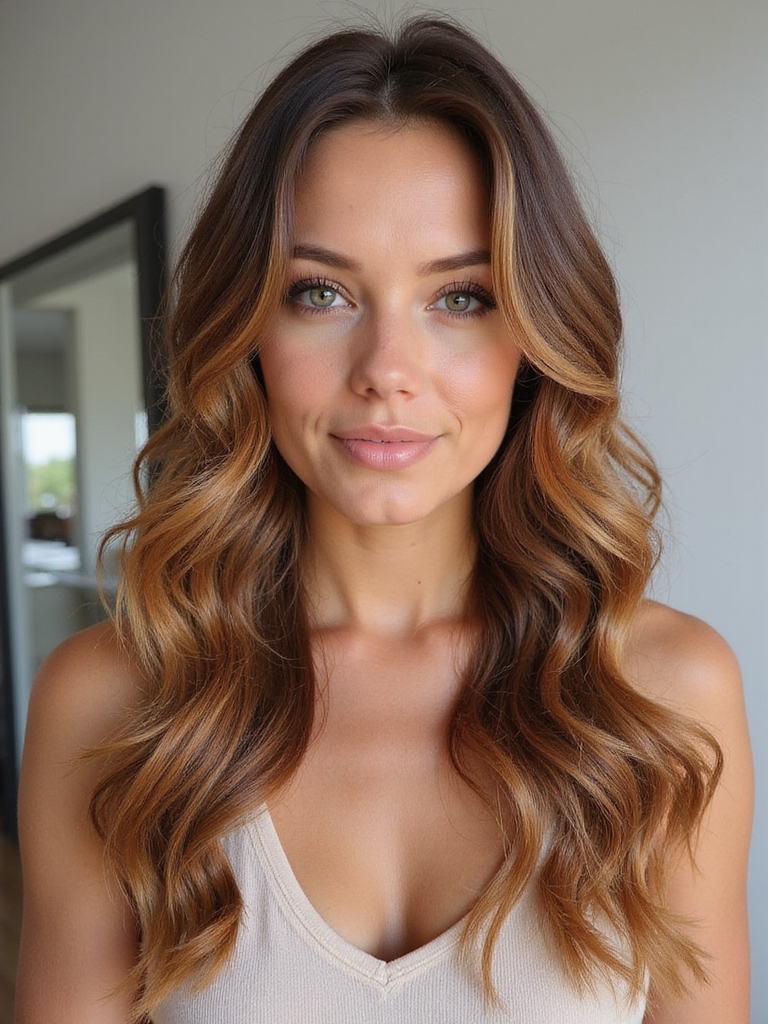
When you’re gathering inspiration, look for photos of people with a similar undertone to yours, not just a similar tan, since undertone is what decides whether a color flatters. Save two or three references in different lighting, and note whether the warmth reads gold or brassy in each.
Bring those to your colorist and be clear about how much upkeep you’ll keep up with, especially the anti-brass toning. On cost, a gloss or single-process runs about $60 to $120, while balayage, highlights, or a bold color is closer to $150 to $300. A good colorist will adapt any inspiration to keep your warm color glowing rather than going brassy.
Warmth, Without the Brass
Tan skin is made for warm, glowing color, and the only real skill is keeping that warmth on the right side of brassy. Read your undertone, choose a shade that flatters it, gold and caramel for warm skin, a touch of ash for olive, and then commit to the toning and glossing that hold the color true. Done that way, tan skin wears honey, caramel, red, and warm brunette better than almost any complexion.
Start with the direction that suits your undertone and your patience for upkeep, then lean on a good gloss to keep it glowing. Whether you go sun-kissed caramel or rich brunette, the right warm color, kept brass-free, lights your whole face.
Keep the Inspiration Going