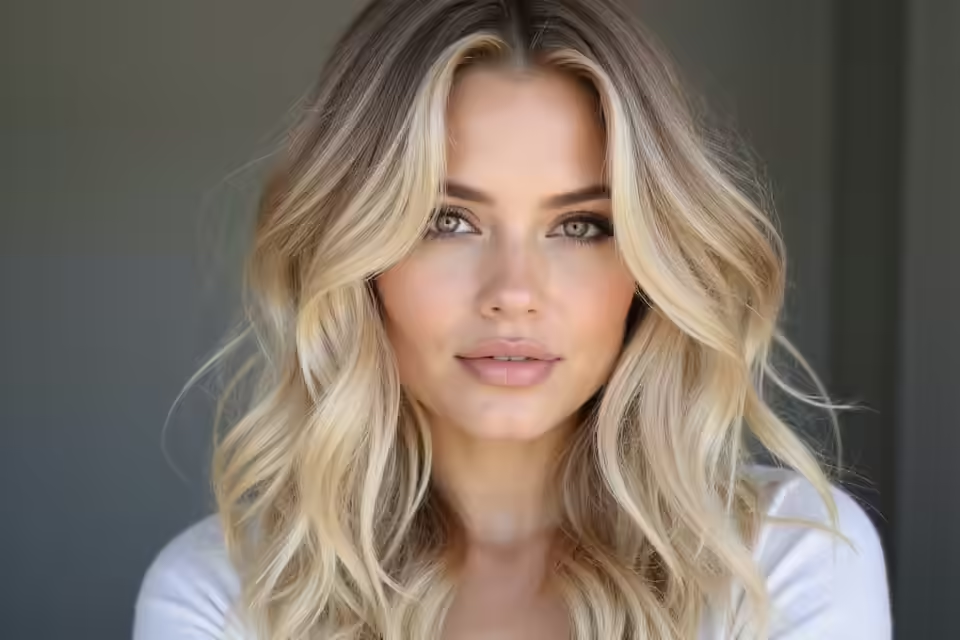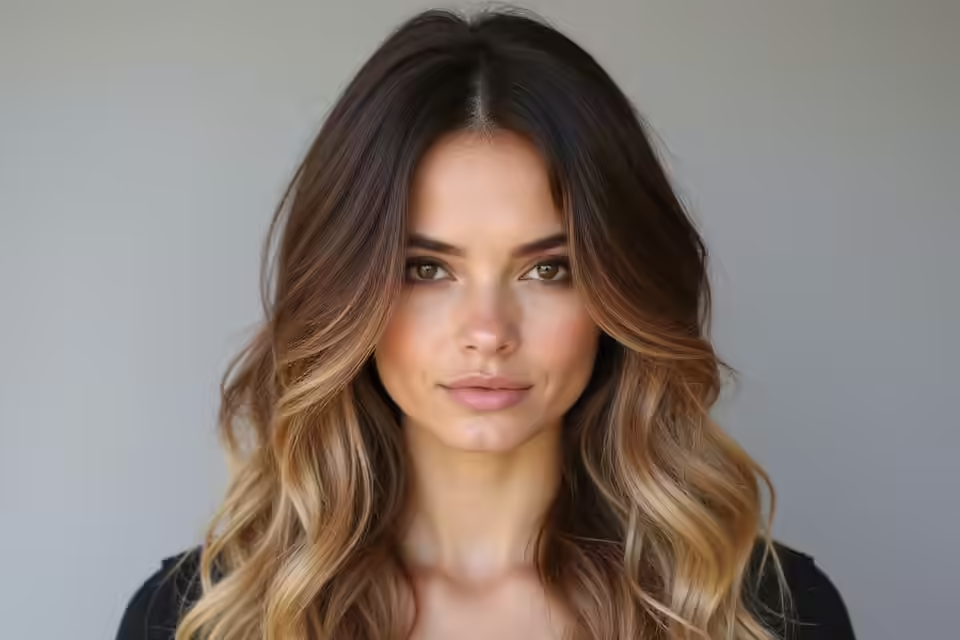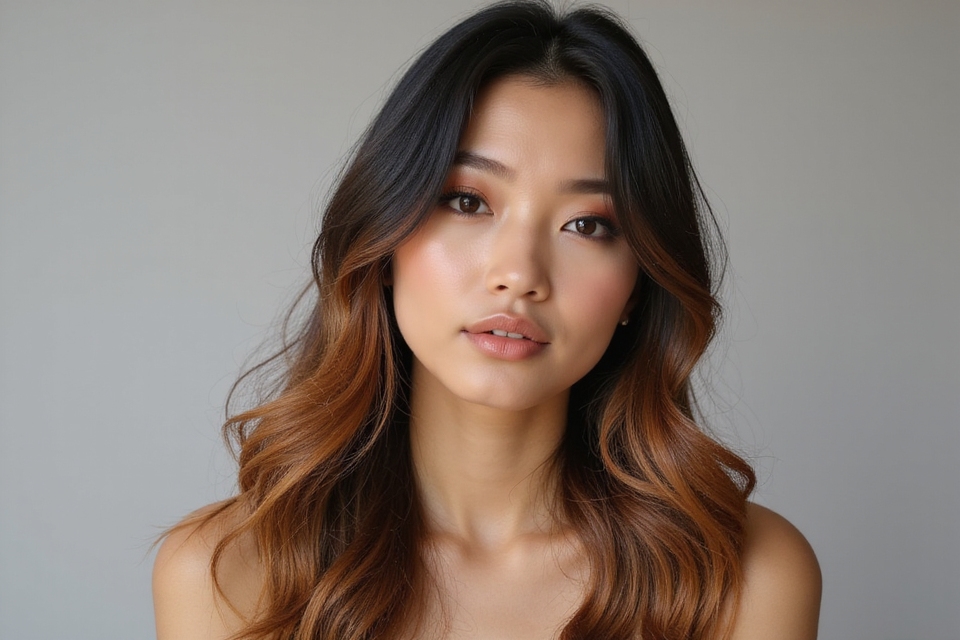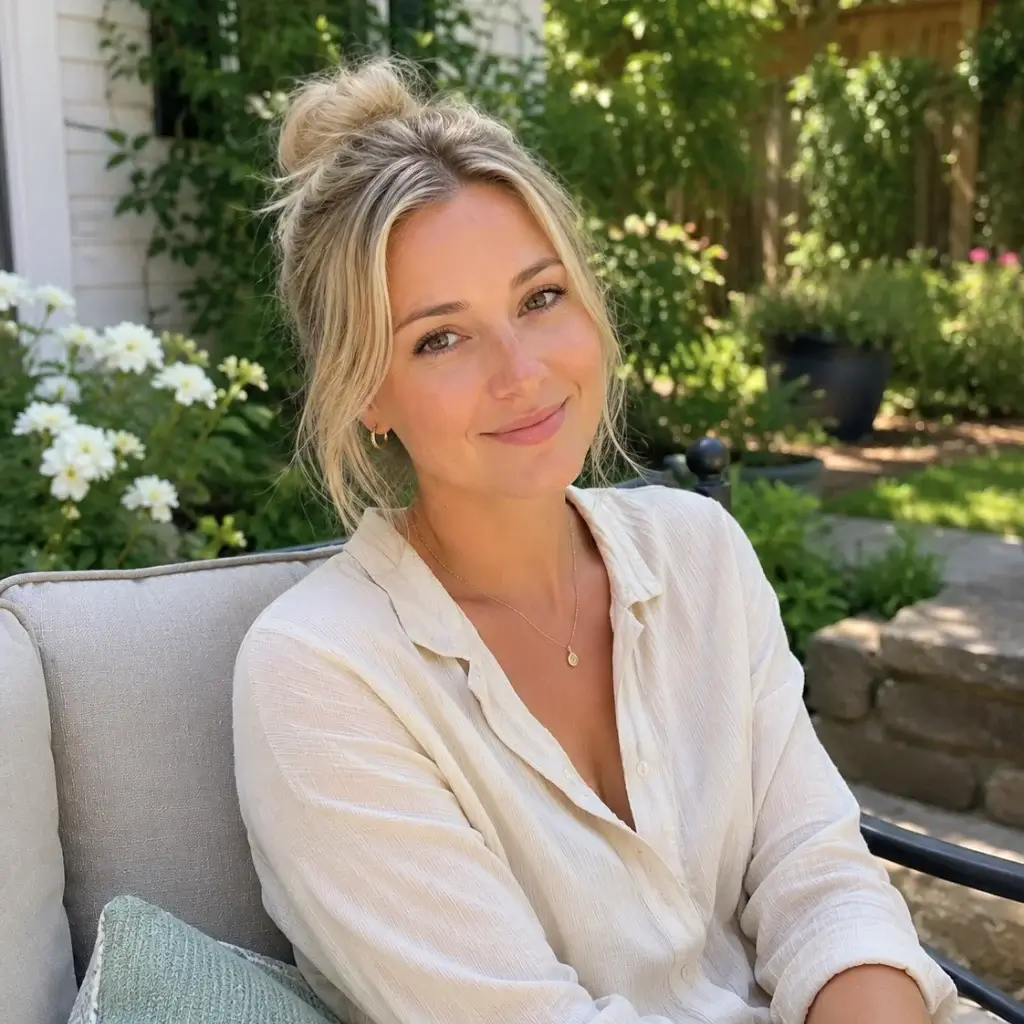
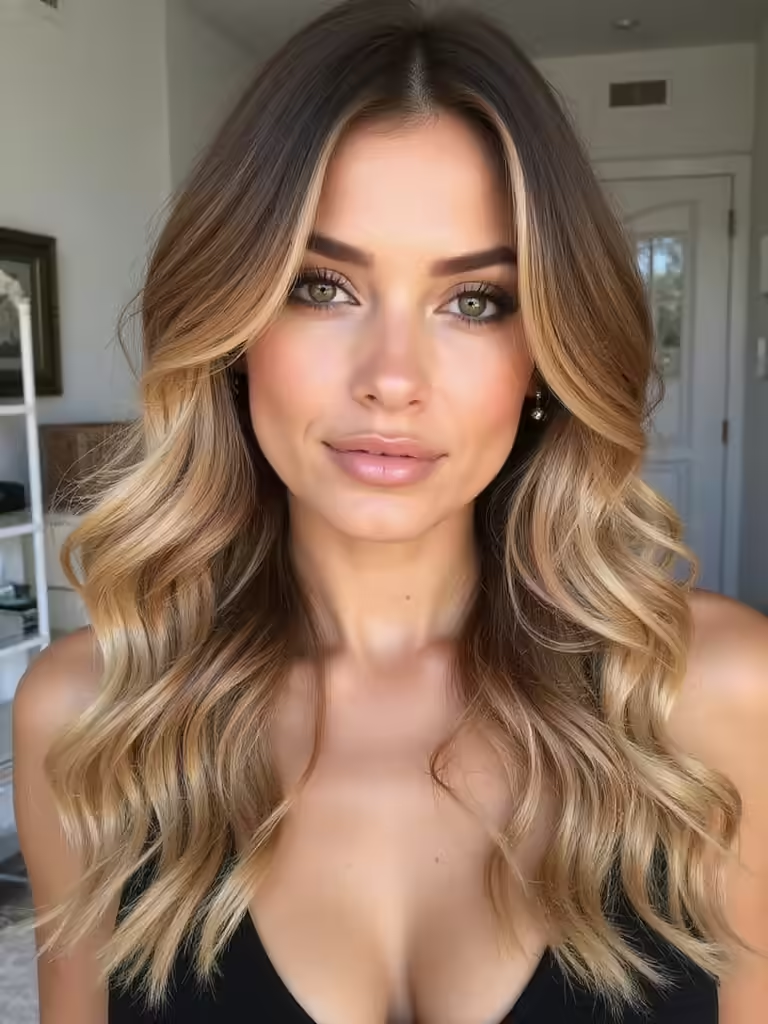
Golden brown and blonde is the color I hear the most requests for, and it’s easy to see why. It keeps the richness of brunette hair while weaving in warm, sunlit blonde, so you get dimension and glow without going fully light. The two tones sit close on the warmth scale, which is what makes the blend look natural, like real sun-lightening.
Below is everything that actually matters: how to match it to your skin, what to ask your colorist for, which techniques give which effect, and how to keep the gold from fading to brass. Start by figuring out how much brightness you’d actually wear, then work back from there.
Golden Brown and Blonde, the Essentials
- The blend works because the two tones sit close on the warmth scale, giving dimension without harsh contrast.
- Match the depth to your skin: softer, cooler blends for fair skin; richer, warmer golds for olive, tan, and deep skin.
- Balayage gives the softest, lowest-maintenance grow-out; full highlights need a refresh every six to eight weeks.
- Warm color fades fast: sulfate-free products, cooler washes, and heat and UV protection keep it rich and gold.
The Allure of Golden Brown and Blonde
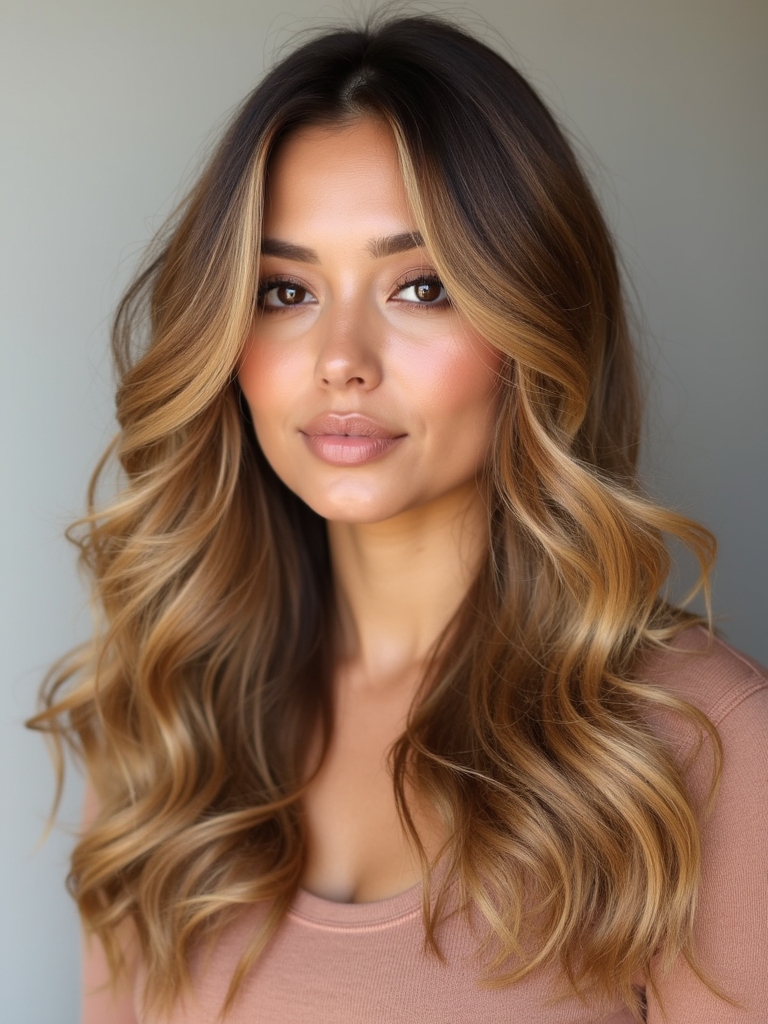
Golden brown and blonde earns its popularity because it gives you two things at once: the depth of brunette hair and the glow of blonde. The brown base keeps richness near the roots, while warm blonde threads through the mid-lengths and ends like sun-lightening. Together they read as natural, expensive dimension.
A Color on a Spectrum
It flatters more people than a solid blonde, because the darker base keeps depth at the roots and grows out softly. Whether your natural color is dark brown or already light, there’s a version that suits you. See blonde color ideas if you want to go brighter.
Think of it as a spectrum. A little blonde gives subtle warmth; a lot gives a bright, beachy finish. Where yours lands comes down to your skin tone and how much upkeep you’re up for.
Choosing the Right Shade for Your Skin Tone
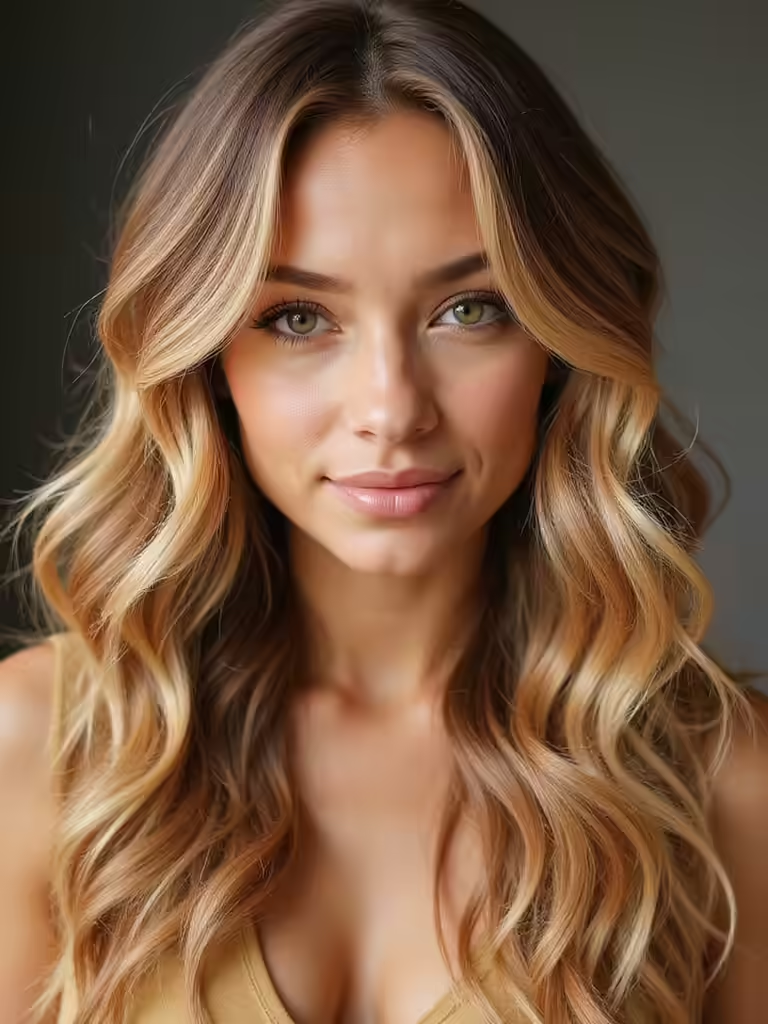
The single biggest factor in whether this color flatters you is undertone. Warm skin, with golden or olive undertones, glows with honey, caramel, and gold-brown blends. Cool skin, with pink undertones, usually wants the blonde kept softer and less brassy, leaning toward beige-gold. Clients ask me about this constantly, and it’s almost always the deciding detail.
A Quick Skin-Tone Test
Deeper and olive skin tones look beautiful in rich golden browns with warm caramel highlights that echo the warmth in the skin. Very fair skin can go lighter and cooler without washing out. Keep the pieces closest to your face a shade that lifts your complexion. For a browner starting point, see brown color ideas.
Bring a photo to your colorist and hold shades against your jaw in natural light. The blonde that flatters you is the one that makes your skin look brighter and more awake.
Balancing Warmth and Just Enough Contrast
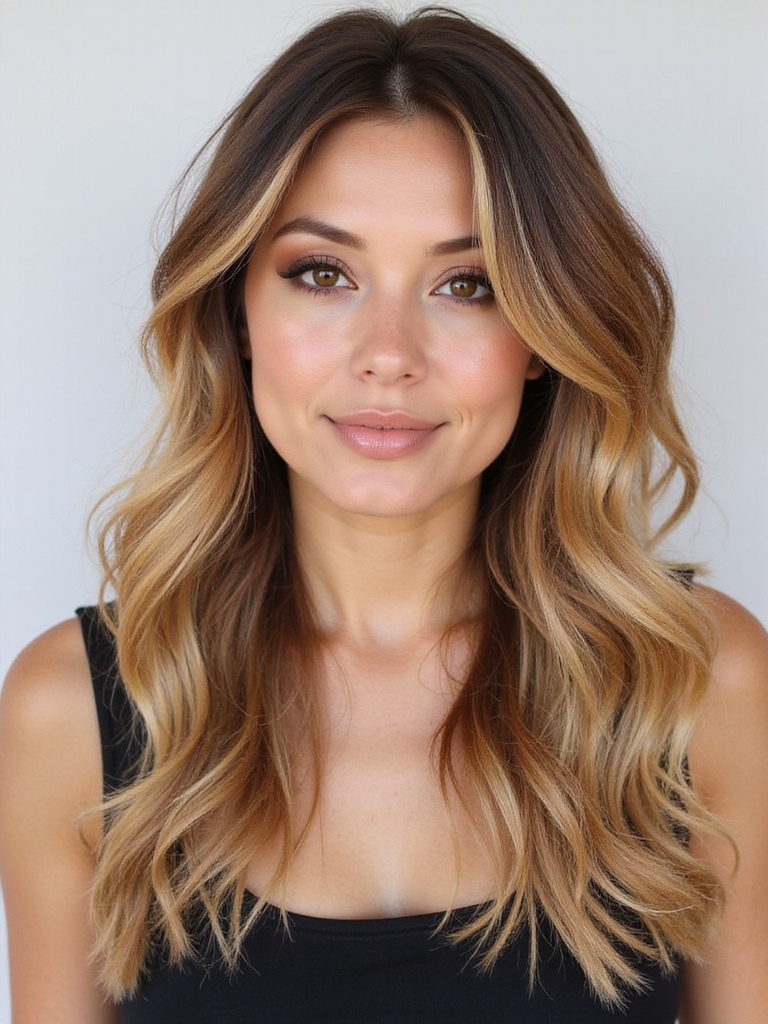
The magic of this look is contrast that’s soft, not stark. Too little difference between the brown and blonde and the color falls flat. Too much and it looks stripy. The sweet spot is two to three shades of lift, enough to catch light without a hard line.
- Keep the blonde two to three shades lighter than your base, no more.
- Blend the tones so they melt together, with no sharp root line.
- Concentrate the lightest pieces near the face and down the mid-lengths.
- Add a few darker lowlights if the blonde starts to look one-note.
How to Achieve the Look at Home
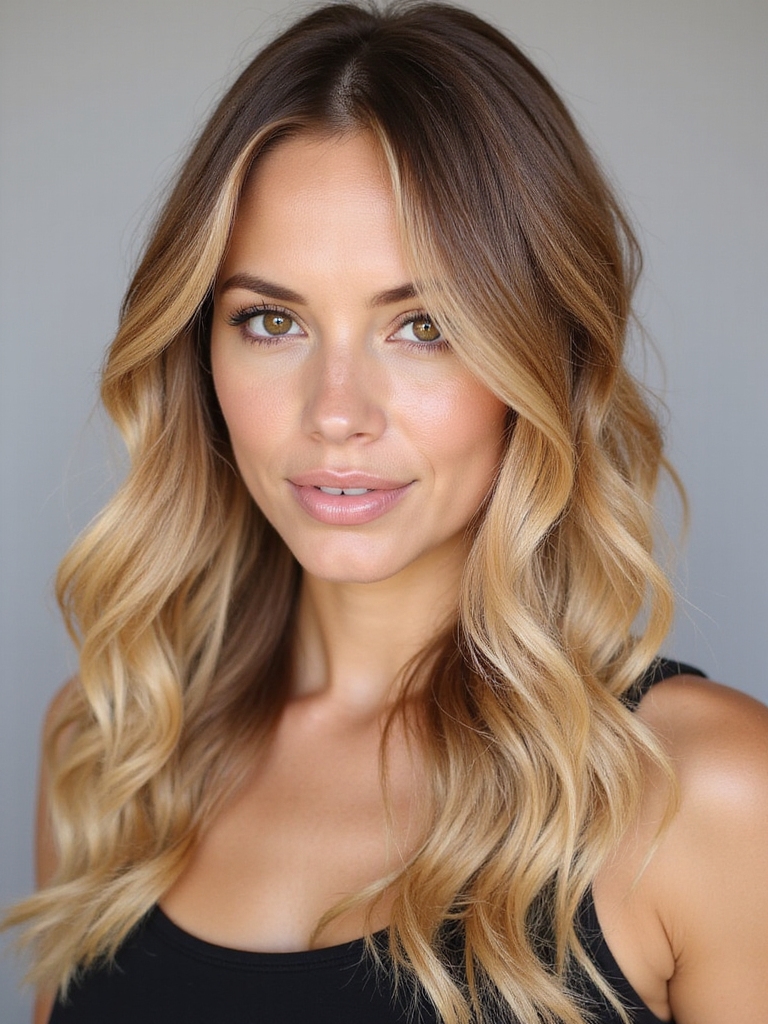
You can get a soft version at home, though the more blonde you want, the more it pays to see a professional. At home, stick to a few face-framing highlights with a balayage kit and save a full head for the salon, since that’s where DIY color most often goes wrong.
When to Leave It to a Pro
Section clean, dry hair, paint lightener onto the surface of thin pieces, and feather it toward the ends so there’s no harsh line. Watch it closely and rinse before it lifts too far, since warm tones go brassy fast. Tone afterward if it pulls orange.
Honest note: going more than two shades lighter, or coloring dark or previously-dyed hair, is a job for a salon. Over-lightening at home is the fastest route to breakage.
The Perfect Blend of Brown and Blonde
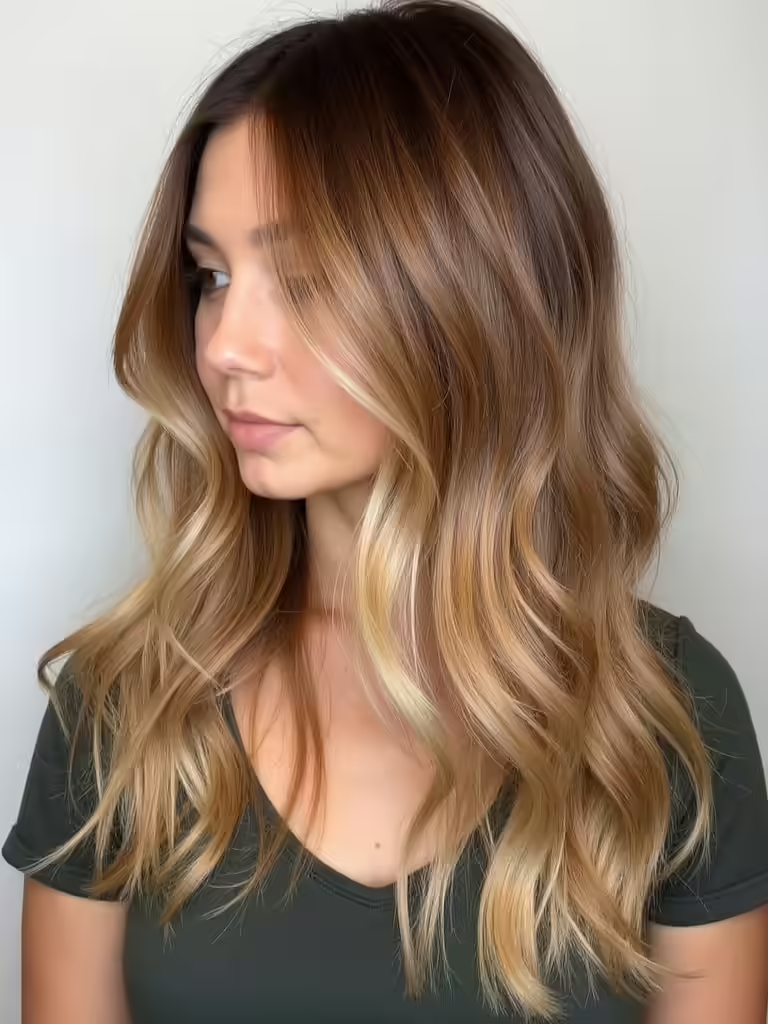
A convincing blend is really several tones working together at once. In my chair, that usually means a lowlight close to your natural depth, a mid golden-brown, and a lighter blonde, so the color has real layers. A honey blonde blend is a good reference point.
What to Ask For
This is why salon color looks dimensional and box dye often looks solid. The variation mimics the way sun naturally lightens hair, in scattered pieces.
Ask for warmth kept soft gold, not brassy if you burn orange easily, and for a root that’s blended down rather than bleached to the scalp. That one request keeps the grow-out easy.
A few color terms so you can talk to your stylist.
📖Lowlight
A darker piece woven in to add depth and stop the blonde from looking flat.
📖Toner
A gloss that neutralizes brass and sets the exact shade after lightening.
📖Lift
How many shades lighter the hair is taken; more lift means more damage.
Color Care and Maintenance Basics
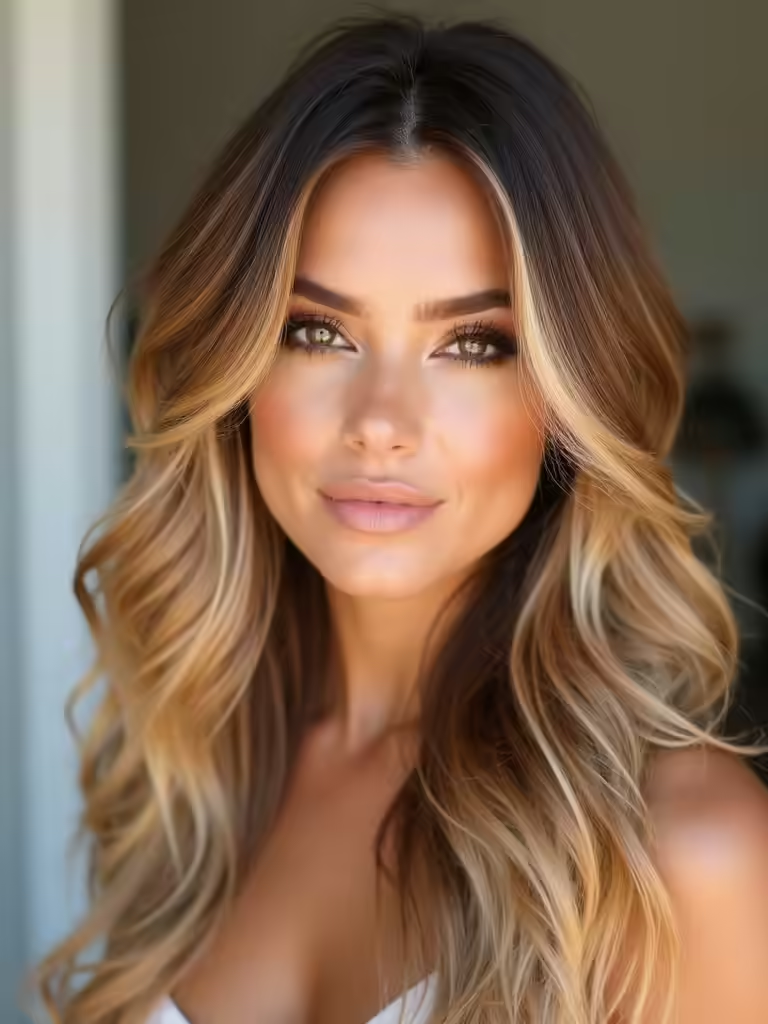
Warm blondes and golds fade faster than any other color, because the lightened hair is porous and loses tone quickly. The care routine is what keeps it from turning brassy or dull, and it’s mostly about being gentle. Curly and coily hair is especially porous, so lightened textured hair needs extra moisture and a careful hand.
- Use sulfate-free, color-safe shampoo and wash less often.
- Rinse with cooler water to keep the cuticle smooth and the color in.
- Use a weekly bond or protein treatment on lightened lengths.
- Book a toning gloss roughly every six to eight weeks.
Celebrity-Inspired Transformations
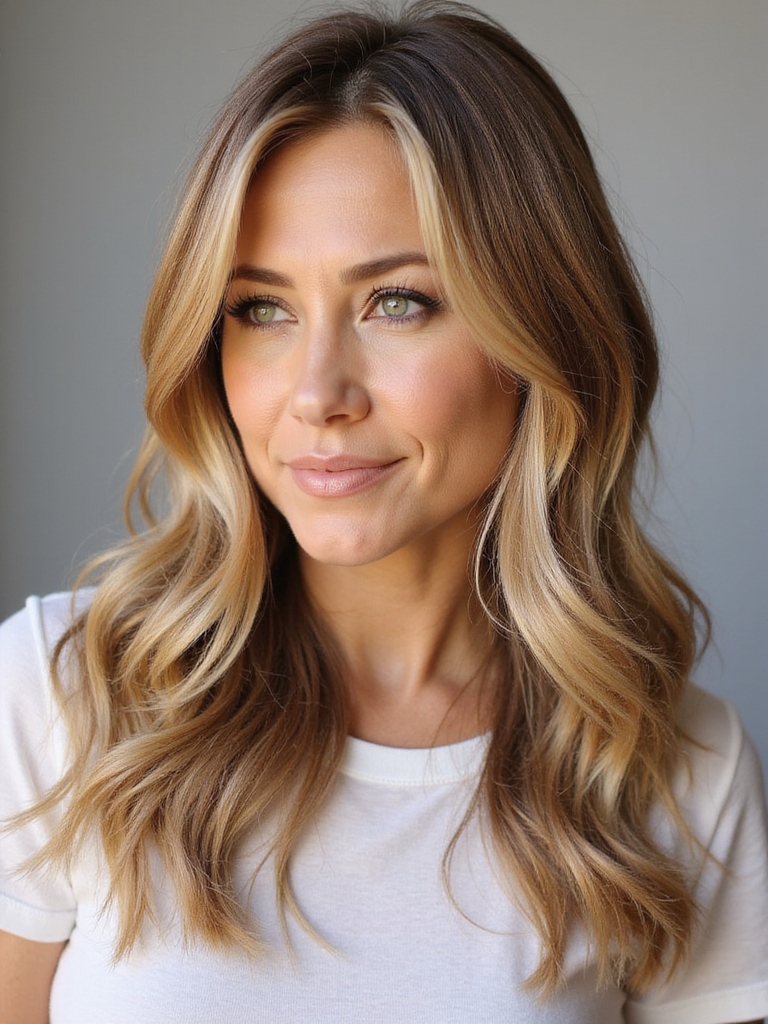
Some of the most-saved versions of this color come from red-carpet and magazine looks, where a natural brunette is lifted into warm, sun-touched blonde around the face. The appeal is always the same: it looks expensive and low-effort at once.
You don’t need a famous name to get the look. Take a screenshot to your colorist, be clear about how much brightness you want, and ask them to adapt it to your skin tone rather than copy it exactly.
- Save two or three reference photos taken in different lighting.
- Point out exactly which pieces you love, like the face-framing lightness.
- Ask your colorist to tailor the depth to your undertone.
Styling It for Autumn
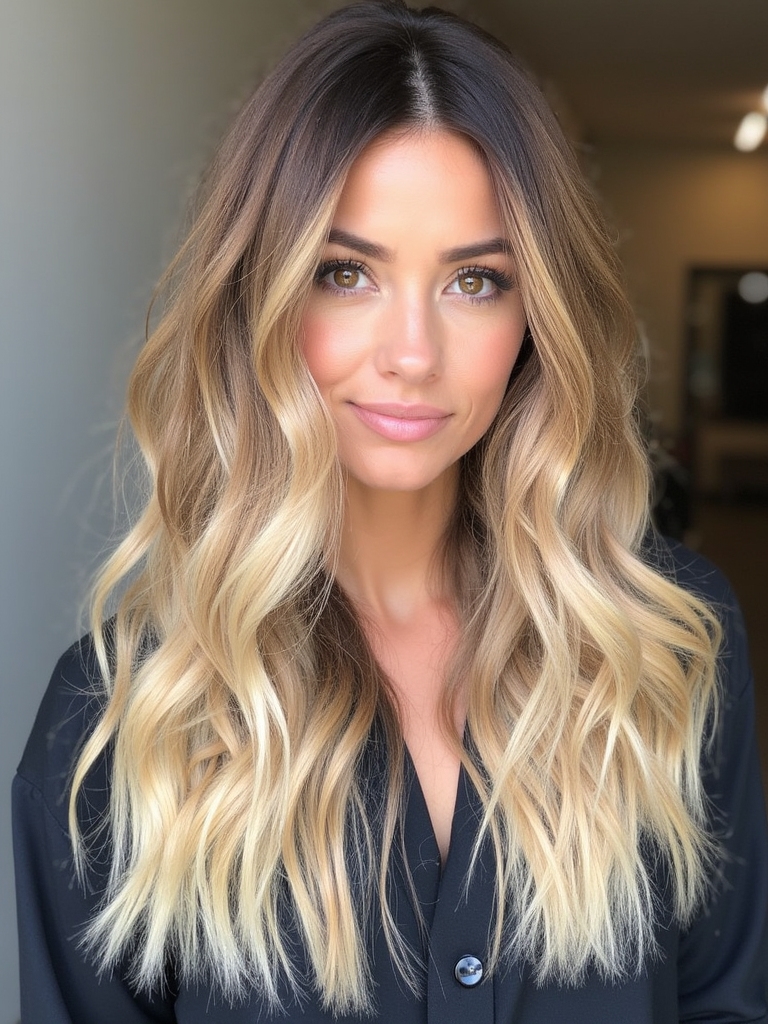
This color comes into its own in autumn, when warm golds and caramels echo the season. As the summer sun fades, a gloss in a slightly deeper gold keeps the blonde from looking washed out against darker fall clothing. It’s a small change that makes the whole color feel current.
Right now is a good time to add a few warmer lowlights if your summer blonde has gone very light. It brings back depth and richness without a full recolor.
Golden Face-Framing Layers
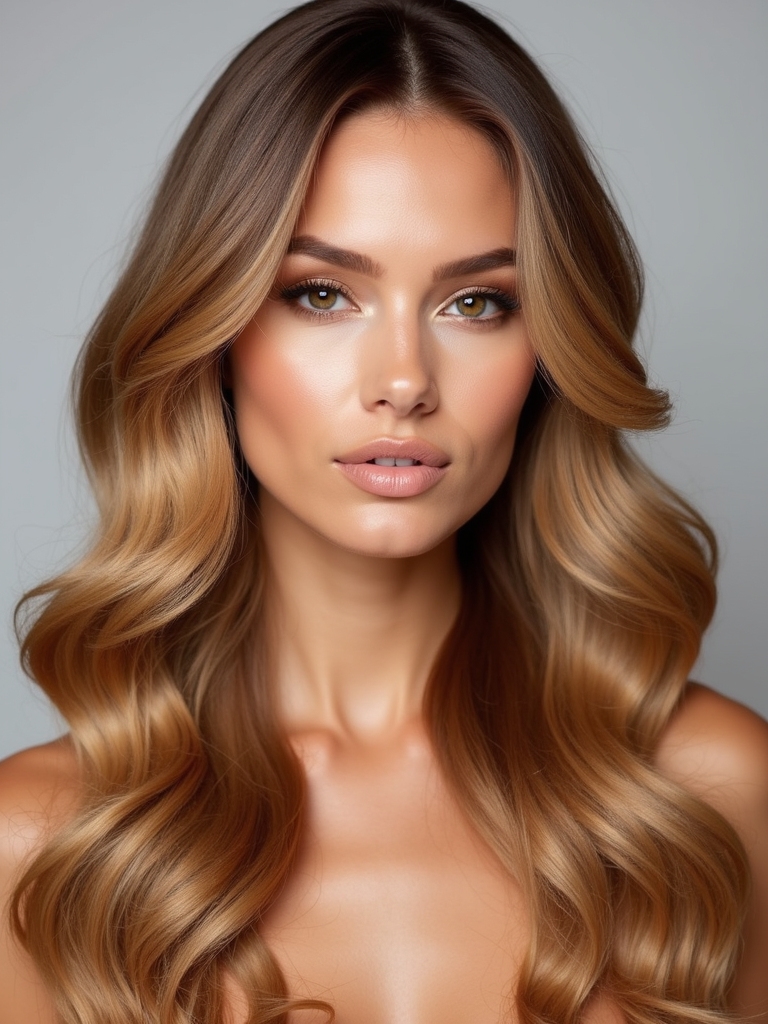
Face-framing is where this color earns its keep. Concentrating the lightest golden pieces right around the face brightens your complexion and draws the eye up, which is the most flattering placement for almost everyone. Paired with soft layers, it frames the face like good lighting.
- Ask for the brightest blonde on the front pieces around your face.
- Keep those pieces a shade that lifts and brightens your complexion.
- Pair with long, soft layers so the color moves and catches light.
- Curtain bangs work beautifully with face-framing gold.
The Products That Protect Your Color
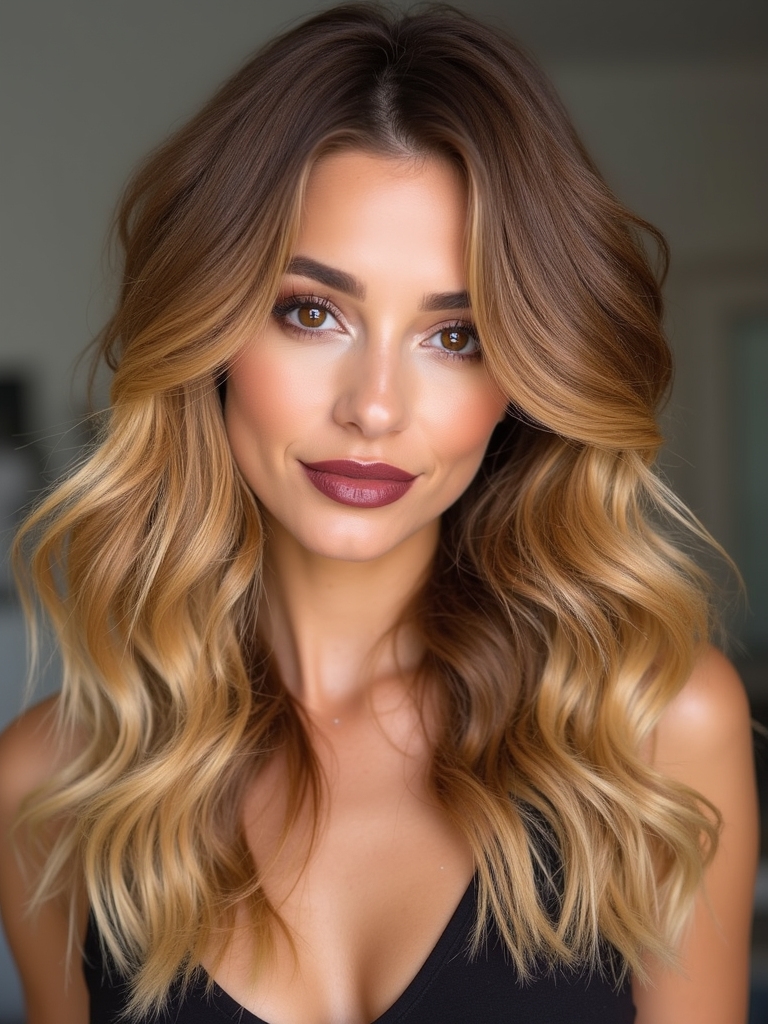
The right products make the difference between color that stays gold for months and color that turns brassy in weeks. A sulfate-free shampoo, a rich conditioner, and a weekly bond treatment are the non-negotiables for lightened hair. A toning shampoo, used once a week, keeps unwanted brass in check.
Don’t over-tone, though. Purple shampoo used every wash can leave warm blonde looking dull and grey, which defeats the golden effect. Once a week is plenty for most people.
Leave-in heat protectant matters too, since heat styling speeds up fading and dryness. A little goes a long way on the lightened lengths.
🅰️Purple shampoo
Cancels yellow-brass to keep cooler blondes clean; use once a week so it doesn’t dull warm gold.
🅱️Gold gloss
Adds warmth back and boosts shine; better for keeping a golden, sun-kissed tone between salon visits.
Highlights and Lowlights Together
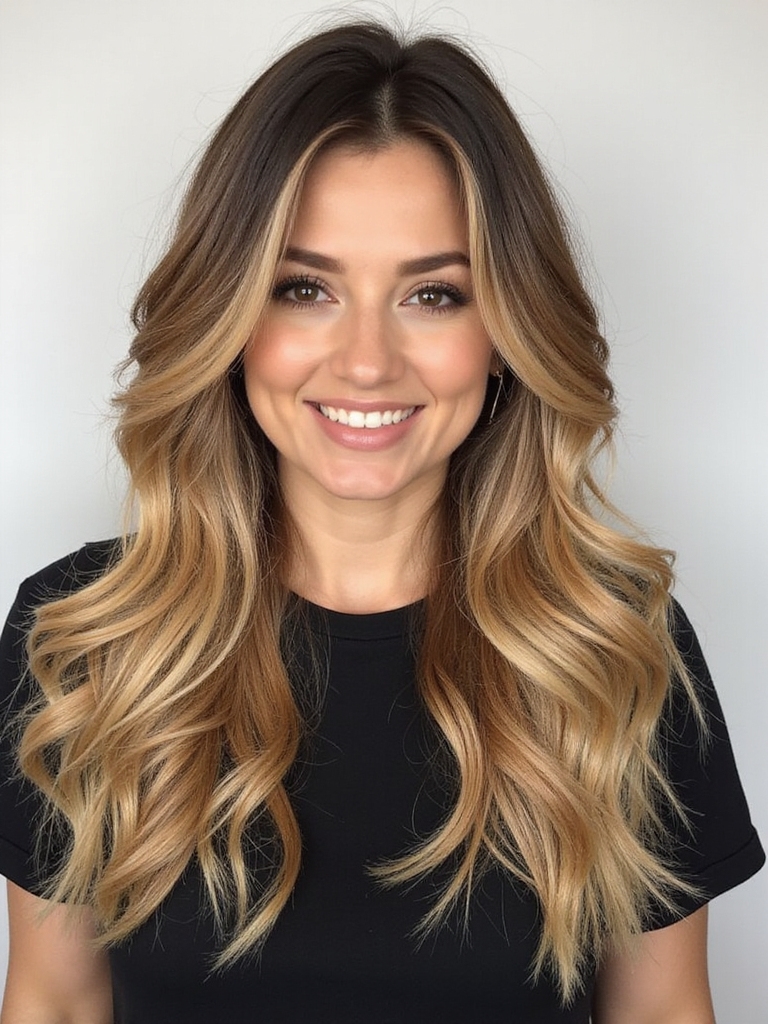
The secret to dimension is using both highlights and lowlights. Highlights add the blonde brightness; lowlights weave darker pieces back in so the color has depth and stays lively. Together they mimic the natural range of tones real hair has, which is what makes the blend believable.
- Add lowlights if your highlights have made hair look one-dimensional.
- Keep lowlights within a couple of shades of your base for softness.
- Aim for more base and lowlight than bright blonde overall.
- This combo is great for growing out old, solid highlights.
Creative Color Techniques to Ask For
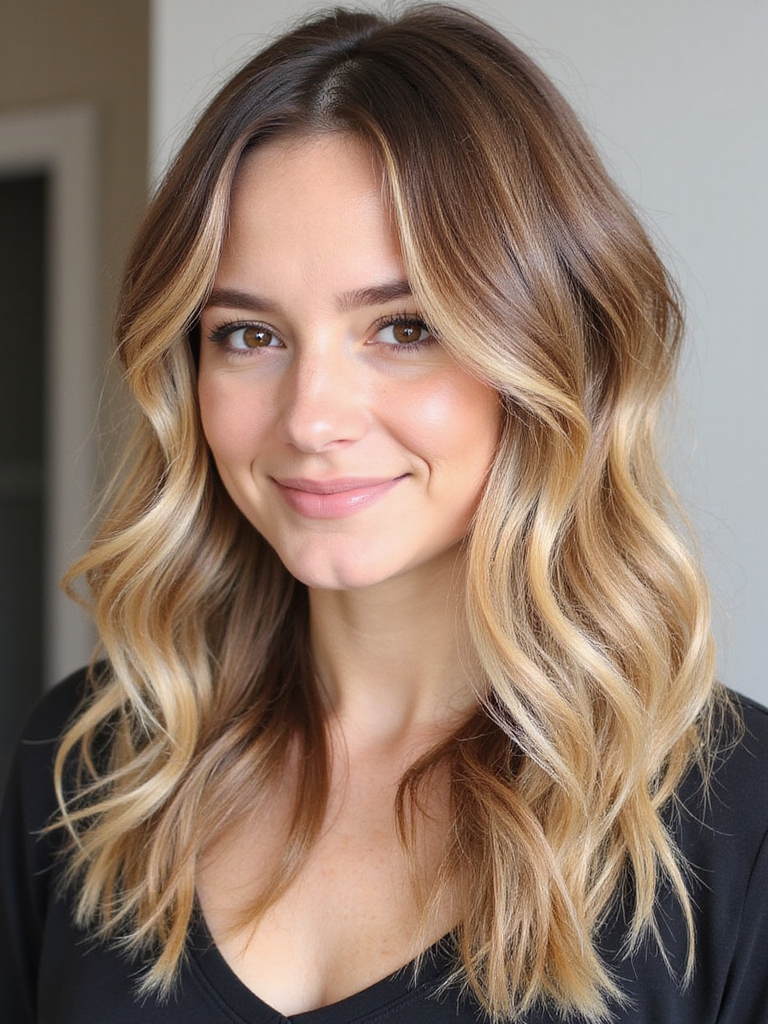
Beyond basic highlights, a few placement techniques give this color its modern, natural feel. Balayage hand-paints color for a soft gradient. Foilyage adds foils to balayage for extra lift on darker hair. Babylights are ultra-fine highlights that look like natural sun-lightening.
Naming the Effect, Not the Technique
Which one suits you depends on your starting color and how much brightness you want. Darker hair usually needs foils to lift cleanly, while lighter hair takes beautifully to freehand balayage.
You don’t need to know the exact term. Describe the effect you want, soft and blended or bright and sunny, and let your colorist choose the method.
Which technique fits your starting point?
🎯Balayage
Hand-painted, soft grow-out; best on already light-to-medium brown hair.
🎯Foilyage
Balayage plus foils for more lift; better on darker or stubborn hair.
🎯Babylights
Ultra-fine, natural-looking highlights; ideal for a subtle first-timer blend.
Balayage vs Ombré: Which to Choose
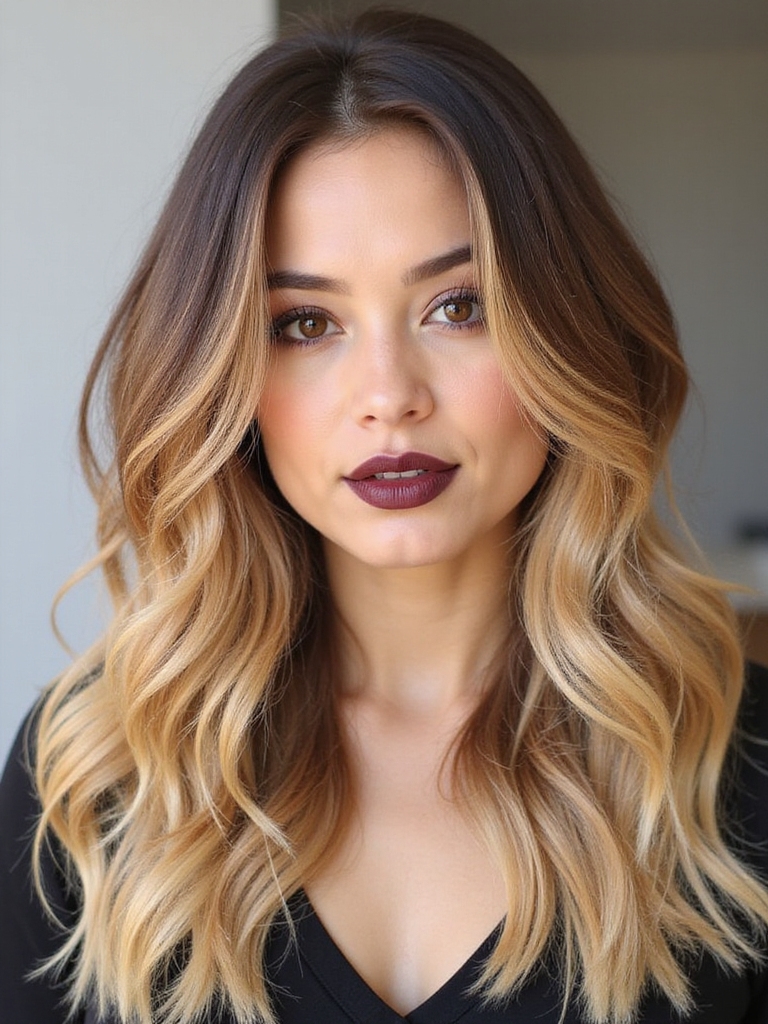
People mix these up, but they’re different things. Balayage is a technique: hand-painted highlights scattered through the hair for a soft, all-over glow. Ombré is a style: a gradient from darker roots to lighter ends with a more noticeable transition. For golden brown and blonde, most people want balayage.
- Choose balayage for soft, sun-kissed dimension all over.
- Choose ombré for a bolder root-to-tip gradient.
- Balayage grows out the most gracefully, with no harsh line.
- You can combine them: balayage on top, brighter ombré-style ends.
Debunking Common Color Myths
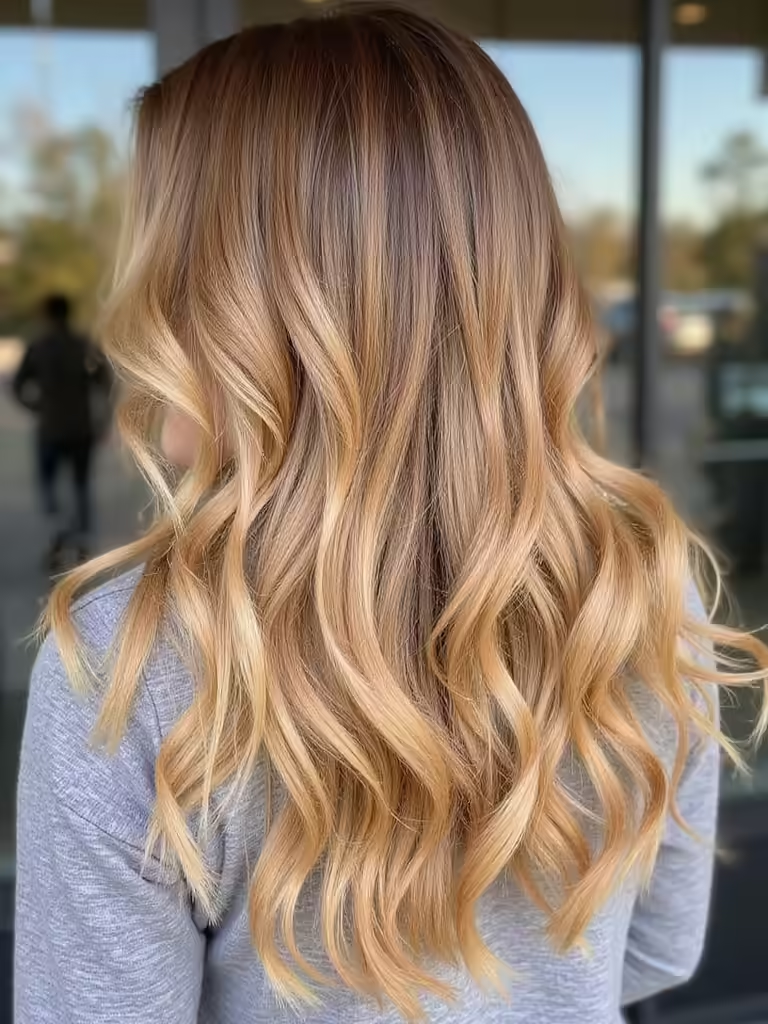
A few myths keep people from this color. I tell nervous clients the first one all the time: that blonde highlights destroy your hair. Done well, with modern lighteners and bond-builders, lift is far gentler than it used to be. The second is that dark hair can’t go golden, when a good colorist can lift most dark hair safely over one or two sessions.
The last myth is that it’s high-maintenance across the board. A soft balayage blend can go three to four months between appointments, which makes it one of the lower-upkeep color options out there. A chocolate brown base with balayage is especially easy to live with.
Going Gradual: Easing Into the Color
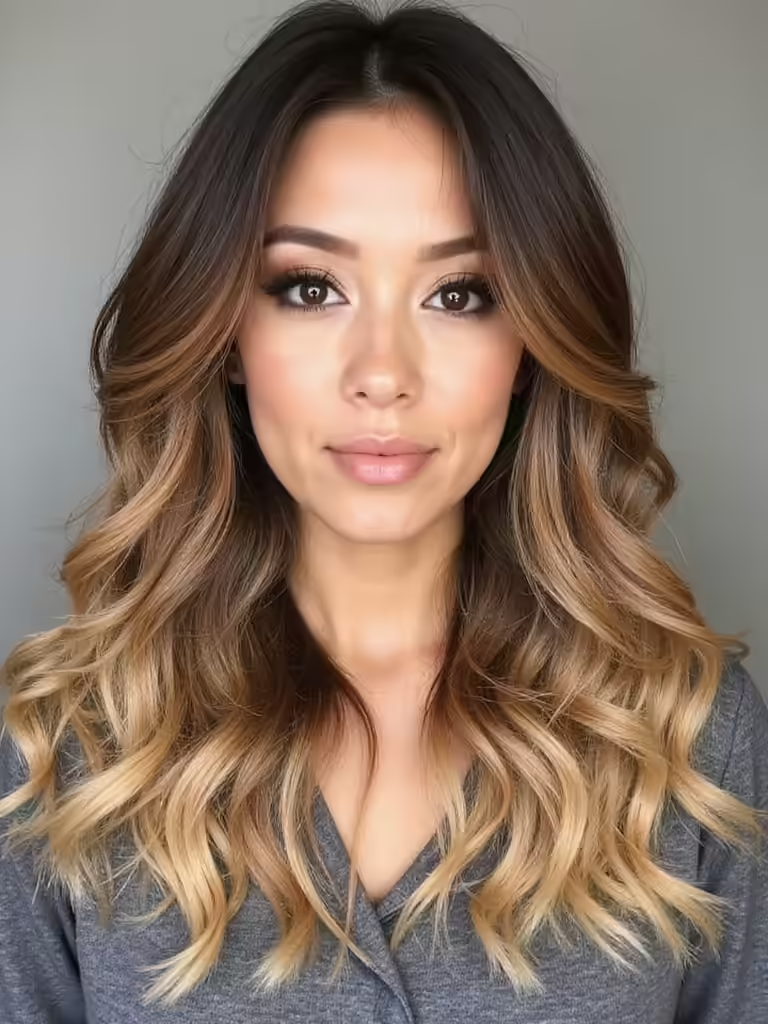
If you’re nervous, you don’t have to commit all at once. Starting with a few face-framing babylights and adding brightness over two or three appointments lets you live with each step and see what suits you. It’s also gentler on the hair than one big lightening session.
This gradual approach is ideal if your hair is dark or previously colored, where a single dramatic lift risks damage. Spreading it out keeps the hair healthier and the result more natural.
It’s easier on your budget, too, since you’re spacing the cost. And you can stop at any point that feels right, once the color looks like you.
Blonde Highlights That Transform
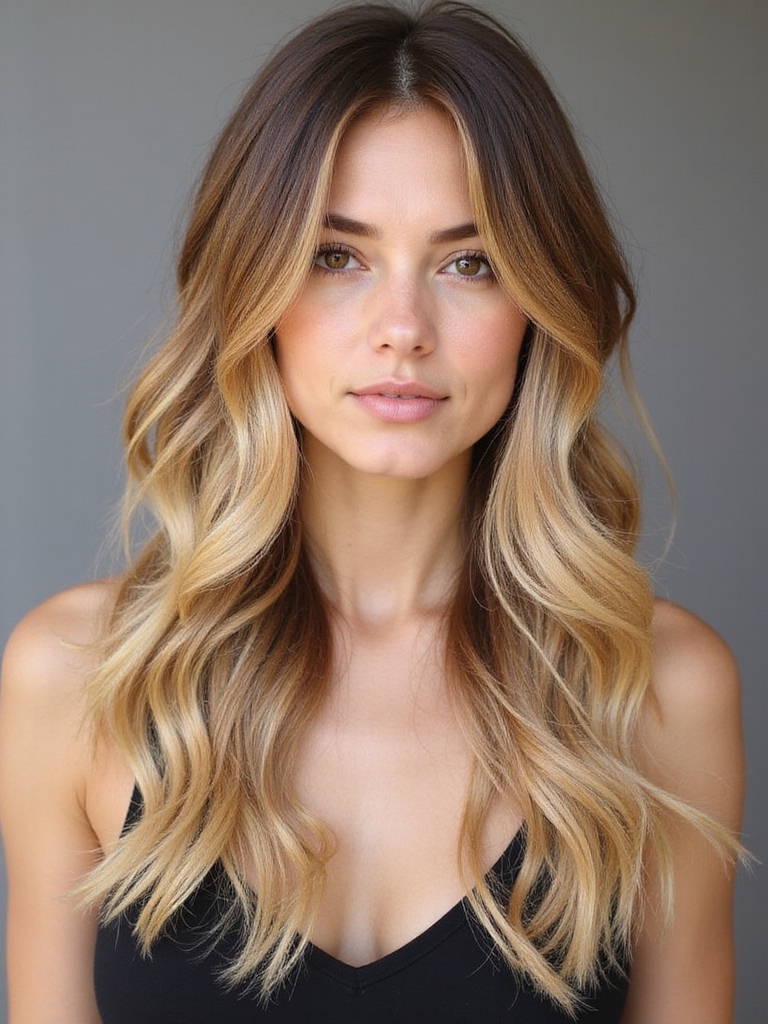
A well-placed set of blonde highlights can change your whole look without touching your base color. Even a dozen bright, face-framing pieces lift the complexion, add movement, and make hair look thicker. This is the lowest-commitment way into golden brown and blonde, and a good place to start if you’ve never lightened your hair.
- Start with face-framing pieces for the biggest impact.
- Keep the base your natural depth so grow-out stays soft.
- Add a gold-leaning toner so highlights read warm, not brassy.
- Book a gloss refresh at six to eight weeks to keep them bright.
Building Depth and Shine
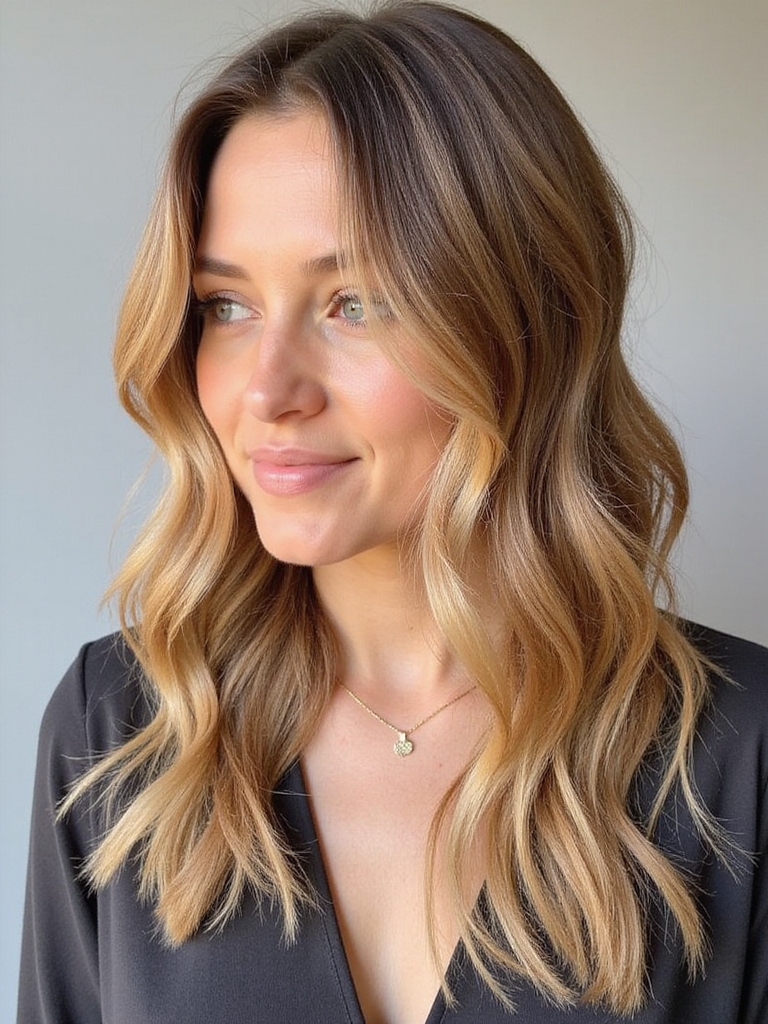
Depth is what stops a blend from looking flat, and shine is what makes hair look healthy and costly. Both come from layering tones and finishing with a gloss. A clear or warm gloss seals the cuticle, boosts reflection, and evens out any patchiness, so the whole head catches light.
Ask for a gloss at every appointment and refresh it between visits. It’s the single cheapest treatment that makes color look freshly done, and it only takes about fifteen minutes.
Protecting Color From the Sun
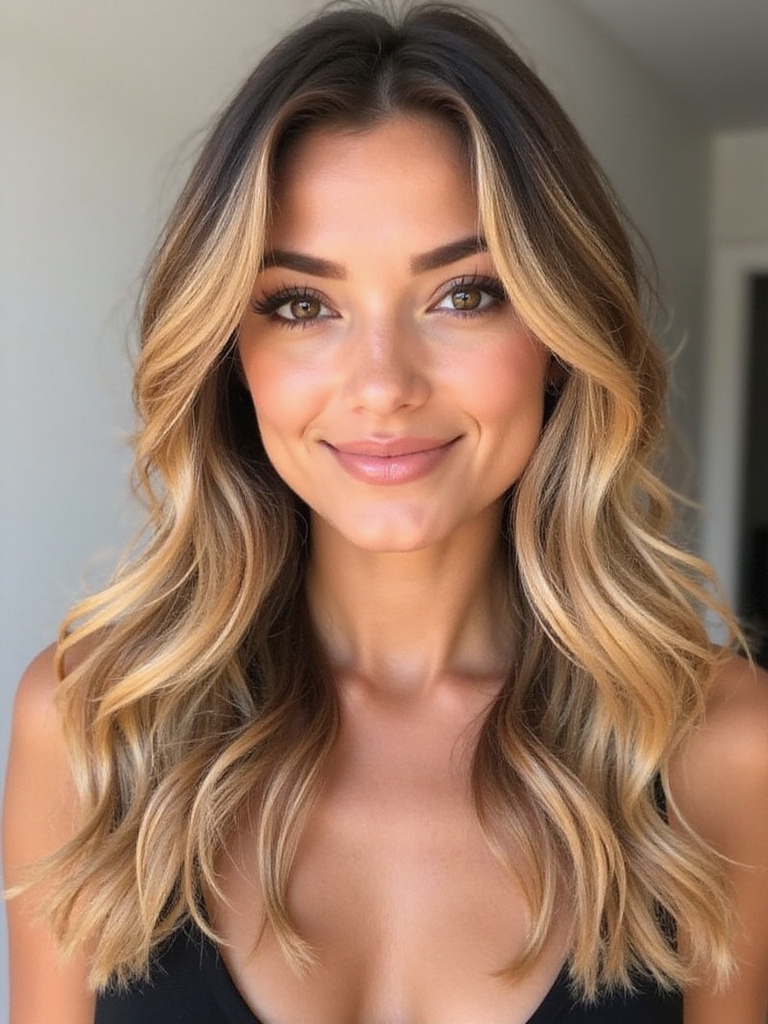
Sun is warm blonde’s biggest enemy after heat styling. UV breaks down the color molecules and lifts tone unevenly, turning gold brassy and drying the lengths. A little protection keeps your color fresh far longer, especially in summer.
Summer Color Insurance
Use a leave-in with UV filters, wear a hat on long beach days, and rinse chlorine and salt out promptly, since both strip and dry lightened hair. A coat of conditioner before the pool helps.
If you spend a lot of time outdoors, factor in a gloss more often, roughly every six weeks, to counter the extra fading. It’s far cheaper than a full recolor.
At-Home Color Maintenance
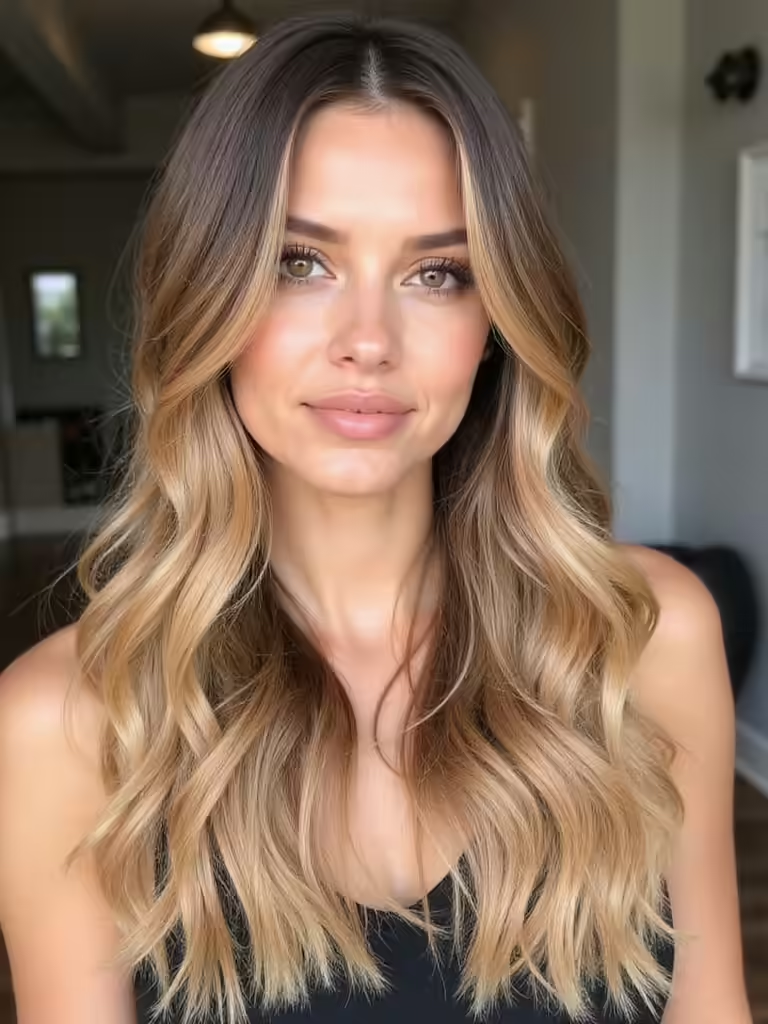
What you do between salon visits decides how long your color lasts. A simple home routine keeps the gold rich and the hair strong, and none of it is complicated. Gentle and consistent is the whole goal.
- Wash two or three times a week to slow the fading.
- Use a weekly hydrating mask on the lightened lengths.
- Apply a toning or gloss product as your colorist recommends.
- Always use heat protectant before hot tools.
Keeping the Color Rich
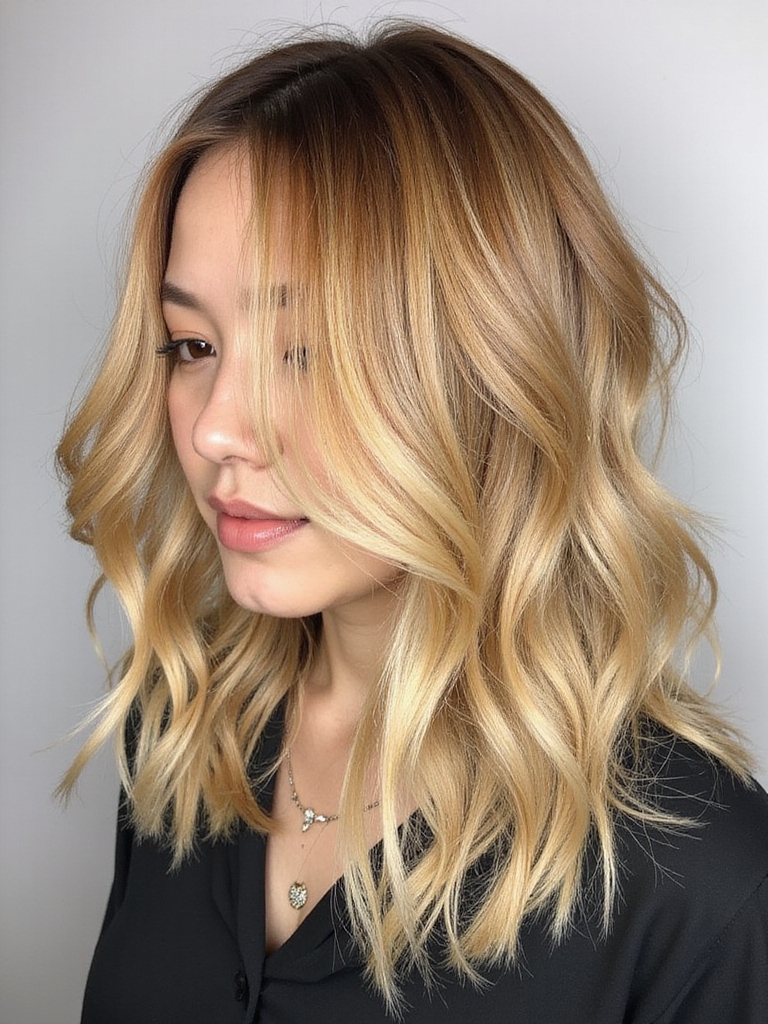
Keeping golden brown and blonde looking freshly done is mostly about tone and shine. As the color ages it fades warm and can go brassy, so a periodic gloss in your target shade resets it. Between glosses, a gentle toning product keeps unwanted orange in check without dulling the gold.
Pay attention to your ends, which are the oldest, most porous hair and fade first. A little extra conditioning and the occasional gloss focused on the ends keeps the color even from root to tip.
Accessorizing Golden Brown and Blonde
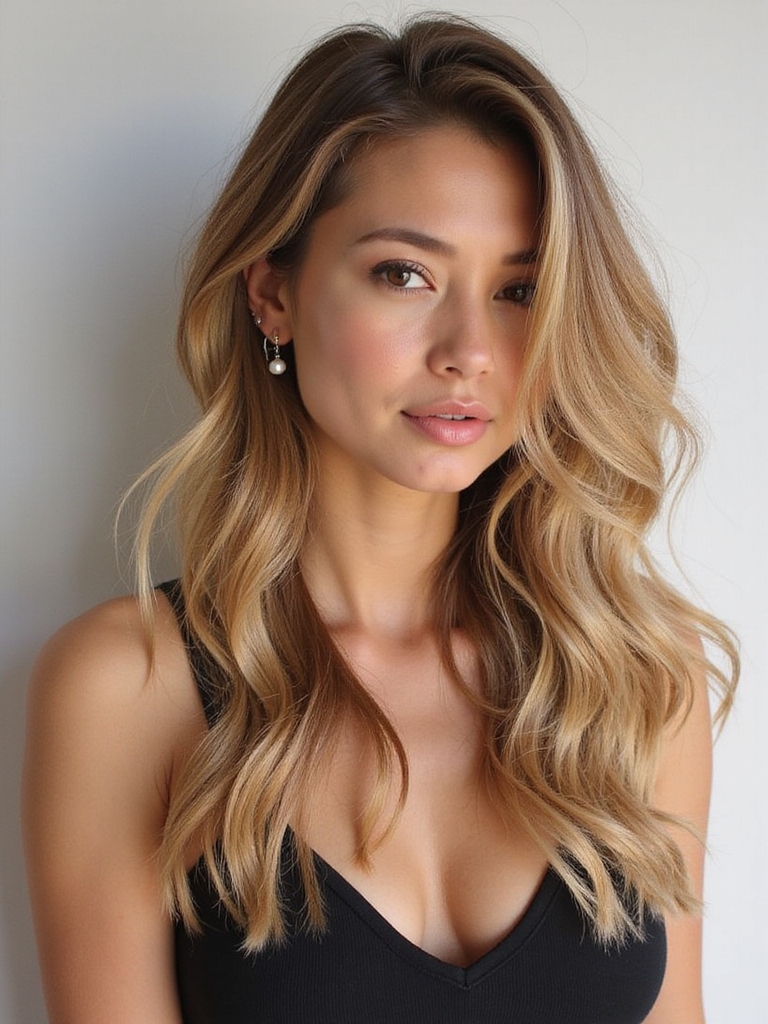
This color plays beautifully with the right styling, because its warmth pairs naturally with gold jewelry and earthy tones. A few small choices make it pop even more. Warm-toned makeup and clothing echo the gold in the hair and pull the whole look together.
- Gold jewelry echoes the warm tones in the hair.
- Earthy, warm-toned clothing complements the color best.
- Loose, tousled waves let the dimension show; poker-straight styling hides it.
- A warm-toned lip ties your makeup to your hair.
Why Unique Hair Accents Matter
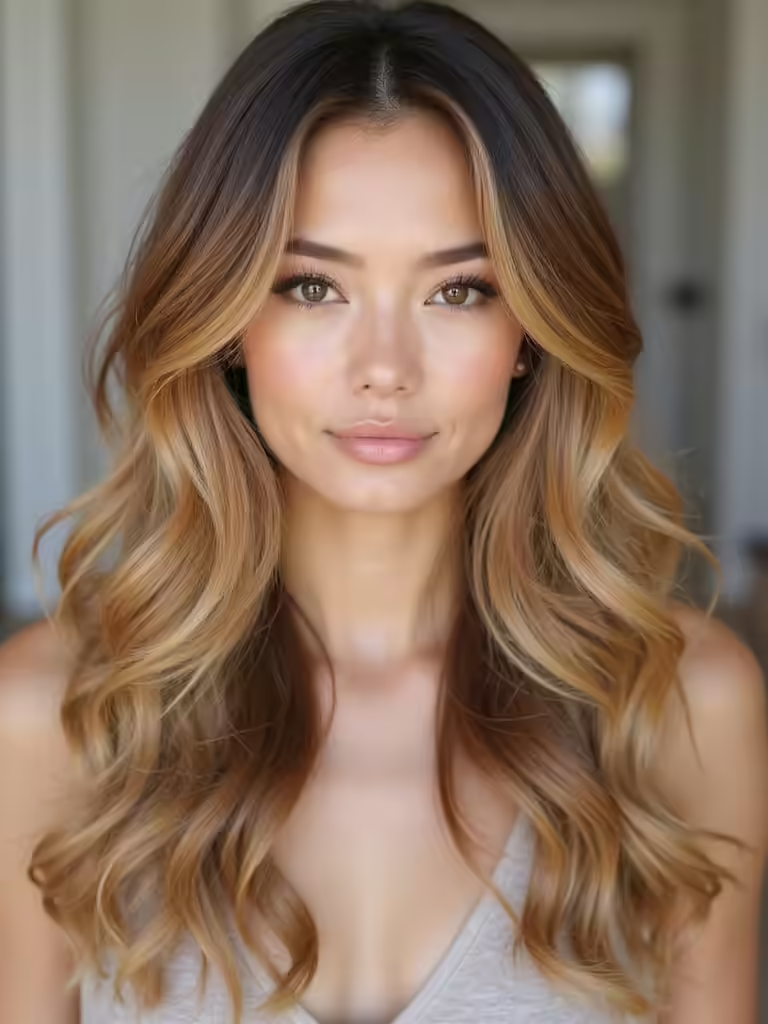
Small, unique touches are what take this color from pretty to personal. A single brighter money-piece at the front, a hidden panel of extra-warm gold, or a soft shadow root all make the blend feel designed around your face. These little accents are where a good colorist earns their fee.
One Detail, Big Difference
They also let you experiment without a big commitment. A bold money-piece can be toned down at the next visit if you decide it’s not for you, so it’s a low-risk way to play.
Talk to your colorist about one accent that would suit your face and lifestyle. Often a single well-placed detail does more than a whole head of highlights.
The detail I add most is a brighter money-piece at the front. It frames the face and makes the whole color look intentional.
Why This Color Trend Endures
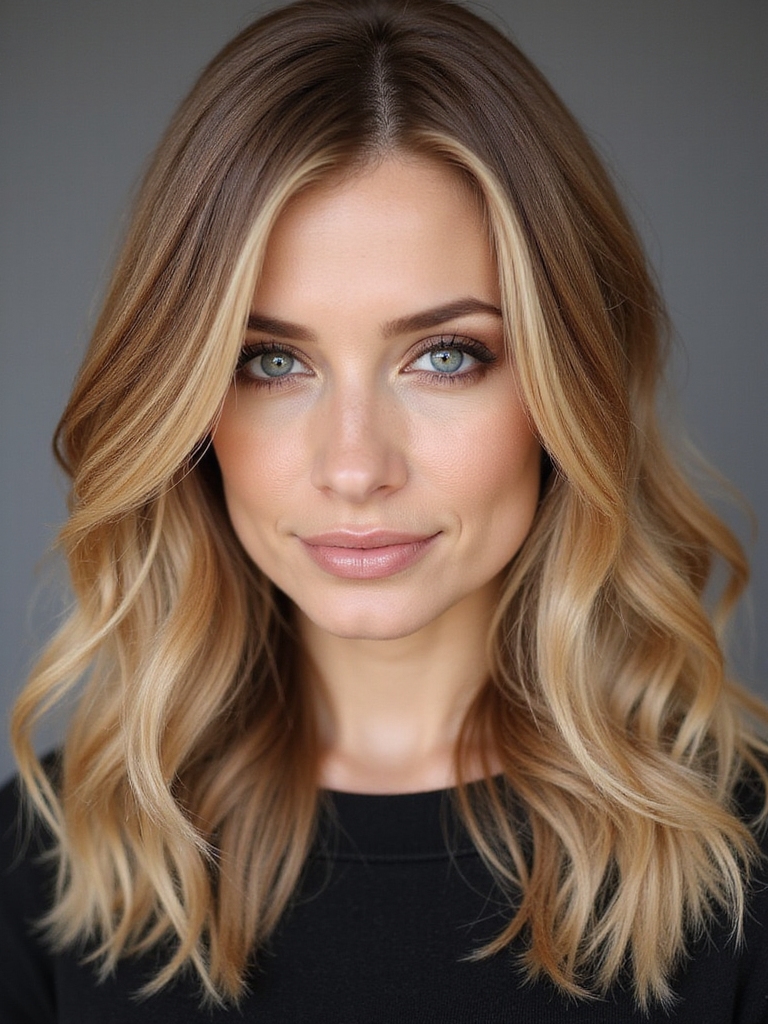
Trends come and go, but golden brown and blonde keeps coming back because it’s flattering, low-maintenance, and endlessly adaptable. It suits nearly every skin tone, grows out softly, and can be dialed up or down as your taste changes. That versatility is why it has outlasted flashier color fads.
- It flatters warm, cool, deep, and fair skin with the right balance.
- It fades out gently and blurs the regrowth as it goes.
- It works from subtle and office-appropriate to bright and beachy.
- It photographs beautifully in almost any light.
Common Mistakes to Avoid
The most common mistake is going too light too fast, especially at home; over-lightening warm hair leads to brass, breakage, and a color that’s hard to fix. The second is skipping the toner, which is what turns fresh blonde orange within weeks. And washing too often, in hot water, with the wrong shampoo strips the tone faster than anything else.
A few more to sidestep: too much contrast, which looks stripy rather than blended; over-using purple shampoo, which dulls warm gold to grey; and neglecting the ends, which fade first. Fix these, keep up with glosses, and the color mostly takes care of itself. For a warmer variation, look at caramel highlights on brown hair.
Making the Blend Your Own
Golden brown and blonde lasts because it bends to fit you: warmer or cooler, brighter or softer, high-drama or barely-there. Get the undertone right, keep the contrast gentle, and protect it from heat and sun, and it stays the kind of color that looks expensive without looking like it took much.
If you’re starting from scratch, a few face-framing babylights are the easiest first step, and you can build from there over a couple of visits. However much gold you choose, the same rules carry it: soft blending, warm placement near the face, and a gloss to keep it rich.
Related Reads