
There is a particular quiet that settles in once the parting is done and the first braid starts to take shape. Braiding is part style and part ritual, the kind of slow, hands-on process that turns a long afternoon in the chair into weeks of waking up with your hair already done and ready to go. That trade, a few hours now for a month of ease later, is why protective braids never go out of rotation.
Below are fifteen braided styles worth knowing, from classic box braids to feed-in cornrows and beaded Fulani. For each one you get the look, a realistic sense of install time and upkeep, and an honest note on who it suits best, so you arrive at your appointment sure of exactly what to ask for.
Before You Book Your Braids
- Match the style to your goal: knotless and feed-in are gentlest on the hairline, while box braids and twists give you the widest styling range.
- Plan for the time and cost up front. Most full installs run three to seven hours and cost roughly $150 to $300, then last six to eight weeks.
- Comfort comes first. A fresh install should feel snug, never painful, and your edges should stay flat and unstrained.
Classic Box Braids

Box braids are the style everything else gets measured against. Hair is parted into clean squares and braided from root to tip, with or without added length, for a look that goes anywhere and lasts. They are the protective style clients in my chair ask for more than any other. There is a reason for that.
Plan a real chunk of time for the install and a long stretch of low effort afterward.
- Install runs four to seven hours depending on size and length, and costs roughly $150 to $250.
- They hold up for six to eight weeks with a nightly satin wrap and a little oil worked along the scalp.
- Medium box braids are the sweet spot, light enough to stay comfortable and small enough to style up or down. For more, see these box braid styles.
Chunky Senegalese Twists

Senegalese twists swap the three-strand braid for a smooth, rope-like two-strand twist, which gives a sleeker finish with real shine. Going chunky keeps the install shorter and the overall weight lighter on your scalp.
They read polished and put-together, and they take less time than fine braids while still lasting for weeks.
- A chunky install runs about three to five hours, faster than small twists.
- Expect four to six weeks of wear; twists can unravel sooner than braids at the ends.
- Seal the ends with hot water or a dab of gel so the twists stay tight and smooth.
Not sure which braids to book? Start with what you want most.
1I want the gentlest option for my edges
Go knotless or feed-in. The gradual start means far less tension at the hairline.
2I want a finished look in the least time
Choose jumbo braids or crochet, both of which cut install time to a few hours.
An Elegant Halo Braid

A halo braid loops one continuous braid right around the crown, like a halo of your own hair, keeping every strand off your neck and face. It works on your natural hair or over existing braids, which makes it one of the most flexible updos here.
To build it, braid in a continuous line around the hairline and pin the tail underneath so it disappears. On natural hair it suits a wash-and-go base; over box braids or twists it gives you a fresh look without a new install. The faces I have styled for weddings almost always end up in some version of this because it photographs beautifully from every angle.
It suits special occasions and heat waves alike. If your hair is very short, a few extra pins or a little added length keeps the halo full all the way around.
Chic Fulani Braids

Fulani braids carry real heritage, rooted in the styling traditions of the Fulani people of West Africa. Its hallmark is a row of center cornrows running back from the forehead, with face-framing braids alongside, usually dressed in beads or cuffs that add a little movement and sound.
Wearing the Beads Well
The look mixes cornrows along the scalp with free-hanging braids, so you get pattern up top and swing below. Beads at the ends are part of the tradition, and you can keep them subtle or stack them bold. Because the parting is the star, this is a style worth booking with a braider who works the patterns cleanly.
Fulani braids suit anyone wanting detail and cultural richness in one install. The beads add a little weight at the ends, so size them to your comfort. For more, browse these Fulani braid styles.
👍Why braids are worth it
- +Weeks of low-effort, protective styling
- +Endless pattern, length, and color options
- +Your natural hair tucked away and shielded
👎What to weigh first
- –Installs can take several hours in the chair
- –Too-tight braids strain the hairline
- –Heavier styles add weight you will feel by day’s end
Stylish Ghana Braids

Ghana braids, known too as banana cornrows, sit flat to the scalp while hair gets added in stages so each braid grows thicker as it travels back. The result is a raised, sculpted pattern that hugs the head cleanly.
Why the Feed-In Method Helps
The feed-in method is what makes these so comfortable; because length is added little by little, there is no heavy knot pulling at the root. Braiders can lay them in straight lines, curves, or intricate geometric parts, so the design possibilities are wide. They are a favorite for a reason.
Ghana braids suit anyone who wants a flat, scalp-following style that lasts and stays out of the way. They work for the gym, the office, and everything between.
Versatile Cornrows

Cornrows are the foundation so many other styles build on, laid flat to the scalp in unbroken rows. Straight-back rows are the classic, but the same technique bends into curves, swirls, and detailed designs once you have a braider with an eye for it.
On their own, simple straight-back cornrows are quick, clean, and ideal under wigs or as a base for other styles. Left out, they make a sleek statement that lasts a week or two with care. They are one of the lowest-cost braided options, often $40 to $90 for a straightforward set, and a quick refresh of the edges keeps them looking fresh. For more pattern ideas, see these cornrow styles.
Keeping any braided style fresh comes down to a simple nightly routine:
1Wrap
Cover your braids with a satin scarf or bonnet before bed to cut friction.
2Moisturize
Mist the scalp with a light oil or diluted leave-in every few days.
3Refresh gently
Smooth flyaways with a little edge control, and avoid re-braiding edges too often.
Trendy Knotless Braids
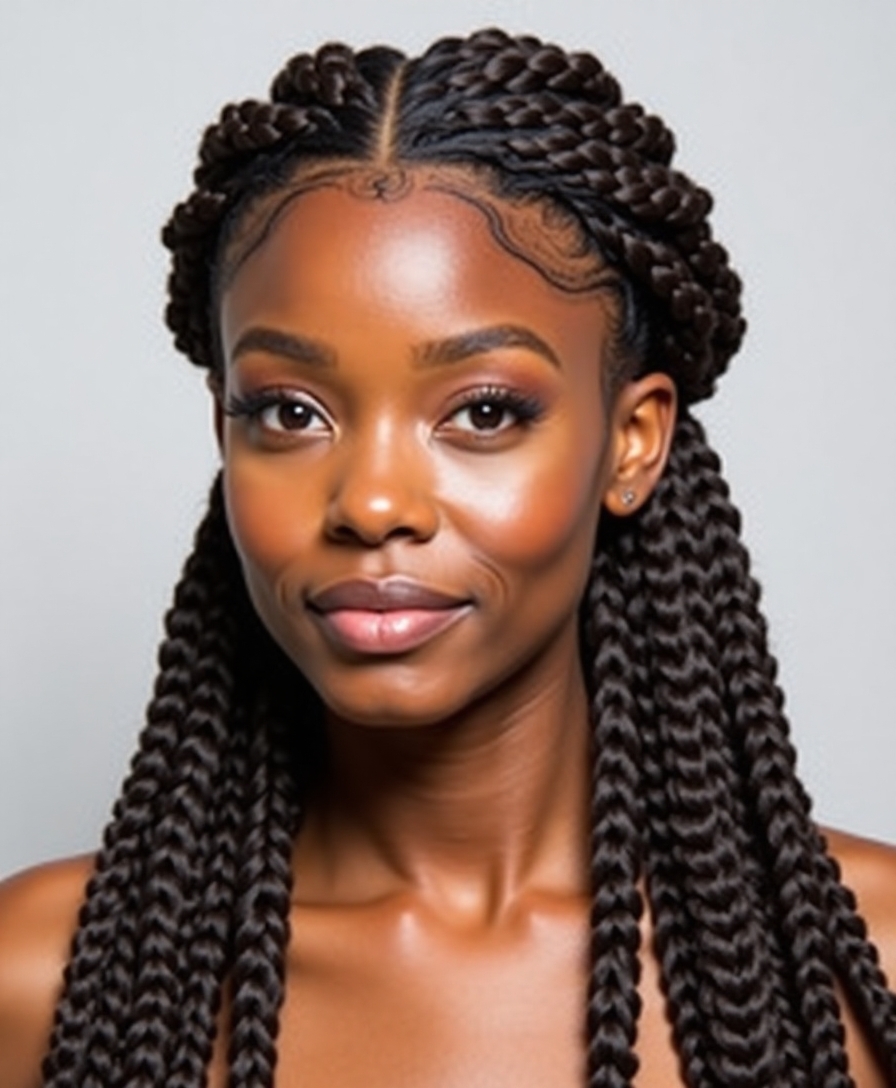
Knotless braids have taken over for good reason. Rather than anchoring with a knot up top, the braider works the added hair in a little at a time, so the braid lies flat from its very first stitch and sits softly against the scalp instead of tugging at one fixed point. The payoff is comfort and a more natural-looking part.
This is the install I recommend most to anyone whose scalp finds traditional box braids too tight at the roots.
- The gradual start means less tension on the hairline and an instantly wearable feel, with no day-one tightness.
- Install runs five to eight hours since the method is slower, often $180 to $300.
- They drape and move more naturally than knotted braids. For more, see these knotless braid styles.
Eye-Catching Lemonade Braids

Lemonade braids are side-swept cornrows that all travel in one direction, sweeping across the head and cascading over one shoulder. The name nods to the look that put them in the spotlight, and they have stayed a favorite ever since.
Getting the Sweep Right
Because every braid flows the same way, the style has motion built in and frames the face on a flattering diagonal. They can be fine or chunky, beaded or plain, and they work fed-in for that smooth, thickening finish. The angled sweep is what gives them their signature drama.
Lemonade braids suit anyone who wants movement and a bit of edge. The one-direction pull means a skilled braider matters, so the tension stays even and gentle across the whole head.
ℹ️Good to Know
A braided style should never hurt. Tension headaches, tender bumps, or stinging edges right after an install are signs the braids are too tight, and a good braider will happily loosen them. Comfort on day one protects your hairline for the long run.
Playful Jumbo Braids

Jumbo braids size everything up, with fewer, thicker braids that make a bold statement and cut your install time way down. They are the fast lane to a protective style when you are short on chair hours.
- Far fewer braids means an install of just two to four hours in many cases.
- The bigger size is lighter in count but heavier per braid, so a satin scarf at night keeps them neat.
- Jumbo braids suit a bold mood and a busy schedule, though they tend to last a little less than fine braids.
Modern Feed-In Braids

Feed-in braids are all about that smooth, natural-looking hairline. The braider starts with your own hair and adds extensions gradually as the braid moves back, so it begins fine at the front and thickens behind, with no bulky knot at the start.
The Smooth Hairline Payoff
The technique is the same idea behind Ghana braids, and it is prized because it looks like the braid grows straight from your scalp. It keeps the front lightweight and the part believable. Feed-in works for straight-backs, ponytails, and patterned designs alike, which is why braiders reach for it so often.
This method suits anyone who wants a polished, natural finish with less strain at the front hairline. It is a gentle, comfortable way into braids if you are new to them.
Intricate Goddess Braids

Goddess braids are larger, raised cornrows that sit up off the scalp for a sculptural, statement finish. Thicker than standard cornrows and often laid in curving or swirling patterns, they turn the braid pattern itself into the main event.
Because they are bigger, goddess braids install faster than fine cornrows while still giving plenty of design drama. They suit weddings, events, and any day you want your hair to do the talking, and they hold neatly for a couple of weeks. A little edge control and a satin scarf at night keep the raised pattern crisp. They flatter a wide range of face shapes because you can place the parting and height where it suits you.
Fashionable Bohemian Braids

Bohemian braids, often called boho braids, weave loose curly pieces throughout the braid so wavy tendrils escape along the length. The effect is soft and romantic, a relaxed take on a protective style.
They pair the staying power of braids with a softer, undone finish that feels less structured than a clean install.
- Curly pieces are added during the braid, so the look is built in, not clipped on after.
- The loose curls can tangle, so a little leave-in on the wavy bits keeps them smooth.
- Boho braids suit anyone who finds full braids too severe and wants movement. See more boho braid ideas.
Glamorous Crochet Braids
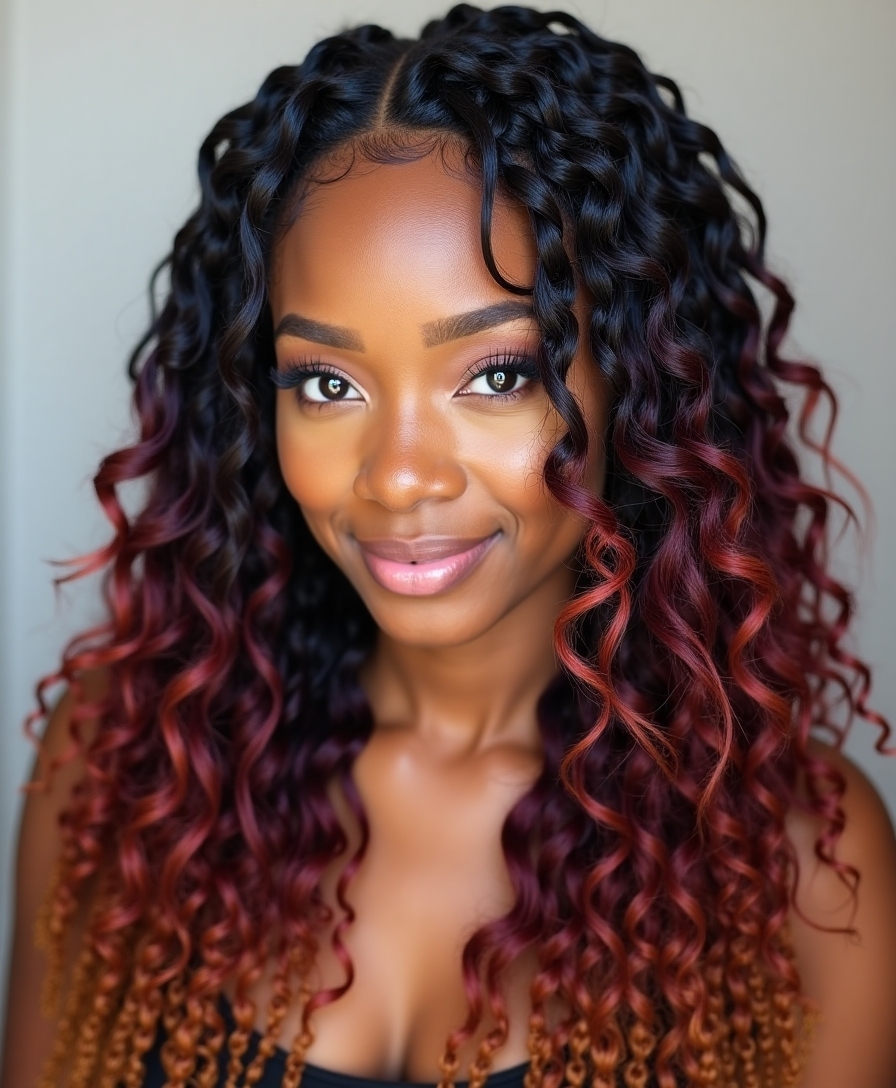
Crochet braids are the shortcut with serious payoff: pre-looped hair is crocheted onto a base of cornrows, so you get full, textured volume in a fraction of the install time. It is the fastest route to a big, finished look. Speed is the whole appeal.
- The cornrow base plus the crochet install often takes just two to three hours total.
- Pre-curled or textured crochet hair gives instant fullness with no individual braiding.
- Crochet suits anyone wanting volume and speed; refresh the cornrow base every few weeks to keep it tidy.
Darling Micro Braids
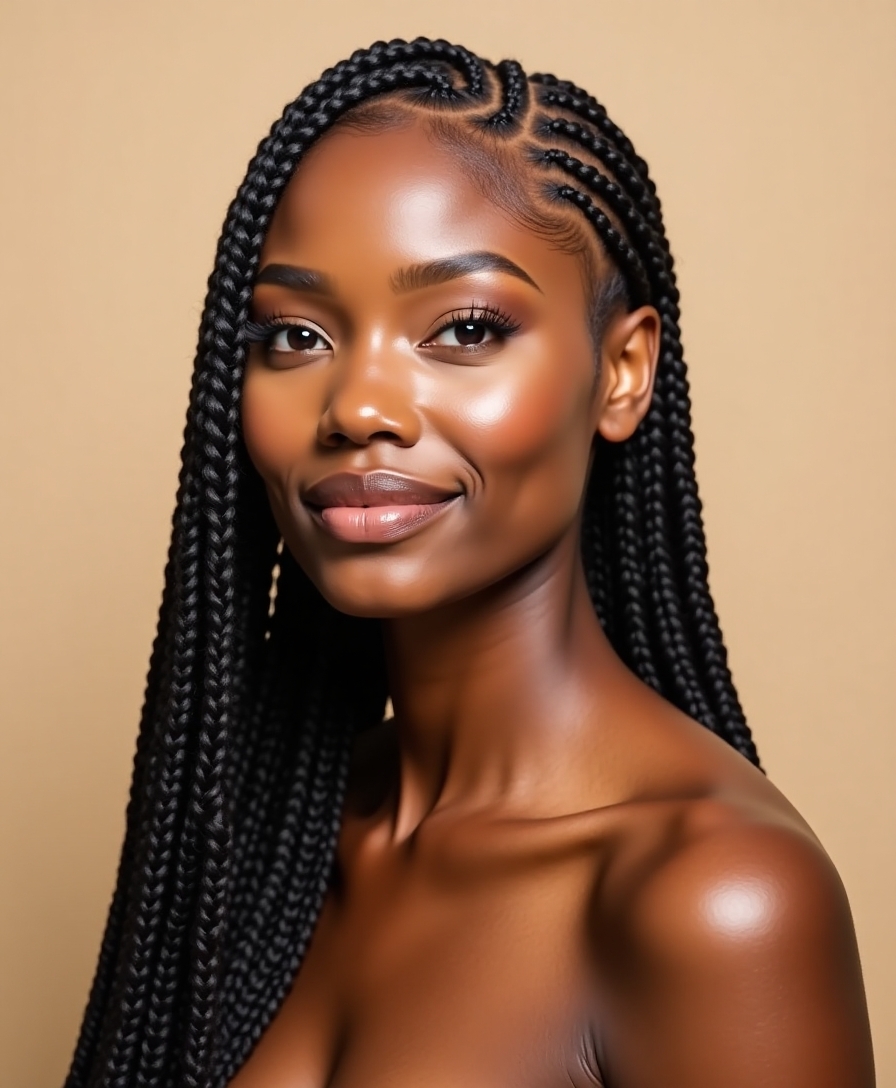
Micro braids are tiny, delicate braids that swing almost like unbraided hair, giving you the most natural movement of any braided style. That delicacy comes at a price, since the small size means a long install and careful handling.
They are the most time-intensive style here, but they reward you with the most versatility once they are in.
- Expect a long install, often six to ten hours, because of the sheer number of braids.
- Their fine size makes the takedown slow too, so book time for removal as well.
- Micro braids suit anyone wanting natural movement, though their small size asks for gentle handling at the roots.
Creative Tribal Braids

Tribal braids is the popular umbrella name for patterned cornrow-and-braid styles, often dressed with cuffs, beads, and thread that draw on traditional African braiding. Many braiders simply name the specific style, like Fulani or Ghana, but the decorated, patterned look is what people usually mean.
- The defining touch is the accessories: gold cuffs, wooden beads, and wrapped thread along the braids.
- Patterns mix scalp cornrows with free-hanging braids for contrast and detail.
- These suit anyone who loves ornament and wants their braids to carry real visual story. Browse more protective braided styles.
Styling Tips
The single most important thing with any braided style is comfort at the root. A fresh install should feel secure but never sore, and you should not see your edges straining or little bumps forming along the hairline.
If a braid pulls hard enough to sting, it is too tight, and it is completely reasonable to ask your braider to loosen the ones around your face and nape before they go any further. Protecting your edges and your natural hair underneath is what keeps these styles protective in the first place.
Once your braids are in, a little routine keeps them fresh for weeks. Tie your hair up in a satin scarf at night, or switch to a satin pillowcase, to ease the rubbing that roughens braids; mist your scalp with a light oil or a diluted leave-in every few days; and resist re-doing your edges too often.
When it is time to take them down, work slowly and gently, section by section, and give your hair a deep conditioning wash afterward. A break between installs lets your scalp and hairline rest before the next set.
Common Questions About Braided Styles
?Which braids are easiest on your hairline?
Knotless and feed-in braids are the gentlest, because the hair is added gradually instead of starting with a knot. That means less tension at the root and no heavy pull on your edges from day one.
?How long do braided styles usually last?
Most last six to eight weeks with good care, though twists and bohemian styles can loosen at the ends sooner. Sleeping in satin and keeping the scalp lightly moisturized stretches the life of any install.
?How much do braids typically cost?
It varies by style and region, but a full install usually runs about $150 to $300, with simple cornrows lower and long or micro braids higher. The longer and finer the braids, the more chair time and cost involved.
?How do I keep my braids from hurting?
Speak up during the install if anything stings, especially around the face and nape. A fresh set should feel snug but never painful, and any braider worth booking will loosen tight spots so your edges stay protected.
?Can I wash my hair while it is braided?
Yes, gently. Dilute a little shampoo, focus on the scalp, rinse thoroughly, and let the braids dry fully so they do not stay damp at the roots. A light routine keeps the scalp healthy through the whole install.
Find the Braid That Fits Your Life
The best braided style is the one that matches your hair type, your routine, and the hours you can give the chair. If your edges need a rest, lean knotless or feed-in. If you are short on hours, jumbo or crochet gets you finished fast. If you want detail and heritage, Fulani and tribal patterns bring real richness. Every option here buys you the same gift: weeks of waking up ready.
So which one feels like you right now, the sleek comfort of knotless or the beaded movement of Fulani? Picture your week ahead, pick the style that fits it, and book a braider who keeps your hairline as happy as your hair looks.
More to Explore